REVIEW · POMPEII
Pompeii tour with LOCAL GUIDE and SKIP THE LINE entrance
Book on Viator →Operated by Gennaro Balzano · Bookable on Viator
Pompeii feels close enough to hear the rumble. This skip-the-line Pompeii tour gets you into the archaeological park quickly and keeps you moving with a local guide. In a short time, you’ll hit the spots that explain daily Roman life—houses, public spaces, and even the old bath complex.
I love that the group stays small (max 14), so questions don’t get swallowed by a crowd. I also like that the route mixes big-picture history with very specific rooms and details, like the frescoed atrium of Casa del Menandro.
One thing to consider: the main guided portion is about two hours, so if you want to linger in every doorway and read every inscription, this may feel a bit fast.
In This Review
- Key highlights
- Priority Entry That Actually Changes Your Day
- What You Get for $66.38 (And Why It’s Not Just a Ticket)
- Pompeii’s “Time Capsule” Feeling: The Park Orientation You Need
- Casa del Menandro: Frescoes, Banquets, and a Hidden Silver Story
- The Lupanar: A Brothel You Can Read With Your Eyes
- Foro de Pompeya: The City’s Control Room in Stone
- Stabian Baths (Terme Stabiane): Roman Hygiene Under the Ash
- Timing Tips for a 2.5-Hour Pompeii Visit
- Where You Might Need a Longer Day (And Who This Tour Fits Best)
- Should You Book This Skip-the-Line Pompeii Tour?
- FAQ
- How long is the Pompeii tour?
- Does this include skip-the-line entry?
- What’s included in the price?
- Is it offered in English?
- Where does the tour meet, and where does it end?
- How many people are in the group?
- Is the tour refundable if I cancel?
- What happens if it’s canceled due to weather?
- Are service animals allowed?
Key highlights
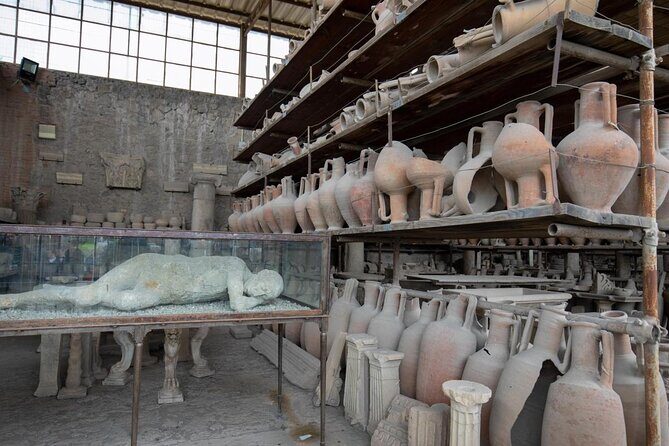
- Skip-the-line priority entry to save time at the busiest gates
- Small groups (up to 14), usually making it easier to hear your guide and ask questions
- Big name stops in one loop: Casa del Menandro, the Foro, the Lupanar, and Terme Stabiane
- Real Roman detail you can spot on-site, from carved fresco themes to built-in beds in the brothel
- Optional extra wandering after the guided portion, if you want more time in the ruins
Priority Entry That Actually Changes Your Day
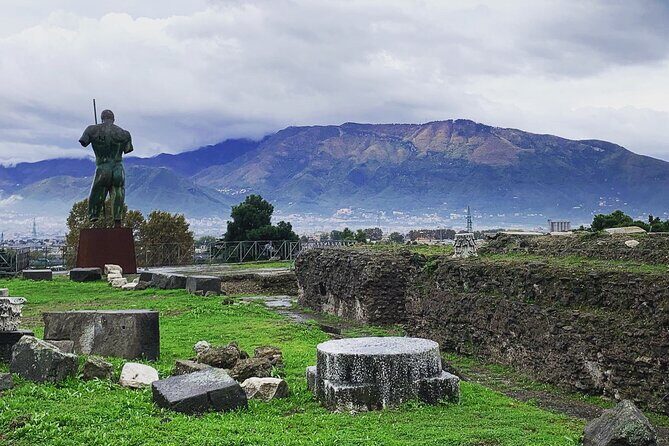
Pompeii is famous for a reason, but let’s be honest: the site can swallow time. This tour helps you avoid that slow start. You get priority service so you can skip the line for entry, which matters most when you only have a few hours.
You’ll meet near the park area at Via Villa dei Misteri, 3, just a few meters from the entrance and close to station and car parks. That location makes the beginning of your visit feel organized instead of chaotic. You’ll also use a mobile ticket, so you’re not stuck rummaging for paper while the clock ticks.
The overall tour time is about 2 hours 30 minutes, with the guided portion listed around two hours plus the option to stay inside afterward. That structure is the sweet spot if you want a guided “hit list” without turning the entire day into logistics.
You can also read our reviews of more guided tours in Pompeii



What You Get for $66.38 (And Why It’s Not Just a Ticket)
At $66.38 per person, you’re paying for more than museum-style entry. Your ticket includes admission, plus a local guide, plus the priority entry service. That’s the core value.
Think about what you’re usually buying at Pompeii:
- Time at the gate: priority entry helps you avoid losing your best daylight to lines.
- Context on the ground: a good guide helps you connect what you see to why it mattered 2,000 years ago.
- A route that makes sense: this loop moves from major public life to private homes and special-purpose buildings, so you aren’t just wandering.
There’s also a maximum of 14 travelers, which keeps the experience from turning into a head-bobbing march. Guides you might encounter include people like Gennaro Balzano (listed as the provider) and others noted for being friendly and funny on past tours, such as Antonio, Gennaro, and Sasa. One guide, Anna, has even been described as very patient when someone was delayed due to trains—so it helps to plan, but also reassures you that the operator is paying attention.
Value tip: if you’re booking this as a one-and-done Pompeii visit, the guide portion is where the money shows up. If you’re the type who wants to read everything slowly for hours, you may need a longer option.
Pompeii’s “Time Capsule” Feeling: The Park Orientation You Need
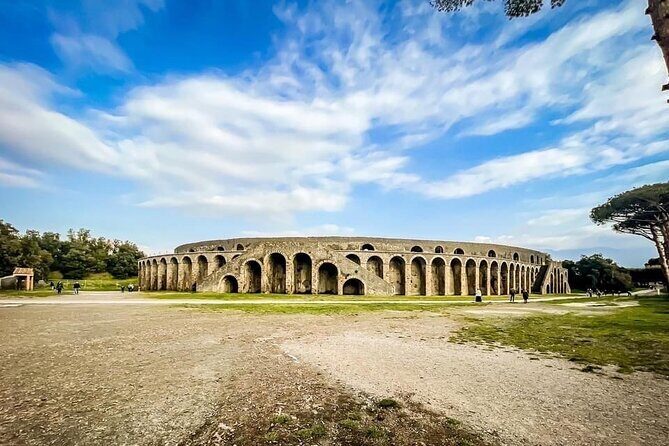
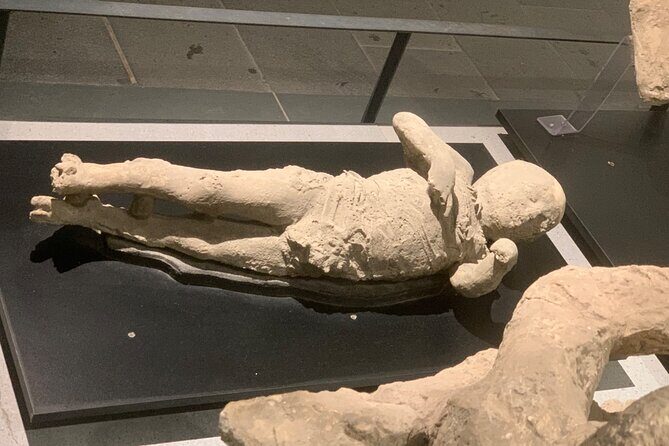
The tour begins at the Archaeological Park of Pompeii. The big idea here is why Pompeii hits so hard: volcanic ash preserved the city and its people in a way that lets historians and archaeologists reconstruct daily life. You’re not just seeing ruins—you’re walking through streets where daily rhythms once played out.
Here’s another reason this tour works even when time is tight: excavations started in the 18th century, and over about 250 years, roughly 75% of the site has been brought to light. That means you’re seeing an ongoing story, not a fully finished “one-time” display. As you move through the streets, it can feel like the eruption is almost around the corner—an effect your guide will help you understand, not just experience.
During this first portion, you’ll get that crucial orientation moment: what to look for, how buildings relate, and how public and private spaces connect. If you come in cold, Pompeii can feel like a collection. With a guide, it becomes a map.
What I’d watch for: Pompeii is a walk-heavy site. You’ll get more out of the tour if you save your energy early—wear shoes that handle uneven stone and be ready for a steady pace.
Casa del Menandro: Frescoes, Banquets, and a Hidden Silver Story
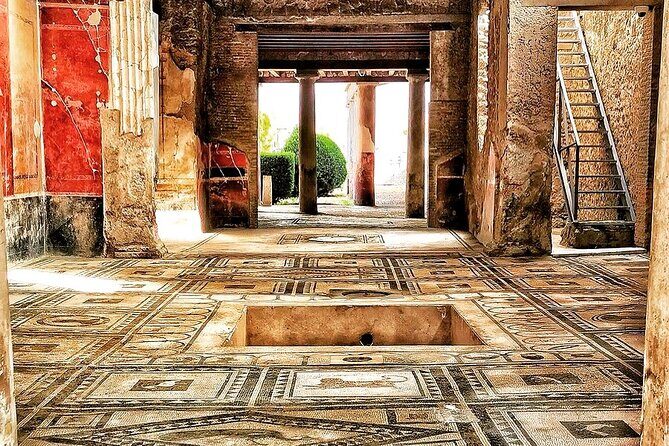
Casa del Menandro is one of those stops that turns Pompeii from “wow, old buildings” into “oh, I get how people lived.” This house belonged to a high-ranking family and shows off how wealthy domestic life worked.
In the atrium, you’ll see frescoed scenes tied to the Iliad and the Odyssey. That’s a powerful clue about education, taste, and social identity—Greek stories, shown in Roman homes. From there, the peristyle is described as a rhodium type, with the northern side higher. Even the layout matters. You’re learning how space flowed inside a wealthy residence.
The house gets its name from a portrait of Menander, an Athenian playwright, placed in the porch. That little naming detail is a great example of how Pompeii “labels” itself through art and objects.
Then comes the truly specific part: below the house there’s an underground room, perhaps a cellar. A chest with 118 pieces of silverware was found there, hidden before restoration work began, and the treasure is now exhibited in the National Archaeological Museum of Naples. Your guide will help you connect that to banquets and daily rituals. The pottery linked to pouring wine and serving meals adds texture. If you’re into the practical side of history—what people ate, how they served it, where items were stored—this stop delivers.
Time-wise, it’s around 15 minutes. That means you’ll see highlights rather than every corner. If you love houses and want to track every room, you might want to do extra time afterward.
The Lupanar: A Brothel You Can Read With Your Eyes

The Lupanar stops are short, but they’re loaded with details. Pompeii is famous for being blunt about Roman life, and this is one of the clearest examples you’ll see.
In the brothel, prostitutes—mostly described as Greek and Oriental slaves—worked for between two and eight asses. One cup of wine cost one. Your guide’s framing usually makes the pricing feel real, not like an abstract trivia fact.
The building has two floors. On the upper floor you’ll find homes for the owners and slaves. On the lower floor, there are five rooms, each with a built-in bed. Rooms were closed by a curtain, and at the end of the corridor—under the stairwell—you can see a latrine. Even in a quick visit, these are the kinds of details that stop the tour from being generic.
On the walls of the central corridor, you’ll find small pictures with erotic depictions. These weren’t just art; they were part of how customers were told what happened there.
The itinerary lists Lupanar twice with different time slots, which often turns into a quick second look for different angles or surrounding context. Either way, don’t expect a modern “tour” feeling—expect a structure designed for function, with the evidence still visible.
Practical consideration: if you’d rather avoid sexual content, this stop is unavoidable in the standard route. You can still keep your expectations straight: this is about how Roman society worked, not a sensational detour.
You can also read our reviews of more tours and experiences in Pompeii




Foro de Pompeya: The City’s Control Room in Stone
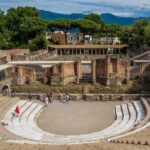
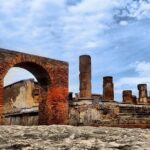
The Foro de Pompeya is where daily city life clustered. If you want to understand how a Roman city ran, this stop helps you do it fast.
The civil forum served as the center for administration and justice, plus business and commercial activity. You’re walking around the heart of governance and trade, not just a pretty open space.
Originally, it was more like a simple open area of rammed earth. On the west side stood the Sanctuary of Apollo. On the east side, you’d find a row of shops. Over time—between the 3rd and 2nd centuries BC—the forum was modified. The shape got regularized, arcades appeared, and the bottom was paved with tuff slabs.
There’s also the kind of alignment detail that makes your brain snap into place: the axis of the square aligned with the facade of the Temple of Jupiter, placed in line with Vesuvius. Later, during the imperial age, the forum was paved again with travertine slabs. Even small fragments matter—some slabs have recesses for bronze letters from a large inscription.
This is the stop where you’ll feel the tour’s value most if you like understanding systems. It’s also a good place to pause and take in scale, because the forum layout makes it easier to see how people moved through the city.
Stabian Baths (Terme Stabiane): Roman Hygiene Under the Ash
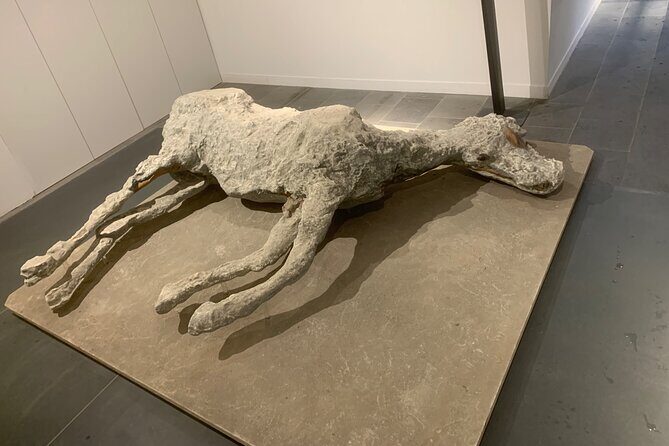
Ending with the Stabian Baths is a smart choice. Terme Stabiane are described as the oldest building in Pompeii of its kind—Roman thermal complex energy, preserved and then buried by the 79 eruption, later rediscovered through excavations.
Baths were social spaces, not just functional ones. A quick guided look at the Stabian Baths helps you understand why Roman cities invested in comfort, routine, and public life. Even when your time is limited, this stop gives you a “how people spent time” angle, not only “where people worked or prayed.”
Because the bath portion is around 10 minutes, you won’t get a slow, room-by-room explanation of every element. But you should leave with a sense of why this complex mattered, and how Pompeii’s destruction also preserved a snapshot of everyday habits.
Timing Tips for a 2.5-Hour Pompeii Visit
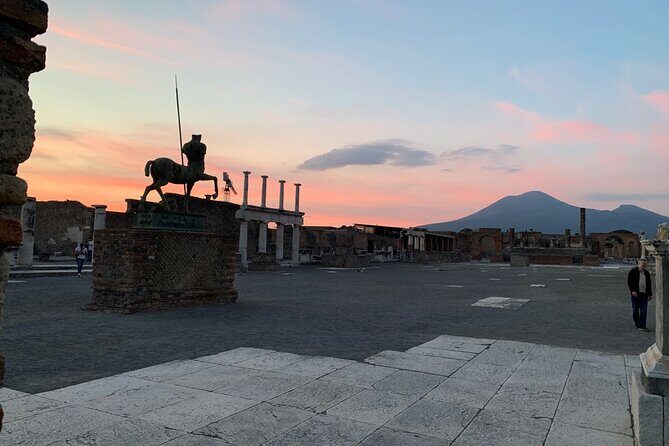
This is a short tour, and the pace reflects that. You’ll cover several headline sites—enough to understand Pompeii’s main parts without getting lost in details for half a day.
Here’s how I’d plan your mindset:
- Go into Stop 1 as an orientation. Let the guide set your landmarks early.
- At each later stop, pick one or two details to focus on: fresco themes at Casa del Menandro, layout and built-in beds at the Lupanar, alignments and pavings at the Foro, and the role of baths at Terme Stabiane.
- After the guided portion, if you still feel fresh, spend your extra time walking on your own—this is where you can slow down without worrying about missing the next stop.
One caution: the tour is about 2 hours guided, and that can feel limited if you want deep learning. If Pompeii is a once-in-a-lifetime stop for you, consider looking for a longer guided option or a private experience priced by the hour, which the operator has noted exists for those who want more time.
Sound and hearing tip: one suggestion you may want to take is to bring or use your own headphones if you personally struggle with hearing in open-air settings. The tour doesn’t mention headsets, so you’ll need to handle audio needs yourself.
Where You Might Need a Longer Day (And Who This Tour Fits Best)
This Pompeii tour fits best if you’re:
- Short on time but serious about seeing the main sights
- The type who likes a planned route instead of wandering for hours
- Traveling with kids or family who do better with stories and guiding rather than long self-guided walks (Antonio has been described as kind to daughters and making the ruins fun for young minds)
- Interested in the contrast between public life (Forum), private life (Casa del Menandro), and specialized buildings (Lupanar and Baths)
It might not fit if you’re:
- A hardcore Pompeii reader who wants to spend 45 minutes in one house alone
- Someone who wants a lot of slow photo time and long pauses for every wall painting
Also, keep weather in mind. The experience requires good weather, and if it’s canceled due to poor weather you’ll be offered a different date or a full refund. This kind of site is not the place to gamble with a rain day.
Should You Book This Skip-the-Line Pompeii Tour?
If you want Pompeii to feel clear and meaningful without eating your entire day, I think this booking makes sense. Skip-the-line priority entry helps you start faster, the route hits the strongest “Roman life” mix, and the small group size makes the guide’s explanation actually land.
I’d book it if you’re aiming for a smart first visit and you’re okay with highlights over marathon exploring. If Pompeii is your only stop in the region and you crave a slower, more detailed learning pace, look for a longer or private option so you can linger where your interests pull you.
FAQ
How long is the Pompeii tour?
It lasts about 2 hours 30 minutes (approx.). The guided portion is listed as about 2 hours, with the possibility of staying inside after the tour.
Does this include skip-the-line entry?
Yes. The tour includes priority service to skip the line for entry.
What’s included in the price?
Entry tickets and a local guide service are included, along with priority service. A mobile ticket is also part of the experience.
Is it offered in English?
Yes, the tour is offered in English.
Where does the tour meet, and where does it end?
You meet at Via Villa dei Misteri, 3, 80045 Pompei NA, Italy. The tour ends back at the same meeting point.
How many people are in the group?
The tour has a maximum of 14 travelers.
Is the tour refundable if I cancel?
No. This experience is non-refundable and cannot be changed for any reason.
What happens if it’s canceled due to weather?
The experience requires good weather. If it’s canceled due to poor weather, you’ll be offered a different date or a full refund.
Are service animals allowed?
Yes, service animals are allowed.