REVIEW · WALKING TOURS
Rome: Underground Temples and Crucifixion Relics Walking Tour
Book on Viator →Operated by TOURIKS · Bookable on Viator
Few cities do faith and archaeology like Rome.
This tour strings together four key church stops with a strong story line: pagan Rome, early persecutions, and the relic culture that followed, all in a small group of 10 with headsets so you don’t miss a word. I especially love the start at San Clemente, where you go down through three layers of buildings, and the stops that let you see major Christian relics up close at Santa Croce in Gerusalemme. One drawback to plan for: it’s a lot of walking and some time standing, including under tight underground spaces, so it’s not a great fit if you have claustrophobia.
You’ll see famous Rome landmarks without feeling like you’re speed-running the postcard stuff.
The pacing usually works well because each site has a clear purpose, from the Temple of Mithras ruins under San Clemente to the golden interior at San Giovanni in Laterano and the Holy Stairs linked to St. Helena. I also like that the guide adapts if a church area is closed, keeping the overall time similar. Still, you should come ready for churches with strict dress rules, and expect the day to shift a bit if weather or services affect access.
In This Review
- Key Things I’d Put on Your Radar
- San Clemente Underground: The Three-Layer Time Machine
- Walk From Pagan Cults to Constantine at St. John Lateran
- The Holy Stairs: St. Helena’s Story in Stone
- Santa Croce in Gerusalemme: Crucifixion Relics Up Close
- Optional Add-On: Saint Mary Major for Mosaics and Relics
- Group Size, Pace, and How to Not Feel Miserable
- Price and Value: What $90.51 Buys You
- Weather, Services, and When Your Day Might Shift
- Who Should Book This Tour (and Who Might Skip It)
- Should You Book the Rome Underground Temples and Crucifixion Relics Walking Tour?
- FAQ
- How long is the Rome Underground Temples and Crucifixion Relics Walking Tour?
- How many people are on the tour?
- Where does the tour start and end?
- Is the tour in English?
- What is included in the price?
- Do I need special clothing to enter the churches?
- Is this tour a good idea if I have claustrophobia?
Key Things I’d Put on Your Radar
- San Clemente’s underground layers: three time periods stacked under one basilica.
- Temple of Mithras inside the ruins: one of the best-preserved versions you’ll see in Rome.
- Holy Stairs at Scala Santa: tied to St. Helena’s Jerusalem relic recovery story.
- Santa Croce in Gerusalemme relic lineup: nail from the Crucifixion, walnut board, wood of the Cross, plus nativity cave wall fragments and thorns.
- Basilica of San Giovanni in Laterano highlights: golden interior and Constantine’s 313 legalization of Christianity.
- Optional extension to Santa Mary Major: extra mosaics and relics if you want more.
San Clemente Underground: The Three-Layer Time Machine
If you like Rome when it’s weird, old, and layered, this is where you feel it first.
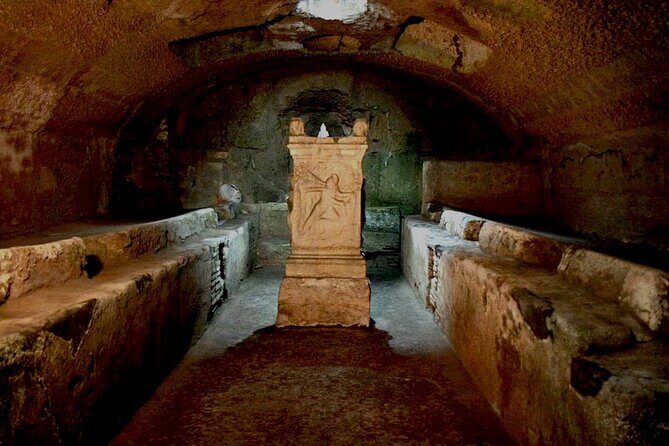
You start at Piazza di San Clemente, and you’ll head to Basilica di San Clemente, just a short walk from the Colosseum area. The big draw is what happens underground: you move through three layers of ancient monuments built on top of each other. That means you’re not just looking at old stones on a wall. You’re literally walking across evidence of how Rome rebuilt itself—again and again—over centuries.
The tour’s best “wait, what am I seeing?” moment is the Temple of Mithras. You’ll be able to admire it in its underground setting, and you’ll even be invited to touch the underground river that flows below the streets. It’s a small gesture, but it adds a physical sense of scale: this isn’t a staged museum piece, it’s part of the city’s buried geography.
On top of that archaeology, you’ll see ancient mosaics with stories portrayed in them. Those mosaics matter because they connect art to belief. In a city like Rome, the details of what people chose to display—figures, symbols, scenes—are usually where you start understanding what mattered to them.
Possible drawback to keep in mind: this is underground, and it can feel tight. The tour is not recommended for people with claustrophobia. Also, a lot of the time at San Clemente is spent standing or moving in contained areas, so comfortable shoes are not optional.
You can also read our reviews of more walking tours in Rome


Walk From Pagan Cults to Constantine at St. John Lateran
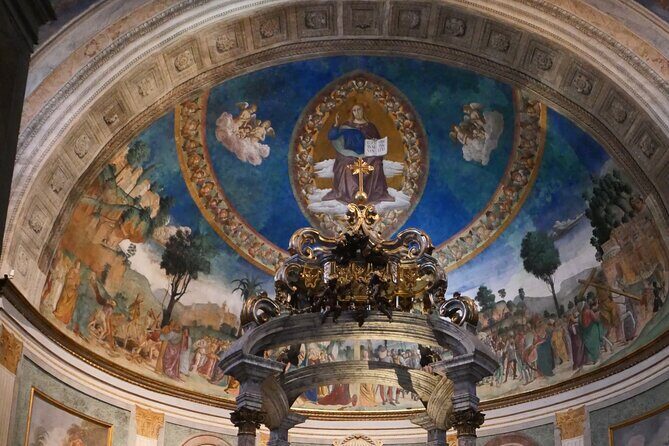
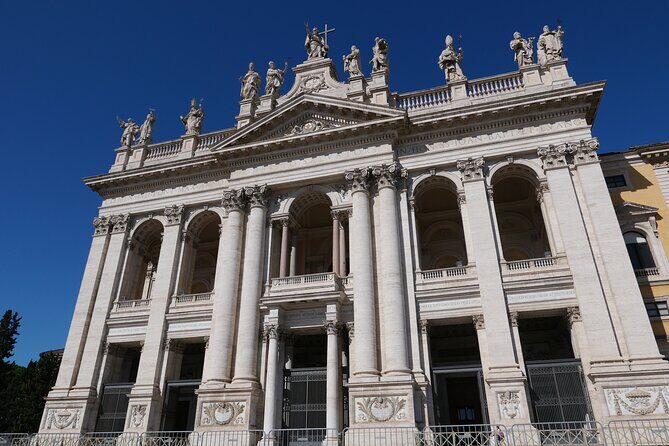
After the underworld start, the day changes tone as you head to Arcibasilica di San Giovanni in Laterano. This stop is shorter, but it’s a key hinge in the story: early persecution, martyrs, and then the moment Christianity becomes legal under Emperor Constantine in 313.
You’re walking over to the cathedral of Rome—often called the Mother and head of all churches on Earth. It’s a title people toss around, but here it shows up in how the interior is described: golden interior and ancient frescoes. That visual weight is part of the point. Once Christianity moved from underground and “managed survival” to accepted public life, the art and architecture followed.
This stop is also where the tour’s small-group style really helps. You get time to ask questions and connect themes without feeling rushed between photo spots. If your trip is already heavy on the big names in Rome, this one gives you a different angle: not just the church as a building, but the church as an institution changing history.
Practical note: this stop is about 30 minutes and admission is free. That makes it easier to value the schedule because you’re not paying twice just to enter.
The Holy Stairs: St. Helena’s Story in Stone
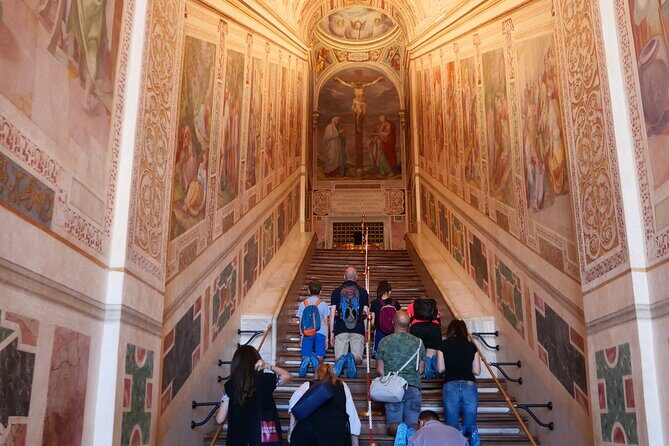
Next you’ll reach the Pontifical Sanctuary of the Holy Stairs. This is a quick stop—about 15 minutes—but it’s powerful in a very specific way.
You’ll hear the story of St. Helena, connected to a pilgrimage to Jerusalem to recover sacred artifacts. In the tour’s framing, those relics are tied to an early underground church in the Holy Land—meaning the sacred objects weren’t just collected; they were protected.
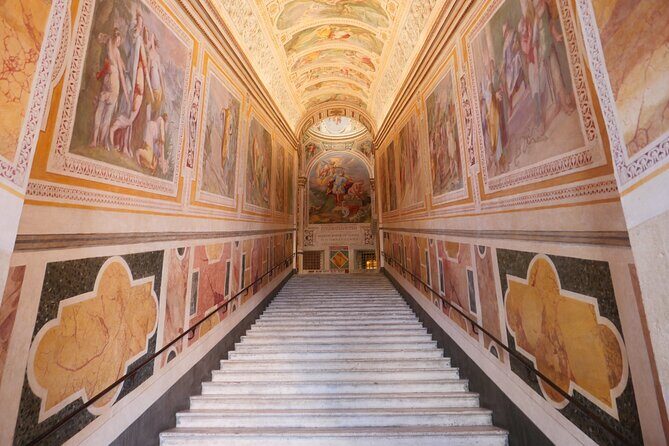
Then you reach the Holy Stairs, described as the original steps of the praetorium that Jesus is said to have climbed at judgment. Even if you approach this as history first, you’ll still notice what people do here: you’re stepping into a place where the meaning has been carried for a long time, not just the official interpretation.
In one of the key reflections shared from guides and visitors, people often talk about the chance to climb Scala Santa on your knees. If you want to do that, plan for it physically and mentally. If you don’t, you can still participate by watching, focusing on the guide’s explanation, and taking in the atmosphere.
This stop is “small time, big symbolism.” Don’t treat it like a quick photo break. Even if you only spend 15 minutes, give it your attention.
Santa Croce in Gerusalemme: Crucifixion Relics Up Close
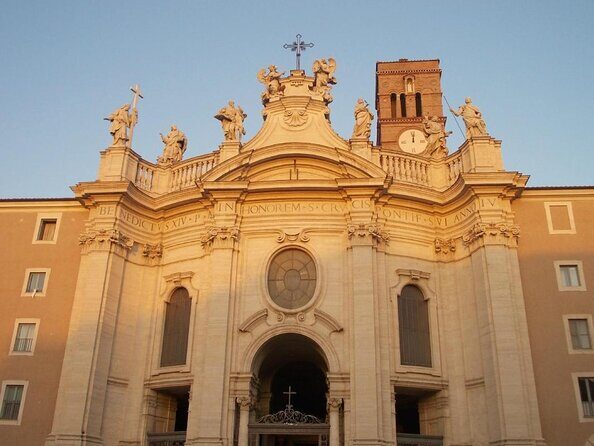
Now you walk to Basilica di Santa Croce in Gerusalemme, where the tour becomes intensely concrete. Instead of just talking about beliefs, you’re looking at relics tied to the Passion and related events.
The church itself is part of the story: it was built using earth brought from the Holy land. That detail sounds almost poetic until you remember what Rome does well—turns big ideas into physical places you can walk through.
Then you get the list of relics the tour highlights, including:
- a nail from the Crucifixion
- the walnut board Pontius Pilate placed above the cross
- the wood of the Cross Jesus was crucified on
- fragments of the wall from the cave of the nativity in Bethlehem
- two thorns from the crown of the Passion of Christ
Relics are controversial in modern life, and that’s fair. But as a traveler, you can still appreciate what you’re seeing without having to agree with every claim. Here, the practical value is this: you’ll understand what these objects meant to people and why they were worth protecting, transporting, and venerating.
This stop runs about 30 minutes with admission free, which helps the tour stay focused on experience rather than upsells. It’s also the kind of place where a good guide’s tone matters. The best versions of this tour don’t turn sacred objects into trivia; they frame them as part of a lived tradition.
Optional Add-On: Saint Mary Major for Mosaics and Relics
There’s a built-in chance to extend the experience at Papal Basilica of Saint Mary Major. If you choose to keep going, this is about 1 hour, with admission included.
Why it’s worth considering: the tour describes stunning mosaics and sacred relics, which complements the day’s “art, belief, and protection over time” themes. If you already love churches as art objects, you’ll likely enjoy the extra time. If you’re already church-weary, skip it and keep your energy for Rome at street level.






Group Size, Pace, and How to Not Feel Miserable
The tour is capped at maximum 10 travelers, and that small size is a big deal for two reasons. First, it keeps the underground spaces manageable. Second, it helps your guide control pacing and answer questions without losing everyone.
You’ll also get headsets to hear your guide clearly. Rome churches can be echo-y and crowded, so this is the kind of detail that makes the difference between enjoying the explanation and constantly asking your neighbor to repeat themselves.
Timing-wise, expect 2 hours 30 minutes to 3 hours 30 minutes depending on conditions and any site adjustments. The tour can adapt if some areas are closed, and they keep the overall duration similar.
One caution that keeps showing up in real-world feedback: there’s a lot of walking between stops, and the churches are generally a few blocks apart rather than right next door. You should expect standing time too. If you’re traveling with knees that don’t love stairs or you hate heat, bring water and move at a steady pace.
What to wear matters:
- cover knees and shoulders for entry
- wear comfortable walking shoes
- keep in mind that you’ll go inside churches, so no casual “shorts and tank top” plan
Price and Value: What $90.51 Buys You
At about $90.51 per person, this tour isn’t cheap, but it also isn’t just “a walk with a storyteller.”
Here’s where the value comes from:
- Entrance fees are included (and several stops list free admission, so the cost isn’t purely gate fees).
- A live professional guide provides context that would be hard to reconstruct on your own quickly—especially for the San Clemente underground layers and the relic stories.
- Headsets make the information component actually usable, not lost in acoustics.
- You’re getting multiple top-tier sites tied to early Christianity in a tight timeframe, not spreading it across separate tickets and multiple days.
If you’re the type who reads plaques and then moves on, you might feel like you could do parts independently. But if you care about understanding the connections—how pagan space becomes Christian sacred space, how persecution becomes legalization, how relics travel and get protected—then this format is strong value.
The best “fit” for this price is a traveler who wants a guided storyline and doesn’t want to spend hours designing a self-guided route that includes underground archaeology and relic churches.
Weather, Services, and When Your Day Might Shift
This experience depends on weather and liturgical-calendar events. If it gets canceled due to poor weather, you’ll be offered an alternative date or a full refund. If a particular area is closed during your visit, your guide adjusts what you see while keeping the tour length about the same.
That means you should plan for the day to run smoothly, but not like a lab schedule. If your Rome itinerary is locked into strict reservations, consider leaving a little buffer around this tour.
Who Should Book This Tour (and Who Might Skip It)
Book it if:
- you want early Christian history in a few hours
- you’re excited by underground Rome and stacked layers of the city
- you want to see relics at multiple churches without coordinating separate entries
- you appreciate a guide who can connect art, architecture, and belief in plain language
Skip it or reconsider if:
- you have claustrophobia
- you dislike church dress rules or don’t want to plan clothing
- you’re not up for a walking day with some standing time
- you want lots of free time at one stop. This tour is structured, not slow and wandering
Also, if you’ve already seen the heaviest hitters in Rome, this tour is a smart way to go beyond the usual monuments. It gives you a different angle on the city—less about the obvious skyline view, more about what’s underfoot and what people built to protect meaning.
Should You Book the Rome Underground Temples and Crucifixion Relics Walking Tour?
I think you should book it if your ideal Rome day includes churches with stories, underground archaeology, and a relic route that feels like a mini pilgrimage. The best parts—the San Clemente underground layers, the Temple of Mithras setting, and the relic focus at Santa Croce in Gerusalemme—add up to far more than a standard basilica stroll.
Just be honest with yourself about the tradeoffs: there’s a lot of walking, you’ll be inside churches with shoulders and knees covered, and underground spaces may not suit claustrophobia. If you can handle those, this tour is a strong value way to experience early Christianity in real Roman space, not in textbook distance.
FAQ
How long is the Rome Underground Temples and Crucifixion Relics Walking Tour?
The tour lasts about 2 hours 30 minutes to 3 hours 30 minutes.
How many people are on the tour?
The group is limited to a maximum of 10 travelers.
Where does the tour start and end?
It starts at Piazza di San Clemente and ends at Basilica di Santa Croce in Gerusalemme (Piazza di S. Croce in Gerusalemme).
Is the tour in English?
Yes, it is offered in English.
What is included in the price?
The tour includes a live professional guide, headsets, entrance fees, and all fees and taxes.
Do I need special clothing to enter the churches?
Yes. You need an appropriate dress code: knees and shoulders must be covered.
Is this tour a good idea if I have claustrophobia?
No. It is not recommended for people with claustrophobia since part of the experience is underground.