REVIEW · TREVI FOUNTAIN TOURS
Small-Group Express Tour of Trevi Fountain with Undergrounds
Book on Viator →Operated by TOURIKS · Bookable on Viator
Trevi is bigger than the coin toss. This express tour pairs a quick, guided look at the fountain with an underground stop at Vicus Caprarius, the City of Water site beneath Rome. I like the small-group size (max 12), and I like the sterilised headsets that keep the guide easy to hear even in the crush of the piazza. One drawback to plan around: you do not enter the fountain basin area included in the tour, and that restricted section costs an extra €2.
Here’s what makes it genuinely interesting: you get the full story of Trevi as a designed water feature, not just a photo backdrop. You’ll also spend time 9 meters down at the archaeological remains tied to how water reached the fountain above, including an ancient aqueduct area that still supplies water and the remains of an imperial Roman home.
In This Review
- Key Things That Make This Trevi Underground Tour Worth Considering
- Trevi Fountain Through a Water-System Lens
- The Meeting Spot: Start Close, Then Go Underground
- Stop 1: Trevi Fountain at the Piazzas Level (Statues, Meaning, and Water Power)
- The one catch: basin access is not included
- Timing feel
- Stop 2: Vicus Caprarius, the City of Water, 9 Meters Down
- What you’ll see underground
- A realistic expectation for “underground”
- Express Doesn’t Mean Skip—It Means Prioritize
- Price and Value: Is $42.05 Fair for Trevi + Underground?
- Guides, Style, and How the Tour Feels in Real Life
- Small-Group Comfort: Why Max 12 Changes the Experience
- Who Should Book This Trevi Fountain Underground Tour
- Should You Book? My Practical Take
- FAQ
- Where does the tour meet?
- How long is the tour?
- Is this tour in English?
- How many people are in the group?
- What’s included in the ticket price?
- Do I need to buy a ticket for the underground site?
- Do I get access to the Trevi Fountain basin?
- How far underground is the Vicus Caprarius site?
- What should I bring?
- What happens if weather is bad?
Key Things That Make This Trevi Underground Tour Worth Considering

- Max 12 people means less jostling and more chance to actually hear the story
- Sterilised headsets help you follow the guide without shouting in a crowded piazza
- Trevi seen from the public piazza level (basin access is a separate €2 option)
- 9 meters underground at Vicus Caprarius, tied directly to Rome’s water system
- Entrance fees for the underground site are included, so you’re not juggling ticket math
- Express format keeps it fast, but it also limits how long you’ll linger
Trevi Fountain Through a Water-System Lens
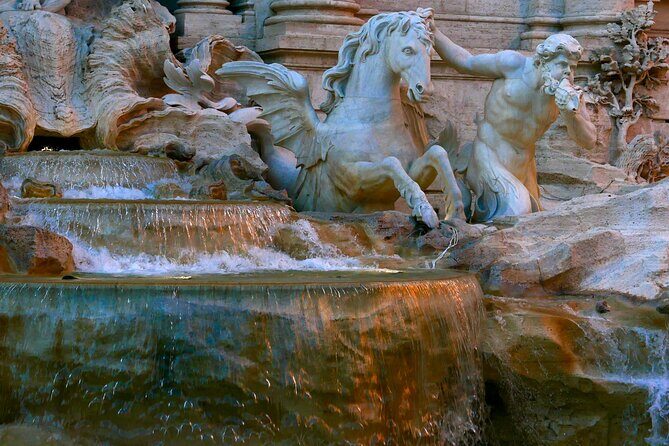
Most Trevi visits feel like this: stand, toss a coin, take a picture, move on. This tour nudges you to slow down just enough to notice the mechanics behind the magic.
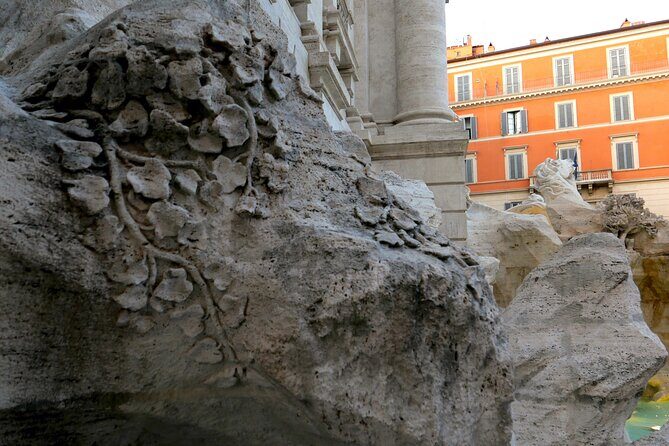
At the piazza, the guide frames the fountain as engineered theatre—mythology carved into stone, but also a visible sign of how water was brought into the city and shaped into a showpiece. You’re not just learning what the statues look like; you’re getting what each piece was meant to communicate through the movement and power of water.
That shift matters because Trevi’s design is the whole point. If you only focus on the surface, you miss why the fountain looks the way it does and why Rome treated water as something worth celebrating. This tour is built for that connection.
You can also read our reviews of more tours and experiences in Rome.



The Meeting Spot: Start Close, Then Go Underground
The tour starts at Via del Lavatore, 49 (00187 Roma RM). Show up about 5 minutes early so you can get settled before the group starts moving.
This matters more than it sounds. Trevi sits in a traffic-and-crowd knot. When you arrive late, you can easily end up chasing a group through tight streets and bottlenecks. The tour runs as an express format, so pacing is real here.
Also note the practical bits that can make your day easier:
- You’ll be close to public transportation.
- Service animals are allowed.
- The experience is described as suitable for most people.
Stop 1: Trevi Fountain at the Piazzas Level (Statues, Meaning, and Water Power)
The Trevi portion is about what you can see in real time—and what most people rush past.
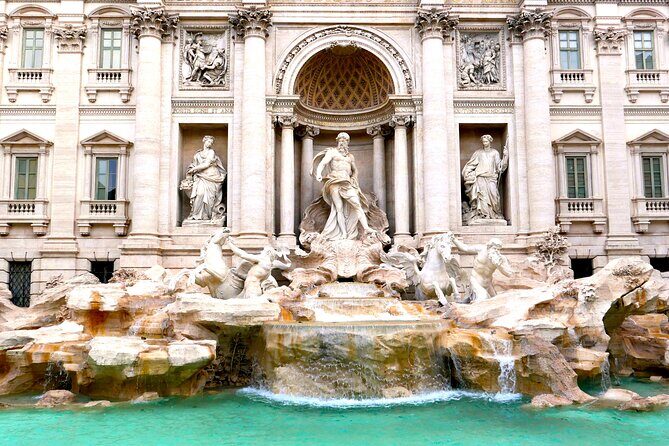
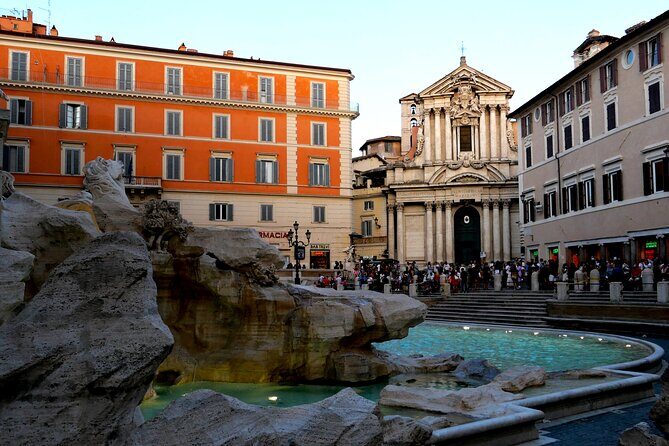
You’ll meet your guide in a visible spot and get oriented on what to look for, including how the mythological figures are arranged and what that says about the fountain’s message. You’ll also learn how the fountain’s design uses the presence of water to deliver that message. The guide will lead you to an excellent viewing point at the public piazza level.
The one catch: basin access is not included
Trevi has a restricted basin area. Access to that zone costs an extra €2, and the tour notes clearly that you’ll be viewing the fountain from the public piazza level. If your dream is standing in a closer, more intimate position for photos, build that €2 into your plans—or be ready to accept more distance.
Timing feel
Because the tour is express, the Trevi explanation is brief. Some visitors love the fast, focused approach. Others feel the Trevi time is just enough for the highlights, not enough to linger and take lots of angles. If you want a long, slow, photography-first Trevi visit, this format may feel a bit rushed.



Stop 2: Vicus Caprarius, the City of Water, 9 Meters Down

Then you head underneath the streets to Vicus Caprarius—described as the City of Water.
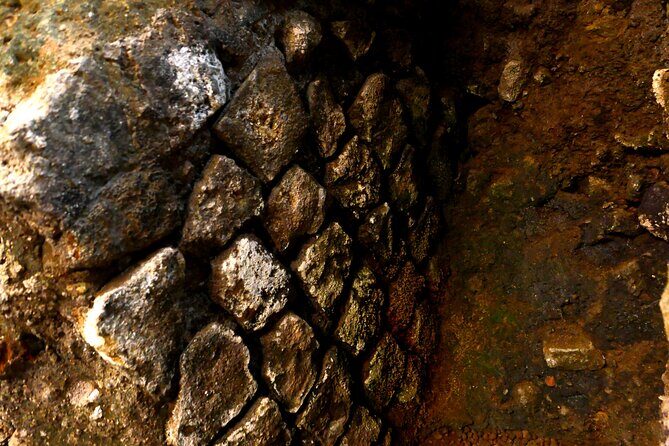
This is the part that often makes the tour memorable, because it shifts you from performance stone to functional infrastructure. The site sits about 9 meters below ground, and you’re walking through archaeological remains that connect to Rome’s water story.
What you’ll see underground
Here’s what the tour focuses on:
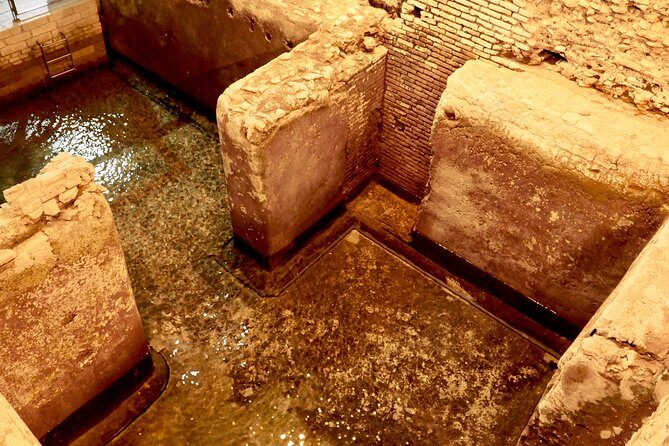
- The ancient aqueduct connected to the fountain above
- A site that is described as still functioning and supplying water to the fountain
- Remains of an imperial Roman domus (an elite home)
- The layered history beneath Rome’s streets
Even if the underground doesn’t look like a big-ticket museum, it’s the perspective that hits. You’re essentially meeting the parts of Rome that built the city’s systems. The “why” becomes physical—water routing, construction layers, and the fact that Roman streets have been built, rebuilt, and buried over centuries.
A realistic expectation for “underground”
A couple of important notes help you avoid disappointment:
- The underground visit is to the Vicus Caprarius site, not Trevi’s restricted under-basin area.
- The underground time is limited. You’re there for a guided pass through the key areas, not an open-ended wander.
If you come in expecting a long, behind-the-fountain archaeological walk, you might feel time pressure. If you come in wanting a short, focused primer on how Trevi fits into Rome’s water engineering, you’ll likely feel satisfied.
Express Doesn’t Mean Skip—It Means Prioritize
The tour is listed at about 40 minutes total, with roughly half the time above ground and half underground. That “small and fast” structure is a strength if you’re trying to fit Trevi into a packed Rome day.
I like express tours when they:
- solve the hard part (finding what matters)
- put meaning to the signs and shapes
- get you in and out without eating your entire afternoon
But you should also know the trade-off. With an express format, you’re paying for interpretation and access within a short window. That’s exactly why people who want a slower Trevi stroll sometimes bounce off it.
One other pacing point: the tour uses sterilised headsets for guide clarity. The underground portion tends to be the time when people feel the history lands best. The Trevi explanation is also valuable, but it’s likely shorter than you’d get from a full-length guide.
Price and Value: Is $42.05 Fair for Trevi + Underground?
At $42.05 per person for about 40 minutes, this isn’t priced like a freebie. You’re paying for three things:
- A guide who explains the design and the water story
- Included entrance fees for the underground excavations
- Headsets that make the experience easier to follow in a busy area
The value question comes down to what you want from Trevi:
- If your goal is just to see Trevi and move on, you’ll likely feel you could do it on your own without paying for a guided underground connection.
- If your goal is to understand how the fountain ties into ancient water infrastructure—and you want the entrance included—this can feel fair.
The experiences that seem to disappoint people often share one theme: the title leads them to expect full access to Trevi’s basin area or a more expansive underground view directly behind the fountain. The tour’s details are clearer than the headlines, and the basin area is explicitly not included (extra €2). If you match your expectations to what you’re actually getting—Trevi from the piazza, then Vicus Caprarius underground—this tour tends to land well.
Guides, Style, and How the Tour Feels in Real Life
What makes or breaks a short tour is how the guide shapes the time.
In the guide-led descriptions tied to this experience, certain names show up with a pattern: clear explanations, statue-by-statue interpretation, and the ability to answer questions fast without turning it into a lecture. Names like Valerio and Frederica come up with that sort of pacing. Mario and Franchesca also appear in feedback connected to keeping a group engaged, including families with kids.
There’s also a reminder here: because it’s short, the guide has to choose what to emphasize. If you’re the kind of person who wants every corner and every artifact in deep detail, an express format will always feel like a sampler. If you want the big picture with enough specifics to connect it all, you’ll probably enjoy the way the time is used.
Small-Group Comfort: Why Max 12 Changes the Experience
Max 12 isn’t just a number here. Trevi is crowded, and when you’re in a tight space, group size affects:
- how close you can stand to hear
- whether you can keep moving without losing the guide
- whether you can ask questions and get an answer
This tour also offers full on-site assistance and sterilised headsets, which together make a short tour feel more controlled. You don’t need to be a Rome expert. You just need to show up and follow.
Who Should Book This Trevi Fountain Underground Tour
This one is a good fit if you:
- want an efficient Trevi stop that still explains meaning
- like learning how Rome’s water system worked, not just seeing landmarks
- prefer small-group pacing over large-coach chaos
- can accept limited time above ground and limited time underground
It may be a mismatch if you:
- strongly prefer long photo time at Trevi itself
- expect to stand in restricted basin access without paying extra
- want a full, behind-the-fountain underground route rather than Vicus Caprarius
Should You Book? My Practical Take
Book it if you want a guided shortcut to understanding Trevi’s design and its relationship to Rome’s water world, plus included access underground. The small group, headsets, and included entrance fees are the practical reasons to say yes.
Skip or adjust expectations if you’re chasing basin-level access or a long underground exploration. This is an express tour. Think of it as a focused primer with just enough time to feel the layers—then you can keep wandering on your own after.
If you’re planning a one-day Trevi hit, this can be one of the smarter ways to do it: guided where it counts, fast where Rome crowds would otherwise steal your attention.
FAQ
Where does the tour meet?
It meets at Via del Lavatore, 49, 00187 Roma RM, Italy.
How long is the tour?
The duration is about 40 minutes.
Is this tour in English?
Yes, it’s offered in English.
How many people are in the group?
The maximum group size is 12.
What’s included in the ticket price?
You get a professional live guide, full on-site assistance, sterilised headsets, and entrance fees into the underground excavations.
Do I need to buy a ticket for the underground site?
No. The entrance fees into the underground excavations are included.
Do I get access to the Trevi Fountain basin?
Not automatically. Access to the Trevi Fountain restricted basin area has an extra €2 fee, and you view the fountain from the public piazza level.
How far underground is the Vicus Caprarius site?
It is about 9 meters below the ground.
What should I bring?
Bring your own earphones if you can, since it’s preferable for environmental reasons. You may also want a refillable bottle, since drinkable water fountains are available around Rome.
What happens if weather is bad?
The tour is subject to weather conditions. If it’s canceled due to poor weather, you’ll be offered an alternative date or a full refund.