REVIEW · BORGHESE GALLERY TOURS
Rome: Borghese Gallery Skip-the-Line Tickets with Audioguide
Book on GetYourGuide →Operated by Crown Tours · Bookable on GetYourGuide
Borghese tickets feel like Roman gold. I love the timed entry approach that limits crowding, and I love that you can take the visit at your own pace with a digital audio guide. One drawback to plan for: some rooms can be closed on the day you go, so your exact route may be slightly different.
You meet your host right at Fontana dei Mascheroni, get your entry handled, and then it’s art-first time inside the Cardinal Borghese villa. The gallery can be a sprint or a slow burn depending on how you pace it, so I’d treat it like a choose-your-own-adventure, not a checklist.
In This Review
- Key things I’d bank on before you go
- The Galleria Borghese setup: why this museum works
- Finding your host fast: Fontana dei Mascheroni and timed entry flow
- Inside the villa: how 2 to 4 hours plays out
- The art hit list: Bernini, Caravaggio, Raphael, and the rest
- Using the digital audio guide without slowing yourself down
- Guided tour option: what changes when you add a host
- Price and value: is $53 worth it?
- Practical expectations: rules, restrictions, and closures
- Who this Borghese ticket suits best
- Should you book the Borghese skip-the-line ticket?
- FAQ
- How long is the Borghese Gallery visit with this ticket?
- Where do I meet the host?
- What is included in the ticket?
- Is access to the Borghese Gardens included?
- Can I bring a stroller or large bag?
- Is wheelchair access available?
Key things I’d bank on before you go
- Limited timeslots help you avoid the worst of the crush outside
- A villa museum: Cardinal Scipione Borghese’s personal collection sits in its home, not a modern box
- Bernini + Caravaggio intensity is the big reason to pick Borghese over almost any other museum
- Digital audio guide adds context to the paintings and sculptures at your pace
- Bag rules are real: bring a small bag and use the cloakroom if needed
- Some sections may be closed, so focus on the marquee masterpieces and enjoy the rest
The Galleria Borghese setup: why this museum works

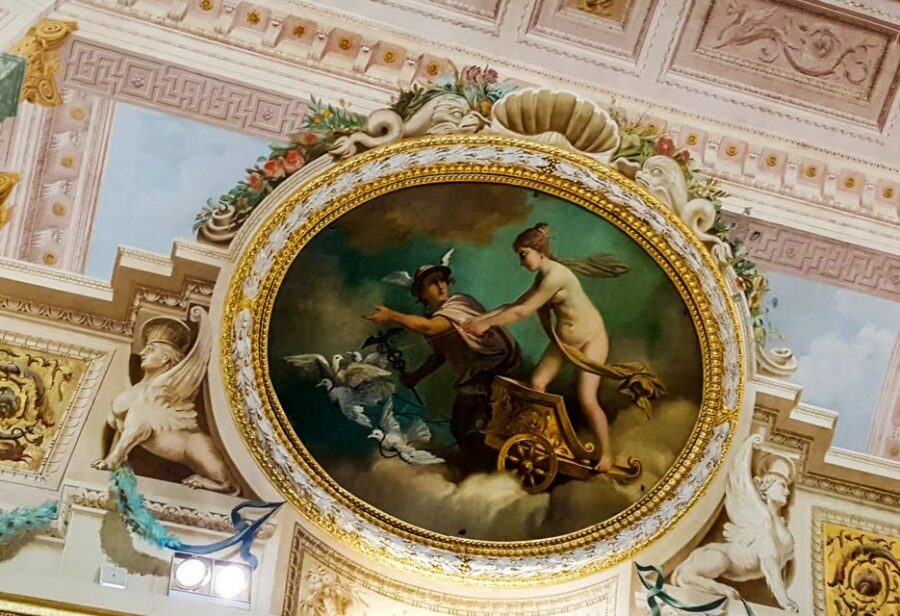
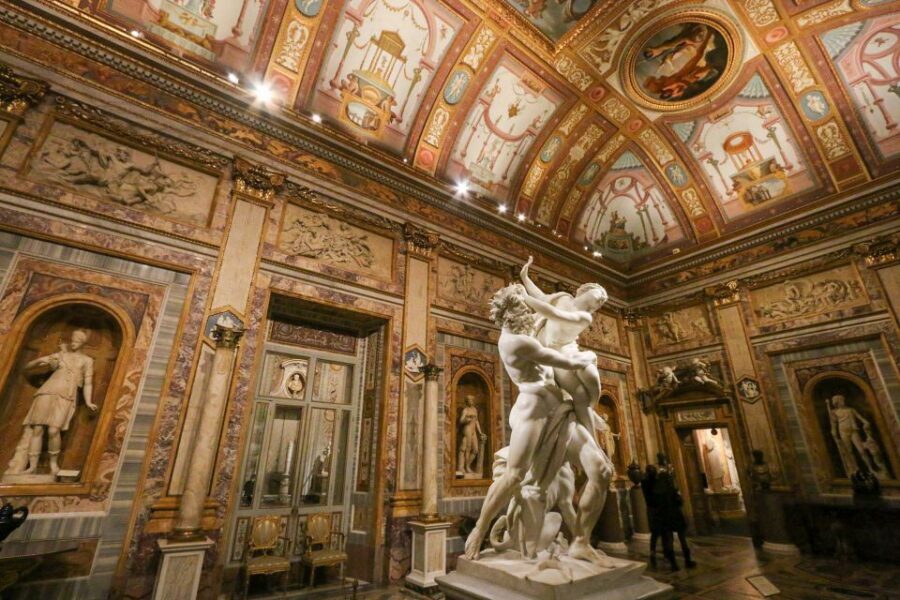
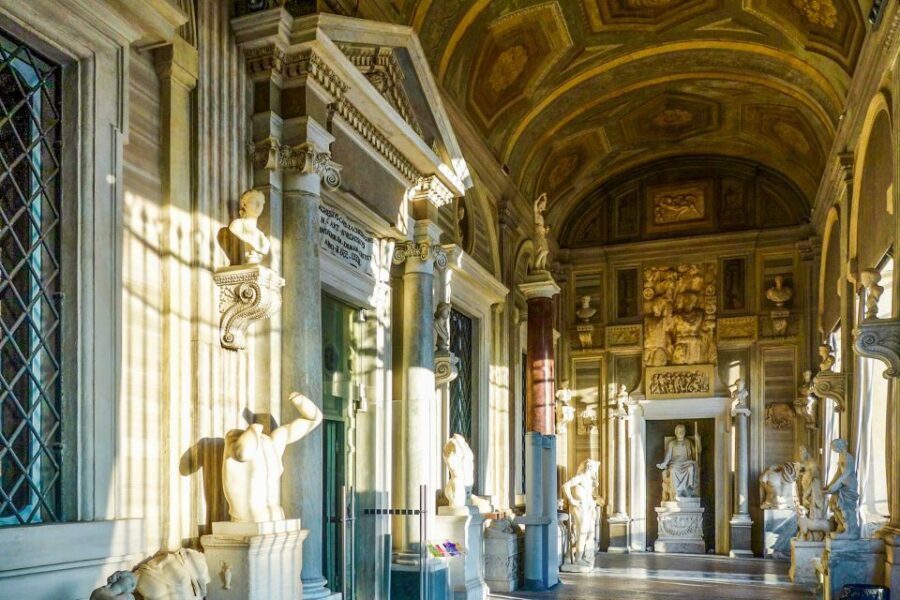
Most Roman museum days start with a queue and end with you trying to remember what you saw. Borghese flips the script. You’re entering a 17th-century villa that holds a curated private collection, where Renaissance, Roman, and Baroque art were meant to be experienced together. That matters, because the building style and room layout change how you read the art. A sculpture isn’t just “a piece,” it’s placed like part of a living conversation.
What makes it feel special is that the museum is built around the Borghese taste. Cardinal Scipione Borghese assembled works from the giants of the period, so you see major painters and sculptors back-to-back: Bernini’s marble drama, Caravaggio’s emotional realism, and Raphael’s polished balance. You’ll also run into masterpieces attributed to artists like Rubens, Titian, and Canova, which gives the gallery more breadth than you’d expect from a single villa.
And yes, the skip-the-line part matters. Not because the gallery is always a total bottleneck, but because timed entry slots are limited and the lines for the wrong ticket approach can waste your energy fast. A timed entry spot helps you spend more of your Rome time looking, not waiting.
You can also read our reviews of more tours and experiences in Rome


Finding your host fast: Fontana dei Mascheroni and timed entry flow
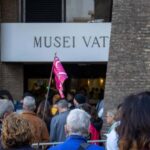
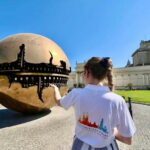
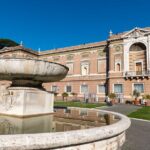
The practical win starts at the meeting point: Fontana dei Mascheroni, Viale del Museo Borghese, right in front of Galleria Borghese. Your host stands by the small drinking water fountain called La Fontana dei Mascheroni, wearing a purple Crown Tours t-shirt and flag.
If you want an easy arrival, use the walking approach the site gives:
- From Pinciana or Museo Borghese: walk along Viale dell’Uccelliera for about 2 minutes; you’ll spot Fontana dei Mascheroni about 40 meters from the gallery.
- From S. Paolo del Brasile: walk straight along Viale del Museo Borghese for about 8 minutes to reach the same fountain.
Here’s a real-world tip: when you’re staring at a fountain area, it’s easy to pick the wrong exact spot. If you don’t see the purple shirts immediately, slow down and scan carefully along the front area—people do lose 5 to 10 minutes hunting for a sign that’s easy to miss when you’re arriving under pressure.
Once you meet your host, the process is simple: they help you get your timed entry sorted. Then you head inside and your real work begins—choosing where to linger.
Inside the villa: how 2 to 4 hours plays out
The ticket is designed for a 2 to 4 hour visit, but you should think in terms of a timed entry rhythm rather than a free-for-all. The gallery operates with set time windows, and once you’re in, you’re effectively stamped for your slot. That’s why pace matters.
The beauty is that you’re not forced into a rigid museum marathon. The core format is self-paced viewing with a digital audio guide. That means you can:
- Spend extra time in the rooms that grab you
- Skip a room if the theme isn’t your thing
- Re-check a sculpture or painting if something keeps pulling you back
The main “gotcha” is that your museum time is time-limited. Some people end up wanting to see more than their entry slot allows, especially if they get stuck in a must-see room. So I’d go in with a priority order: Bernini and Caravaggio first, then Raphael and the rest.
Also plan for small-bag rules. Inside, only small bags and purses are allowed. If you arrive with something larger, you can use a free cloakroom at the entrance for safe storage. If you forget and show up with a big daypack, you’ll burn time sorting it out before you even reach the first room.
The art hit list: Bernini, Caravaggio, Raphael, and the rest
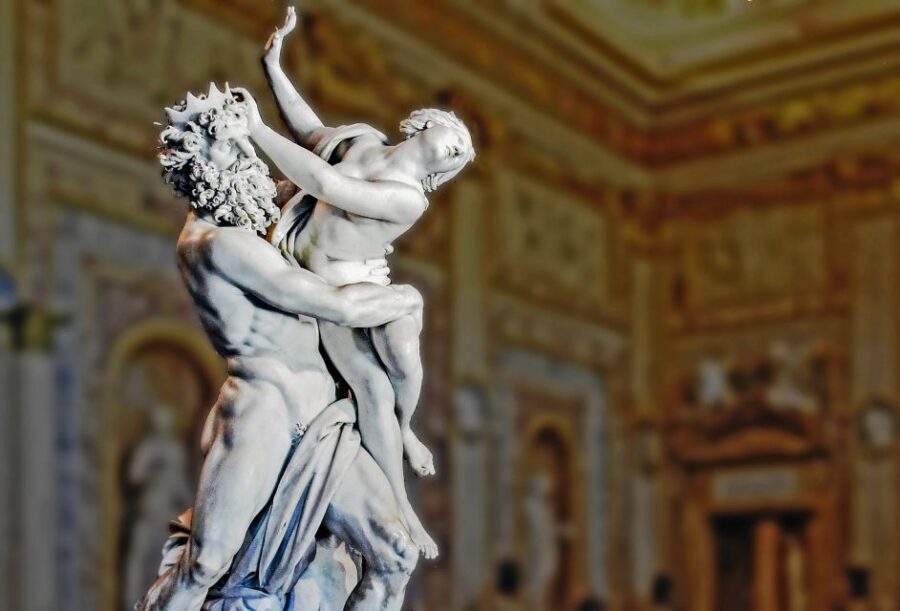
Borghese is famous for a reason. This is where Bernini turns marble into motion. One standout you should actively look for is Apollo and Daphne—built around the feeling of speed and strain, the kind of sculpture that makes you walk closer just to study the transitions. Even if you’re not a “sculpture person,” Bernini’s work here tends to grab you because it reads like drama frozen mid-breath.
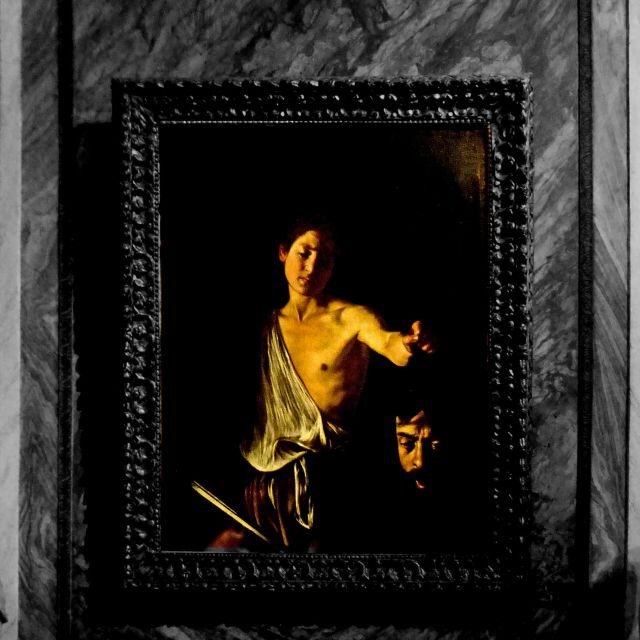
Next, make space for Caravaggio. The gallery includes major paintings like David with the Head of Goliath. Caravaggio’s power is how he uses light and expression to make you feel what’s happening, not just what’s depicted. If you spend most of your time at paintings, this is where Borghese justifies its reputation.
Then shift to Raphael and the art of controlled grace. The audio guide is especially helpful here because it explains how Raphael blended classical beauty with human emotion. That kind of context makes the paintings easier to read, especially if you’re staring at details and wondering why they feel so balanced.
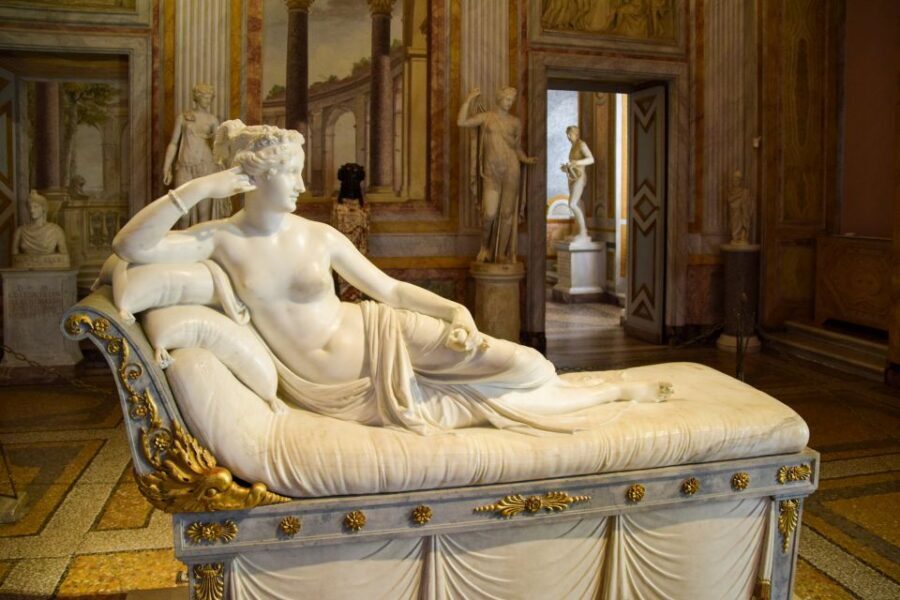
Beyond the headline names, you’ll also see other masterpieces from the period—Rubens, Titian, and Canova come up in the collection highlights. Canova’s presence matters because he’s the bridge to later taste: Neoclassical elegance made physical in marble. It’s a nice contrast after the high emotion of Baroque works.
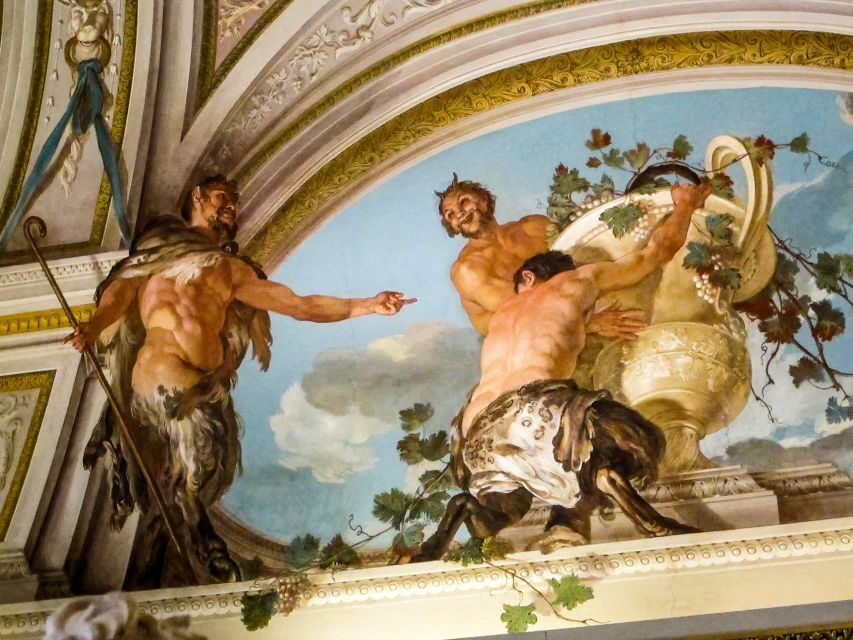
What I like most is that the gallery doesn’t feel like a random assortment. The rooms are set up as themed experiences. You move through different styles and moods, and the art history becomes tangible: how technique changes, how patron taste shapes what gets collected, and how different artists solve the problem of showing power, movement, or feeling.
Using the digital audio guide without slowing yourself down
The ticket includes a digital audio guide, and you can use it at your pace. The audio isn’t just name-and-date trivia. It’s built to explain the background and the significance—things like how Raphael shaped beauty with emotion, or how Canova created Neoclassical elegance in marble.
When the audio guide works best is when you pair it with curiosity. For example, don’t just hit Play and wander aimlessly. Stop for a minute in front of a work that keeps catching your eye, listen to a short segment, then re-look with your new context in mind.
One honest balance point: some people find the audio guide more useful than others. A few visitors have said QR codes next to works can feel more direct than the app. So I’d use the strategy that keeps you engaged:
- Start with the audio guide for structure and context
- If you spot QR codes near specific works, switch to those when you want quick, targeted info
Either way, plan to spend your listening time where you’ll actually look. If you try to use audio while walking at full speed, you’ll miss the payoff.
You can also read our reviews of more museum experiences in Rome

Guided tour option: what changes when you add a host
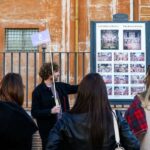
This experience includes a host at the meeting point, and it also offers a guided tour option if you choose it. If you go the self-paced route, the host mainly helps with entry and getting your materials set up.
If you choose a guided option, the value is typically less about covering every single object (you can’t do that well in Borghese) and more about steering you to the right works and explaining what to notice first. From the kind of art storytelling that comes up with hosts, you may hear background on the Borghese family and pointers about the most famous sculptures and paintings.
You might also hear from different English- or French-speaking hosts. Names that come up in the experience data include Victoria and Migo, among others. If your host is chatty (in a good way), don’t be shy—ask a simple question like which room they’d prioritize and why. Those answers often help you shape the rest of the time.
Price and value: is $53 worth it?
At about $53 per person, this isn’t the cheapest way to enter Borghese. But the value question isn’t just price—it’s time saved and access guaranteed.
Here’s the math you should do in your head:
- Borghese tickets often sell out, so a skip-the-line timed entry can be the difference between getting in and spending the day planning a backup museum.
- During peak periods, the line situation can be messy. In that case, skip-the-line access turns into real vacation time.
One more reality check: at opening time, some people find that the skip-the-line benefit doesn’t feel as dramatic. So if your visit date is slower and you’re naturally an early bird, the savings might feel less obvious.
Still, there’s another angle beyond the line: security and bag rules can eat time if you show up unprepared. Having the timed entry set and the meeting point handled smoothly helps you avoid avoidable stress, which is worth something on its own.
Also, note that one visitor said official tickets were cheaper, roughly half the price. I can’t confirm the exact difference for your date, but the point is valid: this ticket can cost more than buying direct. If you’re buying last-minute or online slots are gone, paying extra for certainty can be the smarter move.
Practical expectations: rules, restrictions, and closures

Borghese is a museum, not a lounge, and the rules show up fast.
Bring:
- Passport or ID card
- Comfortable shoes
- Comfortable clothes
Don’t bring:
- Baby strollers
- Luggage or large bags
- Electric wheelchairs
If you show up with something large, you can use the cloakroom at the entrance. If you show up with an item that’s not allowed, you may be stuck adjusting your plan at the worst possible moment.
Mobility note: this isn’t suitable for people with mobility impairments and it’s not for wheelchair users, based on the tour data provided. If you or someone in your group has mobility needs, you’ll want a different plan that can match your pace.
Finally, closures happen. Some people have noted sections like the second floor or parts of the gallery being closed during their visit. That means your “must-see” list should include the core masterpieces that are typically emphasized—then enjoy whatever extra rooms you can access that day.
Who this Borghese ticket suits best

I’d book this if:
- You want priority entry to one of Rome’s most in-demand art spaces
- You like self-paced museum time, with help when you want it
- You care most about major names: Bernini and Caravaggio are big here
- You prefer a smaller-group feel tied to limited timeslots
I’d think twice if:
- You’re expecting a full guided tour cover-to-cover. The format is mainly self-paced viewing, with optional guiding depending on your selection.
- You need wheelchair-friendly access. This one isn’t recommended for that based on the provided restrictions.
- You hate any “rules-first” museum experience. Bag limits and entry windows are part of the deal.
Should you book the Borghese skip-the-line ticket?
If your goal is to see the Galleria Borghese collection without spending your morning stuck outside, I think it’s a smart move. The timed entry plus audio guide combination makes the visit easier to manage, and Bernini and Caravaggio alone give you a strong reason to prioritize this museum.
Book it especially if you’re visiting during a busy season, you’re flexible about pacing, and you want the option to linger over the works that really catch you. Skip it if you’re traveling with mobility constraints that this format can’t support, or if you’re the type who needs a completely open-ended museum schedule with no time-window pressure.
FAQ
How long is the Borghese Gallery visit with this ticket?
The experience is listed as 2 to 4 hours, depending on available starting times and how you pace your visit inside.
Where do I meet the host?
Meet at Fontana dei Mascheroni, Viale del Museo Borghese, right in front of Galleria Borghese. The host is in front of the fountain called La Fontana dei Mascheroni, wearing a purple Crown Tours t-shirt and flag.
What is included in the ticket?
You get a skip-the-line entrance ticket to The Borghese Gallery, assistance at the meeting point, a digital audio guide, and a guided tour if you selected that option.
Is access to the Borghese Gardens included?
No. Access to Borghese Gardens is not included with this ticket.
Can I bring a stroller or large bag?
No baby strollers are allowed, and luggage or large bags are not allowed inside. A free cloakroom is available at the entrance for storage.
Is wheelchair access available?
No. This activity is not suitable for people with mobility impairments or wheelchair users.