REVIEW · CITY TOURS
Rome: City Sightseeing Hop-on Hop-off Bus with Audioguide
Book on GetYourGuide →Operated by Sightseeing Experience · Bookable on GetYourGuide
Rome is easier from a bus loop.
This City Sightseeing hop-on hop-off ride turns Rome into something you can pace: you can stay seated for the full circuit or jump off, wander, then hop back on later. I like that it’s built for flexibility across 1 to 3 days, and it’s loaded with onboard support like audio commentary, a sightseeing app, and even Wi‑Fi on the open bus.
Two things I really like: the hop-on hop-off freedom across major sights, and the audio guide in 8 languages so you can follow along without squinting at guidebooks. One thing to keep in mind: the route can change and some stops may not be guaranteed for special events, so it’s smart to expect a Plan B if you’re aiming for one exact stop.
In This Review
- Key Highlights You’ll Actually Use
- Why This Rome Hop-On Hop-Off Bus Feels Practical
- Ticket Options: 1, 24, 48, or 72 Hours (What Value Means Here)
- Starting Point and Route Basics: Know Where You’ll Board
- Quick heads-up that matters
- The 100-Minute Loop: How to Plan Your On-and-Off Strategy
- Santa Maria Maggiore Stop Area: A Church-First Welcome
- San Giovanni in Laterano: More Space to Breathe
- Colosseum Area: The Big Moment (Plus the Reality Check)
- Circus Maximus and Piazza Venezia: Big-Scale Rome Views
- Largo di Torre Argentina and Piazza Navona: Streets You’ll Want to Explore
- Vatican City (with Castel Sant’Angelo Reference): Don’t Rush It
- Villa Borghese and Piazza di Spagna (Fontana di Trevi): The Rome “Photo Triangle”
- Roma Termini and the Return to Via Marsala, 7
- Audio Guide, Wi‑Fi, and the App: What They’re Good For
- Getting the Best Day Out of It: Small Moves, Big Payoff
- Who This Bus Trip Fits Best
- Should You Book It?
- FAQ
- How long is the full loop?
- What ticket length do I need?
- Can I hop on and off as many times as I want?
- Where do I start the tour?
- What’s included in the price?
- Are attraction tickets included?
- Which languages are available for the audio guide?
- What should I know before I go about stops?
Key Highlights You’ll Actually Use

- Hop on and off at your pace across Rome’s big landmarks, so you’re not trapped in one walking timeline
- A 100-minute loop that’s long enough to orient you, short enough to reset between strolls
- Audio in 8 languages with headphones on the open bus (and a sightseeing app for backup)
- Wi‑Fi on the open bus plus onboard commentary to help you plan where to jump next
- Jubilee Line included with your City Sightseeing ticket (operated by Vatican & Rome Open)
- Frequent buses and easy routing, based on what people consistently rate highly
Why This Rome Hop-On Hop-Off Bus Feels Practical
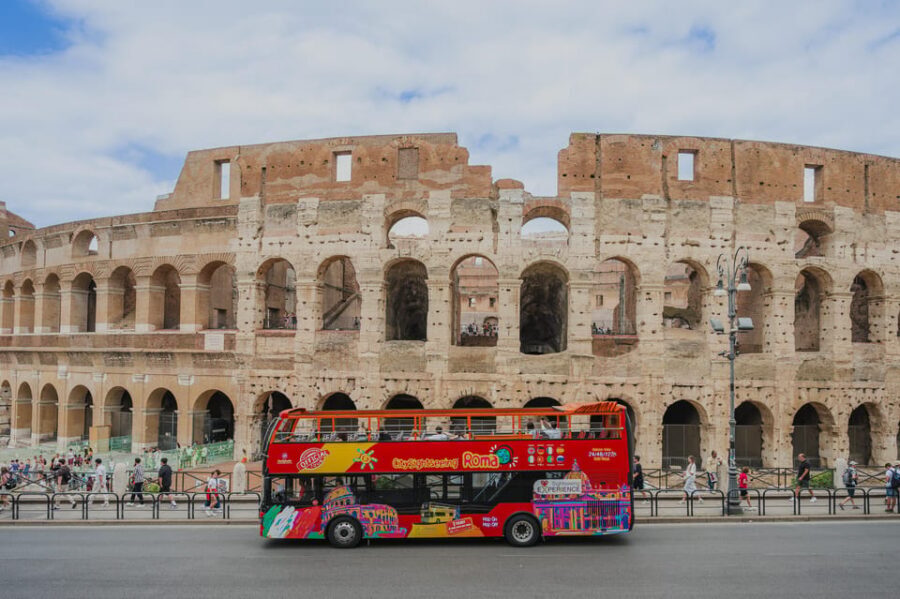
Rome can be glorious and chaotic in the same block. This bus loop is a low-stress way to see the classics while you get your bearings—no maps-first pressure, no trying to interpret every street sign before you’ve even had your first coffee.
You also get a real mix of “look from the top” sightseeing and “get off and explore” time. The bus takes you past major icons like the Vatican, Colosseum, Spanish Steps, and Trevi Fountain area, and you can decide on the fly whether you want photos only or more time on foot.
You can also read our reviews of more city tours in Rome


Ticket Options: 1, 24, 48, or 72 Hours (What Value Means Here)
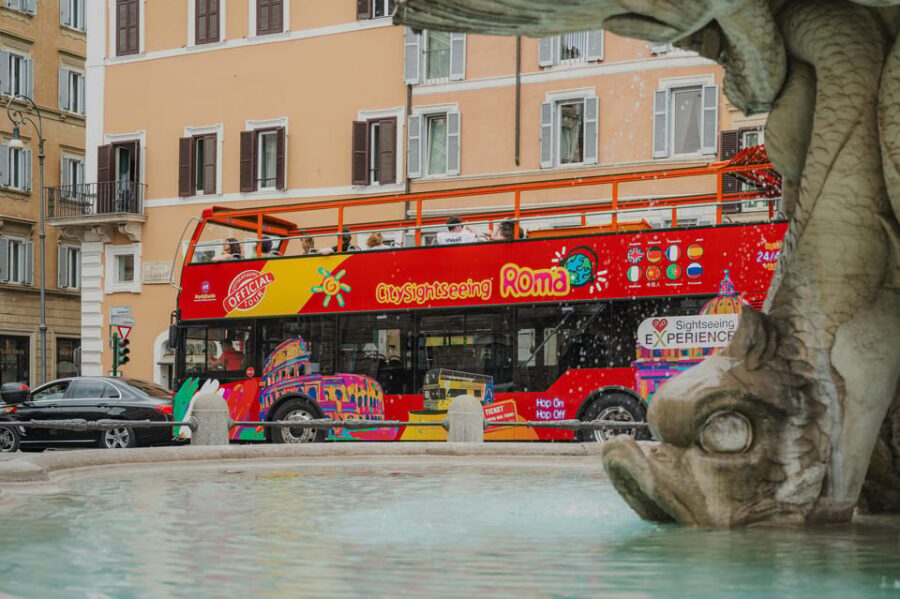
This is sold as a hop-on hop-off pass valid for 1–3 days, with options that effectively let you cover Rome over a short window. Even though the headline price is around $15 per person, the real value is the flexibility: you’re paying for transportation + time-saving sight access, not just a one-time ride.
If you only have one day, you’ll use it like an orientation tool: ride the loop, hop off at 1–2 priorities, then get back on to keep moving. With 48 or 72 hours, you can do Rome like a slow buffet—hit the must-sees once, then return to the areas you liked for a second walk.
Starting Point and Route Basics: Know Where You’ll Board

Your tour starts at Via Marsala, 7, with the practical tip that you can begin at any stop of City Sightseeing Rome Line A. In other words, you don’t have to show up at one narrow door at one exact minute.
The full loop takes 100 minutes, and the route includes a set of hop-off points along the way. Some of the boarding/stop areas you’ll see listed include terminals such as Terminal A (Largo di Villa Peretti) and Terminal C (Piazza dei Cinquecento), plus the central sight stops you’ll recognize right away.
Quick heads-up that matters
The route may change, and some stops may not be guaranteed due to special events. Also, make sure you book the hop-on hop-off version you intend—there’s a note that a one-loop tour is not the same as hopping on and off.
The 100-Minute Loop: How to Plan Your On-and-Off Strategy
Think of the loop as your Rome “spine.” Ride it once (or twice) to understand distances and neighborhoods, then start making choices.
Here’s a smart way to use it:
- First loop: stay on, take the audio in, and pick 2 targets for getting off
- Later loops: hop off near what you liked most and use the bus as your return transport
- If you’re short on time: you can hop on around midway and still complete the sightseeing approach efficiently
I also like that you can remain seated for the whole circuit if you want the “see it all” version without stopping for every stop.






Santa Maria Maggiore Stop Area: A Church-First Welcome
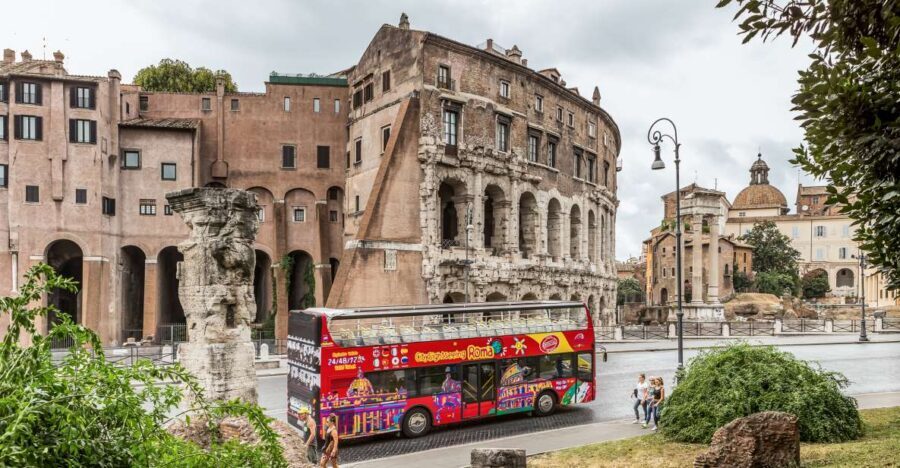
The bus passes Basilica Papale di Santa Maria Maggiore early on. This is a good start point if you want Rome’s monumental side before you hit the busier, more crowded landmarks.
What you can do here:
- Get off if you want a calmer first walk
- Stay on and let the audio set context before you move toward the more famous ancient sites
Potential drawback: if you’re hoping for a specific stop to be fully accessible at the exact moment you arrive, remember that special events can affect stop reliability.
San Giovanni in Laterano: More Space to Breathe
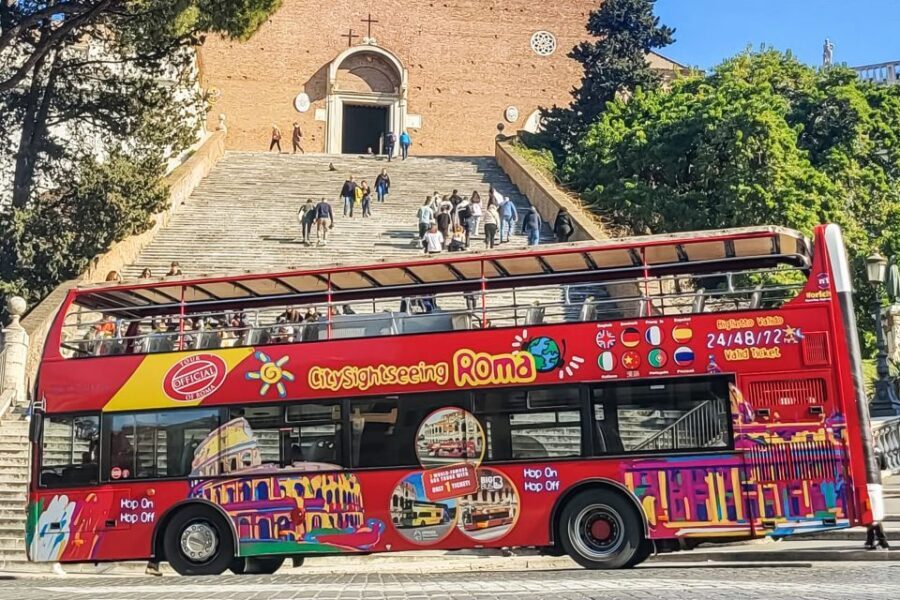
Next you pass Basilica di San Giovanni in Laterano. It’s another classic church stop on the route that helps you understand Rome isn’t only about ruins and fountains. If you prefer architecture and big interiors to “standing in a crowd,” this kind of stop can be a welcome break.
On the bus, this is also where the audio guide starts to tie the city together. If you’ve ever wanted a quick overview before you start wandering, this is the stretch to ride seated.
Colosseum Area: The Big Moment (Plus the Reality Check)
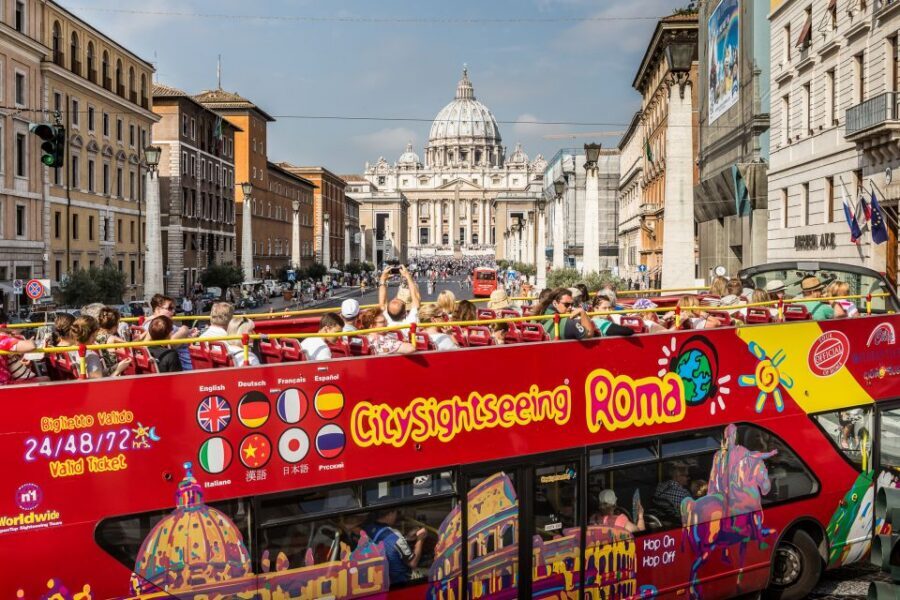
The bus heads to Colosseum. This is the stop most people mentally map to Rome, and it’s also the one where you should be prepared for hiccups.
In one case that came up, someone was disappointed that they couldn’t get off at the Colosseum stop, even though they still managed to capture photos from the bus. That’s a useful lesson: plan for the possibility that the exact hop-off may be affected, and don’t let that ruin the entire day.
Practical tip: if your heart is set on getting off here, treat it like a priority and try to time it early in your visit window so you’re less likely to face operational changes.
Circus Maximus and Piazza Venezia: Big-Scale Rome Views

After the Colosseum area, you pass Circus Maximus and then reach Piazza Venezia.
Why these stops feel good from the bus:
- Circus Maximus sets you up for the scale of ancient Rome
- Piazza Venezia is a central-feeling landmark that often makes it easier to re-orient once you’re back on foot nearby
If you’re doing this as a first-timer plan, I like using this segment as a “stay aboard and absorb” portion, because it helps you get the geography in your head.
Largo di Torre Argentina and Piazza Navona: Streets You’ll Want to Explore
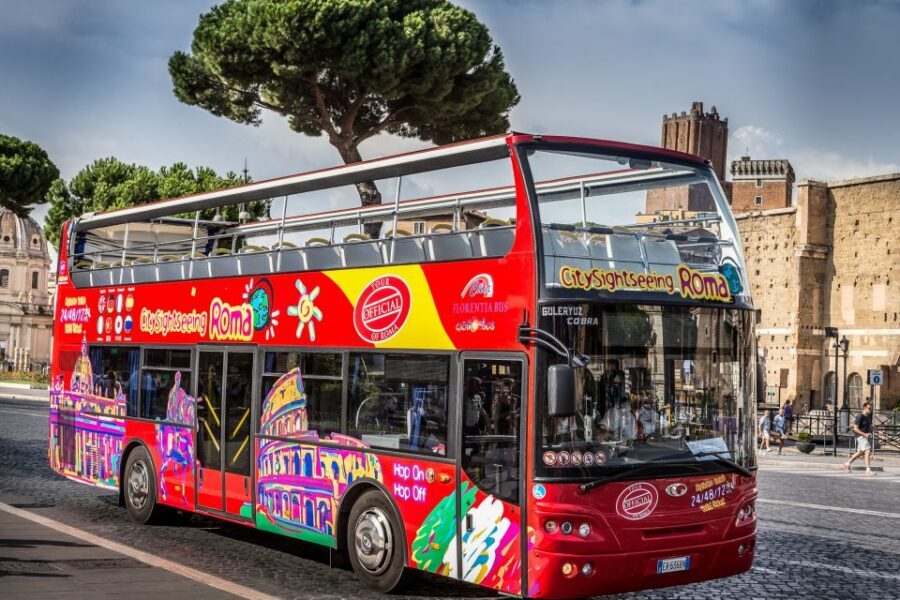
The route includes Largo di Argentina and Piazza Navona. These are the kind of stops where you can do the classic Rome move: hop off, walk a bit, then decide if you want to keep going or just return to the bus and protect your energy.
Piazza Navona in particular tends to be a great “wander and people-watch” stop. If you’re traveling with kids or anyone who gets tired quickly, this is also a friendly place to stretch your legs without committing to a long hike.
Vatican City (with Castel Sant’Angelo Reference): Don’t Rush It
Next up is Vatican City, listed alongside Castel Sant’Angelo. Even if you don’t get off for long, this is the segment where you’ll feel Rome switch gears into something more ceremonial and iconic.
Also, your ticket includes the Jubilee Line exclusively in connection with this City Sightseeing offering (operated by Vatican & Rome Open). That’s handy because it puts an extra Vatican-area connection into your pass rather than making you hunt for a separate option.
Practical advice: if you want real time here, don’t treat it as a quick photo stop. Give yourself room to breathe, even if you only hop off for an hour.
Villa Borghese and Piazza di Spagna (Fontana di Trevi): The Rome “Photo Triangle”
The route continues toward Villa Borghese, then Piazza di Spagna (Fontana di Trevi), and later Piazza Barberini. This is where Rome’s postcard side starts clustering together.
Even when you’re not getting off at every point, staying seated with the audio on can help you connect what you’re seeing with what you’re planning next—especially around the Spanish Steps and the Trevi Fountain area.
If you do hop off near this zone, keep it simple:
- Take photos quickly
- Walk enough to feel the streets
- Then use the bus to prevent decision fatigue
Roma Termini and the Return to Via Marsala, 7
The route passes Roma Termini, which is useful if you need to reconnect to trains or just want an easy central reference point. Then the circuit returns to Via Marsala, 7.
This matters because Rome can wear you down. Having a predictable return loop makes the day feel more controllable—especially if you’re juggling multiple sights across a tight schedule.
Audio Guide, Wi‑Fi, and the App: What They’re Good For
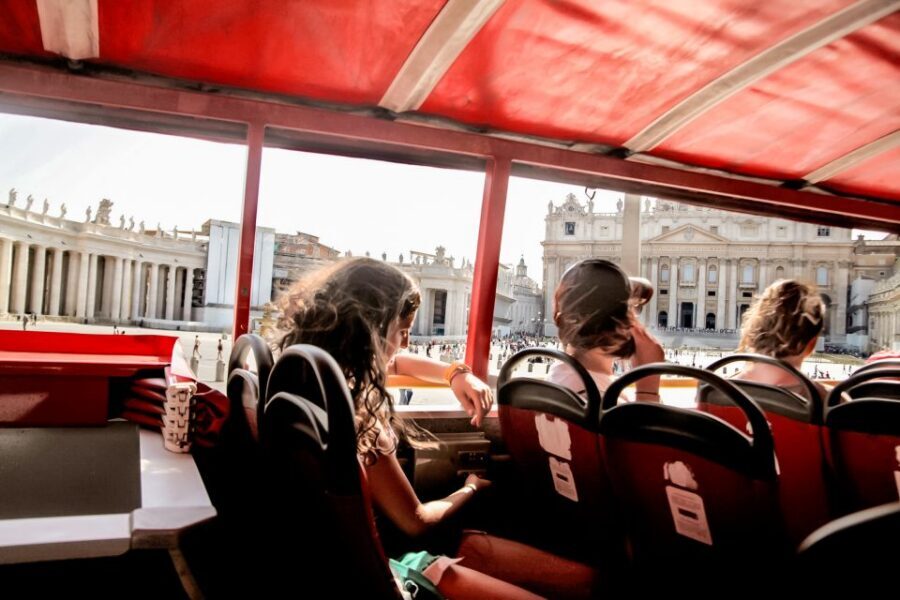
This tour includes headphones (on the open bus), audio in 8 languages, a sightseeing app, and Wi‑Fi on the open bus. That’s a lot of onboard help for one pass, and it makes the experience less stressful if you don’t know Rome yet.
One caution from feedback: the audio can get interrupted and may not always finish every segment cleanly. If you’re the type who loves hearing every detail, don’t count on a perfect uninterrupted narration from start to finish. Use it as a guide, not a classroom lecture.
Language options are Spanish, Chinese, English, French, German, Italian, Russian, Portuguese, so you should be covered regardless of where you’re coming from.
Getting the Best Day Out of It: Small Moves, Big Payoff
Here are the habits that usually make hop-on hop-off bus days go smoothly, based on how this service functions and what’s praised:
- Start early if you want the freedom to pick stops without racing the clock
- Use the app to help you plan when to hop on next
- If one stop is blocked or skipped, treat the bus as still successful—Rome is huge, and you’ll get other great views from onboard
- If you’re sensitive to audio interruptions, focus on the key landmarks first, then let the commentary fill in the rest
Also, the buses use a system where people find it easy to recognize and follow—so pay attention to the bus you board and stick with the correct route.
Who This Bus Trip Fits Best
This is a strong match if:
- You’re seeing Rome for the first time and want a simple “greatest hits” plan
- You want flexibility over a rigid guided tour schedule
- You have limited time and still want to get close to landmarks like the Vatican and Colosseum
- You’d rather manage logistics yourself with help from audio and an app
It’s less ideal if you want deep, long walking time tied to one specific monument—this bus is about getting you around efficiently, not replacing a full guided entry experience.
Should You Book It?
I’d book this if you want Rome to feel navigable from day one. The combination of hop-on hop-off freedom, audio in 8 languages, and a loop that hits the big icons like the Colosseum and Vatican makes it a practical choice when you’re short on time.
Skip it or reconsider if you’re planning around one single stop and can’t handle the possibility that stops may not be guaranteed due to special events. In that case, still use the bus as your “always works” backup—but confirm your must-do timing.
Bottom line: for most first-time Rome itineraries, this is a smart, flexible way to see the city without turning your vacation into a navigation test.
FAQ
How long is the full loop?
The full loop takes about 100 minutes.
What ticket length do I need?
Your City Sightseeing Rome ticket is valid for 1–3 days (options include 24, 48, or 72 hours).
Can I hop on and off as many times as I want?
Yes. It’s a hop-on hop-off sightseeing pass, and you can leave the bus at stops and hop back on later.
Where do I start the tour?
You can start at any stop of City Sightseeing Rome Line A. The starting location listed is Via Marsala, 7.
What’s included in the price?
Included: headphones (on the open bus), Wi‑Fi (on open bus), audio in 8 languages, a sightseeing app, the hop-on hop-off ticket, and the Jubilee Line operated by Vatican & Rome Open.
Are attraction tickets included?
No. Attraction tickets and food and drinks are not included.
Which languages are available for the audio guide?
Audio is available in Spanish, Chinese, English, French, German, Italian, Russian, and Portuguese.
What should I know before I go about stops?
The route may change, and some stops may not be guaranteed due to special events. Also, make sure you have the hop-on hop-off product, since a one-loop tour is not the same thing.