REVIEW · HOP-ON HOP-OFF TOURS
Rome:Hop-On Hop-Off Panoramic Open Bus Ticket 3 Circuits x 1
Book on GetYourGuide →Operated by Green Line Tours · Bookable on GetYourGuide
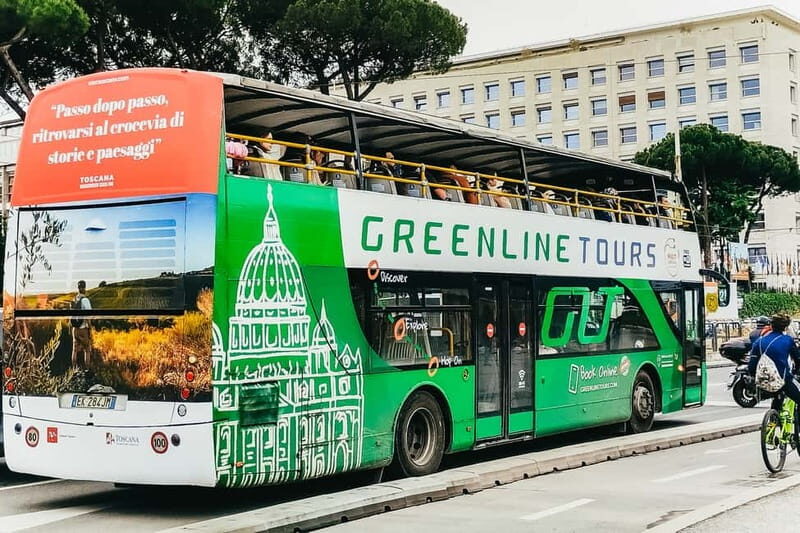
Rome gets around fast. This open-top hop-on hop-off ticket is an easy way to see the big hits of the city without locking yourself into timed tours, with 16 audio languages and unlimited hop-on hop-off during your valid window. You can start at Piazza dei Cinquecento and ride as long as your ticket window allows (from about 9 hours up to 3 days, depending on what you pick).
I especially like that the audio commentary gives you context while you’re rolling past Rome’s landmarks, so you’re not just staring out the window. One heads-up: the audio quality can be uneven on some rides, and a few headphone ports may not work as smoothly as you’d expect.
In This Review
- Key points before you ride
- Why a hop-on hop-off bus is the smartest Rome orientation
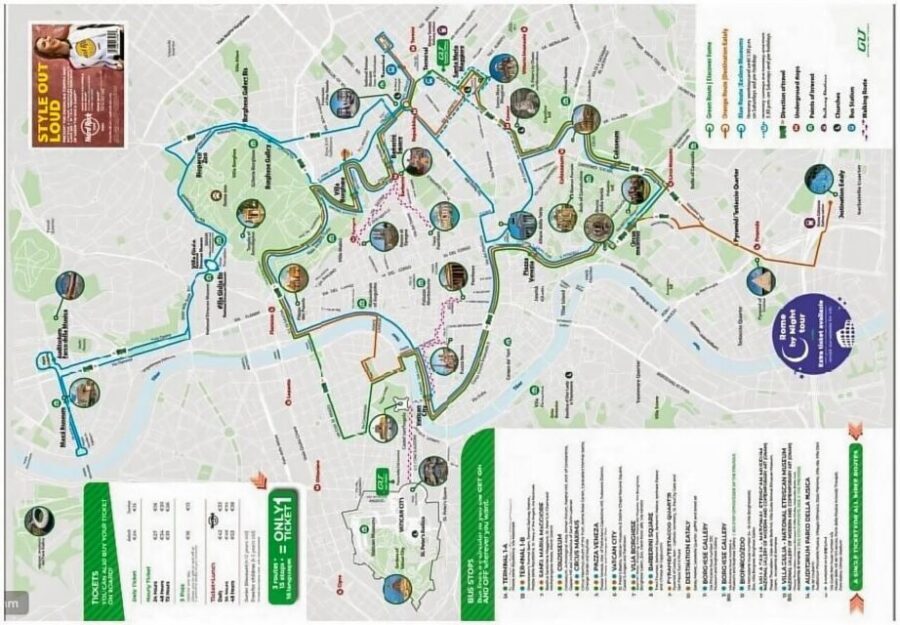
- Your ticket and how the three circuits change your day
- Start at Piazza dei Cinquecento: your easy launchpad
- Santa Maria Maggiore area: a calm first stop
- Colosseum stop: what to do when you hop off
- Circus Maximus and Piazza Venezia: big scale views
- Vatican City: classic sights from the street, then plan your next move
- Villa Borghese and Piazza Barberini: views plus everyday Rome
- Testaccio and Eataly Rome: when sightseeing turns into lunch planning
- Borghese Gallery and Bioparco: art and family-friendly options
- Villa Giulia and modern breaks at MAXXI
- Buses, timing, and the real-world hop-on hop-off rhythm
- Audio guide and earphones: helpful, but don’t treat it as flawless
- What this costs and why it’s good value
- Who should book this bus ticket
- Should you book this Rome hop-on hop-off ticket
- FAQ
- How often do the buses run?
- How long is the ticket valid?
- Can I hop on and off more than once?
- What audio languages are available?
- Is Wi‑Fi available on the bus?
- Are entrance tickets included for attractions?
- Where does the tour start and end?
Key points before you ride
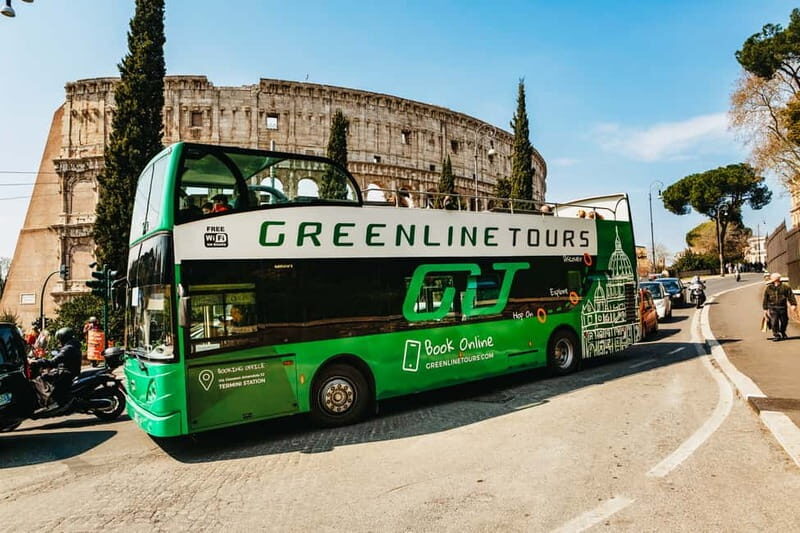
- Three circuits on one ticket: hit Ancient Rome, the historic center, and more out-of-the-way stops without buying separate tours
- 16-language audio guide: built for self-paced sightseeing while you’re on the bus
- Frequent buses with tracking: service runs about every 20 minutes, and live bus tracking helps you time your hops
- Start/end at Piazza dei Cinquecento: a simple base that makes your day easier to plan
- Off-the-main-track extras: Eataly, Testaccio area stops, MAXXI, and MAXXI-area modern Rome views
Why a hop-on hop-off bus is the smartest Rome orientation
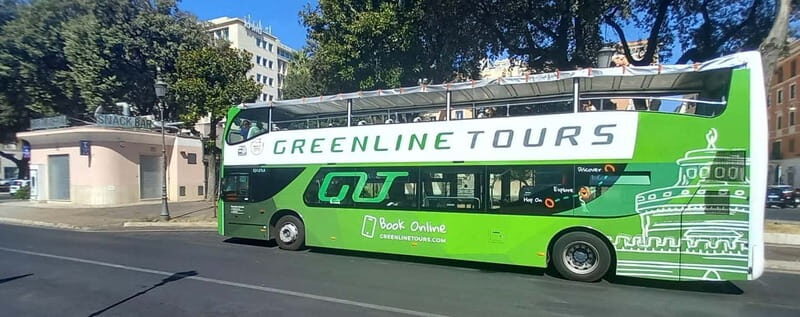
Rome is huge, and the walking can feel endless, especially your first day. This bus tour works because it gives you movement and meaning at the same time: you get the road perspective, plus an audio guide that helps you understand what you’re actually looking at from the street.
The big value here is flexibility. You can ride straight through for a general sweep, or hop off when something grabs you (a view over the city, a church stop, a neighborhood you want to explore). With three different routes covered by one ticket, you can mix and match based on your energy level, your weather, and what you learn once you start moving.
Also, this setup is built for real-life schedules. If you’re tired from travel, you don’t have to “perform” sightseeing all morning. You can sit, absorb, and build a plan for the next day while still seeing the landmarks that matter.
You can also read our reviews of more tours and experiences in Rome

Your ticket and how the three circuits change your day
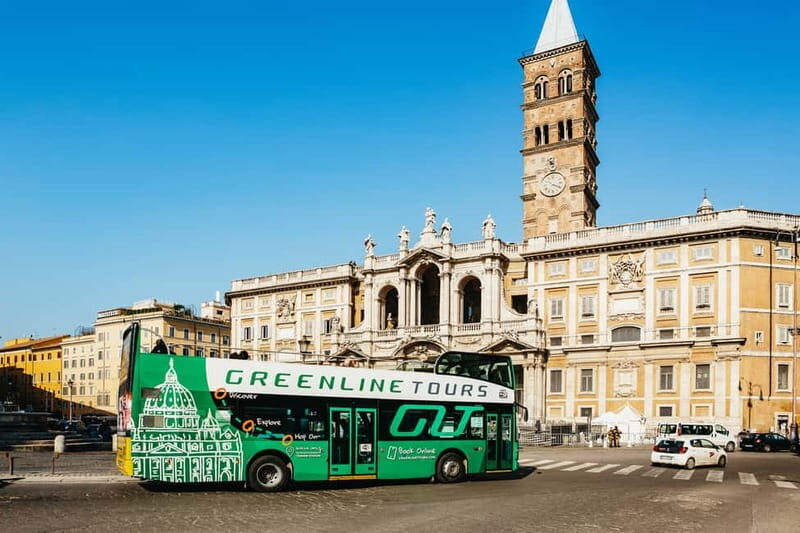
You’re buying a single bus ticket that covers all bus routes across three circuits. Your ticket is valid for a limited window (from about 9 hours up to 3 days), and you can board and hop off during that period as often as you like after you first validate.
Practically, that means you can do things like:
- Ride one route in the morning, hop off for a couple of key sights, then return later
- Use the bus to connect neighborhoods that would take too long on foot
- Save museum or shopping time for when you’re ready, not when you’re forced
Buses run about every 20 minutes, which is frequent enough that you usually aren’t stuck waiting. You also get live bus tracking, which is handy because Rome traffic and curbside chaos can change how fast your bus arrives.
One more practical perk: free onboard Wi‑Fi plus an assistant on board and single-use earphones. If you’re trying to decide when to hop off, Wi‑Fi and tracking help you stay in control.
Start at Piazza dei Cinquecento: your easy launchpad

Your tour begins at Piazza dei Cinquecento corner Via Cavour (Terminal 1/A). This matters more than it sounds. A clear meeting point reduces the stress factor, and Piazza dei Cinquecento is a good base for getting oriented fast.
When you’re figuring out where to sit, think about your goal:
- If you want the best views and photos, aim for the front area on the upper level when available
- If you get motion-sensitive, choose a seat where you can face forward and keep a steady rhythm with traffic
Rome buses mean real city driving. You’ll move past historic streets, busy junctions, and tight corners, but the ride is designed for sightseeing, not for getting you from A to B as fast as possible.
Santa Maria Maggiore area: a calm first stop
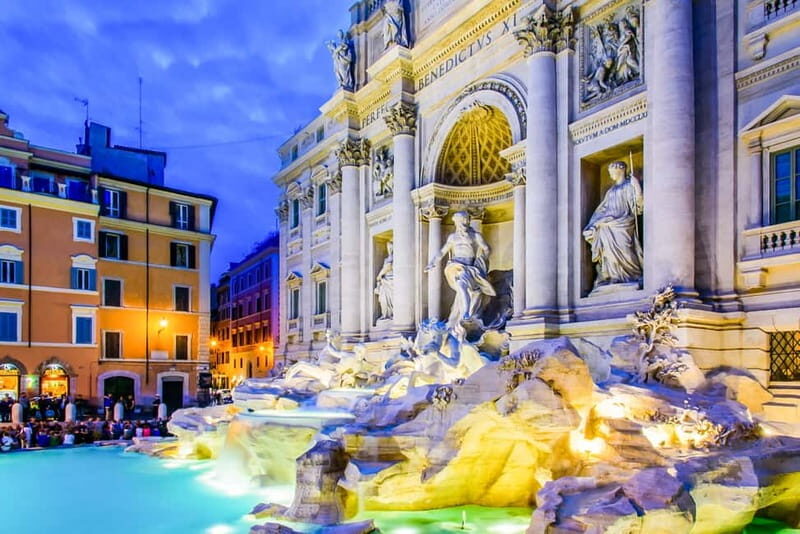
The route passes Basilica Papale di Santa Maria Maggiore (stop near Piazza dell’Esquilino, 12). This is a useful early stop because it’s a “real church visit” within reach, but it still feels manageable before you hit the heavier hitters like the Colosseum and Vatican.
If you hop off here, give yourself time to orient your bearings. Even if you don’t go in for a long visit, stepping into the area helps you understand how Rome’s layers overlap: neighborhoods, churches, and major corridors.
Colosseum stop: what to do when you hop off
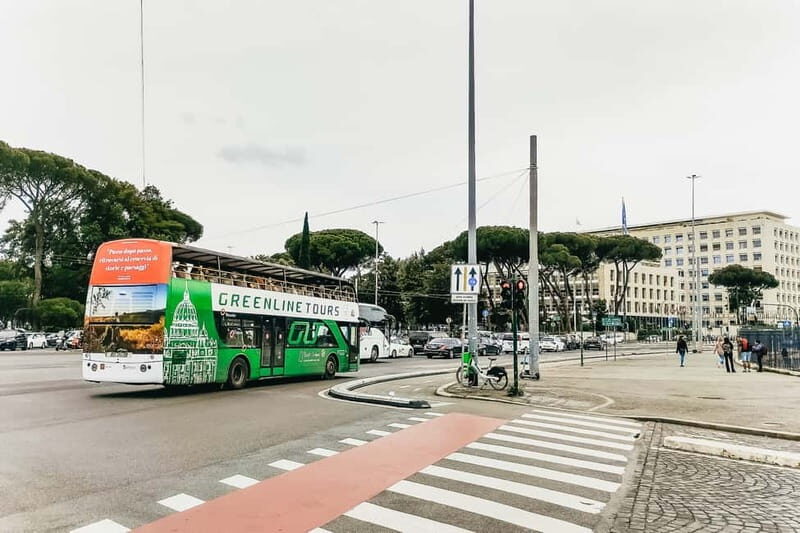
Next up is the Colosseum area (Via di San Gregorio, close to the entrance of Palatine). This is one of the most important stops because it puts you right where the “Rome postcards” begin to make sense.
What to do:
- If you want a fast hit, get off, take your photos, and re-board quickly to keep the rest of your day on schedule
- If you want a longer visit, plan your time for walking in the area afterward (pavement and crowd flow can slow you down)
The potential drawback is obvious: you’ll still need separate entrance tickets for any paid sites. The bus gets you there, but it doesn’t include entry. Still, this stop is great for deciding what you’ll do next.
Audio tip: while you’re on the bus near this zone, listen to the commentary more than you normally would. The bus view helps you understand the geography that’s hard to see when you’re only looking at walls up close.






Circus Maximus and Piazza Venezia: big scale views
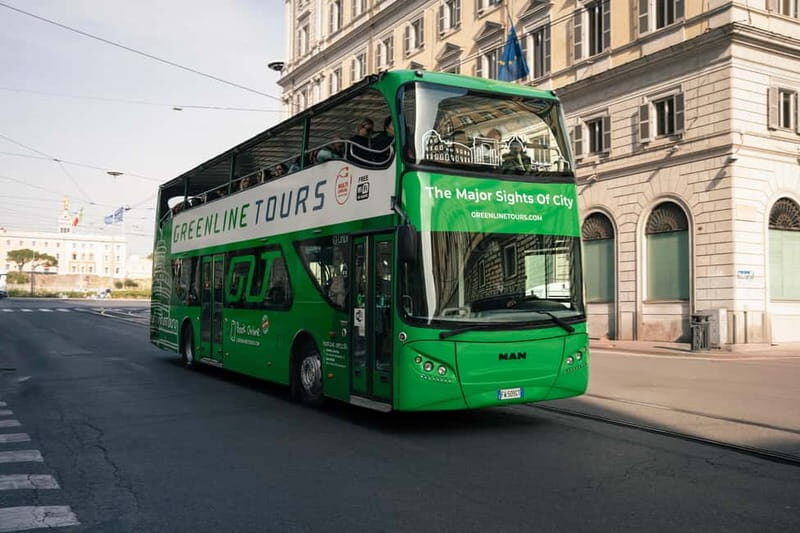
You’ll pass and stop near Circus Maximus (via del Circo Massimo Belvedere Romolo e Remo). Even if you don’t go far inside, the area gives you a sense of scale. Rome wasn’t built for “small admiration.” It was built to impress people watching from a distance.
Then you’re headed to Piazza Venezia (stop at Via del Teatro Marcello, in front of civic numbers 32–34). This is a strong connection point because it’s close to the historic center’s energy. If you want to stretch your legs without committing to a full museum day, this is a good hop-off moment.
The trade-off here is time. Once you get into central Rome, you may be tempted to linger in streets and piazzas. The bus is flexible, but your day can still slip away if you don’t set a re-boarding plan.
Vatican City: classic sights from the street, then plan your next move
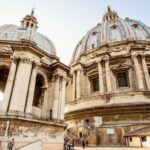
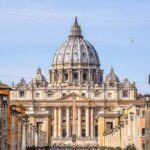
The route includes a stop for Vatican City (Lungotevere Tor di Nona, 7). This is ideal for your first contact with the Vatican area. You’ll get an overview from the roadway and the audio will help place the landmarks in context.
Because entrance tickets aren’t included, you’ll want to decide what you actually want to do on your timeline:
- If you’re still deciding between a church visit and more neighborhood time, get off, look around, then come back later
- If you already know what you want to see, you can use the bus to drop you at the right zone and keep your travel time under control
A smart strategy: don’t try to “solve Vatican logistics” on the same day you’re also sightseeing five other major stops. Use the bus to reduce transit stress, and reserve one big focus for later.
Villa Borghese and Piazza Barberini: views plus everyday Rome
You’ll have access around Villa Borghese (Via Ludovisi, 48) and then Piazza Barberini (Via Barberini, 14). This is where Rome shifts from monumental sightseeing to neighborhood feel.
If you’re traveling with kids, these stops can be a relief. Even a short walk around this section can feel like a reset button after standing near the biggest historic icons.
If shopping and cafés are your thing, this part of the route also sets you up for that. You’ll be close to everyday streets and smaller places to pause.
Practical note: comfortable shoes matter here. Rome sidewalks are not always smooth, and you’ll want the freedom to wander a few blocks without feeling punished.
Testaccio and Eataly Rome: when sightseeing turns into lunch planning
One of the more “Roman day” segments is the Pyramid/Testaccio quarter area, including the stop near the Pyramid of Cestius / Non Catholic Cemetery / St. Paul City gate and St. Paul out of Wall zone. This is a different vibe than the postcard centers. It’s more local-feeling, and it works well if you want to get away from the heaviest crowds.
Then you can hop near Eataly Rome (Eataly market around the Garbatella Quarter and street art area mentioned for the route). This is valuable because it gives you a built-in lunch option without forcing you to hunt for something during peak times.
You still won’t get food included, of course, but having a predictable “food anchor” changes how you plan. You can tour longer in the morning, then eat without spiraling into decision fatigue.
Borghese Gallery and Bioparco: art and family-friendly options
The route includes Borghese Gallery (Via Pinciana area) and Bioparco di Roma (zoo area around Via Mercadante 34, 36). These are great additions because they let you shape the day around your group.
If you care about art: the Borghese stop is a natural option.
If you’re traveling with kids (or you just prefer animals and open space sometimes): the Bioparco stop can add variety beyond churches and ruins.
Again, you’ll need your own entrance tickets if you want to go inside attractions like these. But the bus helps you avoid the hard part: reaching these areas efficiently while you’re already moving around the city.
Villa Giulia and modern breaks at MAXXI
Next you’ll reach Piazza Thorvaldsen and the zone for Villa Giulia and the National Etruscan Museums. This is a smart option if you want Rome beyond just the Roman emperors. You get a chance to add depth without turning the day into a museum marathon.
Then you’ll go to Auditorium Parco della Musica (Via de Coubertin) and MAXXI (Via Guido Reni 4/a). These stops are fantastic if you like seeing how Rome carries on after the ancient and Renaissance eras. It’s also a good way to change your pacing: modern architecture in the city can feel like a reset.
These zones can be hit-and-miss depending on what’s open and what you’re in the mood for. But the bus makes them easy to sample without committing to a separate transport plan.
Buses, timing, and the real-world hop-on hop-off rhythm
The frequency is about every 20 minutes, and the experience is designed so you’re not waiting forever. Live bus tracking helps you stay on schedule, and the onboard audio keeps you productive while you ride.
Here’s how I’d run the day for maximum sanity:
- Plan for one “main” stop where you’ll spend more time (Colosseum or Vatican, for example)
- Add one extra hop-off that matches your energy (Eataly for lunch, a park area like Villa Borghese, or a museum-zone stop)
- Use the bus between those moments, not instead of them
Also, the open-top views are best when weather cooperates. If rain hits, you’ll still ride, but you might change how long you hop off. Bring a sun hat and sunglasses, because bright Rome light can make even quick photo stops feel intense.
Audio guide and earphones: helpful, but don’t treat it as flawless
This ticket includes a multilingual audio commentary with 16 languages (Italian, English, French, German, Dutch, Spanish, Arabic, Chinese, Japanese, Portuguese, Russian, Hindi, Korean, Greek, Hebrew, Polish). That’s a big deal if you’re in a mixed-language group.
Most importantly, the audio gives you context while you watch Rome pass by. It’s not just facts. It helps you understand why the place matters, which makes your walking time afterward feel less random.
The caution: audio can vary in quality. Some days or some buses may have ports that don’t work perfectly, and sound clarity can be inconsistent. My advice is simple: keep your expectations realistic. If one headphone channel fails, ask the onboard assistant or switch what you’re listening with when possible.
What this costs and why it’s good value
The price listed is $20 per person, and the value comes from what you actually get:
- Unlimited circuits and stops during your chosen validity window
- Multilingual audio commentary
- Free Wi‑Fi onboard
- A convenient loop that connects the city’s most recognized landmarks with practical neighborhood stops
The biggest value lever is that you’re not just paying for a ride. You’re paying for a guided sightseeing structure with flexible timing.
The reason it’s not a one-stop solution: entrance tickets aren’t included. If your plan is to fully tour major attractions inside (instead of using the bus for orientation and quick exterior time), you’ll budget separately for those entries.
Who should book this bus ticket
This is a strong fit if:
- You want a first-day overview and need help shaping a plan fast
- You prefer self-paced sightseeing over joining a strict group tour schedule
- You like mixing major landmarks with neighborhood time (Eataly, Testaccio zone areas, modern stops like MAXXI)
- You’re short on time and want efficient transport between distant sights
It may feel less ideal if:
- You want a deep, timed, step-by-step guided experience inside major attractions (since entries are separate and the bus is not a museum walkthrough)
- You need wheelchair-friendly transportation (this option is not suitable for wheelchair users)
- You’re traveling with a lot of luggage, since luggage or large bags aren’t allowed
Should you book this Rome hop-on hop-off ticket
Yes, if you want a low-stress way to cover Rome’s major zones in a day or two. For the price, it’s one of the easiest ways to see a lot and decide what to do next, especially when you’re landing after travel or trying to organize sightseeing around meals and rest.
Skip it or reconsider if your trip is built around only one or two paid, timed attractions and you’re already confident navigating the city by foot or metro. In that case, the bus may feel like extra when you could spend time directly where you want to be.
If you’re undecided, book it. You can treat it like your moving orientation map: ride once for context, then hop off where you feel like spending your best energy.
FAQ
How often do the buses run?
Buses run approximately every 20 minutes.
How long is the ticket valid?
It’s valid for a window from about 9 hours up to 3 days, depending on the option you choose and the starting times available.
Can I hop on and off more than once?
Yes. Once you first validate your ticket, you can hop on and off as many times as you like during your chosen 24-hour, 48-hour, or 72-hour (and similar) validity period.
What audio languages are available?
Audio is available in Italian, English, Dutch, French, German, Spanish, Arabic, Chinese, Japanese, Portuguese, Russian, Hindi, Korean, Greek, Hebrew, and Polish.
Is Wi‑Fi available on the bus?
Yes, free Wi‑Fi is included onboard.
Are entrance tickets included for attractions?
No. Other entrance tickets are not included, and food and drinks are also not included.
Where does the tour start and end?
It starts at Piazza dei Cinquecento corner Via Cavour (Terminal 1/A) and ends back at the same meeting point area.