REVIEW · COLOSSEUM TOURS
Rome: Colosseum, Palatine Hill and Roman Forum Guided Tour
Book on GetYourGuide →Operated by Rutas Romanas · Bookable on GetYourGuide
Three ancient Rome icons in 2.5 hours. I like the focus here: you get Colosseum entry plus a guided storyline that connects the stadium to the city around it. Two things I especially love are the chance to walk inside the central Forum area and hear what you’re seeing put into plain context. One thing to plan for: on busy days you still have to pass the security check, and that line can add delay.
You’ll also get some great payoff views, including the Colosseum’s arena and basement-floor perspective from a panoramic terrace. And the walk along the Via Sacra is where the tour turns from ruins into a route you can actually follow, with stops like the Arch of Titus and the House of the Vestals. Guides for this tour often get praised by name too, like Henry and Aphrodite, for keeping the pace moving and the explanations clear.
In This Review
- Key highlights worth knowing
- Entering the Colosseum: from outside façade to inside roar
- The panoramic terrace view of the arena and basement floor
- Arch of Constantine and the walk that stitches the city together
- Palatine Hill: the oldest settlement and the imperial residences
- Roman Forum stops you actually remember: Maxentius to the Vestals
- The Forum’s central area: Curia, Arch of Septimius Severus, Tabularium
- Guide style, headsets, and the difference between seeing and understanding
- Price and ticket value for a 2.5-hour Colosseum, Forum, Palatine day
- When the day may feel crowded or delayed: security checks and weather
- Who should book this Colosseum and Forum guided tour
- Should you book this Colosseum, Palatine Hill and Roman Forum tour?
- FAQ
- How long is the Rome Colosseum, Palatine Hill and Roman Forum guided tour?
- What’s included in the price?
- Does the tour help you avoid lines?
- What languages are available for the live guide?
- Where do we meet for the tour?
- Is the tour running if it’s raining?
- Are wheelchair users able to join this tour?
- Can I bring my own guide?
- What is the cancellation window?
- Do I need to go through security?
Key highlights worth knowing
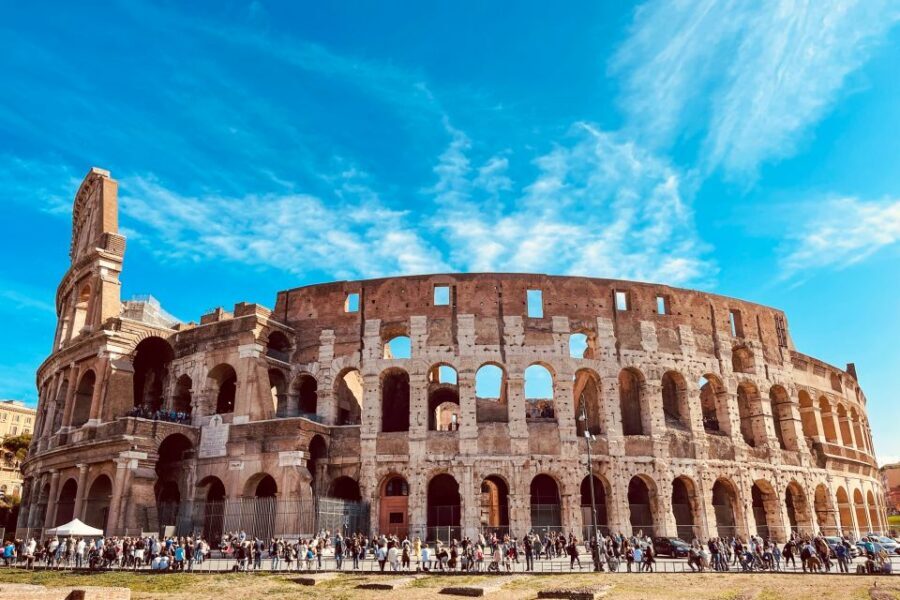
- Skip-the-ticket-line entry to the Colosseum, Roman Forum, and Palatine Hill with tickets included
- Arena and basement views from a panoramic terrace (and optional arena/underground access if selected)
- Via Sacra walking route that links monuments into one story instead of disconnected stops
- Stand in the Forum’s core and learn what made it Rome’s political and everyday center
- Headsets included so you can follow a guide even in thick crowds
Entering the Colosseum: from outside façade to inside roar
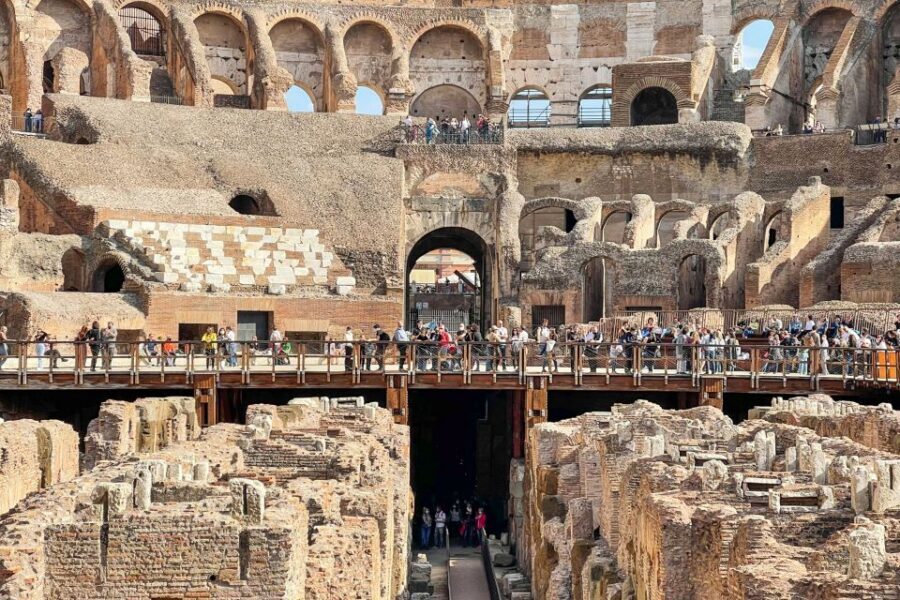
The Colosseum is the kind of place where your brain already knows it’s famous. What a good guided tour does is translate that fame into how it worked—what the building was built for, and what changed over time.
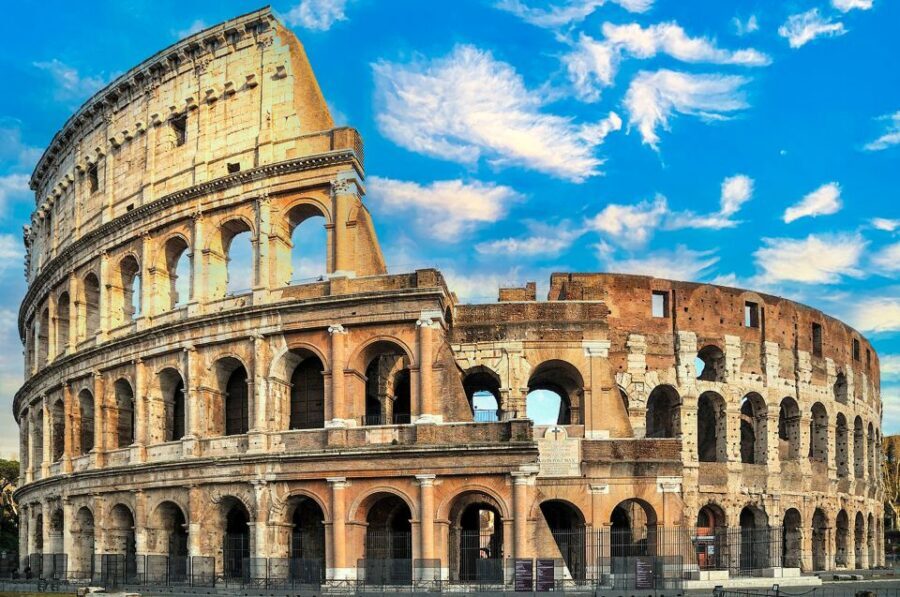
You start by looking at the Colosseum from the outside and hearing the big timeline: why this amphitheater mattered in the Roman world, and what it became as centuries passed. Then you go through security, enter the site, and move into the amphitheater area where the guide explains the kinds of spectacles that took place there. Even if you’ve seen photos, being inside changes your sense of scale. The arches, openings, and seating layout make it easier to picture the bustle and noise that once filled the space.
Next, you visit the first floor areas and admire parts of the interior. In practice, this is where the guide helps you read the building rather than just admire it. You start noticing how the structure is laid out for movement and crowd control—details you’d likely miss if you were just walking and snapping pictures.
You can also read our reviews of more guided tours in Rome



The panoramic terrace view of the arena and basement floor
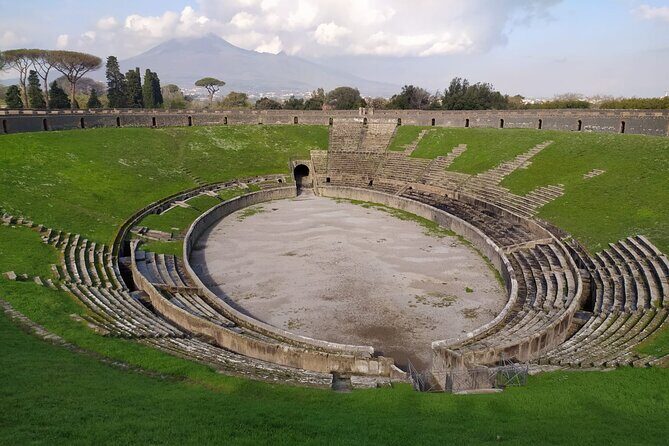
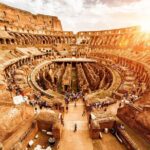
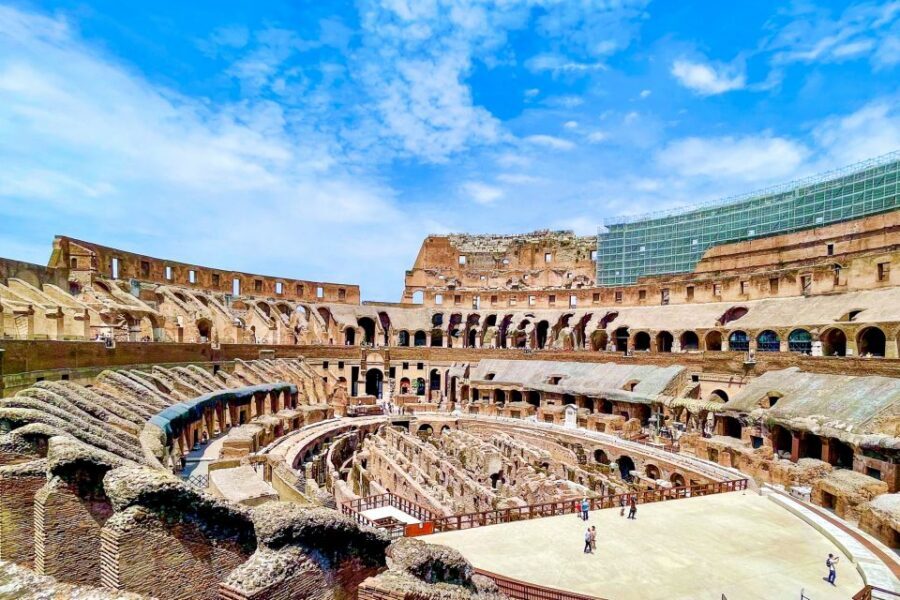
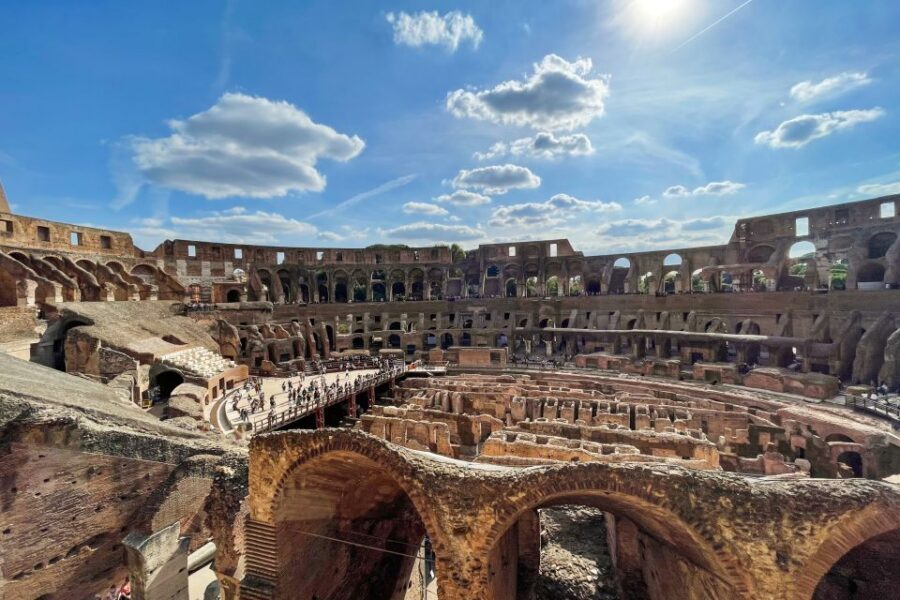
One of the most satisfying moments on this tour is the panoramic terrace viewpoint. From there, you can see the arena and the basement-floor area from above. If you’re picking between versions of this tour, this terrace moment is a strong reason to choose a guided option instead of a self-guided roam.
Why it matters: the Colosseum isn’t only about the seats. The energy of the building was powered by what happened underneath—service areas, access points, and the hidden machinery of spectacle. Even without special access, the terrace view gives you a “how did they do it” moment. And once you’ve seen that layout, the rest of the tour makes more sense, because the guide can connect the structure to the stories.
If you selected the option that includes arena access and/or underground access, you’ll go further than the standard walk. Just know those inclusions depend on what you choose in the tour title.
Arch of Constantine and the walk that stitches the city together
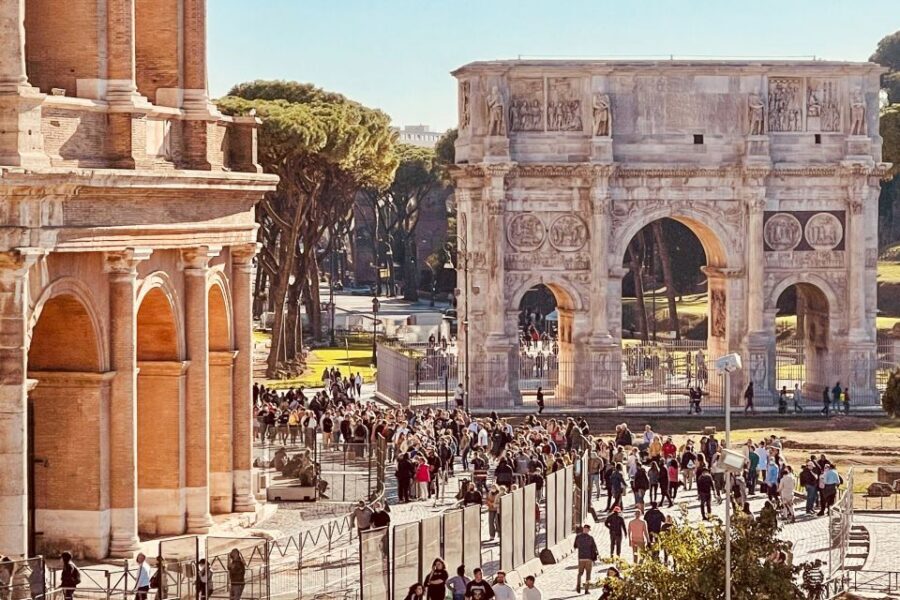
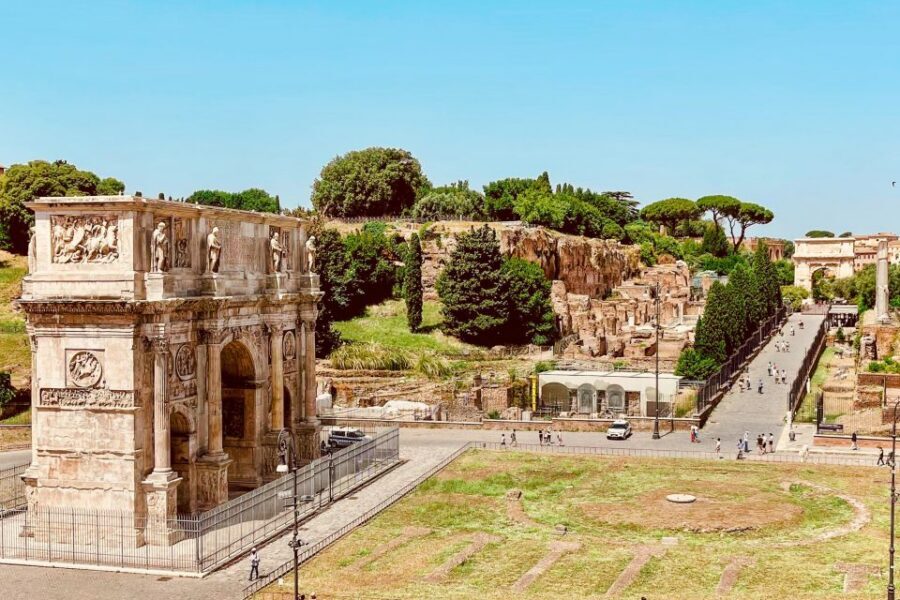
Between the Colosseum and the next ruins, you get a short but important history stop: the Arch of Constantine. The guide typically points out its major features and explains why this triumphal monument fits into the bigger Roman narrative.
Then comes the best “make it real” transition: the walk onto the ancient Via Sacra to reach the entrance area for Palatine Hill and the Roman Forum. This is one of those Rome moments that feels almost unfair—half the time you’re just following your guide and suddenly you’re standing where Roman processions once moved through the city. It’s not just scenic. It’s structural. Via Sacra is the spine that connects multiple eras and monuments.
After another security check, you get to see the Arch of Titus up close. That stop is useful because it helps you switch gears. The Colosseum is entertainment architecture. These arches and Roman streets are power and commemoration. The tour keeps the contrast clear, so you don’t experience the day as three random “big sights.”
Palatine Hill: the oldest settlement and the imperial residences
Palatine Hill is where Rome’s origin story starts to feel physical. You walk through the remains of what’s described as the oldest settlement in the city, and the guide turns that into something you can picture: early settlement life on one side, then the shift into elite power over time.
The tour focuses on imperial residences, including:
- Palatine Stadium
- Domus Augustana
- Domus Flavia
Here’s the practical value of having a guide: Palatine Hill has lots of fragments. Without context, it can become a guessing game. With a good guide, you learn which walls or building areas matter and why. You also understand how these residences reflect the emperor’s role—palace spaces designed to project authority, not just comfort.
And yes, you’ll get that “standing on layers” feeling. Rome’s elite lived literally on top of earlier Rome, and Palatine Hill shows that stacking clearly. It makes the Forum ahead feel less like a separate stop and more like the political stage you’d expect for emperors.
Roman Forum stops you actually remember: Maxentius to the Vestals
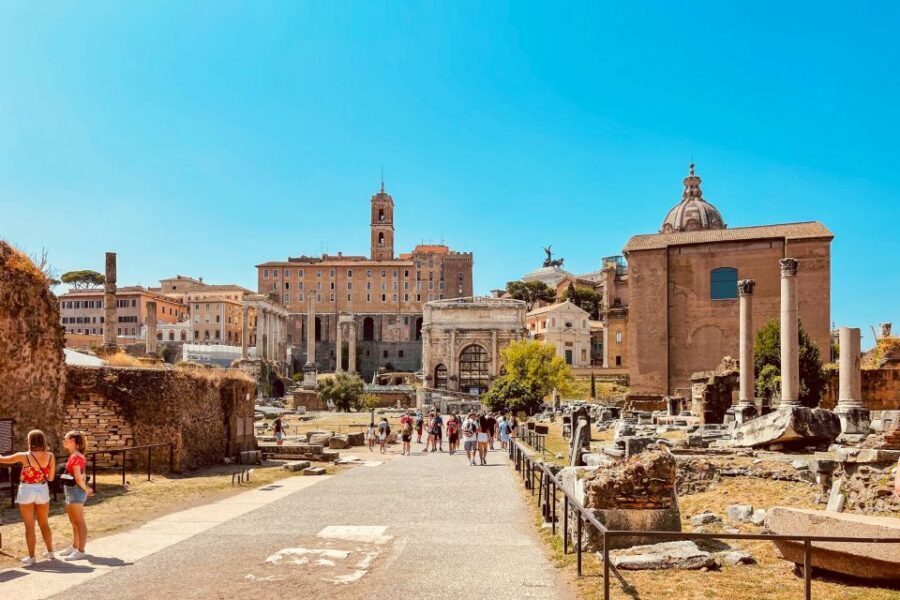
After Palatine Hill, the tour heads down into the valley that hosts the Roman Forum. This part can feel like Rome’s backstage—less about one single icon and more about a whole working landscape of institutions and beliefs.
Along the Via Sacra, you’ll encounter a series of highlights that are memorable because they’re specific:
- Basilica of Maxentius
- The bronze door of the Temple of Romulus
- A curious suspended door from the Temple of Antoninus and Faustina
- The temple area and the house of the Vestals
These details matter because they give you something to look for besides the biggest-name ruins. When the guide explains what these pieces were for, you start seeing how the Forum worked as a hub for religion, politics, and public life all at once.
The House of the Vestals stop is especially helpful for first-timers. You get a sense that the Forum wasn’t only where speeches happened; it was also where sacred roles, rituals, and long-term continuity played out in real space.



The Forum’s central area: Curia, Arch of Septimius Severus, Tabularium
The tour finishes this phase by arriving at the central area of the Roman Forum. This is where you’ll really understand why the guide frames the Forum as the beating heart of ancient Rome.
You’ll stand in the core space and learn what it became over time: a center for politics, religion, economics, law, and public gathering. Then you visit key named monuments and structures, including:
- Curia
- Arch of Septimius Severus
- Tabularium
- Temple of Saturn
Even if your knowledge of Rome is limited, you can follow the logic. The Curia links to governance. The arches connect emperors to legitimacy. The Tabularium ties into administrative functions. Temple spaces explain the religious backbone behind public authority. The guide’s job here is to help you connect those dots quickly—so the Forum doesn’t become just a photo set.
One reason I like this tour format: it gives you time to stop and stand in the center, rather than only walking past from one caption to the next. That standing moment is where the Roman Forum starts to feel like a place people moved through for real reasons.
Guide style, headsets, and the difference between seeing and understanding
A big part of the value here is the live guide with headsets. That headset detail may sound small, but in Rome it changes everything. Crowds rise, people talk, and sightlines are messy. With headsets, you can keep your attention on the guide instead of constantly straining to hear.
The praise in this tour experience repeatedly points to lively storytelling and strong group management. Names that come up often include Henry, Leo, Aphrodite, Alessandra, Alexandra, and Ledion. The common thread: the guides keep people engaged and make it feel like a conversation instead of a lecture. Some guests even mention the guide answering questions in depth and checking in when someone felt anxious.
I also like that the tour is built for different paces. You’re walking, yes, but the guide still has to keep the group together while giving you stops that are worth slowing down for—like that terrace view in the Colosseum and the tighter, detail-heavy Forum points.
Price and ticket value for a 2.5-hour Colosseum, Forum, Palatine day
At $52 per person for a 2.5-hour guided experience, the best value is simple: you’re buying entry to three major sites in one package, plus a live guide and headsets. That matters because Rome’s “sightseeing cost” adds up fast when each location requires separate tickets and separate planning.
This tour also saves you time in a real way. You get skip-the-ticket-line entry, which can be the difference between arriving ready to explore versus losing half your energy to waiting. And if you chose a version that includes arena access and/or underground access, you’re getting a step beyond typical viewing—access that changes how you interpret what you’re seeing.
Bottom line: this isn’t priced like a casual walk through ruins. It’s priced like a guided program built around priority entry and expert explanation. If you want the monuments to make sense, it’s a strong deal.
When the day may feel crowded or delayed: security checks and weather
This tour runs rain or shine. That’s great for planning, but it comes with an honest tradeoff: some areas of the Roman Forum and Palatine Hill might not be accessible during bad weather. That doesn’t mean the day is ruined—it means your route and what you can reach could shift.
Also plan for security. All visitors must pass through a security check. On busy days, a line can form and that queue is described as unavoidable. The tour may start later than the exact time shown.
Practical tip: wear comfortable shoes and keep a little patience in your pocket. When you expect delays at security, the rest of the day tends to feel smoother.
Who should book this Colosseum and Forum guided tour
This is a great fit if:
- You’re seeing Rome’s top ancient sites for the first time and want a guided storyline
- You like learning the why behind monuments, not only the what
- You appreciate a walk that connects Colosseum → Palatine Hill → Roman Forum
It may feel like too much if you have mobility impairments or if you use a wheelchair, since it’s not suitable for wheelchair users. And if you deal with altitude sickness, this tour is also listed as not suitable. If that sounds like you, consider a different format with fewer stairs and tighter routes.
It can also work well for families. Some guests specifically mention guides keeping kids engaged, including a family where the guide helped a child feel included.
Should you book this Colosseum, Palatine Hill and Roman Forum tour?
I’d book it if your goal is understanding, not just wandering. The itinerary is built to connect three iconic locations into one coherent story, and the headset setup helps you actually follow it in real time. The most convincing reason is that you’re not only looking at ruins—you’re standing inside major spaces like the Colosseum and in the Forum’s center area while a guide explains what mattered and why.
Skip it only if you want total freedom to move at your own pace without any group structure, or if accessibility limits you. Otherwise, for $52 you’re getting serious value: priority entry, ticket coverage for multiple sites, and an expert-led route that turns Rome into a readable place.
FAQ
How long is the Rome Colosseum, Palatine Hill and Roman Forum guided tour?
The tour lasts about 2.5 hours.
What’s included in the price?
Your ticket includes entry tickets for the Colosseum, the Roman Forum, and Palatine Hill. A live guide and headsets are included if the live guide option is selected. Arena access and underground access are included only if selected in the tour title.
Does the tour help you avoid lines?
Yes. This tour is designed to skip the ticket line, though you still must pass a security check.
What languages are available for the live guide?
The live guide is available in German, English, Spanish, Portuguese, Italian, and French.
Where do we meet for the tour?
The meeting point may vary depending on the option you booked.
Is the tour running if it’s raining?
Yes, it runs rain or shine. Some areas of the Roman Forum and Palatine Hill might not be accessible during bad weather.
Are wheelchair users able to join this tour?
No. This tour is listed as not suitable for wheelchair users and people with mobility impairments.
Can I bring my own guide?
No. Booking with the intention of using an external guide is strictly prohibited. Only supplier’s authorized guides can run the tour.
What is the cancellation window?
You can cancel up to 7 days in advance for a full refund.
Do I need to go through security?
Yes. All visitors must pass through a security check, and on busy days the queue can cause unavoidable delays.