REVIEW · MUSEUMS
Rome: Vatican Museums, Sistine Chapel & Basilica Tour
Book on GetYourGuide →Operated by Crown Tours · Bookable on GetYourGuide
The Vatican feels like a maze—until you’re guided. This tour is built around a skip-the-line approach and a planned route that helps you see the big-ticket art without losing the plot. I especially like the way the guide sets up each stop so the Sistine Chapel hits harder, and how St. Peter’s flows naturally after the Museums.
Two things I love: the chance to stand close under Michelangelo’s ceiling frescoes with context, and the option to add the Dome for sweeping views over Vatican City and Rome. One drawback to plan for: the Vatican is still hot, crowded, and strict about clothing—so you’ll want comfy shoes and covered shoulders and knees.
In This Review
- What You’ll Love Most on This Vatican Day
- Skip-the-Line Entry That Actually Saves Your Energy
- Meeting the Guide and Getting Oriented Near the Vatican Walls
- The Vatican Museums: How the Planned Route Keeps You From Getting Lost
- Gallery of Maps and the Tapestries: Art That Teaches You How Rome Looked
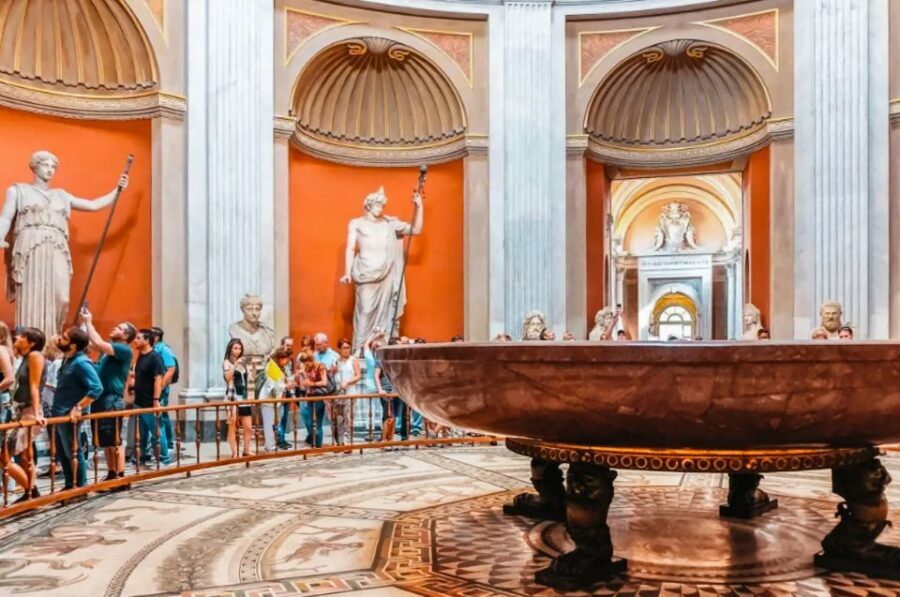
- Museo Pio-Clementino and Cortile del Belvedere: Ancient Sculpture With Impact
- Sistine Chapel: What to Notice When You’re Under Michelangelo
- St. Peter’s Basilica: Direct Access and the Bernini Moment
- Dome Access for the Best Views: Elevator Up, Then the Final Steps
- Timing, Pacing, and the Crowd Reality Inside the Vatican
- Dress Code and What You Need to Bring (So You Don’t Get Turned Away)
- Who This Tour Fits Best (and Who Should Rethink It)
- Should You Book This Vatican Museums, Sistine Chapel, and Basilica Tour?
- FAQ
- What is included in the 2-hour Vatican Museums and Sistine Chapel tour?
- Can I add St. Peter’s Basilica to this experience?
- Do I skip the lines for everything?
- Is Dome access included?
- What should I wear to enter the Vatican?
- Do I need ID?
- What should I bring for the tour?
- Is this tour suitable for wheelchair users?
What You’ll Love Most on This Vatican Day
- Skip-the-line entry to the Vatican Museums and Sistine Chapel (you still go through security)
- A guide who helps you notice what matters, not just what’s famous
- Big visual payoff: Maps, tapestries, ancient sculpture, then Sistine Chapel
- Optional full route: St. Peter’s Basilica via Bernini’s Royal Staircase
- Optional Dome time: elevator up, then the final ascent on foot for views
- Small group feel, plus audio headsets so you don’t miss the story
Skip-the-Line Entry That Actually Saves Your Energy
Here’s the reality of the Vatican: time vanishes fast. The lines are a form of friction, and the tour’s main value is removing a big chunk of that hassle with pre-arranged entry.
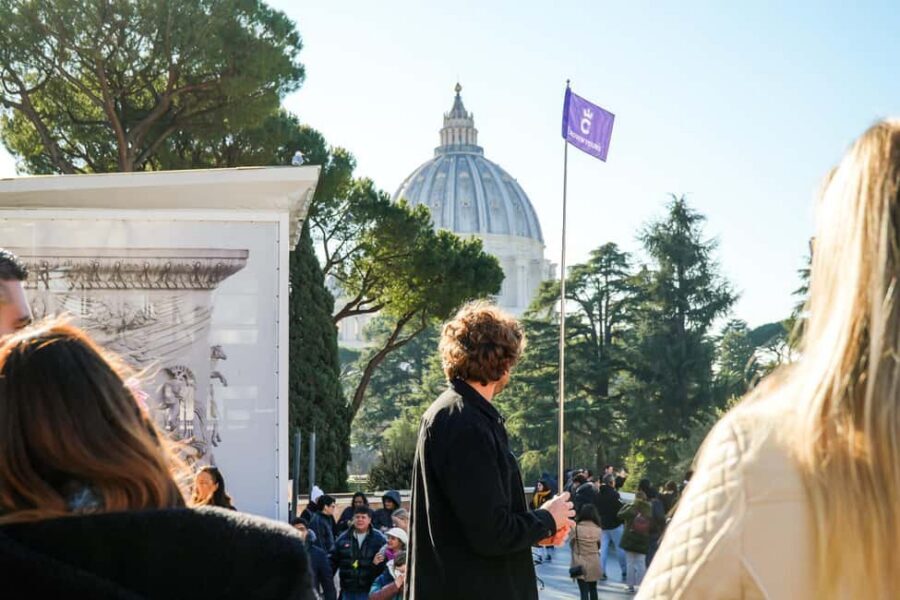
When you book, you’ll meet staff near the Vatican walls at the Crown Tours office for check-in, then your guide leads you past waiting crowds. That matters because the Vatican is not just a place you visit—it’s a place you have to manage. With a timed entry and a planned path, you can keep momentum and spend your attention on art instead of queueing.
Also, you’re not exempt from security. This bypasses ticket lines (and for select options, Basilica security too), but everyone still passes screening. So keep expectations realistic: fast doesn’t mean no process.
Price-wise, $72 per person is a fair fit if you want someone to guide you through the Museums and Sistine Chapel rather than doing it solo. Vatican self-guided touring can be a lot of staring at labels and guessing what to look for. A good guide turns that chaos into a clear route with memorable stops.
You can also read our reviews of more museum experiences in Rome


Meeting the Guide and Getting Oriented Near the Vatican Walls
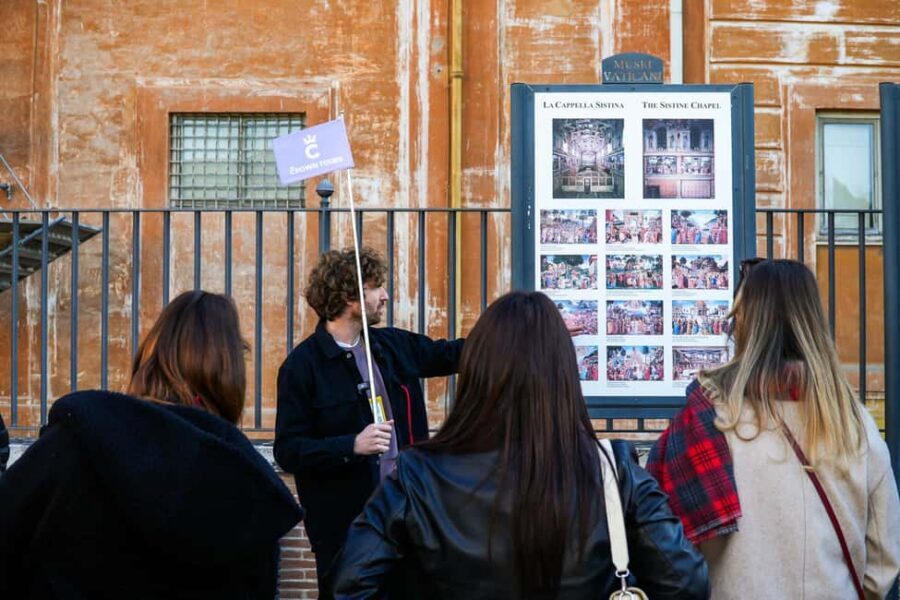
The start point can vary depending on the option. You’ll meet at a Crown Tours location near the Vatican walls, and then staff help you get checked in smoothly. You’ll also have free WiFi at the meeting point, which is handy if you’re juggling tickets, phones, and meeting-time pressure.
The practical trick here: show up on time. Timed entry is real at the Vatican, and late arrival may mean you’re refused with no refund. If you’re unsure where to go, head there early and build in a buffer. It’s a crowded area and signage can be confusing.
Once you’re inside, the guide becomes your compass. You’ll get audio headsets, which help a lot in the Museums where the noise level can be high and the crowd flow can break conversations fast.
The Vatican Museums: How the Planned Route Keeps You From Getting Lost
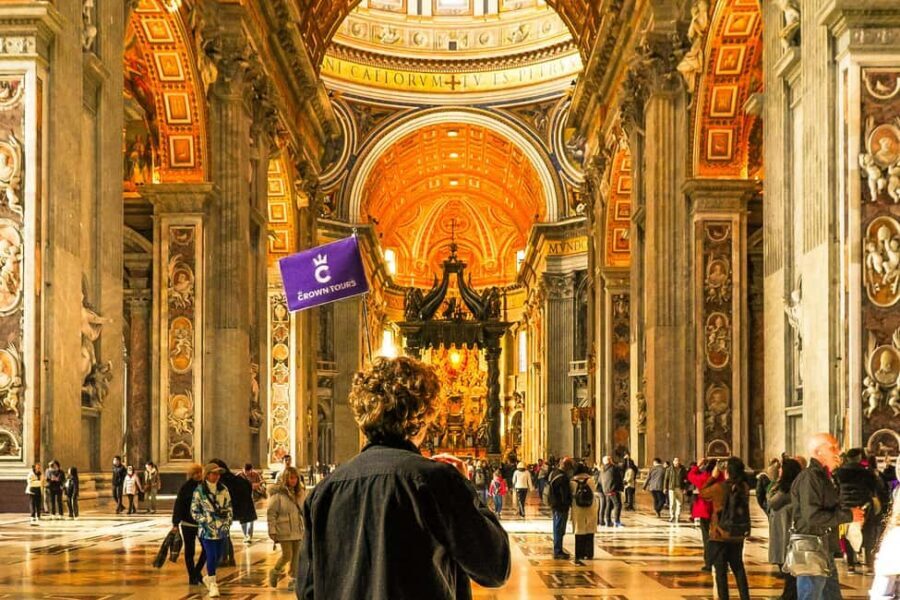
The Vatican Museums are enormous—so enormous that many people lose the thread halfway through. This tour fixes that by using a curated-style flow (but in plain terms: a route with priorities) and storytelling that places each room in context.
Your guide leads you through one of the world’s largest art collections, built over five centuries, across dozens of galleries. That’s a lot of time layered into one building. Without help, you’ll bounce from hallway to hallway like a pinball. With help, you connect themes: maps as politics, tapestries as power, sculpture as ancient memory.
From early on, your guide points you toward the real masterpieces, not just the biggest rooms. You’ll stop for major highlights such as:
- Gallery of Maps
- Gallery of Tapestries
- Museo Pio-Clementino (including ancient sculpture like the Apollo Belvedere)
The pacing is designed for a “hit the essentials and actually enjoy them” visit. If you’ve only got half a day, this is a strong way to avoid Museum fatigue.
Gallery of Maps and the Tapestries: Art That Teaches You How Rome Looked
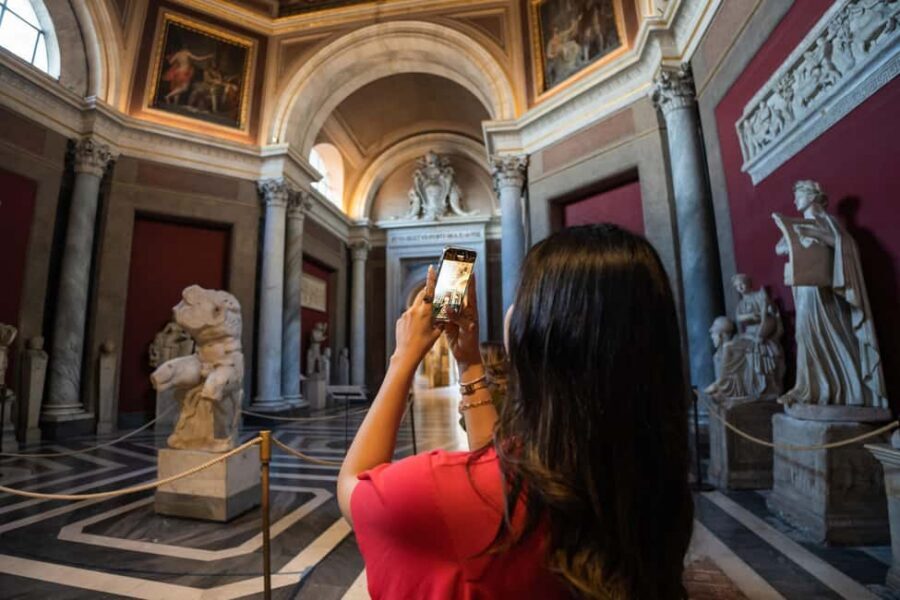
Some rooms in the Vatican are famous because they’re beautiful. Others are famous because they explain how people once understood the world.
The Gallery of Maps is one of those rooms. It presents a sweeping frescoed view of Italy across the walls, and your guide’s job is to help you read it as more than an impressive ceiling-level moment. You’ll learn what it represents and why it matters—so you walk out with a sense of what the Vatican was doing beyond collecting art.
Then come the tapestries. The Gallery of Tapestries is where the Vatican’s wealth becomes visible in cloth form: large-scale works that blend craftsmanship, symbolism, and political storytelling. Even if you’re not a “textile person,” you’ll usually find yourself slowing down here because the details reward closer looking.
These stops are valuable because they give your brain something to organize. When your visit suddenly feels less random, the rest of the day gets easier.
Museo Pio-Clementino and Cortile del Belvedere: Ancient Sculpture With Impact
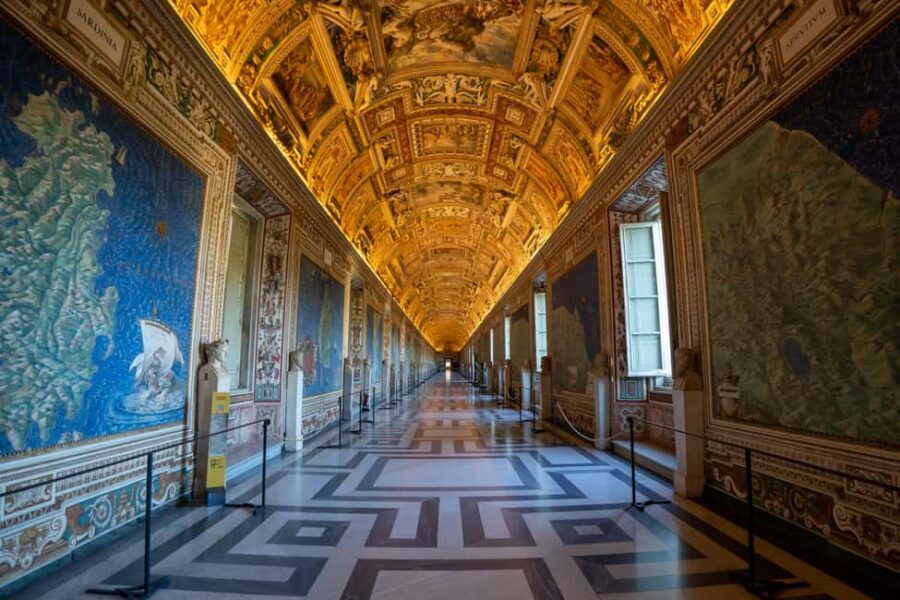
The Vatican isn’t only Renaissance paint and papal drama. In the Museo Pio-Clementino, you get a deep dose of classical sculpture—plus the setting to make it feel grounded in ancient Rome.
You’ll visit key areas such as the Cortile del Belvedere and the Pio-Clementino galleries. The Apollo Belvedere is specifically called out as one of the iconic pieces you’ll see. That’s useful because it gives you an easy anchor: when you know what you’re looking for, you can spend time noticing proportions, poses, and why these forms survived as cultural reference points.
This is also where a strong guide makes the biggest difference. Several guides mentioned in real experiences bring extra depth here. For example, Sonia is highlighted for having an archaeology background, which can make ancient art feel less like museum furniture and more like a conversation with the past. On the day, you’ll benefit most if you let your guide give you a framework before you start comparing details.




Sistine Chapel: What to Notice When You’re Under Michelangelo
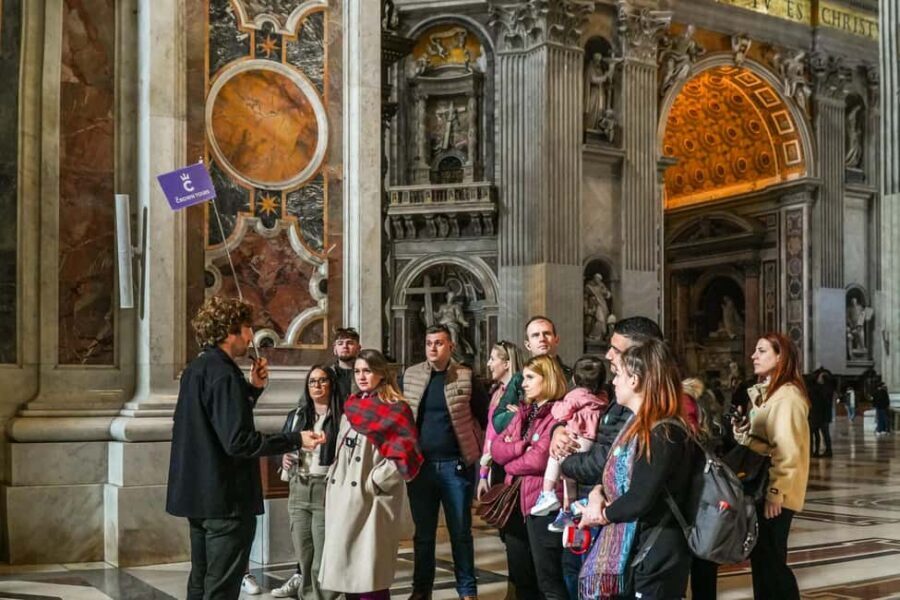
The Sistine Chapel is famous in photos. It’s unforgettable in person. The first time you stand there, the scale and quiet can hit you all at once.
With your guide’s commentary still in your head, the experience becomes more than a photo stop. You’ll see Michelangelo’s Creation of Adam and The Last Judgment, and you’ll likely find the room becomes clearer because someone explains what you’re looking at, not just that it exists.
Here’s my practical advice: inside the Sistine Chapel, your best strategy is to look in short passes. Pick a section, focus for a few seconds, then shift to the next. That’s how you avoid standing there overwhelmed by everything at once.
Also, listen for the guide’s pacing cues. The Chapel is quiet, and you’ll want to stay together with the group. A few experiences note that if you drift too far behind due to crowds, the audio connection can drop. So keep close enough that your headsets stay connected and you don’t miss the next set of key points.
St. Peter’s Basilica: Direct Access and the Bernini Moment
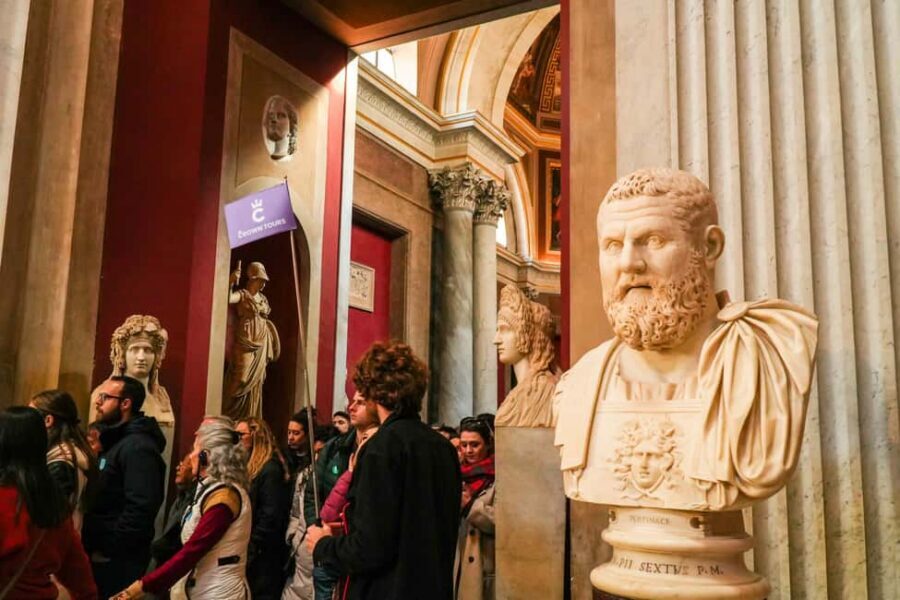
If you choose the all-three-sites option, you’ll continue to St. Peter’s Basilica with direct access. One detail that matters: your route takes you through Bernini’s Royal Staircase, historically reserved for popes and royalty.
That isn’t just a fancy entrance. It changes how you feel as you arrive. You’re not wandering into the Basilica like a visitor. You’re walking into the place as it was meant to be approached.
Inside, you’ll see major highlights including:
- Michelangelo’s Pietà
- Bernini’s Baldachin
St. Peter’s is a UNESCO World Heritage site, and it’s also huge in a way that can feel almost unreal. A guide helps you make sense of what to prioritize when your eyes keep wanting to float upward forever.
One thing to know based on the tour’s rules: for certain time slots (3:00 PM and later tours), the Basilica portion may be self-guided rather than guided inside. So if you want a guide’s full storytelling in the Basilica itself, check that your chosen option includes guided time there.
Several guides stand out in people’s experiences for adding humor and personality. Roberto is mentioned as especially engaging, even mixing in a great sense of humor and singing with his passion for Vatican history. It’s not guaranteed, but it’s a good reminder that the best part of a guided day is how the guide makes the art feel alive.
Dome Access for the Best Views: Elevator Up, Then the Final Steps
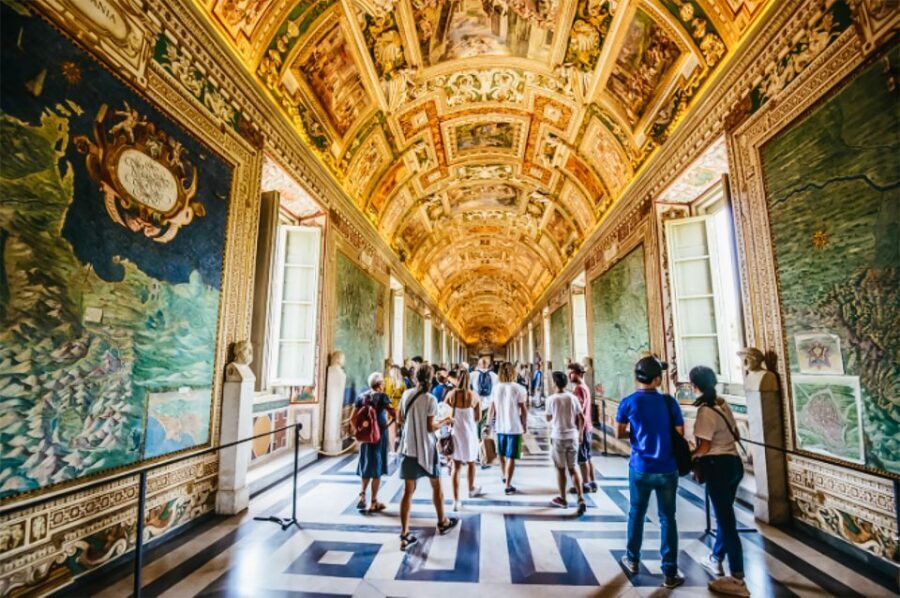
Want the “Rome from above” feeling? The optional Dome visit is one of the best payoffs, because it turns a museum day into a viewpoint day.
If you choose Dome access, you’ll take an elevator up to the rooftop terrace (for select options), then complete the final ascent on foot for sweeping views over Vatican City and Rome. This is the route to choose if you want the views without making your entire trip about stairs.
If you choose a Dome climb, be ready for more effort. The climb can involve 320 steps, narrow spirals, and long stretches. It also may not be recommended for people with certain health or mobility concerns.
I’d treat the Dome as optional value-add, not mandatory. If you’re physically comfortable and you want a final “wow” at the end of the day, go for it. If you’re already feeling worn down after the Museums and Sistine Chapel, stick with the guided sites and use your energy for a good meal and a long walk outside.
One more practical note: plan your stamina. Even with an elevator, you’re still adding time and walking in tight spaces and at a higher pace than a normal sightseeing stroll.
Timing, Pacing, and the Crowd Reality Inside the Vatican
This tour is built for a tight timeframe—2 to 4 hours, depending on the option. That means you won’t see every room, and you shouldn’t expect to. Instead, you’ll get the high-impact sequence designed to hit the big masterpieces and keep you moving.
The tradeoff is obvious: you’ll be moving through a lot of space. The Vatican needs comfortable shoes because you’re on your feet for galleries, stairs, and transfers between areas. People also mention that even in off-season, you can end up squeezing past other visitors to keep up—so expect motion.
Audio headsets help, but they won’t solve everything. If the group falls behind, you may lose audio briefly. So stay close to your guide, especially when crowds compress the path.
Closures can happen too. Sistine Chapel, St. Peter’s Basilica, or museum sections may close or restrict without notice due to events, security, or restoration. The itinerary can adjust, and no refunds apply for those changes. Not fun, but it’s smart to accept it as part of Vatican reality.
Dress Code and What You Need to Bring (So You Don’t Get Turned Away)
The Vatican’s rules are strict, and getting this wrong can ruin the day. Plan to follow the dress code:
- Shoulders and knees must be covered
- Shorts and short skirts aren’t allowed
- Sleeveless shirts aren’t allowed
Also bring:
- A passport or ID card (a copy accepted)
A couple of other practical constraints:
- No baby strollers inside; strollers must be left under the Basilica portico
- Small bags only; there’s no cloakroom
- No animals
One more “small but important” tip: keep your outfit Vatican-friendly even if you’re only doing the outdoor parts. It’s all enforced on-site.
For mobility: this tour is not suitable for wheelchair users. That matters for planning the best option for someone in your group.
Who This Tour Fits Best (and Who Should Rethink It)
This is a strong match if you want:
- A fast, high-impact Vatican day
- Expert storytelling that explains what you’re seeing
- A guided path that reduces decision fatigue
- The option to add St. Peter’s and the Dome at the end
It’s especially useful if you’re visiting for the first time and feel like you’d otherwise miss the meaning behind famous scenes. Many people describe the difference between simply looking and actually understanding what you’re seeing.
It’s also a good match for families and teens when the guide’s style keeps things moving. Zara is mentioned as working especially well even with teenagers—because she makes the art and history feel connected instead of like a list.
If you’re the type who wants to roam slowly, sit and read every placard, and take lots of breaks, you might find the pace too tight. In that case, a more flexible self-guided plan could suit you better. But if your goal is to see the essentials and leave feeling energized, this setup is hard to beat.
Should You Book This Vatican Museums, Sistine Chapel, and Basilica Tour?
I’d book it if your priority is value through time saved and meaning gained. For $72 per person, the core advantage is not just skipping lines—it’s having a licensed guide connect the dots across rooms that are otherwise overwhelming. Add St. Peter’s for the full storyline, and consider the Dome if you want that last high view before you call it a day.
I wouldn’t book it if:
- You need wheelchair access
- You don’t want any strict rules about dress and timing
- You’re likely to get separated from the group and fall behind often (audio connection can suffer when you lag)
If you want one simple strategy: pick the option that matches your stamina, not your ambition. The best Vatican days feel focused, not rushed. This one is designed for that.
FAQ
What is included in the 2-hour Vatican Museums and Sistine Chapel tour?
It includes skip-the-ticket-line entry to the Vatican Museums and Sistine Chapel, plus a licensed professional guide with audio headsets. This option does not include St. Peter’s Basilica.
Can I add St. Peter’s Basilica to this experience?
Yes. There’s a guided all-three-sites option that includes St. Peter’s Basilica with direct access, plus highlights like Michelangelo’s Pietà and Bernini’s Baldachin.
Do I skip the lines for everything?
You skip the ticket lines for the Vatican Museums and Sistine Chapel, and for select options you can also skip the security lines for St. Peter’s Basilica. You still pass through security.
Is Dome access included?
Dome access is available with select options. The elevator takes you to the rooftop terrace, and then you complete the final ascent on foot for views.
What should I wear to enter the Vatican?
Dress code is enforced: cover shoulders and knees. Shorts, short skirts, and sleeveless shirts are not allowed.
Do I need ID?
Yes. You’ll need a passport or ID card, and the name and ages on your booking must match your ticket type.
What should I bring for the tour?
Wear comfortable shoes for walking, and bring your passport or ID. Small bags are best since there’s no cloakroom.
Is this tour suitable for wheelchair users?
No. The experience is not suitable for wheelchair users.