REVIEW · CITY TOURS
Rome: City Highlights Moonlight Walking Tour
Book on GetYourGuide →Bookable on GetYourGuide
Rome at night feels like a secret. This guided moonlight walking tour strings together big-ticket landmarks and Roman side streets when the city looks softer and the crowds behave better. You start near the action and move at a leisurely pace, with stops that let your guide explain what you’re actually seeing—old stadiums, sacred domes, and imperial streets.
What I like most is the mix of famous places and story time. I love how the guide work turns the monuments into a connected narrative, and how guides like Sila, Vladimir, Domenica, and Pauline/Paulina are repeatedly praised for pacing and making details click. I also love the way Trevi Fountain is timed for a calmer photo moment, so you can actually enjoy it instead of battling the daytime crush.
One drawback to plan for: this is a walking tour with no attraction entry included. You’ll get stops, passes, and guided time at key sights, but if you want to go inside places that require tickets, you may need separate plans.
In This Review
- Quick highlights
- Why a Rome by Night Walk Works for First-Time Trips
- Price and What You Actually Get for $28
- Meeting Points and How the Tour Moves Through Rome
- Piazza Navona to the Pantheon: Stadium Energy and a Dome You Can’t Ignore
- Church Stops and a Galleria Stroll for the Rome-Backstreet Feeling
- Trevi Fountain in Moonlight: Symbols and Fewer-Crowd Photos
- Piazza Venezia and the Capitoline View: Where Italy’s Stories Overlap
- Via dei Fori Imperiali and Trajan’s Column: Walking Through the Empire’s Spine
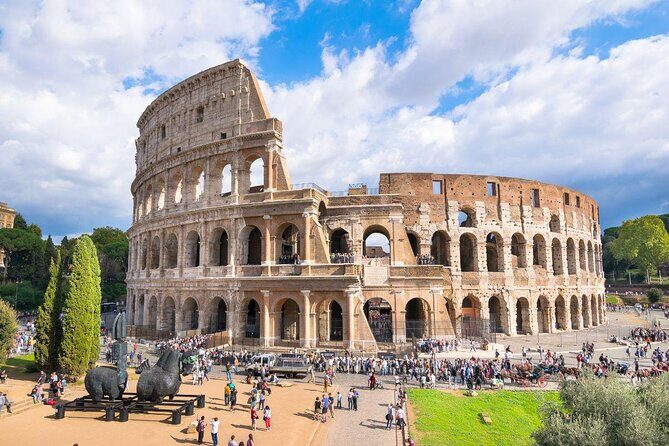
- Colosseum Under Moonlight: Final Views Outside the Icon
- What to Look for in Each Guided Moment (So You Don’t Tune Out)
- Who This Tour Suits Best (and Who Might Prefer Something Else)
- Should You Book This Rome City Highlights Moonlight Tour?
- FAQ
- FAQ
- How long is the Rome City Highlights Moonlight Walking Tour?
- How much does the tour cost?
- Where do I meet the guide?
- What are the main stops on the tour?
- Is there a guide, and what languages are available?
- Is entry to attractions included?
- Are food and drinks included?
- Where does the tour end?
- Is a private group available?
- Is cancellation free if my plans change?
Quick highlights
- Trevi Fountain timed for the quietest part of the day, plus symbol explanations and the coin-toss moment
- Piazza Navona’s ancient stadium layer, with Bernini’s Four Rivers Fountain at the center
- Pantheon at close range, including the famously perplexing dome detail your guide will point out
- Imperial Rome street views down Via dei Fori Imperiali, with Trajan’s Column and forum area stories
- Colosseum under lights, ending outside the big icon so you can just look and soak it in
Why a Rome by Night Walk Works for First-Time Trips
If Rome is your first stop in Italy, doing the city highlights at night can be a smart move. The big sites still look dramatic under lights, and the whole experience feels less like a checklist and more like wandering through a story. With a duration of about 2 to 2.5 hours, it’s long enough to feel like a tour but not so long that you burn your evening.
This format also helps you get bearings fast. You’ll cover major “anchor points” (Piazza Navona, Pantheon area, Trevi Fountain, Piazza Venezia, and the Colosseum corridor) and learn how the parts of the city connect. By the time you’re done, you’ll know which neighborhoods you want to revisit in daylight.
And yes, you’re walking. The good news is that the tour is built for a relaxed pace, with guided time at each main stop instead of a constant shuffle. Bring comfortable shoes, because Rome’s streets do not care how good your intentions are.
Price and What You Actually Get for $28
At $28 per person, this tour sits in the practical range for a guided evening plan. You’re paying for one thing above all: a guide who can stitch together what you see—so you don’t just pass monuments that all look impressive but disconnected.
What you do get is:
- a live guide (English or Spanish)
- a guided walking experience with multiple stops
What you should not assume:
- entry to attractions is not included
- food and drinks are not included
So think of the value as “paying for orientation and interpretation,” not as a ticket package. If you’re the kind of traveler who learns fast when someone explains symbols, architecture, and Roman context, this is the kind of investment that pays off for the rest of your trip.
Meeting Points and How the Tour Moves Through Rome
You’ll meet at one of two starting options depending on the booking: Piazza d’Aracoeli or Piazza di Pasquino. The tour then ends back at the meeting point, so you’re not left solving public transit or timing puzzles late at night.
The itinerary is structured around a smooth walking route with a blend of:
- guided time at selected stops (where your guide can talk and you can look slowly)
- shorter passes by for landmarks you’ll still want to see lit up
Plan on frequent “pause and look” moments. That’s part of why this works so well at night: the lights make details easier to notice, and the pace prevents you from feeling rushed at the most crowded corners.
Piazza Navona to the Pantheon: Stadium Energy and a Dome You Can’t Ignore
Your first major “wow” stop is Piazza Navona, guided at around 20 minutes. This square looks like a classic Baroque showpiece, but your guide will connect it to something older: the Romans used the area for athletic contests, and the piazza sits above the ancient stadium layer. That’s the kind of detail that changes how you see a familiar famous place.
At the center is Bernini’s Fountain of the Four Rivers. Even if you’ve seen photos, seeing it in the evening light hits different. It also gives your guide a natural moment to explain symbolism so the fountain isn’t just a pretty backdrop.
From there, you head toward the Pantheon (a short walk away, and typically a pass-by stop of about 20 minutes). You won’t just take in the façade—your guide will point out what makes the Pantheon special: one of the best-preserved Roman monuments, and an enormous dome made with unreinforced concrete that still puzzles architects.
Because it’s a pass-by rather than a ticketed museum stop, it’s ideal if you want the atmosphere without turning your evening into a line-management project.
Church Stops and a Galleria Stroll for the Rome-Backstreet Feeling
A highlight that many “just-the-famous-stuff” tours skip is the chance to slow down in quieter corners. This route includes a guided stop at the Church of Sant’Ignazio di Loyola (about 30 minutes) and then a guided visit to Galleria Sciarra (around 20 minutes).
What you should expect here is not a single-thing photo moment, but guided observation. These pauses are where you start understanding Rome as a layered city: architecture, religion, and everyday streets in the same walk. If you like tours that tell you what to notice—how façades work, what the space is doing, and how each location fits into the larger story—these stops are a big reason the tour earns its high ratings.
Trevi Fountain in Moonlight: Symbols and Fewer-Crowd Photos
Then comes the big one: Trevi Fountain, with guided time of about 30 minutes. The selling point is simple and practical—this is timed for a calmer moment. Daytime Trevi can feel like organized chaos. Here, the guide leads you when the light looks better and the crowd energy is lower, so you can actually enjoy the monument instead of just photographing over people.
This stop is built for three things:
- Photos in the moonlight
- A guide explaining the symbols behind what you’re seeing
- The classic coin toss over your shoulder for a return to Rome
Even if you’ve done Trevi before, a guide-led symbol walk can make it feel fresh. And if it’s your first time, you’ll leave knowing what the fountain is trying to say, not just what it looks like.
Piazza Venezia and the Capitoline View: Where Italy’s Stories Overlap
Next you shift toward the Capitoline Hill area with Piazza Venezia as a guided stop (about 20 minutes). Your guide will set context from the foot of the hill through to the Altar of the Fatherland—and explain why this zone matters historically.
This is one of those moments where the route gives you a “zoom out” perspective. You’re standing in a spot where centuries of Rome overlap in sightlines and meaning. Your guide’s job is to connect the big modern monument to the older city beneath it, so you feel like you’re reading a timeline rather than just taking photos.
If you’ve ever felt overwhelmed by Rome’s layers, this is the stop that helps your brain catch up.
Via dei Fori Imperiali and Trajan’s Column: Walking Through the Empire’s Spine
From Piazza Venezia, the walk pushes into a more “imperial” feeling. You’ll pass and linger around Trajan’s Column (about 20 minutes as a pass-by moment) and then take Via dei Fori Imperiali, guided for roughly 20 minutes.
This boulevard is described as a cut through ancient Rome, and that’s a good way to think about it. It’s not just a street—it’s a corridor where Roman power shows up in stone, angles, and scale. Your guide will point out key landmarks connected to the forums of major emperors—Trajan, Augustus, and Nerva—and help you understand what you’re seeing as part of the empire’s big city plan.
In reviews, guides like Sila and Vladimir are mentioned for turning small details into memorable facts—like noticing how everyday spaces connect to larger historical meaning. On Via dei Fori Imperiali, that style really works, because the scenery can feel intimidating if you don’t have a frame.
Colosseum Under Moonlight: Final Views Outside the Icon
You end with the Colosseum area, outside the most famous monument of all. The Colosseum is an obvious headline, but the value here is the timing and the lighting. Seeing it illuminated shifts it from “photo target” into a real nighttime landmark.
Your final stretch includes a walk along Via dei Fori Imperiali and concluding outside the Colosseum, with drop-off options including Piazza del Colosseo and the Colosseum area. That’s convenient if you want to continue exploring right after, rather than feeling locked into the tour’s last moment.
Since entry isn’t included, treat this as your chance to experience the Colosseum’s presence—then decide later if you want a separate timed ticket for the interior.
What to Look for in Each Guided Moment (So You Don’t Tune Out)
Night tours can be hit or miss depending on how the guide keeps energy up. This one has a strong track record for keeping people engaged. Guides are repeatedly described as funny, energetic, and story-driven, with frequent reminders about pacing and what matters.
Here’s what I’d focus on while you’re listening:
- Symbols at monuments: Trevi is built for this, but other sites connect if you pay attention to what the guide emphasizes.
- Architecture cues: The Pantheon dome detail is specifically called out; use it as a mental anchor.
- City layers: Piazza Navona’s stadium history helps you “read” the city while walking.
- Imperial connections: Via dei Fori Imperiali becomes much easier when your guide links the forums and monuments to a bigger plan.
And if you like a tour that feels more like a narrative than a rush between photos, you’re in the right place. Several guides mentioned for this kind of storytelling—like Domenica and Sila—are known for giving you a sense of why things were built, not just what they are.
Who This Tour Suits Best (and Who Might Prefer Something Else)
This tour fits you best if:
- you want major highlights in a short evening window
- you like guided context, not just sightseeing
- you prefer Rome at night for a calmer feel and better photo atmosphere
- you’re early in your trip and want orientation for where to go next
It may be less ideal if:
- you’re determined to do ticketed interiors during this exact time block (since entry isn’t included)
- you don’t handle walking well, since the whole experience is built around comfortable shoes and a continuous route
- you’re the type who wants museum-depth time rather than guided pauses and viewing stops
If you’re flexible, you can pair this evening tour with a later day of ticketed visits once you know what you want to go back for.
Should You Book This Rome City Highlights Moonlight Tour?
I’d book it if you want a guided night route that connects Rome’s most famous spaces into one coherent walk. For $28, you’re paying for the practical payoff: fewer daytime crowd problems, major landmarks in a couple hours, and a guide who explains what you’re looking at—especially at Trevi Fountain and the Pantheon.
I’d skip it or add a ticket plan of your own if interior entry is your top priority. But if you’re open to seeing the sights up close from the right angles and learning how they fit together, this is a smart, low-stress way to get your bearings and fall a little more in love with the city.
FAQ
FAQ
How long is the Rome City Highlights Moonlight Walking Tour?
The tour lasts about 2 to 2.5 hours.
How much does the tour cost?
It costs $28 per person.
Where do I meet the guide?
The meeting point depends on the option booked. It can be Piazza d’Aracoeli or Piazza di Pasquino.
What are the main stops on the tour?
You’ll visit or pass by Piazza Navona, the Pantheon, Sant’Ignazio di Loyola, Galleria Sciarra, Trevi Fountain, Piazza Venezia, Trajan’s Column, and Via dei Fori Imperiali, with the Colosseum as the final focus outside the monument.
Is there a guide, and what languages are available?
Yes. The tour has a live guide available in English and Spanish.
Is entry to attractions included?
No. Entry to attractions is not included.
Are food and drinks included?
No. Food and drinks are not included.
Where does the tour end?
The tour ends back at the meeting point.
Is a private group available?
Yes. Private group options are available.
Is cancellation free if my plans change?
Yes. You can cancel up to 24 hours in advance for a full refund.