REVIEW · PANTHEON TOURS
Rome Walking Tour with Piazza Navona, Trevi Fountain and Pantheon
Book on Viator →Operated by City Wonders Ltd · Bookable on Viator
Rome is easier when someone holds the map.
This Rome walking tour strings together the biggest “first visit” sights in a logical route, so you spend less time wandering and more time looking. You start at Piazza Navona for Bernini’s Four Rivers fountains, move on to the Pantheon (with included entry on the group option), then finish in the elegant chaos around the Spanish Steps. I like that the pacing is tight but not frantic, and you get a guide to explain the why behind what you’re seeing.
Two things I especially like: Pantheon tickets are included for the group tour, which helps you avoid the long wait that can drain your energy. And I like that you end in a spot where you can actually keep exploring—Piazza di Spagna is a great “tour-to-walk” finish for cafés and side streets.
One thing to consider: this is mostly walking through crowded, busy public squares. If you’re easily stressed by lines (even short ones) or dense crowds, you may want to plan for extra patience—especially around Trevi and the Spanish Steps.
Key highlights you’ll feel fast
- No getting lost route with a guide leading the way between top sights
- Pantheon entry included on the group option (with skip-the-line)
- Small-group feel (maximum 25 travelers) with clear guidance in the streets
- Trevi Fountain history plus photos—and a heads-up that the coin-toss add-on is separate
- Gelato is included, so you’re not just sightseeing nonstop
- Finish at Piazza di Spagna, then keep moving on your own
In This Review
- Piazza Navona to Piazza di Spagna: the route that saves your sanity
- Start at Via Giuseppe Zanardelli: you’ll be in the right place on arrival day
- Piazza Navona: the baroque square where street life is part of the show
- Pantheon with skip-the-line entry: what you’ll actually notice inside
- Piazza Colonna and the Column of Marcus Aurelius: the quick stop that adds depth
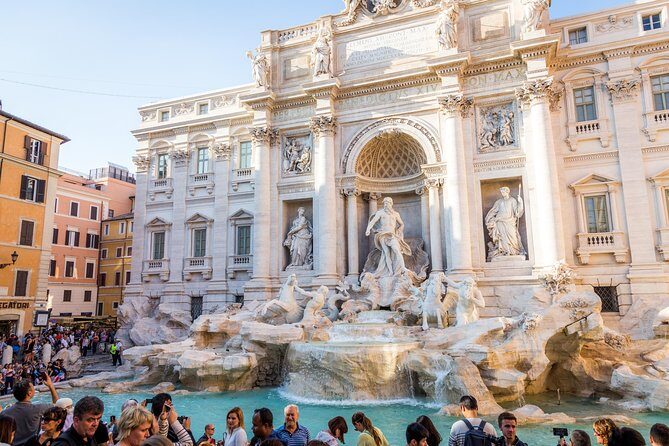
- Trevi Fountain: iconic photos, but plan for the coin-toss detail
- Gelato in Trevi: a real break, not a random detour
- The Spanish Steps finish: views, strolling, and a better use of your time
- What you’re really paying for: value at $35
- Who this tour fits best (and who might want something else)
- Practical tips so you enjoy it even in thick crowds
- Should you book Rome Walking Tour with Piazza Navona, Trevi Fountain and Pantheon?
- FAQ
- Is the Pantheon entrance included?
- How long is the walking tour?
- Where do I meet the guide, and where does the tour end?
- Do I need to bring ID for the Pantheon?
- Is the Trevi Fountain coin toss included?
- Is gelato included?
- Can I choose a morning or afternoon time?
Piazza Navona to Piazza di Spagna: the route that saves your sanity
This tour is built like a smart day-one (or day-two) plan. You hit Piazza Navona, then swing over to the Pantheon, then connect the next icons: the Column of Marcus Aurelius, Trevi Fountain, and finally Piazza di Spagna.
Why that matters? Rome is a city of gorgeous detours—and also a city where you can waste time if you’re aiming for multiple “must-sees” on your own. With a guide, you get a clear path through the busiest zones, and you can relax your brain. That’s especially useful if you’re juggling museum fatigue, jet lag, or just plain city overwhelm.
Also, the tour length (about 2 hours 30 minutes) fits neatly into a morning or afternoon slot. Do it early and you still have daylight for neighborhoods and churches later. Do it later and you’ve got a solid base for what you see on your own afterward.
Start at Via Giuseppe Zanardelli: you’ll be in the right place on arrival day
Meeting is at Via Giuseppe Zanardelli, 21. It’s in central Rome and listed as near public transportation, which helps if you’re mixing this tour with other plans.
In practice, this kind of start matters. If you’re arriving in Rome and still figuring out bus routes, lines on apps, and which way streets run, a straightforward meeting point is a small win. You don’t have to solve a puzzle before you even start sightseeing.
The tour ends at Piazza di Spagna, which is a smart finish: you get to step out of group mode into strolling mode. That means you’re not stranded at some random corner with nothing to do after the last photo.
You can also read our reviews of more walking tours in Rome



Piazza Navona: the baroque square where street life is part of the show
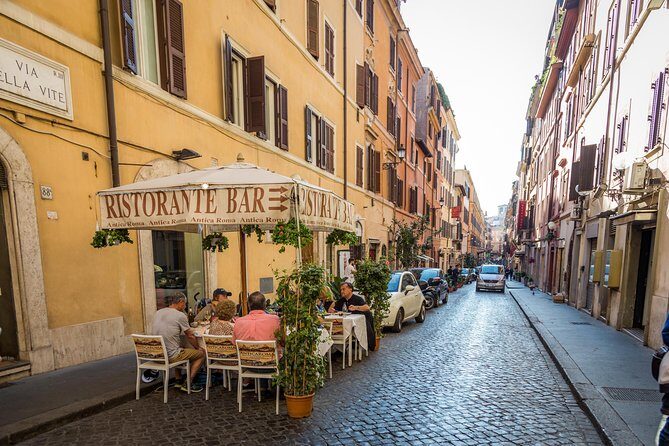
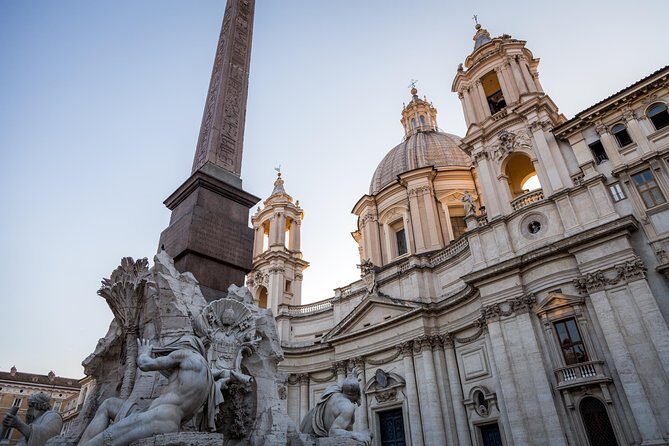
Your first stop is Piazza Navona, a favorite for a reason. This square feels like it’s always performing—crowds, artists, performers, and fountains that pull you toward the center.
The centerpiece here is Bernini’s Fountain of the Four Rivers. The guide will point out the details so you don’t just register it as “a big famous fountain.” You also get context on the baroque style that shapes what you see around you. Even if you’re not a “history person,” it helps you notice how the architecture creates drama and movement.
What to watch for:
- It can be loud and busy. Put your phone away for a minute and listen to the guide. You’ll see more.
- If you’re hoping for perfect photos without people, you’ll likely need patience at this stop. The upside: you’re seeing the real thing, not a staged postcard.
This stop is about 20 minutes, and that’s just enough time to get the “wow” factor and understand what you’re looking at before moving on.
Pantheon with skip-the-line entry: what you’ll actually notice inside
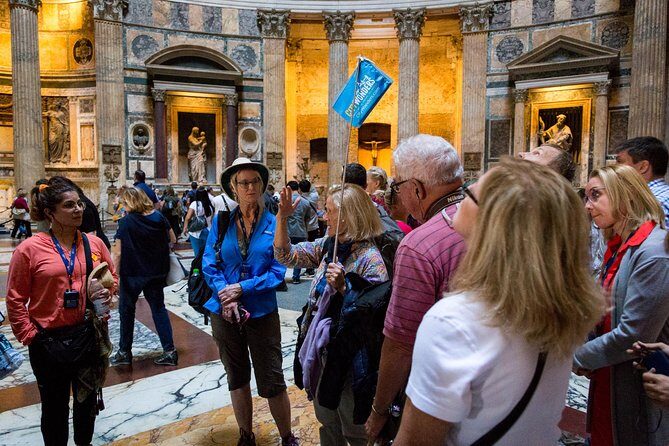
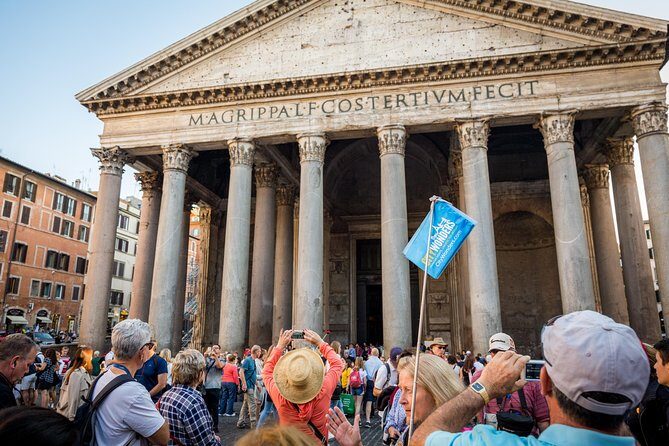
Next up: the Pantheon, one of the best-preserved monuments from ancient Rome. Here’s the big value: on the group tour option, Pantheon entrance is included, and you get skip-the-line access led by your guide. That saves time you’d otherwise spend waiting with everyone else who also had the same idea.
Once inside, your guide focuses on what makes the Pantheon feel otherworldly even after centuries: the massive dome, the oculus, and the engineering logic behind how it works. You’ll also get the story of how the building changed roles over time—from a pagan temple to a grand resting place connected with Italian kings.
Two practical notes from the tour rules:
- Bring a passport or valid ID document. Entry depends on it, and if you can’t show it when asked, you may be denied.
- The Pantheon is an active religious site. On occasions when it’s closed for ceremonies—or when entry rules change—your guide will switch to a full explanation from the outside.
If you choose the private option, the note you should remember is simple: private tours include only an exterior explanation. That’s fine if you mainly want a one-on-one route and commentary, but it’s not the same Pantheon value as the group option.
How long is it? About 30 minutes for this stop, which is typically just right for seeing the space, hearing the key points, and taking a few photos without feeling rushed.
Piazza Colonna and the Column of Marcus Aurelius: the quick stop that adds depth

Then you move to Piazza Colonna for the Column of Marcus Aurelius. Even though this is a shorter stop (around 15 minutes), it’s a useful one. It connects the ancient world to what you can see today, because the Italian Parliament sits nearby.
The column helps you understand that Rome wasn’t just temples and emperors in marble. It was also politics, messaging, and power—stuff that echoes through time.
At this stop, your guide also tends to put details into plain language: what the figures are showing, why Rome tells stories in stone, and why a single object can represent an entire era.
Trevi Fountain: iconic photos, but plan for the coin-toss detail

After the column, you reach the Trevi Fountain. This is where the tour becomes instantly recognizable: even people who swear they don’t care about monuments usually care about Trevi.
The guide will explain the fountain’s history and symbolism, then you’ll have time for photos and a little breathing space nearby. This stop runs about 15 minutes.
Here’s the key “don’t get surprised” detail: the tour includes Trevi time, but the coin-toss ticket is not included. If you want to toss a coin, you’ll need that separate ticket purchase.
My practical advice: if the coin moment is part of your personal ritual, do it calmly. The crowd crush around the water can turn into a scramble. If you just want the fountain itself, focus on getting a photo from a slight angle where you can include more of the facade without fighting the sea of heads.






Gelato in Trevi: a real break, not a random detour
Next is the part you’ll feel later in your feet: gelato. The tour includes a gelato stop (about 15 minutes), and the exact shop can vary.
I like this break because it’s timed where your energy is likely dipping. You’ve done big visual stops back to back. Gelato gives you a reset without derailing the route.
Also, having a guide help you manage the stop makes it easier to find the place quickly and get back to the group. And if you’ve got kids, it’s a genuine morale boost.
One small consideration: it’s still a busy zone, so be ready for the usual Rome evening-day crowd energy around Trevi.
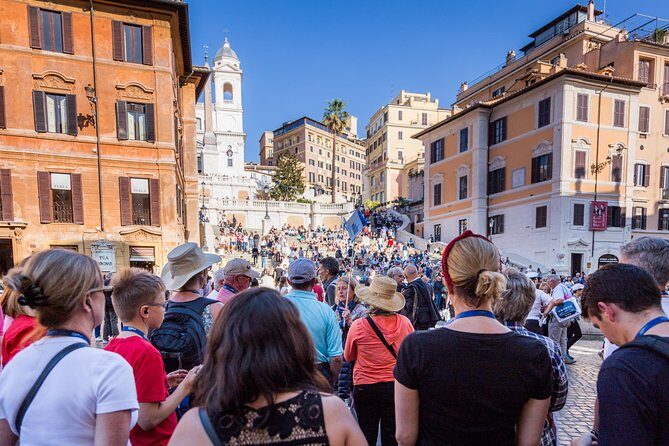
The Spanish Steps finish: views, strolling, and a better use of your time
The tour ends at Piazza di Spagna with time to enjoy the atmosphere around the Spanish Steps. This is a good ending point because the area is built for strolling. Once you’re released from the group, you can pick your next move: a café, a side street, or a walk toward viewpoints.
This stop is about 20 minutes. That’s enough time to admire the views over Rome and snap photos. But be realistic: the Spanish Steps area is often crowded, so if photo perfection is your goal, you’ll need either patience or a different time of day later.
Still, as a finish, it works. You’re not ending at some far-off edge of town. You’re ending in one of the most walkable, rewarding “from here to wherever” zones.
What you’re really paying for: value at $35
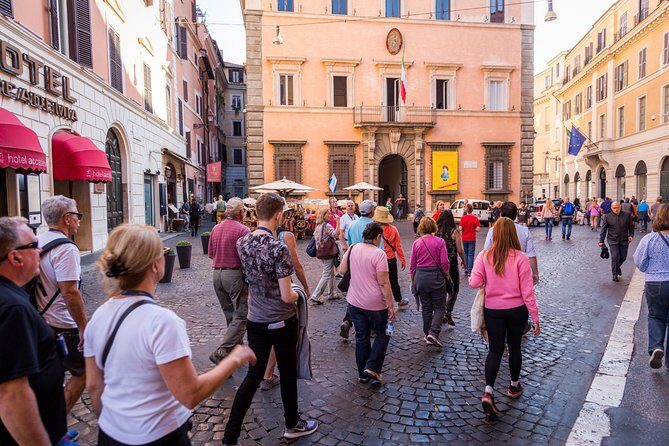
At $35 per person for about 2.5 hours, this tour isn’t just about ticking off famous landmarks. You’re paying for three main things:
1) Time saved on the Pantheon with included entry on the group option
2) Route efficiency so you’re not reinventing directions through crowds
3) A guide’s explanation, which turns photos into understanding
The ticket and gelato inclusion help too. If you were doing this day on your own, you’d still have to:
- figure out the walking connections,
- manage lines and opening rules,
- and decide what to prioritize once you’re already in the middle of the city.
Here you’re following a plan. For first-time visitors, that matters a lot. And because this tour is capped at 25 travelers, you’re not usually stuck in a giant, impossible herd—assuming your guide keeps things moving.
One more sign of value: this tour is often booked far in advance (around 73 days). That usually means the route and timing hit a sweet spot for people arriving in Rome.
Who this tour fits best (and who might want something else)
This is a strong choice if:
- You want a great highlights primer without planning a lot
- You’re short on time and want major sites in one route
- You like learning the “why” behind architecture and symbols
- You want morning or afternoon flexibility and to keep the rest of the day open
It may be less ideal if:
- You hate crowded public squares and prefer quieter, slower pacing
- You want very long time inside major monuments (this is a walking-and-seeing tour, not a sit-and-study tour)
- You’re sensitive to last-minute changes if the Pantheon faces closures for ceremonies
Practical tips so you enjoy it even in thick crowds
Bring a few basics and you’ll thank yourself:
- ID/passport for Pantheon. Don’t assume “I’ll just show my phone.” Bring the real document.
- Wear comfortable shoes. The route is packed with stops, and Rome sidewalks are not the same as walking trails.
- If you get audio help like small ear-pieces/radios, use it. Rome noise and crowds make it hard to hear otherwise.
- If you’re traveling with a group (friends or family), decide in advance how you’ll handle “group spacing” for photos. The tour pace works best when everyone tracks the guide.
Also, some sights and surroundings can be affected by maintenance/restoration. Expect occasional temporary obstructions. Rome is always being kept in working order.
Should you book Rome Walking Tour with Piazza Navona, Trevi Fountain and Pantheon?
I think this is an easy “yes” for many first-timers—especially because the Pantheon entry is included on the group tour, and the route finishes in a place where you can keep enjoying the city right away.
Book it if you want:
- a tight, sensible highlights route,
- less stress about getting lost,
- and a guide-led explanation that makes famous sights feel more meaningful.
Hold off (or choose a different option) if:
- you’re planning around strict crowd-avoidance,
- you absolutely need more time at each monument,
- or you prefer a private, custom plan that still includes Pantheon access (note: private option here is exterior-only).
If your goal is to see the big five—Piazza Navona, Pantheon, Column of Marcus Aurelius, Trevi Fountain, Spanish Steps—and understand them without burning your day, this tour is a solid way to do it.
FAQ
Is the Pantheon entrance included?
Yes, Pantheon entrance is included only when you choose the group tour option. If you choose the private option, the tour includes only an exterior explanation.
How long is the walking tour?
The duration is about 2 hours 30 minutes.
Where do I meet the guide, and where does the tour end?
You meet at Via Giuseppe Zanardelli, 21, 00186 Roma RM, Italy and the tour ends at Piazza di Spagna, 00187 Roma RM, Italy.
Do I need to bring ID for the Pantheon?
Yes. A passport or valid ID document is mandatory for this tour. If you cannot provide it when requested, entry may be denied.
Is the Trevi Fountain coin toss included?
No. The Trevi Fountain coin-toss requires a separate ticket, and it is not included in this tour.
Is gelato included?
Yes. Gelato is included in the tour price, and the gelato shop can be subject to change.
Can I choose a morning or afternoon time?
Yes. The tour offers morning or afternoon tour timings, and you can choose based on how you want to plan the rest of your day.