REVIEW · CITY TOURS
Rome: Guided City Center Evening Sightseeing Walking Tour
Book on GetYourGuide →Operated by Rome Your Way · Bookable on GetYourGuide
Rome at night moves differently.
This guided city-center evening walk strings together the big Roman icons with street-level context and art history you can actually use while you’re there. I like that it’s built for the moment: you start in Piazza del Popolo, watch the light shift as you move, and finish in Campo de’ Fiori, ready to keep exploring. Guides in this program have a strong reputation for clear, story-rich explanations and for answering questions beyond just the stop at hand, with names like Ghil, Andrada, Carolina, and Elida showing up often in feedback.
What I really love is the mix of viewpoints. You get a proper sunset moment from Pincio Terrace, plus a tight route through the Spanish Steps, Bernini fountains, and the Pantheon area without needing to jump around the city. Another win: when you need it, you get headsets, which helps when the group slows at crowded corners.
One consideration: it’s a no-fuss, on-your-feet 3 hours. Reviews also point out it can feel fast-paced, and there’s at least one steep climb for that view, so wear comfortable shoes and plan for solid walking.
In This Review
- Key highlights that make this tour worth your time
- Piazza del Popolo to the first big sights: how you start strong
- Pincio Terrace sunset: the climb that pays off
- The Spanish Steps and Trevi Fountain, linked by Bernini energy
- Pantheon exterior time: what to look for when you can’t go in
- Piazza Navona’s Four Rivers Fountain and the Bernini-Borromini mix
- Campo de’ Fiori after the tour: use the ending wisely
- Price and value for a 3-hour evening: what you’re really paying for
- What to expect on your feet: small prep that makes it easier
- Should you book this Rome evening walking tour?
- FAQ
- FAQ
- How long is the Rome city center evening walk?
- Where does the tour start?
- Where does the tour end?
- What sights are included on this tour?
- Is hotel pickup included?
- Is the tour wheelchair accessible?
- Does the tour offer headsets?
- What language is the tour guide?
- Are there free spots for children?
- What is the cancellation policy?
Key highlights that make this tour worth your time
- Pincio Terrace sunset views that turn the city into a slow-motion skyline
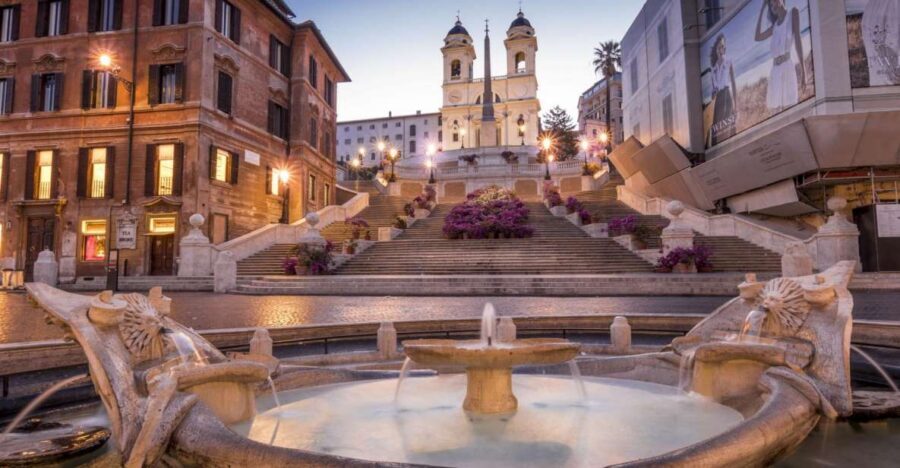
- Spanish Steps + Barcaccia Fountain framed by the right evening light
- Trevi Fountain coin-toss moment with the left-shoulder legend
- Pantheon exterior context including its shift from Roman temple to church
- Piazza Navona’s Four Rivers Fountain plus Borromini’s Sant’Agnese in Agone nearby
- Ending at Campo de’ Fiori so you can transition straight into dinner and nightlife
Piazza del Popolo to the first big sights: how you start strong
The tour meets at Piazza del Popolo, in front of Santa Maria del Popolo Church, right next to the Leonardo da Vinci Museum. Look for a guide holding the Rome Your Way sign, and plan to arrive a few minutes early so you’re not trying to locate the group while you’re staring at Rome’s most dramatic square.
Why I like this start: Piazza del Popolo works like an open “map in real life.” You can orient yourself fast. From there, you’re not just ticking off monuments—you’re learning how this part of Rome connects, which makes your next independent walks feel smoother.
A practical tip from the overall tone of the experience: the guides seem to work well with questions. People have specifically mentioned getting answers that aren’t only about what you’re standing next to, which matters in a city where the streets and eras overlap.
You can also read our reviews of more walking tours in Rome

Pincio Terrace sunset: the climb that pays off
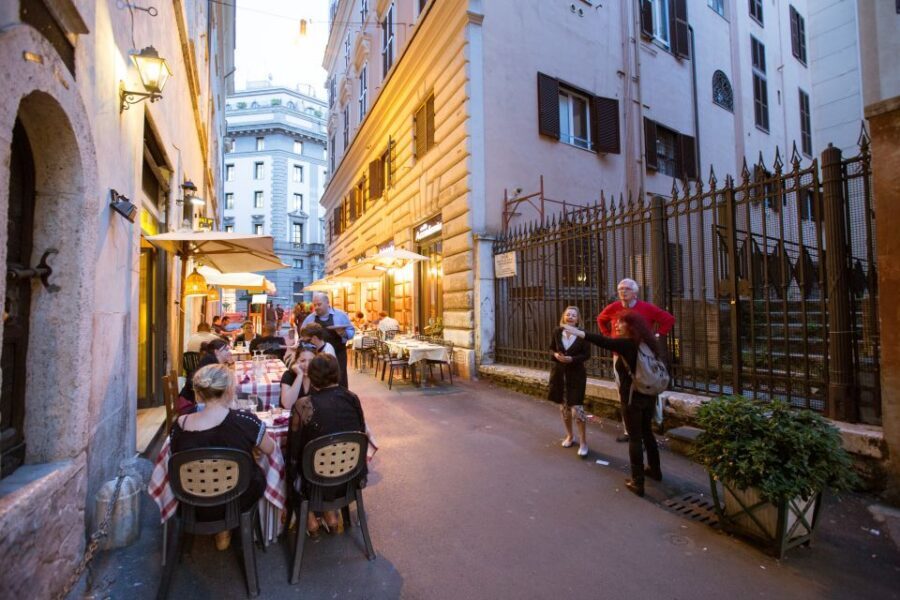
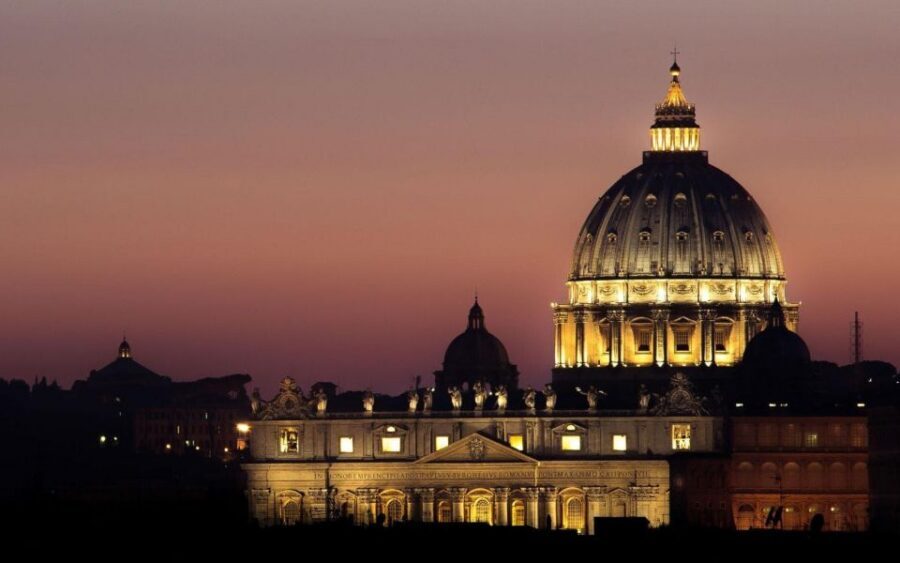
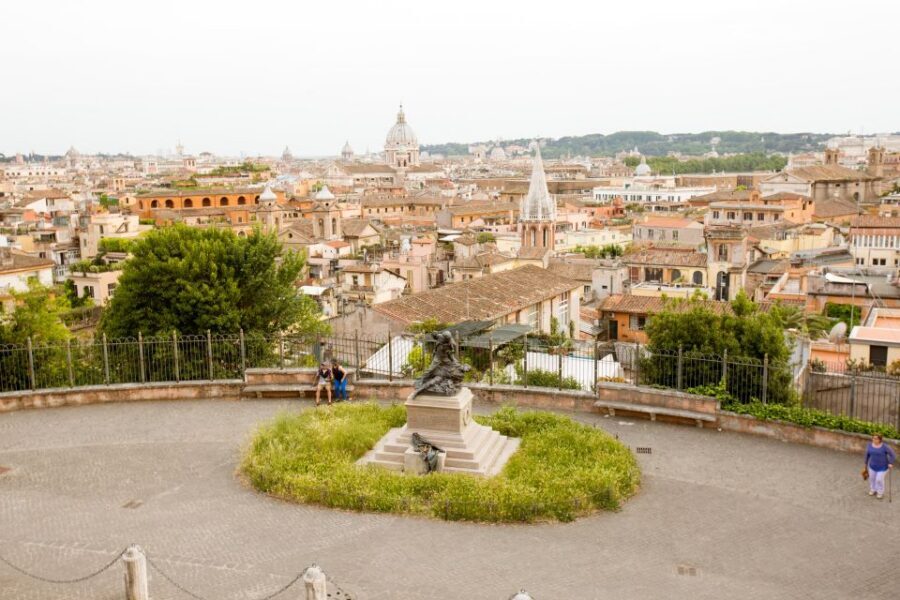
One of the most memorable parts is the walk up toward Pincio Terrace for sunset views. This is where Rome stops feeling like a checklist and starts feeling like a lived-in city. From above, the rooftops and domes line up in a way that’s hard to reproduce from street level.
Yes, there’s a hill involved. Some feedback flags that the opening climb can be steep, so take it slow, especially if you’re traveling with anyone who gets tired quickly. The good news: it’s worth building in a pause for the view, because the light changes fast once the sun starts dropping.
Think of Pincio as your “reset button.” After this, the rest of the walk feels more connected. You’re no longer just moving between famous places; you’re seeing how the city’s shape holds them together.
The Spanish Steps and Trevi Fountain, linked by Bernini energy
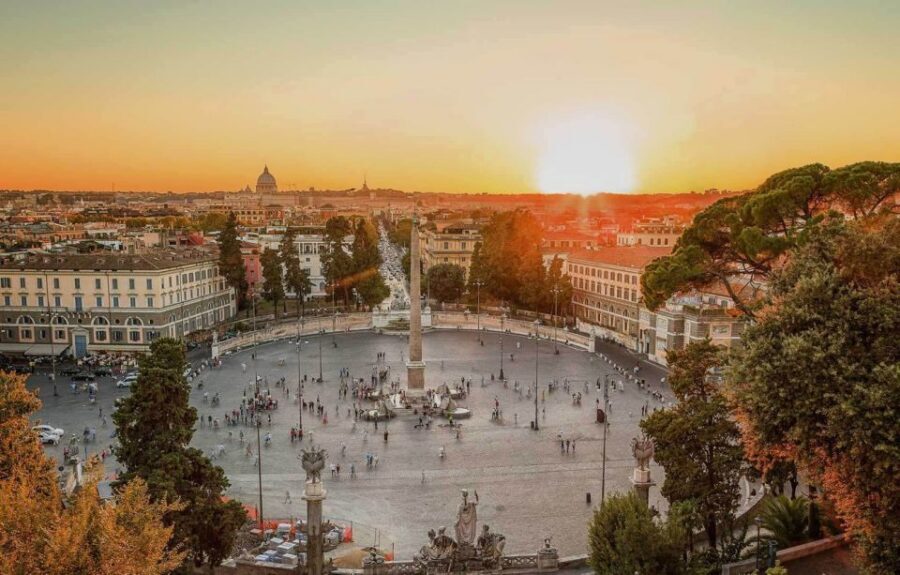
Next up are the classic photo stops: Piazza di Spagna for the Spanish Steps, and Bernini’s Barcaccia Fountain at the base. Even if you’ve seen pictures, the evening makes a difference. The steps and fountain area can be loud and crowded in daylight, but at night you get a calmer pace to look at details like the way the fountain’s design pulls your eye across the square.
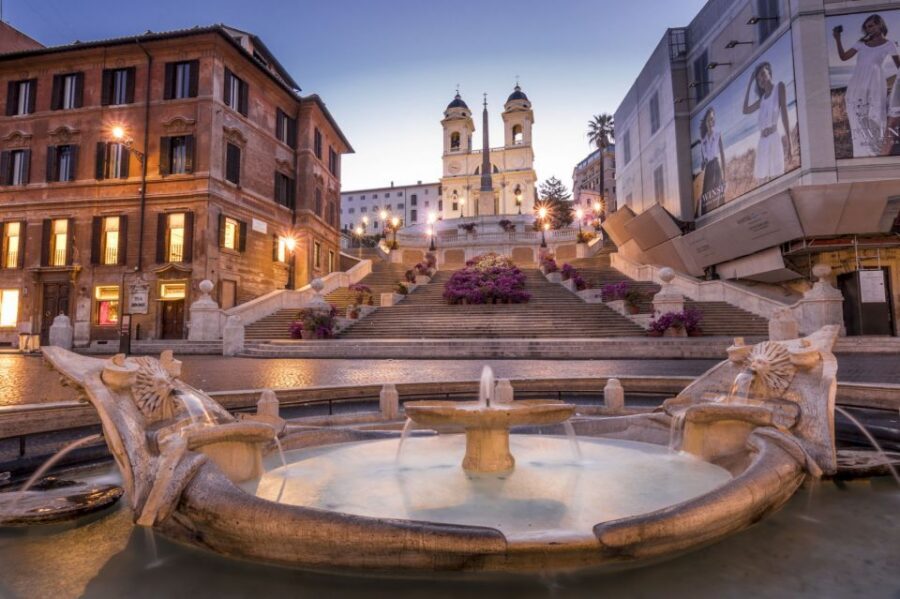
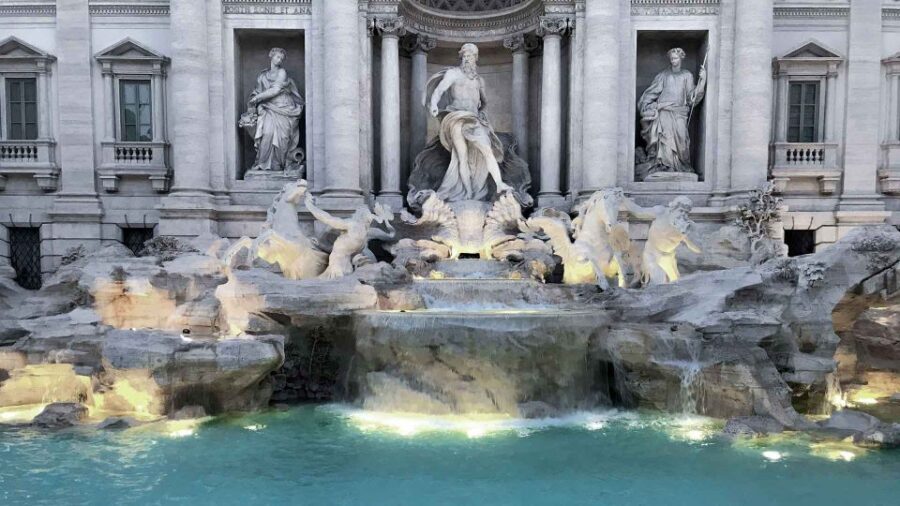
Then the tour moves to Trevi Fountain, the big Baroque showstopper. Here’s the part worth remembering: the legend says that if you toss a coin over your left shoulder into the fountain, you’ll return to Rome one day. It’s a fun ritual, and it also gives you a clear moment to slow down and take in the whole composition.
A value point: Trevi can be overwhelming if you go in cold. With a guide, you’re more likely to notice what makes it Baroque—how the movement, the figures, and the sculptural drama are meant to feel like theater. That’s where your evening becomes more than just snapshots.
Pantheon exterior time: what to look for when you can’t go in
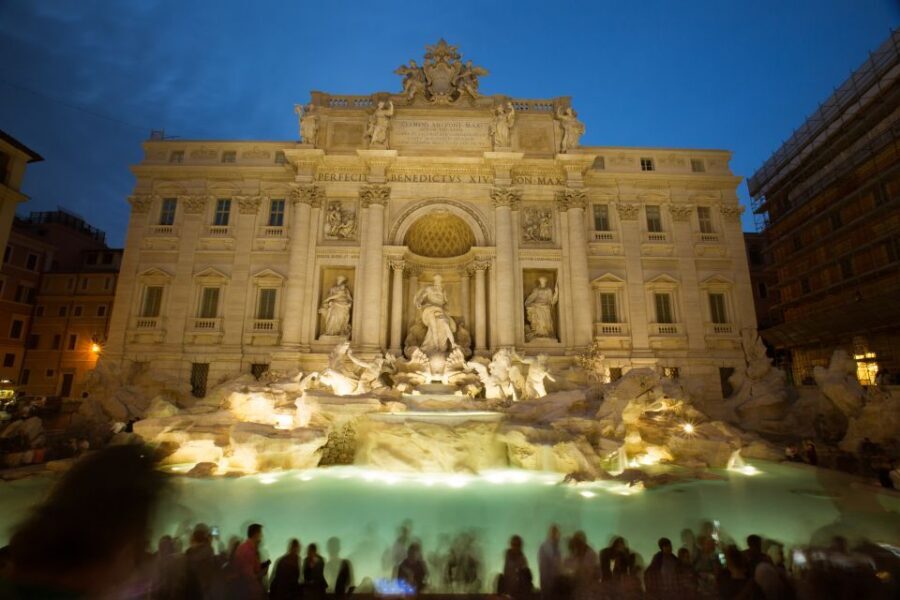
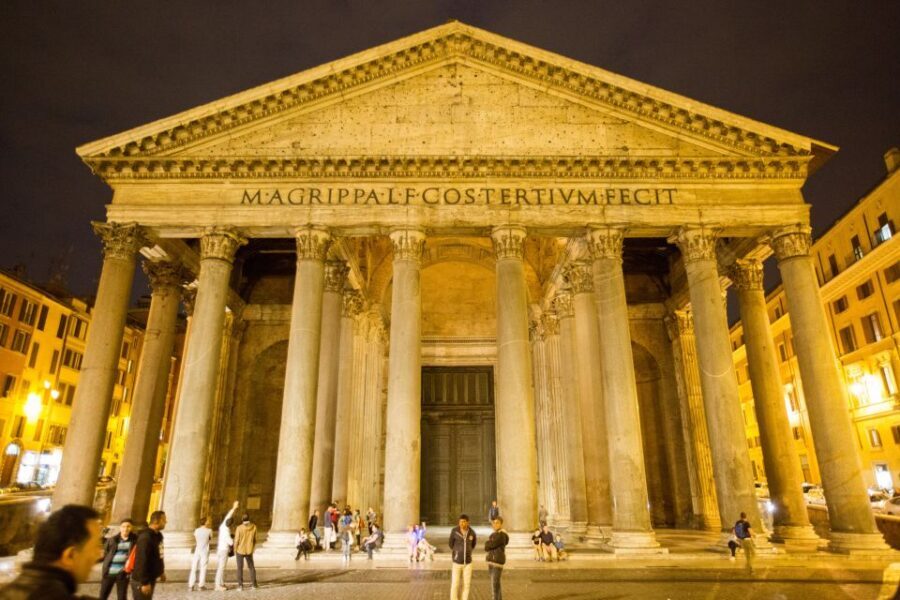
The walk also reaches Piazza della Rotonda, where you can admire the Pantheon exterior. This is the type of stop that rewards attention. Even without stepping inside (the tour data focuses on seeing the exterior), the building is so specific that you can spot why people still talk about it.
The key context your guide will help you hold in your head:
- The Pantheon was built in 27 B.C. and dedicated to all Roman gods.
- In the 7th century, it was converted into a church dedicated to Mary and the martyrs.
- It’s also the resting place of major Renaissance artists, including Raffaello.
This matters because Rome’s monuments don’t sit still. The same space absorbed Roman religion, then Christian life, then later Renaissance memory. When you understand that in advance, the building stops being just impressive and becomes readable.
If you love architecture, this is also a good stop to compare “then vs. now” in real time: the exterior tells you Roman intent; the church identity tells you what Rome chose to carry forward.
Piazza Navona’s Four Rivers Fountain and the Bernini-Borromini mix
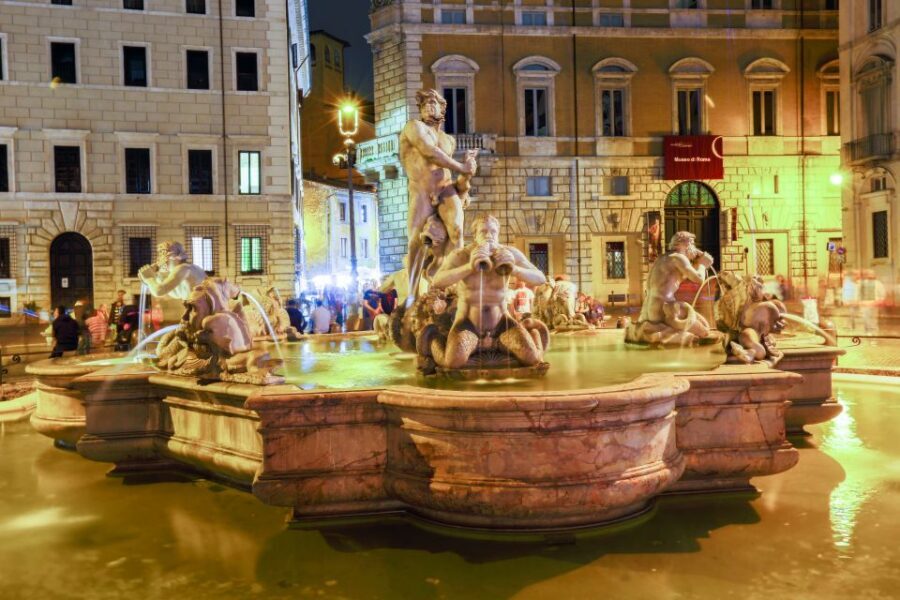
The tour culminates in Piazza Navona, home to Bernini’s Four Rivers Fountain. It’s one of those scenes where you can feel why Baroque art works in public space: the fountain isn’t quiet decoration. It’s a centerpiece meant to command attention.
In the same square, you’ll notice other major sculptural and architectural landmarks, including:
- Sant’Agnese in Agone, designed by Borromini
- Palazzo Pamphili
- Neptune Fountain at the northern end
- Moor Fountain at the southern end
Why this stop is so satisfying on an evening tour: it’s not just one monument. It’s a whole stage set. And because you’ve been walking through different eras, you’re primed to catch how Renaissance and Baroque styles keep talking to each other across the same paving stones.
Also, the “four rivers” theme gives you something to anchor the art with. You’re not only looking at faces and stone work—you’re seeing a symbolic system expressed in water, motion, and sculpture.
You can also read our reviews of more guided tours in Rome




Campo de’ Fiori after the tour: use the ending wisely
The walk ends at Campo de’ Fiori, which at one time was known for races and executions. Today it’s a lively market in the morning and a nightlife hub after sunset. In the center, you’ll see the statue of Giordano Bruno, a detail that turns this final square into more than a convenient exit point.
This ending works well because you’re not left standing in some empty pocket of Rome. You finish where you can actually keep moving—dinner, a drink, or a simple evening wander through streets that feel local rather than purely touristic.
From a practical standpoint, I like tours that end this way. If you’re new to the city, your evening needs continuity. Campo de’ Fiori gives you a natural place to regroup, plan the next day, and decide what you want to revisit up close.
Price and value for a 3-hour evening: what you’re really paying for
At $46 per person for about 3 hours, this isn’t a bargain-style deal, but it’s also not overpriced for what you get. You’re paying for three things that matter in Rome:
1) A guided route through multiple “anchor” sights
Spanish Steps, Trevi, Pantheon area, Piazza Navona. That’s a lot to line up without wasting evening time.
2) Interpretation, not just movement
People repeatedly highlight that guides make history and art feel understandable, and that they can answer questions beyond the exact stop. That kind of explanation turns iconic places into something you remember.
3) Evening timing
The sunset viewpoint from Pincio and the calmer feel compared to hot daytime conditions are major value. Several accounts specifically praise the benefit of doing it after arrival day because it helps you learn where to go next and what to prioritize.
Now for the honest catch: it’s fast-paced and lots of walking. One review notes there’s essentially no break during the full 3 hours, so this is not the choice if you want a slow stroll with frequent sitting time.
Who I think this fits best:
- First-time Rome visitors who want to get their bearings fast
- People on a short schedule who still want more than selfies
- Anyone who cares about art, religion, and architecture stories, not just facts on a sign
Who might want to skip or plan differently:
- Wheelchair users, since it’s noted as not suitable
- Anyone with limited mobility or who struggles on steep climbs
- Travelers who want a slow, sit-and-stretch tour rather than a continuous walk
What to expect on your feet: small prep that makes it easier
Because the pace can feel brisk, I’d treat this like a light training session for Rome’s hills. Wear shoes you trust. Bring water if you tend to get thirsty during long walks. Dress for evening weather—Rome evenings can feel cool once the sun drops.
Also, arrive early enough to settle in at Piazza del Popolo. Meeting points can be confusing when you’re in a big square with several attractions and streets opening up. A little patience at the start saves frustration later.
Finally, use the route to build your next-day plan. This tour is great for learning what kind of Rome you like—Baroque fountains, monumental churches, or the Roman layers under everything. You’ll leave with a shortlist of places that make sense to return to.
Should you book this Rome evening walking tour?
If you want a smart first-night plan, I’d book it. The route hits the biggest center-city hits—Pincio sunset, Spanish Steps, Trevi, Pantheon area, and Piazza Navona—and the guide experience is consistently described as engaging and question-friendly, with names like Andrada, Rosa, Elida, Carolina, Ava, Marzia, and Ghil showing up across feedback.
Skip it only if your body needs a slower format. With its fast walking pace and at least one steep climb, it’s best for travelers who can handle a full 3 hours on foot.
FAQ
FAQ
How long is the Rome city center evening walk?
The tour lasts 3 hours.
Where does the tour start?
Meet at Piazza del Popolo square in front of Santa Maria del Popolo Church, next to the Leonardo da Vinci Museum. Look for a guide with the Rome Your Way sign.
Where does the tour end?
The tour ends at Campo de’ Fiori.
What sights are included on this tour?
You’ll see Pincio Terrace (sunset views), the Spanish Steps and Bernini’s Barcaccia Fountain, Trevi Fountain, the Pantheon area at Piazza della Rotonda, and Piazza Navona with Bernini’s Four Rivers Fountain.
Is hotel pickup included?
No. There’s no hotel pickup and drop-off.
Is the tour wheelchair accessible?
No. It’s listed as not suitable for wheelchair users.
Does the tour offer headsets?
Yes, headsets are included when needed.
What language is the tour guide?
The live tour guide speaks English.
Are there free spots for children?
Yes. Children 5 years old and younger go for free.
What is the cancellation policy?
The tour offers free cancellation up to 24 hours in advance for a full refund.