REVIEW · CATACOMBS TOURS
Rome Underground: Catacombs Tour, Aqueducts and Appian Way
Book on Viator →Operated by Walks - Italy & Spain · Bookable on Viator
Rome feels different underground. This Rome Underground tour strings together Appian Way history, soaring aqueducts, and catacombs that feel strangely personal—especially since you go as the last group of the day. I love the small group size (18 or fewer), and I really appreciate that the catacombs stop is timed for quieter viewing. One thing to consider: the catacombs are tight, so if you’re claustrophobic, you’ll want to think twice.
What makes the day work is the mix of above-ground and underground stops in one tight half-day. You’ve got private, air-conditioned minibus transport between sites, an English-speaking guide, and you’ll use headsets so narration stays clear even when you’re walking. This is also a walking tour, so plan on moderate walking over uneven old-road surfaces—bring shoes you trust.
In This Review
- Key Highlights You’ll Care About
- Walking the Via Appia Antica: Rome’s oldest road mood
- Cecilia Metella’s Mausoleum: power in stone, not lectures
- Standing under Roman aqueducts in Parco degli Acquedotti
- Catacombs of San Sebastiano or Domitilla: quieter, cooler, and more human
- Why the guides make this feel like a guided story, not a checklist
- How the half-day schedule stays manageable
- Price and value: what $65.30 buys you in real terms
- Who should book this (and who should swap priorities)
- What to bring and wear for Appian Way unevenness and cool catacombs
- Should you book Rome Underground: Catacombs Tour, Aqueducts and Appian Way?
- FAQ
- How long is the Rome Underground tour?
- Which catacombs will I visit?
- Is transportation included?
- Is the tour offered in English?
- Is there a lot of walking or any claustrophobia concerns?
- Is hotel pickup included?
Key Highlights You’ll Care About
- Small group pacing keeps questions from getting lost in the shuffle
- Catacombs as last visitors means calmer, quieter tunnels
- Air-conditioned minibus transport saves time and energy between sites
- Aqueduct park photos feel more dramatic when you’re standing under them
- Two catacombs options (San Sebastiano or Domitilla) depending on the day
Walking the Via Appia Antica: Rome’s oldest road mood
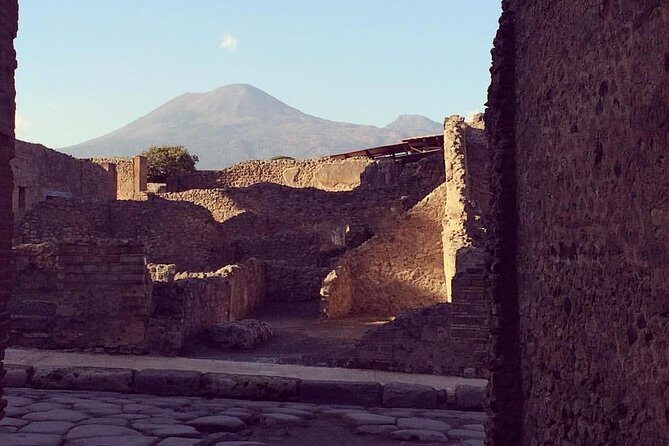
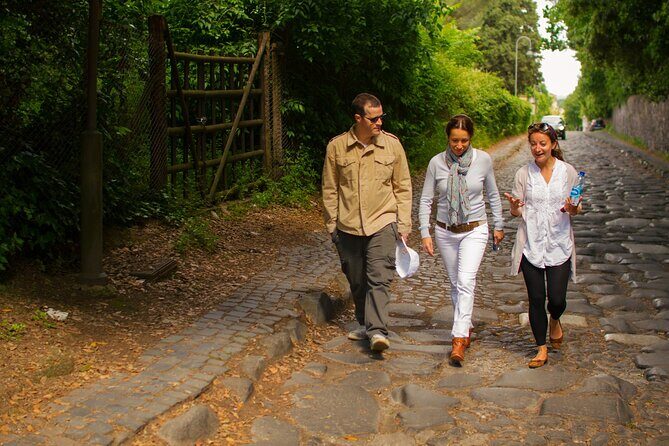
The tour starts with a walk on Via Appia Antica, one of the earliest major Roman roads. The big payoff is getting your feet on those centuries-old paving stones instead of just looking at the idea of Rome from behind glass. It’s only about 25 minutes here, so think of it as a preview with real texture.
Because it’s ancient paving, you’ll feel the unevenness. This is where good walking shoes matter. If you wear sandals, you’ll probably spend part of the walk doing the safety dance.
Practical tip: keep your pace steady. You’re not trying to conquer a marathon—just taking in the road alignment, the tombs and ruins lining the way, and the way this route shaped movement across Roman territory.
You can also read our reviews of more tours and experiences in Rome.



Cecilia Metella’s Mausoleum: power in stone, not lectures
Next you stop at the Mausoleum of Cecilia Metella, a striking circular tomb from the 1st century BCE. Even without a long explanation, the monument has presence. It’s a reminder that Rome wasn’t just about emperors and crowds—it was also about elite families building monuments that could last.
You’ll get around 25 minutes here. That’s usually enough time to understand what you’re looking at, snap a few photos from good angles, and move on without feeling rushed. Admission at this stop is free, so you’re paying tour money for the guiding and the sequencing, not for a standalone ticket.
The one drawback is also part of the deal: short stop length. If you like lingering at monuments, you’ll likely want to come back later on your own with more time.
Standing under Roman aqueducts in Parco degli Acquedotti
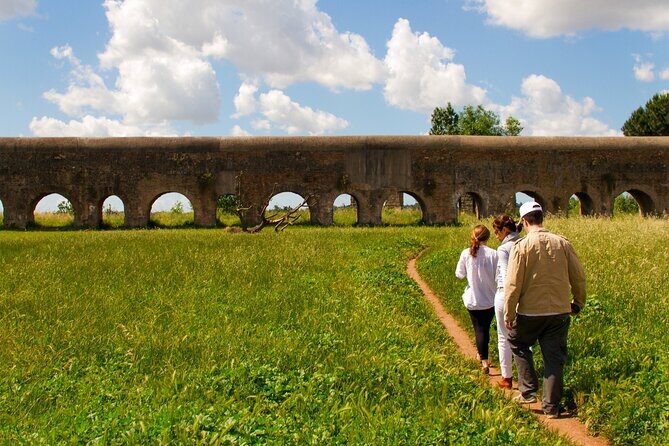
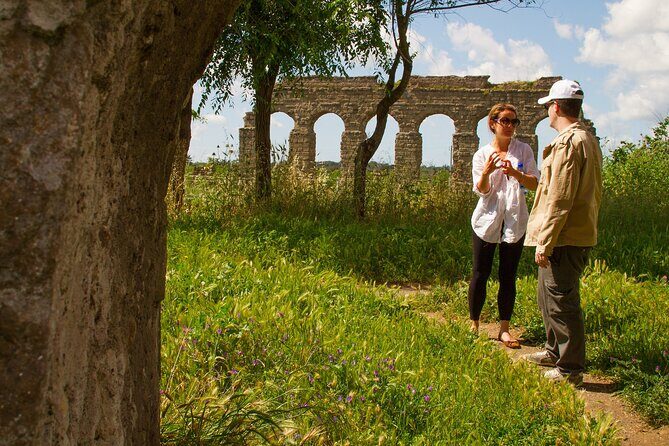
After the Appian Way, you move to Parco degli Acquedotti (Parco Archeologico dell’Appia Antica). This is where the tour really earns its keep. You get to stand beneath towering aqueduct remains—structures built to supply fresh water to the ancient city, and built with serious engineering logic.
You’ll spend about 45 minutes in the park, and the admission is included. The guided part helps you connect what looks like “old stone arches” to how Romans actually moved water over distance. It’s one of those things that makes modern plumbing feel less like magic and more like math.
You should expect some walking on uneven park paths. One helpful review tip: bring a bottle of water, especially if you’re going in hot weather. Also, since headsets are used on the tour, it’s easier to keep up with explanations while you’re moving around for photos.
Catacombs of San Sebastiano or Domitilla: quieter, cooler, and more human
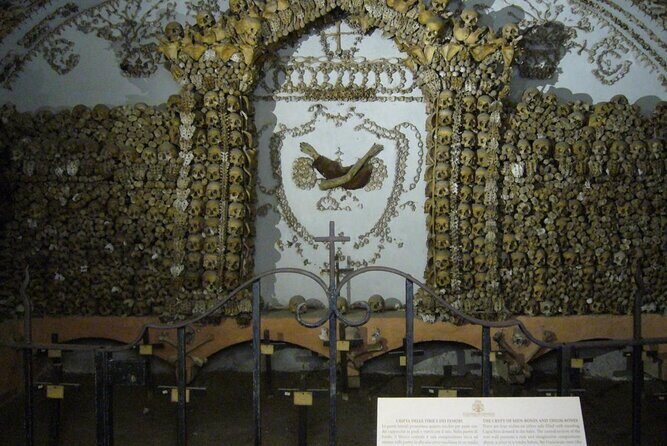
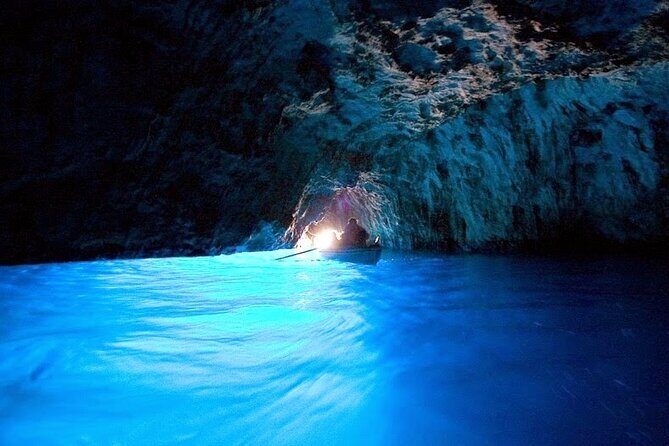
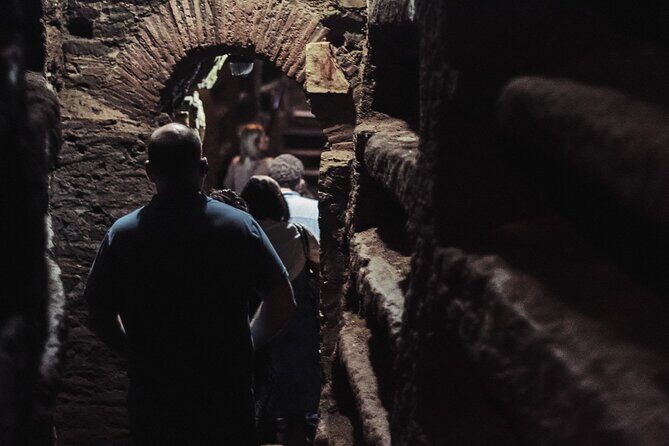
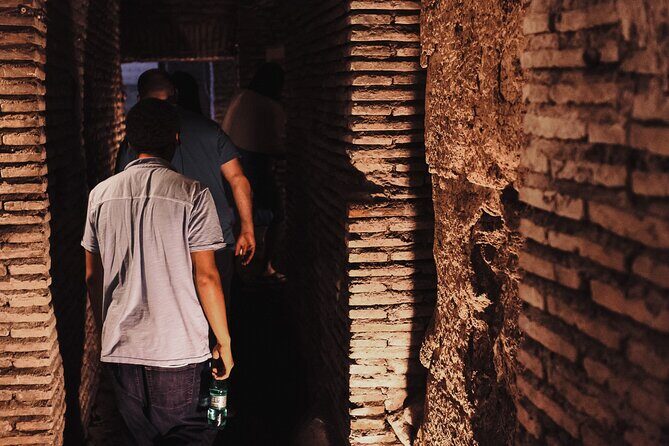
The final big moment is the underground catacombs stop: Catacombe San Sebastiano, or Domitilla depending on the day. Either way, you’re heading into tunnels lined with early Christian burial spaces and ancient frescoes. The pacing matters here, and this tour’s timing helps: you go in a crowd-free setting as the last visitors of the day.
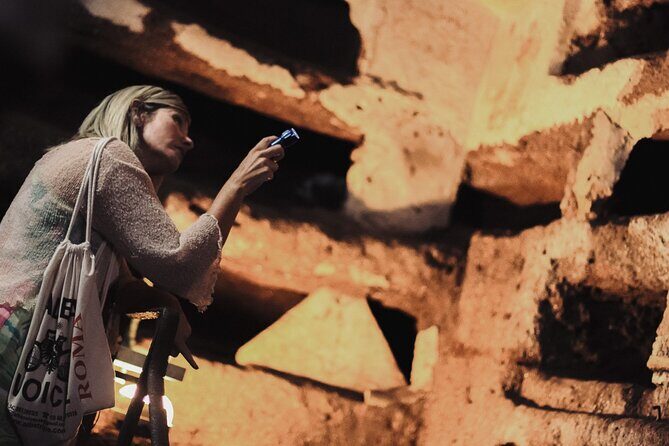
This stop runs about 1 hour 20 minutes, and the admission is included. Catacombs are typically chilly, and some parts can feel stuffy once you’re down there for a while. Wear layers you can handle, and consider a small bottle of water for the walk over to keep yourself comfortable before you descend.
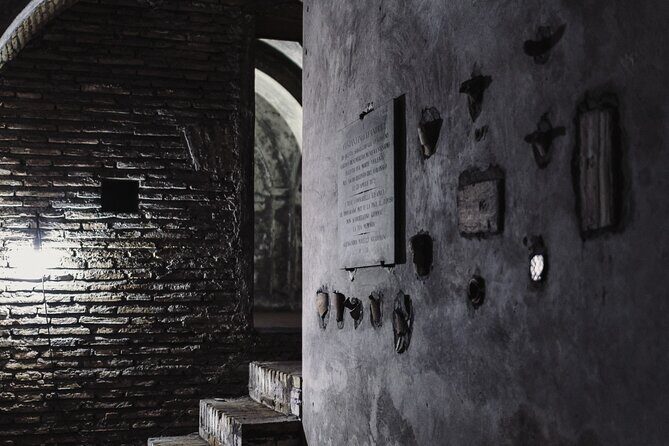
Let’s talk claustrophobia honestly. The tour notes that the catacombs are tight, and that’s real. If enclosed spaces make you panic, don’t “tough it out” here. It’s better to pick a different Roman history tour where you’re not spending a long stretch underground.
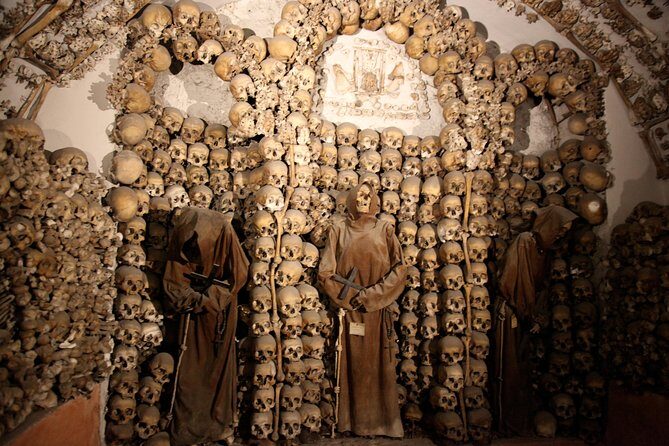
One more expectation check: the catacombs experience is more about the artwork, burial niches, and layout than about seeing skeletons up close. Some people find it less creepy than they feared, and that lines up with how the sites are often presented—history and atmosphere, not horror-movie staging.
Why the guides make this feel like a guided story, not a checklist
A huge part of the value here is the guiding. The structure of the day includes several “site moments,” but it’s the interpretation that turns them into one connected story. When the guide is energetic and precise, you’ll start spotting patterns—how Romans planned movement, how they managed water, and how later communities used burial networks below the city.
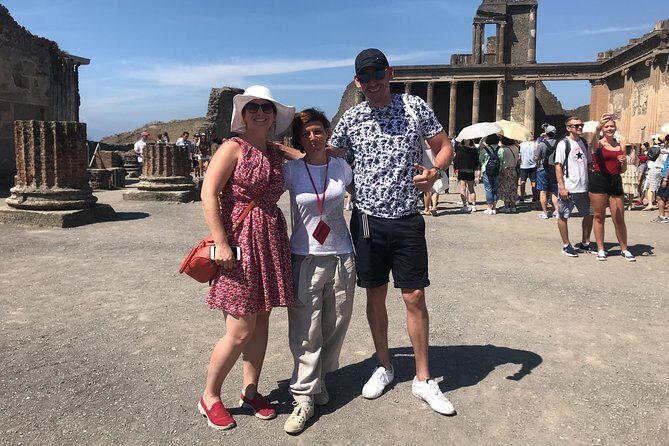
You’ll also benefit from the fact the group stays small (18 or fewer). That means your questions have a real chance of getting answered. Several guides have been praised for staying on top of details and keeping the group engaged through the full duration—people have specifically called out guides like Sylvia, Andre, Antonella, Francesca, Chiara, Flavia, and Annamaria by name.
At the aqueduct and road stops, you’ll typically hear the narrative while you walk and look around. At the catacombs, the experience shifts. It’s the one place where having a dedicated, site-focused approach pays off, especially if you want context for what you’re seeing inside those tight corridors.



How the half-day schedule stays manageable
This tour lasts about 3 hours 15 minutes. That’s long enough to feel like you left the city center and experienced Rome beyond the famous headline sites, but short enough to fit into a realistic itinerary.
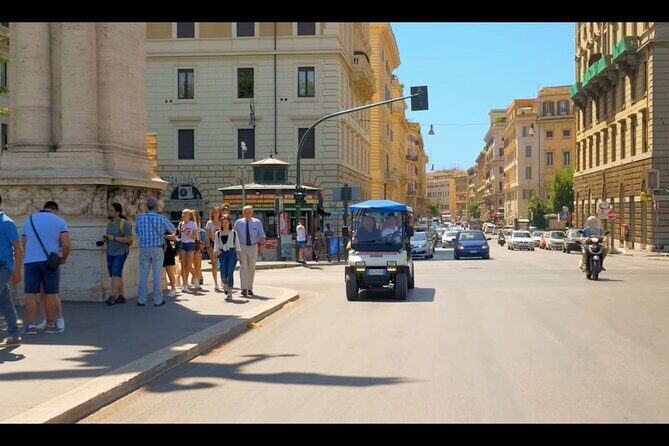
The transport between stops helps a lot. You’re not trying to stitch together buses or taxis with a schedule full of walking. Private, air-conditioned minibus rides keep you comfortable and on time, and reviews also mention that the bus is clean and the headsets are easy to use and clear.
One timing note: you might arrive a bit later at the start if you’re catching up to the group. That can shorten a stop length for everyone, so don’t plan anything right before meeting time. It’s Rome—there’s always a chance your route or pickup gets confused.
Price and value: what $65.30 buys you in real terms
At $65.30 per person for about 3 hours 15 minutes, you’re not just paying for someone to point at monuments. You’re paying for three things that are hard to DIY well:
First, you get guided interpretation across multiple sites. A lot of Rome tours focus on one neighborhood or one type of attraction. This one stitches together roads, water engineering, and underground burial history.
Second, key admissions are included where it matters most. The catacombs ticket and the Parco degli Acquedotti admission are included. Appian Way walking and the Mausoleum stop are listed as free admissions, which means your payment is concentrated on the parts that usually require tickets and guided context.
Third, transport is included. If you were to travel between these locations on your own, you’d spend time coordinating rides—and you’d lose the value of hearing the story while you move.
Bottom line: this is good value if you want a structured Roman-history outing without spending your own energy on route planning.
Who should book this (and who should swap priorities)
I think this tour fits best if you’re the kind of traveler who likes Rome’s layers beyond the biggest icons. It’s also a strong choice if you’re here for at least a few days, because you’ll get more value when you’re not trying to cram the Colosseum and Vatican in alongside everything else.
If your Rome time is tight—say you have only 2 or 3 days—this can still be worth it, but you’ll want to be honest about what you enjoy most. One person felt that in a shorter stay, other top sites might use the time better. I agree that the tradeoff exists: you’ll be outside the core of Rome for part of the day.
This tour shines when you want:
- Roman history with a human scale (burial sites and real-world logistics)
- engineering history (aqueducts that actually explain how water worked)
- a calmer experience outside the usual crowd patterns
If that’s your thing, book it. If you’re only hunting the very top ticket items, make sure you’re not stretching your schedule too thin.
What to bring and wear for Appian Way unevenness and cool catacombs
Do this like you’re going to Rome, not like you’re visiting a museum with perfect floors.
- Wear supportive walking shoes. Appian Way surfaces can be uneven, and sandals aren’t a great plan.
- Bring a bottle of water. You may walk a fair bit in the aqueduct park, and it can get hot.
- Pack a light layer. Catacombs can feel chilly, even when it’s warm above ground.
- If you’re claustrophobic, take that warning seriously. The tight tunnels are part of the experience.
Also, don’t skip the headset fit. It makes a big difference if you’re walking and listening at the same time.
Should you book Rome Underground: Catacombs Tour, Aqueducts and Appian Way?
Book it if you want a focused Roman history experience in a small group that mixes three different worlds: the Appian Way, the aqueducts, and the catacombs—plus comfortable transport and included admissions where it counts. The small-group feel and the last-visitor timing in the catacombs are the kinds of details that improve the whole day.
Skip or reconsider if you hate tight spaces or you’re on a very short Rome schedule and need to prioritize the headline sites first. In that case, you may get more value spending time closer to the center.
If you’re somewhere in the middle—enjoy history, can handle some walking, and want something off the usual track—this is an excellent way to see Rome’s underground side without losing half your day to transit.
FAQ
How long is the Rome Underground tour?
It lasts about 3 hours 15 minutes (approximately).
Which catacombs will I visit?
You’ll visit either the Catacombs of San Sebastiano or the Catacombs of Domitilla, depending on the day.
Is transportation included?
Yes. You get private air-conditioned transport by minibus between sites.
Is the tour offered in English?
Yes. It’s offered in English.
Is there a lot of walking or any claustrophobia concerns?
It is a walking tour with moderate walking. The catacombs are tight, so claustrophobia may be a concern.
Is hotel pickup included?
No, hotel pickup and drop-off are not included. The tour starts and ends back at the meeting point near Piramide.