REVIEW · CATACOMBS TOURS
Appian Way Aqueducts Bike Tour (Catacombs & Lunch Option)
Book on Viator →Operated by Roma STARBIKE · Bookable on Viator
If Rome sightseeing feels repetitive, this e-bike route gives you a different beat: ancient roads, aqueduct views, and long stretches of green space outside the usual crush. You start near the Colosseum area, then roll to the Via Appia Antica where the landscape (literally) shifts from city streets to countryside paths and ruined monuments.
What I like most is that the biking is made realistic with electric assist and gear that’s actually included (helmet, phone/handlebar holder, plus child seating if you need it). I also like how the stops are spaced so you get context along the way—Porta San Sebastiano, parks, mausoleums, aqueduct remains, and major Roman ruins on the way back.
One consideration: this is not a gentle Sunday cruise. You need to know how to ride a bike well, and the route can include cobblestones and rougher stretches, plus some traffic while you’re leaving and re-entering the city.
In This Review
- Key highlights at a glance
- Getting Started: meeting near the Colosseum and powering up your e-bike
- The practical riding reality
- Porta San Sebastiano: the gateway that sets the tone
- Rolling the Appian Way: aqueducts, villas, and the Queen of Roads
- Expect surfaces that aren’t museum-smooth
- Parco della Caffarella: green space with ancient bones
- What I’d look for on your ride here
- Ninfeo di Egeria: a quick stop with a story payoff
- Cecilia Metella and Castrum Caetani: mausoleum drama in daylight
- Optional 5-hour upgrade: Catacombs of St. Callixtus (and why it changes the mood)
- How to decide if catacombs are for you
- Parco degli Acquedotti: the aqueduct park lunch stop (plus aperitif on the 5-hour)
- Lunch and aperitif: practical value, not just a “rest break”
- Circus of Maxentius: standing in the outline of entertainment
- Why this stop works on an e-bike day
- Baths of Caracalla (Terme di Caracalla): the big finish with preserved structure
- Guides, pacing, and small-group comfort (what really drives the experience)
- A practical tip before you go
- What kind of rider should book this?
- Should you book the Appian Way Aqueducts e-bike tour?
- FAQ
- FAQ
- How long is the Appian Way Aqueducts Bike Tour?
- What’s included on the 4-hour vs 5-hour tours?
- Are the e-bikes and helmets included?
- Where does the tour start?
- Is the tour offered in English?
- Is there a small-group limit?
- Do children ride on this tour?
- What physical ability do I need?
- What’s the maximum weight allowed?
- Is the tour affected by weather?
Key highlights at a glance
- E-bikes with electric assist that help you keep moving up hills and through longer stretches
- Small group size (max 12) for calmer pacing and more guide attention
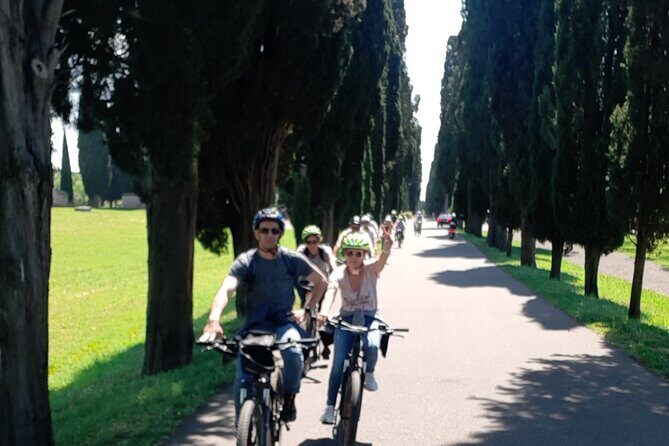
- Appian Way Archaeological Park route with aqueduct remains, villas, and noble tombs along the road
- Optional Catacombs of St. Callixtus included only in the 5-hour version
- 5-hour version adds lunch and aperitif around the aqueduct park area
- Stops tied to big stories: Porta San Sebastiano graffiti, Egeria’s love story, and Circus of Maxentius
Getting Started: meeting near the Colosseum and powering up your e-bike
You meet at Roma STARBIKE in central Rome, not far from the Colosseum. From there, the group gets helmets fitted and you’re set up with the e-bike controls before you roll. The bike comes with practical extras like a mobile phone holder and handlebar holder, which matters because you’ll be stopping for photos and you’ll want your phone accessible without fumbling.
This tour is designed for small groups (up to 12), so the handoff from “shop briefing” to “on-the-route riding” usually feels smoother than larger bus-style outings. It’s also offered in English and uses a mobile ticket, so once you’re checked in, you’re not waiting around for paperwork.
You can also read our reviews of more cycling tours in Rome
The practical riding reality
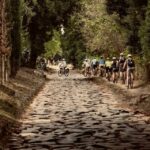
This is an e-bike tour, but you still pedal. One of the strongest themes in the experience reports is that guides run a safety-first approach and keep an eye on riders—especially when leaving the core streets. Expect some concentration at the start: you’ll be in Rome, and you’ll need to follow the group line while learning how your bike responds.
If you don’t ride often, or if you’re rusty, the tour may feel tougher than you expected. It’s best for riders who feel comfortable handling a bike at real-world speeds and surfaces.
Porta San Sebastiano: the gateway that sets the tone
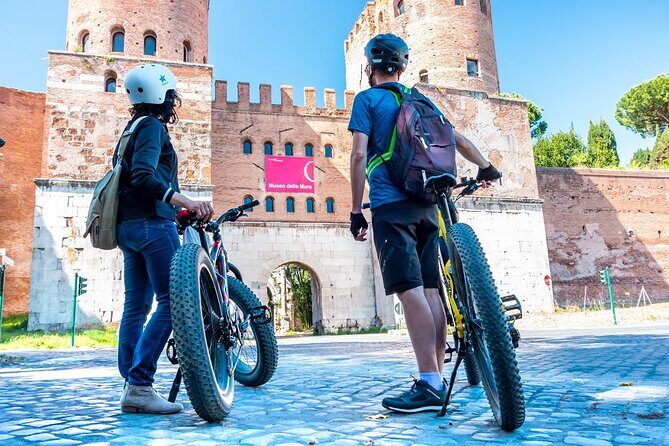
Your first major stop is Porta San Sebastiano, an imposing Aurelian Walls gate built around 275 AD. This is also where the historic Via Appia Antica begins, so it’s a natural “click” moment: you’re not just watching Roman ruins, you’re stepping into the road system that shaped movement and power.
A small detail that adds character here: you can see medieval graffiti on the gate, which is a reminder that this place stayed important long after the ancient era. Time for this stop is short (around 15 minutes), which is typical—enough to orient you, then back on the bike.
Why this stop matters for your ride: It frames the route as more than scenery. Porta San Sebastiano is where Rome’s southern story starts, and it makes the later aqueduct and tomb stops feel connected instead of random.
Rolling the Appian Way: aqueducts, villas, and the Queen of Roads
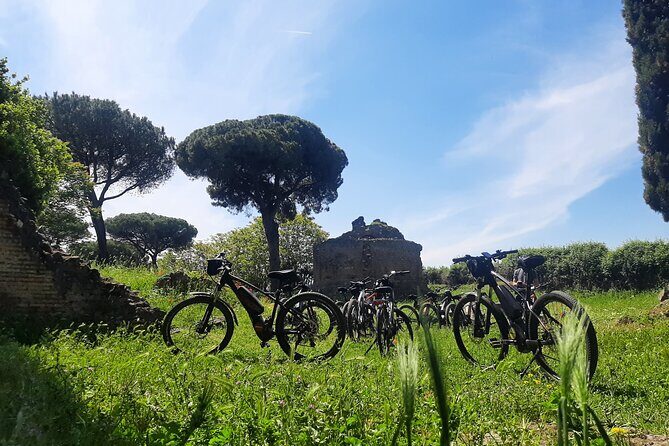
Once you enter the route proper, you pedal onto Via Appia Antica, often called Regina Viarum—the Queen of Roads. This is the “hero segment” of the tour for many people, and for a good reason: it’s one of the most famous ancient roads in the world, and it still feels like a road corridor rather than a single monument.
You’ll hear how it began in the 4th century BC and expanded over centuries toward the port city of Brindisi. Practically, that context helps you understand why the roadside remains are so dense: aqueducts, mausoleums, and villas didn’t line up randomly—they followed a major infrastructure route.
Expect surfaces that aren’t museum-smooth
Several riders point out that the pavement and stonework can be rugged. The cobblestones on the Appian Way can be big with deep gaps, and the route may include mixed surfaces along the way. The good news is the e-bikes can make this manageable, and guides typically pace so you’re not constantly white-knuckling.
Still, this segment is the reason I’d call the tour active. You’ll feel the effort, even with assist.
You can also read our reviews of more tours and experiences in Rome



Parco della Caffarella: green space with ancient bones
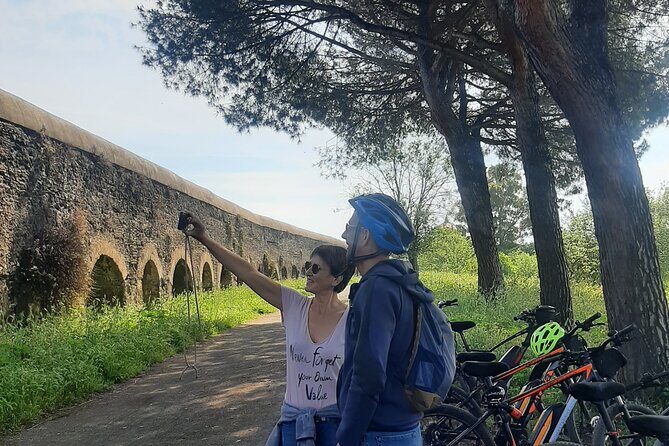
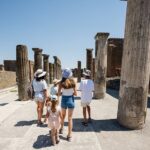
After leaving the gate area, you ride into Parco della Caffarella, a major green space within the larger Appia Antica Regional Park. This is a big part of why the tour feels like a break from the city: you get shade, open paths, and the feeling of countryside near Rome.
You’ll pass through a historical park full of visible remains of ancient buildings. The stop time is about 50 minutes here, which is enough to enjoy the space without turning the day into a slow crawl.
What I’d look for on your ride here
Watch for the transition between “Roman corridor” and “park life.” You’ll still see structures and ruin fragments, but the atmosphere is different—more breathing room, less stop-and-start. If you want photos that don’t look like they were taken in a crowd, this is where your memory will thank you.
Ninfeo di Egeria: a quick stop with a story payoff
At Ninfeo di Egeria, you’ll pause briefly (about 20 minutes) at a sacred site tied to a love story. The legend connects the nymph Egeria and Numa Pompilius, and the tale is dramatic: Egeria’s grief is said to have something to do with a spring.
This is the kind of stop that works best when you’re already in the walking-and-riding rhythm. On an e-bike tour, short stops can feel oddly satisfying because you still have energy, and the guide can connect the myth to the physical setting.
Cecilia Metella and Castrum Caetani: mausoleum drama in daylight
Next you visit the Mausoleo di Cecilia Metella and Castrum Caetani in the archaeological park area. The mausoleum dates to the 1st century BC and is described as one of the best-preserved mausoleums on the Via Appia Antica. You’ll also have a chance to see the remains of the medieval Caetani house and the perimeter walls of the church of San Nicola.
This is around a 20-minute stop. Short enough to keep momentum, long enough for you to actually look up and around rather than just snap photos and move on.
Why it’s a great pairing: A mausoleum is more than architecture here. It’s part of the same “route logic” as the road and aqueducts, and it helps you picture who lived, who traveled, and who was remembered along the Appian corridor.
Optional 5-hour upgrade: Catacombs of St. Callixtus (and why it changes the mood)
If you choose the 5-hour tour, you add a visit to the Catacombe di San Callisto (St. Callixtus). This stop is not included in the 4-hour option, but in the 5-hour plan it’s scheduled for about 50 minutes, with the admission ticket included.
The catacombs are described as the largest underground cemetery in Rome, with long corridors (about 20 km) and a deep connection to early Christian burial history. The stop name may be unfamiliar, but the structure and significance are the main draw—an official funerary complex tied to the early church era.
How to decide if catacombs are for you
If you like Roman history but don’t usually enjoy underground spaces, go in with open eyes. This stop adds a different tone: cooler, darker, and more “serious” than the open-air ruins above. If you’re happy with that shift, it’s a strong upgrade because it gives you variety in the same day without turning the itinerary into a checklist sprint.
Parco degli Acquedotti: the aqueduct park lunch stop (plus aperitif on the 5-hour)
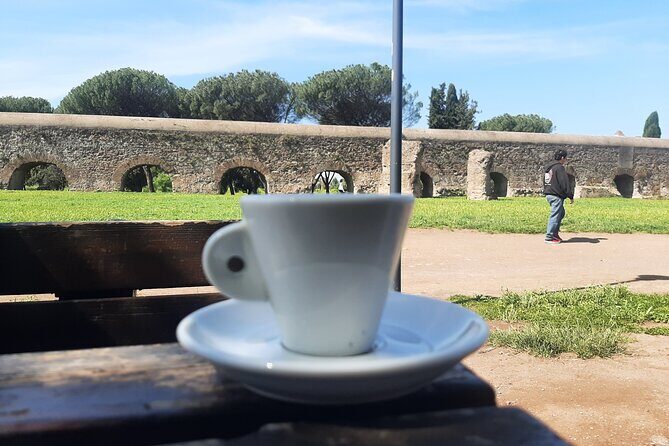
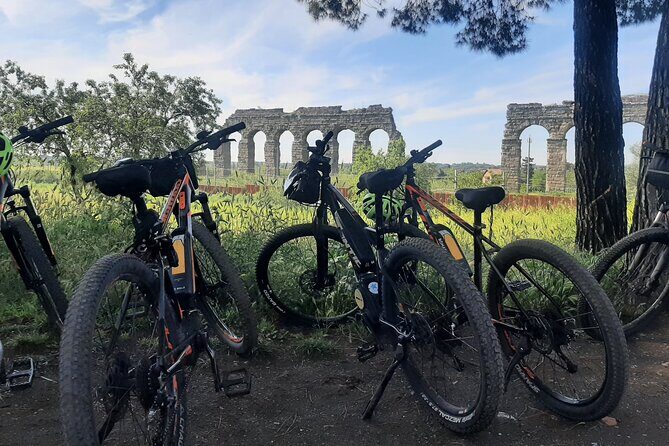
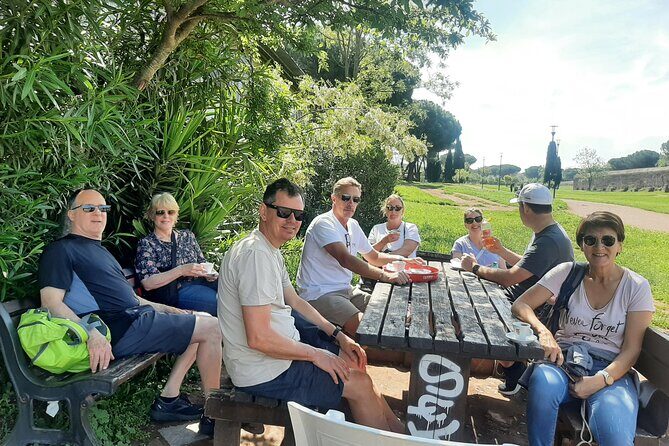
This is the heart of the theme: the Parco degli Acquedotti within the Appia Antica archaeological park. On the 5-hour version, you stop here for lunch and later get an aperitif in the afternoon. The stop structure is split: you’ll have a longer break (about 40 minutes) and then later resume in the same aqueduct park area (about 20 minutes).
The aqueduct setting is a big deal because it lets you see Roman engineering in context. You’ll ride through an immense green area crossed in ancient times by the water network. Some aqueduct remains are well preserved, and you may even notice that parts of the system were still in operation, which is one of those details that makes the ancient world feel less distant.
Lunch and aperitif: practical value, not just a “rest break”
Lunch is included only on the extended tour, and it’s described as a boxed lunch option in the general plan. One detail that helps your expectations: riders have said it feels like a simple sit-down meal rather than just something grabbed on the go.
Either way, it’s valuable because it breaks up the ride. And because you’re biking for hours, having a planned meal time matters more than most people think.
Circus of Maxentius: standing in the outline of entertainment
On the return ride you stop at the Circus of Maxentius, one of the best-surviving Roman circuses in place. You’ll spend about 20 minutes here, and the guide typically connects the site to the central features: the spina (the dividing strip) and the obelisk that was moved centuries later.
One neat story detail: the spina housed the Agonale obelisk, which was later moved during the Renaissance to the Fountain of the Four Rivers in Piazza Navona. That kind of connection helps you notice Rome as a living city rather than separate tourist zones.
Why this stop works on an e-bike day
This isn’t a “long sit and read” stop. It’s a quick visual understanding moment. You can walk the outline, take photos, and still stay in the ride rhythm.
Baths of Caracalla (Terme di Caracalla): the big finish with preserved structure
Your final ruin stop is Terme di Caracalla. Built under Emperor Caracalla, these baths were for about a century the largest public baths ever constructed, and much of the structure is still there today. Water was supplied via an aqueduct system connected to the Aqua Marcia and Antoninian aqueduct.
Time here is short (about 15 minutes), but it’s a powerful way to close the day. You get a major Roman civic site after the countryside riding, which makes the whole route feel like a loop through different Rome identities.
Guides, pacing, and small-group comfort (what really drives the experience)
When people rate this tour so highly, it usually comes down to two things: guide handling and rider confidence.
You’ll often hear that guides are patient in the first streets and careful on the route when surfaces get uneven. Several named guides show up in the experience reports, including Iman, Alex, Ava, Chris, Lorenzo, Paolo, and Ricardo. The consistent theme is clear instructions plus a real focus on keeping the group together and safe, not just reciting dates.
A practical tip before you go
If you’re nervous about traffic, tell your guide during the briefing. A good guide can position you in the group and pace you through the trickier start. Also, remember that biking is physically demanding even with electric assist. Plan your day so you’re not already exhausted from a long museum day.
What kind of rider should book this?
This tour is best for you if you:
- Want a different side of Rome beyond the main monuments
- Feel comfortable riding a bike and handling uneven stone
- Like ruins with context and stories tied to real infrastructure (roads and water)
- Want a small-group experience with time for questions and photos
You might want to skip or consider the shorter, less intensive plan if you:
- Haven’t ridden a bike in years
- Are uncomfortable with cobblestones and mixed surfaces
- Have trouble managing steady effort for several hours (even with electric help)
- Expect a fully relaxed, fully paved, stop-and-stroll route
Should you book the Appian Way Aqueducts e-bike tour?
My take: this is a smart booking if you want your Rome day to include real movement and real “place.” You get aqueduct scenery, major Appian Way context, and top Roman ruins, without spending the whole day inside a crowded walking loop.
Book it if you’re the type who enjoys history when it’s tied to land and engineering—roads, walls, water. I’d especially consider the 5-hour option if you want the catacombs and the included lunch/aperitif, because it adds a whole extra chapter without making the day feel scattered.
If you’re expecting an easy ride or you’re unsure about bike handling, don’t guess. Read the riding requirement carefully and be honest about your comfort level.
FAQ
FAQ
How long is the Appian Way Aqueducts Bike Tour?
It’s listed as about 4 to 5 hours, depending on the version you book.
What’s included on the 4-hour vs 5-hour tours?
The Catacombs of St. Callixtus and lunch/aperitif are included only in the 5-hour version. The 4-hour version skips those additions.
Are the e-bikes and helmets included?
Yes. A high-quality e-bike and a helmet are included.
Where does the tour start?
The meeting point is Roma STARBIKE – Rome eBike Tours & Experiences at Via dei SS. Quattro, 58, 00184 Roma RM, Italy.
Is the tour offered in English?
Yes, the tour is offered in English.
Is there a small-group limit?
Yes, the maximum group size is 12 travelers.
Do children ride on this tour?
A child seat is included for children up to 25 kg. There’s also a child option for ages 6 to 10, but it only applies if the child is under 4/7 feet (143 cm) because a trailer bike is used.
What physical ability do I need?
You should have moderate physical fitness, and you must know how to ride a bike well.
What’s the maximum weight allowed?
The maximum weight is listed as 120 KG / 265 pounds.
Is the tour affected by weather?
Yes. This experience requires good weather. If it’s canceled due to poor weather, you’ll be offered a different date or a full refund.