REVIEW · CATACOMBS TOURS
Rome: Appian Way, Catacombs, & Roman Aqueducts E-bike Tour
Book on GetYourGuide →Operated by TopBike Rental & Tours · Bookable on GetYourGuide
Rome changes when you ride it.
This tour puts ancient roads and colossal aqueducts into motion, with an option to add an underground catacomb visit on the 6-hour version. I like that it’s built for real comfort and control: you’re on a quality Cannondale e-mountain bike, wearing a helmet, and guided in a way that keeps the group together. The one thing to consider is that you cover a real distance on uneven surfaces, so you’ll want to feel okay on a bike before you commit.
What also makes this special is the rhythm of the day: city edges first, then quieter parks where traffic mostly disappears. The scenery shifts fast, from ancient stonework to green Caffarella Valley, so it never feels like one long viewpoint parade.
In This Review
- Key things to know before you go
- Why this e-bike route works better than a bus day
- Meeting at Via Labicana and getting rolling on Cannondale power
- From Aurelian Walls to the Appian Way: a guided path that reduces stress
- Appian Way sights you’ll pass: villas, tombs, and big Roman names
- Circus of Maxentius
- Tomb of Cecilia Metella
- Villa dei Quintili
- Catacombs: choose the 4-hour stop or the full guided 6-hour visit
- Parco degli Acquedotti and Caffarella Valley: the aqueduct ride you’ll remember
- Baths of Caracalla and the end-of-ride rhythm back to Via Labicana
- How hard is it, really? Distance, off-road, and Rome traffic
- Price and value: is $85 worth it?
- Who this tour fits best (and who should skip it)
- Should you book? My quick decision guide
- FAQ
- What is the duration of the Appian Way, Catacombs, and Aqueducts e-bike tour?
- What is the difference between the 4-hour and 6-hour tours?
- Where does the tour start and end?
- What’s included with the tour price?
- Do I need to bring food or drinks?
- How much of the route is off-road?
- Is this tour beginner-friendly?
- What languages are the guides available in?
- Are kids allowed, and how do child seats work?
Key things to know before you go
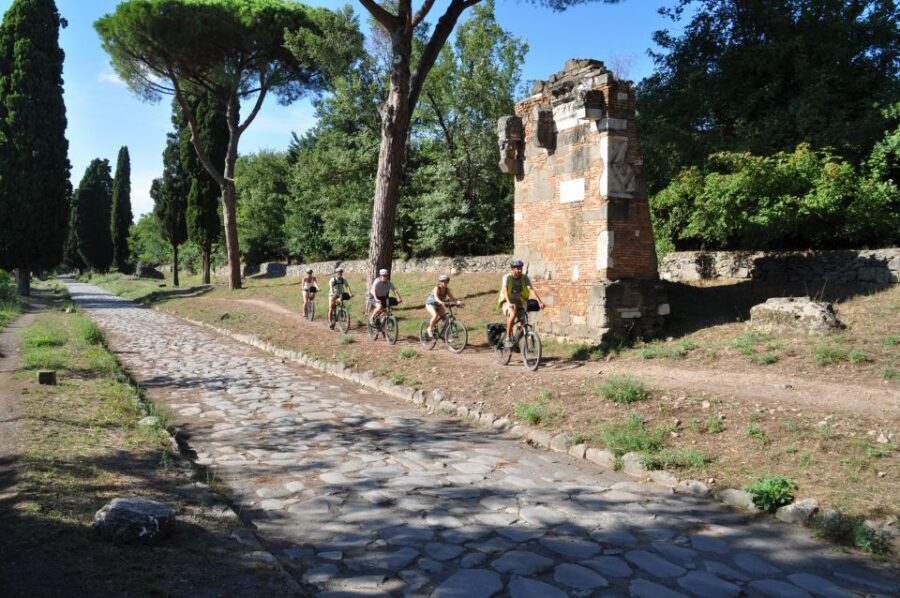
- Small group, big attention: capped at 10 riders, so your guide can actually manage the lines and crossings.
- Two tour lengths, two experiences: the 6-hour option includes a guided catacombs visit; the 4-hour option only stops briefly at the entrance.
- E-bike does the heavy lifting: the assist helps you pedal through stretches that would otherwise feel too long.
- A lot of off-road riding: 60% of the 27 km route is off-road, which means gravel and bumpy moments.
- Aqueducts are the star: Parco degli Acquedotti brings you close to the arches, then the ride continues through the Caffarella countryside.
Why this e-bike route works better than a bus day

The Appian Way is one of those Roman sites that you can see from a distance, or you can actually travel along it. Riding the route turns monuments into a sequence—villas, tombs, and major engineering all appear as parts of the same story, not separate photo stops.
You also get something Rome tours rarely give you: space. After the initial city approach, the route spends much more time in parks and along quieter paths, so your brain can reset. That makes the history feel less like memorizing dates and more like understanding how people lived across centuries.
And yes, the aqueducts matter. Those arches in Parco degli Acquedotti are the kind of sight that looks bigger while you ride beneath and alongside it, because you get perspective from the ground up.
You can also read our reviews of more cycling tours in Rome
Meeting at Via Labicana and getting rolling on Cannondale power
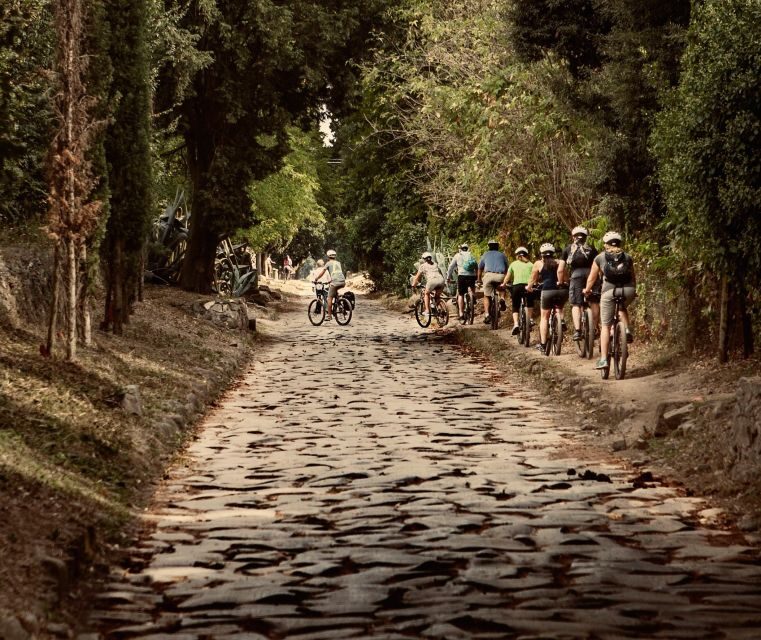
Your day starts at Via Labicana 49. Expect a straightforward check-in, helmet up (it’s mandatory), and bike set-up before you head out. The bikes are Cannondale e-mountain bikes with anti-puncture tires, plus a 5-liter handlebar bag and a biodegradable bottle of water.
The practical win here is comfort and control. Multiple guide styles were praised in the past—people specifically noted how leaders like Oscar, Arina, and Agnese kept the group safe on busier city sections, and how they helped newer riders feel confident with gears and electric assist.
One more detail that matters: you’ll be stopping often, but the e-bike means those stops don’t turn into a fatigue spiral. You can pedal steadily and let the assist help where you need it.
From Aurelian Walls to the Appian Way: a guided path that reduces stress

You enter the Ancient Appian Way through St. Sebastian’s Gate in the Aurelian Walls, which instantly sets the tone. This is not just a random ride through Roman suburbs; it’s a route that tries to connect the city’s defensive history to the road systems and beyond.
Early on, you’ll also get the feel for the guiding style. The group rides in a tight, controlled way, with your leader managing the trickiest parts: crossing points, lane changes, and the moments where city traffic can feel intimidating.
This matters because 40% of the route takes place in the city. It’s not endless traffic, but you should still expect some stress if you’re nervous on bikes. The upside is that the guide’s job is to remove chaos, not add it.
Appian Way sights you’ll pass: villas, tombs, and big Roman names
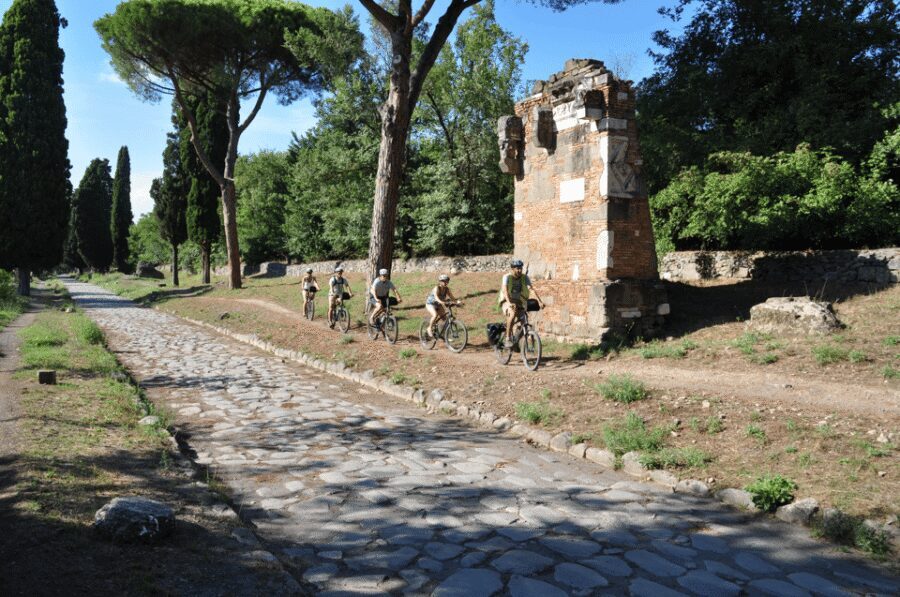
Once you’re in the Appian Way corridor, the ride becomes a slow reveal. You pass ancient villas of aristocrats, tombs and mausoleums, and roadside memorials that read like a timeline carved in stone. It’s quiet enough that you can actually look up between pedal strokes.
Several major stops break up the ride and give you a pause to absorb scale:
Circus of Maxentius
You’ll see the Circus of Maxentius, part of the larger world of Roman public spectacles. Even without deep museum time, it’s the kind of structure that helps you picture daily life in the imperial era: entertainment on a massive footprint.
You can also read our reviews of more tours and experiences in Rome




Tomb of Cecilia Metella
Next comes the Tomb of Cecilia Metella. This is one of those landmarks where the shape alone tells you something about status and permanence. When you encounter it from a moving bike position, you get a sense of how these structures dominated the landscape and travel routes.
Villa dei Quintili
You also stop near Villa dei Quintili. This is a reminder that the Appian Way wasn’t only about death and monuments—it was also lined with wealth, country estates, and the lifestyle of people who could afford to build far beyond the city center.
A key benefit of having a guide is not just storytelling. It’s pacing: they help you look at the right thing at the right time instead of turning every stop into your own scavenger hunt.
Catacombs: choose the 4-hour stop or the full guided 6-hour visit
This is the decision point that changes the entire mood of the tour.
On the 6-hour version, you make a real underground stop at the Catacombs of St. Callixtus (or St. Sebastian) for a guided visit through crypts and corridors. That turns part of your ride into a slower, reflective experience, where your sense of Roman religious history gets tangible fast.
On the 4-hour version, you get a short stop at the entrance with a brief explanation of their history and significance, but you don’t go inside with the full guided underground route.
If you’re into early Christian history and you want the emotional impact of going underground, pick the 6-hour tour. If you want mostly outdoors—Appian Way, aqueduct park, and countryside—without the extra time underground, the 4-hour tour keeps the day lighter.
Either way, the catacombs are a strong thematic link between the road’s Roman past and the religious world that followed.
Parco degli Acquedotti and Caffarella Valley: the aqueduct ride you’ll remember
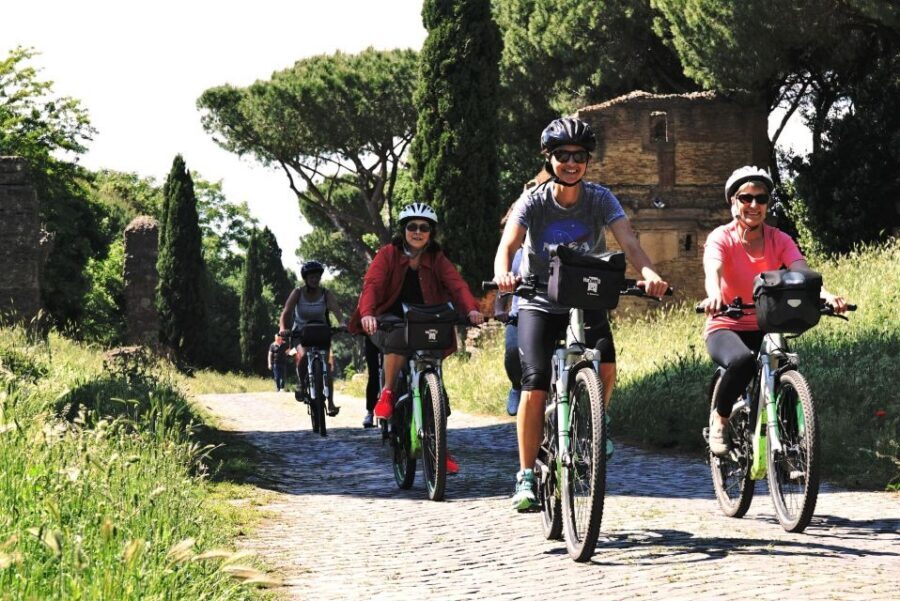
This is the centerpiece of the day for most people. You reach the Park of the Aqueducts (Parco degli Acquedotti) and follow stretches where colossal arches rise against warm light. Seeing aqueducts from the ground while riding gives you an extra layer of scale—these weren’t decorative ruins. They were functional infrastructure, built to move water long distances.
After the aqueducts, the route crosses Caffarella Valley. This is where the tour earns its relaxed reputation. The ride through green spaces feels like a reset button after the monuments, and it’s also a nice change of pace from the city.
In past groups, people highlighted how the aqueduct park sections felt special even in less-than-perfect weather, which tells you the route depends more on the environment and engineering than on ideal conditions.
Baths of Caracalla and the end-of-ride rhythm back to Via Labicana
You finish with Baths of Caracalla on the sightseeing loop before heading back to Via Labicana 49.
This isn’t random winding at the end. Baths are a big part of Roman everyday life—public, architectural, and built around routine. Seeing them late in the day helps you connect the infrastructure theme: water, engineering, and civic space show up again and again along the route.
The final ride back is when you’ll feel the balance of the day. You’ve had monuments, countryside, and a major engineering highlight, all stitched together by cycling rather than waiting in lines.
How hard is it, really? Distance, off-road, and Rome traffic
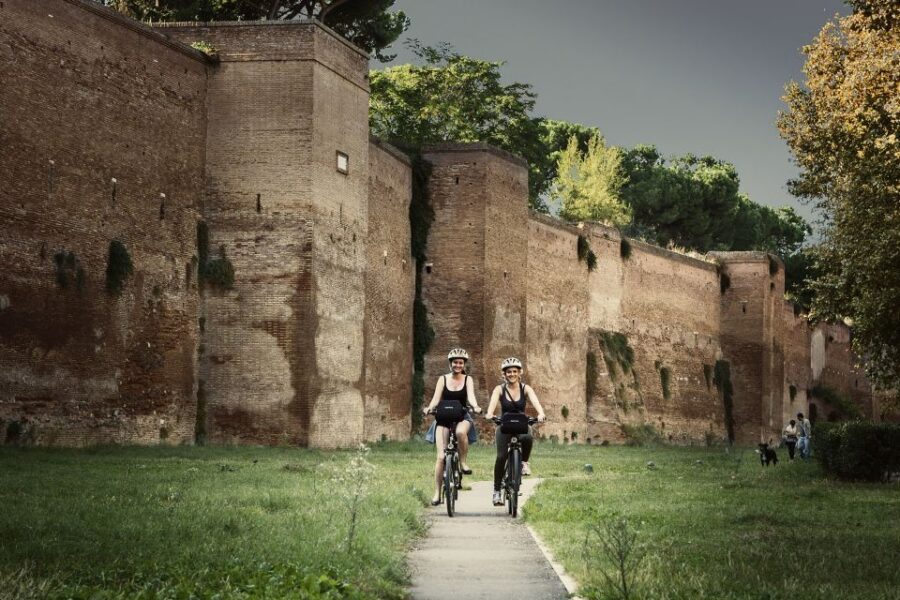
The route covers about 27 km (17 mi), with 60% off-road. It’s listed at an intermediate level, and the company notes it’s difficult with a child seat or child extension.
Here’s what this means for you in plain terms:
- You should be comfortable mounting, braking, and holding a line on gravel and uneven paths.
- The city parts aren’t the longest portion, but you still need calm bike handling for those sections.
- The terrain can be bumpy. One rider even said it would be nice to have rear shocks, so don’t expect a plush ride over rough ground.
The good news is the e-bike assist. Many past riders noted they didn’t feel drained, even with less bike experience, as long as the guide helped with crossings and stayed organized.
Also, on Wednesdays, the tour can run about 30 minutes longer, so if you have a strict schedule that day, plan for a bit of wiggle room.
Price and value: is $85 worth it?
At $85 per person, the value is mostly in what you get bundled:
- A Cannondale e-mountain e-bike with anti-puncture tires
- A professional guide and helmet
- A small amount of hydration support (the bottle)
- A handlebar bag so you’re not juggling phones and cameras
- And if you pick the 6-hour option, a guided catacombs visit
Food isn’t included, but you can purchase it along the way. In fact, some groups found time for a pizzeria stop that made the break feel like a genuine local moment, not just a rushed fuel stop.
When you compare this to paying for bike rental plus tickets plus a guide, the bundled format is the main reason it feels like a good deal. You’re paying for the day’s flow—especially the safety management in Rome traffic—plus the time saved by not navigating the route yourself.
Who this tour fits best (and who should skip it)
This is ideal if you want the Appian Way and aqueducts without the crowds and without sitting on a bus. If you like history, but you also want a scenic, active day, this hits the sweet spot.
It’s also a good family option when kids are old enough to handle it. The tour information is specific:
- Babies under 1 year are not suitable.
- Ages 1–4 travel free with a child seat (max 49 lbs / 22 kg).
- Ages 5–8 join with a child extension.
- Ages 9 and above can ride independently.
The bike equipment has a weight limit of 300 lbs / 136 kg, so if you’re booking for larger riders, confirm the fit ahead of time.
If you have zero bike comfort at all, I’d still consider the e-bike a help—but you should manage expectations: city traffic can feel scary even when you’re being guided carefully. A short test ride somewhere calmer beforehand can make the day much easier.
Should you book? My quick decision guide
Book this tour if you want:
- a small-group Roman day with real guidance and safety focus
- the Appian Way and aqueduct park in one sweep
- a choice between a quick catacombs introduction (4-hour) or a full underground guided visit (6-hour)
- a ride where the e-bike helps you actually enjoy the sights instead of racing to survive the distance
Skip it if:
- you’re not comfortable riding on uneven, off-road surfaces
- you can’t handle even a moderate bike day of about 27 km
- you need a fully sheltered, low-movement sightseeing option
If you fall into the first group, you’ll likely come away with one of those Rome memories that feels different from the usual list of landmarks—because you experienced it as a journey, not just a stop-and-go checklist.
FAQ
What is the duration of the Appian Way, Catacombs, and Aqueducts e-bike tour?
It runs for 4 to 6 hours, depending on the version you choose.
What is the difference between the 4-hour and 6-hour tours?
The 6-hour tour includes a guided catacombs visit, while the 4-hour tour includes only a short stop at the catacombs entrance with a brief explanation.
Where does the tour start and end?
The tour starts and ends at Via Labicana 49.
What’s included with the tour price?
You get a Cannondale quality e-mountain bike (with anti-puncture tires), a professional guide, a helmet, a 5-liter handlebar bag, and a biodegradable bottle of water. The guided catacombs visit is included only on the 6-hour version.
Do I need to bring food or drinks?
Food and drinks are not included, but you can purchase some along the way.
How much of the route is off-road?
The total route is 27 km (17 mi), and about 60% of it is off-road.
Is this tour beginner-friendly?
It’s rated intermediate. You’ll find it difficult if you’re doing it with a child seat or child extension, and it involves off-road and some city traffic connections.
What languages are the guides available in?
The live tour guide is available in Dutch, Spanish, French, English, German, and Italian.
Are kids allowed, and how do child seats work?
The tour states: babies under 1 year are not suitable. Ages 1–4 travel free with a child seat (max 49 lbs / 22 kg). Ages 5–8 ride with a child extension, and ages 9 and above can ride independently.