REVIEW · CATACOMBS TOURS
Rome EBike Tour: Appian Way, Catacombs & Roman Aqueducts
Book on Viator →Operated by TopBike Rental and Tours · Bookable on Viator
The Appian Way hits different from a bike. This Rome e-bike tour is built for moving fast on the outside paths while still hearing the stories that make ancient sites feel real, from Porta San Sebastiano to the aqueduct park ruins. I love that the ride mixes countryside air with major landmarks without turning the day into a museum marathon.
My second favorite part is the option to add catacombs, so you can match the day to your interests and energy. The one thing to think about is that a big chunk of the route is on rocky, dusty terrain, and some stretches will be easier if you’re a confident cyclist (or ready to walk for a moment).
In This Review
- Key highlights worth planning for
- Why the Appian Way on an e-bike beats a bus or walking day
- The bikes, helmets, and how tough is the ride really?
- Your first Roman fortress moment: Porta San Sebastiano
- Riding the Regina Viarum: the Queen of Roads
- Aqueducts in Parco degli Acquedotti: Rome’s water empire up close
- Circus of Maxentius and the Appia Way monuments you can spot easily
- Villa ruins and the “where did the elite live?” question
- Catacombs option: San Callisto vs San Sebastiano, and why the timing matters
- Timing, pacing, and what “small group” feels like
- Value for $102.79: what you’re really buying
- Who should book this Rome e-bike tour?
- Should you book it? My straight answer
- FAQ
- How long is the Rome e-bike tour?
- What does the tour cost?
- Where do we meet, and where does the tour end?
- Is the tour offered in English?
- Do I need to bring my own bike or helmet?
- How much of the route is off-road?
- What catacombs are included?
- Is lunch included?
- What’s the biggest cycling difficulty to expect?
- What if the tour needs to be canceled?
Key highlights worth planning for
- Cannondale e-bikes with anti-puncture tires and a comfy saddle make this practical, not just scenic
- Small group size (max 10 riders) keeps the pace relaxed and safe across crossings
- 60% off-road through parks gives you the calm “Rome outside the city” feeling
- Catacomb choice (4-hour vs 6-hour) lets you decide how much time underground you want
- Aqueducts in Parco degli Acquedotti gives you big Roman infrastructure views close up
Why the Appian Way on an e-bike beats a bus or walking day
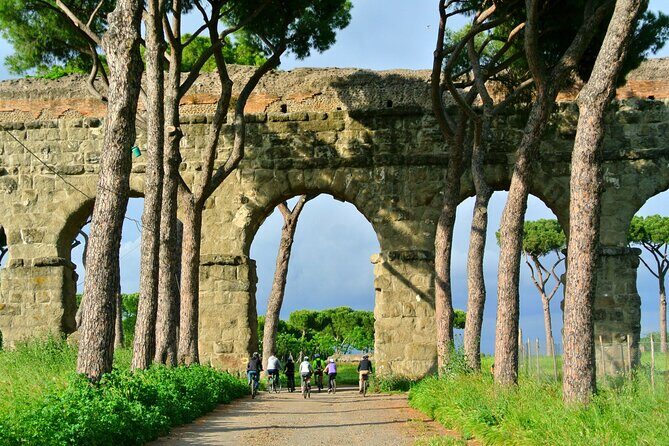
There’s a reason people talk about the Appian Way like it’s sacred ground. It’s one of those roads that feels less like a “sight” and more like a timeline you can ride alongside. On this tour, you get to experience it at human speed: quiet parks, open sky, and ruins you can see at eye level instead of from a vehicle window.
The e-bike matters. With pedal assist, you can cover about 17 miles (27 km) without turning the day into a fitness contest. That means you can actually listen to your guide while you ride, stop where it counts, and still feel fresh enough for the catacombs option.
Just know this is not a flat, paved bike path the whole way. Rough stone and dirt show up, and on a couple of tricky segments you might want to slow down or hop off and walk for comfort.
You can also read our reviews of more cycling tours in Rome
The bikes, helmets, and how tough is the ride really?

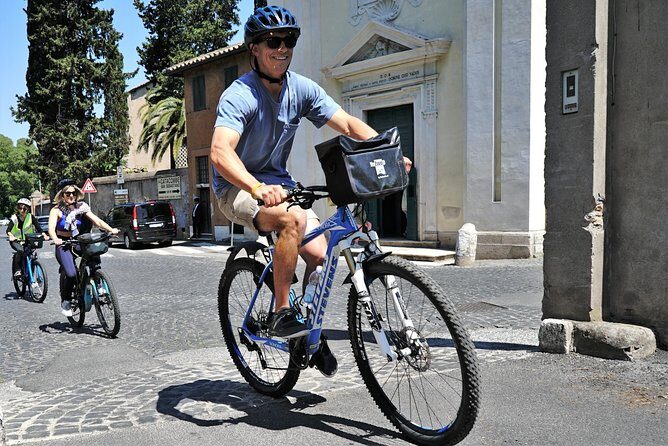
You’ll start with the basics handled for you: a helmet is mandatory and provided, plus a handlebar bag and a biodegradable water bottle. The bike itself is a top-quality Cannondale e-bike with anti-puncture tires, which is reassuring when the route leaves the city and starts getting gritty.
The tour’s physical level is listed as intermediate. About 40% of the route is in the city, and you’ll connect between parks with carefully chosen streets where some traffic is unavoidable. The remaining 60% is off-road, mostly in park settings.
So what does “intermediate” mean in real life? Expect dirt, dust, and uneven ground. You’ll see people from different ages and riding backgrounds on these bikes, but if you’re new to cycling, give yourself a little extra patience on the rockier sections. One rider tip from the experience is simple: dress for dust and ride in clothes you won’t mind getting dirty.
One more practical note: there’s a 300 lbs (136 kg) weight limit for the bike equipment, so plan around that if needed.
Your first Roman fortress moment: Porta San Sebastiano
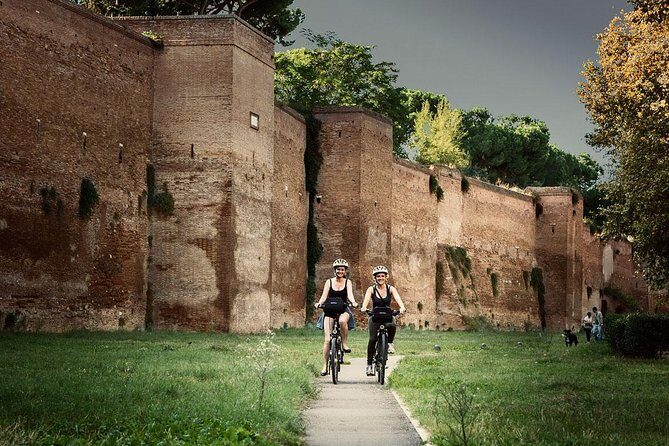
The day opens at Porta San Sebastiano, a massive gate in the third-century defensive walls of Rome. Even if you’ve seen plenty of Roman stone before, gates like this have a weight to them. They’re built to impress enemies first and welcome visitors second.
This is a quick stop, but it sets the tone. From here, you’re moving out toward the ancient road system that helped Rome connect to the rest of the peninsula. It also helps you get your bearings before the ride turns into open-air road and park cycling.
Riding the Regina Viarum: the Queen of Roads
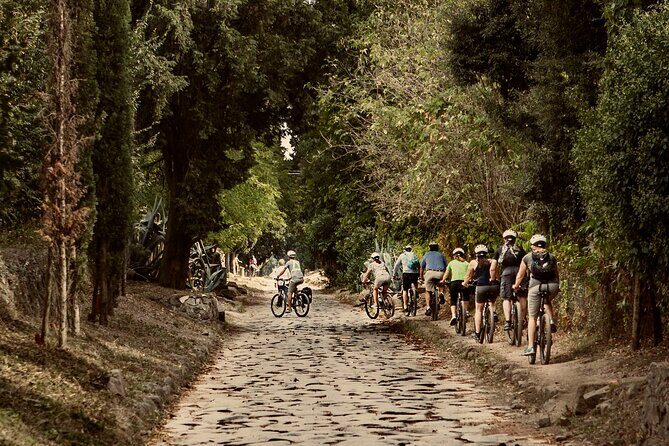
After you head out of the center, the highlight you came for shows up: Via Appia Antica, nicknamed the Regina Viarum. This is the “Queen of Roads” idea taken seriously. The original concept stretches between Rome and Brindisi, and the road’s age is part of its punch: it goes back centuries before the city grew into the Rome most people picture.
Your time here is part scenic, part historical. You’re not hustling from point to point like a checklist tour. Instead, you ride and look as you pass Roman-era markers along the way, with your guide explaining what you’re seeing and why it mattered.
The biggest consideration? The ground can be uneven. If you’re not a confident cyclist, plan to take it slower on the rougher segments. A bike on uneven stone can feel less “fast tour” and more “controlled adventure,” and that’s normal here.
Aqueducts in Parco degli Acquedotti: Rome’s water empire up close
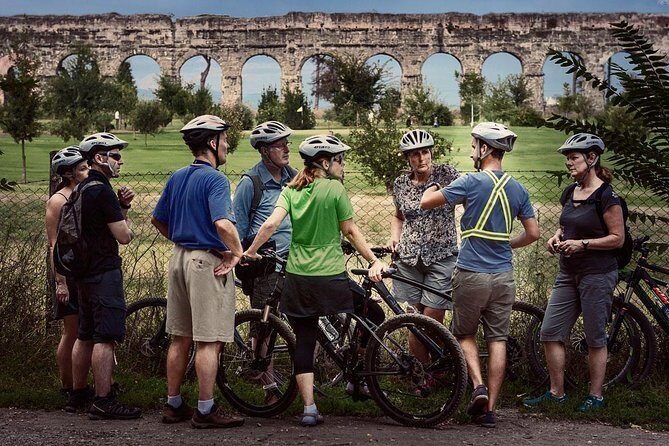
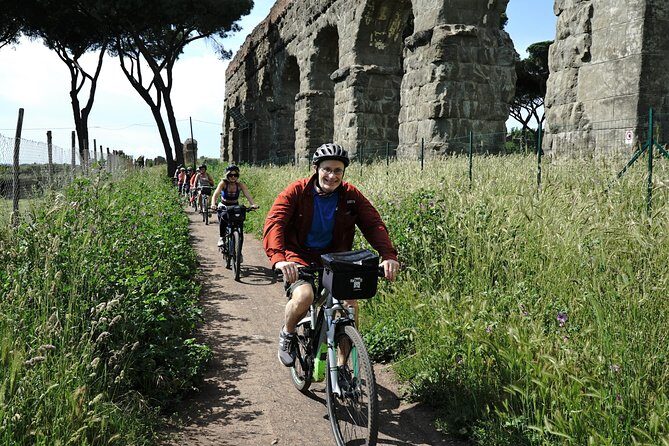
Then comes the park that makes this tour feel special: Parco degli Acquedotti. You’ll spend about 30 minutes in the aqueduct park, and it’s one of those places where Roman engineering doesn’t feel abstract. You see the arches lining up, stretching across space, and you understand how the city fed itself.
This isn’t the kind of stop where you sprint for a photo and move on. The aqueducts are spread out, and the park paths give you a close look from different angles. If you like outdoor ruins and infrastructure, this is your payoff.
Be aware, though: some people find they want a bit more time elsewhere. If catacombs are your #1 priority, think carefully about whether you’re choosing the 4-hour or 6-hour route, because the day includes multiple major highlights.
You can also read our reviews of more tours and experiences in Rome



Circus of Maxentius and the Appia Way monuments you can spot easily
You’ll also pass a cluster of big, recognizable ruins that don’t require museum tickets to understand.
First up is the Circus of Maxentius, plus its adjacent chariot racetrack from the early fourth century AD. It’s a Roman reminder that daily life here included spectacle, movement, and crowd energy, even far from the modern center.
Next, you get Mausoleo di Cecilia Metella e Castrum Caetani in the Appia Antica archaeological park. It’s the largest mausoleum built along this road, tied to a young noblewoman from the first century AD. Even if you don’t know all the names, the scale gives you instant context: this was a route where status and memory traveled with you.
Villa ruins and the “where did the elite live?” question
In the longer option, you’ll also see remains connected to wealthy Roman life, including the Villa dei Quintili and Santa Maria Nova area. The Villa dei Quintili remains hint at how much power and space the elite had, and how the Appian Way wasn’t just an exit road. It was also an address.
Also in the longer option, you may stop to see the Thermal Baths of Caracalla from above. This is one of ancient Rome’s biggest bath complexes, and a view of the ruins helps you picture how baths functioned as social life, not just hygiene.
If you’re the type who likes Rome best when it’s outside the main monuments, these stops make the day feel balanced: roads, infrastructure, elite villas, and public life all in one ride.
Catacombs option: San Callisto vs San Sebastiano, and why the timing matters
The catacomb decision is the heart of choosing between the 4-hour and 6-hour routes.
In the 6-hour tour, you get a guided visit inside the catacombs, with about 45 minutes underground. Your tour focuses on either San Callisto or San Sebastiano, depending on the day. This guided inside time is the difference between seeing the entrance and understanding what you’re looking at.
In the 4-hour tour, the catacombs stop is described as a shorter pause to contemplate the underground resting places, and it’s not included on Wednesdays.
Here’s the day-specific twist you should plan around:
- On Wednesdays, the 6-hour tour visits Catacombs of San Sebastiano instead of San Callisto.
- On Easter Sunday (April 5, 2026), catacombs are closed, so the 6-hour tour won’t run.
Also keep your expectations about photos realistic. One practical note from the experience is that you can’t take pictures inside the catacombs. If photography matters to your planning, remember the best moments here are about the guide’s explanation and the atmosphere.
Timing, pacing, and what “small group” feels like
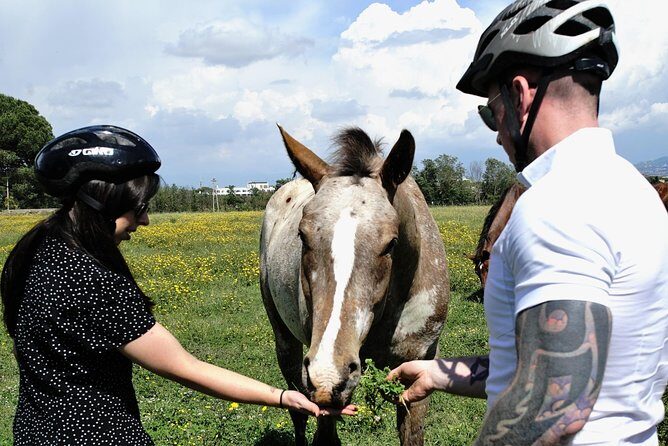
This tour is capped at 10 travelers, so you’re not fighting for space while trying to learn. The pace is relaxed, and the guide can manage stops without the day feeling frantic.
Still, you are riding for several hours. The city portion is about 40%, and it includes traffic connections you can’t fully avoid. The good news is the route is planned to limit traffic, and you’ll move carefully across streets so you’re not stressed.
The tour duration can shift on specific days. On Wednesdays, the route may run about half an hour longer (around 4.5 hours instead of 4, and 6.5 hours instead of 6). That means your catacomb schedule and overall end time will drift slightly.
In the real world, it adds up to this: you’ll feel like you left the center of Rome and stayed outdoors for most of the day, then returned without it feeling like you spent the afternoon trapped in transit.
Value for $102.79: what you’re really buying
At $102.79 per person, you’re paying for more than “a bike with a guide.” You’re buying access to a route that would be harder to replicate solo without logistics, especially when you want the Appian Way + aqueduct park + optional catacombs in one day.
What you’re getting included:
- E-bike rental with quality tires and comfort-focused saddle
- Helmet (mandatory)
- A professional guide
- Catacomb guided visit only on the 6-hour option
- Handlebar bag and a water bottle
What you’re not getting:
- Lunch or drinks are not included
- No hotel pickup or drop-off
So how do you judge value? If catacombs are a must for you, the 6-hour option is the one that turns this from a great ride into a complete Rome experience. If your top priority is fresh air and ruins above ground, the 4-hour version still hits the Appia Way and the aqueduct park while keeping the day shorter.
One smart planning move: since there’s no set lunch, bring a flexible mindset. You’ll find opportunities to purchase food or drinks during a break, but the tour doesn’t build a formal meal into the schedule.
Who should book this Rome e-bike tour?
Book it if you:
- Want a real outdoors day in Rome, with roads and parks doing the heavy lifting
- Like learning in motion, with stops that match what you’re actually seeing
- Prefer a small-group pace over a big-van tour
- Are comfortable with the idea that some roads are not smooth
It’s a strong fit for families and mixed groups too, because pedal assist helps people ride together. One review example included ages ranging from middle-aged to older adults, with the e-bike making the ride doable.
Skip it (or rethink the catacomb-heavy version) if you hate uneven surfaces or you’re not confident on a bike. You’ll still be safe and guided, but you may find yourself walking some stretches, especially on the rougher ground.
Should you book it? My straight answer
If your Rome plan includes Appian Way + aqueduct ruins, this is one of the most practical ways to do it without burning half a day on transfers. The e-bikes make the distance feel manageable, and the small-group size keeps the experience calm and personal.
I’d especially lean toward booking if you want the underground story. The 6-hour route is the one that delivers the guided catacomb visit with enough time to make it more than a quick stop.
If you’re on the fence, decide based on two questions: Can you handle rocky, dusty riding for parts of the day? And do you want catacombs inside the tunnels, not just a brief pause at the entrance? If your answers are yes, this tour is a very solid choice.
FAQ
How long is the Rome e-bike tour?
It runs about 4 to 6 hours, depending on the option you choose.
What does the tour cost?
The price listed is $102.79 per person.
Where do we meet, and where does the tour end?
You meet at Via Labicana, 49, 00184 Roma RM, Italy, and the tour ends back at the meeting point.
Is the tour offered in English?
Yes, the tour is offered in English.
Do I need to bring my own bike or helmet?
No. You get the e-bike, and a helmet is provided and required.
How much of the route is off-road?
About 60% of the route takes place off-road, with roughly 40% in the city.
What catacombs are included?
On the longer 6-hour option, there’s a guided visit to San Callisto or San Sebastiano. On Wednesdays, the 6-hour tour switches to San Sebastiano instead of San Callixtus. The 4-hour option includes only a short pause and does not include this stop on Wednesdays.
Is lunch included?
No. Lunch and drinks are not included, though there are places to buy something during breaks along the route.
What’s the biggest cycling difficulty to expect?
The route is labeled intermediate and includes rocky, dusty terrain and some tricky paths, especially where the surface isn’t smooth.
What if the tour needs to be canceled?
You can cancel for a full refund if you cancel at least 24 hours in advance. The tour also has a minimum number of participants, and if it falls below that, you’ll be offered an alternative date or a full refund.