REVIEW · FOOD
Rome: Trastevere & Campo de Fiori Street Food Walking Tour
Book on GetYourGuide →Operated by Hili srl · Bookable on GetYourGuide
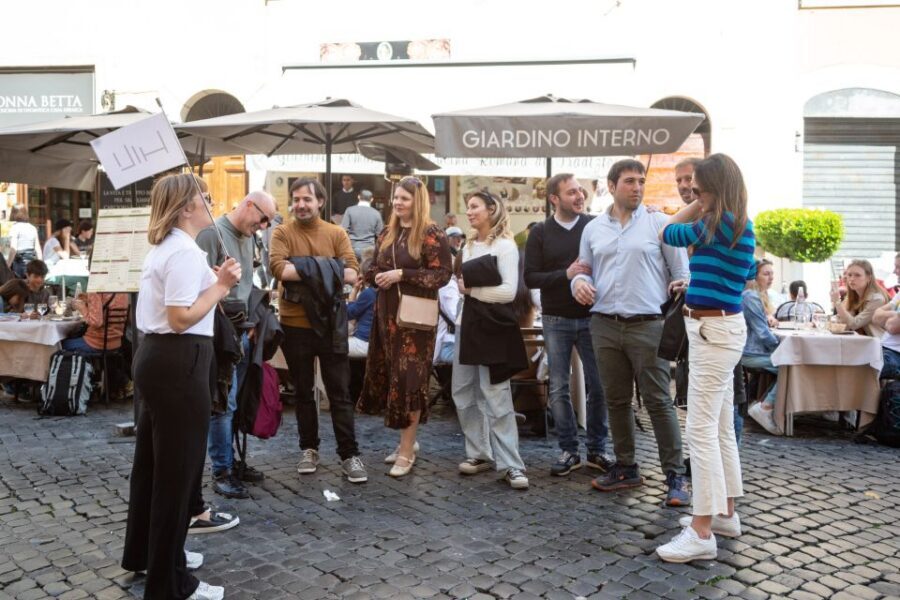
Follow the smell. It leads to dinner. This 2.5-hour walk through Trastevere and Campo de’ Fiori is built around classic Roman street bites, with stories tied to the streets you’re actually walking.
I love how small groups (up to 14) keep things friendly, not rushed. And I really like that you’re not just tasting food—you’re getting local context as you go, including time near the Santa Maria in Trastevere area and a market stop in Campo de’ Fiori.
One thing to consider: it’s not suitable for vegans and it’s also not for people with gluten intolerance, and drinks are not included.
In This Review
- Key takeaways before you go
- Trastevere + Campo de’ Fiori: the street-food route that actually makes sense
- Meeting at Piazza San Simeone: start point and what to do first
- Chiostro del Bramante to your first tasting: the warm-up that sets the tone
- Santa Maria in Trastevere and the pizza tradition from 1870
- The secret stop: when the walk gets fun (and a little unpredictable)
- Campo de’ Fiori: market energy and the suppli mission
- Piazza Farnese to Ponte Sisto: scenic breaks that keep you oriented
- Piazza Trilussa and the second restaurant stop: more Roman classics
- Gelateria Regusto: the finish line that makes the whole walk stick
- What you’ll actually eat (and how much is enough)
- Price and value: why $51 can work if you eat like a local
- Dietary fit: vegetarian support, but strict limits
- The guide makes a big difference: expect humor and quick context
- Who should book (and who might not love it)
- Should you book the Rome: Trastevere & Campo de’ Fiori Street Food Walking Tour?
- FAQ
- Where is the meeting point?
- How long is the walking tour?
- How many people are in the group?
- What’s included in the price?
- Are drinks included?
- What languages are the guides?
- Is the tour suitable for vegans?
- Is it suitable for gluten intolerance?
- Can I get vegetarian options?
- What is the cancellation policy?
Key takeaways before you go
- Licensed guide with real neighborhood stories as you eat and walk
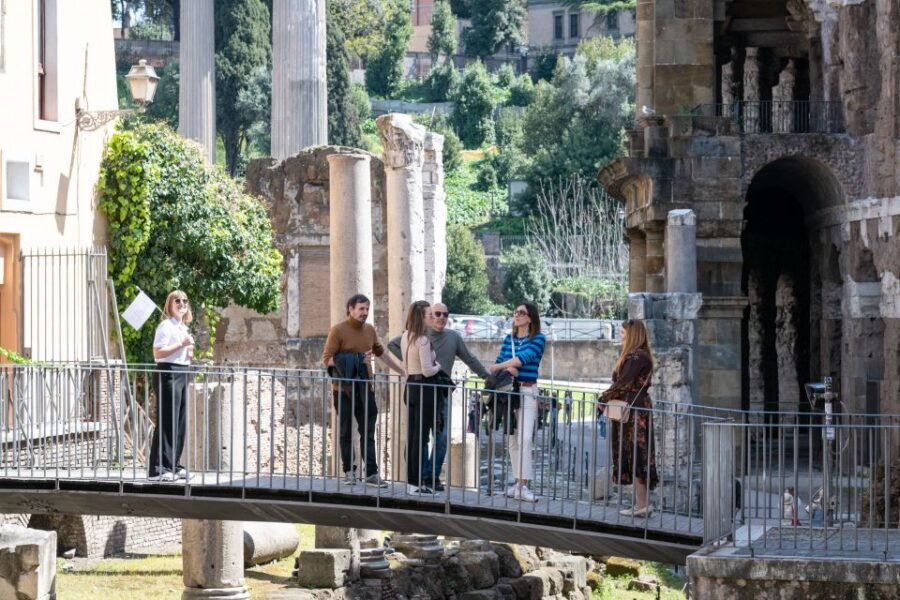
- Santa Maria in Trastevere and the Byzantine-style church context
- Campo de’ Fiori market visit with a strong focus on Roman suppli
- Multiple street-food tastings in just 2.5 hours, so you can get full fast
- Gelateria Regusto for dessert as the walk winds down
- Up to 14 people, which makes it easier to ask questions and compare notes
Trastevere + Campo de’ Fiori: the street-food route that actually makes sense
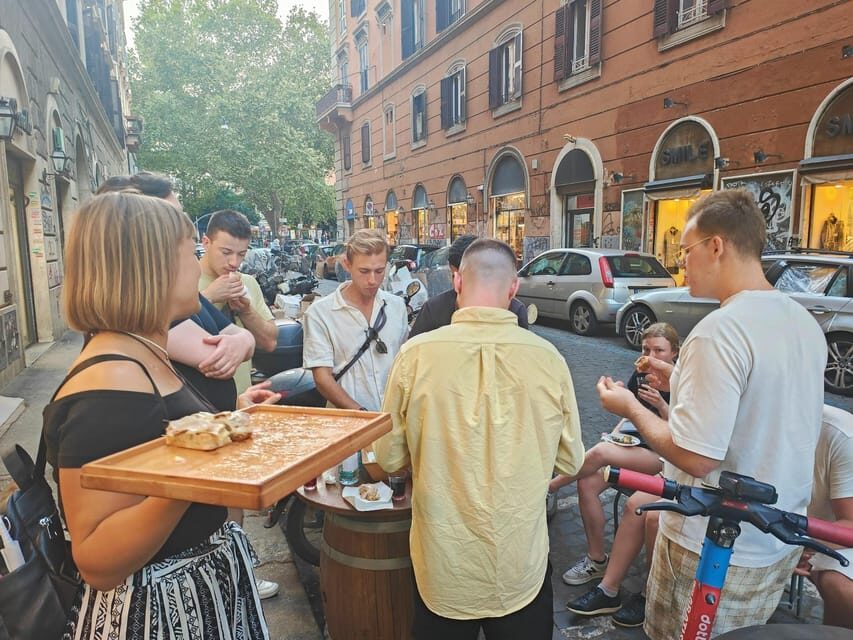
Rome has street food everywhere, sure. But this is the kind of walk that helps you eat like a local without spending your whole day guessing. You start in the San Simeone area and work your way through two famous neighborhoods—Trastevere on one side of the vibe, Campo de’ Fiori on the other—with a scenic passage that crosses toward the Tiber views.
What makes it work is the pacing. You’re walking between concentrated food zones, then stopping long enough to taste properly and ask questions. The tour is also designed for “good hunger.” The tastings are meant to add up to more than a snack run, and that’s why it’s such a good value for the time.
Trastevere is positioned as Rome’s beating heart, and you feel that in the mix of old streets, everyday shopfronts, and the kinds of places where you’d normally just wander in if you knew the local name. Campo de’ Fiori adds another layer: an old outdoor market atmosphere where you can see the food culture happening in real time, not just on menus.
You can also read our reviews of more walking tours in Rome

Meeting at Piazza San Simeone: start point and what to do first
You meet in Piazza San Simeone, next to the fountain in the middle of the square. That’s a helpful landmark because the center of Rome can be a maze of similar streets.
When you arrive, give yourself a few minutes to find the group before the walking starts. This tour is only 2.5 hours, so you don’t want to waste time early. Wear shoes you’re comfortable in for a sustained walk, because Rome sidewalks are uneven and you’ll be shifting between little streets and open squares.
The route then keeps moving—quick passes, short walks between stops, and then the longer tasting windows. It’s an easy structure to follow even if you’re tired. You’ll also get a good sense of where landmarks sit in relation to each other, so you can come back on your own later.
Chiostro del Bramante to your first tasting: the warm-up that sets the tone
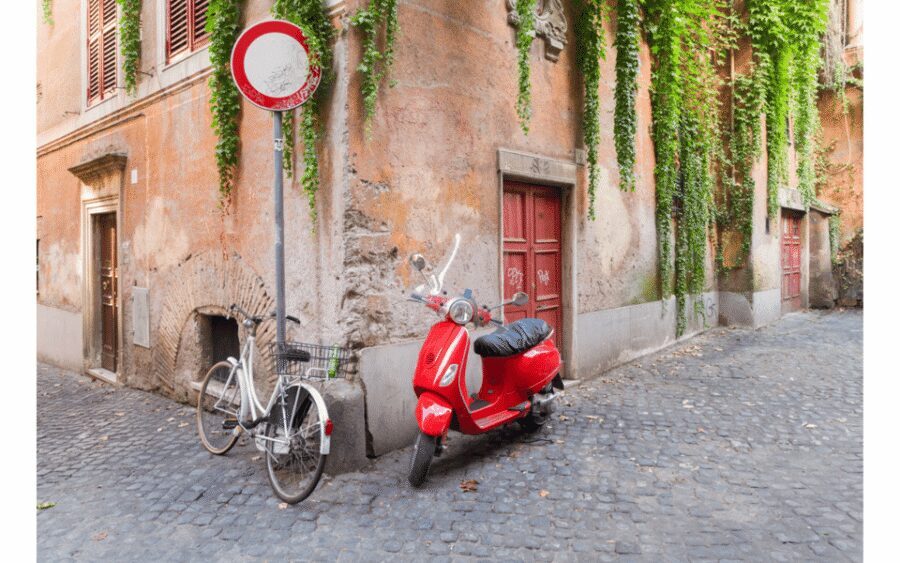
Right after you start, you pass Chiostro del Bramante—just a brief look, but enough to remind you you’re in a city where architecture and daily life overlap.
Then the tour shifts into food mode with your first local restaurant street-food tasting (about 15 minutes). This is the moment where the guide starts connecting flavors to the local story. Expect classics that fit the Roman street approach: quick, handheld, and built for eating on the move.
Practical tip: if you’re the type who needs a moment to choose, don’t worry. The guide’s job is to keep you moving and make sure the group gets served without chaos. You can focus on eating and asking the good questions.
Santa Maria in Trastevere and the pizza tradition from 1870
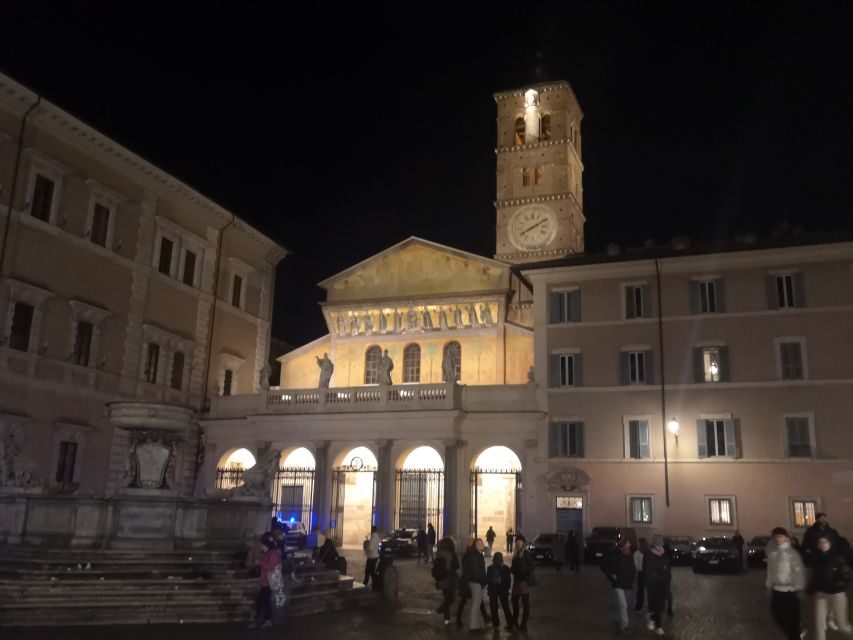
One of the best parts is the stop tied to Santa Maria in Trastevere, with the guide explaining the church’s ancient Byzantine style. This isn’t a formal museum-style lecture. It’s more like the kind of history you can actually remember because it’s linked to the neighborhood you’re in.
Right around this area, you’ll also taste crunchy Roman-style pizza from a bakery that’s been operating since 1870. That detail matters. Rome has lots of “pizza” experiences for tourists. This one is about the texture and tradition: the kind of pizza that’s meant to be eaten quickly, with a crust that holds up in your hands.
In practice, this is where the tour earns trust. You’re not just chasing food—you’re being pointed toward places with long roots.
The secret stop: when the walk gets fun (and a little unpredictable)
Midway through, there’s a secret stop (also about 15 minutes) focused on street-food tastings. This kind of stop is often where a tour differentiates itself from the “same list everywhere” style.
It’s designed to add variety without derailing the flow. You may find another classic Roman bite here, the kind that makes you think: I would have walked past this shop on my own.
In a small group, you’ll get to hear the guide’s explanation for why this item belongs in Roman food culture, not just in a tourist tasting lineup. And that’s one of the most praised elements in the tour experience overall: the way guides turn food into a story you can repeat.
You can also read our reviews of more food & drink experiences in Rome




Campo de’ Fiori: market energy and the suppli mission
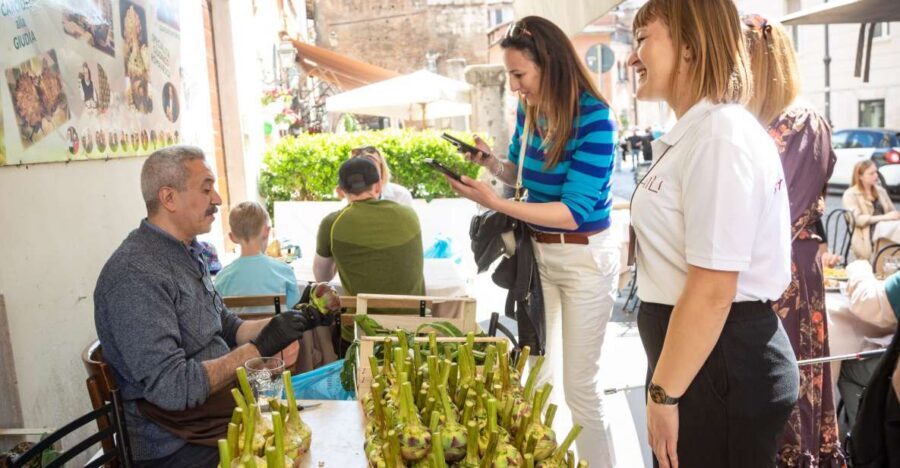
Then you hit Campo de’ Fiori, including a market visit (about 25 minutes). This is one of the strongest segments because it gives you more than tasting. You’re watching the market setting, seeing how people buy, and getting a feel for why the food here is so “normal” to locals.
The focus is on suppli, the typical Roman rice balls. The guide helps you land on the best places for fresh, handmade versions. Suppli is one of those foods that seems simple until you taste a great one: the crust gives way to hot, seasoned rice, often with a gooey interior. It’s street food that still feels like comfort food.
Here’s the practical angle: market time can be distracting. If you get pulled toward other smells, that’s normal. But trust the guide’s plan. This is where your tour pays for itself, because you’re learning which counters deliver the real deal rather than settling for whatever looks busiest.
Piazza Farnese to Ponte Sisto: scenic breaks that keep you oriented
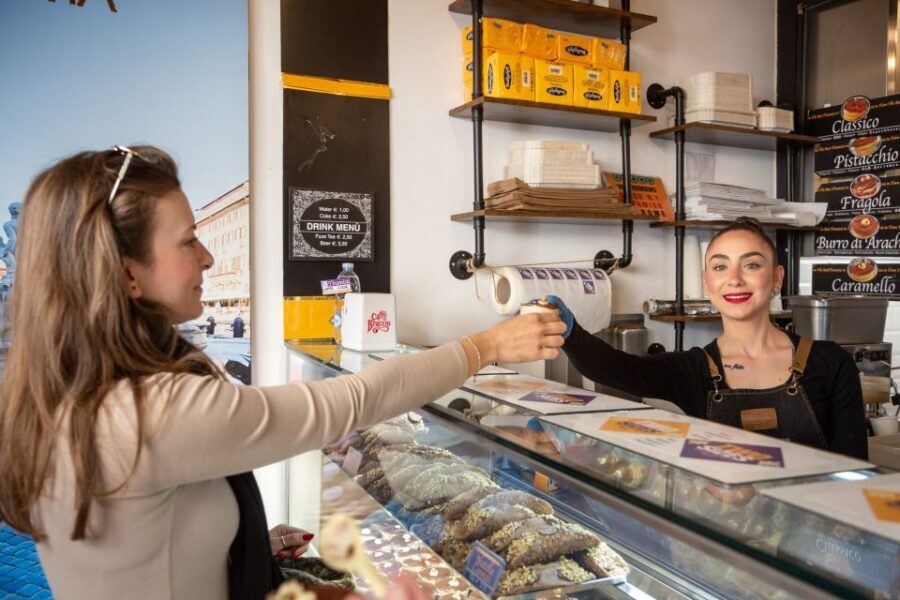
After the market, the walk continues past Piazza Farnese (brief pass) and then along Ponte Sisto. You get a 10-minute walk with scenic views on the way, which does two things.
First, it resets your brain after concentrated eating. Second, it helps you map Rome visually. When you later revisit this area for photos or dinner, those walk segments become memory anchors.
This part also helps explain the neighborhood differences. Trastevere has a different rhythm than Campo de’ Fiori, and the river crossing gives you that contrast in a very simple way.
Piazza Trilussa and the second restaurant stop: more Roman classics
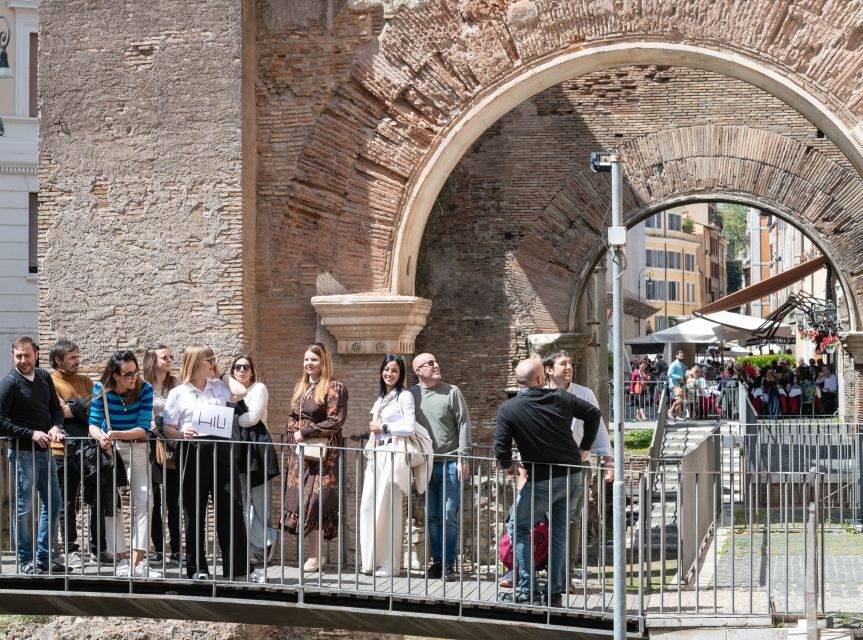
You pass Piazza Trilussa, then reach another local restaurant street-food tasting (about 15 minutes). This is where you round out the tour with additional Roman favorites, building toward the “full meal without planning dinner” feel.
If you’ve ever done a food tour where every stop tastes the same, this one usually doesn’t. The pattern is deliberate: different styles, different textures, different reasons the guide brings you to each place.
Also, this is where the guide’s group management shows. In the feedback people highlight how guides adapt for specific needs (for example, someone with fussier tastes). If you have dietary constraints beyond what the tour supports, bring it up during booking so the provider can match you to options.
Gelateria Regusto: the finish line that makes the whole walk stick
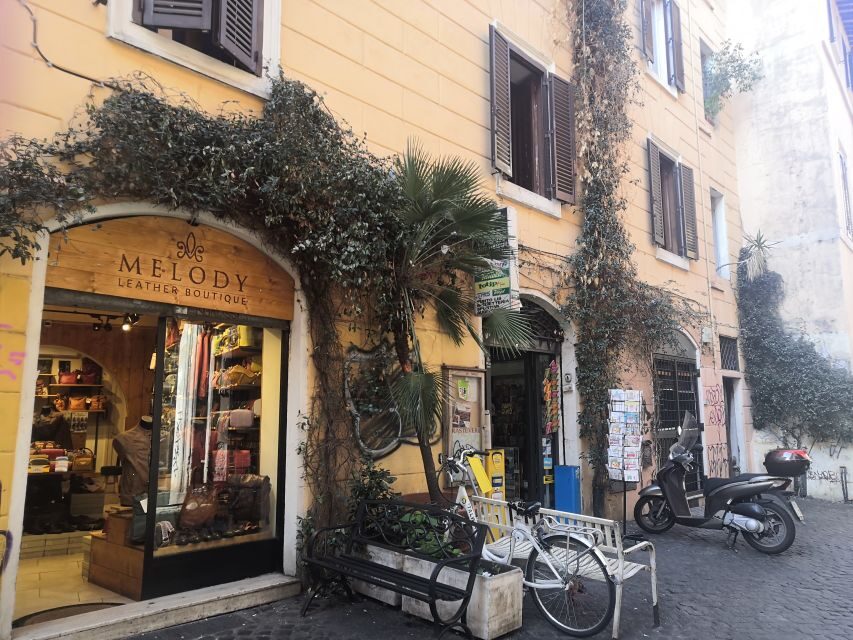
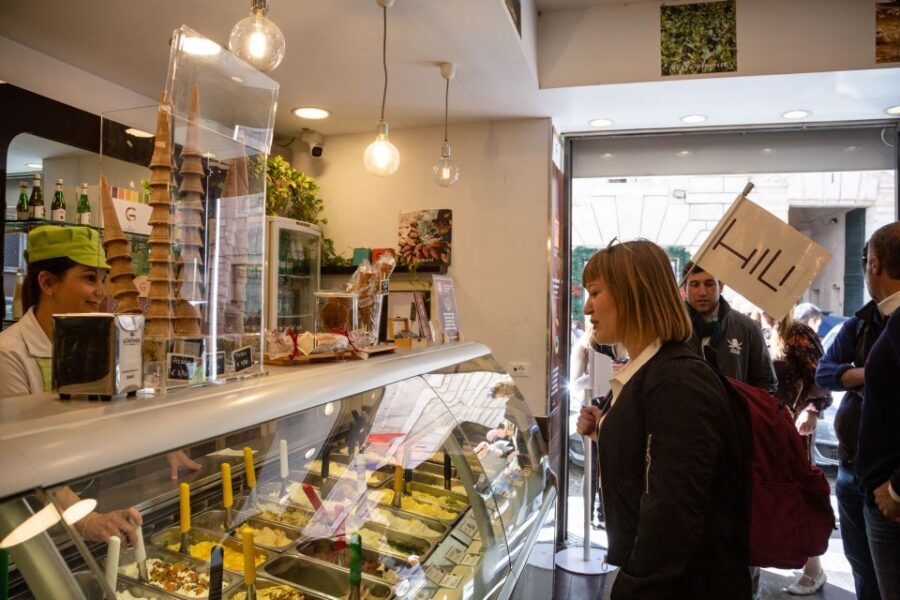
To close, you head to Gelateria Regusto for dessert (about 15 minutes). Gelato is almost always a crowd-pleaser, but the point here is timing: you’re finishing while your appetite is still awake.
You’ll taste gelato at a local bar, and the guide’s story helps you understand why it fits the route you just walked. After eating savory street food, gelato also acts like a “reset,” so you don’t feel like you’re forcing the last bite.
The walk ends at Piazza di San Giovanni della Malva. It’s a good natural stopping point, especially if you’re continuing exploring on foot after the tour.
What you’ll actually eat (and how much is enough)
You can expect a mix of Roman street staples such as:
- crunchy Roman-style pizza
- suppli (fresh handmade focus)
- gelato
- a traditional Roman sandwich (listed as part of the classic street-food set)
The exact items can shift depending on seasonal availability and local holidays, so don’t plan your day around one single food. But the tour is built to deliver variety across flavors and textures—rice balls, pizza, and sweets—so you don’t end the night feeling like you “only ate one thing.”
Portion reality check: the tour is designed so food adds up. People consistently describe it as more than a quick tasting, which makes sense given the number of stops and the time spent at each.
Price and value: why $51 can work if you eat like a local
At $51 per person for a 2.5-hour guided walk with food included, the value depends on what you compare it to.
If you tried to replicate this on your own, you’d likely pay for:
- multiple snacks (pizza slice(s), suppli, plus gelato),
- and the “hidden cost” of not knowing where to go for the best versions.
This tour replaces that uncertainty with a licensed guide who brings you to specific places and explains what you’re tasting and why it matters. And because the group is limited (up to 14), you usually get a better experience than a big-bus-style shuffle.
One more value point: you’re paying for time you’d otherwise spend researching. Rome is famous for eating well, but good street food is the kind of thing where local knowledge saves money and saves calories wasted on mediocre options.
Dietary fit: vegetarian support, but strict limits
This tour supports vegetarian diets and other diets, as long as you tell the provider your needs when booking. That’s important because street food options are not automatically adjustable at the counter.
The key limitations are clear:
- Not suitable for vegans
- Not suitable for gluten intolerance
If you fall into one of those categories, don’t assume substitutions exist. The safe move is to confirm with the provider before booking, especially if you have strong restrictions.
Also, the tour explicitly notes you should let them know about allergies and dietary restrictions. That’s not the place to be casual.
The guide makes a big difference: expect humor and quick context
A recurring theme in the experience is that the guide isn’t just reciting facts. Several guides are described as funny, engaging, and interactive—like Daniele, who’s noted for being an archaeologist and using a tablet with images and videos during the tour. Caterina is highlighted for being friendly and authentic and making the walk interactive. Leonardo and Alessandra are praised for enthusiasm, local insight, and helping guests get their bearings for the rest of their trip.
You’re paying for a licensed guide, but you’re also buying the way they translate food into culture. If you like questions, this tour usually rewards that. If you prefer quiet, it still works—you can listen and eat—but you may want to communicate that preference ahead of time.
Who should book (and who might not love it)
Book this if you:
- want a guided way to eat multiple Roman street-food classics in one evening
- like history that’s connected to what you’re tasting, especially around Santa Maria in Trastevere
- enjoy small-group walking tours where you can ask questions
- want a practical start to your Rome trip so you can follow up with restaurant suggestions later
Skip it or think twice if you:
- are vegan or need gluten-free options (it’s not suitable for gluten intolerance)
- hate walking for about 2.5 hours total
- expect drinks to be part of the price (drinks are not included)
Also, because tastings and the exact plan can change with seasonal availability and local holidays, be flexible. That’s normal in Rome.
Should you book the Rome: Trastevere & Campo de’ Fiori Street Food Walking Tour?
If your goal is simple—eat great Roman street food, learn what you’re eating, and see the neighborhoods in a smart walking loop—this is a strong buy. The combination of Trastevere streets, Campo de’ Fiori market time, and a finish at Gelateria Regusto keeps the experience cohesive. Add the small group size and the fact that the food is included, and the $51 price starts to make real sense.
Just be honest about one thing: diet restrictions. If you’re vegan or gluten-intolerant, don’t force it. But if you’re vegetarian or you can eat gluten, this tour is one of the easiest ways to turn Rome’s food culture into a night you’ll remember.
FAQ
Where is the meeting point?
The guide meets you in Piazza San Simeone, next to the fountain in the middle of the square.
How long is the walking tour?
The duration is 2.5 hours.
How many people are in the group?
It’s limited to 14 people for a more personal experience.
What’s included in the price?
The tour includes a 2.5-hour walking tour, a licensed guide, and food.
Are drinks included?
No. Drinks are not included.
What languages are the guides?
Live tour guides are available in Portuguese and English.
Is the tour suitable for vegans?
No, it is not suitable for vegans.
Is it suitable for gluten intolerance?
No, it is not suitable for people with gluten intolerance.
Can I get vegetarian options?
Yes. Vegetarian options are available, and other diets are supported if you inform the provider when booking.
What is the cancellation policy?
Free cancellation is available up to 24 hours in advance for a full refund.