REVIEW · COLOSSEUM TOURS
Small Group Colosseum, Roman Forum & Palatine Hill Tour
Book on Viator →Operated by Crown Tours · Bookable on Viator
This tour is interesting because it connects the Colosseum, the Forum, and Palatine Hill into one logical story of power, spectacle, and origins. You’ll get live guide narration through audio headsets, so you can keep walking, stop for photos, and still hear every detail.
I especially like the small group size (max 24) and the late-morning departures that give you some breathing room before the busiest crowds. One thing to consider: the sites are a lot of walking, and if you’re expecting lots of bathroom time, you should plan ahead.
In This Review
- Key points before you go
- How the Colosseum, Forum, and Palatine Hill fit together
- Meeting up and getting in without headaches
- Stop 1: Colosseum entry with audio headsets and arena stories
- What you’ll learn in the arena context
- Practical tips to make the Colosseum part work
- Stop 2: Roman Forum walk—politics, public life, and war inside the city
- What makes this stop valuable
- A drawback to plan for
- Stop 3: Palatine Hill—legend, imperial power, and origin stories
- Why Palatine Hill works after the Colosseum and Forum
- Photo and viewpoint reality check
- The real pacing: small group size, headsets, and walking energy
- Heat season adjustment
- One thing to think about: bathroom timing
- Price and value: what $77.40 is really buying
- Guide style: what you can expect from live storytelling
- Who this tour suits best
- Who might want a different approach
- Should you book this Colosseum-Forum-Palatine Hill tour?
- FAQ
- What’s included in the tour price?
- How long is the tour?
- Where do I meet the group?
- Do I need to bring ID?
- Are admission tickets included for all three sites?
- What should I wear or bring?
- Can I get a refund if I cancel?
Key points before you go
- Audio headsets let you move freely while still hearing the guide clearly
- Three major sites, one run: Colosseum, Roman Forum, Palatine Hill
- Tickets and reservations are included (Colosseum entry + reservation fee)
- Late-morning timing helps you sleep in or stack another plan
- Order can shift depending on internal Colosseum arrangements
How the Colosseum, Forum, and Palatine Hill fit together
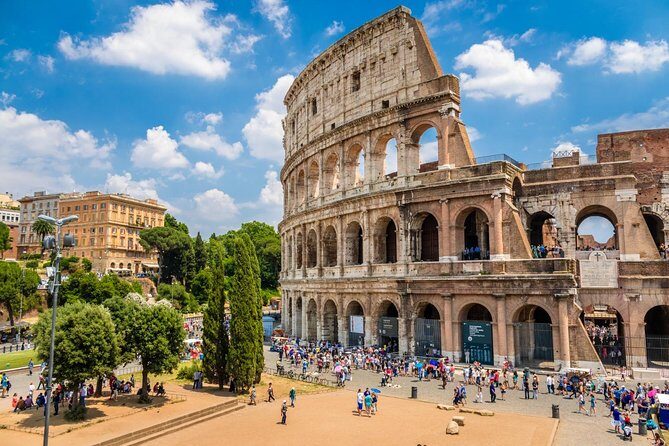
Most Rome tours hit these places one at a time. This one gives you a storyline. You start with the Colosseum, where the city staged drama on a huge scale. Then you move to the Roman Forum, Rome’s public nerve center—politics, business, and speeches in the same footprint. Finally, Palatine Hill ties it together with imperial power and the older legends about Rome’s beginnings.
That combo matters because it turns the ruins from “pretty stone” into cause-and-effect. The Colosseum isn’t just an arena. It’s a political tool and a cultural machine. The Forum isn’t just a plaza of columns. It’s where Rome argued, voted, competed, and bragged—then built monuments to prove it. Palatine Hill puts that ambition into context by showing how the city’s ruling class occupied the best ground.
You also get a classic Rome rhythm: big stop, short walks, then another major moment. The tour runs about 2 to 3 hours for most of the year, and about 2.5 hours in July and August due to heat.
You can also read our reviews of more tours and experiences in Rome.



Meeting up and getting in without headaches
Your start point is Largo Gaetana Agnesi, 00184 Roma RM, Italy. The tour ends back at the same meeting point. There’s also a ticket redemption point at Via della Polveriera, 13, 00184 Roma RM, Italy.
Here’s what I’d do to keep things smooth:
- Arrive early, not just on time. The Colosseum has strict entry scheduling. Build in buffer time for lines, security, and finding your group.
- Bring a valid passport or ID that matches your booking name. Entry can be refused if names don’t match.
- Wear comfortable shoes. You’ll be on uneven surfaces and will want grip.
The tour is offered in English, and it’s designed for most travelers, but you should expect some walking and standing. Also, there’s a clear reminder: inside the Colosseum, no glass, sharp objects, alcohol, or spray.
Stop 1: Colosseum entry with audio headsets and arena stories
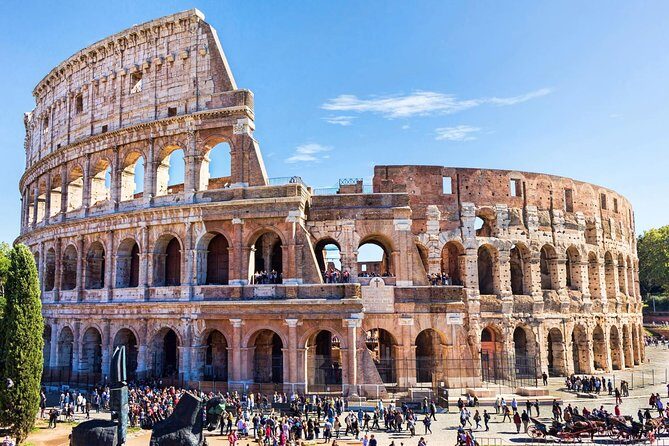
The Colosseum is the headline for a reason. It’s called the Amphitearum, and it’s the largest surviving monument tied to ancient spectacle. This is the part where you can almost feel the city’s noise in your imagination—crowds, announcements, and the shifting mood of an arena.
You get about 1 hour here, and admission is included, including the Colosseum reservation fee. That matters because timed entry helps you avoid the worst pileups. In a place like this, being “one of many” is slow. Being guided through the queue with the right paperwork is faster.
What you’ll learn in the arena context
Instead of only pointing at architecture, the guide tells the story behind it: gladiators, emperors, and the spectacle of organized violence (yes, it’s intense, but it’s also part of how Rome worked). You also get explanations that place the building in context—why it looked the way it did, how it functioned, and why it mattered to people beyond just entertainment.
Practical tips to make the Colosseum part work
- Bring your attention, not just your eyes. When the guide connects arenas to emperors, the place stops being random.
- Use the headset actively. If you pause for photos, keep one ear tuned in so you don’t miss the explanation you’ll wish you’d heard later.
- Expect photos to take time. This site is photogenic from multiple angles, and it’s worth slowing down.



Stop 2: Roman Forum walk—politics, public life, and war inside the city
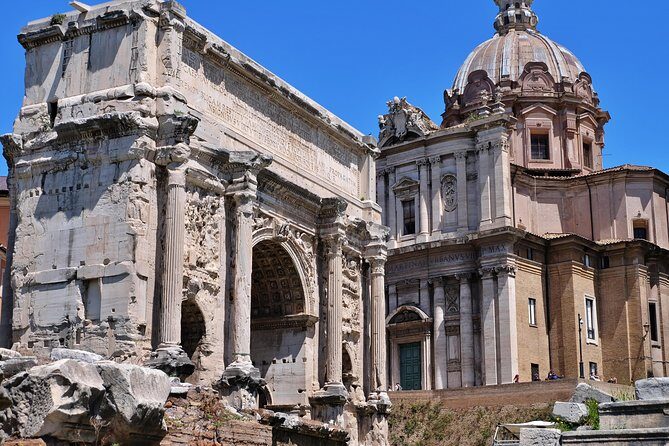
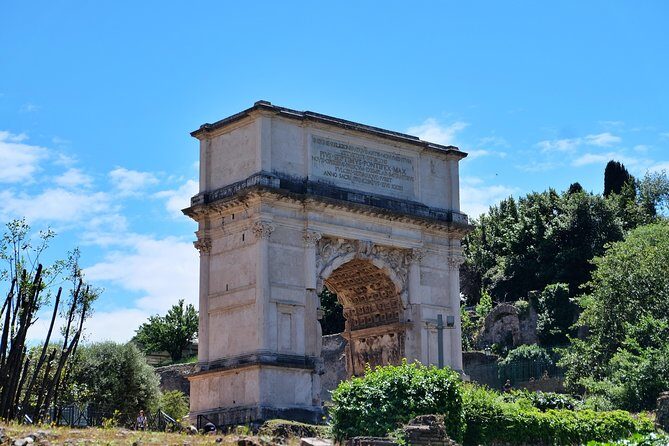
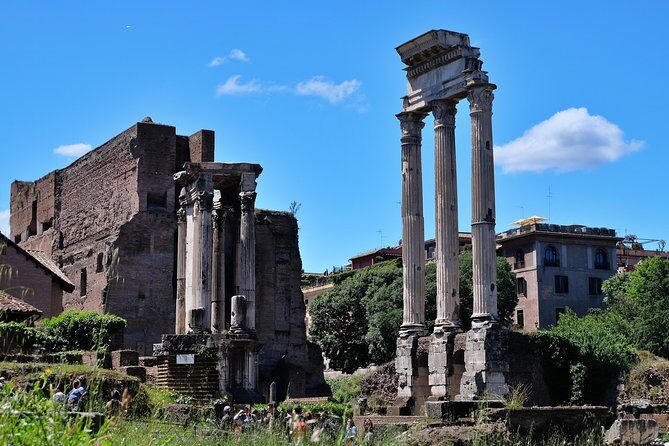
Then you move to the Roman Forum, often described as the heart of ancient Rome. You’ll spend about 45 minutes here, with admission included.
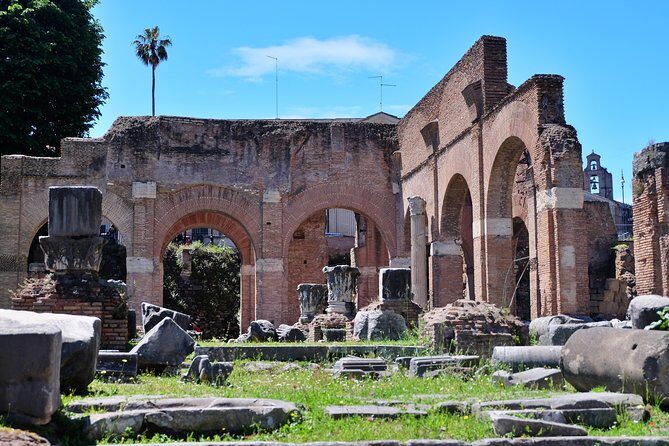
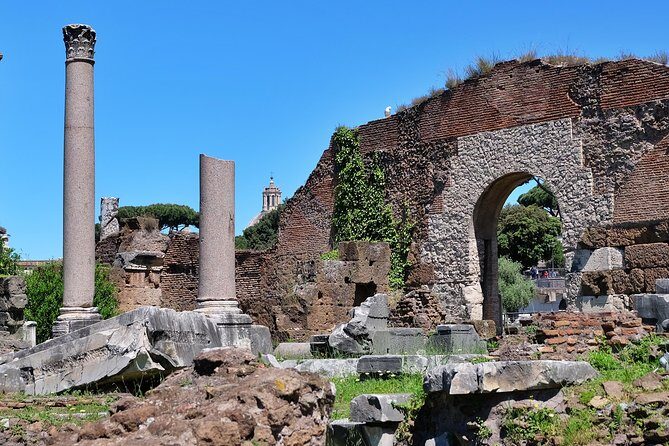
This is the area that can feel confusing if you show up cold. It looks like scattered ruins, but it was once the center of public life: commerce, government, and social activity. Over time, it became a stage for political conflict—especially in the Republican era—where buildings and monuments were tied to power struggles.
What makes this stop valuable
The guide helps you read the Forum like a map. You’ll hear how the Forum shifted from commercial beginnings into a “warzone” of politics, marked by clashes between ambitious leaders. That framing helps you understand why you see certain remains where you do—and why the Forum was constantly being rebuilt, claimed, and reinterpreted.
A drawback to plan for
The Forum part can feel like a lot of information in a short window, especially if you prefer slower museum-style pacing. If you want to go deep on only one building or one era, you might wish you had extra time. But for a 2 to 3 hour tour that includes the other two sites, this stop is a smart hit-and-run.
Stop 3: Palatine Hill—legend, imperial power, and origin stories
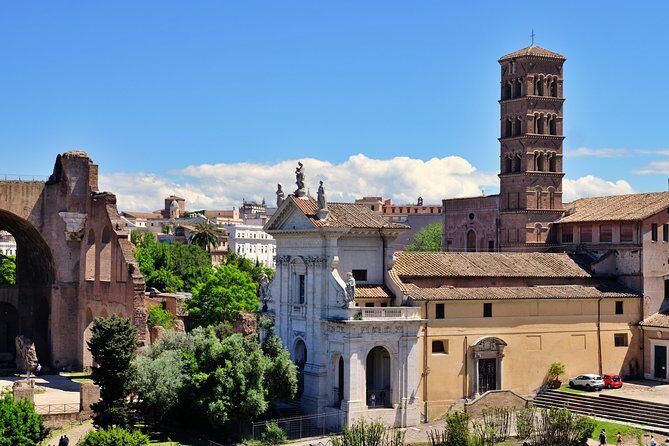
Palatine Hill is where Rome’s story grows roots. You’ll get about 1 hour here, with admission included again.
This hill was tied to the imperial age, meaning it became a stronghold for the ruling class. It’s also tied to legend—where people imagine foundational moments that relate to the mythic start of Rome.
Why Palatine Hill works after the Colosseum and Forum
By the time you reach Palatine Hill, the tour has already shown you:
- spectacle and politics at the Colosseum
- civic life and power struggles in the Forum
So Palatine Hill doesn’t come out of nowhere. It feels like the logical next step: if Rome’s power needed public stages and official buildings, then it also needed a seat of control.
Photo and viewpoint reality check
Palatine Hill is great for photos, but you’ll likely spend more time walking and positioning than at a single “viewpoint stop.” Plan for it as a moving experience.
The real pacing: small group size, headsets, and walking energy
This is a small group tour with a maximum of 24 travelers. That’s a meaningful cap. In huge Rome tours, you end up following a crowd. Here, you’re still part of a group, but you can usually keep your bearings without playing human traffic control.
A big win is the audio system. Since you hear the guide through audio equipment, you don’t need to hover right next to the person talking. You can drift slightly for photos or to rest your legs without losing the story.
Heat season adjustment
If you’re going in July or August, plan for a shorter tour window (about 2.5 hours) due to heat. That’s not “less value” so much as sensible time management.
One thing to think about: bathroom timing
The tour format doesn’t mention scheduled bathroom breaks. That means you should handle this the same way you would at any major site: go before you start, and don’t assume there will be an early pause. If your group needs extra time, you may feel rushed during the transitions.
Price and value: what $77.40 is really buying
At $77.40 per person, you’re paying for more than “a guide walk.” Here’s the transparent cost idea the tour describes:
- The Colosseum site admission fee is €16 per adult
- There’s a €2 booking fee
- Children under 18 get free admission (per the tour’s note)
- Your remaining amount supports services like licensed guide time, audio headsets, booking fees, and tour amenities
On top of that, the tour includes:
- Entrance tickets for Colosseum, Roman Forum, and Palatine Hill
- Audio equipment
- All fees and taxes
- Specifically for the Colosseum: the €18 entry ticket value plus the €2 reservation fee are called out
This is one of those Rome pricing setups where you can feel the value most clearly if you’ve ever tried to coordinate timed entry tickets alone while managing lines and navigation. Here, the admission pieces are bundled, and the headset turns the visit into a guided experience rather than a “figure it out” scavenger hunt.
Guide style: what you can expect from live storytelling
A theme across the guide experiences is that the tour leans heavily into storytelling—gladiators, emperors, and how politics shaped everyday public space. You’ll also see guides use different methods: some focus on spoken explanations at a steady pace; others use visuals (like before-and-after style comparisons) to help you imagine how the ruins looked in their prime.
You might also notice different guide voices and delivery styles. English clarity can vary by person, and when the accent or speed is tough, it can make the whole experience feel less smooth. If you’re sensitive to that—someone in your group struggles with fast spoken English—you’ll want to rely more on the headset and consider arriving with a small buffer so you can settle quickly.
Who this tour suits best
This tour is a strong match if you want:
- Top Roman sights in one morning/late-morning block
- Guided context so the ruins make sense
- A small group with audio headsets
It’s also a good option if you don’t want to spend your trip time juggling ticket lines and route planning. The route order can change based on what’s allowed at the Colosseum, so flexibility helps.
Who might want a different approach
If you want slow, museum-style time in each location, this may feel too fast. If you need frequent restroom breaks or step-by-step accessibility planning, you should know the tour is built for standard walking.
Should you book this Colosseum-Forum-Palatine Hill tour?
Yes—if you want an efficient, high-impact Roman route with real narration and included admission.
Book it if:
- you like structure and context (Colosseum + Forum + Palatine in one sweep)
- you value audio headsets for flexibility and comfort
- you want a tour that aims to keep you moving in crowded conditions
Consider another option if:
- your group needs long pauses to rest or use the bathroom repeatedly
- you’re very sensitive to audio delivery differences (clear English matters for enjoyment here)
- you prefer a very slow pace at each ruin
If you do book, do one simple thing that pays off: arrive early and keep your ID ready. At the Colosseum, that’s the difference between a smooth start and a stressful scramble.
FAQ
What’s included in the tour price?
You get entrance to the Colosseum, Roman Forum, and Palatine Hill, plus audio equipment, all fees and taxes, and the Colosseum reservation/entry components are included.
How long is the tour?
The tour runs about 2 to 3 hours. In July and August, it’s about 2.5 hours due to heat.
Where do I meet the group?
The start meeting point is Largo Gaetana Agnesi, 00184 Roma RM, Italy. The tour ends back at the same meeting point.
Do I need to bring ID?
Yes. Each traveler must present a valid passport or ID document that matches the name on the booking. ID may be required for certain ages.
Are admission tickets included for all three sites?
Yes. Admission tickets are included for the Colosseum (about 1 hour), Roman Forum (about 45 minutes), and Palatine Hill (about 1 hour).
What should I wear or bring?
Wear comfortable shoes. Inside the Colosseum, avoid bringing glass, sharp objects, alcohol, and spray.
Can I get a refund if I cancel?
You can cancel up to 3 days in advance for a full refund. Cancelling 1–3 days before the start time gives a 50% refund. Less than 1 day before is not refunded.