REVIEW · POMPEII
Private Pompeii & Ravello Day Trip via Amalfi Coast (Tickets)
Book on Viator →Operated by Leisure Italy · Bookable on Viator
Two legends in one long day. This private outing links Pompeii’s Roman world with Ravello’s high-coast calm, while a dedicated driver takes care of the thorny part: getting you there along winding Amalfi roads.
I like two things right away. First, the hotel pickup option means you start relaxed, not hunting taxis. Second, Pompeii can be self-paced or you can upgrade for the ticket/entry flow and a Blue Badge guide inside the park so you get context without feeling stuck in a huge group.
Here’s the trade-off: it’s a full day with real Pompeii walking and heat, especially in summer. If you don’t love long sun exposure, plan on breaks and wear the kind of shoes that forgive your feet.
In This Review
- Key highlights worth marking on your day
- Private pickup and a driver who knows how to move all day
- Pompeii: Porta Marina to the Antiquarium, in a route you can actually enjoy
- Temple of Apollo: where old city layers show
- The Forum: the civic center that makes Pompeii feel real
- Macellum: Pompeii’s food market and everyday routines
- Forum Baths: Roman social life, not just hot water
- Houses of wealth: House of the Faun and House of the Vettii
- Insula and Via dell’Abbondanza: the city as a working neighborhood
- Teatro Grande and the Antiquarium: performance space and the context museum
- A note on the Basilica-style civic stop
- Your Pompeii choice: self-paced time vs the guide upgrade
- Amalfi Coast drive: the scenic part that you don’t want to plan
- Ravello: cathedrals, artisan lanes, and the view that slows you down
- Piazza Duomo and the Cathedral area
- Shops and short walks
- Villa Rufolo and Villa Cimbrone: famous gardens, timed to your day
- Villa Rufolo (short stop, big payoff)
- Villa Cimbrone Gardens (the Infinity Terrace moment)
- Minori, Maiori, Cetara, and Vietri sul Mare: the coast’s calmer edges
- Minori: the “City of Taste” reset
- Maiori: long beach, airy pace
- Cetara: the fishing village feeling
- Vietri sul Mare: ceramics and color from the road
- What you should pack for a day like this (and what to expect)
- Price and value: why $508.61 can make sense here
- Should you book this Pompeii and Ravello day trip?
- FAQ
- How long is the Pompeii and Ravello day trip?
- Is pickup included?
- Is this a private tour?
- Is Pompeii admission included?
- If I choose the guide option, what do I get?
- Is there live commentary during the day?
- What stops are included besides Pompeii and Ravello?
- Is lunch included?
- Can I cancel for a full refund?
- What should I wear or bring?
Key highlights worth marking on your day
- Hotel pickup plus a private English-speaking driver to handle the road and pacing
- Flexible Pompeii plan: self-guided time or an upgrade with guide/ticket convenience
- Frescoes, mosaics, markets, and bathhouses in one focused Pompeii route
- Ravello’s terraces and gardens with views that feel higher than the rest of the coast
- Short, smart stops along the Amalfi Coast drive (Minori, Maiori, Cetara, Vietri)
- Timely planning helps: start early when possible to cut crowd pressure at Pompeii
Private pickup and a driver who knows how to move all day
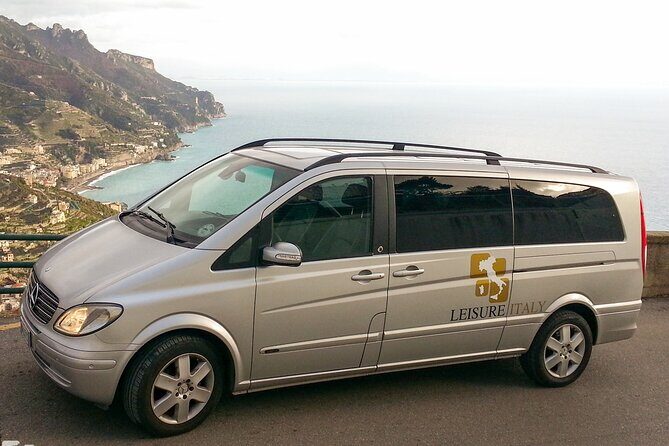
The biggest practical win here is the setup: you’re not piecing together trains, buses, and ticket lines. You get a private vehicle with an English-speaking driver and live commentary while you’re traveling. That matters because the Amalfi Coast roads are tight, windy, and slow when traffic stacks up.
In the real world, this is what you feel as “less stress.” You can look out the window. You can ask questions without buffering through directions. And when you hit the reality of driving time, your day still works because the plan is built around a full-day driver, not a checklist you rush through.
Your driver can also tailor things. Some people prefer Pompeii first, others like the reverse to reduce crowd pressure. If you care about that detail, tell your driver early. A lot of the day’s success is simply sequencing.
You can also read our reviews of more tours and experiences in Pompeii
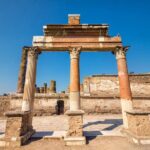
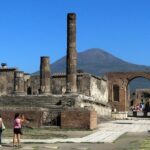

Pompeii: Porta Marina to the Antiquarium, in a route you can actually enjoy
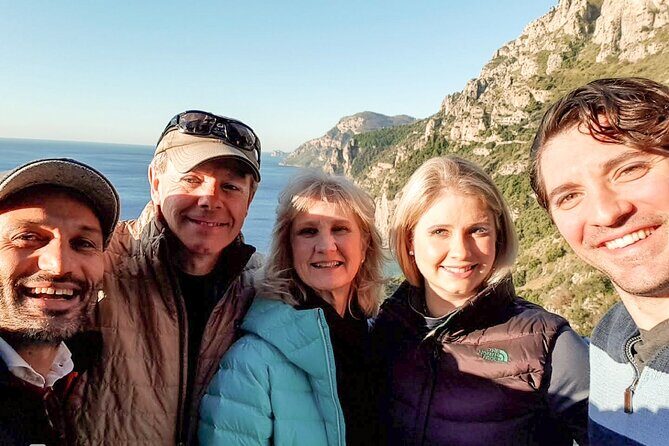
Pompeii is famous for a reason, but the trick is not letting “famous” turn into “overwhelming.” The best visits feel like walking through neighborhoods that were paused in the middle of life.
Your day begins around Porta Marina, the main ancient gate. Even if you’ve read about Pompeii before, arriving through that gateway changes your brain. You get a sense of how people came and went—merchants, travelers, and locals moving toward the city core. Nearby defensive walls help you understand Pompeii wasn’t just pretty ruins. It was planned, protected, and part of a functioning Roman system.
From there, your route keeps key zones close enough that you’re not constantly sprinting between far corners of the park.
Temple of Apollo: where old city layers show
The Temple of Apollo is a great early stop because it hints at Pompeii’s deeper roots. The temple dates back to the 6th century BC and reflects Greek influence before later Roman dominance. Even in ruins, the layout—columned portico, altar area, and podium—helps you picture worship as a central civic activity.
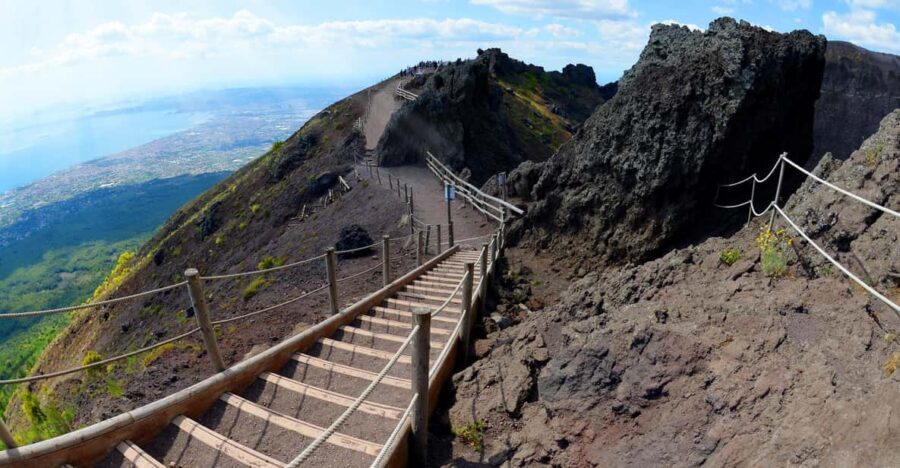
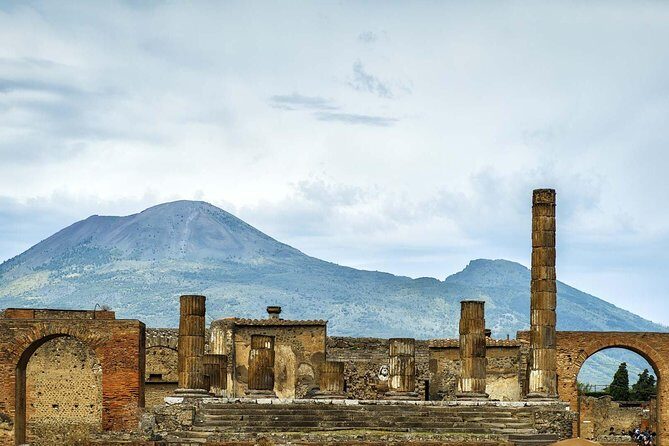
If you want one practical reason to care: the views from here often connect the city to Mount Vesuvius visually. Religion and nature weren’t separate worlds to these people. You feel that link quickly.
The Forum: the civic center that makes Pompeii feel real
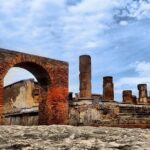
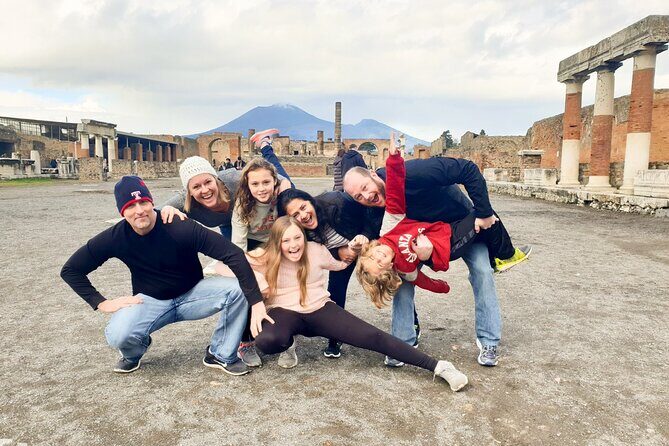
Next, the Forum. This open plaza is where politics, commerce, religion, and daily public life met. Today it’s roofless, but the space still works. You can stand in the middle and imagine foot traffic between temples and public buildings. The dramatic sightline toward Vesuvius reinforces that Pompeii’s setting shaped its identity long before AD 79 ended it.
If you’re prone to museum fatigue, the Forum is a good counterweight. It’s not just objects. It’s space.
Macellum: Pompeii’s food market and everyday routines
The Macellum gives you the city’s “what people ate and sold” side. It’s one of Pompeii’s best-preserved market spaces, with porticoes, stalls, and counters that make the commercial life feel organized and intentional. You can also see how commerce and politics overlapped—there’s even a shrine area linked to the imperial family.
This is one of those stops where the ruins explain themselves. Look at the counters and basins and you start getting the rhythm of a Roman workday: preparation, selling, socializing, moving on.
You can also read our reviews of more private tours in Pompeii

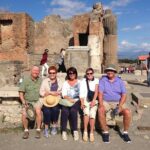


Forum Baths: Roman social life, not just hot water
Then comes the Forum Baths, one of the more rewarding complexes because it’s easy to follow the sequence: changing areas, warm rooms, plunge pools. The engineering shows up in the floor systems and ventilation design, but you also get what the baths meant socially.
For your day planning, this is a useful pause point. Bathhouse stops break the walking up into meaningful chunks. And if it’s hot, stepping into these semi-shaded interior spaces can feel like a mini reset.
Houses of wealth: House of the Faun and House of the Vettii
Pompeii’s residential areas are where “Roman life” stops being abstract.
The House of the Faun feels almost unreal. It covers an entire city block, with courtyards and refined garden areas. The mosaic legacy matters here—especially the famous “Dancing Faun” tradition of the entrance area and the “Alexander Mosaic” that’s associated with the house. Even if you can’t spot every detail instantly, the scale helps you grasp the difference between elite and everyday living.
The House of the Vettii is a different kind of wow: more vivid, more intimate, and packed with frescoes that still carry color and storytelling energy. The garden layout, statue placement, and room arrangement help you picture banquets and business dealings—life under those paintings, not just life in them.
Insula and Via dell’Abbondanza: the city as a working neighborhood
After the standout homes, you get the sense of Pompeii as a functioning system.
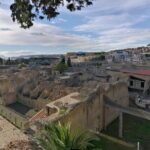
The insula area (a residential and commercial block) shows how busy the city stayed right up until the eruption. Elevated walkways and ramps help you observe without constantly disturbing archaeological layers, and you can see evidence of mid-renovation life—ovens, counters, building materials left in motion.
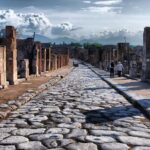
Then walk along Via dell’Abbondanza, Pompeii’s central street corridor. This is where storefronts, signs, and street design make the city feel like it was meant for pedestrians. You’ll notice features like stepping stones and water fountains that signal “designed for daily movement,” not just architecture.
Teatro Grande and the Antiquarium: performance space and the context museum
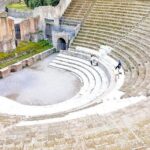
The Teatro Grande is one of Pompeii’s most striking public buildings. It’s open-air, carved into the hill slope, and it’s built for real audience experience. Even standing in the seating area, you can imagine the acoustics working and the crowd energy focusing toward the stage.
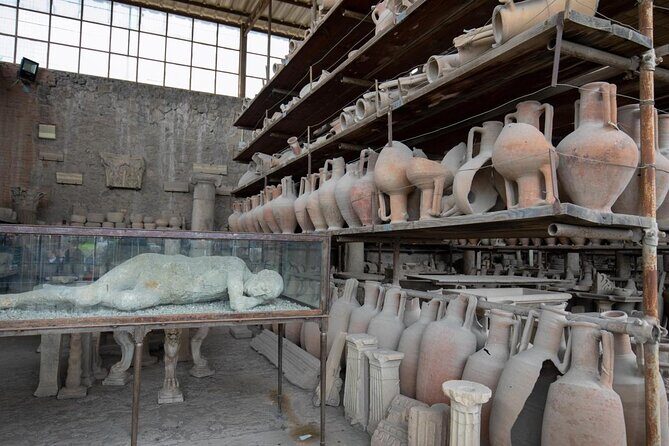
After that, the Antiquarium helps tie things together. It’s Pompeii’s main museum space for context, including everyday objects, fresco fragments, luxury items, and plaster casts tied to the eruption story. It’s not there to replace the ruins—it’s there to explain them. If you’re doing Pompeii plus Amalfi without a guide, this museum stop is especially valuable because it gives you the “how to read the city” framework.
A note on the Basilica-style civic stop
You may also pass through major civic architecture areas tied to law and public business (the kind of space where Romans handled disputes and official matters). These big civic rooms remind you that Pompeii was not only religious and residential—it was also administrative.
Your Pompeii choice: self-paced time vs the guide upgrade
This tour is built around flexibility. You can go in on your own pace, or upgrade for Pompeii ticket convenience and a private Pompeii guide option that includes a Pompeii Blue Badge guide when selected.
If you choose self-paced:
- You’ll spend roughly 2 hours in Pompeii with the freedom to slow down where you want.
- It’s a good fit if you already know the basics and you want to move like a solo explorer.
If you choose the upgrade:
- You get skip-the-line convenience tied to the guide option.
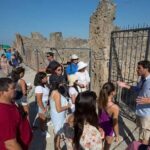
- A guide can steer you through the park so you don’t miss the “why” behind what you’re seeing.
- You also save time on interpretation, which is crucial when you’re pairing Pompeii with multiple Amalfi Coast stops.
A useful real-world tip: Pompeii can be easier later in the day if you hit the Amalfi Coast first. Some guides even suggest this order to avoid stronger morning crowd patterns. If your schedule allows it, ask your driver what sequencing they recommend for your departure day.
Amalfi Coast drive: the scenic part that you don’t want to plan
Once you leave Pompeii, you shift from ancient streets to modern winding roads. This is where the private driver earns its keep.
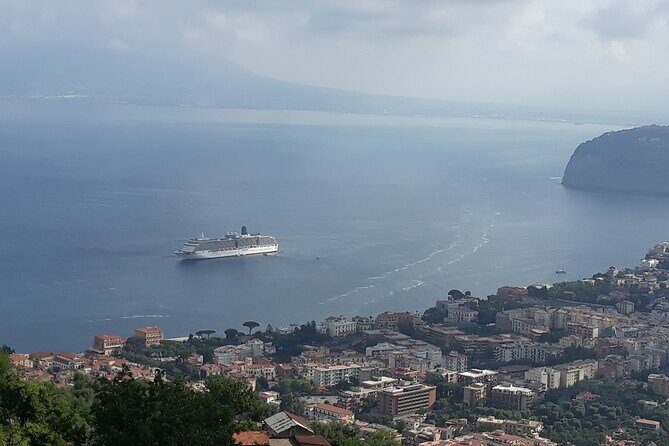
You’ll be on the road along the Amalfi Coast cliff line, passing terraced lemon groves, pastel houses on slopes, and lookout points where the sea flashes between curves. The route naturally creates photo stops and viewpoints, so you get scenic breaks without needing navigation apps.
Two practical considerations:
- Time adds up fast. Even when stops are short, the road eats minutes.
- Traffic can change everything, especially on weekends. Starting early helps. If you’re traveling on a day known for crowding, build in patience.
Ravello: cathedrals, artisan lanes, and the view that slows you down
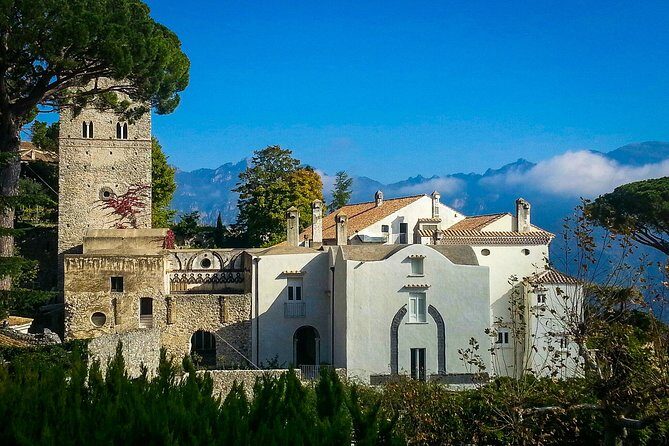
Ravello sits high above the coast with a calmer feel than the seaside towns. It’s the kind of place that’s easy to enjoy without trying to do everything.
You get about one hour for Ravello itself, so you’re not trapped in long transit and you can actually wander.
Piazza Duomo and the Cathedral area
In the center, Piazza Duomo anchors your time. The cathedral area is visually striking with bronze doors and a bright interior linked to Ravello’s historic ties to the maritime Republic of Amalfi. Even if you only take in part of the exterior and immediate square, it sets the tone: medieval meets sea views.
Shops and short walks
Ravello also rewards casual browsing. You’ll pass artisan shops and lanes where you can pick up distinctive souvenirs like ceramics or linen goods. The pacing is slower here than in more famous coastal stops, and that makes it feel more “local.”
Villa Rufolo and Villa Cimbrone: famous gardens, timed to your day
Two Ravello garden stops do a lot of work for the whole trip.
Villa Rufolo (short stop, big payoff)
Villa Rufolo is just off the main square and is tied to the Grand Tour era, when European artists came for inspiration. Its cloistered courtyards and Neo-Moorish arches give it a layered look. Most importantly, the terraces open onto a huge panorama of the Amalfi Coast.
You’ll only have around 15 minutes, so treat it like a viewpoint mission:
- Walk to the terrace areas.
- Find your photo angle.
- Spend the rest soaking in the view.
Villa Cimbrone Gardens (the Infinity Terrace moment)
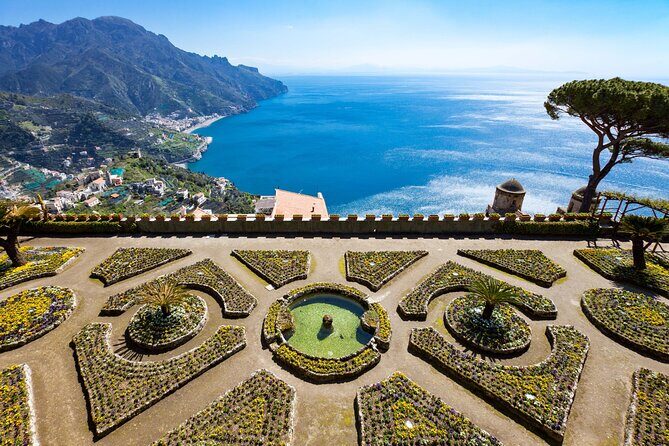
Then there’s Villa Cimbrone. The gardens sit on Ravello’s eastern side with one of the coast’s most dramatic outlooks. The highlight is the Terrace of Infinity, where a balustrade lined with marble busts creates a floating effect between sea and sky.
You’ll have about 30 minutes, which is enough to walk a loop and catch the key terraces without feeling rushed.
Minori, Maiori, Cetara, and Vietri sul Mare: the coast’s calmer edges
After Ravello, the drive continues with short stops along the Amalfi Coast.
Minori: the “City of Taste” reset
Minori is often a welcome break from the big-name crowds. It’s known as the City of Taste, and the vibe feels more everyday: a small beach, a relaxed waterfront, and pastry shops that smell like lemon sugar even when you’re just passing by.
If you want one practical angle: Minori’s shorter stop time makes it easy to enjoy without planning a full beach day. You can stroll, snack, and keep moving.
Maiori: long beach, airy pace
Maiori stretches along one of the longer beaches on the coast. Compared to cliff-hugging towns, it feels more open and breezy. This is a good stop if you want a gentle walk and a less intense “vertical climb” experience.
Cetara: the fishing village feeling
Cetara gives you a more working-coast look. It’s a small fishing town with a tiny harbor, colorful boats, and a medieval watchtower above. It’s known for anchovy traditions, and even with a short stop, you get that sense of life tied to daily catch.
Vietri sul Mare: ceramics and color from the road
Finally, Vietri sul Mare acts like the artistic gateway to the coast. From the road, you’ll notice bright ceramic tiles and a domed church sparkling above the town. Vietri’s ceramic tradition shows up everywhere in shop signs and decorative façades, so this stop is as much about visual “color hunting” as it is about shopping.
What you should pack for a day like this (and what to expect)
This is not a sit-behind-glass kind of tour. Pompeii requires walking on uneven surfaces and climbing short stretches.
The operator recommends moderate physical fitness, comfortable shoes, and sun gear in summer. That matches the reality: you’ll spend significant time on your feet, and Pompeii is exposed in many areas.
Good to know: if someone in your group doesn’t want to walk through Pompeii, there are cafés and gift shops right in front of the ticket office. That makes it easier to split the difference without derailing your whole day.
Also, expect the timing to be “managed,” not perfectly loose. You’ll have a full itinerary across Pompeii plus multiple Amalfi Coast stops, so you’ll want to be ready to move when it’s time.
Price and value: why $508.61 can make sense here
At $508.61 per person, this isn’t a budget day. You’re paying for three core things:
First, the private vehicle and full-day driver across two regions. A big chunk of the coast’s difficulty is logistics, and a private driver removes that friction.
Second, the structure. You get hotel pickup options, live commentary in transit, and an itinerary with Pompeii and Ravello built into one coherent day instead of scattered rides.
Third, the Pompeii upgrade option. If you choose the Pompeii guide plan, ticket convenience and skip-the-line benefits can matter a lot because Pompeii entry flow can be one of the hidden time sinks on a busy day.
What’s not included is also important. Admission fees at Pompeii are only included when you select the guide option, and lunch isn’t part of the package. So if you always arrive ready to purchase tickets and you bring your own lunch plans, you may feel the price more sharply.
Bottom line: this is a strong value if you want a private, organized day with scenic driving and if you’ll use that Pompeii guide option to maximize what you see.
Should you book this Pompeii and Ravello day trip?
I’d book it if you want:
- A single, private day that covers Pompeii + Ravello without stress
- Room to tailor your time in Pompeii (self-paced or guided upgrade)
- A driver who helps you handle the coast roads safely and calmly
- Scenic Amalfi Coast stops that don’t turn into a rushed photo sprint
I might skip it if:
- You hate long walking days in the heat
- You want a deep, slow-study Pompeii session with no time pressure at all
- Your budget is tight and you’d rather mix public transit with cheaper entry planning
If you’re on the fence, my practical advice is simple: decide upfront whether Pompeii needs a guide for you. If you want the context story while you walk, the upgrade is the move. If you’re comfortable reading ruins on your own, the self-paced option can still work because the route is well constructed and the day is curated around viewpoint-rich stops.
FAQ
How long is the Pompeii and Ravello day trip?
The tour runs about 8 to 9 hours.
Is pickup included?
Pickup is offered, and you can be collected from Naples, Sorrento, Pompeii, and other listed locations. You’ll specify your pickup place when booking.
Is this a private tour?
Yes. It’s a private tour/activity, and only your group participates.
Is Pompeii admission included?
Admission fees at Pompeii are not included unless you select the Pompeii guide option.
If I choose the guide option, what do I get?
With the Pompeii guide option, you get a Pompeii Express skip-the-line ticket and a private Blue Badge guide. You still may spend time based on how you want to pace the visit.
Is there live commentary during the day?
Yes. There is live commentary on board during transportation.
What stops are included besides Pompeii and Ravello?
Besides those, the drive includes stops in Minori, Maiori, Cetara, and Vietri sul Mare, plus short garden visits in Villa Rufolo and Villa Cimbrone.
Is lunch included?
No. Lunch isn’t included.
Can I cancel for a full refund?
Yes, you can cancel for a full refund with free cancellation up to 24 hours before the experience’s start time.
What should I wear or bring?
Bring comfortable shoes for Pompeii. In summer, also plan for sun gear since Pompeii is often exposed.