REVIEW · POMPEII
Pompei three hours with an expert guide
Book on Viator →Operated by Campaniaguide · Bookable on Viator
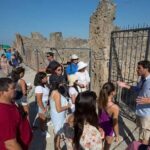
Pompeii makes sense when you have a guide. This private, three-hour outing is designed to help you read the ruins like a city, not like a pile of stone. I love how the guide turns layouts into real daily life, and I love the calmer pace that avoids the all-out sprint of big-group tours.
You also get control. The route can be adjusted for the ages and interests in your group, so you are not stuck on a fixed checklist. If your guide is someone like Giovanna or Vincenzo, the focus is on detail, pacing, and pointing out what most people would miss.
One watch-out: the Pompeii admission ticket is not included. So add that cost when you plan your budget, then enjoy the fact that you are paying for the interpretation, not just the walking.
In This Review
- Key highlights at a glance
- A smart way to do Pompeii in just three hours
- Getting oriented: starting from Piazza Esedra
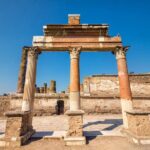
- Pompeii Archaeological Park: what you’ll see and why it matters
- Street of Abundance: the city’s main road in context
- Theaters, brothel, and spas: how the social city worked
- Thermopolis: the snack-stop detail that clicks
- Amphitheater time: scale you can feel
- Classic and newly discovered areas: why this route feels different
- Why a great guide is the real product
- Price and value: what $416.34 per group really means
- Who should book this Pompeii three-hour guide tour
- Practical planning tips for your Pompeii morning
- Should you book this Pompeii three-hour expert guide tour?
- FAQ
- What time does the tour start, and where do we meet?
- How long does the Pompeii tour last?
- Is Pompeii entrance included in the price?
- How many people can be in my group?
- Is the tour offered in English?
- Do I receive a mobile ticket?
- Where does the tour end?
- Is the tour suitable for most people?
- What happens if the weather is bad or the minimum isn’t met?
- Can I cancel for a full refund?
Key highlights at a glance
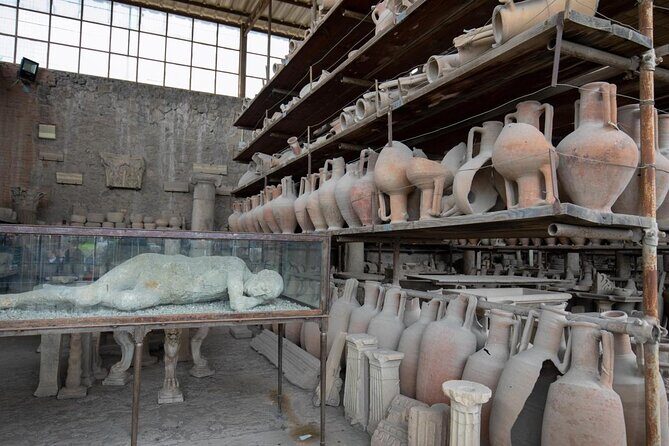
- Private group up to 7 people: more flexibility, fewer bottlenecks.
- Route customization for ages and interests, so the tour fits your group.
- Street of Abundance walk plus major set pieces like theaters, a brothel area, and spas.
- Thermopolis and amphitheater time, including the big amphitheater that could hold up to 20,000.
- Classic and newly uncovered areas: the guide can weave in parts other tours may skip.
- Meet at Piazza Esedra at 9:30 am and finish back where you started.
A smart way to do Pompeii in just three hours
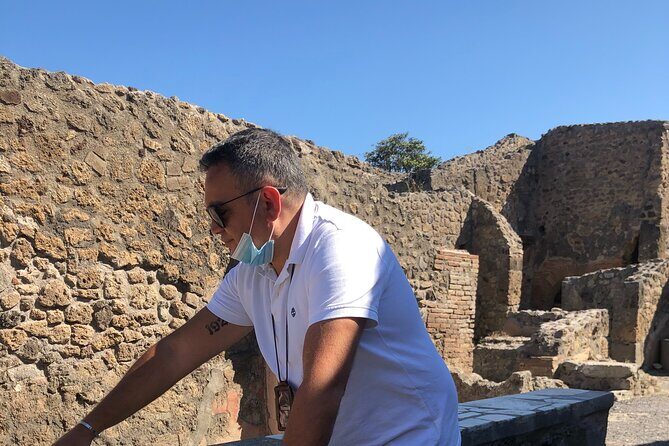
Pompeii is huge, and doing it wrong is easy. You can rush, miss the patterns, and leave with vague impressions like streets and columns. This format is built for the opposite: you spend a short time with strong context, so your brain can connect what you see.
The tour runs about three hours, starting at 9:30 am from Piazza Esedra in Pompeii. Because it is private (just your group), you are not forced to keep up with strangers or vote on what matters most.
And yes, it still walks. Pompeii is an outdoor site, and even a “short” tour requires attention and stamina. The good news is that the schedule is compact enough to feel manageable, especially if you do not want a full-day plan.
You can also read our reviews of more guided tours in Pompeii

Getting oriented: starting from Piazza Esedra
Meeting matters in Pompeii, and starting at Piazza Esedra helps you get your bearings quickly. You are not hunting for a flag in a maze of entrances and side streets. Once you’re together, your guide can set the map in your head early—what part of the city you are looking at, what life looked like there, and what you should watch for as you move.
This is also a practical setup because it is described as near public transportation. That matters if you are using trains or buses as part of your day plan. The tour ends back at the same meeting point, which keeps the logistics simple when your energy is running on a schedule.
Pompeii Archaeological Park: what you’ll see and why it matters
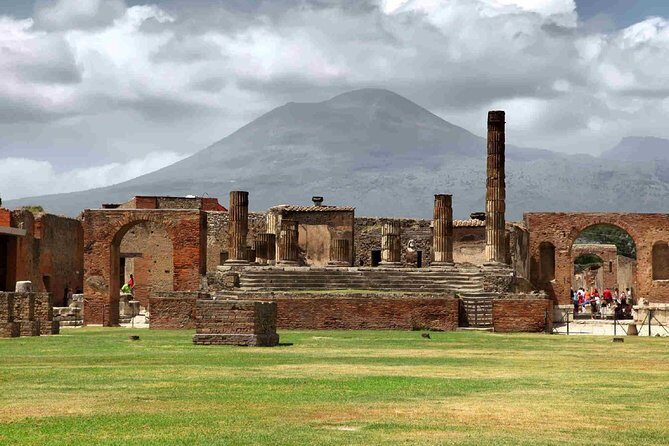
The heart of this experience is the Pompeii Archaeological Park stop. The goal is to help you understand how the city worked right before the eruption of Vesuvius buried it. In about two hours, you cover the main facts and the key places that explain everyday life in Roman Pompeii.
You’ll see a mix of public and private spaces:
- Private homes (so you can grasp domestic life, not just monuments)
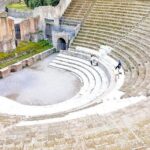
- Two theaters (for entertainment and civic rhythm)
- A brothel area (for the social side of the city)
- Spas (for bathing culture and routine)
- The Thermopolis (a sort of early snack-and-drink stop)
- The Street of Abundance, the city’s main road
- The amphitheater, big enough for up to 20,000 people
Here’s the value of doing this with a guide: Pompeii is not arranged to be easy for first-timers. A guide helps you connect shapes, entrances, and street alignments to what they meant in daily use. Instead of reading it like a museum map, you start seeing it like a place people lived.
Street of Abundance: the city’s main road in context
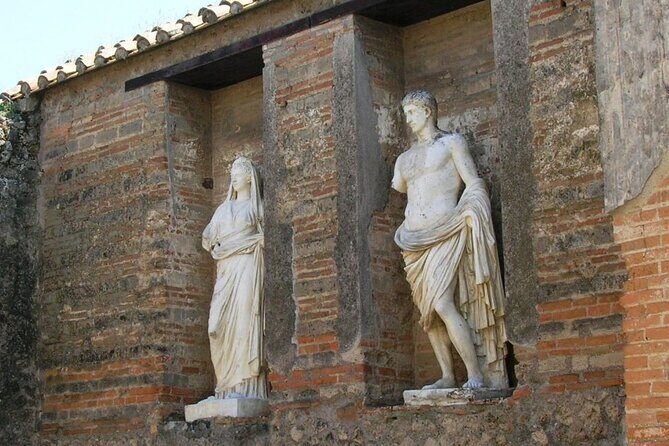
Walking along the Street of Abundance is a highlight because it’s the spine of daily movement. You are not only looking at stones; you’re tracing how people would travel between sights, commerce, and social stops.
With the right interpretation, this street becomes more than a viewpoint. You start to notice how storefront-style spaces relate to the road, how buildings front onto public life, and how the scale of the street signals how busy the city felt on ordinary days. Even if you are not a “Roman history person,” this is where Pompeii starts to feel human.
And because this tour is private, you can slow down where the guide finds the best teaching moments. If your group includes kids, older adults, or anyone who gets tired fast, the route can shift to match attention and mobility.
Theaters, brothel, and spas: how the social city worked
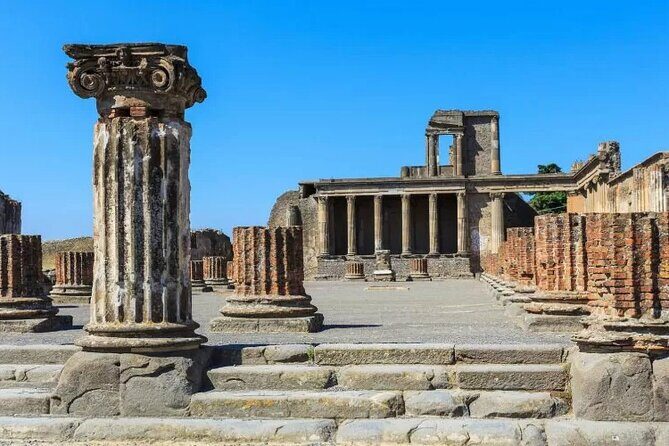
Pompeii includes places people used for fun, commerce, and routine—and the tour intentionally hits those. That mix is what makes the experience feel complete.
The theaters show how public gatherings worked, and the guide can explain what made these venues important to Roman city life. The brothel stop is not treated like a scandal tour. Instead, the guide’s job is to place it in the city’s social ecosystem, so it reads as part of everyday urban life.
Then come the spas, which help you see Pompeii as a place of repeated rhythms. Bathing culture wasn’t a rare event—it was woven into daily habits. When you understand that, the bathing spaces stop feeling like odd ruins and start feeling like routine infrastructure.
This is one place where the guide quality shows. Guides such as Giovanna are praised for being kind and detailed, with the ability to make history feel visual—so you can picture what a stop on this route might have felt like, not just what it looked like on a sign.
You can also read our reviews of more tours and experiences in Pompeii




Thermopolis: the snack-stop detail that clicks
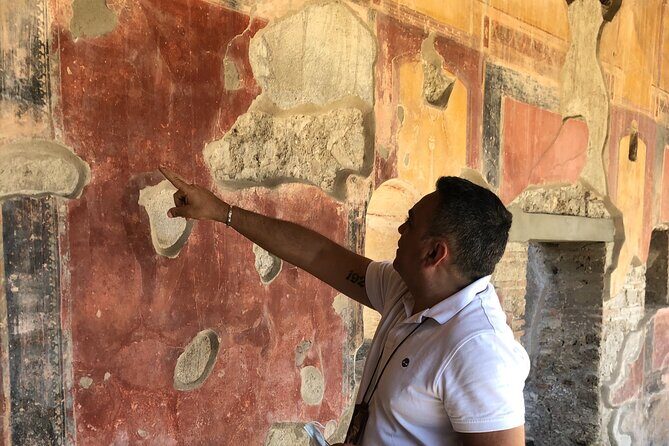
The Thermopolis is one of those Pompeii features that sounds minor until it becomes a window into routine. It suggests a place where people grabbed drinks and quick food, probably as part of daily movement.
With a guide, you learn how these spaces fit into the city’s day-to-day flow. It’s not just a stop on a list. It’s a clue about who went where, how long people might stay, and what kinds of transactions were normal.
If you like travel that turns small details into a bigger story, this is exactly the kind of point that makes the tour feel worth paying for. A self-guided wander can miss this kind of meaning.
Amphitheater time: scale you can feel
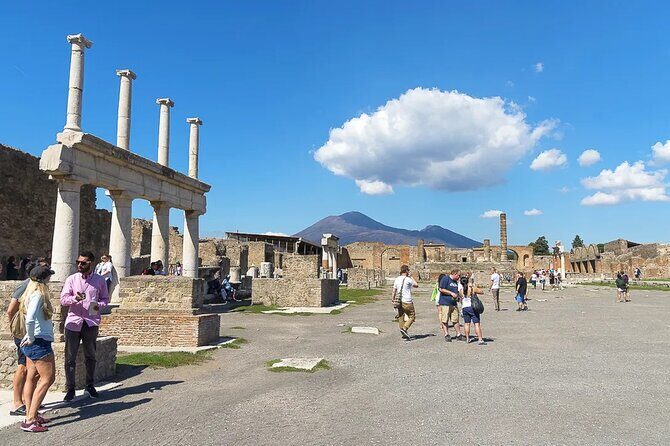
The amphitheater is hard to understand from photos. In person, you get the sense of how large the audience was. This stop matters because the tour frames it in terms of what it meant to the city, not just how impressive it looks.
The amphitheater could hold up to 20,000 people. When the guide helps you connect that capacity to civic life, it changes your perspective. You stop thinking only about stone and start thinking about gatherings, performances, and the social energy of a big event.
And because the tour is not rushed by a huge crowd, you can actually take in the sight instead of being dragged forward before it lands.
Classic and newly discovered areas: why this route feels different
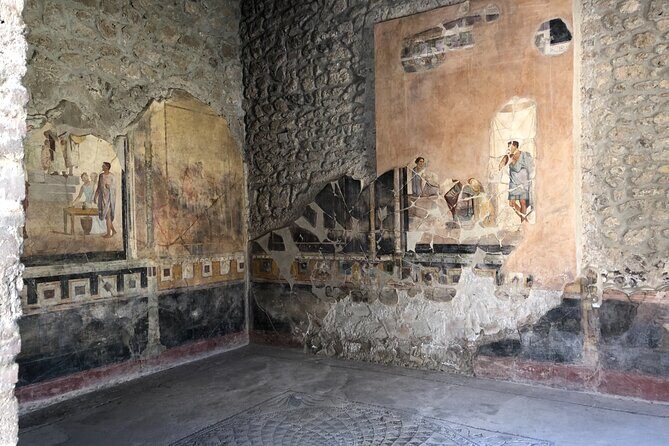
Pompeii has parts that are well-known and parts that are newer to visitors. This tour’s route includes not just the classic areas, but also the more recently discovered sections joined into the walk.
That matters because it can make your experience feel less like every other Pompeii stop. Even if you have read about the city, newly surfaced areas can change your sense of how much there is still to understand.
It also pairs well with the tour’s customizing approach. If your group is curious about what’s been found or how preservation changed over time, your guide can shape the route to match that interest within the time window.
Why a great guide is the real product
The ruins are the stage. The guide is what turns the scene into something you can follow.
In this tour, the guide service is the key included value. People highlighted guides like Vincenzo for helping them understand the significance behind the sights, not just naming them. Vincenzo is also described as an archaeologist with the ability to point out details others might miss and to keep the group away from heavy crowd pressure.
That last part matters more than it sounds. Pompeii has busy zones, and when you are stuck waiting in a line, you lose the chance to learn. A guide who manages the pace helps you keep your attention where it counts.
Also, the tour can accommodate older adults by giving them time to maneuver. If your group includes someone who needs a slower rhythm, this format is built for that kind of flexibility.
Price and value: what $416.34 per group really means
The price is listed as $416.34 per group, for up to 7 people. The Pompeii entrance fee is not included, so your total depends on adding that on top.
Still, it can be good value if you travel in a group. If you fill all 7 spots, the guide cost per person drops a lot. Even with 3–5 people, you’re essentially paying for expert interpretation spread across your group size.
Why is that worth it? Because Pompeii is not just a “see it” place. It’s a “figure it out” place. If you want the most important sites and you want to understand why they matter, paying for the guide can save you from an expensive mistake: going without context and leaving with half-understood highlights.
If you are coming solo, the per-person cost rises because it is priced per group. In that case, you may want to compare what you would pay for self-guided time versus paying for direct interpretation—especially if you enjoy turning ruins into stories.
Who should book this Pompeii three-hour guide tour
This works especially well if you fit at least one of these groups:
- Your group includes mixed ages, and you want flexibility rather than a strict march.
- You want the key highlights without spending all day.
- You like history explained in a way that makes the city feel lived-in.
- You want to focus on meaningful areas like homes, theaters, baths, and the street-life core.
It may not fit as well if you want a slow, hours-long wander with no structure. Pompeii rewards patience, sure, but this is a three-hour window. The strength here is clarity, not unlimited time.
Practical planning tips for your Pompeii morning
This experience is dependent on good weather. If weather is poor, you’ll be offered a different date or a full refund. That’s worth keeping in mind when you schedule Pompeii as part of a tight itinerary.
Also, plan around the fact that the main sites involve walking through an outdoor archaeological park. The tour is designed to be doable for most people, but you’ll enjoy it more if you come ready to keep moving for a few hours.
Finally, remember the entrance ticket is separate. Get that sorted before your guide meets you, so you do not waste your prime tour time at the ticket desk.
Should you book this Pompeii three-hour expert guide tour?
If you want Pompeii to make sense fast, I think this is a strong choice. The structure is short enough to feel doable, and the private setup makes it easier to slow down where your group cares. The guide-focused approach is the real win: you come away understanding what you saw and why it mattered.
I’d book it when your group includes different ages or different interests, because the route can adjust. I’d also book it when you want the core highlights—Street of Abundance, theaters, spas, Thermopolis, amphitheater—without turning your day into a marathon.
Just budget for the Pompeii admission fee, since that is not included. If that small addition works for your trip math, this is the kind of Pompeii visit that turns scattered ruins into a city you can actually picture.
FAQ
What time does the tour start, and where do we meet?
The tour starts at 9:30 am at Piazza Esedra, 80045 Pompei NA, Italy.
How long does the Pompeii tour last?
It lasts about 3 hours.
Is Pompeii entrance included in the price?
No. The Pompeii entrance fee is not included.
How many people can be in my group?
This is a private tour/activity for only your group, with a maximum of up to 7 people.
Is the tour offered in English?
Yes, it is offered in English.
Do I receive a mobile ticket?
Yes. A mobile ticket is included.
Where does the tour end?
The activity ends back at the meeting point (Piazza Esedra).
Is the tour suitable for most people?
The tour notes that most people can participate.
What happens if the weather is bad or the minimum isn’t met?
If the experience is canceled due to poor weather, you’ll be offered a different date or a full refund. If the minimum number of travelers is not met, you’ll also be offered a different date/experience or a full refund.
Can I cancel for a full refund?
Yes. You can cancel up to 24 hours in advance for a full refund. If you cancel less than 24 hours before the start time, the amount you paid is not refunded.