REVIEW · POMPEII
Guided Tours of Pompeii Excavations Historical and Cultural Itineraries
Book on Viator →Operated by Bruno Pisano · Bookable on Viator
Pompeii hits different with a real guide. This 4 hours 10 minutes outing is built around an interpretive walk through the city’s Hellenistic layers, with the blockbuster Villa dei Misteri and its famous Dionysian fresco on the route. I like that it’s a maximum of 15 people, so the story actually has room to breathe instead of turning into a fast shuffle.
What you’ll enjoy most is how the tour explains Pompeii as a lived place, not just a list of ruins. You get guided context on the Mystery cults (Dionysian and Isiac), daily life in a city called the Most Living Among the Dead Cities, and the idea that Pompeii linked the Mediterranean world—before the eruption froze everything in time.
One thing to plan for: the Pompeii ruins entrance ticket isn’t included, and you’ll spend about 25 minutes at each stop. It’s not a slow museum stroll, so if you want long, quiet reading time, you may feel slightly time-pressed.
In This Review
- Key things that make this Pompeii tour worth it
- A small-group Pompeii tour that connects buildings to beliefs
- Price, tickets, and what you actually pay for
- Porta Marina logistics: start time, mobile ticket, and pace
- From suburban spas to the Apollo temple: the public city in 25-minute stops
- Stop 1: Pompeii Archaeological Park (suburban spas)
- Stop 2: Tempio di Venere
- Stop 3: Basilica of Pompeii
- Stop 4: Temple of Apollo
- Stop 5: Foro de Pompeya (Forum)
- Stop 6: Terme del Foro
- Fresco houses and mystery cults: Villa dei Misteri and the daily life under ash
- Stop 7: Casa del Fauno
- Stop 8: Casa dei Vettii
- Stop 9: Casa degli Amorini Dorati
- Stop 10: Villa dei Misteri
- Should you book this Pompeii guide tour?
- FAQ
- How long is the guided Pompeii tour?
- What is the meeting point for the tour?
- Is the Pompeii entrance ticket included in the price?
- How many people are in the group?
- Who provides the guide for the tour?
- Do I get a mobile ticket?
- Is free cancellation available?
Key things that make this Pompeii tour worth it
- Max 15 per guide, which keeps questions possible and pacing sane
- Villa dei Misteri included, with the Dionysian fresco noted for its outstanding condition
- A philosophical and cultural framing, not only architecture and dates
- A well-rounded route: public buildings, temples, baths, and elite domus houses
- Stop-by-stop sights tied to beliefs like the Imperial cult and Mystery traditions
- Bruno Pisano guiding with a mix of history and everyday relevance
A small-group Pompeii tour that connects buildings to beliefs
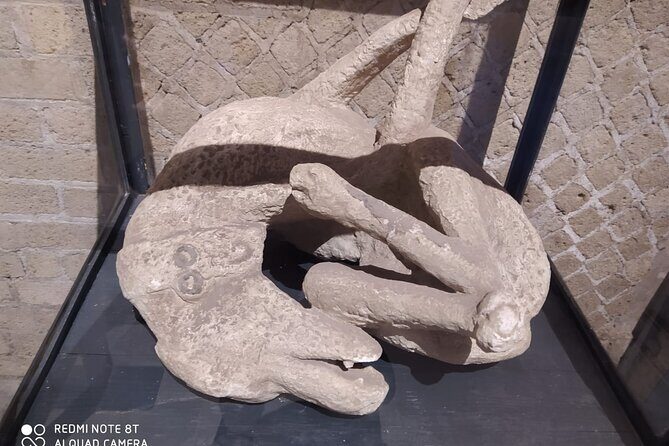
Pompeii can feel like a textbook until someone translates it into people and choices. This tour leans hard into interpretation: what the city meant, who it served, and why certain spaces mattered. Instead of treating ruins as disconnected highlights, you’ll hear how public buildings and private homes point to beliefs and routines—religious, social, and political.
I also like the angle that Pompeii isn’t neatly “Greek” or “Roman” in the way people often lump it together. The framing here is that Pompeii was Hellenistic, functioning as a major commercial and industrial hub with connections reaching beyond Italy. You’ll hear it described as part of a larger Mediterranean world—when the sea was a uniting highway, not a divider.
Then the tour uses that big picture to zoom back in. You get the Imperial cult and sailor-related devotion at the Tempio di Venere, the ethical and prophetic tone connected to the Temple of Apollo, and the Mystery-cult atmosphere connected with Dionysian and Isiac traditions. The eruption story is also treated with a religious-historical lens, with a reference to the idea of divine punishment. Even if you don’t buy every interpretive step, this kind of guided framing is what turns “stones” into understanding.
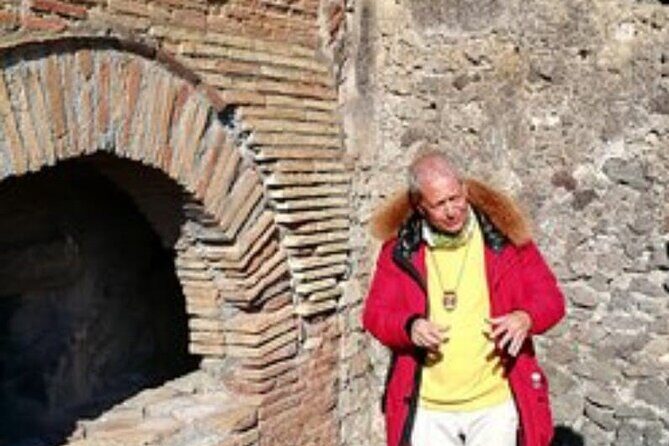
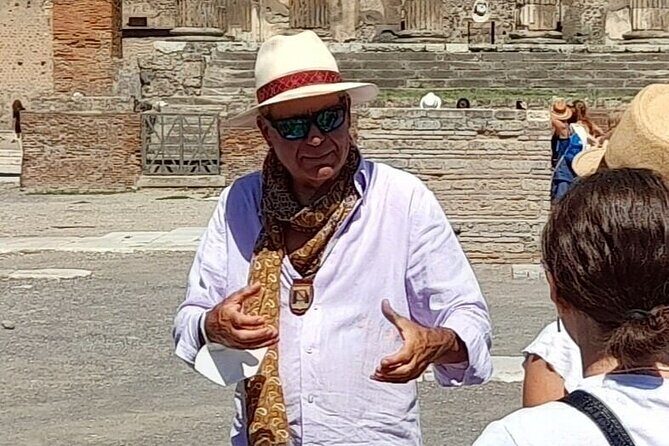
Finally, the guide matters. The provider is Bruno Pisano, and the feedback highlights how he explains with competence and a genuinely engaging style. More than one comment points out that his approach mixes ancient life with modern relevance, and even touches on psychology to help ideas stick. If you like a guide who connects the past to how people think and behave, this is the right fit.
You can also read our reviews of more guided tours in Pompeii

Price, tickets, and what you actually pay for
The price is $57.62 per person for a guided experience lasting about 4 hours 10 minutes. That includes the guide and assistance for the full time, plus the small-group format. The mobile ticket feature is included, which helps on the day.
But here’s the practical value check: the Pompeii entrance ticket is not included. That’s normal for many guided tours, yet it’s easy to forget when you’re comparing deals. I strongly suggest you budget for two separate parts:
- the guided service (what you’re paying $57.62 for)
- the site admission (what you still need to purchase)
Also, snacks aren’t included. Each stop is around 25 minutes, so you’ll likely want water and something small to eat before you meet. Doing that keeps the tour from feeling like you’re thinking about hunger every few minutes.
One more caution, based on a real-world complaint: a commenter said they paid extra through an agency because it added a fee. If price transparency matters to you, it’s worth making sure you’re booking the tour directly with the provider rather than through a reseller that marks it up.
If you do the math this way, the $57.62 looks fair. You’re not just paying for access; you’re paying for a specialized archaeology/history/philosophy guide, in a group that stays small.
Porta Marina logistics: start time, mobile ticket, and pace

This tour starts at 9:30 am and meets at Porta Marina audioguide official, located at Via Villa dei Misteri, 2, 80045 Pompei NA, Italy. The tour ends at the same address, which makes the day easier—you’re not dragged across town afterward.
The ticket format is mobile, which is convenient. Confirmation is sent within 48 hours (subject to availability), and the tour lists free cancellation up to 24 hours in advance for a full refund. If your plans are flexible, that gives you breathing room.
Group size is capped at 15 travelers, and that matters for ruins. Pompeii has bottlenecks and uneven paths, and larger groups can turn a guided tour into a standstill. With a small group, you’re more likely to get the guide’s attention and better timing between stops.
One more practical note: many stops involve walking and standing for explanations. Comfortable shoes aren’t optional. Also, since admission isn’t included, double-check you have your site ticket sorted before you arrive so you don’t waste time at the start.
From suburban spas to the Apollo temple: the public city in 25-minute stops
The route moves through key public spaces and elite-but-public life: baths, temples, tribunals, and the administrative heart of Pompeii. Expect a rhythm of roughly 25 minutes per stop—enough to understand what you’re seeing, without pretending you’ll master the whole site in one morning.
Stop 1: Pompeii Archaeological Park (suburban spas)
You begin with the suburban spas, which are a great choice for kicking off because they show what daily life could look like beyond the big headline monuments. Watch for the frigidarium’s framing details, including a nymphaeum made with glass paste, polychrome and glazed tiles, and a swimming pool frescoed with Nilotic subjects. It’s a reminder that even “outside the center,” people wanted comfort and decoration—not just function.
Practical tip: because this is at the start, take a moment to get your bearings here. Your later stops will make more sense if you know which direction you’re heading.
You can also read our reviews of more historical tours in Pompeii
Stop 2: Tempio di Venere
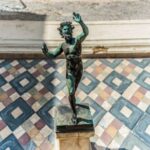
Next comes the Tempio di Venere, tied to the Imperial cult and the goddess of sailors. The temple sits on a terrace dominating the surrounding landscape, which makes it feel like a viewpoint even though it’s still part of the urban fabric. There’s also a striking bronze statue depicting Daedalus by the Polish artist Igor Mitoraj—a modern layer set into an ancient setting.
This stop is especially useful if you like your Pompeii explanations to include religion with real-world anchors—who might have prayed here, and why devotion could be linked to seafaring life.
Stop 3: Basilica of Pompeii
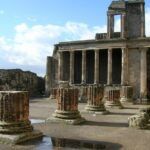
Then you hit the Basilica, the big Tribunal building. The Basilica of Pompeii has three naves, and it’s often described as anticipating the typology of the Christian basilica. It’s also the largest public building in Pompeii. Even if you’ve seen basilicas elsewhere, this one works because it explains how civic power shaped architecture.
It’s not just about columns and layout. You’ll get the sense that justice, administration, and public business lived in stone and space designed for people to gather.
Stop 4: Temple of Apollo
The Temple of Apollo follows, with a focus on ethical and prophetic worship. Architecturally, it’s described as Greek in design, and the tour highlights how the plastic configuration feels impressive even as a ruin. Two bronze statues—Apollo and Diana—dominate the setting.
If you like the story to connect belief to physical objects, this stop does that. Apollo isn’t just a name; the tour frames what this temple represented in daily thought and ritual.
Stop 5: Foro de Pompeya (Forum)
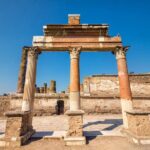
Now you’re in the commercial, administrative, and religious center. The Forum is where Pompeii feels most “urban” in the classic sense—an organized complex with major ceremonial weight. It’s dominated by the grand Temple of Jupiter, Juno, and Minerva, which gives you a clear anchor for the city’s official identity.
In a guided format, this is one of the places where the interpretation pays off. Without a guide, it can be easy to see the Forum as a generic plaza. With context, it becomes a working map of power, trade, and belief.
Stop 6: Terme del Foro
Finish this public segment with the Terme del Foro, a wellness center and SPA. Here the details are the point: the tepidarium stands out for its stuccoes from the Neronian school, and the calidarium includes a grand alabaster labrum described as of Egyptian origin.
Baths are a perfect subject for a “people” tour. They show a routine you can almost picture: social time, hygiene, and status all mixed into one place.
Fresco houses and mystery cults: Villa dei Misteri and the daily life under ash
After the city’s public face, the tour shifts to elite domestic life—where belief and art show up in floors, walls, and household shrines. This is where the tour’s cultural interpretation becomes concrete, because you can literally look at what people filled their private worlds with.
Stop 7: Casa del Fauno
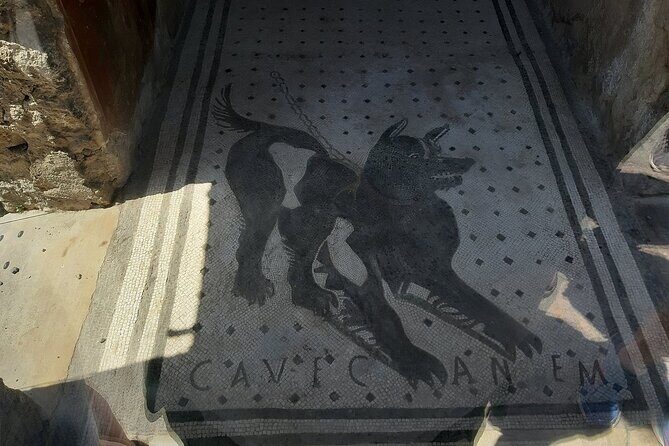
The Casa del Fauno is one of the tour’s biggest “wow” stops because it’s the largest house in all of Pompeii and a Hellenistic-era palace home. You’ll see an excellent copy of the mosaic known as Battle of Issus (333 BC), showing Alexander the Great against Darius III of Persia.
Even if you don’t memorize every figure in the battle scene, the mosaic works as a statement: this was display culture, identity, and taste. It’s a way of telling you what kind of household this was.
Stop 8: Casa dei Vettii
Next is the Casa dei Vettii, famous for frescoes in the fourth Pompeian style. The tour points out the Priapus figure associated with the Neronian school, plus the grand hall with Cupids working—little messages of play, labor, and myth folded into decoration.
The mythological paintings are a major highlight in the description: Daedalus and the Minotaur themes show up here. This house turns mythology into wall-sized storytelling, and you’ll likely find it easier to track once your guide connects the images to what people enjoyed and valued.
Stop 9: Casa degli Amorini Dorati
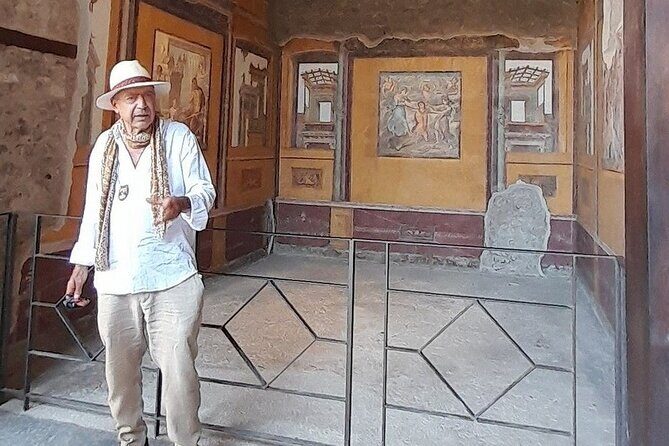
Then you reach Casa degli Amorini Dorati, a perfectly preserved domus with a Rhodian peristyle. The tour notes obsidian mirrors—a detail that instantly signals luxury because it’s so specific and so visually “smart” for the time.
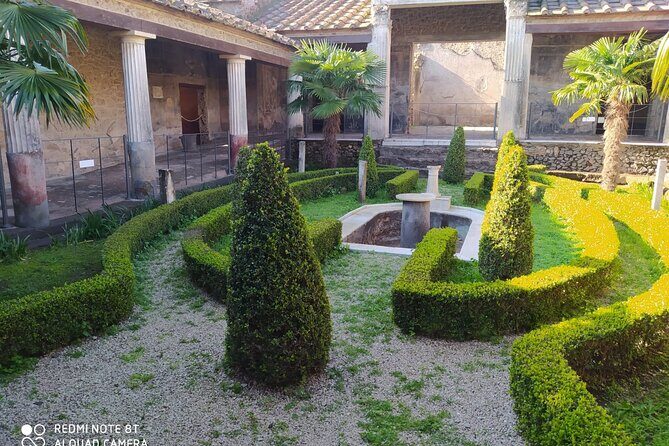
Inside, you’ll also encounter a shrine dedicated to the cult of Isis and the Lararium, the household protector gods. The frescoes tied to the Trojan War are highlighted as magnificent. This stop is a reminder that religion wasn’t only public temples; it also lived in home spaces.
Stop 10: Villa dei Misteri
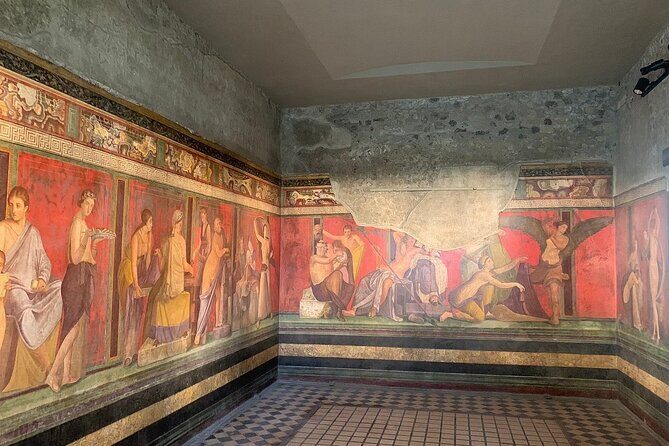
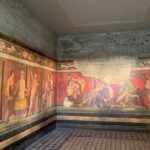
The tour’s grand finale is the Villa dei Misteri with the Dionysian fresco from the first century BC. The description emphasizes its unique status for state of conservation, which is exactly what you want from a guided tour: a focused explanation of a standout masterpiece.
This is where the Mystery-cult theme tightens. The tour frames the Dionysian imagery and connects it to the broader web of mystery traditions—so the fresco isn’t just a pretty wall. It becomes a window into what people sought in ritual and belief.
And since it’s last, you’ll end the day with your eyes trained. By this point you’ve seen the city’s public power, its bath culture, and its private art choices. The villa ties that into spiritual meaning.
Should you book this Pompeii guide tour?
If you want Pompeii explained as a real society—public rituals, private houses, belief systems, and art that mattered—this tour is a strong booking. I’d especially recommend it if you care about having Bruno Pisano as your guide. The feedback repeatedly points to his competence, professionalism, and a style that mixes history with present-day clarity, including connections that help people understand what they’re looking at.
It’s also a good choice if you dislike big-group tours. With a maximum of 15 people, the pacing feels more controlled, and you’re more likely to get individualized attention when questions pop up.
The main reasons to pause: you still need to buy the Pompeii entrance ticket, and each stop is brief. If your ideal day is slow wandering and quiet self-guided discovery, consider a longer, unstructured visit. But if you want your time to count and you like guides who interpret ideas, this route is built for you.
FAQ
How long is the guided Pompeii tour?
It runs for about 4 hours 10 minutes.
What is the meeting point for the tour?
You meet at Porta Marina audioguide official, Via Villa dei Misteri, 2, 80045 Pompei NA, Italy. The tour also ends at the same place.
Is the Pompeii entrance ticket included in the price?
No. The entrance ticket to the Pompeii ruins is not included.
How many people are in the group?
The tour has a maximum of 15 travelers per guide.
Who provides the guide for the tour?
The experience provider listed is Bruno Pisano.
Do I get a mobile ticket?
Yes, the tour provides a mobile ticket.
Is free cancellation available?
Yes. You can cancel up to 24 hours in advance for a full refund.