REVIEW · COLOSSEUM TOURS
Colosseum Palatine Hill and Roman Forum Guided Tour
Book on Viator →Operated by Gladiator Tours · Bookable on Viator
Ancient Rome moves fast when it’s guided. This tour strings together the Colosseum, Roman Forum, and Palatine Hill with a professional, licensed guide—and they give you headsets so you don’t miss the story over the crowd. It’s a smart way to see the big three without spending your whole day tracing maps and hoping you’re in the right place.
I also like that the tour is built for real viewing. You get an added look at a gladiator-related area, plus the guide points out what to notice at each stop (architecture, daily life, and myths) instead of just letting you stand there. One more win: you finish inside the Colosseum, with time to keep exploring after the guided portion ends.
The one drawback to plan around is Rome’s rules about timing and names. You must provide all full names and bring ID that matches; if the names don’t match the ticket, you can be denied entry. Also, on crowded or unusual days, delays and even cancellations can happen due to site operations—so keep a little flexibility in your schedule.
In This Review
- Key highlights worth noting
- A tight circuit: Colosseum, Forum, and Palatine in one flow
- Meeting point and timing: why punctual beats perfect
- Inside the Colosseum: gladiator spectacles and what to focus on
- Roman Forum: where politics and daily life lived
- Palatine Hill views: myths, emperors, and the big picture
- How the $82.90 price adds up for this 3-site combo
- Crowd reality, pace, and what you can control
- Who should book this tour—and who might choose differently
- Should you book this Colosseum–Forum–Palatine guided tour?
- FAQ
- FAQ
- What time does the tour last, and when do I get inside the Colosseum?
- Where does the tour start and where does it end?
- Is the tour offered in English?
- How many people are in the group?
- What’s included with the ticket price?
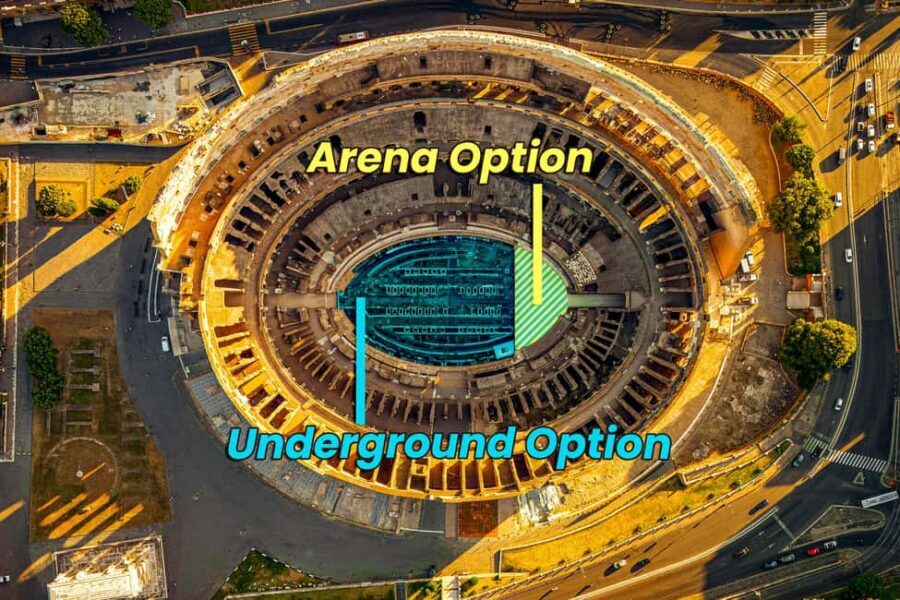
- Do I get access to the Colosseum underground or arena floor?
- Do I need to provide full names and matching ID?
- What’s the cancellation window for a full refund?
Key highlights worth noting
- Licensed guide plus headsets: clearer explanations without shouting over the noise
- Small group size (max 15): easier to follow and stay together
- Included tickets for all three sites: Colosseum, Roman Forum, and Palatine Hill are covered
- A special gladiator-training stop: a less typical angle on gladiator life
- Panoramic viewpoints on Palatine Hill: classic photo moments over the Forum and Colosseum
- Finish inside the Colosseum: you get time after the tour to wander on your own
A tight circuit: Colosseum, Forum, and Palatine in one flow
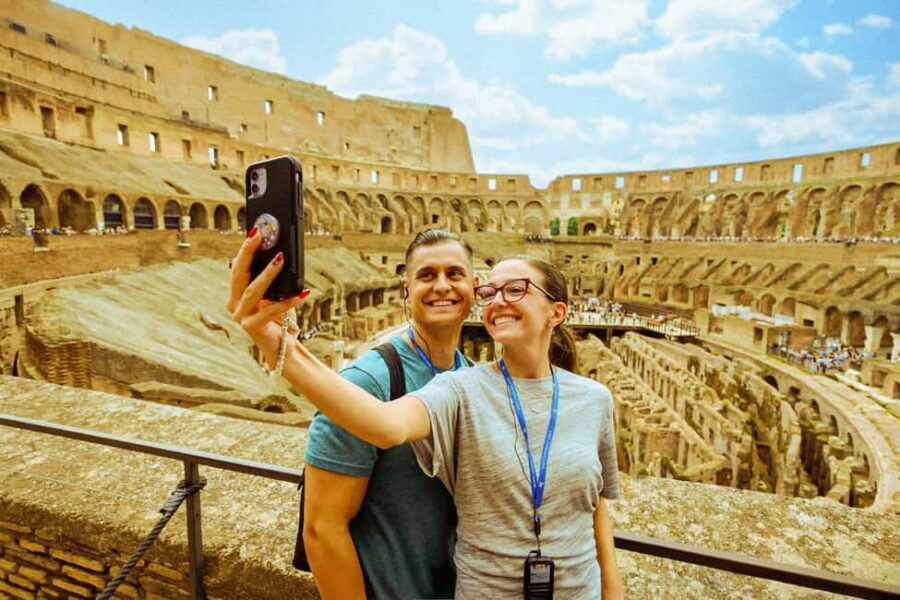
This is the kind of Rome tour that feels efficient in a good way. In about 3 hours, you cover the sites most people picture when they think of the Roman Empire, and you do it in a logical order that keeps you moving through the story of the city. You’re not just collecting monuments—you’re seeing how power, politics, and myth all sit in the same patch of ground.
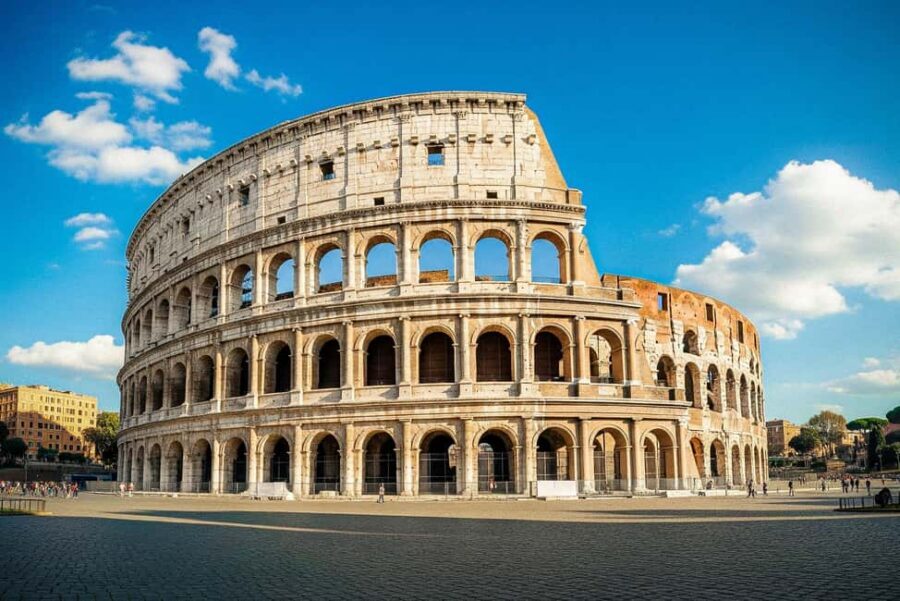
The route is also set up to help your brain. The Colosseum is where spectacles took center stage. The Roman Forum is where the real engine of city life ran—courts, commerce, religion, and politics all in walking distance. Then Palatine Hill pulls everything upward into legends and imperial palaces, with views that make the whole setup click.
If you’re the type who gets lost without context, you’ll likely appreciate the guide’s job: they connect the big visuals to the why behind them. And if you’re the type who needs photo moments, you’ll also get those because the guide has to pause at key angles and viewpoints to explain what you’re looking at.
You can also read our reviews of more guided tours in Rome



Meeting point and timing: why punctual beats perfect
The tour starts at Via di S. Giovanni in Laterano, 14 and ends at Piazza del Colosseo. It’s near public transportation, which matters because Rome buses and trains can be unpredictable. You’ll want a buffer on travel time from your hotel.
Here’s the practical truth: the Colosseum and Forum have strict entry handling, and this tour’s success depends on you arriving on time. You’ll hear this theme from the fine print because it’s real. You must provide all visitors’ full names, and every person must show valid passport or ID that matches what was submitted. If you don’t match, the site can refuse entry.
Also note the experience window. You’re guided for about 3 hours, but the tour finishes inside the Colosseum. After you enter, you have up to 75 minutes to stay and continue exploring on your own. That’s great—just don’t plan your whole day as if time is infinite. It’s still the Colosseum, still crowded, and you’ll want time for the final wander without sprinting to catch your next stop.
Inside the Colosseum: gladiator spectacles and what to focus on
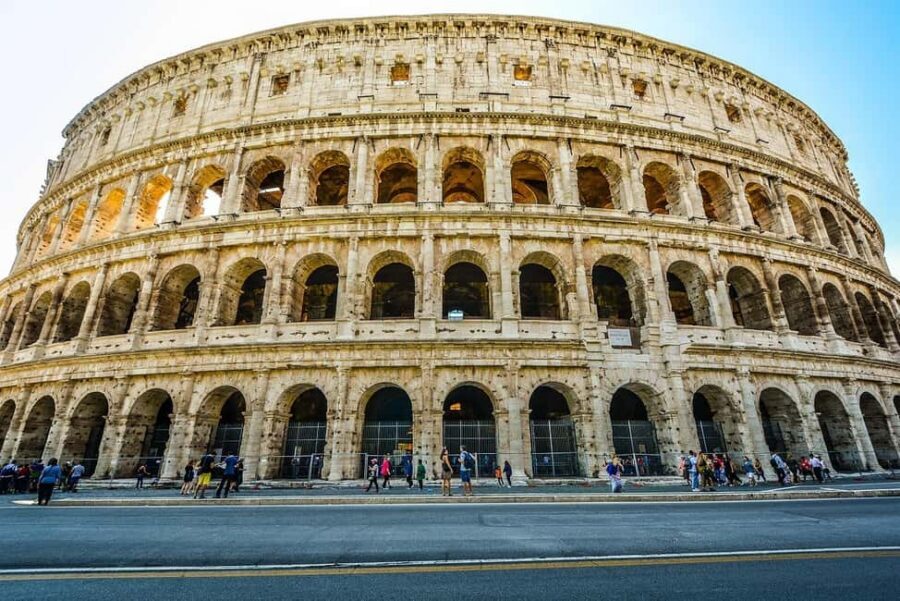
The Colosseum is the star, but it can also be the most frustrating place to visit solo. It’s huge, the crowd is constant, and it’s hard to know what part matters most. This is where the guide earns their pay.
During the Colosseum stop (about 1 hour 15 minutes), you’ll learn about gladiator battles and ancient spectacles and how the building’s design helped stage the action. The structure can look like stone and arches at first glance. With a guide, you start seeing it as an instrument—built to funnel people, control sightlines, and keep events moving.
One standout from the tour highlights is the inclusion of an exclusive visit to a gladiator training ground area. Even if you’ve read about gladiators before, this kind of stop gives you a more grounded sense of how training and performance were connected. It’s also a nice break from the usual pattern of just circling the main bowl and calling it a day.
After the guided portion, you stay inside. One of the best practical aspects here is that you can shift into slow tourist mode—photo angles, standing still long enough to notice details, and taking your time. Reviews also mention that guides often build in brief moments for restrooms and pacing so you’re not stuck in a nonstop rush, especially in heat and crowd conditions.
Important downside to consider: the Colosseum is subject to site-wide constraints. On some days, entry flow can mean delays, and on very unusual days the tour can be disrupted. So if you have a tight travel connection right after your tour ends, keep that risk in mind.
Roman Forum: where politics and daily life lived
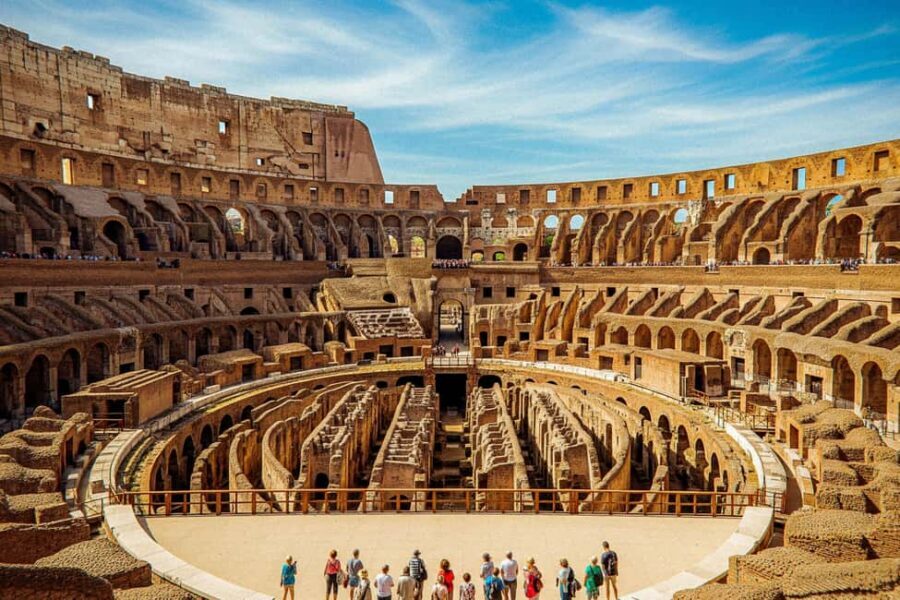
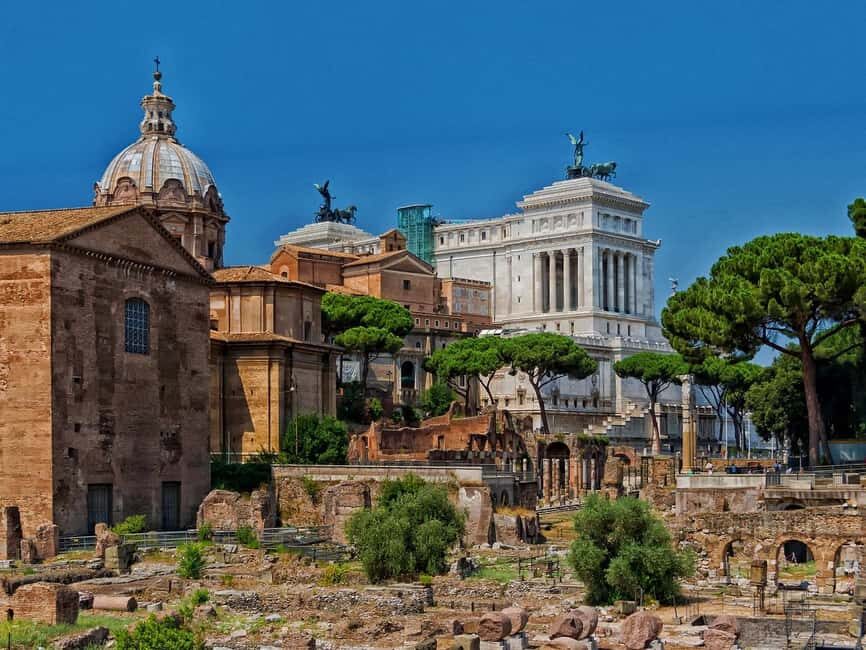
The Roman Forum stop runs about 1 hour, and it’s the part that often surprises people. The Colosseum is dramatic. The Forum is busy-in-a-different-way: ruins connected to the systems of government and commerce. With a guide, you learn what you’re looking at—temples, basilicas, arches—rather than just viewing scattered stone.
The Forum is where Rome’s public life gets real. You’ll walk through the heart of ancient Rome, and the guide ties the remaining structures to how the city worked. This is especially valuable if you’ve only ever seen Rome as tourist postcard material. Suddenly you understand why those buildings mattered: they weren’t just impressive—they were functional hubs for power, trade, and public debate.
A good guide also helps you interpret what’s missing. In ruins, your eyes want to fill gaps. The guide’s job is to guide that filling-in process with facts and context—so you don’t end up “imagining wildly,” but you also don’t feel like you’re staring at labeled rubble.
Crowds are still a factor here. Even with ticketed entry, the Forum can bottleneck. That said, the audio headsets help because the guide can point out the next cluster of ruins even when you’re packed tightly. If you’re someone who loses track in dense crowds, this is one of the reasons a guided route is worth it: you stay oriented.
Palatine Hill views: myths, emperors, and the big picture
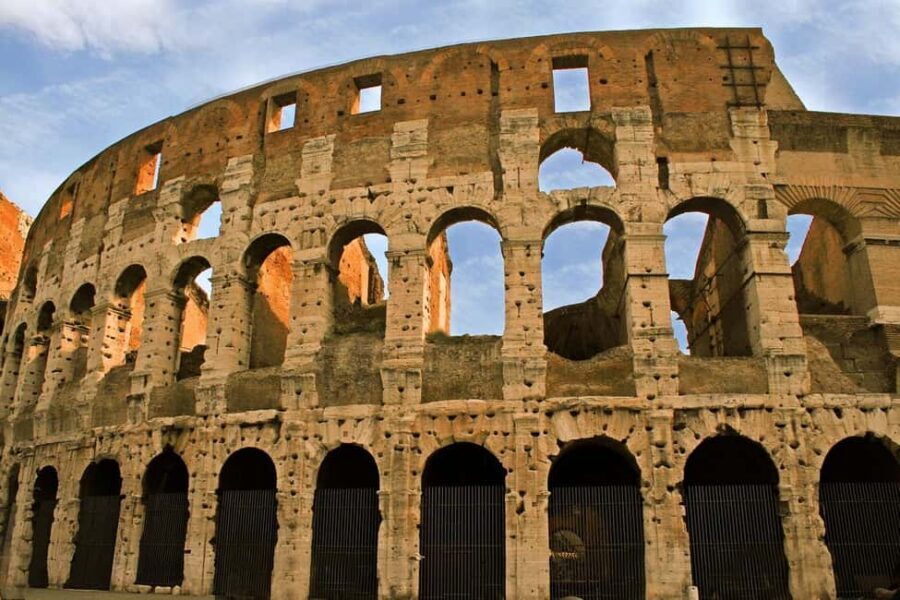
Palatine Hill is the closer (about 45 minutes), and it plays like the “explain it all” segment. It’s legendary—often linked to the birthplace of Rome—and it’s also where imperial palaces shaped daily life for emperors.
During this stop, you’ll learn the myths tied to Romulus and Remus and hear how the site connects to rulers and their grand residences. Then you get the best part for many people: the panoramic views. Looking out toward the Colosseum and Roman Forum helps you understand scale. Without a view like this, the story of the city can feel chopped into separate attractions. With the view, you see the relationships.
Palatine is also a practical choice for a guided tour because it gives you structure in a place that can feel confusing on your own. You’re not just walking up and down; you’re stopping at the points where the guide explains what you’re seeing and why it matters.
How long is enough? Forty-five minutes can feel short if you love lingering, but it’s often exactly right when paired with a longer Colosseum and Forum segment. You’ll finish with enough context to enjoy the view, but not so much time that you get worn out before you wrap up in the Colosseum.



How the $82.90 price adds up for this 3-site combo
At $82.90 per person, the price feels like a “group ticket with expert handling,” not a bargain tour. But the value case is pretty clear once you look at what’s included.
You’re getting:
- A professional licensed guide
- Headsets (huge in noise-heavy ruins)
- Entry tickets for the Colosseum, Roman Forum, and Palatine Hill
- A Colosseum reservation fee (valued at €2 per person)
- The Colosseum admission ticket component (valued at €18 per person)
So the cost isn’t just paying for one site. You’re paying for three. You’re also paying for the guide’s time compressing the story into the hours you’re on-site. In practical terms, this matters because the Colosseum and Forum aren’t “casual stroll” destinations. They’re crowded, they require time discipline, and they’re easy to misunderstand without guidance.
One more value angle: the tour is priced to be “affordable group tour” level. With a small group (max 15), you’re not paying private-tour prices, but you still get the benefit of structured routing and narration.
When the value might feel weaker: if your day gets disrupted (delays, scheduling changes, or cancellations due to site operations), you’re stuck dealing with the real-world mess of Rome’s major attractions. In that case, the “value” becomes less about price and more about whether you can actually use your time.
Crowd reality, pace, and what you can control
This kind of guided tour has a built-in tension: you want to move fast enough to hit the stops and still make it work within site entry rules. Some people absolutely love that pace. Others say it can feel hectic if you’re slower on foot or if the crowd swells.
In reviews, you’ll see both ends: people praising clear pacing and great explanations, and others complaining about schedule mismatches or extra waiting on certain days. That tells you the main factor isn’t the guide’s skill—it’s the external world: entry flows, crowd density, and site operations.
What you can control:
- Arrive early enough that you’re not stressed.
- Bring water, especially in warmer months.
- Wear shoes you can walk in for extended stretches and uneven ground.
- Keep your next plans flexible, particularly if you have a flight soon.
What you can’t control:
- Site-wide changes like operational closures or special event rules.
- Random delays at choke points when many groups arrive together.
The headsets help. They won’t eliminate crowd noise, but they reduce the risk of missing the guide’s explanations at the exact spot you’re standing.
Who should book this tour—and who might choose differently
This tour is a strong match for people who:
- Want to see all three major sites in a short, organized window
- Prefer a guide to connect what you see to what it meant
- Like small groups (max 15) so the tour stays manageable
- Value headsets and clear narration over deciphering ruins alone
It’s also a solid option if your group ranges in ages or walking speeds, because one review mentions the guide helping someone with mobility challenges. That said, the tour still involves walking through busy ancient sites, so it’s not a “sit down and learn” experience.
You might think twice if you’re the type who hates structured time, because you’re on a set route and you’ll have limited freedom during the guided segments. Also, if you’re traveling with very tight connections immediately after, consider choosing a tour earlier in the day and leaving extra buffer.
Should you book this Colosseum–Forum–Palatine guided tour?
My take: this is usually a smart buy if you treat it like a timed ticketed experience, not a casual walk.
Book it if:
- You want your first visit to Rome’s ancient core to feel coherent.
- You like having a guide point out what matters at the Colosseum, then carry the story into the Forum, then land it with Palatine views.
- You’d rather pay a bit more than you would for a self-guided plan and trade that money for clarity.
Skip it or plan extra buffer if:
- Your schedule is inflexible and you can’t absorb the risk of delays.
- You’re expecting guaranteed no-line time every day. Major sites can still create waiting, especially during busy periods.
- You’re not ready to handle the ID and matching-name requirements carefully.
If you do book, my best practical advice is simple: double-check spelling of every full name and bring your ID. Then show up early, hydrate, and use the guided time well. After the tour ends, take advantage of that up-to-75-minute window inside the Colosseum. That’s where the experience often turns from “seen it” into “I get it.”
FAQ
FAQ
What time does the tour last, and when do I get inside the Colosseum?
The tour runs about 3 hours. You finish inside the Colosseum, and you have up to 75 minutes from entry to keep exploring after the guided portion.
Where does the tour start and where does it end?
The tour starts at Via di S. Giovanni in Laterano, 14, 00184 Roma RM, Italy and ends at Piazza del Colosseo, Roma RM, Italy.
Is the tour offered in English?
Yes, the tour is offered in English.
How many people are in the group?
The experience has a maximum of 15 travelers.
What’s included with the ticket price?
You get a professional licensed tour guide, headsets, entry tickets to the Colosseum, Roman Forum, and Palatine Hill, and a guided tour of all three sites (about 3 hours).
Do I get access to the Colosseum underground or arena floor?
No. Access to the Colosseum underground or arena floor is not included.
Do I need to provide full names and matching ID?
Yes. You must provide all travelers’ full names when booking. Each person must bring a valid passport or ID document matching the name provided, or entry may be denied.
What’s the cancellation window for a full refund?
You can cancel up to 3 days in advance for a full refund, based on local time at the experience location.
If you want, tell me your travel month and whether you’re going early or later in the day, and I’ll suggest a smart plan to reduce crowd stress.