REVIEW · PANTHEON TOURS
Pantheon: The Iconic Ancient Roman Temple – Semi-Private Tour
Book on Viator →Operated by OLGA DI CAGNO · Bookable on Viator
The Pantheon feels unreal even on your first look. This semi-private visit is built around one aim: turning a famous monument into something you can actually understand, with an archaeologist-led guide and a pace that doesn’t leave you behind. You meet in a simple spot (Piazza della Rotonda) and stay in the action at the temple itself with Olga Di Cagno and a small-group format.
Two things I really liked: the focus on ancient Roman symbols and architectural traditions, and the way Olga explains the building choices in plain language you can follow on the spot. You’ll also get visuals (like iPad graphics and archaeological drawings) that help connect what you see to what it meant.
One consideration: your time is tight (about 50 minutes to 1 hour), so this is best if you want key insights fast rather than a long, slow wander. Also, plan for the practical site rule that says you need shoulders covered, which can be a hassle on hot days.
In This Review
- Key things you’ll notice on this Pantheon tour
- Why the Pantheon still feels like a time machine
- Meet at Piazza della Rotonda and walk in with confidence
- Inside the Pantheon: what Olga Di Cagno helps you actually see
- How much time you really get (and why that can be a good thing)
- Price and value: what you’re paying for (beyond just entry)
- Who should book this Pantheon semi-private tour
- Should you book this Pantheon semi-private tour?
- FAQ
- Where is the meeting point for this tour?
- How long is the Pantheon semi-private tour?
- Is the tour offered in English?
- Is admission included?
- Do I need to cover my shoulders?
- How big is the group?
- Can I cancel for a full refund?
Key things you’ll notice on this Pantheon tour

- Easy meetup at Piazza della Rotonda so you start without stress.
- Archaeologist-led explanations focused on Roman design and meaning, not just dates.
- Small group size capped at a maximum listed as 10 (some materials mention 15), so questions stay realistic.
- Visual aids like iPad graphics and drawings to clarify structure and construction.
- Family-friendly pacing that works for adults and kids.
Why the Pantheon still feels like a time machine
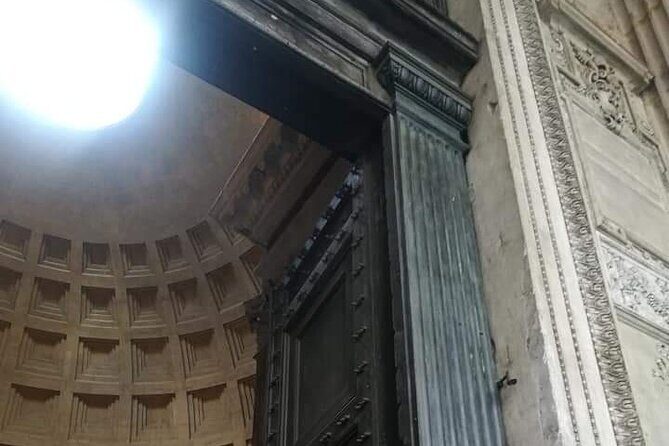
The Pantheon is one of those places where your brain keeps saying, This can’t be real. Even with crowds around, it has a strange ability to pull you out of modern Rome and into the logic of ancient Roman engineering. The visit is set up so you don’t just look at the monument—you learn how Roman architects and builders created a sense of power through monumentality and carefully chosen design traditions.
What makes this tour especially interesting is that it treats the Pantheon as more than a standalone artifact. You get the “Roman” layer and you also get the later meaning the site took on when it was repurposed over time. That is where the experience becomes more satisfying. Instead of memorizing facts, you start seeing the Pantheon as a living meeting point between cultures: pagan origins, later Christian use, and a role as an important Catholic space.
And because this is a semi-private experience, you’re not stuck competing with a mass of people for attention. The guide’s style is built around questions and quick course-correction as you look around. That matters at the Pantheon, where it is easy to leave feeling like you saw a great building but didn’t really connect it to its purpose.
You can also read our reviews of more private tours in Rome



Meet at Piazza della Rotonda and walk in with confidence
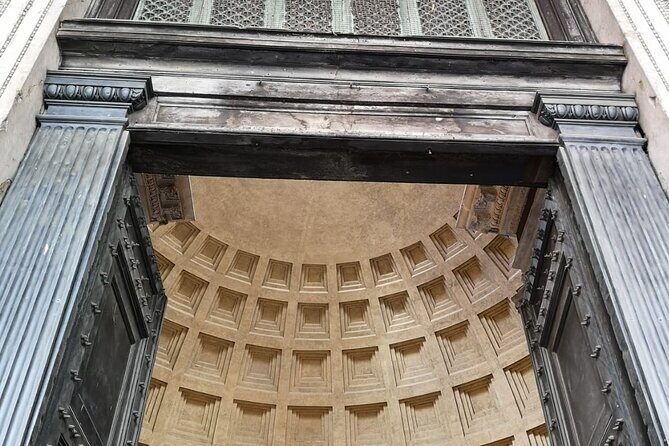
The tour starts right where you want to be: Piazza della Rotonda, near the Pantheon. The meeting point is clear, and the activity ends back at the same spot, so you avoid the annoying situation where you get deposited somewhere random.
You should also know a couple of practical details that make the start smoother. You get a mobile ticket, and the tour is offered in English. It is near public transportation, which is handy because Rome sidewalks can be slow and crowded, especially around major sights.
One other thing: the site requires shoulders to be covered. It’s not a small detail. If you show up in a sleeveless top and don’t have something to cover up, you can lose time at the gate and your tour flow can get awkward. I suggest bringing a light scarf or shawl so you’re covered without turning your day into a last-minute shopping mission.
Finally, the tour description says you’ll be able to participate for most visitors, and service animals are allowed. So from a “can I handle this?” standpoint, it’s set up like a normal sightseeing stop, not a stunt that requires special fitness.
Inside the Pantheon: what Olga Di Cagno helps you actually see
This is a guided visit focused on the Pantheon’s interior and exterior, with the guide using archaeology and architectural storytelling to connect the dots. Olga is an archaeologist, and that background shows in her approach: she explains not only what the Pantheon is, but why Roman builders were so confident in their methods.
The tour highlights ancient Roman symbols and architectural traditions. In practice, that means you’re not just hearing a lecture. You’re learning how to read the building. You start noticing how Roman design choices communicate authority and how the Pantheon’s survival through centuries makes it a rare “you can stand here and feel it” kind of monument.
Olga also brings tools that make the hardest concepts easier. Multiple people mention iPad visuals that support the explanations, and some reviews specifically note archaeological drawings used during the walk. If you’re the type who learns faster with diagrams or visual cues, this is a big plus. At the Pantheon, where the scale and details can be overwhelming, those tools help you slow down without taking hours.
Another strong theme is meaning across time. Olga’s angle (based on what people consistently praised) is that the Pantheon is layered. It’s tied to its pagan beginnings, then shaped by its later Christian use, including the fact that it remains important in the Catholic world. You’ll leave with a clearer sense that you’re not looking at one era only—you’re looking at a site that has kept getting reinterpreted.
And because it is a small group, you can ask follow-up questions. If you care about construction logic, symbolism, or how later religious use changed the way people interacted with the building, this kind of back-and-forth is where a guided visit beats audio or a self-guided sprint.
How much time you really get (and why that can be a good thing)
The tour runs about 50 minutes to 1 hour. That short window can sound limiting, until you think about the reality of Rome. Most people don’t want to schedule half a day for one spot; they want to absorb it, ask questions, and move on with the rest of their day.
This tour’s timing also helps at the Pantheon itself. The area is busy, and the monument is visually intense. An hour is enough to grasp the main ideas—Roman design intentions, how to interpret what you’re seeing, and how the meaning evolved—without burning out. For families and for kids, shorter tours often work better because you keep attention and avoid the bored, sleepy stage.
The small group size matters here too. You get the benefit of a guide while still feeling like a guided conversation. The max group size is listed as 10 travelers in the additional info, while the highlights section also mentions a limit of 15. Either way, the promise is a low-crowd experience compared with big coach groups.
If you’re the kind of visitor who loves to linger and sketch and read every plaque, you might want additional independent time after the tour. But as a “make the Pantheon click” first visit, this duration is a smart match.
Price and value: what you’re paying for (beyond just entry)
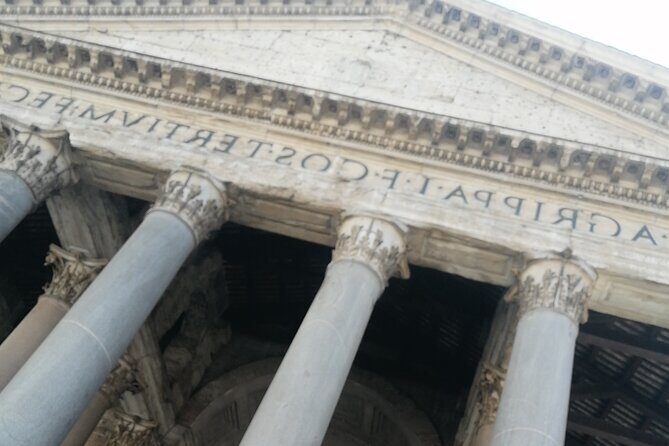
At $66.54 per person, this isn’t the cheapest way to see the Pantheon. But it’s priced more like a focused, guided learning experience than a bare-bones ticket. What changes the value equation is that the tour info lists Admission Ticket Free for the Pantheon visit.
So your main cost is paying for the guide and the small-group format. You’re not just hiring someone to point things out. The strongest reviews emphasize Olga’s archaeology background, her enthusiasm, and the fact that she can answer questions with depth. People also mention that the tour feels engaging for multiple ages, which is a real advantage if you’re traveling with kids and want one experience everyone can enjoy.
You’re also getting practical help: easy meetup, mobile ticket, and a guided flow that keeps you from losing time in confusion. If you’ve ever wandered up to a major attraction and felt like you spent the first 20 minutes just figuring out where to stand, you’ll appreciate a guided start.
In short: this price makes sense if you want the Pantheon to mean something, not just look impressive. If you’re already deep into architecture and want a self-directed long-form study session, you might find it less cost-efficient. But for most people, paying for the interpretation is what makes the visit feel worth it.






Who should book this Pantheon semi-private tour
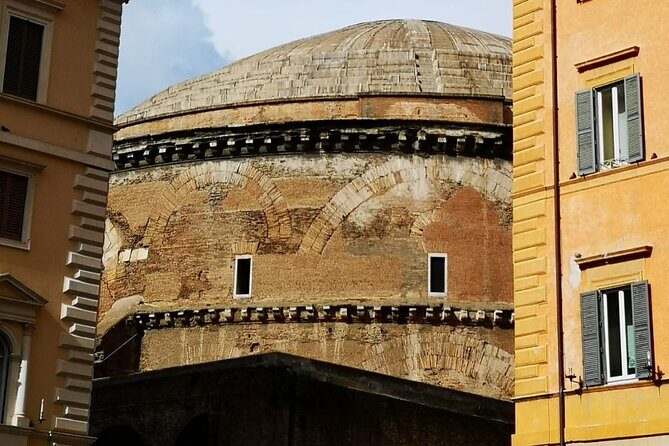
This tour fits best if you want more than sightseeing photos. It’s ideal for you if you’re curious about Roman architecture and want the symbols, building traditions, and construction logic explained in a way you can carry home in your head.
It’s also a good family pick. Reviews praise the way Olga engages with different ages, and shorter pacing helps keep kids from melting into the crowd. If your group includes both adults who love history and kids who need a story to stay interested, this is the type of tour that can satisfy both.
Choose this tour if:
- you want an archaeologist’s lens on the Pantheon
- you like questions and clear explanations
- you appreciate visual supports like iPad graphics and drawings
- you prefer small-group attention over a large-group script
Skip it if:
- you plan to spend hours just soaking in details on your own
- you don’t want to be constrained by a fixed 50-minute to 1-hour time block
- your group is not willing to follow the shoulder-covering rule
Should you book this Pantheon semi-private tour?
If you’re going to the Pantheon once, I think you should book this. The Pantheon is too meaningful to treat like a quick stop, and this guide-led format is built for understanding: Roman symbols and architectural traditions, the way the site’s meaning shifts over time, and visuals that help you connect what you see to why it was built.
The small-group cap is the other big reason. You get a real guide experience without the “everyone gets 10 seconds” feeling that can happen with large tours.
Just be ready for the practical bits: bring something to cover your shoulders and plan your day so you arrive at Piazza della Rotonda ready to start. If you do that, you’ll leave with the kind of clarity that turns a famous monument into your own personal Roman story.
FAQ
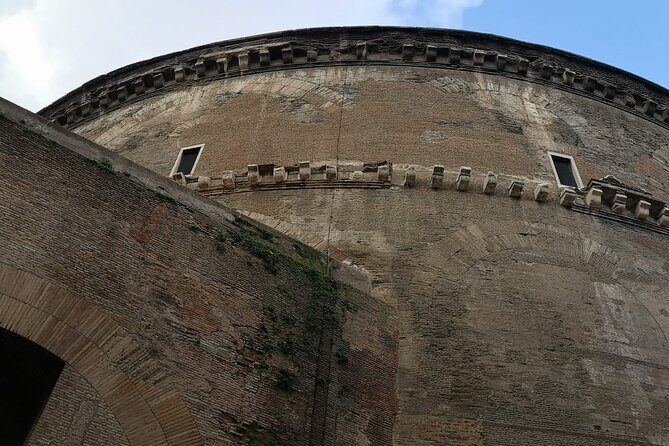
Where is the meeting point for this tour?
The meeting point is Piazza della Rotonda, 00186 Roma RM, Italy. The tour ends back at the meeting point.
How long is the Pantheon semi-private tour?
It runs about 50 minutes to 1 hour (approx.).
Is the tour offered in English?
Yes, the tour is offered in English.
Is admission included?
The Pantheon visit shows Admission Ticket Free in the tour details.
Do I need to cover my shoulders?
Yes. It is necessary to cover the shoulders.
How big is the group?
The tour information states a maximum of 10 travelers. The highlights section also mentions a limit of 15 travelers.
Can I cancel for a full refund?
Yes. Free cancellation is available up to 24 hours in advance for a full refund. If you cancel less than 24 hours before, the amount paid is not refunded.