REVIEW · POMPEII
Sharing Tour of Pompeii
Book on Viator →Operated by Tours Pompei · Bookable on Viator
Pompeii, but with a plan.
This 2 hours 30 minutes small-group Pompeii tour helps you see the big stuff without feeling lost, and the English-speaking guide keeps the ruins understandable and moving. I like that it focuses on three specific stops instead of a rushed blur. One drawback to keep in mind: the Pompeii entrance ticket is not included (it’s €20 per person), so you’ll need to budget for that on top of the tour price.
I also appreciate the practical setup: you get a mobile ticket, pickup may be offered, and the meeting point is clearly set at Pompei Scavi Villa Dei Misteri. It’s the kind of tour that fits well if you want history explained, but you still like to walk at your own pace through the streets and spaces you’re actually seeing.
In This Review
- Key points at a glance
- Pompeii in 2.5 hours: what you’ll truly see
- Where to meet at Pompei Scavi Villa Dei Misteri
- Your day’s route: temple, domus, and the lupanari
- Stop 1: The Roman temple and how to read it at street level
- Stop 2: Casa dei Vettii and Roman art you can actually spot
- Stop 3: The lupanari—real Pompeii, not sanitized
- Price and value: what you pay, and what you still need
- Group size, pace, and why it affects your photos
- What the booking score tells you about reliability
- Who this tour is best for
- Should you book the Sharing Tour of Pompeii?
- FAQ
- How long is the Sharing Tour of Pompeii?
- What does the tour price include?
- Is the Pompeii entrance ticket included in the price?
- Where do we meet for the tour?
- Do we get tickets on a phone?
- Is there free cancellation?
Key points at a glance
- Clear, three-stop route that’s actually paced for real viewing time
- Roman temple context that helps you recognize what you’re looking at
- Casa dei Vettii as a first-century Roman art stop, not just a name on a map
- Lupanari visit with the real-world context of what these spaces were for in Pompeii
- High satisfaction score: 4.9 rating with 98% recommending the tour
Pompeii in 2.5 hours: what you’ll truly see
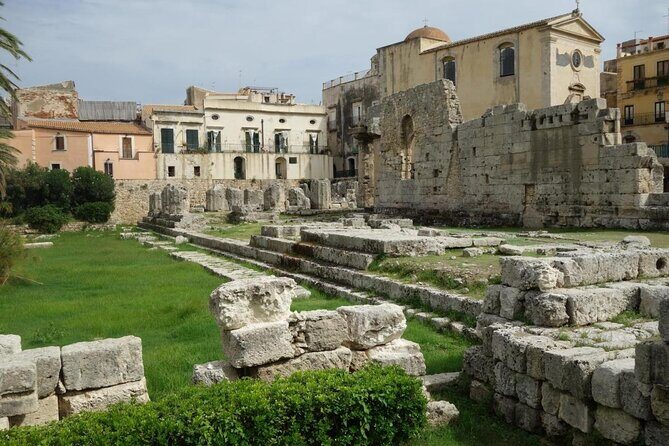
Pompeii can feel like a whole city you’re trying to outrun. This tour solves that by narrowing the focus to three meaningful, visually distinct places. Over roughly 2 hours 30 minutes, you’re not just passing through; you’re getting guided context that makes the stone, openings, and floor plans make sense.
The structure matters. Instead of trying to cover everything, the experience helps you connect each stop to the same core story: a Roman city frozen in 79 AD when Vesuvius erupted. You’ll still walk, but you’ll walk with a purpose—so your photos won’t just look cool, they’ll be easier to interpret afterward.
You can also read our reviews of more tours and experiences in Pompeii.



Where to meet at Pompei Scavi Villa Dei Misteri

Your meeting point is Pompei Scavi Villa Dei Misteri, 80045 Pompei. You’ll find the guide waiting for you with a Sharing Tour of Pompei sign.
This is one of those details that saves time and stress. Pompeii is big, and the quickest way to lose momentum is to guess where to go. Start here, arrive a bit early, and let the guide’s sign do the work.
Pickup is offered, and the description says you’ll find the guide there with your tour sign. If you’re using pickup, I’d still plan to be on time for the pickup window so you don’t end up trying to catch up once everyone starts moving.
Your day’s route: temple, domus, and the lupanari

This is a “choose your Pompeii” kind of route. Each stop teaches a different side of life in the city.
You’ll start with a Roman temple that was buried by the eruption of Vesuvius in 79 and then recovered through archaeological excavations. Then you’ll move into a Roman domus—the Casa dei Vettii—a house known for impressive Roman art from the first century. Finally, you’ll visit the lupanari, the Latin term tied to mercenary sexual pleasure, essentially Pompeii’s brothel spaces, where some rooms are still visible in the ruins.
That mix is why this tour works. You get religion/ritual through the temple, private life and display through the house, and everyday reality through the lupanari.
Stop 1: The Roman temple and how to read it at street level
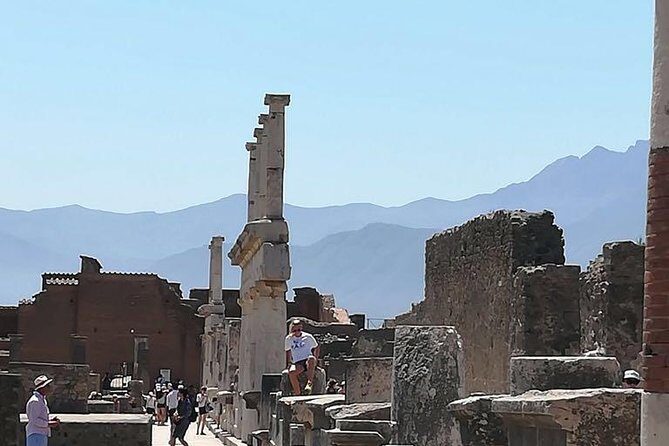
The temple is the first stop for a reason. It gives you a framework for understanding Pompeii beyond just the drama of the eruption. Temples helped organize community life—where people gathered, how they marked values, and how architecture signaled importance.
Even if you’re not a Roman architecture expert, this kind of guided stop helps you notice features like:
- how the space is laid out
- how the building relates to nearby street movement
- why certain areas feel more ceremonial than residential
A practical tip: take a moment before you move on to look at the temple as a whole. Ruins make you want to zoom in on fragments, but temples are easier to understand when you first step back and map the layout in your head.
Stop 2: Casa dei Vettii and Roman art you can actually spot
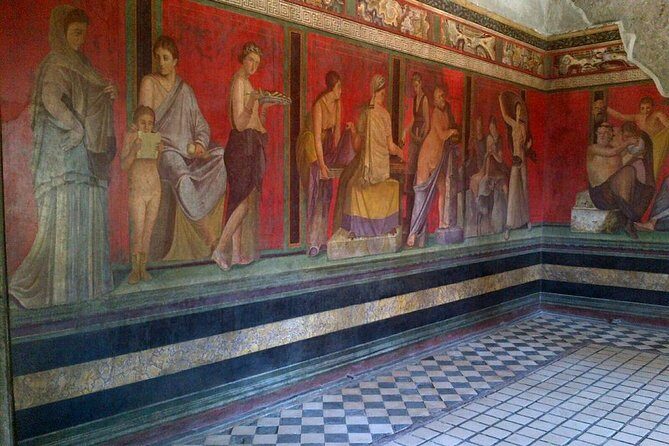
The Casa dei Vettii is a big reason to come to Pompeii. It’s a Roman domus—so, a private house—buried during the Vesuvius eruption and later found through excavation. It’s also described as one of the greatest examples of Roman art from the first century.
You’ll also hear the name explained: it’s called Casa dei Vettii because it’s named after the owners. That detail helps you shift from thinking of it as a random ruin to seeing it as a home owned by real people with taste, pride, and spending power.
Why this stop is worth your time: a guided visit lets you look beyond “pretty fresco locations” and into what Roman domestic art was doing. In houses like this, wall art and design elements served as status signals and storytelling. You’ll get more out of the visit if you treat it like a visual reading exercise: where would you have stood, what would you have looked at, and what would have impressed visitors?
Potential drawback here: domus spaces can feel dense and visually similar from one angle. If you’re the type who likes wide shots, ask your guide to point out the key viewing points so you don’t spend all your time in one narrow doorway.



Stop 3: The lupanari—real Pompeii, not sanitized
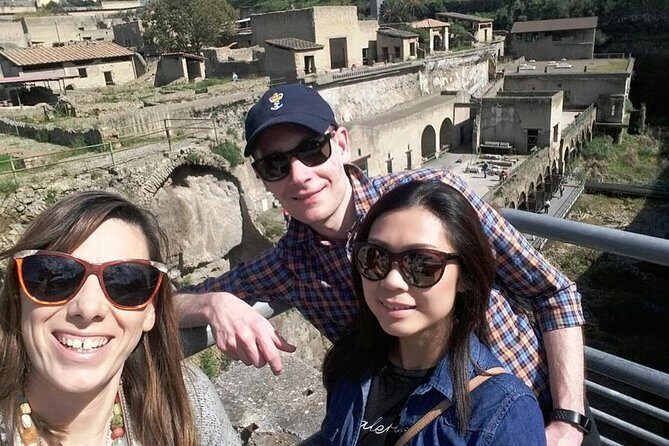
The lupanari visit is the most sensitive stop on the route, and it’s also one of the most historically grounded. These places were dedicated to mercenary sexual pleasure during the Roman period. In plain terms: this is where sexual commerce happened, and the term comes from Latin, linked to lupa.
Some lupanari spaces are still visible in the ruins of Pompeii, and your guide’s job is to put what you see into context so it doesn’t turn into shock value or gossip. You’re seeing part of the city’s economy and social reality, not a modern movie set.
If you’re worried about discomfort, plan your mindset ahead of time: approach it like a history stop. You don’t need to linger if you don’t want to. But you’ll probably leave with a clearer sense of how ordinary people lived alongside institutions we’d rather hide.
Practical note: if you’re traveling with kids or if your group prefers lighter stops, you might decide in advance how long you want to stay at this final segment. The tour includes it, so it’s best to align expectations early.
Price and value: what you pay, and what you still need
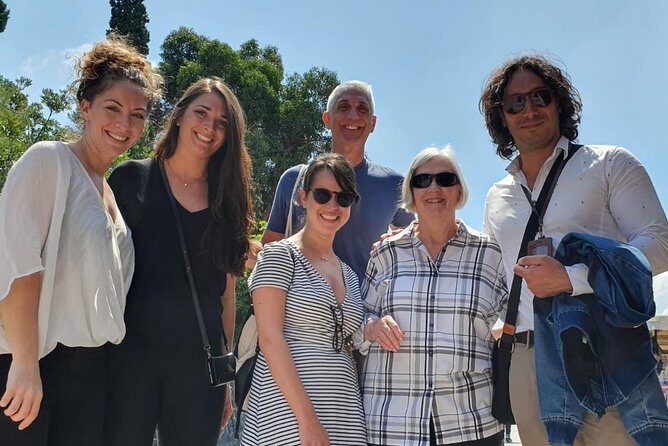
The tour price is $193.49 per group (up to 8 people). That group-based pricing can be a good value if you’re traveling with family or friends and can fill most of the group size. Instead of paying a high per-person rate, you’re spreading the guide cost across up to eight people.
Now the key budget item: the Pompeii entrance ticket is not included. The additional cost is €20.00 per person. That means your real total depends on how many people are in your group. If you’re traveling solo or as two people, you’ll feel that entrance fee more sharply than if you’re filling most of the group.
A practical way to think about it: you’re paying for guided time—someone making the ruins readable. Pompeii is not a place where silence automatically equals value. If you like explanation, this tour can justify the price quickly.
Also, this experience is booked on average 50 days in advance. That suggests you should plan ahead and not assume you can walk up last minute and get the exact tour timing you want.
Group size, pace, and why it affects your photos
This is listed as a private tour/activity, with only your group participating. The group size is up to 8. That matters because Pompeii is chaotic at peak times. Smaller groups tend to keep you moving with less waiting and fewer bottlenecks around entrances and viewpoints.
You’ll still have the “ruins reality” of Pompeii—uneven ground, crowds on popular sections, and the fact that archaeology doesn’t move quickly. But with a guide and a short route, you’re less likely to spend your precious time chasing lost directions.
If you care about photos, don’t just shoot everything. Use the guide’s prompts to choose where you stop and when you rotate your camera. Ruins look better when you capture the layout, not only the fragments.
What the booking score tells you about reliability
This tour has a 4.9 rating and is recommended by 98% of travelers, with 487 reviews. That’s a strong signal that, in most cases, the experience runs smoothly and matches what people expect: a guided, English-language Pompeii walkthrough centered on three stops.
That said, there is one kind of issue you should take seriously: the provided feedback includes a report of an instance where the tour was not taking place and the message arrived late at night. Another line of that feedback hints at the importance of getting in touch with the operator if you want extra assurance.
You can’t fully eliminate risk in any tour that depends on a minimum number of travelers, but you can reduce it. If you book far in advance, double-check your confirmation details, and closer to departure, confirm your timing.
Who this tour is best for
This works well if you:
- want a guided Pompeii experience without trying to cover everything
- like structure: temple, house, then lupanari, with context for each
- travel with friends or family and can take advantage of the group pricing up to 8
- prefer an English guide and a straightforward route of about 2 hours 30 minutes
You might skip it (or pick a different style) if you:
- want a long, unstructured wandering day across many sectors
- dislike the lupanari stop and don’t want that subject matter in your itinerary
- are traveling with a very tight schedule and can’t add the €20 per person entrance ticket to your plan
Should you book the Sharing Tour of Pompeii?
I’d book it if you want Pompeii to feel understandable and not overwhelming. The three-stop route is focused, and you’ll get context that makes the temple, Casa dei Vettii, and lupanari easier to enjoy and remember.
Before you hit confirm, do two things: budget for the entrance ticket (€20 per person), and make sure you’re comfortable with the lupanari topic. If your group is flexible on that and you like guided explanations, this is a high-rated way to spend a few hours inside the Pompeii story without burning your day getting lost.
FAQ
How long is the Sharing Tour of Pompeii?
The tour runs about 2 hours 30 minutes.
What does the tour price include?
It includes a private tour guide. The Pompeii entrance ticket is not included.
Is the Pompeii entrance ticket included in the price?
No. The ticket is €20.00 per person and is purchased separately.
Where do we meet for the tour?
You meet at Pompei Scavi Villa Dei Misteri, 80045 Pompei, and you’ll find the guide waiting with the Sharing Tour of Pompei sign.
Do we get tickets on a phone?
Yes, mobile tickets are offered.
Is there free cancellation?
Yes. You can cancel for a full refund up to 24 hours before the experience’s start time.