REVIEW · POMPEII
Pompeii and Herculaneum Small Group Tour with an Archaeologist
Book on Viator →Operated by Askos Tours · Bookable on Viator
Roman ruins, explained in human terms. I love that this is archaeologist-led, so the Forum, baths, theatres, and houses feel connected instead of random stones. I also love that admission to both Pompeii and Herculaneum is included, plus you get headsets so you can actually hear the details while walking. The one possible drawback: the timing is tight, and Pompeii in particular can feel rushed if you want to linger.
Logistics are the other win here. With a small group capped at 20 and clear meeting points, you spend less time figuring things out and more time looking closely at what’s left of daily life in AD79—especially at Herculaneum, which is the better-preserved half of the day.
In This Review
- Key things that make this tour work well
- Pompeii to Herculaneum with an archaeologist: why this combo hits
- Meeting points and transport: what your day depends on
- Pompeii highlights that actually explain the city
- Basilica and the Forum: where business and civic life met
- House of Menander: wealth you can spot fast
- Granaries of the Forum: water features and cast details
- Stabian Baths: an old-school fitness and social system
- Lupanar: the city’s most famous brothel
- House of the Faun and the theatres: Pompeii’s big statements
- Plaster casts: why this is included for a reason
- Lunch break: plan your energy, not just your stomach
- The transfer between sites: train vs minibus
- Herculaneum in two hours: preserved houses and thermal life
- House of the Deer and the idea of status through art
- Terrazza di M. Nonio Balbo: benefactor power in stone
- College of the Augustales: religion and civic organization
- Casa del Rilievo di Telefo and unusual design
- Partem Domus lignea: the wooden partition story
- House of the Skeleton: the discovery behind the name
- Central Thermae: men and women, separate entrances
- House of the Black Salon: carbonised door detail
- Casa Sannitica: regional influence you can see in layout
- Casa del Bel Cortile and the courtyard idea
- House of the Grand Portal: charred wood and a finished look
- What the small-group + headsets really change
- Value check: is $77.09 a smart deal?
- Guides you might meet: what to look for
- Who this tour is best for
- Should you book this archaeologist tour?
- FAQ
- How long is the Pompeii and Herculaneum tour?
- Is admission to Pompeii and Herculaneum included?
- Where do I meet the tour guide?
- How do I get from Pompeii to Herculaneum?
- Is lunch included?
- How big is the group?
- Can I cancel for a full refund?
Key things that make this tour work well
- Skip-the-ticket-line setup at both sites, including Herculaneum entry tickets
- Two guided blocks of focused time: about two hours in Pompeii and about two hours in Herculaneum
- Transport matched to where you start: minibus from Naples/Rome/Sorrento, Circumvesuviana train if you start in Pompeii
- Headsets for every participant, so you’re not constantly craning your neck
- A highlights route with real stops like the Forum, Stabian Baths, the Lupanar, and major Herculaneum houses
- Max 20 people means questions are actually possible during the walk
Pompeii to Herculaneum with an archaeologist: why this combo hits
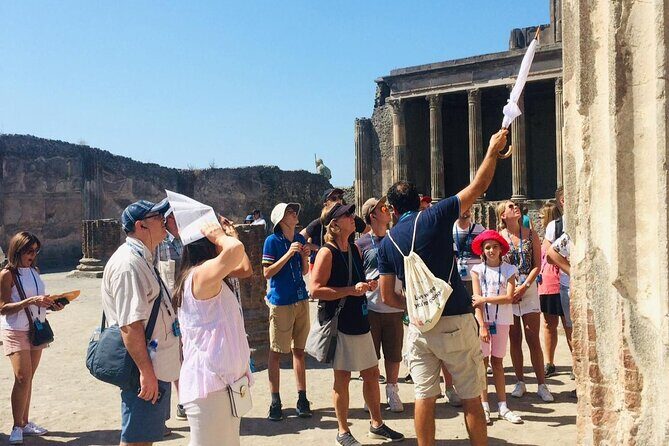
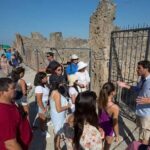
If you’re choosing between a self-guided day and a guided day, this is the kind of tour that fixes the biggest self-guided problem: you won’t know what you’re looking at. Pompeii and Herculaneum are both enormous, and without a guide you tend to bounce from photo spot to photo spot. With an archaeologist at your side, streets, villas, theatres, baths, and religious buildings start to make sense as systems—how the city worked, not just what survived.
I also like that the day doesn’t just say see everything. It’s more honest than that. You get a clear “greatest hits” route, with time built in for the most meaningful structures and for the plaster casts that show what the eruption did to real people.
The pacing is where you should be honest with yourself. You’ll see a lot, but you won’t slow down for long, deep wandering. Pompeii in particular is huge, and even with a strong guide, two hours is still two hours.
You can also read our reviews of more tours and experiences in Pompeii.
Meeting points and transport: what your day depends on
The biggest deciding factor is where you start. This tour runs different logistics for Naples/Rome/Sorrento versus Pompeii, and that changes the feel of the day.
- If you start in Naples or Rome: you meet at Starhotels Terminus and travel by modern minibus for the full day transport service.
- If you start in Sorrento: you meet at Piazza Angelina Lauro, again with full-day minibus transport.
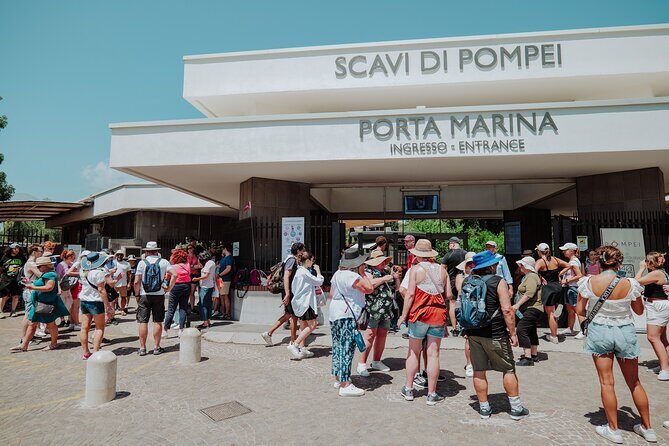
- If you start in Pompeii: you meet at Porta Marina Superiore and then use the included Circumvesuviana train to reach Herculaneum with your guide (about 30 minutes plus a short walk).
That “two worlds” approach matters. Minibus days tend to feel smoother because you’re not managing schedules. The Pompeii-start option can feel efficient too, but you should know it’s a one-way setup to Herculaneum—so your return to Pompeii may be on you, since the tour ends in Herculaneum for Pompeii departures.
Pompeii highlights that actually explain the city
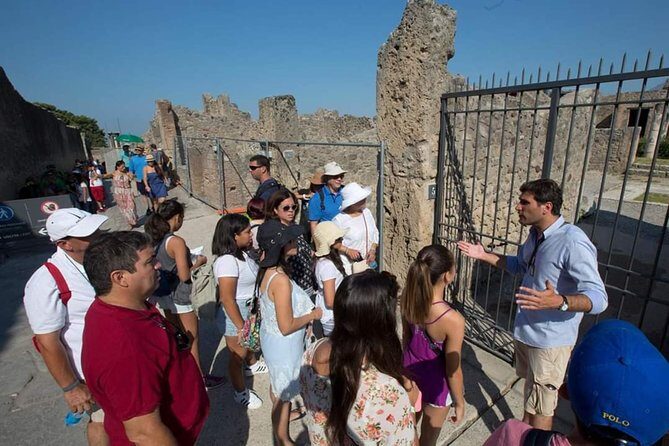
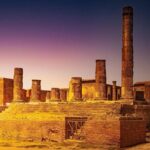
Pompeii gets the first guided block, focused on the public heart and several signature sites. You’re typically in Pompeii for about two hours, and the stop sequence is designed to hit major civic and cultural spaces rather than trying to cover every corner.
Basilica and the Forum: where business and civic life met
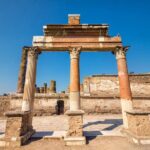
You start with the Basilica, an open portico sheltering merchants and everyday activity. In practical terms, this is your orientation stop. You see the kind of place where people handled transactions and where power showed up in public.
Next comes the Forum (Foro di Pompeya), Pompeii’s main square. This is the place where the city’s identity shows. As your guide connects temples, civic life, and major buildings, you start to understand the Forum as the city’s stage—not just a big open area.
House of Menander: wealth you can spot fast
Then you shift from public space to private life with the House of Menander, one of Pompeii’s showpiece residences. The house is famous for its architecture and decoration, and it’s a great choice for a short visit because the visual payoff is immediate. It’s also the kind of site where a guide’s explanations help you notice what’s beneath the surface: design choices that signal status.

Granaries of the Forum: water features and cast details
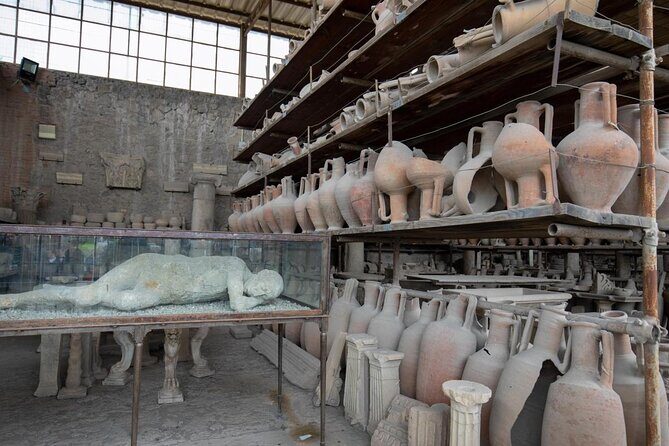
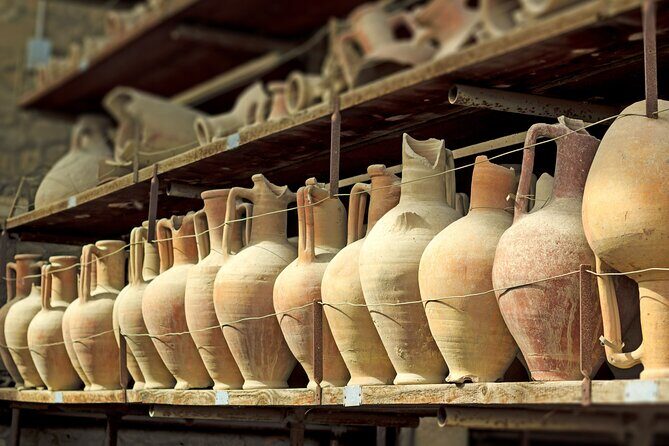
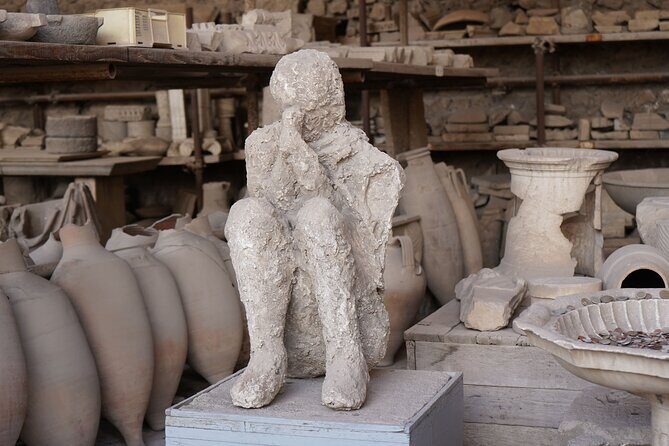
The Granaries of the Forum add another layer to the story. Beyond the food storage idea, you’re also looking at details like marble tables and installations connected to fountains at house entrances. Your guide can also point out plaster casts of victims of the eruption and even casts of smaller figures like a dog and a tree, which makes the tragedy feel specific rather than abstract.
Stabian Baths: an old-school fitness and social system
At Stabian Baths (Terme Stabiane), you see a vast thermal complex described as the oldest in the city. Baths in Pompeii were not just “showers.” They were a routine, a place to meet people, and part of daily rhythm. With an archaeologist speaking through how the complex is laid out, it becomes easier to picture how people moved through these spaces.
Lupanar: the city’s most famous brothel
The Lupanar is one of Pompeii’s most recognizable stops. It’s also the kind of site where you’ll want context. With a guide, you can connect the physical layout to what it meant socially and economically. If you prefer your tours light on uncomfortable topics, you’ll at least have a frame for what you’re seeing.
House of the Faun and the theatres: Pompeii’s big statements
Next is the House of the Faun, one of the largest private residences. This is a strong “wow” stop—large-scale Pompeian living—and it’s a good moment to tie back to what you’ve learned about wealth, art, and space.
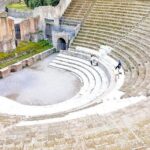
After that, you cover performance and spectacle: the Odeon (Teatro Piccolo) and the Teatro Grande, Pompeii’s most important theatre. A guide’s narration helps here more than you might expect, because it turns seating, entrances, and stage structure into an idea of audience flow and public culture.
Plaster casts: why this is included for a reason
Pompeii’s plaster casts are specifically called out as a highlight on this tour. Even if you’ve seen pictures before, the casts hit differently in context. With a guide, you’re less likely to treat them as just “the scary visuals” and more likely to understand why they matter for interpreting the eruption.
Lunch break: plan your energy, not just your stomach
Lunch is on your own. The tour includes a short break before you move on to Herculaneum.
Here’s the practical part: the lunch stop can feel like a convenience choice rather than a romantic sit-down in a perfect corner of the ruins. If you care a lot about keeping the vibe going, consider bringing snacks or planning your own meal close to where you’re dropped during the break. At the same time, if you just want something easy and predictable, the built-in break does offer that.
The transfer between sites: train vs minibus
Once Pompeii wraps, you head to Herculaneum.
- Naples/Rome/Sorrento starts: you go by modern minibus directly with the guide.
- Pompeii start: you take the Circumvesuviana train (about 30 minutes) and then do a short walk (about 10 minutes) to the entrance area.
I like this split because it keeps the day from becoming a travel headache. If you start in Naples or Sorrento, you get a smoother “door-to-ruins” rhythm. If you start in Pompeii, you’re trading a direct ride for a straightforward rail hop.
Bring the same mindset you’d use on any day with real walking and lines: keep a little time buffer in your head. Even with good organization, train timing and small walking segments add up.
Herculaneum in two hours: preserved houses and thermal life
Herculaneum is the smaller site, and that makes it a smarter second stop. You’re not fighting the sheer sprawl of Pompeii. Instead, you’re moving through a concentrated set of preserved buildings—houses, baths, and public spaces—that let you see daily life with clearer details.
When you arrive, the guide leads you directly to the Ticket Office area in Herculaneum. Access is handled based on your transportation method, including a short walk from the station if you used the train.
House of the Deer and the idea of status through art
The House of the Deer is named for marble statues of stags/deer found in the peristyle. This is a nice “reading” stop. Your guide’s explanations help you notice how decorative choices signal a household’s taste and standing.
Terrazza di M. Nonio Balbo: benefactor power in stone
Next is the La Terrazza di M. Nonio Balbo, tied to the city’s major benefactor, Marcus Nonius Balbus. There’s a specific mention of a long inscription about the honours he received after his death. In plain terms, this is where you feel how public memory worked in Roman towns.
College of the Augustales: religion and civic organization
The College of the Augustales is linked to the cult connected to Emperor Augustus and may also relate to local civic structure. If you’re the type who likes seeing religion as a system (not just temples), this stop is worth your attention.
Casa del Rilievo di Telefo and unusual design
The Casa del Rilievo di Telefo is noted as unusual because it has private access to the adjoining Suburban Thermae to the south. That kind of detail matters, because it shows how households and city facilities were interconnected in everyday routines.
Partem Domus lignea: the wooden partition story
Then you hit Partem Domus lignea (Casa del Tramezzo di Legno), important for the surviving wooden partition. It’s one of the strongest “how we know what we’re seeing” stops—because the preservation here is tied to how materials survived the eruption.
House of the Skeleton: the discovery behind the name
The House of the Skeleton comes with a clear explanation: its name comes from human remains found in a second-floor room in 1831. This is also a stop where an archaeologist’s context helps keep the site respectful and accurate rather than sensational.
Central Thermae: men and women, separate entrances
At the Central Thermae, you’re looking at thermal life built around the beginning of the 1st century AD, divided with separate men’s and women’s baths and separate entrances. This is a key “daily routine” piece. With the guide’s framing, you can imagine how people structured their schedules around the facilities.
House of the Black Salon: carbonised door detail
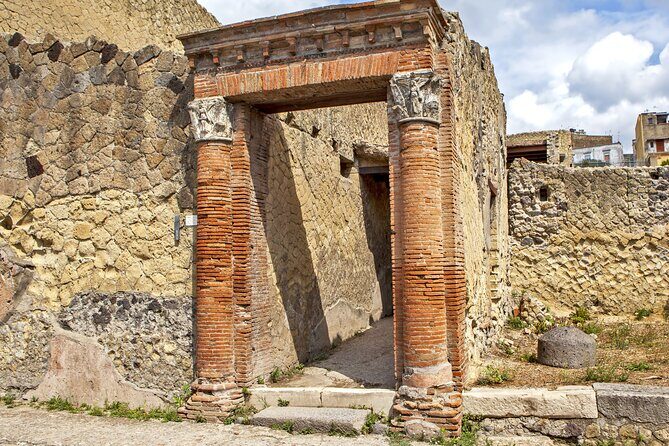
The House of the Black Hall (House of the Black Salon) is one of Herculaneum’s more luxurious mansions, with a monumental entrance that still retains carbonised remains of the doorposts and lintel. If you like small physical details—where a survival gives a clue to a lost structure—this is a great stop.
Casa Sannitica: regional influence you can see in layout
The Casa Sannitica shows a layout typical of the Samnites. You also see fresco decoration and a gallery with Ionic columns. Again, having a guide matters here, because without context you might just label it pretty rather than “why this design exists here.”
Casa del Bel Cortile and the courtyard idea
The Casa del Bel Cortile stands out for its courtyard, including a stairway and a stone balcony instead of a traditional atrium. It’s a helpful reminder that Roman domestic architecture wasn’t one template; it adapted to the household.
House of the Grand Portal: charred wood and a finished look
Finally, the tour wraps with the House of the Grand Portal, with collonnati and frescos, and the charred remains of wooden parts. It’s a strong closing note because it ties back to the theme of preservation: what survived, what changed, and what the loss still tells us.
What the small-group + headsets really change
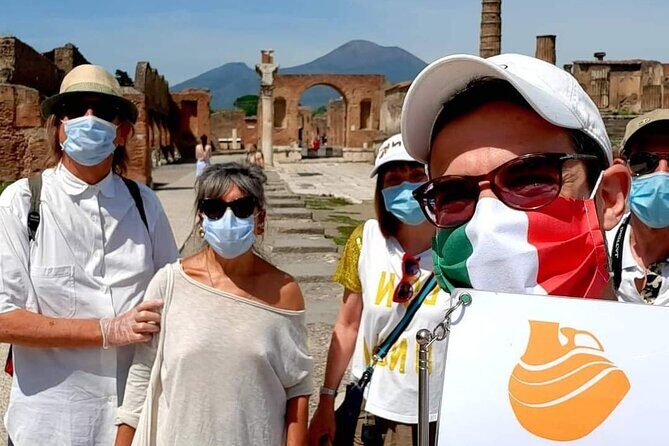
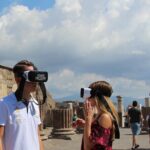
The headsets are more than a nice perk. They help you follow the guide’s explanation while you’re moving, especially at the places where you’d normally end up distracted by crowds or visual noise. The tour also keeps the group size small (max 20), which makes questions realistic.
There is one pacing consideration. Some people find the guide’s movement brisk and the connection can drop if you’re too far from the receiver at certain moments. If you know you hate feeling rushed, you’ll still likely enjoy the day, but you may want to manage expectations: you’re there for highlights, not for slow museum-style wandering.
Value check: is $77.09 a smart deal?
On paper, the price looks like a bargain when you consider what’s included. The tour includes admission for both sites, and adult entry is listed at about 20 euros for Pompeii and 16 euros for Herculaneum. That means just the core tickets for adults can already be a big chunk of what you pay, before you count guided time, headsets, and transportation between sites.
You’re also getting organized entry that helps you avoid friction at the gates. Even if you don’t think you’d mind a line, the time you save is real when your total guided time is limited.
Is it “cheap”? Not exactly—this is an archaeologist-led day with multiple pieces. But for what you get in admissions + guided focus + transport, it’s strong value for most people who want both sites in one day.
Guides you might meet: what to look for
Archaeologists on this tour are consistently praised for turning ruins into stories people can understand. Names mentioned include Michele, Diego, Tomas, Antonio, Paulo, Gianni, Alfredo, and others.
Here’s how to use that as a planning tool: when you arrive, ask a question early. If your guide is good (and the track record is), you’ll quickly see how they connect the layout to daily life—like explaining how baths work, how public buildings were used, or why a domestic space is laid out a certain way.
Who this tour is best for
This is a great fit if you:
- Want an organized day that covers both Pompeii and Herculaneum without map stress
- Like explanations that connect buildings to how people lived
- Appreciate a smaller group and headsets
- Prefer a highlights route instead of a slow, self-directed crawl
It’s less ideal if you:
- Want long time in Pompeii to explore at your own tempo
- Need lots of unhurried stops for photos and rest
- Are visually impaired and need a dedicated personal assistant (the tour notes it isn’t recommended without one)
Should you book this archaeologist tour?
I’d book it if your goal is to get the big picture and the best preserved contrasts—Pompeii’s public energy and Herculaneum’s detailed domestic life—while also saving time on ticketing and navigation.
I’d think twice if you’re the type who plans your trip around staying in one place for an hour or two. This tour is designed to move. You’ll see plenty, but you won’t “take your time” in the way you can with a return visit.
If you do book, do one smart thing: plan your meal ahead of time mentally. Lunch is on your own, and the break between sites can feel like a practicality stop rather than a scenic pause.
FAQ
How long is the Pompeii and Herculaneum tour?
The duration is listed as 6 to 11 hours, depending on your departure option and included transport timing.
Is admission to Pompeii and Herculaneum included?
Yes. Admission tickets for both Pompeii and Herculaneum are included, with Pompeii express entry tickets and Herculaneum entry tickets.
Where do I meet the tour guide?
You meet at different points depending on your start: Pompeii (Porta Marina Superiore), Naples and Rome (Starhotels Terminus), or Sorrento (Piazza Angelina Lauro).
How do I get from Pompeii to Herculaneum?
If you start in Pompeii, you use the included Circumvesuviana train ticket and then do a short walk. If you start in Naples, Sorrento, or Rome, you travel by modern minibus with the guide.
Is lunch included?
No. Meals and drinks are not included. A quick lunch break is available before the transfer, but it’s at your own expense.
How big is the group?
The tour has a maximum of 20 travelers.
Can I cancel for a full refund?
Yes. Free cancellation is available up to 24 hours in advance for a full refund.