REVIEW · POMPEII
Skip the Line Guided Tour of Pompeii led by an Archaeologist
Book on Viator →Operated by Tours of Pompeii with Lello & Co. · Bookable on Viator
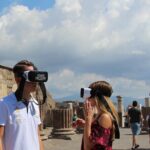
Pompeii feels overwhelming fast. This skip-the-line guided tour focuses you on the right ruins, with an archaeologist bringing the city to life in plain, human terms. You’ll move through major areas on foot without getting stuck in long entry lines, and you’ll also get the kind of context that makes the stones feel less random.
I especially like the small-group size (max 15). It keeps the pace comfortable and lets the guide answer questions while you’re walking—something you almost never get with bigger groups. My other favorite part is the stop mix, from Via dell’Abbondanza to the Forum and even the Stabian Baths and the Lupanar—so you get a rounded picture of daily life, not just famous walls.
One consideration: you’re walking on the original ancient streets in smart-casual clothes, and it’s a tight 2-hour window. You won’t see everything Pompeii offers, and if you’re late, there are no refunds—so build in extra time.
In This Review
- Key things to know before you go
- Skip-the-Line Pompeii Entry That Actually Gives You Time Back
- Meet Your Archaeologist Guide (and Why Names Like Lello and Italo Matter)
- The Two-Hour Walk From Piazza Esedra: A Fast, Focused Route
- Pompeii’s Big Story at the Archaeological Park: Ash, Pumice, and Sudden Time
- Via dell’Abbondanza: The Main Street You’ll Actually Understand
- Foro de Pompeya (Pompeii’s Forum): Markets, Square Life, Roman Routines
- Stabian Baths (Terme Stabiane): Daily Hygiene, Social Life, and Design
- The Lupanar: Erotic Frescoes and a Tour With Boundaries
- Walking Comfort: Smart Casual, Comfortable Shoes, and Heat Reality
- What You’re Paying For: $95.53 for a 2-Hour Archaeologist-Led Route
- Who This Tour Is Best For (and Who Might Want a Different Plan)
- Should You Book This Pompeii Skip-the-Line Archaeologist Tour?
- FAQ
- How long is the Pompeii skip-the-line guided tour?
- What language is the tour offered in?
- How many people are in the group?
- Where does the tour start and end?
- What’s included in the price?
- Is this a self-guided ticket to Pompeii ruins?
- What should I wear?
- Is transportation included?
- What if I’m late or miss the tour?
Key things to know before you go
- Skip-the-line entry is built in, so you’re not wasting your limited time waiting.
- Archaeologist-led storytelling helps you notice details you’d miss on your own.
- Max 15 people keeps the tour moving at a human pace.
- You cover the essentials: Via dell’Abbondanza, the Forum, Stabian Baths, and the Lupanar.
- Comfortable shoes matter because you’ll walk on uneven, historic surfaces.
Skip-the-Line Pompeii Entry That Actually Gives You Time Back
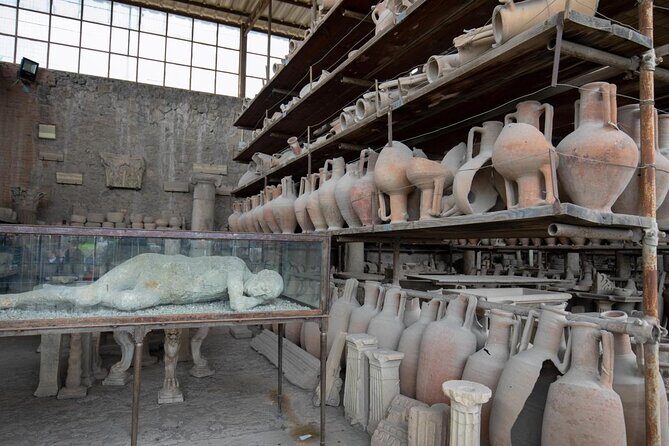
Pompeii is one of those places where timing matters. The site is big, and lines can eat up the best part of your day. What I like about this tour is simple: skip-the-line tickets are included, and they’re guaranteed to avoid long waits. That’s not a small benefit. In a place like Pompeii, 30–45 minutes of saved time can be the difference between feeling rushed and actually soaking up the details.
Also pay attention to what the confirmation really is. This isn’t a standalone ticket you can use solo. It’s a guided tour confirmation, and you use it with your guide. That matters because Pompeii’s entrances can be a bit chaotic if you’re trying to improvise.
The tour also starts and ends at Piazza Esedra (80045 Pompei NA). That gives you a clear anchor point in a town that can feel spread out. If you like a plan with fewer decisions, this is for you.
You can also read our reviews of more guided tours in Pompeii



Meet Your Archaeologist Guide (and Why Names Like Lello and Italo Matter)
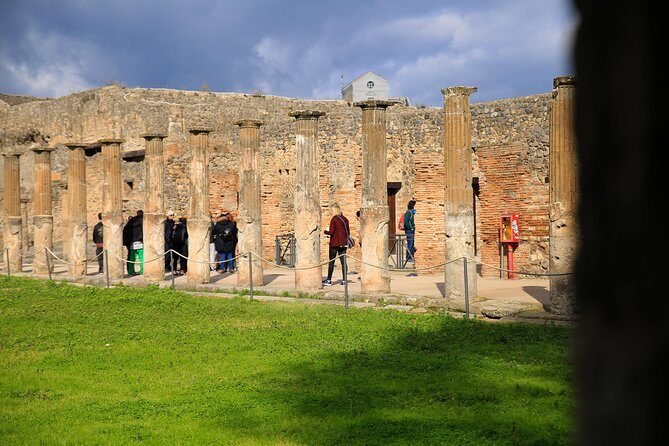
This is an archaeologist-led experience, and the difference shows up right away. When you hear Pompeii explained by someone trained to read artifacts and architecture, the site stops being a checklist of “cool ruins” and turns into a city you can understand.
In particular, I’d keep an eye out for guides like Lello (sometimes spelled Llello or Leonelle in reviews) and Italo. Across the guide names mentioned, the pattern is consistent: the best part isn’t just facts. It’s how the guide turns architecture, street layout, and everyday objects into stories you can picture.
Here’s what that looks like for you on the ground:
- You’ll get “what you’re seeing and why it mattered” context as you walk.
- You’ll see more than just walls—you’ll learn how Romans used these spaces.
- You’ll move in a way that avoids the heaviest crush you’d hit in a self-guided plan.
And yes, there are practical touches too. One review mentions earbuds handed out so you can hear your guide clearly. That’s a real comfort upgrade in a noisy, crowded UNESCO site.
The Two-Hour Walk From Piazza Esedra: A Fast, Focused Route

The total time is about 2 hours. That sounds short—because it is. But the tour is designed to give you a strong “headline + supporting details” view.
Your walk is paced in bite-size chunks, with multiple stops (each one on the order of about 20 minutes) that let you absorb key zones without sprinting across the park.
What you should expect:
- Multiple short stops rather than one long lecture.
- A route that hits major areas most people miss when they wander alone.
- Plenty of opportunity to ask questions while you’re still near the thing being discussed.
What you might not get:
- A full Pompeii tour. This is a high-impact selection. If you want every corner, you’ll need a longer day plan or a second visit.
Pompeii’s Big Story at the Archaeological Park: Ash, Pumice, and Sudden Time
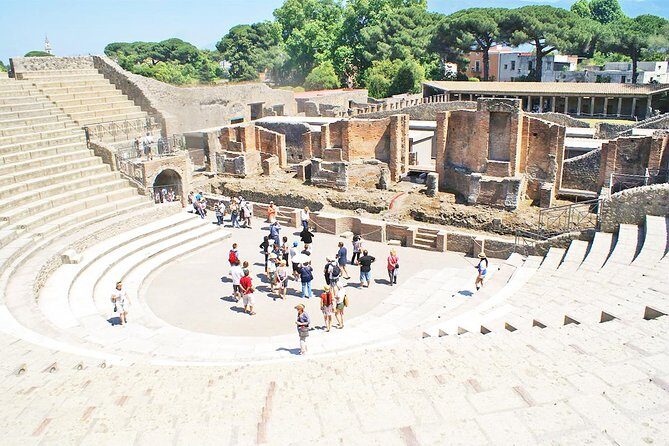
Your first stop is the Archaeological Park of Pompeii, part of a UNESCO World Heritage Site. Pompeii was an ancient Roman city buried under ash and pumice after the eruption of Mount Vesuvius in 79 A.D. That one event is the spine of the place.
The value here is not just knowing the eruption date. It’s learning how to read what survived—street lines, building layouts, and the way spaces were used. An archaeologist guide helps you connect the physical site to the human story, so you’re not just staring at ruins wondering what life was like.
A quick reality check: the park is extensive, and the ground can be uneven. Even though the tour is well paced, you’ll still need to stay steady and focused as you walk.
Via dell’Abbondanza: The Main Street You’ll Actually Understand
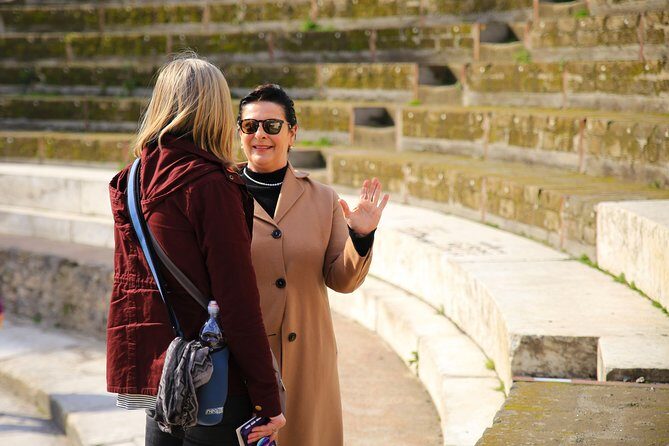
Next you move to Via dell’Abbondanza, described as one of the main streets. This is where a guided approach pays off fast.
When you walk it without context, it’s easy to see buildings and shops and just think, interesting. With an archaeologist guiding you, you start noticing patterns: how a street functioned, how people moved, and how commerce and daily life shaped what you see.
Why this stop works in just about 20 minutes:
- It gives you a clear sense of city layout.
- It anchors your understanding before you hit bigger public spaces like the Forum.
- It’s a “readable” area—ideal for building mental maps quickly.
Practical note for you: this is a good time to slow your pace for a minute and look at doorways, thresholds, and street wear. Those small details help the whole city click.
You can also read our reviews of more tours and experiences in Pompeii





Foro de Pompeya (Pompeii’s Forum): Markets, Square Life, Roman Routines
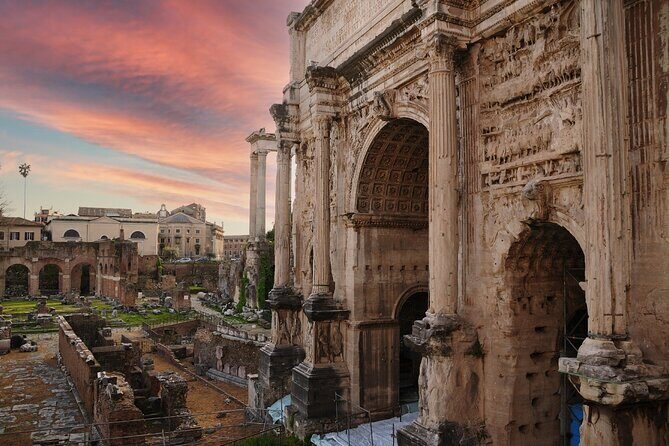
The tour then ends up at the Forum (Foro de Pompeya), the main square where markets and public life gathered. This part is essential because it’s where you see civic space in action.
The guide explains how life in Roman times worked as you walk through the main streets and then arrive at the Forum. You’re not just looking at a plaza. You’re learning the function of the space—where people met, shopped, and conducted everyday business.
This is also where the tour does a nice job of “zooming out” after you’ve been focused on streets. You go from private-ish life and commerce-adjacent spaces to the heart of public activity.
If you’re trying to get your bearings in Pompeii, this is a strong anchor stop. Afterward, you’ll be far more able to interpret what you see next, even if you don’t have time to follow every path.
Stabian Baths (Terme Stabiane): Daily Hygiene, Social Life, and Design
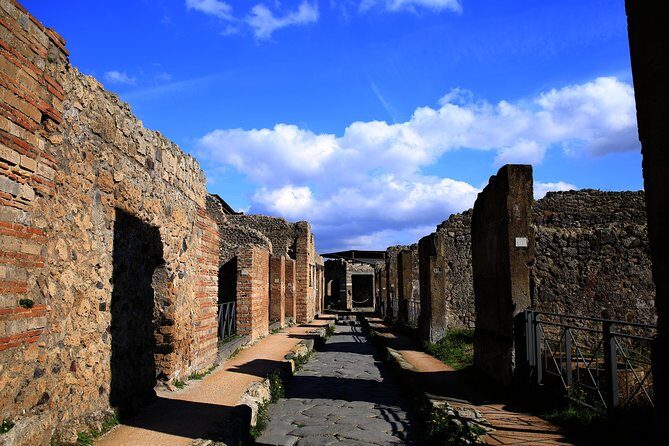
The Stabian Baths (Terme Stabiane) are a standout stop because baths weren’t only about cleanliness. They were social hubs, workout spaces, and places where routine became a public event.
In a short tour, the challenge is deciding what to focus on. Here, a guide helps you focus on how the layout signals different functions—how people would move through areas and what the space suggests about daily habits.
In plain terms: it’s one of the best places to learn that Pompeii wasn’t frozen in time. It was active, shared, and organized around human needs.
Drawback to consider: baths can be conceptually harder than streets if you’re expecting big “wow” moments from one photo spot. You’ll get more out of it if you enjoy process—how spaces worked—rather than only chasing the most famous structures.
The Lupanar: Erotic Frescoes and a Tour With Boundaries
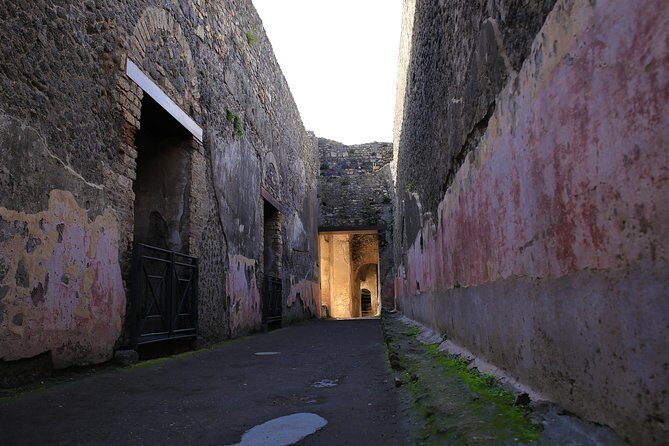
You’ll also see the Lupanar, known for its erotic frescoes. This stop is historically important and also sensitive.
On a guided tour, you get the context that turns the shock factor into understanding—what these images likely communicated in that setting and how the building functioned within the city.
If you prefer family-friendly sightseeing, keep in mind the tour is still geared toward historical interpretation, and the Lupanar is part of that. For children, the tour data notes children must be accompanied by an adult, which helps ensure you’re not dealing with awkwardness without support.
This is also a good reminder that Pompeii isn’t just pretty architecture. It’s a real city, with real people and real behaviors.
Walking Comfort: Smart Casual, Comfortable Shoes, and Heat Reality
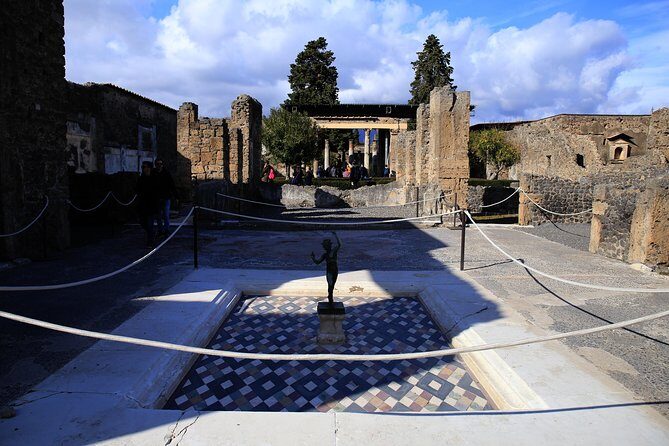
Pompeii is not a sit-and-watch museum. You’ll be on foot, including areas that use original street surfaces. The tour notes a moderate physical fitness level and encourages comfortable shoes.
Here’s what I suggest you do:
- Wear shoes with traction. Sneakers can work, but make sure the soles are grippy.
- Bring water and pace yourself. Two hours goes by faster than you think once you’re in sun and stone.
- Dress smart casual rather than fancy. You want clothes that won’t restrict your stride.
One review includes a strong caution about local travel time and lateness. Roads can be unpredictable, and missing the tour can be an expensive mistake since there are no refunds if you’re late or miss it. I’d treat this like a timed appointment. Arrive early enough that you won’t be sprinting downhill with a phone in your hand.
What You’re Paying For: $95.53 for a 2-Hour Archaeologist-Led Route
At $95.53 per person for about 2 hours, you’re paying for three things:
- Expert archaeologist interpretation
- Skip-the-line access (so you can actually use your time)
- A curated, small-group route focused on key areas rather than random wandering
The math works best if you value time. Pompeii rewards planning. Even if you love independent travel, this site can overwhelm you fast because it’s so vast and spread out.
Also note that admission is described as included at each stop. You’re not trying to juggle extra tickets mid-walk. And since the tour isn’t private transportation, you just focus on showing up, meeting your guide at Piazza Esedra, and then enjoying the route.
If you’re visiting Pompeii for the first time, I think this is good value. If you’ve already done a full-day self-guided circuit and want only a single themed pass, you might prefer a longer or more specialized tour. But for most people, a tight, expert-led highlights tour is a smart use of limited vacation time.
Who This Tour Is Best For (and Who Might Want a Different Plan)
This tour fits well if:
- You want a high-impact first visit to Pompeii
- You enjoy hearing what you’re seeing and why it matters
- You prefer a small group that doesn’t feel like a cattle chute
- You want key stops like the Forum, Baths, and Lupanar without spending half the day getting orientated
It may not be ideal if:
- You want to cover every corner of Pompeii in one go (two hours won’t do that)
- You struggle with walking on uneven historic surfaces
- You’re the type who enjoys total freedom and doesn’t want a structured route
Should You Book This Pompeii Skip-the-Line Archaeologist Tour?
I’d book it if you want Pompeii to feel understandable fast. The biggest wins for you are skip-the-line entry, a small group up to 15, and an archaeologist-led route that hits the city’s main “life” areas: street life, public space, bathing, and even the Lupanar.
If you hate waiting, love guided context, and want a clean route you can build on afterward, this is a strong pick. Just don’t treat it casually—be early, wear good shoes, and accept that 2 hours means you’re choosing highlights over completeness.
If that sounds like your style, you’ll likely come away feeling like Pompeii wasn’t just seen. It was read.
FAQ
How long is the Pompeii skip-the-line guided tour?
It’s listed as about 2 hours.
What language is the tour offered in?
The tour is offered in English.
How many people are in the group?
The tour has a maximum of 15 travelers.
Where does the tour start and end?
The meeting point is Piazza Esedra, 80045 Pompei NA, Italy, and it ends back at the same meeting point.
What’s included in the price?
The price includes a professional guide and skip-the-line tickets. Admission is included for the stops listed.
Is this a self-guided ticket to Pompeii ruins?
No. The confirmation is for a guided tour, and you can use it only with the guide.
What should I wear?
Smart casual is suggested, and you should wear comfortable shoes because you’ll walk on the original ancient streets.
Is transportation included?
Private transportation is not included.
What if I’m late or miss the tour?
If you are late or miss the tour, there are no refunds.
If you tell me your travel month and whether you’re visiting on a busy weekday or weekend, I can suggest a simple timing strategy to help you avoid heat and crowds.