REVIEW · POMPEII
Pompeii Small Group Tour with an Archaeologist
Book on Viator →Operated by Askos Tours · Bookable on Viator
You can read Pompeii’s stones in new ways. This small-group tour guides you through the site with an archaeologist, turning big monuments into human stories. You’ll move at a practical pace, from the Basilica and Forum down to the theaters, with skip-the-line access built in.
I especially like two things: the archaeologist guide approach (you hear why objects and layouts matter, not just what they are), and the way the route hits the site’s most useful anchors fast—so you don’t waste your limited time hunting for the next highlight. Guides such as Alessandra, Teresa, Paolo, and Vincenzo have been praised for making the city feel lived-in, not like a textbook.
One consideration: the park is a real outdoor ruin, with uneven ground and plenty of steps and ramps. If you’re relying on mobility support, you may find it hard—this tour is not recommended for mobility issues, and mobility scooters aren’t allowed.
In This Review
- Key things that make this tour worth your time
- Where You Start at Porta Marina Superiore (and Why It Matters)
- Basilica and Forum: Pompeii’s Center of Commerce and Community
- Granaries of the Forum Plaster Casts: The Human Part You Can’t Ignore
- House of Menander: Frescoes, Mosaics, and How the Wealthy Lived
- Stabian Baths and the Brothel Lane: Daily Comfort and Taboo
- House of the Faun, Odeon, and the Theaters Closing the Loop
- Price and Logistics: Is This Good Value for Pompeii?
- Pace, Walking Terrain, and Comfort Tips That Actually Help
- Who This Tour Is Best For (and Who Should Think Twice)
- Should You Book This Pompeii Archaeologist Tour?
- FAQ
- How long is the Pompeii Small Group Tour with an Archaeologist?
- Where do I meet for the tour, and where does it end?
- Do I get a ticket to enter Pompeii?
- Is the tour in English?
- Is this a skip-the-line experience?
- Are headsets provided for the group?
- What should I wear or bring?
- FAQ
- Are there any limits on group size?
- Can children join this tour?
- Is the tour available year-round?
- Are mobility scooters allowed?
Key things that make this tour worth your time
- Pompeii Express skip-the-line entry, so you start exploring sooner
- Small groups (max 20) with a licensed guide and archaeology background
- Headsets for groups of 16+ to keep the storytelling clear
- Plaster casts at the Granaries of the Forum, plus a dog and a tree cast
- Stops built around major anchors: Basilica, Forum, baths, brothel lane, and Teatro Grande
- A finish inside the ruins, which helps you keep going on your own afterward
Where You Start at Porta Marina Superiore (and Why It Matters)
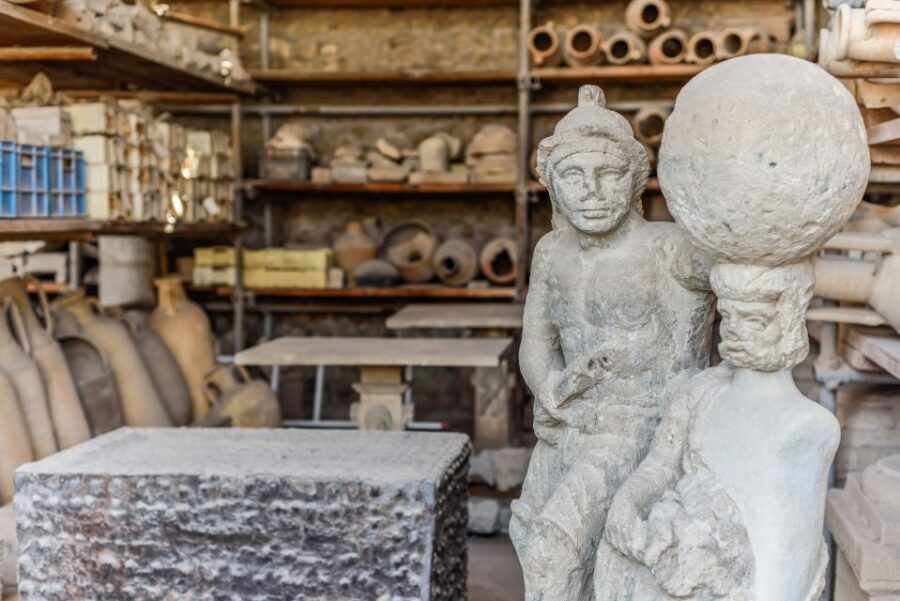
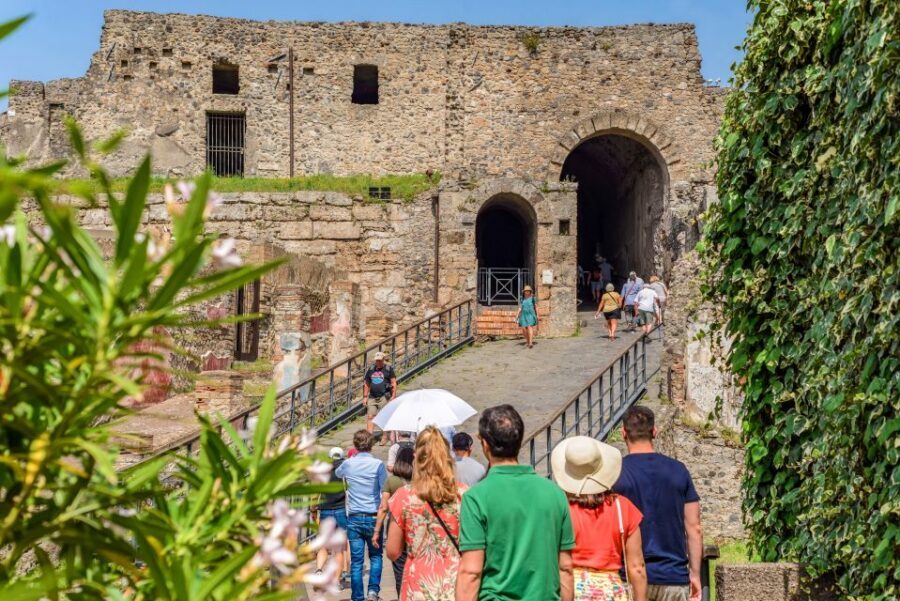
Most people underestimate how much walking Pompeii requires. This tour starts at the archaeological park entrance called Porta Marina Superiore, where your guide (Askos Tours sign in hand) brings you straight into the ruins with your ticket already taken care of.
The big practical win is the skip-the-line access. Pompeii can be busy, and even when it isn’t, waiting is time you could spend seeing the places that actually structure a first visit. The tour is also designed for a small group of up to 20, which makes it easier to hear the guide and keep your place in the flow.
Expect a very guided start, but not a choreographed sprint. You’ll be led through the main areas in about two hours, with the route focused on the kind of landmarks you can use later when you wander independently.
One smart habit: arrive on time. I’ve seen what happens when people run late in a large site like Pompeii—your group is already moving, and catching up inside the ruins can be difficult.
You can also read our reviews of more tours and experiences in Pompeii.



Basilica and Forum: Pompeii’s Center of Commerce and Community
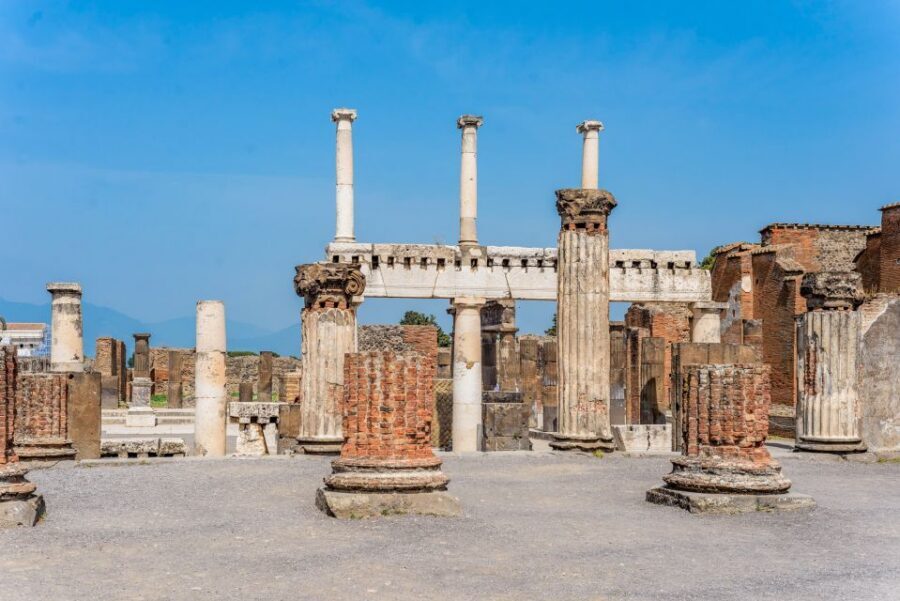
Your route begins in the heart of civic Pompeii: the Basilica and the Forum. These are not just pretty ruins. They’re the “where daily life happened” places—think merchants, public business, and the bustle of people moving through the city’s core.
The Basilica is described as an open portico that provided shelter for merchants and other activities. That detail matters, because it helps you picture the space as functional, not ceremonial. With an archaeologist guide, you start seeing patterns: how the architecture encouraged movement, transaction, and gathering.
Then you head to the main square, the Forum of Pompeii. This is where you get a quick sense of city planning and social rhythm. When you look at the stone blocks and street layout after hearing context, the whole area makes more sense than it does from photos or a generic map.
Granaries of the Forum Plaster Casts: The Human Part You Can’t Ignore
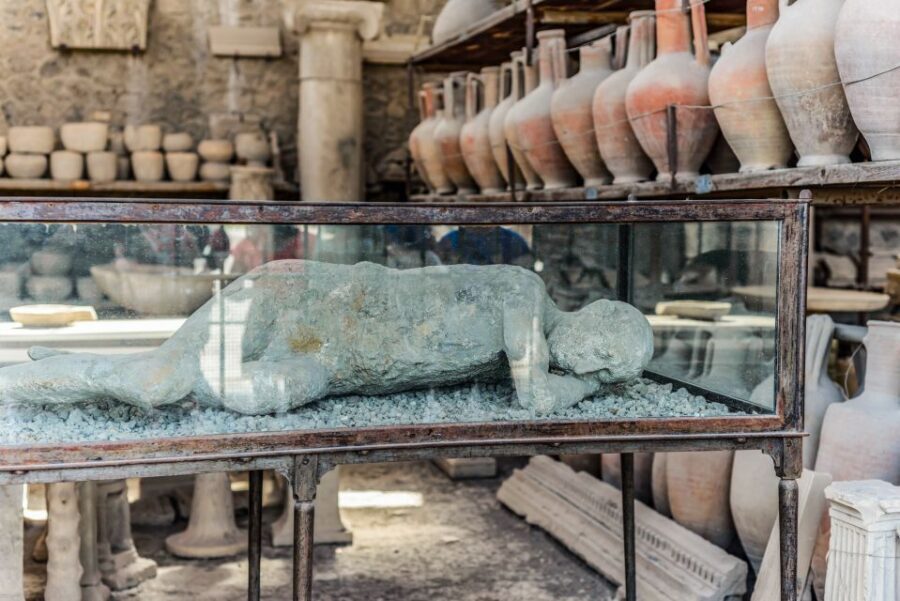
Next comes a stop that always hits people in the chest: the Granaries of the Forum. This is where you pause to look at the famous plaster casts of victims of the eruption that destroyed Pompeii.
Seeing these figures in person is different from hearing about them. The space gives you a pause point inside the tour—time to look slowly instead of power-walking to the next building. The stories tend to focus on how the catastrophe froze moments in time, turning the site into something emotionally direct.
You’ll also see other casts, including those of a dog and a tree. That mix helps you understand the eruption as a city-wide event, not just a tragedy of one street or one type of person. It’s history with bodies and ordinary life mixed together.
House of Menander: Frescoes, Mosaics, and How the Wealthy Lived
After the civic core and the emotional pivot point, the tour shifts into domestic life with the House of Menander. This is one of Pompeii’s richer residences, known for its architecture and decoration, plus a strong sense of how the household was organized.
The highlight here is not just the house itself, but what decoration tells you. When you’re walking through rooms that once held daily routines—where visitors were received, where walls carried paintings and floors carried mosaics—it changes how you interpret everything else around you. You start noticing things like the layout of spaces and how rooms likely served different purposes.
You’ll also have time to admire frescoes and mosaics in this area. A good guide can point out details that you’d miss on your own, especially when the ruins are partly collapsed or worn down.
The takeaway: the House of Menander helps you connect Pompeii’s public world to its private world, so the city feels complete rather than split into “important buildings” versus “random walls.”
Stabian Baths and the Brothel Lane: Daily Comfort and Taboo

Pompeii wasn’t only art and politics. It also ran on routines, including public bathing, social visiting, and everything between respectful and scandalous.
The tour visits the Stabian Baths (Terme Stabiane), described as the oldest thermal complex in the city. Baths in Roman life were about more than cleanliness. They were places for meetings, relaxation, and conversation—so this stop adds warmth to the story of the city. You’ll see how a large bathing complex was organized in space.
Then you move toward the most famous brothel area: the Lupanar. This part of Pompeii is famous for a reason, and it can feel surprising at first if you’re used to thinking of Pompeii as museum-like. Here, you learn how the city’s social world included places people sought out for pleasure and transactions.
You’ll also have a chance to understand it through the setting and neighboring streets, not only through the brothel ruins themselves. The route is built so you don’t just point and stare—you get the “why was this where it was” perspective.
A small word of caution: if you prefer to keep your sightseeing family-friendly, you may want to gauge your group’s comfort level with the brothel stop. The tour includes it either way, because it’s one of Pompeii’s key landmarks.

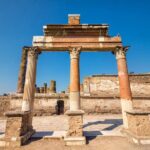

House of the Faun, Odeon, and the Theaters Closing the Loop
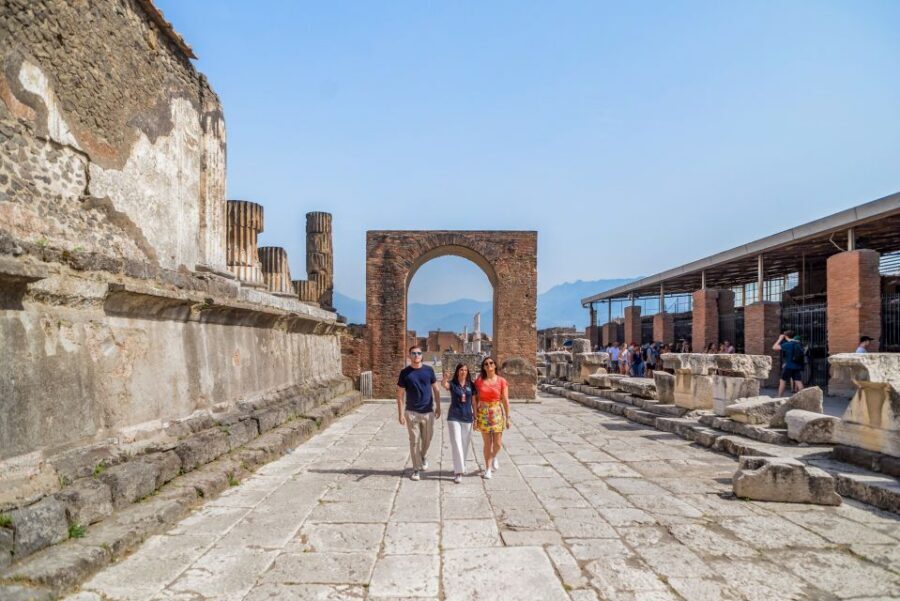
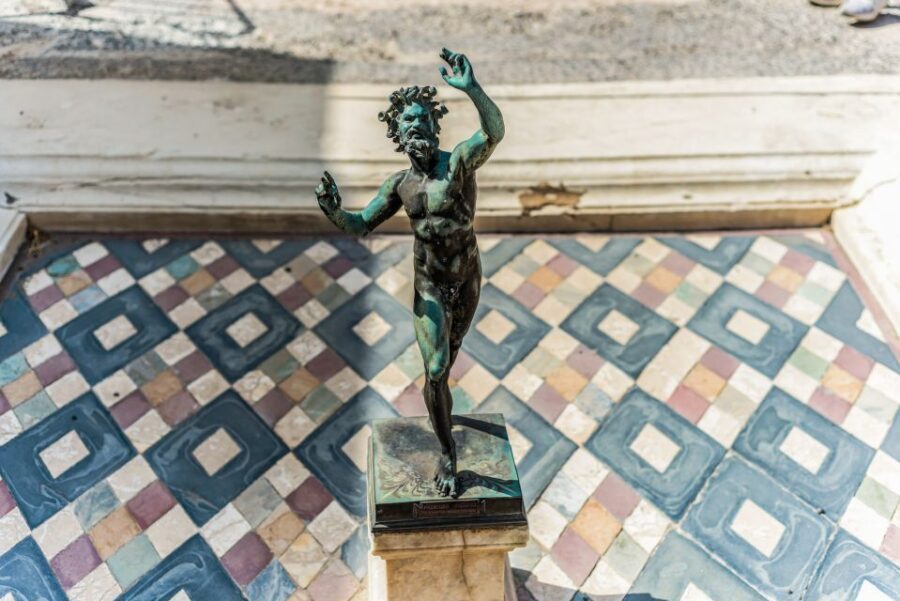
After the baths and brothel lane, you’ll transition to the “big picture” of Pompeii’s urban life with a major residential stop: the House of the Faun. It’s one of the city’s largest and most impressive private residences, which makes it a strong counterpoint to smaller houses you might see later.
Then you get a walk along the city’s main street, where your earlier context starts to click. Streets stop being just routes; they become corridors of movement—where people walked between work, entertainment, and home.
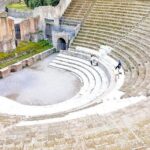
The tour also includes the Odeon (a smaller theater). It’s a useful stop because it helps you see how Roman entertainment wasn’t one-size-fits-all. There’s variety in audience spaces, sound, and use.
From there, you’ll have a look at the Teatro Piccolo and then finish at Teatro Grande—the city’s largest theater. Ending here is smart. It leaves you with a visual finale that helps you remember Pompeii as a functioning city with public life at its core, not only a tragic archaeological site.
Price and Logistics: Is This Good Value for Pompeii?
At about $35.67 per person for roughly two hours, this is one of those deals that makes sense if your goal is a first visit with structure. You’re paying for three things that matter in Pompeii: a licensed guide with archaeology background, skip-the-line entry (through the Pompeii Express ticket), and a small group experience that keeps you from feeling lost.
If you tried to do this on your own, you’d still be paying for admission, and you’d spend more time figuring out where to go next. Even with a good guidebook, Pompeii can be overwhelming because the ruins are spread out and uneven.
Where the value gets real is the way the tour is arranged around the places that anchor your understanding. Basilica and Forum, the Granaries casts stop, then baths, brothel lane, residences, and theaters—this combination helps you build a mental map fast.
Pace, Walking Terrain, and Comfort Tips That Actually Help
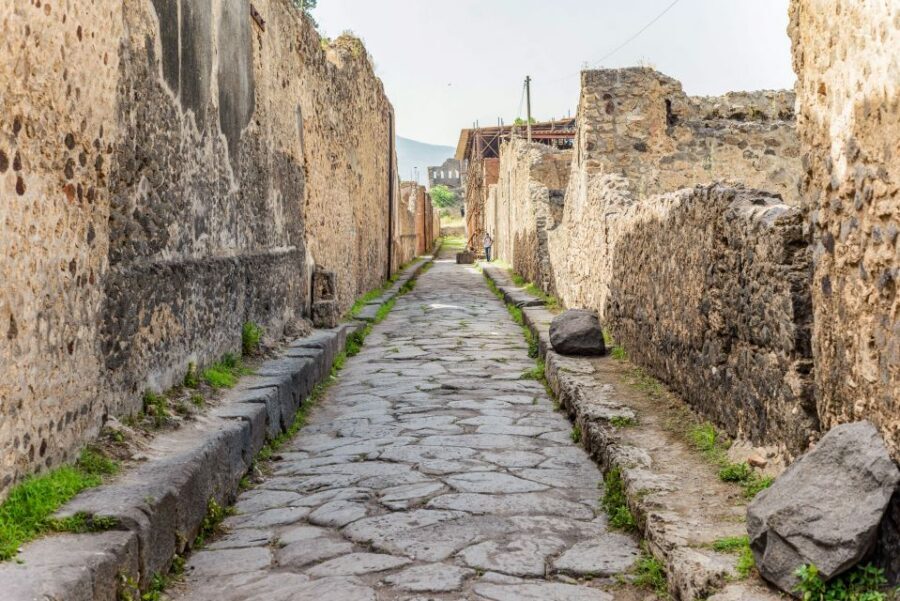
You’ll be walking on uneven ground. This is a big deal at Pompeii, where stone surfaces and slopes can make a two-hour plan feel longer than it sounds.
Wear comfortable shoes you trust on irregular pavement. In summer, add sunglasses and sunscreen, and bring a small bottle of water. If you can, consider a hat too, because shade is limited in many areas.
The tour runs rain or shine, so plan for that. Bring a light rain layer if the forecast looks threatening; you still want to be able to keep moving comfortably.
Also note the practical rule on footwear and mobility: mobility scooters aren’t allowed. If anyone in your group struggles with stairs or ramps, you may want a different setup or a private option.
Who This Tour Is Best For (and Who Should Think Twice)
This tour fits best if you want a high-quality overview in a short window. It’s a good match for couples, friends, and families with older kids who can handle the walking and the brothel stop. The consistent praise for guides like Teresa and Julia highlights storytelling that tends to keep teenagers interested without turning the tour into a lecture.
If you’re visiting in winter, you might find it easier to manage crowds, and a short guided route can feel especially good. In peak season, skip-the-line matters even more.
If you have mobility issues or impairments, this one is not recommended due to steps, ramps, and uneven terrain. And if you’re traveling with a service animal, that’s allowed—but pets have specific limits (small dog size and leash rules), so check your details before you go.
Should You Book This Pompeii Archaeologist Tour?
Yes, if you want a guided first look that makes Pompeii easier to understand fast. The archaeologist-led storytelling, the skip-the-line Pompeii Express ticket, and the set of major stops give you strong value for the time you’re spending.
Skip it only if your group can’t handle uneven walking and steps, or if your priorities don’t include the brothel and theater landmarks. Otherwise, this is a solid way to see the city’s main beats in one go, and then have a clearer map for exploring what’s left.
FAQ
How long is the Pompeii Small Group Tour with an Archaeologist?
The tour is about 2 hours (approx.).
Where do I meet for the tour, and where does it end?
You start at Via Villa dei Misteri, 2, 80045 Pompei NA, Italy. The tour ends inside the ruins.
Do I get a ticket to enter Pompeii?
Yes. The tour includes a Pompeii Express entrance ticket.
Is the tour in English?
Yes. The tour is offered in English.
Is this a skip-the-line experience?
Yes. You’ll have skip-the-line tickets to enter the ruins.
Are headsets provided for the group?
Headsets are provided for groups of 16 or more.
What should I wear or bring?
Wear comfortable shoes. In summer, bring sunglasses and sunscreen, and bring a small bottle of water.
FAQ
Are there any limits on group size?
Yes. The tour has a maximum of 20 travelers per guide.
Can children join this tour?
Yes, but children must be accompanied by an adult.
Is the tour available year-round?
Yes, the tour is available all year around with rain or shine.
Are mobility scooters allowed?
No. Mobility scooters are not allowed.