REVIEW · POMPEII
Pompeii Private Tour with an Archaeologist and Skip The Line – 3 hours
Book on Viator →Operated by ELIANA SANDRETTI · Bookable on Viator
Pompeii hits different with a guide. This 3-hour private tour pairs an archaeologist-style storyteller with a tight route through the most famous (and most useful) parts of Pompeii, starting at Porta Marina Superiore and working your way toward Porta Marina Inferiore.
I especially like the structure: you see the big public spaces like the theaters and the Forum, plus the more human stuff like shops, baths, and homes. I also like that you’re not stuck figuring out what’s important on your own—English-speaking specialists keep the walk logical. One thing to consider: Pompeii is lots of steps and uneven stone, and some areas can feel slippery, so good shoes and a steady pace matter.
In This Review
- Key highlights if you want the best use of your time
- Pompeii in 3 hours with an archaeologist-style guide
- Starting at Hortus Pompei and ending at Porta Marina Inferiore
- Theaters and Main Street: how the city organizes your attention
- Granai del Foro and the Forum spaces you should not miss
- Temple stops: Jupiter and Venus as street-corner anchors
- Stabian Baths and the architecture of everyday life
- Gladiators’ barracks, the Lupanar, and the reality of Pompeii
- Houses, mosaics, and the small details that make it feel lived-in
- Markets, workshops, and the places you can almost smell
- Walking, steps, and heat: what to plan before you go
- Tickets, skip-the-line, and the entry fee confusion to clear up
- Price and value: is $302.32 per group a good deal?
- Who this Pompeii tour suits best
- Final call: should you book this Pompeii archaeologist tour?
- FAQ
- How long is the Pompeii private tour with an archaeologist?
- Is this tour private or shared?
- What language is the tour offered in?
- Where do we meet, and where does it end?
- Does the tour include the entrance ticket to Pompeii?
- Is skip-the-line included?
- Will I be able to handle the walking?
- Are service animals allowed?
- What happens if the weather is bad, or I need to cancel?
Key highlights if you want the best use of your time
- Skip-the-line at the ticket office is possible, but it needs to be requested in advance
- A private format means you can ask questions and go at your group’s pace
- The route hits both major monuments and everyday Roman life
- You’ll cover the theaters, baths, Forum spaces, and market areas without wandering aimlessly
- Expect real walking on steps and uneven surfaces—plan for it
Pompeii in 3 hours with an archaeologist-style guide
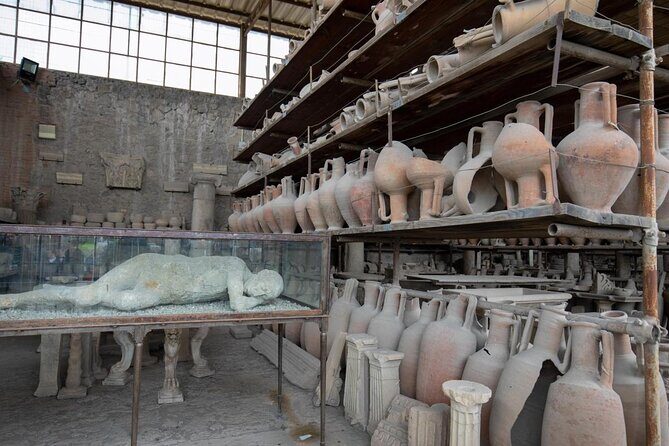
If Pompeii feels overwhelming, that’s normal. The site is huge, and even with a guidebook, you can end up staring at ruins without knowing what to notice first. This tour is built to solve that. You get a specialist guide (listed as archaeologist-led) who turns scattered stones into a readable city plan.
The private setup is a big deal for value, not just comfort. In a group tour, people drift, phones appear, and questions get skipped. Here, you can ask follow-ups and get answers in the moment—useful when you’re trying to understand the layout of theaters, the purpose of public buildings, or how daily life worked inside Roman neighborhoods.
You’re also paying for time. Pompeii is popular, so line time can quietly steal your day. This experience includes skip-the-line support at the ticket office if you request it in advance, plus a link to handle tickets in advance with a mobile ticket.
You can also read our reviews of more private tours in Pompeii


Starting at Hortus Pompei and ending at Porta Marina Inferiore
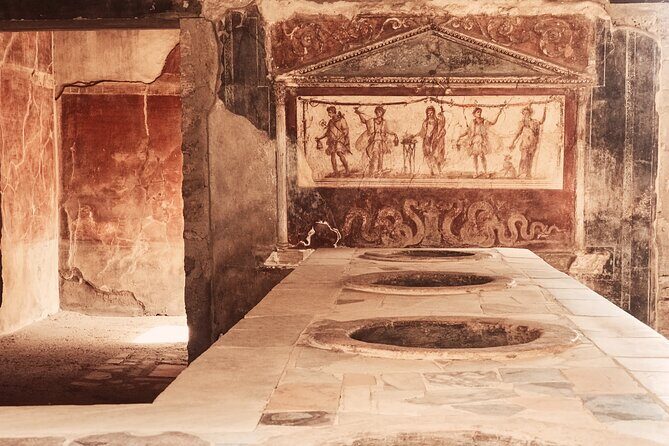
You meet at Hortus Pompei, Restaurant & Garden Bar, at Via Villa dei Misteri near Piazza Porta Marina Superiore 1. The tour begins at Porta Marina Superiore and ends back near the meeting point, at Porta Marina Inferiore. That matters because Pompeii is easiest when you’re moving through it with momentum, not backtracking across the site.
Why I like this start/end idea: it naturally creates a direction. You’ll spend less time asking where to go next and more time watching how one area connects to the next—public entertainment, then civic spaces, then residential and commercial corners.
Also, the “ends back at the meeting point” detail is underrated. When a Pompeii tour dumps you miles away, you still have to manage your transport. Here, your logistics stay simpler.
Theaters and Main Street: how the city organizes your attention
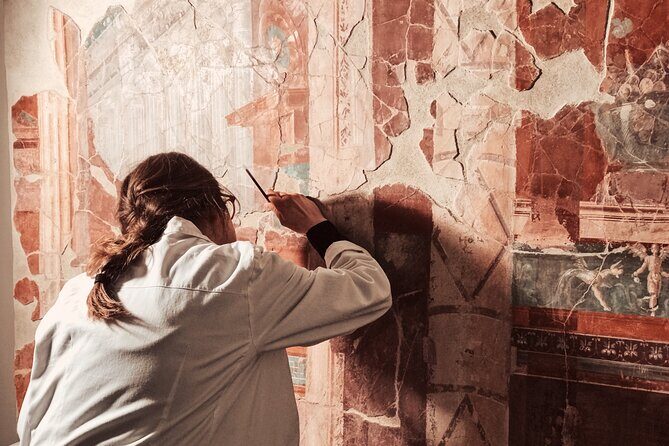
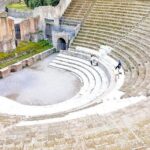
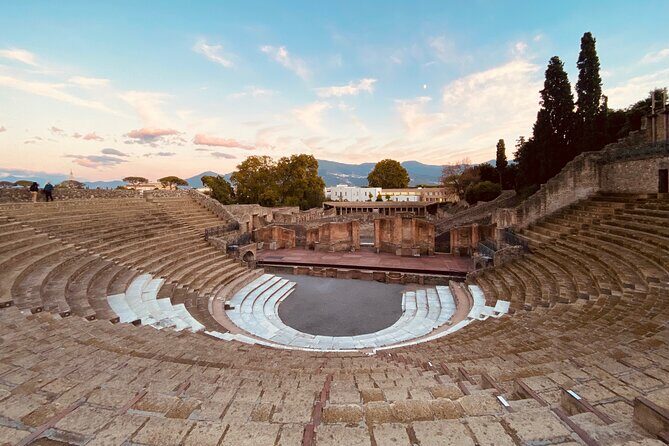
The route opens with the Odeon (small theater) and the Teatro Grande (large theater). Pompeii’s theaters aren’t just pretty backdrops. They show you where people gathered, how performances were staged, and how architecture shaped crowd movement. A good guide helps you spot the way the space is designed—where sound would travel, where people would sit, and how the building connected to surrounding streets.
After the theaters, you move onto Pompeii’s Main Street. This is where the tour shifts from landmark watching to street-level understanding. Main Street helps you “read” the city the way residents did: not as isolated monuments, but as a working network of movement, shops, and daily routines.
Even with just short stop times, the guide’s job is to point you toward the right details fast. That’s the difference between seeing a theater and understanding how theater fit into the rhythm of life.
Granai del Foro and the Forum spaces you should not miss
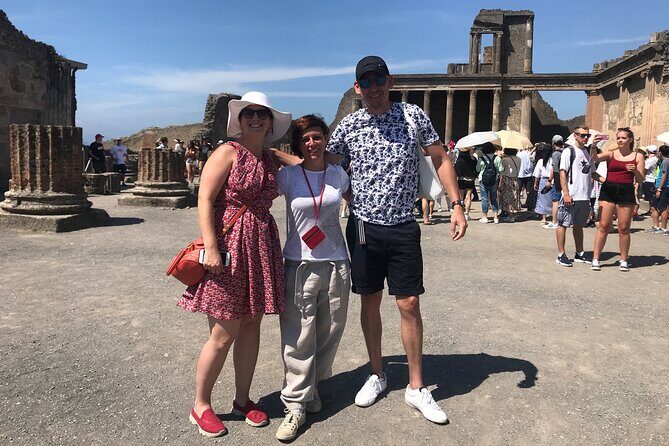
Next comes Granai del Foro, the archaeological deposit area. It’s easy to overlook storage and administrative spaces when you’re hungry for the big visuals, but this is part of why Pompeii feels real. Food storage and supply mattered, and these spaces show that the city was organized like a functioning economy.
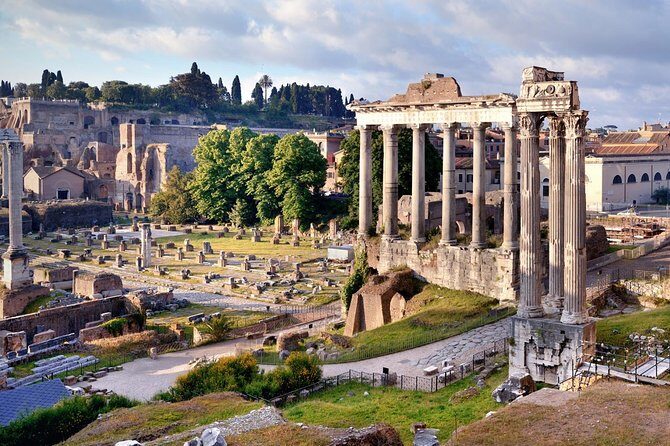
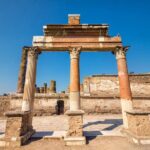
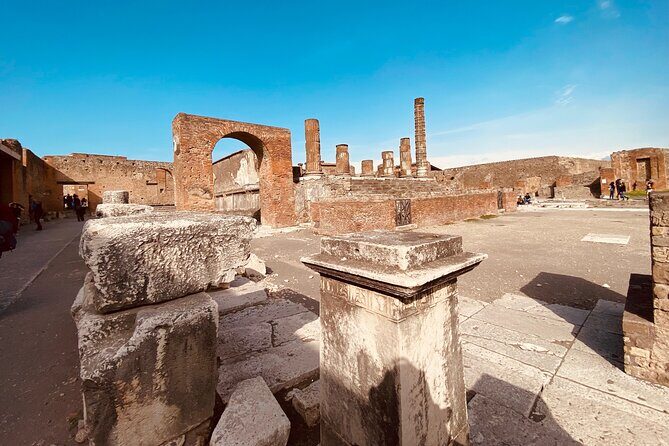
Then you step into the Forum area: Forum (1_Foro di Pompei) and the court of justice space tied to Pompeii’s civic life. If you’ve ever wondered what Rome looked like beyond temples and statues, the Forum is where the answer starts. This is where public decisions happened, where community business played out, and where major city life concentrated.
You also get time at Pompei La Basilica (court of the justice). Even if you don’t go deep into legal history, the building’s shape and placement help you understand why civic spaces were designed to handle crowds and conversations.
Temple stops: Jupiter and Venus as street-corner anchors
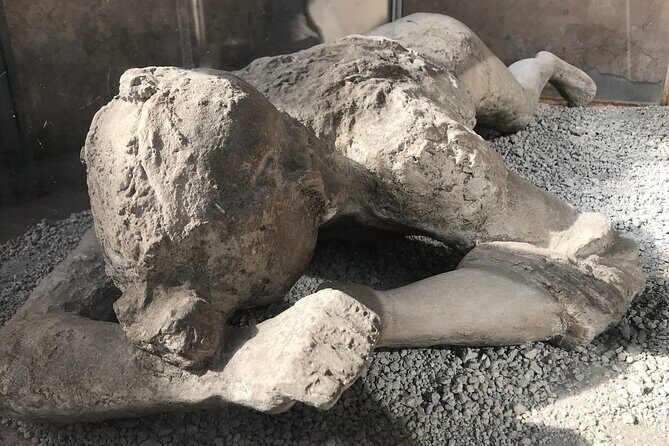
Temples in Pompeii act like anchors. The guide uses them to help you map the city’s spiritual and civic priorities, not just name-drop deities. You’ll see time at the Temple of Jupiter and the Temple of Venus.
The practical value here: these temples help you orient yourself. When you can place a temple in your mental map, everything else stops feeling random. Plus, temples are great moments to pause and look around—what streets feed into them, how far the view reaches, and what kind of foot traffic the site would have had.
You can also read our reviews of more tours and experiences in Pompeii


Stabian Baths and the architecture of everyday life
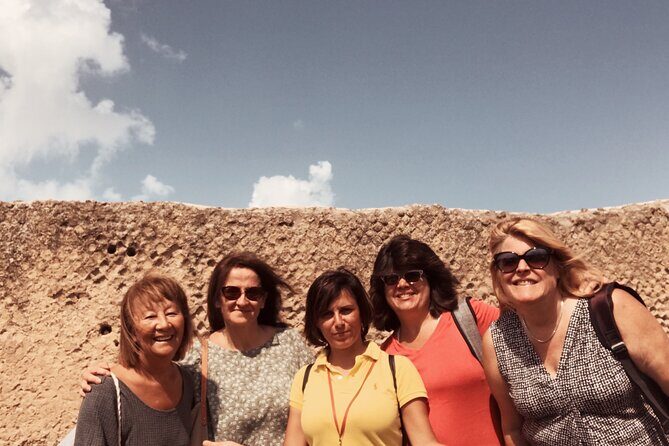
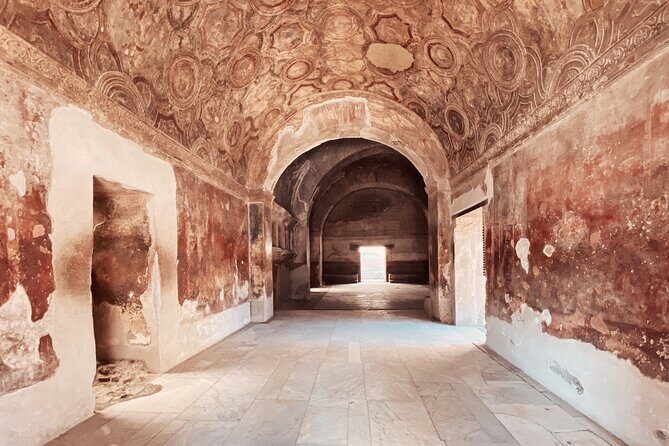
You’ll spend time at the Stabian Baths (Terme Stabiane), described as the first baths of Pompeii. Baths are one of the best ways to understand Roman life because they combine socializing, hygiene, and routine into one building complex.
The tour time here is shorter than a full self-paced wander, so you’ll want to rely on your guide to tell you what matters visually. Expect pointers that help you interpret the layout—how bathing zones relate, why spaces are arranged the way they are, and what the baths suggest about daily habits.
This is also where a guide’s flexibility can shine. In a site like Pompeii, you might want shade, a slower pace, or more time near a specific feature. Guides who know the rhythm of the park can adjust without turning your tour into a stop-and-start shuffle.
Gladiators’ barracks, the Lupanar, and the reality of Pompeii
The tour includes the Quadriporticus of the theatres (noted as gladiators’ barracks) and the Lupanar (prostitution area). These are heavy topics, and Pompeii doesn’t sugarcoat them. That’s exactly why they matter.
The guide can help you approach these spaces with context, so you’re not just reading signs in the wrong direction. You get to see how commercial and entertainment zones sat close to the entertainment district. You also see how people used the city in ways that were both public and private.
If this subject matter makes you uncomfortable, you can still benefit from the stop. Ask your guide what you should focus on—architecture, layout, and the way Pompeii functioned—so the visit stays informative instead of awkward.
Houses, mosaics, and the small details that make it feel lived-in
One of the best parts of Pompeii is how quickly it shifts from city planning to personal space. This tour hits that through multiple house stops, including Casa del Poeta Tragico (with the Cave Canem mosaic), and Casa del Menandro, known for frescoes and mosaics.
These house stops are short, but that’s not a drawback if your guide is doing the explaining. A mosaic like Cave Canem is a perfect example: you’re looking at art, yes, but you’re also seeing how Roman households used imagery, humor, and messaging in daily life.
The guide’s job is to connect those details to the bigger story: who lived where, how decoration signaled status, and how rooms were used. When you can connect art to function, Pompeii turns from ruins into a city with residents.
Markets, workshops, and the places you can almost smell
You’ll pass through commercial Pompeii with stops like the Macellum (meat and fish market), Edificio di Eumachia (wool market), and Termopolio di Vetuzio Placido (a take-away shop and fast food spot). These stops are where the site becomes practical in your head.
Food and trade explain so much. Markets show you where goods circulated, what kinds of products mattered, and how people moved through busy buying-and-selling routes. Workshops like the Fullonica di Stephanus (laundry) help you understand labor in a way that temples don’t.
I like this mix because it prevents the classic Pompeii mistake: only chasing monuments. Here you get a balanced sense of the city as a place where people worked, ate, shopped, and kept up with daily tasks.
Walking, steps, and heat: what to plan before you go
Pompeii is physical. Expect lots of walking, steps, and uneven stone. Surfaces can be slippery, and you should come prepared for a moderate challenge, even if you’re generally fit.
The good news is that the tour is private, so pace and stop timing can be adjusted. Some guides have been helpful with mobility concerns and with moving you toward workable areas. If you need breaks, speak up early—your guide can likely build the pace around you.
My practical advice:
- Wear shoes with real grip.
- Bring sun protection and plan for heat.
- If you want shade, ask. It’s common to plan your pauses around comfort.
- Keep water in mind, since Pompeii can feel like a long outdoor walk in the wrong weather and sun.
Tickets, skip-the-line, and the entry fee confusion to clear up
This part matters because Pompeii ticket details can get messy fast.
You’ll likely handle Pompeii park admission tickets yourself. The entrance fee for adults is 19 euros per person, and children under 18 have free entrance. Your tour includes a way to handle tickets via a mobile ticket and a link to buy tickets entrance in advance.
Skip-the-line at the ticket office works only if it’s requested in advance. If you don’t request it, you may not get the benefit. So do this early: when you book, make sure the skip-the-line support is requested, and confirm you’re set for ticket entry before you arrive.
One more detail: the tour price is listed per group, and it can look like the site entry is already bundled. To avoid surprises, double-check what your confirmation says about park admission so you’re not standing around trying to sort it out at the entrance.
Price and value: is $302.32 per group a good deal?
This experience costs $302.32 per group and runs about 3 hours, private, in English. If you’re traveling solo, it may feel like a splurge, because you’re paying for a guide by the group rather than splitting costs with a larger party.
But consider what you’re buying:
- A specialized archaeologist-style guide who helps you prioritize what to look at.
- A structured route through the most important areas in a short time.
- Ticket office skip-the-line support when requested in advance.
- A private setting for questions and pace control.
If you have limited time in Naples/Pompeii and you really want to understand what you’re seeing, this can be strong value. If you have a full day and you like self-guided wandering with a map, you might choose a cheaper format. Still, even then, a guided orientation can save you hours of confusion.
Also note that this kind of tour is often booked ahead (the data shows an average booking lead time of about 55 days). If you’re visiting in peak season, booking sooner tends to keep your options open.
Who this Pompeii tour suits best
This is a great fit if you:
- Want a first-time Pompeii structure without wasting time.
- Prefer learning from a guide who connects buildings to everyday life.
- Like a mix of public sites (Forum, theaters) and private city life (homes, mosaics).
- Appreciate being able to ask lots of questions in a private setting.
It may be less ideal if:
- You need a very slow walk with minimal steps.
- You want a long, self-paced visit that stretches across many hours.
- You dislike any tours that include the Lupanar area, since it’s part of this route.
Final call: should you book this Pompeii archaeologist tour?
I’d book it if you want your Pompeii visit to feel organized and meaningful in only three hours. The route hits the places that explain the city—entertainment, civic life, baths, markets, and homes with standout details like the Cave Canem mosaic.
Just do one homework step: confirm how your 19 euro adult admission is handled and that skip-the-line support is requested in advance. If you get that right, you’ll spend your time where it counts: walking through Pompeii with a guide who helps you see more than you’d notice on your own.
FAQ
How long is the Pompeii private tour with an archaeologist?
It runs about 3 hours.
Is this tour private or shared?
It’s private. Only your group participates.
What language is the tour offered in?
The tour is offered in English.
Where do we meet, and where does it end?
You start at Hortus Pompei, Restaurant & Garden Bar near Via Villa dei Misteri, Piazza Porta Marina Superiore 1. The tour ends back at the meeting point.
Does the tour include the entrance ticket to Pompeii?
Entrance fees are not included in the tour price. Adult tickets are listed as 19 euros per person, while under 18s have free entrance. You’ll also get a mobile ticket approach and a link to buy entrance in advance.
Is skip-the-line included?
Skip-the-line at the ticket office is available only if it’s requested in advance.
Will I be able to handle the walking?
Most travelers can participate, but the route includes lots of walking with steps and potentially slippery surfaces. You should have moderate balance and wear good shoes.
Are service animals allowed?
Yes, service animals are allowed.
What happens if the weather is bad, or I need to cancel?
The experience requires good weather. If it’s canceled due to poor weather, you’ll be offered a different date or a full refund. You can cancel for a full refund up to 24 hours before the experience start time.