REVIEW · TREVI FOUNTAIN TOURS
Rome: Trevi Fountain and Underground Guided Tour
Book on GetYourGuide →Operated by Touriks · Bookable on GetYourGuide
Rome gets better below street level. This Trevi Fountain tour flips the usual script: you start with the famous facade and mythic scenes, then you drop down to the archaeological remains tied to the water system that made it all possible. Two things I especially like are the chance to see the working aqueduct and the fact that your guide keeps the walk fast, focused, and clear without turning it into a lecture.
One thing to keep in mind: you do not get free access to the restricted basin area. If you want to get right in that inner zone, there’s an extra €2 fee, and the guide will instead point you to a great viewing spot from the public piazza level.
In This Review
- Key takeaways before you go
- Trevi Fountain from the street to the water beneath
- Where to meet your guide at Piazza di Trevi
- Surface time at Trevi Fountain: art, myths, and practical viewing
- Down 9 meters to the Vicus Caprarius area
- The working aqueduct: the best reason to book
- Imperial Domus remains and the layers under your feet
- How the 40 minutes actually feels in real life
- Price and value: what $41 buys you (and what costs extra)
- Guides, pace, and Q&A: what tends to make it work
- Who this tour fits best
- Practical tips: comfortable shoes, photos, and timing your expectations
- Should you book the Trevi Fountain underground tour?
- FAQ
- How long is the Trevi Fountain underground guided tour?
- What does the tour cost?
- Where do I meet the guide?
- Is the restricted basin area included?
- What’s included in the price?
- Is hotel pickup or drop-off included?
- What languages are available?
- Do I need to bring anything?
- What if the weather is bad?
- Is the tour wheelchair accessible?
- Is there private group availability?
Key takeaways before you go
- 9 meters down to the underground archaeological area connected to Trevi’s water story
- A 2000-year-old aqueduct still functioning, supplying water to the fountain above
- Mythological figures and dramatic scenes explained in plain language on the surface
- Vicus Caprarius ruins and an imperial Domus you can actually see, not just read about
- Headsets included, which helps a lot in a busy, noisy piazza
- Short but full: about 40 minutes total, with roughly half on the surface and half underground
Trevi Fountain from the street to the water beneath
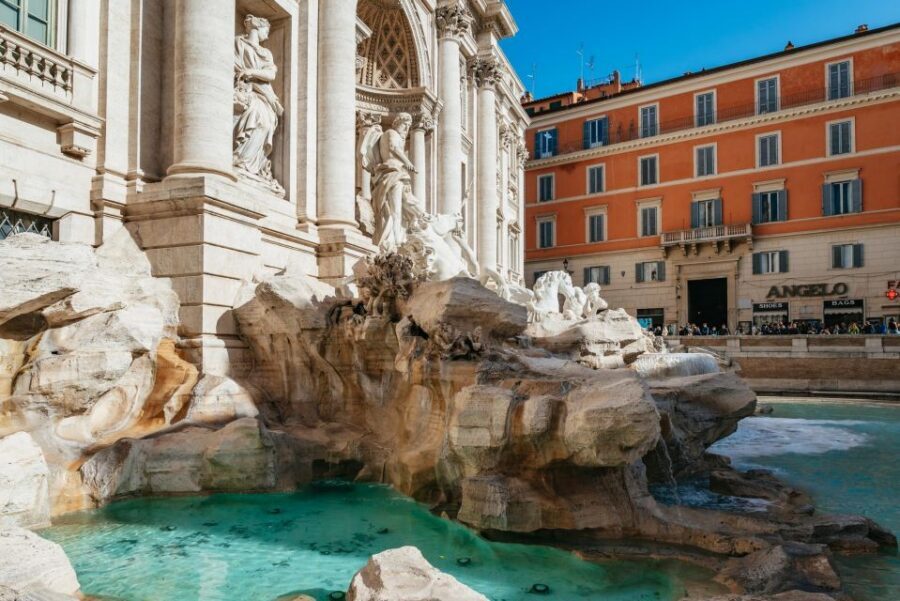
Trevi Fountain is one of those places where your first reaction is usually, It is exactly as famous as people claim. The photo is great, but the tour is better because it gives you the second half of the story: what made the fountain possible and what was sitting under this neighborhood long before today’s streets.
The headline moment is the descent to the underground site, about 9 meters below ground. That’s where the guide helps you connect the dots between ancient engineering and the art you see above.
And yes, you’ll still get the myth: the figures, the drama, the symbolism. But the big win is that your guide treats it like a system, not just scenery.
You can also read our reviews of more guided tours in Rome



Where to meet your guide at Piazza di Trevi
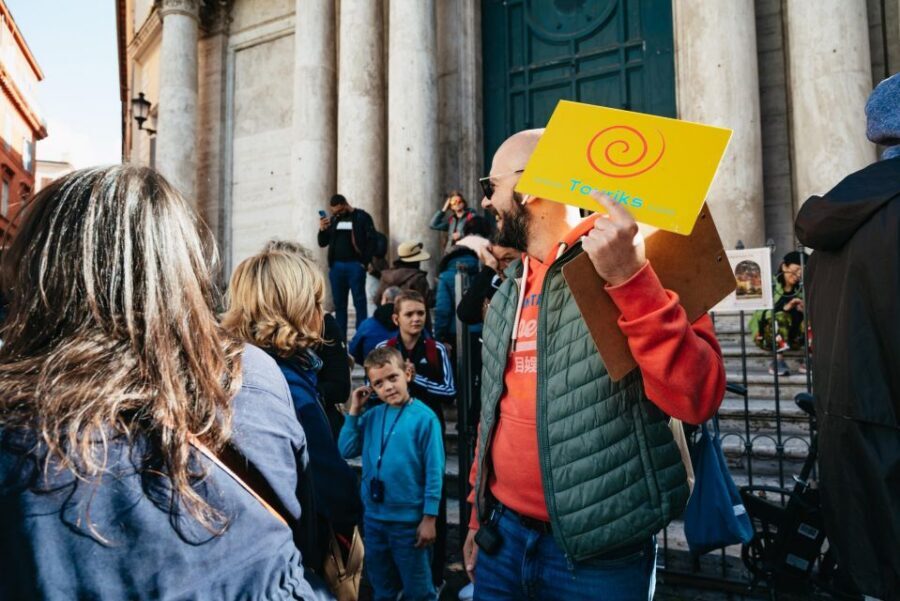
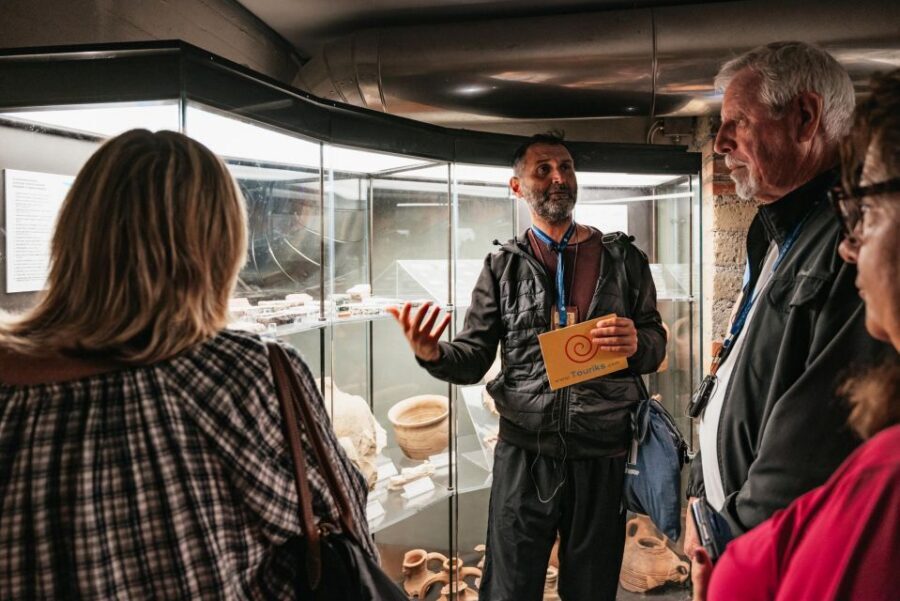
You’ll meet in front of Santi Vincenzo e Anastasio a Fontana di Trevi Church, on the left corner of Piazza di Trevi. Look for a yellow label with TOURIKS written on it.
This meeting point is in the thick of the Trevi area, which can get chaotic fast. I recommend arriving a little early, scanning for the sign, and settling your group before you try to fight through the crowd.
If you’re going in multiple languages, the tour runs with live guides in English, French, Spanish, Portuguese, German, and Italian. That matters here because you’ll want your guide to stay on track while people are funneling past you.
Surface time at Trevi Fountain: art, myths, and practical viewing

Your surface portion is about 20 minutes focused right at Trevi Fountain. Expect a guided walk that explains the fountain’s origins and the details most people miss when they’re just snapping photos.
You also need to know the practical reality: access to the restricted basin area costs €2 extra. The tour does not include that. What you do get is a good, guide-led viewing position on the public piazza level, which is usually the best way to see the fountain clearly without getting stuck in a bottleneck.
I like that the guide doesn’t leave you hanging with only a quick glance. The goal is to help you look like you know what you’re seeing, even if you’ve never studied Roman fountains.
Down 9 meters to the Vicus Caprarius area

After the surface, the tour heads into the underground archaeological site. This is the part that makes the Trevi visit feel different from every other Trevi stop you’ll do in Rome.
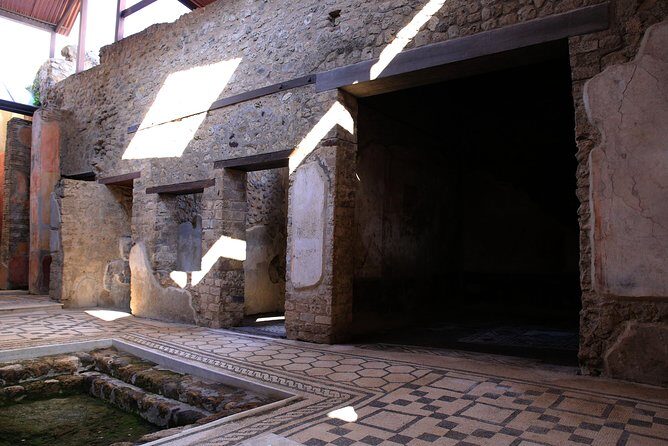
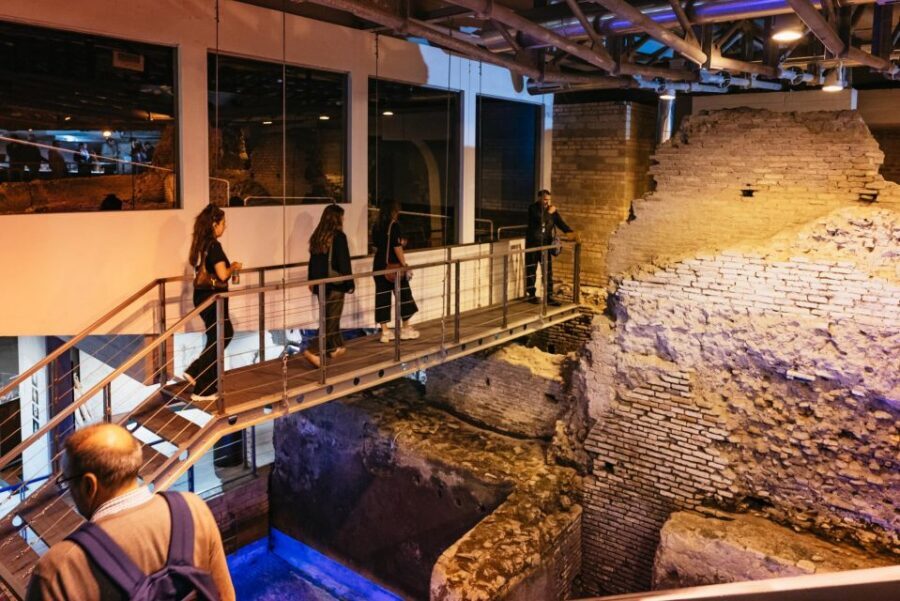
You’ll spend about 20 minutes in the underground area called Vicus Caprarius. The guide shows you ruins and explains how layers of the city built up over time. When you’re standing under Rome’s modern streets, stratification stops being an academic word and becomes something you can literally see.
It’s also a welcome breather. Even on hot days, underground spaces often feel cooler and calmer, so your brain gets a moment to absorb information instead of just dodging crowds.
The working aqueduct: the best reason to book
Here’s the core reason this tour is worth your time. You’ll see a fully functioning, 2000-year-old ancient aqueduct that still supplies water to the fountain above.
That’s not just a neat fact. It changes how you experience Trevi Fountain. Instead of treating it like a decorative landmark, you see it as the end of a long engineering chain.
Your guide also helps you understand the logic of the water system. You’ll follow the explanation from the ancient infrastructure to what you see outside, which makes the fountain feel like a living continuation of history instead of a static monument.
If you like how systems work, you’ll probably love this segment. One of the strongest themes from guide-style descriptions is that they make the water story make sense, not just sound impressive.



Imperial Domus remains and the layers under your feet

Under Trevi, you’re not just looking at a single artifact. You’ll also see the remains of an imperial Domus, plus what the guide calls the millenary stratification beneath the streets.
This is where the tour becomes more than “fountain facts.” It turns into a quick orientation to how Rome functioned: neighborhoods, buildings, upgrades, and how earlier structures got buried as the city changed.
You don’t need to be a history nerd to get something from it. You just need to stay alert for the guide’s pointing and explanations as you move through the excavated areas. The physical layout makes the story easier to hold in your head.
How the 40 minutes actually feels in real life
The total duration is about 40 minutes, with the tour split into two chunks: roughly 20 minutes on Trevi Fountain and 20 minutes underground.
That can sound short, but it fits the goal. You get orientation and meaning without spending half your day in line or waiting around. It’s a good pick when your itinerary is already packed with other major sights.
It also means the tour has a lively pace. The guide is likely to keep things moving and cover a lot of visual ground in a short span. If you like slow, wander-at-your-own-speed museum time, this might feel a bit like a guided sprint. But if you want momentum and context, it’s a smart length.
Price and value: what $41 buys you (and what costs extra)

The listed price is $41 per person for a 40-minute guided experience. For Rome, that’s not outrageous, but it is on the mid-side for what you’re getting time-wise.
Here’s the value math I’d use: your ticket includes the guide, entrance fees into the underground excavations, and headsets. The headsets sound like a small detail, but in a busy area they matter. You’ll hear directions and explanations more clearly instead of constantly guessing what the guide is saying.
What’s not included is mainly the stuff you might already expect:
- The €2 restricted basin fee (optional, and only if you want that inner access)
- Hotel pickup/drop-off
- Food and drinks
Also, if you’re comparing to doing a self-guided visit, the biggest difference is the interpretation. The underground portion is easy to walk through, but harder to connect to the fountain story without a guide.
Guides, pace, and Q&A: what tends to make it work

This tour succeeds when the guide keeps the story moving and makes the visuals easy to follow. The guides associated with this experience are described as patient, funny, and good at answering questions, including questions from kids. That’s a useful sign if you’re traveling with family, because it suggests the explanations can be adjusted on the fly.
You might hear dry humor, patient pacing, and clear breakdowns of the water and ruins. Names that have shown up include Mario, Francesca, Vito, and Anestis, and the common thread in how they’re described is that they connect details to the bigger picture.
If you’re the type who asks, Why does that matter? you’ll likely get a satisfying answer here.
Who this tour fits best

This is a strong fit if you want more than “stand in front of the fountain and take photos.” You’ll likely enjoy it if you care about:
- Roman engineering and water systems
- Learning how Rome’s layers built up over centuries
- Mythology as part of public art, not just names and dates
- A short guided experience that doesn’t eat your whole day
It can also work well for families because the format is quick and the guide is used to keeping people engaged.
If you need fully accessible routes, this one is not suitable for wheelchair users, since you’ll be going underground.
Practical tips: comfortable shoes, photos, and timing your expectations
Because this experience includes steps and time underground, wear shoes you trust on stone. Trevi is crowded, so keep your group close during the surface portion.
For photos, remember you’re doing two very different environments: bright stone and crowds above, and tighter excavated spaces below. Your best strategy is to let the guide set the viewing rhythm, then grab your shots during the brief pauses.
Bring headphones because you’ll be hearing the live guide through headsets. Also bring a reusable water bottle. Even though part of the tour is underground, you may spend enough time outside in the Trevi heat and bustle to want water.
Weather matters here too. If conditions force a cancellation, you’ll be offered an alternative date or a full refund.
Should you book the Trevi Fountain underground tour?
If your Rome plan includes Trevi Fountain anyway, I think this is a smart upgrade. The underground piece is the difference between a photo stop and a story you can actually explain afterward, especially once you see the still-functioning aqueduct and the ruins tied to the water system.
Book it if you want:
- a quick guided framework for Trevi’s art and symbolism
- a cool break under the streets
- a real sense of Rome’s layers, not just a single monument
Skip it if you’re hoping for a long, unhurried exploration or you need full accessibility for wheelchair travel. And if you’re trying to do everything for the lowest cost, note that the restricted basin access is an extra €2 option.
Bottom line: for $41 and about 40 minutes, you’re paying mainly for guided interpretation plus paid access to the underground excavations. In a city where time is always the scarce resource, that can be a good trade.
FAQ
How long is the Trevi Fountain underground guided tour?
It lasts about 40 minutes, split into about 20 minutes on the Trevi Fountain surface and 20 minutes in the underground archaeological area.
What does the tour cost?
The price is listed as $41 per person.
Where do I meet the guide?
Meet your guide in front of Santi Vincenzo e Anastasio a Fontana di Trevi Church, on the left corner of Piazza di Trevi. Look for a yellow label that says TOURIKS.
Is the restricted basin area included?
No. Access to the restricted basin area costs an extra €2 fee, and the guide will lead you to an excellent viewing point at the public piazza level.
What’s included in the price?
The tour includes the guide, entrance fees into the underground excavations, and headsets so you can hear the guide.
Is hotel pickup or drop-off included?
No, hotel pickup and drop-off are not included.
What languages are available?
The live guide is available in English, French, Spanish, Portuguese, German, and Italian.
Do I need to bring anything?
Bring headphones and a reusable water bottle.
What if the weather is bad?
The tour is subject to weather conditions. If it’s canceled, you’ll be offered an alternative date or a full refund.
Is the tour wheelchair accessible?
No, it is not suitable for wheelchair users.
Is there private group availability?
Yes, a private group option is available.