REVIEW · 1-DAY TOURS
Hadrian’s Villa and Villa d’Este Half-Day Trip from Rome
Book on Viator →Operated by Greenline Tours · Bookable on Viator
Tivoli offers a clean break from Rome. This half-day guided trip takes you from the city to two UNESCO sites in the hills, with a comfortable air-conditioned coach and an on-the-ground guide who helps you make sense of what you’re seeing at UNESCO stops. I like the simple structure: ride out, walk the sites with context, then ride back.
I really love the pairing of Roman power and Renaissance theater. You get Hadrian’s Villa with real ruins (thermal baths, temples, theaters, and more), then you shift gears to Villa d’Este and its dramatic fountain world. I also appreciate the human factor: guides such as Luigi, David, and Max are described as friendly and fun, not just recital machines.
One thing to plan for: there’s walking on uneven ground, and some garden areas at Villa d’Este can be temporarily limited (even due to events or filming). If you’re the type who hates steps and gravel, you’ll want to bring sturdy shoes and go in with patience.
In This Review
- Key things to know before you go
- Why Tivoli in half a day works so well
- Getting from Rome to the hills: coach ride, timing, and comfort
- Hadrian’s Villa (Villa Adriana): how to read an imperial ruin site
- Villa d’Este: the fountain-and-garden experience that steals the show
- What the “half-day” really feels like on the ground
- Guides, group size, and why it matters more than you think
- Price and value: what you’re paying for (and what you aren’t)
- Who should book this tour
- Tips to make your visit smoother (without ruining the magic)
- Should you book Hadrian’s Villa and Villa d’Este from Rome?
- FAQ
- How long is the trip?
- What sites are included?
- Are admission tickets included?
- Does the tour include transportation?
- Where does the tour start and end?
- What kind of walking should I expect?
- What is the cancellation policy?
Key things to know before you go
- Two UNESCO sites in one half-day: Hadrian’s Villa then Villa d’Este, side-by-side in your experience.
- Coach comfort matters: air-conditioning is part of the value on a hot Roman day.
- Story makes the ruins click: you’ll look at structures like baths and theaters with more meaning than labels.
- Villa d’Este is about water drama: fountains and garden layouts are the main event.
- Expect real walking: you’re exploring ruins and gardens, not just standing at viewpoints.
Why Tivoli in half a day works so well
Rome can be overwhelming in a hurry. Tivoli is close enough to feel easy, but different enough that you stop thinking about traffic and start thinking about views, water, and old stones. The whole point of this format is momentum: you get out of the city, hit two big sites, and return without turning the day into a long grind.
What I like most is the contrast. Hadrian’s Villa is about imperial scale and Roman engineering—big spaces, grand layouts, and everyday life hinted at through ruins. Villa d’Este flips the mood into Renaissance design, where water features and garden geometry do the storytelling. Doing them in one outing helps you see how “villa life” evolved without needing a full extra day.
You can also read our reviews of more tours and experiences in Rome


Getting from Rome to the hills: coach ride, timing, and comfort
The tour uses a coach with air-conditioning and keeps the group size relatively small (you’ll be on a bus that holds up to 50, and the experience is listed with a maximum of 30 travelers). That matters in Rome, where you can waste time juggling meet-up points and crowd flow.
You’ll depart from the central start point on the Via Giovanni Amendola area, or you can meet near Rome’s Termini depending on your option. Expect a ride through Roman countryside views from the coach window as you go uphill toward Tivoli. In practice, that means you’re already in “tour mode” when you arrive—less stress, more sightseeing time.
Also: the tour is about four hours total and that includes travel. So yes, it’s a half-day—but it’s the real kind, with enough time to walk the sites with a guide rather than speed-walking through photos.
Hadrian’s Villa (Villa Adriana): how to read an imperial ruin site
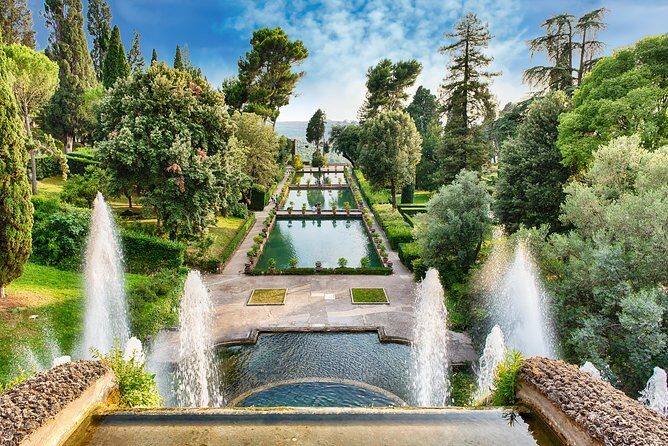
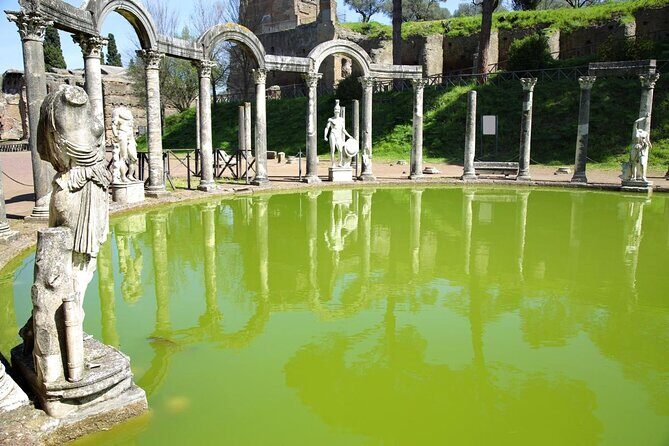
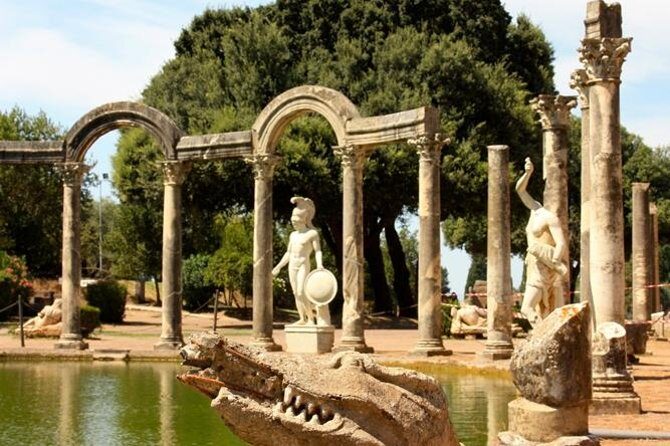
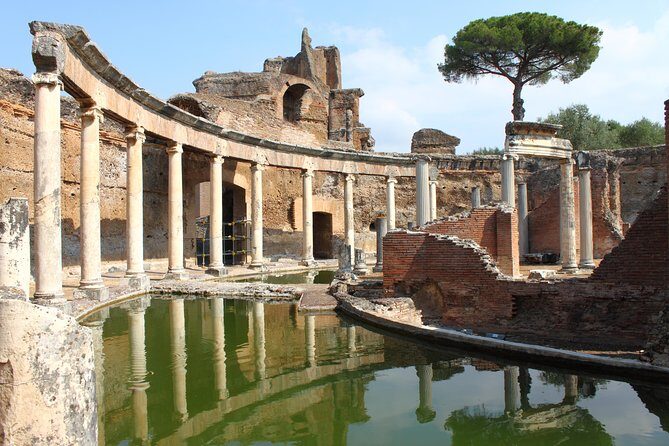
Hadrian’s Villa, also called Villa Adriana, is the 2nd-century holiday home of Emperor Hadrian. The feeling here is not “one big palace.” It’s more like a sprawling estate that can feel village-like, with many separate zones. That’s part of why the ruins are so compelling: you’re not just looking at one monument, you’re moving through the footprints of a whole lifestyle.
At your stop, you’ll stroll among ruins that include thermal baths, temples, theaters, and other structures. A good guide makes a difference here because each area has a different vibe. The baths are about daily comfort and Roman bathing culture. The temples point to belief and power. The theaters connect to leisure, performance, and social life. When you’re shown the “why” behind the layout, the site becomes more legible.
What to watch for: Roman villa ruins can tempt you into a checklist mindset. Don’t. Instead, try to notice transitions—how one zone feels like it belongs to a different kind of activity. That mental shift is what turns ruins into a story.
Potential drawback: some visitors find this part less visually dramatic than Villa d’Este. If you’re expecting fountains and perfect postcard views, you might need to adjust expectations. If you like architecture, engineering, and how empires planned leisure, you’ll likely enjoy this more than you expect.
Villa d’Este: the fountain-and-garden experience that steals the show
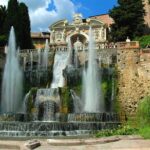
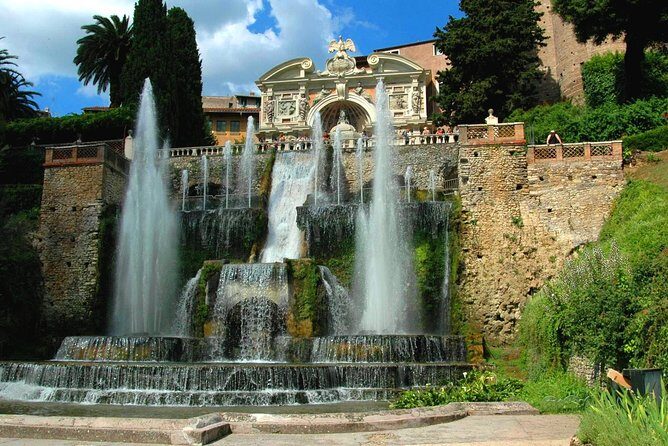
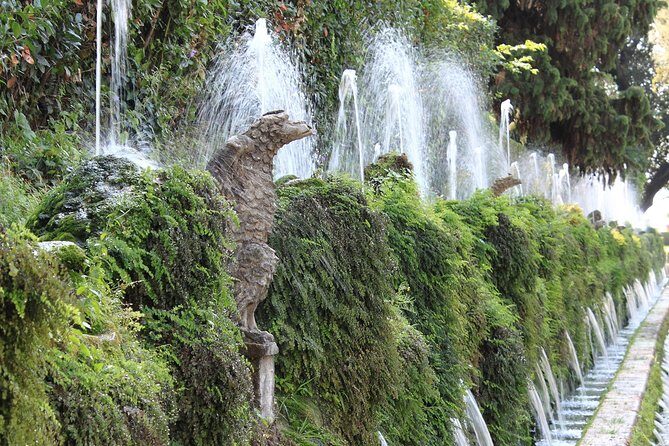
Villa d’Este is a Renaissance palace in Tivoli built around the mid-1500s for Cardinal Ippolito II d’Este, who was also the governor of the area. This is where the mood becomes theatrical. The garden design is the highlight, and the fountains are the headline—water features that are credited here as designed by Gian Lorenzo Bernini.
You’ll tour the palace and gardens with your guide, then spend time lingering in the green spaces and chasing viewpoints where the fountain drama is at its best. Villa d’Este is designed for movement. You walk, turn a corner, and suddenly you’re looking down or up at water in a new arrangement. That’s why a guided visit helps: it gives you the background so the garden layout doesn’t feel like random paths.
A detail that adds flavor: the building project upset local residents, who reportedly had to move to make way for the palace. That kind of human conflict is easy to miss when you’re just admiring gardens, but it adds weight to the story of why this place looks the way it does.
Best practical tip: wear shoes you trust. Even if you’re not “hiking,” the mix of garden surfaces, steps, and walkways adds up. If you want photos, plan for short pauses. It’s better than trying to rush and slip.
What can change on the day: access to parts of the gardens can be affected by filming or other events. One disappointment in the experience feedback is that garden sections were blocked during a movie shoot, so your best bet is to stay flexible and enjoy what’s open.
What the “half-day” really feels like on the ground
This tour is compact by design. You start with Hadrian’s Villa, then hop to Villa d’Este for the second stop. Each site is timed enough to walk with your guide and still see the main sights, but not enough to wander for hours like you would if you booked a full day.
If you’re sensitive to pacing, know that both stops involve walking. Hadrian’s Villa is on uneven, ruin-like terrain. Villa d’Este is a garden complex with paths and steps. The guides tend to keep things flowing so you don’t miss key areas.
The upside is you don’t get exhausted by travel logistics. You’re moving with a plan, riding in comfort, and ending back at the start area (or with optional central drop-off like Via Veneto, Piazza Barberini, Piazza Venezia, or Piazza della Repubblica). That flexibility is handy if you want to tack on dinner plans without backtracking.
You can also read our reviews of more tours and experiences in Rome



Guides, group size, and why it matters more than you think

A half-day tour lives or dies by the guide. With only a few hours, you need more than directions. You need context, and you need it delivered in a way that keeps you interested while you’re walking.
The experience has a multilingual setup, and the guide quality shows up in the kind of praise you’d hope for: friendly, organized, with humor and real details. Names that come up include Luigi, David, and Max. In this kind of setting, that matters because the sites can blur together if you only know broad facts. A strong guide helps you connect the dots—imperial leisure at Hadrian’s estate, cardinal power and garden engineering at Villa d’Este.
Group size is another factor. A smaller group usually means you spend less time waiting. It also means your guide can manage the flow better at crowded photo zones, like fountain viewpoints.
Price and value: what you’re paying for (and what you aren’t)
At $118.81 per person for about four hours (including travel), you’re paying for a guided day trip that includes transport and site entry. The tour includes:
- a local guide
- air-conditioned coach
- admission tickets at both major stops
You do not get:
- food and drinks
- pick-up and drop-off by default (you choose the option that works best)
So the value question is simple: would you otherwise spend time arranging transport plus paying for admission plus hiring a guide? If your answer is yes—or you just want a low-effort, high-impact afternoon—this price starts to feel fair.
The bigger value isn’t just the sites. It’s saving your brain cells. Tivoli is straightforward to visit, but you’d still need to decide what to prioritize and how to make the ruins meaningful. Here, the guide does that work so you can spend your energy on walking and looking.
Who should book this tour
This is a great pick if you want:
- a break from Rome’s intensity without losing a whole day
- two UNESCO sites in one afternoon
- a guided visit that explains what you’re seeing at both places
I’d especially recommend it if you’re curious about Roman life beyond Colosseum-and-forum basics. Hadrian’s Villa is a different lens on the empire: leisure, planning, and daily routines inferred from ruins. Then Villa d’Este gives you a visual reset with gardens and fountains that feel almost like a stage.
If you hate walking or want mostly “easy views with minimal steps,” you may want to think twice or bring a plan to move slowly. The sites are stunning, but they aren’t designed for effortless strolling.
Tips to make your visit smoother (without ruining the magic)
- Wear sturdy shoes. Both sites involve walking on uneven or stepped areas.
- Bring a light layer. Even in warm months, the coach and shaded gardens can feel cooler.
- Use your guide time well. Ask what to look for at each stop, especially at Hadrian’s Villa where it’s easy to get lost in scattered ruins.
- Plan for flexible garden access. If something is blocked, pivot to what’s open instead of fixating on the one area you had in mind.
Also, consider season. One experience takeaway is that Villa d’Este feels like a relief from Rome heat in summer. Another is that it can still be dramatic in cooler months like November. If you can choose, aim for a time when you won’t be cooked by the sun.
Should you book Hadrian’s Villa and Villa d’Este from Rome?
I’d book it if you want a smart half-day that delivers two major UNESCO stops with guidance and included admission. The value is strongest when you want less planning and more meaning—especially at Hadrian’s Villa, where context turns ruins into a real experience.
I’d skip it or adjust expectations if you only want the most visually flashy stop. Villa d’Este is the crowd-pleaser, while Hadrian’s Villa can feel more atmospheric and interpretive. If you’re okay with that trade, this trip is a very efficient way to get out of Rome and see Tivoli at its best.
FAQ
How long is the trip?
The tour lasts about 4 hours, and that total includes travel time.
What sites are included?
You visit Hadrian’s Villa (Villa Adriana) and Villa d’Este, both UNESCO World Heritage-listed locations.
Are admission tickets included?
Yes. Admission tickets are included for the visits at both sites.
Does the tour include transportation?
Yes. You get round-trip transport by air-conditioned coach from Rome.
Where does the tour start and end?
The meeting point is Via Giovanni Amendola, 32, 00185 Roma RM, Italy, and the tour ends back at the meeting point. Drop-off options may include Via Veneto, Piazza Barberini, Piazza Venezia, or Piazza della Repubblica.
What kind of walking should I expect?
A moderate physical fitness level is recommended, and you should expect walking at both villa sites.
What is the cancellation policy?
You can cancel up to 24 hours in advance for a full refund, and it may be canceled due to poor weather or minimum passenger numbers, with either an alternative date or a full refund.