REVIEW · POMPEII
Explore Pompeii with an Archaeologist
Book on Viator →Operated by Askos Tours · Bookable on Viator
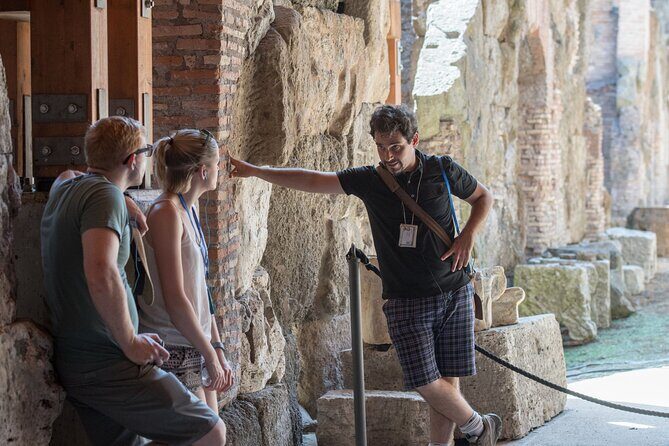
Pompeii makes sense quickly. This small-group tour with an archaeologist helps you read the ruins instead of just staring at them. I love that you get skip-the-line admission and that you’re not stuck guessing what you’re looking at.
Two things stand out for me: the chance to ask questions, and the fact that the tour hits a lot of major sights without feeling like a sprint. With guides like Mario Celentano (praised for patient, great English) or Alexandra (praised for making details click), you’re walking with real explanations, not just a script.
One possible drawback: this is still Pompeii, so you’ll do a fair amount of walking and you may run into big crowds. On very busy days, even the headsets can be harder to hear through the noise, and the time is short—so think highlights, not every back hallway.
In This Review
- Key things to know before you go
- Pompeii in about 2 hours: what you’ll actually see
- Skip-the-line tickets and a small group that lets you ask real questions
- Meet at Porta Marina Superiore: how the tour begins
- The Forum loop: Piazza, court, granaries, and the city’s power
- Stop 2: Foro de Pompeya (the main square)
- Stop 3: Basilica (the courthouse)
- Stop 5: Granaries of the Forum
- Lupanar and Thermopolium VI: where people ate, shopped, and had complicated lives
- Stop 4: Lupanar (the brothel)
- Stop 10: Thermopolium VI (an ancient snack bar)
- House of Menander and House of the Faun: what elite homes tell you
- Stop 6: House of Menander
- Stop 7: House of the Faun
- Stabian Baths and Casa dei Vettii: health, comfort, and status
- Stop 8: Stabian Baths (Terme Stabiane)
- Stop 12: Casa dei Vettii (House of Vettii)
- Via dell’Abbondanza and Teatro Grande: a street-and-theatre finale
- Stop 9: Via dell’Abbondanza (street)
- Stop 11: Teatro Grande (the theatre)
- Practical tips that make the day easier
- Price and value: is $35.67 a fair deal?
- Who this Pompeii tour fits best
- Should you book this Pompeii archaeologist tour?
- FAQ
- How much is the Pompeii archaeologist tour?
- How long is the tour?
- Is the tour offered in English?
- Does it include admission tickets?
- What size is the group?
- Are headsets provided?
- Where do I meet and where does the tour end?
- What is not included in the price?
- Can I bring a service animal or dog?
- What is the cancellation policy?
Key things to know before you go
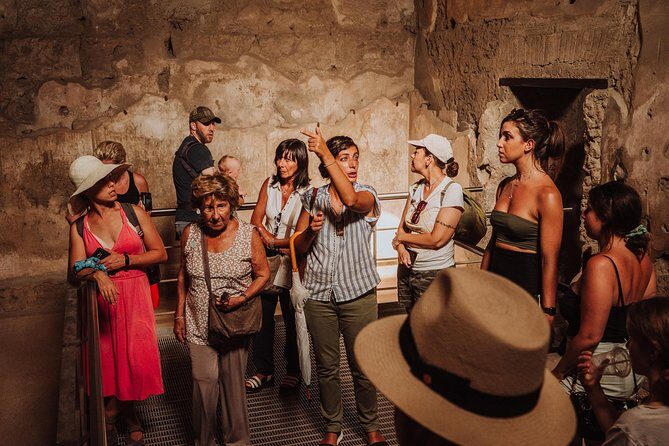
- Skip-the-line entry helps you start strong at Porta Marina Superiore.
- Archaeologist guidance turns street corners and building layouts into clear stories.
- Max 20 people keeps the pace human and makes questions actually possible.
- Headsets for groups of 16+ keep narration from getting lost in the crowd.
- A packed highlights route covers Forum, baths, brothel, homes, theatre, and food-stalls.
Pompeii in about 2 hours: what you’ll actually see
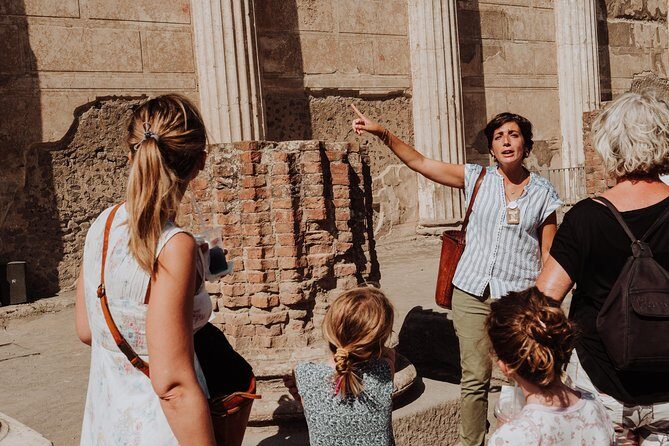
This tour is built for people who want Pompeii to feel understandable in one go. In about two hours, you’ll cover a well-chosen loop that touches the big, recognizable pieces of the city: the Forum area, famous houses, the baths, the theatre, and places tied to everyday life like a thermopolium (ancient snack bar).
The practical win is timing. Pompeii is huge, and first-time visits can turn into long wandering. Here, you get a route that helps you check off major sights without wasting your energy trying to figure out where the best stuff is.
And because it’s led by an archaeologist (not just a general guide), you’re more likely to notice the why behind what’s standing. Doors aren’t only doors. Courtyards aren’t only courtyards. They become clues about daily routines, status, and how the city worked.
You can also read our reviews of more tours and experiences in Pompeii.


Skip-the-line tickets and a small group that lets you ask real questions
The tour includes admission and uses skip-the-line admission tickets, so you’re not spending your “Pompeii window” in slow-moving lines. That alone is good value. If you arrive and lose time sorting tickets, you end up rushing through the ruins. This helps you start sooner and stay in rhythm.
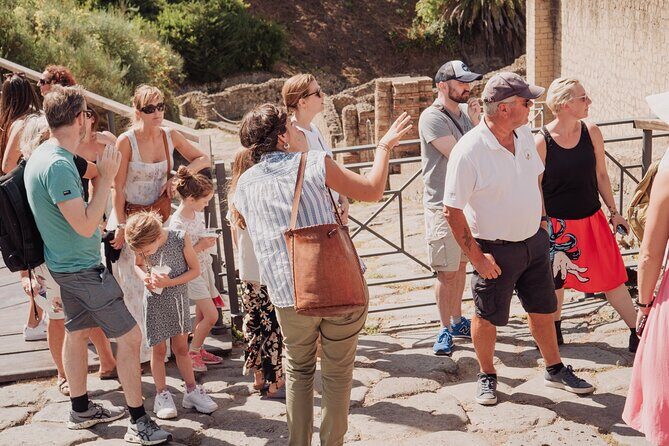
Group size matters here. It’s capped at 20 travelers, which keeps the walk manageable and makes it easier to hear instructions and ask follow-up questions. Some groups have been led by guides such as Julia, Diego, Antonio, Teresa, and Rosanna, and the recurring theme is clear explanations and patience when people ask things.
If you’re the type who likes to understand what you’re seeing before you take photos, this setup usually fits you well.
Meet at Porta Marina Superiore: how the tour begins
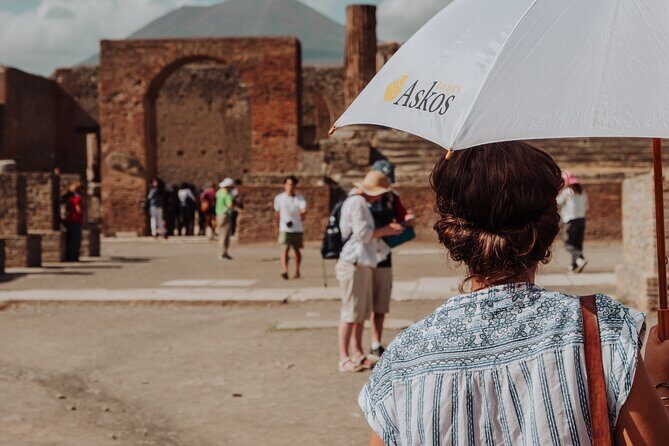
You meet at Via Villa dei Misteri, 2, then the tour officially starts at the archaeological site entrance called Porta Marina Superiore. Your guide holds an “Askos Tours” sign so it’s easier to spot the group quickly.
You’ll get going almost immediately—Stop 1 is right at the start—so you don’t waste the first part of your visit on delays. The pace is structured: each key stop is about 10 minutes, with one short transfer section where admission isn’t part of the stop time.
Also, expect this to feel like a guided walk more than a sit-and-listen lecture. You’ll cover ground, stop at points of interest, and then move on. That structure is ideal if you want momentum and a clear route.
The Forum loop: Piazza, court, granaries, and the city’s power
Your tour moves into the heart of civic life with the Forum stops. Here’s what each stop usually means on the ground.
Stop 2: Foro de Pompeya (the main square)
This is where Pompeii’s public life shows up: space for gatherings, announcements, and daily movement through the city center. With an archaeologist’s narration, you’ll likely connect the layout to how people used the square, not just what it looks like now.
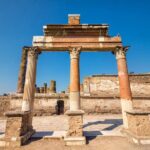
Stop 3: Basilica (the courthouse)
The basilica area helps you understand authority and routine. Even if you don’t know Latin, the building’s purpose becomes clear: it’s a place for legal or administrative activity. A good guide will point out how spaces would have been used and why the design fit that role.
Stop 5: Granaries of the Forum
This is one of those stops that makes Pompeii feel less like a museum and more like a functioning town. You’ll get a sense of how food supply mattered and how storage tied into the city’s stability. It’s also a smart contrast to the Forum’s civic “front stage,” because granaries speak to what had to work behind the scenes.
If you’re only used to seeing famous Roman ruins in fragments, the Forum sequence is a helpful way to build the bigger picture fast.
Lupanar and Thermopolium VI: where people ate, shopped, and had complicated lives
Pompeii isn’t only grand houses and official buildings. It also has places that reflect ordinary behavior.
Stop 4: Lupanar (the brothel)
This stop can feel surprisingly human. The narration here usually focuses on what the site reveals about social life and how these spaces operated. It’s not exactly comfortable, but it’s part of what makes Pompeii different from a purely heroic story of emperors and battles.
If you’re traveling with kids, the guide’s approach matters a lot. Some families do well on this tour when the commentary is handled in a matter-of-fact way and kids are engaged with the art, layout, and daily-life context.
Stop 10: Thermopolium VI (an ancient snack bar)
Food culture is a big part of why Pompeii sticks in your mind. A thermopolium is a place to grab ready-to-eat food and drink, and it connects directly to what people wanted during busy days. Seeing it on a guided route helps you understand how commerce worked in street-level life, not just in the big-picture Forum.
House of Menander and House of the Faun: what elite homes tell you
Pompeii’s residential zones are where you feel the city’s personality. Your route includes two standout houses.
Stop 6: House of Menander
Homes like this are often famous for the way art and daily space mix. With an archaeologist’s narration, you’ll get help spotting what’s meaningful: how rooms relate to each other, what kinds of decoration show up, and what that might suggest about taste and social position.
Stop 7: House of the Faun
This is another major residence that helps you read Pompeii’s domestic world. The guide’s explanations are key here, because these houses can feel confusing at first: you walk through doorways and corridors without knowing what you should be noticing.
A well-run tour makes it easier to look at the architecture and understand it as a lifestyle machine—space designed for hosting, privacy, work, and leisure depending on the part of the house.
Stabian Baths and Casa dei Vettii: health, comfort, and status
Next comes a strong pivot from civic and elite spaces into leisure and everyday social signaling.
Stop 8: Stabian Baths (Terme Stabiane)
Ancient bathing was not just hygiene; it was a social routine. Seeing the baths after the houses gives you a fuller view of how people spent time. If you’ve only seen Roman baths from textbooks, this stop can bring the experience down to real, walkable scale.
It’s also an energy check. Baths tend to be interesting but can involve more walking in uncovered areas, so factor in heat and sun.
Stop 12: Casa dei Vettii (House of Vettii)
This home is a big finale for a highlights-style route. Houses like this often help you understand how owners expressed identity—through decoration, space use, and what the home emphasizes. The guide’s job is to tie those details back to what the city valued and how people showed their place in society.
Via dell’Abbondanza and Teatro Grande: a street-and-theatre finale
Stop 9: Via dell’Abbondanza (street)
This is the street called Via dell’Abbondanza, and it’s on your itinerary as a short segment (admission not included for the stop time). This matters because you experience Pompeii like a city again: you’re not only staring at isolated buildings. You’re walking the connecting tissue that tells you how movement and trade likely worked.
Stop 11: Teatro Grande (the theatre)
The theatre stop rounds out the city’s cultural life. Here, the narration helps you connect entertainment to community rhythm—how people spent evenings and how performances fit into public identity. If you love architecture, theatre design can also be a satisfying way to see Roman thinking in public spaces.
Practical tips that make the day easier
Pompeii can be a workout. Uneven surfaces are a real thing, and you’ll likely spend most of your time walking rather than sitting. I strongly recommend wearing supportive shoes with grip, especially if the ground feels slick or sandy.
Also, plan for heat. One smart piece of advice you’ll hear in many Pompeii visits is to bring a fan if you’re going in summer, and use a refillable bottle. There are fountains for refilling, so you can keep moving without paying for bottled water again and again.
A hat or umbrella can also help you manage sun exposure. If you’ll be there on a bright day, treat shade like a resource, not a bonus.
For hearing, if the group gets loud, the narration can be a bit harder to catch. The tour addresses that with headsets for groups of 16 or more, but in peak crowds you should still keep your headset snug and pay attention early—don’t wait until mid-tour to adjust it.
Price and value: is $35.67 a fair deal?
At $35.67 per person for about 2 hours, the value comes from three things you don’t want to juggle on your own: (1) admission included, (2) skip-the-line entry, and (3) expert archaeological interpretation with a small group.
If you tried to DIY Pompeii, you’d pay for admission anyway, then spend extra time figuring out routes and context. That’s time you don’t get back, especially if your trip schedule is tight.
This tour also adds equipment support. Headsets for larger groups keep the guided part usable, which is important on a site where crowds can get loud quickly.
So yes: for a first visit, or for a quick Pompeii stop while you’re based in Naples, this is a solid buy—particularly if you like understanding what you’re seeing rather than just sightseeing.
Who this Pompeii tour fits best
This is a great match if:
- You want a highlights route in a short time.
- You’d rather ask questions than read a guidebook.
- You like archaeology-focused explanations tied to real spaces.
- You’re traveling with kids who can handle a lively walking tour (and you want structured pacing).
If you’re the type who wants to linger for hours in one house, hunt for every inscription, or spend a full day slowly mapping excavation areas, you might feel the time limits. This route is designed to cover a lot, not to slow down for every corner.
Should you book this Pompeii archaeologist tour?
I’d book it if you’re aiming to get oriented fast and leave with a clearer sense of how Pompeii worked—civic life, food, social spaces, elite homes, baths, and theatre. The combination of skip-the-line entry, small group size, and archaeological interpretation is exactly what makes Pompeii feel less confusing.
I’d skip or upgrade to a more flexible option if you know you need lots of quiet time, you hate crowds, or you’re hoping for a slow, room-by-room experience with extra time at fewer stops.
FAQ
How much is the Pompeii archaeologist tour?
The price is $35.67 per person.
How long is the tour?
It runs about 2 hours.
Is the tour offered in English?
Yes, it’s offered in English.
Does it include admission tickets?
Yes. Pompeii admission is included, and the tour uses skip-the-line admission tickets.
What size is the group?
The tour has a maximum of 20 travelers per guide.
Are headsets provided?
Headsets are included for groups of 16 or more.
Where do I meet and where does the tour end?
Meeting point: Via Villa dei Misteri, 2, 80045 Pompei NA, Italy.
End point: Piazza Esedra, 80045 Pompei NA, Italy.
What is not included in the price?
Transportation and food and drinks are not included.
Can I bring a service animal or dog?
Service animals are allowed. Only dogs that do not exceed 10 kg and a maximum height of 40 cm are permitted, and they must be on a leash and held in the arms inside buildings. It’s mandatory to collect their excrement.
What is the cancellation policy?
You can cancel for a full refund up to 24 hours before the experience’s start time. Free cancellation is allowed if you cancel at least 24 hours in advance. Changes made less than 24 hours before the start time aren’t accepted.