REVIEW · POMPEII
Naples: Pompeii & Herculaneum Day Trip – Small Group Tour
Book on Viator →Operated by Worldtours · Bookable on Viator
Pompeii and Herculaneum in one day is a serious time-saver. This small-group tour gets you from Naples to both sites with a guide doing the heavy lifting, plus skip-the-line entry so you spend more hours walking the ruins and less time queueing.
I like two things a lot. First, the guides make the sites make sense fast. Names that stood out in the groups I read about include Anna and Ravioni (with great Herculaneum storytelling), and Mary and Patricia (who helped people get their bearings in Pompeii and Herculaneum). Second, you get a real comparison: Pompeii feels huge and sprawling; Herculaneum feels tighter and more personal. That contrast lands.
The main consideration is time. You get about 2 hours in Pompeii and about 1.5 to 2 hours in Herculaneum, so Pompeii can feel a bit rushed if you’re the type who wants to linger on every floor mosaic and doorway.
In This Review
- Key highlights worth knowing
- From Naples to two ancient cities: the real setup
- The 8:00 am start: why early matters (and how to beat the heat)
- Pompeii Archaeological Park: what 2 hours can realistically cover
- Herculaneum (Parco Acheologico di Ercolano): the smaller site that lands harder
- Lunch break between ruins: included if you select it
- Winery stop and tasting: part of the day, not a Vesuvius crater trip
- Skip-the-line tickets: why they matter at Pompeii
- What to pack: uneven stones, hot sun, and locker stops
- Guides and group size: when it works, it really works
- Price and value: is $160.09 a fair deal?
- Who this Pompeii and Herculaneum tour suits best
- Should you book this Pompeii & Herculaneum day trip?
- FAQ
- Is the tour duration about 8 hours?
- What time does the tour start?
- Does the tour include round-trip pickup from Naples?
- Are entrance fees to Pompeii and Herculaneum included?
- Is lunch included?
- Does the tour include Mt Vesuvius crater visits?
- Is the group small?
- Can I cancel for a full refund?
- Will I use a mobile ticket?
Key highlights worth knowing
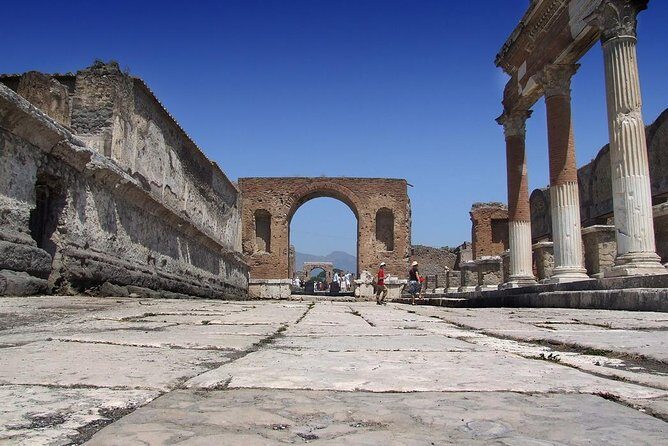
- Two sites, one guide setup: separate guides for each stop, so you’re not stuck with one perspective for everything.
- Skip-the-line entry: built to cut crowd delays at both archaeological parks.
- Pompeii time is short: about 2 hours, so go in knowing it’s a highlight route.
- Herculaneum is the pay-off: smaller streets and homes help you understand daily life quickly.
- Lunch is included only if selected: plan around a set-menu meal break between the ruins.
- Backpacks and heat management: locker use at Herculaneum and lots of exposed walking.
From Naples to two ancient cities: the real setup
This is built for people who want the big Roman tragedy without turning the day into a logistics puzzle. You start in Naples and head out by van, with pickup from selected city-center meeting points. The route matters: public transport can be slow and complicated on a tight schedule, and archaeological sites don’t forgive late arrivals.
The tour runs about 8 hours total. Your day is basically three blocks: Pompeii, Herculaneum, then a break for lunch (if you choose that option) and a winery visit and tasting before heading back to Naples.
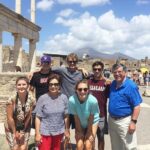
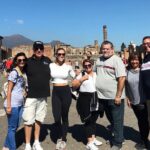
Group size is capped at 40 travelers. That’s large enough to keep the day efficient, but small enough that a good guide can still answer questions without the whole group turning into a moving wall of confusion.
Also, you’ll use a mobile ticket, which is handy in practice. It cuts down on what you need to carry and helps you get into the parks faster.
You can also read our reviews of more tours and experiences in Pompeii
The 8:00 am start: why early matters (and how to beat the heat)
The start time is 8:00 am, and you’ll return to Naples the same day. Early is not just a romantic idea. It’s how you improve your odds of cooler walking and shorter lines, especially at Pompeii where the scale can wear people down fast.
One practical note: even when you start early, expect crowds. The ruins are popular, and you’re still walking outdoors on uneven ground. In summer conditions, the day can feel like a workout class where the instructor never stops talking.
If you’re thinking, I’ll just wear comfortable shoes and I’ll be fine—good plan. Still, I’d treat it like heat touring: bring water, wear a hat, and use sunscreen. A couple of people highlighted how exposed both sites can feel, especially in midday sun.
Pompeii Archaeological Park: what 2 hours can realistically cover
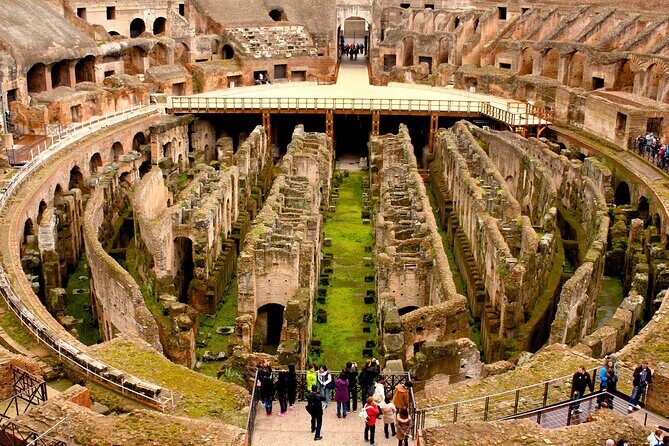
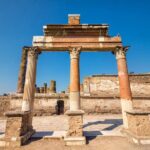
Pompeii is the kind of place that punishes the “I’ll see everything” mindset. The park is vast, and even with skip-the-line access, you can’t cover much in a half-day. That’s why having a guide route you through the most important sections is the whole point.
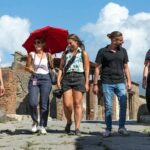
In this tour, you’ll have about 2 hours inside Pompeii, with your guide meeting you outside the archaeological area and leading the group from there. The best way to get value in that time is to think of it as a focused orientation: get a sense of the city’s layout, see the most telling parts, and learn what to look for as you walk.
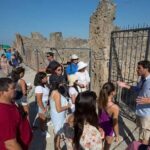
What I love about a guided Pompeii visit is how it changes what you notice. Instead of passing stone walls and doorways like they’re random, you start seeing patterns—how neighborhoods functioned, how street life connected to homes, and why certain spaces matter historically.
The “Heads up” from the logic of the day: you’ll likely cover only a fraction of Pompeii. One guide-led route can be excellent, but it isn’t the same thing as a full day on your own with slow wandering. If you want to stop for ten minutes in every corner, you may feel the clock.
Herculaneum (Parco Acheologico di Ercolano): the smaller site that lands harder
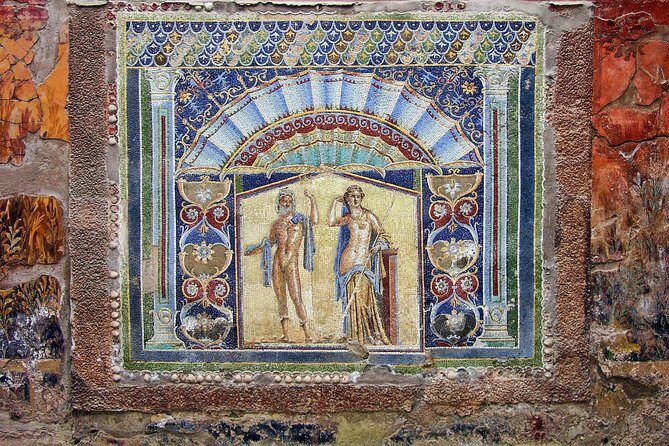
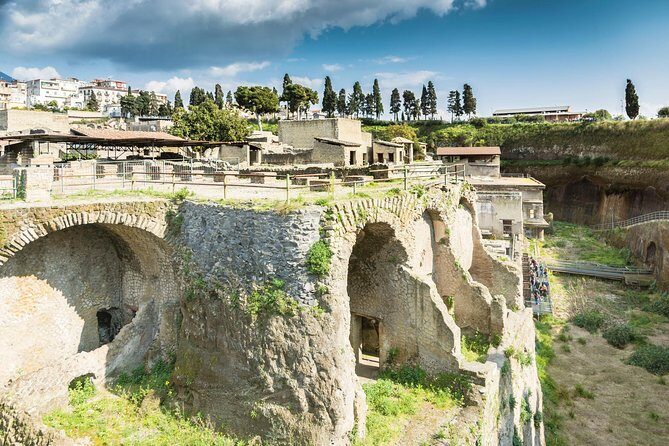
Then comes the shift in pace. Herculaneum is smaller, and that changes how the ruins feel. Your time here is around 1.5 hours (some schedules may stretch closer to 2 hours with the flow of the day), and you’re guided through an easier-to-hold-in-your-head layout.
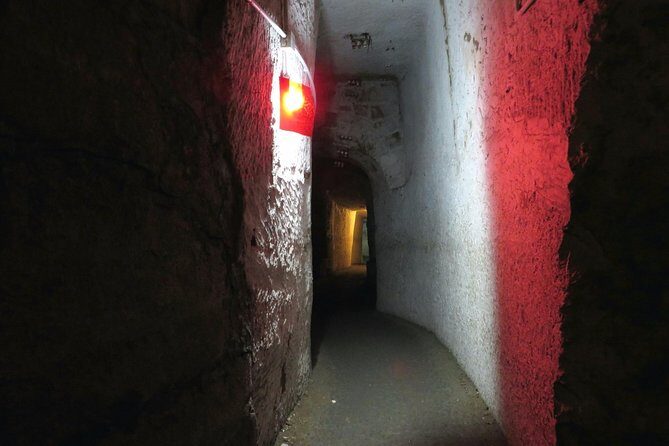
The guide meets you at the entrance, and you’ll walk through excavated streets and homes—alleyways, doorways, and living spaces that help you understand daily life. People often come away feeling that Herculaneum is the place where the scale makes sense. Pompeii can overwhelm; Herculaneum tends to connect.
There’s also an “aha” factor in the comparisons you naturally make between the two sites. Pompeii gives you breadth. Herculaneum gives you texture. When you see both in one trip, the differences click in a way that’s harder to grasp if you visit only one.
Practical tip that matters here: backpacks have to be placed in lockers at Herculaneum. If you’re traveling with a daypack, plan for that moment—arrive ready to store it quickly and don’t bring anything you absolutely need out in the open during the walk.
Lunch break between ruins: included if you select it
Between the two sites, lunch can be a sanity saver. The tour includes lunch if selected, and it’s served as a set menu at a local restaurant.
From what people described, you might see a pasta-forward meal (spaghetti or similar), plus items like bruschetta and dessert like tiramisu. One nice detail: the guides and staff were mindful about food allergies for at least one family in a group I read about, so it’s worth mentioning dietary needs when you book.
Real talk: this isn’t a food tour. It’s a break in the schedule, designed to keep you fueled for more walking. If you’re hoping for a long sit-down with a menu you agonize over, you may find the meal too straightforward. But if you’re focused on ruins, it’s usually just what you need.


Winery stop and tasting: part of the day, not a Vesuvius crater trip
After Herculaneum, the itinerary shifts to a winery visit and tasting before you head back to Naples. This is a nice change of rhythm—less stone, more local flavor, and time to cool down.
One caution from how the plan can land on the ground: there was mention that an item tied to a Vesuvius-base wine testing did not always happen as expected in at least one case. So I’d treat the winery tasting as the reliable part, and I wouldn’t count on any extra wine stop beyond what’s clearly part of the winery arrangement on your specific day.
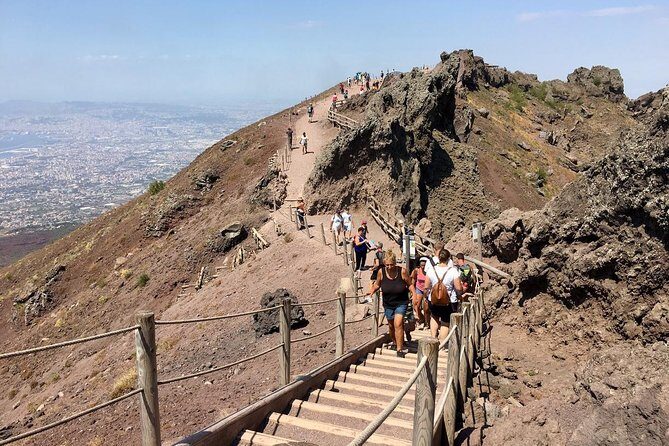
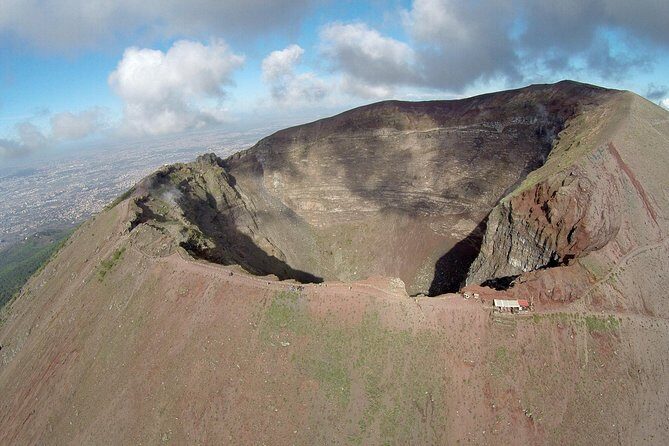
Also, important: the crater of Mt Vesuvius isn’t included in this tour. If you want Vesuvius views from up near the rim, you’ll need a different add-on or a separate tour. This one is about Pompeii and Herculaneum plus the winery.
Skip-the-line tickets: why they matter at Pompeii
Skip-the-line access is one of those features that sounds small until you’re standing in the heat watching people shuffle forward. With Pompeii and Herculaneum, ticket lines can spike, and you lose time that can’t be recovered.
Here, admission tickets are included for both sites, and you’re set up to get in smoothly. Add a guide to direct your movement, and it becomes less about “finding your way” and more about “understanding what you’re seeing.”
That’s how you get the best value out of the short visit windows. It’s not just the entry—it’s what you can do with the time you didn’t waste waiting.
What to pack: uneven stones, hot sun, and locker stops
This day is very walk-and-stand heavy, often on uneven surfaces. Even when the walking feels manageable, your feet will notice it later.
Pack like this:
- Walking shoes with grip
- Hat for sun
- Sunscreen
- Water
- A small day bag you’re fine storing in a locker at Herculaneum
A couple of people also noted that facilities at the sites are helpful for getting organized, but don’t count on convenience to solve everything. Do yourself a favor: keep what you bring simple so you can move quickly once you’re in.
And remember: the day starts early, but the sun doesn’t care. If your tolerance for heat is low, you might feel the schedule more strongly than you expect.
Guides and group size: when it works, it really works
What makes this tour shine is the guide work. People highlighted how well guides explained what you were looking at, and how they handled the scale problem in Pompeii by clearly stating you’ll only see a portion.
In the best cases, the guide leads you like you’re learning a map. That’s why guide names like Anna and Ravioni (Herculaneum), and Mary and Patricia (Pompeii/Herculaneum) come up as standouts. Even if you don’t get the same pair, the structure is designed so each stop has its own interpretive specialist.
Group size helps here. With a cap of 40, you’re not completely alone, but you also aren’t swallowed by a mass where every question gets ignored. If you like asking questions, this setup usually supports that.
Price and value: is $160.09 a fair deal?
At $160.09 per person, you’re paying for more than entry tickets. You’re covering:
- round-trip transport from Naples
- guides for both archaeological stops
- entrance fees for Pompeii and Herculaneum
- skip-the-line ticketing
- lunch if you selected the lunch option
- a winery visit and tasting
If you tried to piece this together yourself—transport, tickets, and a guide—you’d likely spend similar money, especially because Pompeii and Herculaneum are the kind of places where a guide pays off quickly. The real value is time saved and context gained. Two hours in Pompeii is only worthwhile if you’re guided through the right priorities.
So yes, I think it’s strong value for first-timers and for anyone with limited time in Naples. It’s less ideal if you want total freedom to wander slowly without a planned route.
Who this Pompeii and Herculaneum tour suits best
This day trip is a good match if you:
- want to see both sites without arranging separate tours
- like learning on your feet with a guide guiding your priorities
- prefer a small-group format over a huge bus crowd
- are okay with walking and a tight schedule
It may not be perfect if you’re:
- planning to spend hours in museums-style pacing
- very heat-sensitive
- set on a full Vesuvius crater experience (not included here)
It’s also a solid choice for families who want structure. One person mentioned their family stayed comfortable even in heat, thanks to the guide keeping everyone engaged and moving smartly.
Should you book this Pompeii & Herculaneum day trip?
I’d book it if your goal is smart coverage with guidance. This tour is built to solve the two biggest problems at Pompeii and Herculaneum: time and confusion. Skip-the-line access plus a guide-led route helps you get the most from your hours, and the Pompeii-to-Herculaneum comparison makes the story click fast.
If you’re the kind of traveler who wants to wander every street corner for a full day, you may find the pacing tight. But if you want a memorable, well-run day that hits the highlights and teaches you what you’re seeing, this is a strong pick.
FAQ
Is the tour duration about 8 hours?
Yes, the tour is listed as about 8 hours.
What time does the tour start?
The start time is 8:00 am.
Does the tour include round-trip pickup from Naples?
Yes. Pickup is offered from selected meeting points in Naples, and the tour ends back in Naples.
Are entrance fees to Pompeii and Herculaneum included?
Yes. Entrance fees for both sites are included, along with tickets for admission.
Is lunch included?
Lunch is included only if selected when booking.
Does the tour include Mt Vesuvius crater visits?
No. The crater of Mt Vesuvius is not included in the itinerary.
Is the group small?
It’s a small-group style tour with a maximum of 40 travelers.
Can I cancel for a full refund?
Yes, with free cancellation up to 24 hours in advance for a full refund.
Will I use a mobile ticket?
Yes. The tour includes mobile ticket entry.