Pompeii is big, but not confusing.
A good guided visit turns the ruins into a story you can follow: you get a fast skip-the-line approach at the park entrance, plus a guide who points out what to look for and explains how the city worked day to day. I especially like the practical pacing in just about 2 hours, and I love that the tour includes the plaster casts stop, the moment Pompeii stops being a textbook and starts feeling human.
The main thing to plan around is tickets. The guided portion is included, but the archaeological park ticket is separate and is nominative with a daily visitor cap, so you’ll need to have your ID or passport ready for everyone in your group.
In This Review
- Key things that make this Pompeii tour worth it
- Pompeii in two hours: what you’ll actually see
- Skip-the-line at Pompeii: why it matters more than you think
- Your itinerary stop-by-stop (and what to notice)
- Stop 1: Pompeii Archaeological Park (the highlights walk)
- The plaster casts stop: where the tour hits hardest
- Pompeii tickets: the nominative rule you must respect
- Pricing and value: what you’re paying for
- Group size and the feel of the walk
- Where this Pompeii tour fits best
- Practical tips so you enjoy it more
- Should you book this Pompeii tour?
- FAQ
- Is the archaeological park admission included?
- Do I need to buy a nominative ticket for entry?
- What happens if I buy tickets online but forget my ID?
- How long is the guided part of the tour?
- Is the tour private?
- Is the tour offered in English?
- Can I cancel and get a full refund?
Key things that make this Pompeii tour worth it
- Skip-the-line help so you lose less time fighting the entrance crush
- A guided route that keeps you oriented in a sprawling site
- Day-to-day context for Roman streets, homes, shops, baths, and public spaces
- A dedicated stop at the plaster casts to understand the tragedy beyond the visuals
- Highly praised guidance, including English explanations and a relaxed, engaging style when you’re walking
Pompeii in two hours: what you’ll actually see

Pompeii’s ruins cover a lot of ground, and even strong walking stamina can still leave you staring at stone walls wondering what you’re looking at. This tour’s real value is that it’s designed to help you see the important stuff in the right order, without zigzagging across the site.
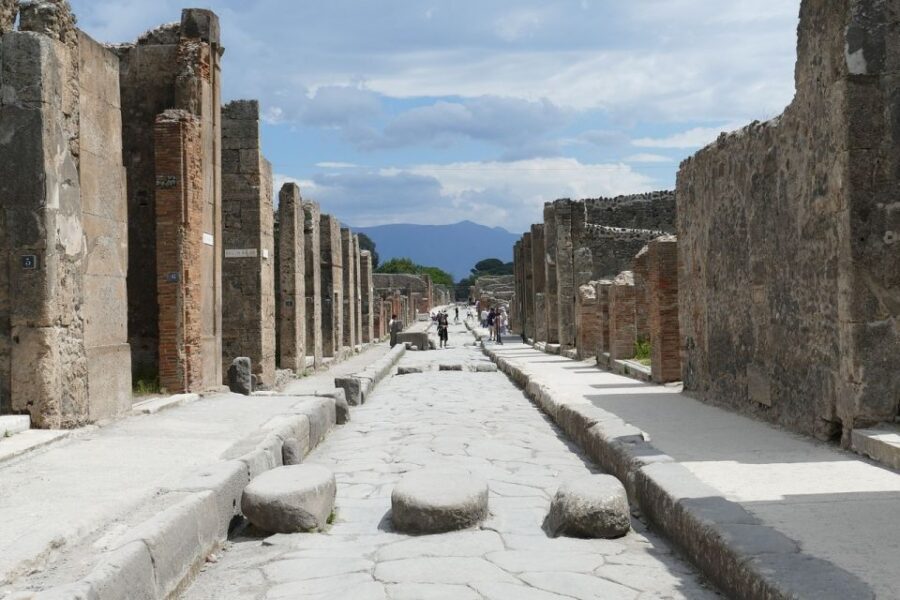
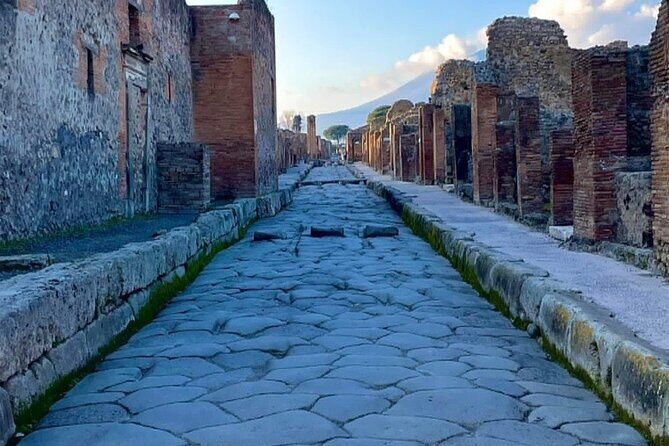
During your roughly two-hour walk, you’ll move through a curated set of highlights that cover daily life and major public spaces. You’ll see the bones of ancient Roman streets, including areas tied to neighborhood commerce like shops, and you’ll also get a sense of how people organized themselves in civic life through the main square and temple areas.
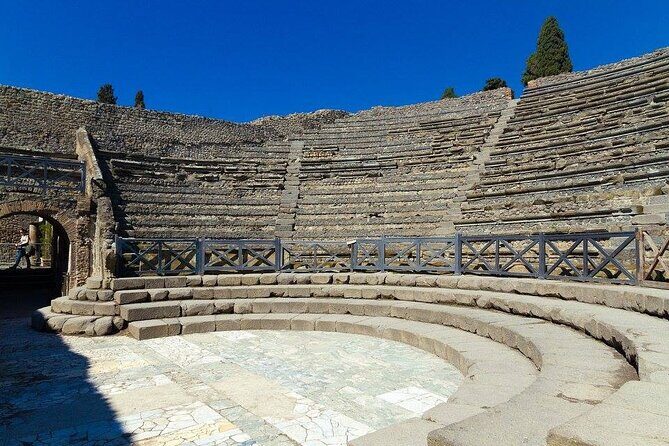
One of the smartest choices here is the mix of “what it looked like” and “how it functioned.” Instead of only pointing at ruins, the guide provides the kind of commentary that makes the city’s layout make sense. That matters at Pompeii because a single building is easier to interpret once you know what surrounded it.
You can also read our reviews of more guided tours in Pompeii


Skip-the-line at Pompeii: why it matters more than you think
The headline feature is skip-the-line ticket support. For Pompeii, that’s not just convenience—it changes your day.
If you arrive when entry lines are long, you can lose a big chunk of your visit before you even step into the park. With this tour, the goal is to get you into the ruins faster so the time you paid for goes toward walking and learning, not standing still.
That said, there’s an important reality check: the archaeological park admission is not included in the guided price you pay for the tour itself. So while you’ll benefit from the smoother entry process for your group, you still must handle the park ticket separately and correctly.
Your itinerary stop-by-stop (and what to notice)

This tour follows a simple format: you meet at the Pompeii area, then spend the two hours inside the Pompeii Archaeological Park seeing the highlights.
Stop 1: Pompeii Archaeological Park (the highlights walk)
Think of this part as a “street-level orientation” tour. You’re not trying to see every square meter—your guide is helping you pick out the places that shape the story of the city.
Here’s what the walk is set up to cover:
- ancient Roman streets and the feel of how people moved through neighborhoods
- shops and commercial spaces that show the economic rhythm of everyday life
- public baths, which are often the easiest way to grasp social life in a Roman city
- ancient houses, so you understand private space—not just temples and big public buildings
- the main square and temples, for the civic and religious context
- the brothel area, included as part of the city’s social reality
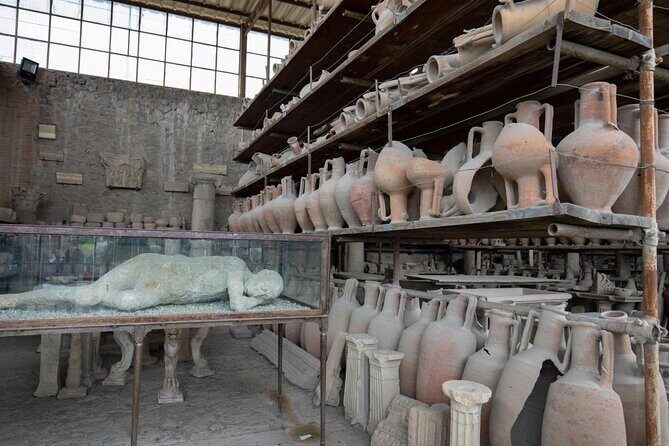
- the famous plaster casts of victims from the eruption
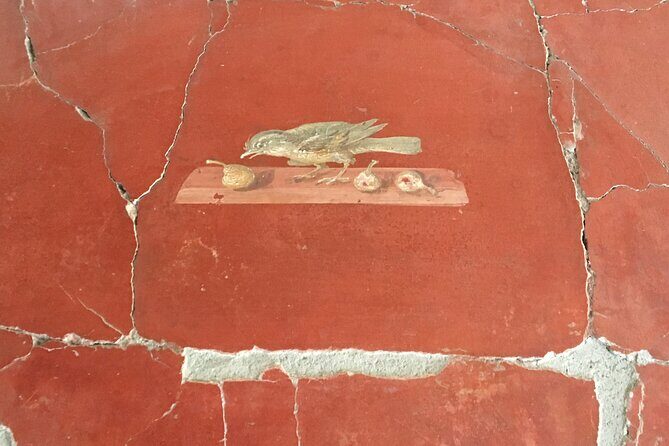
The commentary is the glue that connects these stops. Pompeii can look like scattered ruins until you’re guided through how the spaces related to one another. Once you hear the explanations in place, details that seem random—like doorways, street turns, and building layout—start telling you where people lived, worked, worshipped, and gathered.
The brothel stop is also worth your attention because it helps you understand Pompeii as a functioning community, not a museum display. You’ll get a clearer picture of what was normal there, and why the ancient city’s daily life is such a big part of what makes Pompeii so intense to see.
The plaster casts stop: where the tour hits hardest
Most people remember Pompeii for the shock of the ruins—but the plaster casts are the emotional center of the experience. This tour specifically includes a stop to take in those casts, so you don’t risk missing them while you’re chasing other sights.
What I like about including the casts in a guided route is the pacing. You have context as you walk, and when you arrive, you can look properly instead of rushing through the “famous” photo moment. It’s the part that turns the eruption from a historical event into something you can feel in your gut, and you’ll understand it more because your guide has already explained what the city was like before it was destroyed.




Pompeii tickets: the nominative rule you must respect
Since November 2024, the park ticket has been nominative, and there’s a daily cap of 20,000 admissions. This is not a small detail—this is the kind of rule that can make or break your entry day.
Here’s the practical takeaway:
- When you buy the archaeological park ticket online, you must fill in your personal fields.
- When you arrive, bring your ID or passport to show for entry.
- If your group has multiple people, plan to bring the ID/passport for each member of the party.
If you reach the entrance without the right setup, you may end up dealing with slower processes on the spot. This is why I think the skip-the-line help works best when you’ve already done your prep.
Also, the tour itself is scheduled around a specific window (about two hours), and Pompeii tickets are limited. The offering is often booked about 48 days ahead on average, which is a hint: don’t treat this like a last-minute activity.
Pricing and value: what you’re paying for
The tour price is $120.68 per person for a guided experience of about two hours in the ruins. The archaeological park admission ticket is not included, and the park ticket is listed as €19 per person.
So what are you really paying for?
- A guide who helps you navigate a huge site without getting lost
- Explanations that connect buildings, streets, and public spaces to daily life
- The plaster casts moment, included as part of a planned route
- Skip-the-line ticket help aimed at saving time at the entrance
When I look at Pompeii pricing, I care less about whether the guide is “worth it” in theory and more about what you’ll miss if you go without one. Pompeii is so large and so broken up that it’s easy to spend hours moving between scattered sights with no sense of the bigger picture. A good guide gets you to the right places and gives you meaning fast—so the money becomes practical, not abstract.
Group size and the feel of the walk
This is set up as a private tour/activity, meaning only your group participates. That’s a big difference from the big bus-style experience where you’re herded through highlights and everyone hears the same story from behind a sea of heads.
A smaller, private setting usually means:
- easier questions
- more flexible pacing
- less time lost to crowd flow
In one strongly remembered experience, timing issues like train delays didn’t derail the tour. The guide stayed patient and helped get everyone through the ticket pick-up part quickly, which is exactly the kind of calm support that matters when your start time is already at the mercy of transit.
Where this Pompeii tour fits best
You’ll likely love this if:
- you want Pompeii highlights without spending your day studying maps
- you care about context for daily life, not just “look at that wall” sightseeing
- you want an English guide who keeps you engaged through the walk
- you prefer a relaxed pace instead of rushing from stop to stop
If you already know Pompeii really well and want to roam freely on your own, you might decide you don’t need a guide for the whole experience. But most first-timers, and many repeat visitors who want the emotional and practical meaning, find a guided route pays off quickly.
Practical tips so you enjoy it more
Pompeii ruins are uneven in places, and you’ll be walking for a couple of hours. Wear shoes that handle stone and dirt without drama. If weather turns (rain happens), plan for slick surfaces and keep your pace steady.
A couple of small logistics tips can save time:
- If you need help getting through ticket pick-up, ask your guide for the smoothest entrance route. One helpful tip is that an entrance at the bottom of the road near the train station side is often quieter.
- Keep your ID/passport accessible, since the park ticket is nominative and entry checks can require it.
And one more mindset shift: treat the tour as a guided route that sets you up to look better after it ends. Even if you continue on your own, you’ll recognize more on the ground because the guide has already mapped the city for you.
Should you book this Pompeii tour?
Book it if you want Pompeii to feel organized, meaningful, and time-efficient. The biggest “yes” for me is the pairing of skip-the-line help with a planned highlights walk that doesn’t just show buildings—it explains how people lived and what made the destruction so final. The plaster casts stop is also a strong reason to choose a guided option, because it’s easy to under-appreciate without context.
Skip it only if you’re determined to explore completely on your own with zero structure, or if you already have a deep Pompeii game plan and you’re confident you won’t lose time in entrance lines. For most people, this is a smart middle ground: enough guidance to understand the city, without turning the experience into a race.
FAQ
Is the archaeological park admission included?
No. The guided tour is included, but the Pompeii Archaeological Park ticket is not included and is sold separately.
Do I need to buy a nominative ticket for entry?
Yes. Since November 2024, the park ticket is nominative and you should bring your ID or passport for entry.
What happens if I buy tickets online but forget my ID?
You may not be able to complete entry smoothly, since the ticket check can require you to show the ID or passport matching the nominative purchase.
How long is the guided part of the tour?
The guided tour is about two hours inside the ruins.
Is the tour private?
Yes. This is a private tour/activity, so only your group participates.
Is the tour offered in English?
Yes. The tour is offered in English.
Can I cancel and get a full refund?
Yes. Free cancellation is available if you cancel at least 24 hours before the experience starts, for a full refund.