REVIEW · POMPEII
Pompeii 3 Hours Walking Tour Led by an Archaeologist
Book on Viator →Operated by Askos Tours · Bookable on Viator
Pompeii is huge. This 3-hour private walk keeps it human. You get an archaeologist-led route through the city’s big public sights and standout houses, with admission handled on the key ticketed stops. I especially like the tight, private pacing (no wandering in confusion), and the way the guide explains what you’re looking at—building, art, and even the effects of Vesuvius on painted surfaces.
One thing to plan for: Pompeii is exposed. Minimal shade and summer heat can turn a pleasant stroll into a sweaty march, so bring real sun protection and expect to move at a steady pace.
In This Review
- Key things I’d circle before you go
- Why an archaeologist-led Pompeii walk makes sense
- Meeting at Via Villa dei Misteri (and keeping your day smooth)
- Porta Marina to the Forum: start where the city breathes
- The granaries near the Forum: food, fountains, and casts that stop you cold
- House of Menander and House of the Faun: wealth you can read in stone
- Stabian Baths (Terme Stabiane): the oldest thermal complex feel
- Lupanar: a blunt window into commercial sex work
- Teatro Piccolo and Teatro Grande: Pompeii’s entertainment life
- What the “private for 3 hours” format actually gives you
- What to bring (because Pompeii won’t do you favors)
- Who this Pompeii tour is best for
- Should you book this Pompeii archaeologist walking tour?
- FAQ
- How long is the Pompeii walking tour?
- Is this tour private?
- What language is the tour offered in?
- Where do we meet, and where does the tour end?
- What’s included in the price?
- Do we need to buy tickets for the stops?
- What should I bring for Pompeii?
- Is the tour canceled if it rains?
- Can children join?
Key things I’d circle before you go
- Private by default: only your group participates, so you can ask questions without a crowd bottleneck
- Archaeologist-led explanations: you’re not just sightseeing; you’re learning how the site works
- Forum + baths + houses in 3 hours: a smart hit list without feeling rushed all the way through
- Real Pompeii details: from the Basilica’s portico business life to the thermal complex at Terme Stabiane
- Photo-worthy stops that matter: House of Menander, House of the Faun, and two theaters
- Sun and rain planning: the tour runs rain or shine, and Pompeii gives you little cover
Why an archaeologist-led Pompeii walk makes sense
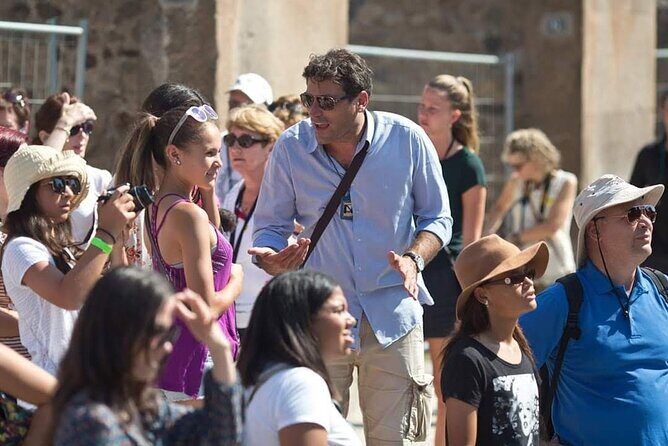
Pompeii can overwhelm you fast. You arrive, you see columns and mosaics, and then you’re stuck guessing what mattered and why. This kind of archaeologist-led walking tour fixes that. The guide helps you read the city like a document, not a museum maze.
I also like that the tour leans practical. You’re not spending half the time “catching up” at each monument. You move from the main city areas into the residential and leisure zones—thermal baths, a famous brothel, and two theaters—so you leave with a coherent picture of daily Roman life before the eruption of Vesuvius.
And yes, Pompeii has plenty of drama built in. But the best part is the calm, technical way your guide frames it. In guides you might encounter—such as Daniela Mantice (art historian), or Monica (PhD in archaeology)—you’ll often hear clear explanations of how eruption conditions affected things like painted surfaces.
You can also read our reviews of more walking tours in Pompeii

Meeting at Via Villa dei Misteri (and keeping your day smooth)
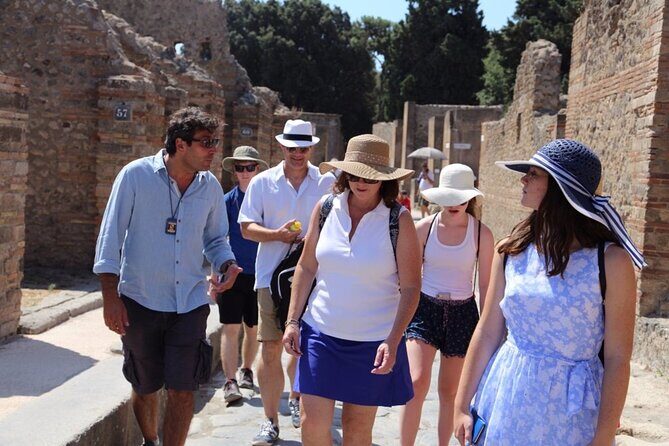
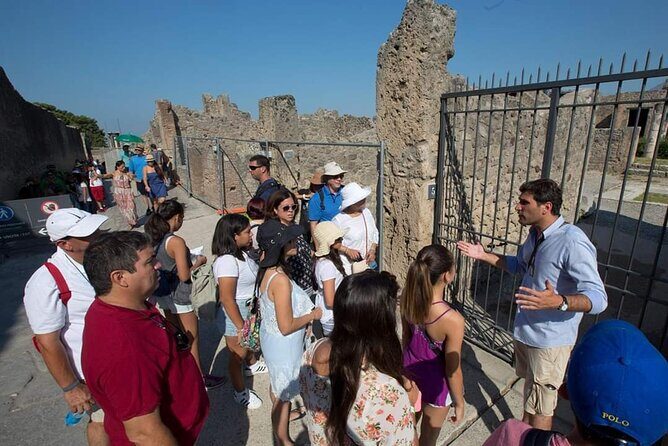
The meeting point is Via Villa dei Misteri, 1, 80045 Pompei NA. You’ll find the guide at the main entrance of the archaeological site called Porta Marina Superiore holding a sign for Askos Tours.
This matters more than it sounds. Pompeii’s entrances and access points can confuse you, especially if you’ve been dropped by public transport or you’re arriving with a queue in your mind. The guide is there to help you start in the right place, so you can get moving fast.
A small but useful bonus: there’s a free luggage store at the meeting area. If you’ve got day bags, keep the walk light. You’ll enjoy the route more when your hands aren’t full.
Porta Marina to the Forum: start where the city breathes
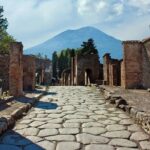
Once you meet at Porta Marina Superiore, your walk lands you in the public spine of Pompeii. This is the area that makes the city feel like a place, not a scatter of famous ruins.
The first stop is the Pompeii Archaeological Park area itself. Expect a short orientation and then you’re off. The duration for this segment is about 10 minutes, and the admission ticket is included for this part.
From there, you hit the Basilica. Think of it as a public porticoed building where merchants and other activity spilled into daily life. The guide frames it as more than architecture: it’s a lesson in how Romans mixed business, movement, and shelter. You’ll have about 20 minutes here.
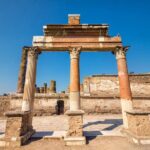
Then you move to the Foro de Pompeya, the ancient main square. In a real-world city, a “main square” is where people check the day, trade news, and meet. Here, you’ll see the Forum as the center of civic identity. You get about 20 minutes—enough to understand it without turning the stop into a lecture marathon.
The granaries near the Forum: food, fountains, and casts that stop you cold
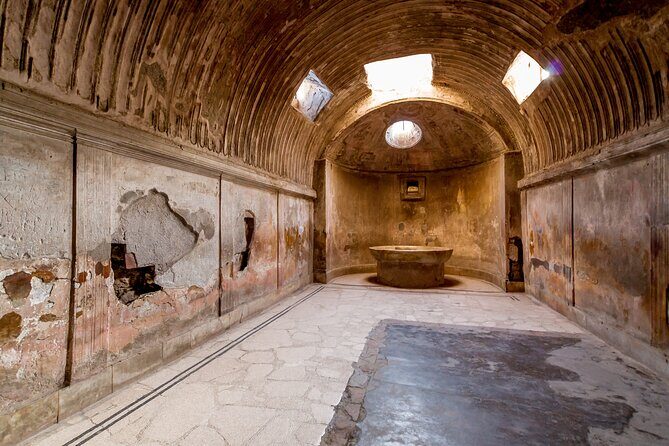
Next comes one of my favorite stops on the route: the Granaries of the Forum. You’ll spend about 20 minutes here, and this is one of the segments where the admission ticket is included.
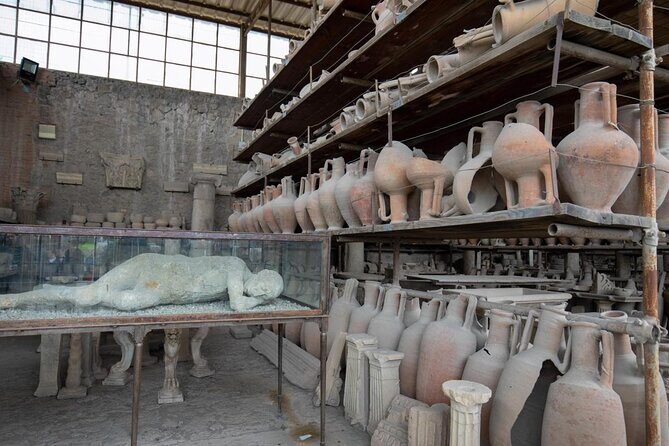
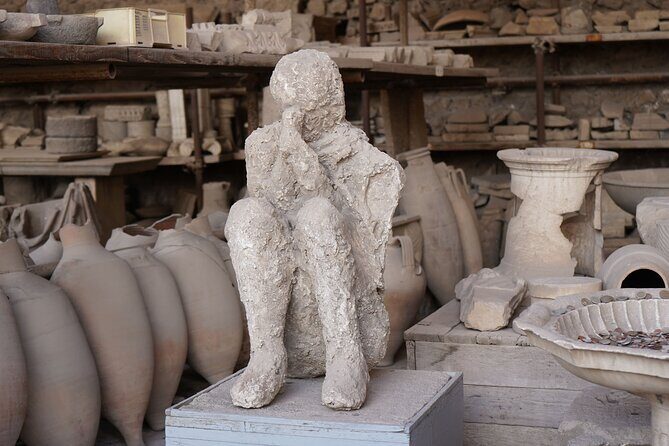
What makes this stop special is the mix of everyday function and haunting evidence. You’ll see marble tables and baths for fountain entrances—details that tell you this wasn’t just storage; it was an organized, decorative part of the city experience. The space also shows casts of victims from the eruption, including a dog and even a tree. That last part is the kind of specific detail that your brain remembers because it’s so strange and so human.
This is where an archaeologist guide earns their fee. You’re not just told what happened; you’re shown how the site preserves the story. The result is that you walk out with a more accurate mental picture of the moment and the aftermath—not only the tragedy, but the mechanics of how the city was built and used.
House of Menander and House of the Faun: wealth you can read in stone
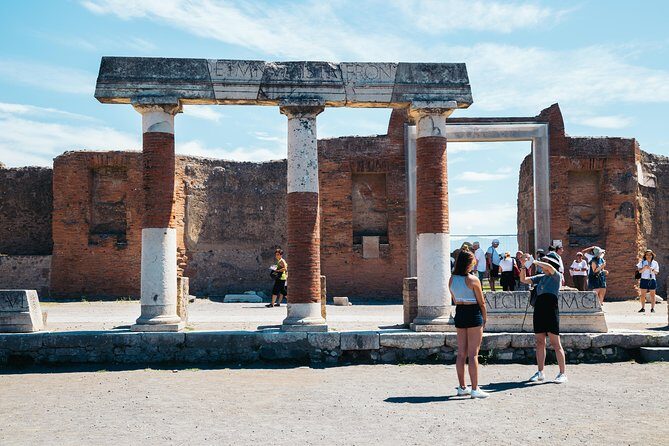
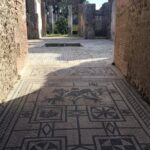
After the Forum zone, the route starts shifting toward private life. You’ll get a look at the House of Menander, often described as one of the richest and most magnificent houses in Pompeii for architecture, decoration, and what’s preserved inside.
You’ll have about 20 minutes at this stop, and while admission isn’t listed as required here, the time is enough to focus on what makes it important: the way decoration and space work together. The guide can also connect these choices to status and taste. If your guide has a background in art and material culture—Daniela Mantice is one name you might see in the guide roster—you’ll likely get extra clarity on why the visuals matter.
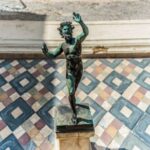
Then you’ll move on to the House of the Faun for about 20 minutes. This is one of Pompeii’s largest private residences. The tour treats it as more than a big house; you’ll see it as a map of power, comfort, and everyday private space.
If you’re wondering what to look for in these homes, I’d focus on the transitions: entry spaces, how rooms open up, and how decoration signals wealth. With a guide in front of you, you won’t miss those cues.
You can also read our reviews of more tours and experiences in Pompeii



Stabian Baths (Terme Stabiane): the oldest thermal complex feel
Next up: Stabian Baths (Terme Stabiane). You’ll have about 25 minutes here, and this is free on the route.
These baths take you into Roman leisure and cleanliness—part social space, part health routine, part gossip engine. They’re also the oldest thermal complex in the city, which gives the stop extra weight. It’s one thing to know baths existed; it’s another to see the scale and layout and understand how the city organized daily routines around heat and water.
A good guide will help you connect the dots between rooms and function: where people changed, where they warmed up, and how the whole experience worked as a system. The advantage of a guided visit is that you don’t have to guess.
Lupanar: a blunt window into commercial sex work
Then comes the Lupanar, the most famous brothel in Pompeii. You’ll spend about 20 minutes, and this is another free stop on the itinerary.
This is not a comfortable topic, but it’s part of what makes Pompeii feel real. The Lupanar wasn’t a hidden corner of the city. It was integrated into the urban fabric, and it tells you how Romans also ran business in visible, hard-edged ways.
If you’re the type who wants moral judgment, Pompeii will feel uncomfortable. If you want context, this stop delivers. I like it because the guide helps you look past sensational headlines and focus on what the building and layout communicate about the system.
Teatro Piccolo and Teatro Grande: Pompeii’s entertainment life
Your last major sequence circles back into public culture: theater.
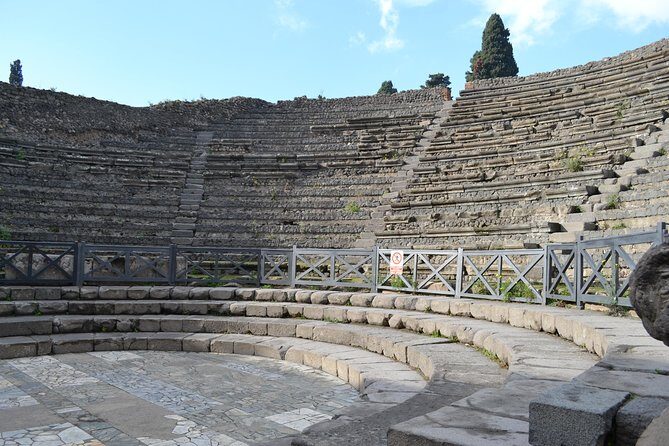
You’ll get a quick look at the Odeon – Teatro Piccolo (about 5 minutes). It’s short, but it sets the stage for the bigger stop.
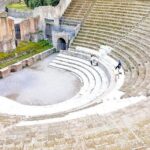
Then you move to Teatro Grande, Pompeii’s most important theater, with about 20 minutes here. The guide’s explanations matter a lot at theaters, because you’ll otherwise just see seats and stone walls. With a guide, you start understanding sight lines, performance space, and why theaters mattered socially.
If you like architecture that shows how people gathered to watch and talk, this part of the route is a satisfying finish. It brings you back to city life rather than private houses.
What the “private for 3 hours” format actually gives you
This tour is designed around time and flow. About 3 hours means you get a lot of Pompeii’s major zones without burning the whole day. And since it’s private, you can adjust pace. If your group wants one extra minute to study a mosaic or signage, you don’t have to fight a group schedule.
The route also mixes ticketed and free entries. The Pompeii Archaeological Park admission is included at the start, and the Granaries of the Forum also include admission. The other stops listed are free during the tour. That’s a practical way to control costs while still covering the sites that most people want to see.
Is $256.99 per person expensive? For a single traveler, it can feel like it. But for a small private group, you’re paying for a professional archaeologist guide and the time-saving value of a curated route. You’re also paying for expertise that helps you interpret what you see. In Pompeii, that interpretation is the difference between random ruins and a city you can actually picture.
What to bring (because Pompeii won’t do you favors)
Pompeii is vast and exposed. The tour notes minimal shade, so take that seriously. Bring:
- sunscreen and a hat
- comfortable shoes for uneven stone
- water you can carry
This is a rain-or-shine tour. If you think you’ll “wait out” weather, don’t plan on it. Wear layers you can handle in cooler drizzle, but don’t count on weather to cancel the route.
One more practical point: you’ll end up at the ruins, and the guide can help you figure out how to get back to your accommodation or the closest train station. That’s useful because Pompeii logistics can be fiddly after you’ve walked the main circuit.
Who this Pompeii tour is best for
I’d book this if you want Pompeii in a guided, structured way without committing to a full-day marathon. It’s especially good for:
- first-time Pompeii visitors who want the “major spots” with context
- art and architecture lovers (the house stops are a big deal)
- people who prefer asking questions over reading wall labels for hours
- anyone who wants an archaeologist-led explanation rather than a casual overview
If you’re traveling solo and strict budgets are your top priority, you may want to compare with group options. But if you value being guided through the meaning of the ruins, this format is a strong fit.
Should you book this Pompeii archaeologist walking tour?
Yes, if you want a route that makes sense and a guide who can explain the site in plain language. The big selling points are the private pacing, the archaeologist-led interpretation, and a smart mix of public spaces (Forum, Basilica), daily life (baths), and standout buildings (houses and theaters).
I’d hold off only if heat and sun are a deal-breaker for your group. Pompeii’s exposure is real, and the tour runs rain or shine. If your group struggles with walking in direct sun for a sustained period, consider a different time of day or a different format.
If your goal is to leave Pompeii feeling like you understood it—not just photographed it—this is the kind of tour that turns stone into story.
FAQ
How long is the Pompeii walking tour?
It runs for about 3 hours.
Is this tour private?
Yes. It’s a private tour/activity, and only your group participates.
What language is the tour offered in?
The tour is offered in English.
Where do we meet, and where does the tour end?
You meet at Via Villa dei Misteri, 1, 80045 Pompei NA, Italy. The tour ends at the same address area, with the guide helping you get back after you finish at the ruins.
What’s included in the price?
A professional archaeologist guide and the admission ticket fees are included.
Do we need to buy tickets for the stops?
The included admission ticket notes apply to specific stops, such as the park entry at the start and the granaries stop. Other listed stops are marked as free.
What should I bring for Pompeii?
Plan for sun and minimal shade. Bring sunscreen and wear a hat, plus comfortable shoes for walking.
Is the tour canceled if it rains?
No. The tour takes place rain or shine.
Can children join?
Children must be accompanied by an adult.