REVIEW · POMPEII
Pompeii Private Tour with an Archaeologist and Skip The Line
Book on Viator →Operated by ELIANA SANDRETTI · Bookable on Viator
Pompeii hits different with a guide in charge. This private, archaeologist-led tour is built for maximum payoff in about two hours, with a skip-the-line approach that keeps you moving instead of waiting. I especially love the way your guide ties daily life to what you’re standing next to—baths, shops, the Forum, even the Lupanar—so Pompeii feels like a place where people actually lived. I also like the tight route that concentrates the best stops (including casts of the victims) without turning the whole visit into a marathon. The one drawback to flag: the Pompeii entrance ticket is not included, and without it, skip-the-line gets messy fast.
The price is for your whole private group (up to 10 people), not per person, which can make this feel like good value if you’re traveling as a family or a small group. Still, plan for the separate site entry ticket: it costs 19 euros per person (free for under 18 with ID or passport). If you dislike logistics, just buy tickets ahead using the link your guide provides the day before.
This works well in good weather, and in storms the operator says you can switch dates or get a full refund. The tour is in English, starts at Piazza Esedra, 10, and ends back at the same meeting point—so you’re not stuck navigating on your own after the tour.
In This Review
- Key things that make this Pompeii tour worth it
- Skip-the-Line Reality Check: Buy the Pompeii Entry Ticket First
- Where to Meet in Pompeii (and Why the Starting Point Matters)
- A 2-Hour Plan That Doesn’t Waste Your Time
- The Archaeological Park First: The Big Picture in the Right Order
- Odeion Acoustics: Hearing How Romans Controlled Sound
- Teatro Grande: Pompeii’s Biggest Stage
- Forum Energy: Granaries, Markets, Jupiter, and the Basilica
- Stabian Baths: Roman Spa Culture in Stone and Ash
- Gladiator Barracks and the Training World
- Lupanar Area: A Sensitive Stop Done Practical
- Casa del Fauno: Elite Living at House Scale
- So, Is the Private Archaeologist Tour Worth the Money?
- Who Should Book This Pompeii Tour (and Who Might Skip It)
- My Take: Should You Book This Pompeii Archaeologist Tour?
- FAQ
- Is the Pompeii entrance ticket included in the tour price?
- How long is the Pompeii private archaeologist tour?
- Is this tour private or shared?
- What language is the tour offered in?
- Where do we meet for the tour?
- What happens if the weather is bad?
Key things that make this Pompeii tour worth it
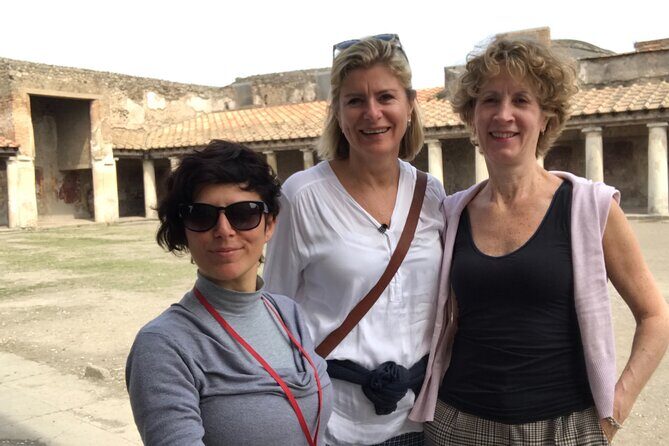
- Archaeologist-led explanations right on-site, not a script you hear from the sidewalk
- A fast, high-yield route through the theaters, Forum, baths, brothel area, and major houses
- Skip-the-line support with a ticket link you’re sent ahead of time
- Casts of victims are built into the itinerary, so the tragedy is addressed with context
- Private pacing that can be tailored (families and mixed ages are mentioned a lot)
Skip-the-Line Reality Check: Buy the Pompeii Entry Ticket First
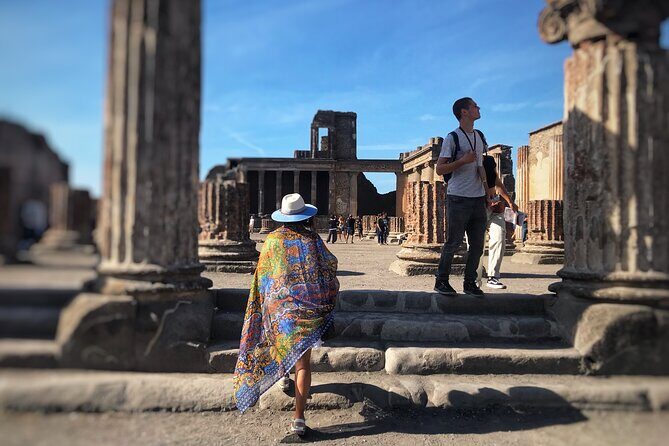
Here’s the big “read this twice” point: the tour price does not include the Pompeii entrance ticket. The cost is 19 euros per person, and under 18 is free with ID/passport. Your guide can help you plan and send you a link the day before to buy tickets online so you can reduce or avoid lines for ticket offices.
That matters because skip-the-line usually only works if you have the correct entry ticket in hand. One review-style issue that comes up in feedback is confusion from wording like skip-the-line when the entrance ticket is actually separate. So my advice is simple: don’t show up hoping the guide will handle everything at the gate. Buy the ticket ahead, then let your guide handle the flow.
Also, even with smart planning, Pompeii is still Pompeii—crowds can build around the most popular ruins. The tour’s advantage is that your guide guides you to the right places in the right order, aiming to keep you away from the worst congestion.
You can also read our reviews of more private tours in Pompeii


Where to Meet in Pompeii (and Why the Starting Point Matters)
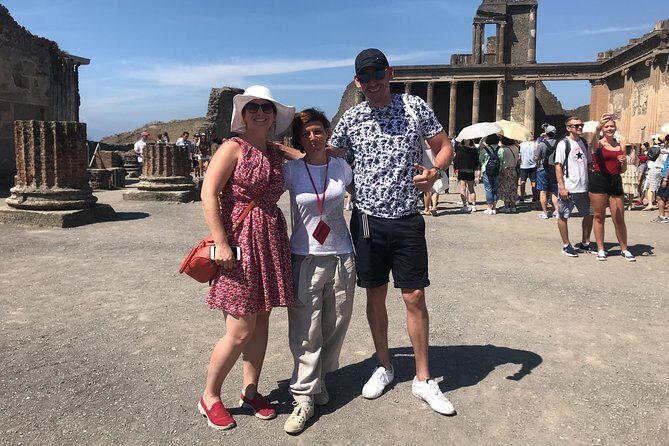
You’ll meet at Piazza Esedra, 10, 80045 Pompei NA, Italy, and the tour ends back there. That “return to the same spot” detail is underrated: after two hours, you can decide whether to keep exploring nearby, grab a snack, or head toward your next stop without a long walk back.
The meeting location also helps you organize the rest of the day. If you’re pairing Pompeii with other parts of the Naples area, you’ll want to minimize transit friction at the end. This tour’s structure gives you that clean reset.
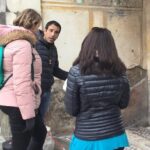
You should also expect a tour format where your guide’s job is more than pointing out ruins. The best guides use the first few minutes to orient you—how Pompeii is laid out, where you’ll go next, and what to look for so you don’t get lost in the open-air “maze” feeling.
A 2-Hour Plan That Doesn’t Waste Your Time
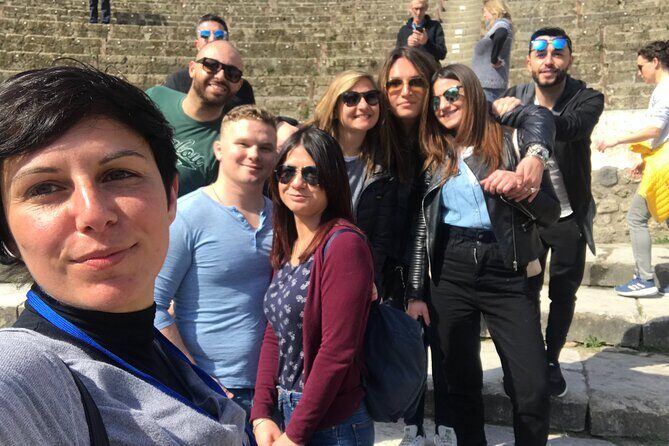
Pompeii is huge. Even if you’re fit and curious, trying to do it all by yourself usually turns into “I’ll just wander until I can’t.” This tour is designed to avoid that trap by hitting standout zones in a logical loop.
In about two hours, you’ll move through major anchors of the Pompeii story: entertainment (the theaters), civic life (Forum and basilica), everyday commerce (shops and street life), bathing culture (Stabian Baths), fear and aftermath (casts of victims), and social extremes (the Lupanar/Brothel area). You’ll also get a look at elite domestic life through one of the city’s famous houses.
The tour feels most valuable when you want a concentrated experience. If you have only a half-day, this is the kind of plan that helps you leave with real understanding instead of just photos.
The Archaeological Park First: The Big Picture in the Right Order
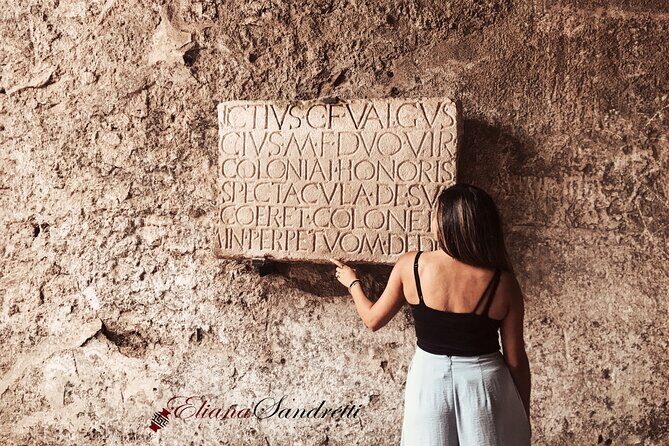
Your tour starts inside the Pompeii Archaeological Park, where the guide brings you to multiple key areas. This is the “connect the dots” phase: you get orientation, then you get the major stops that explain how the city worked.
You’ll see areas tied to entertainment and religion, including the Theaters and Temples, and you’ll also walk through zones connected to daily life such as shops and street food spots. You’ll pass through the Forum, the main square, and the Area of the Gladiators, where training and living spaces belonged to a different kind of fame.
Two stops here deserve special attention because they change how you see Pompeii:
- The casts (bodies of people): this isn’t just a dramatic photo stop. In a good guide moment, you understand what happened and why this evidence is so powerful.
- The Lupanar Area: this red-light district area is part of the city’s social reality. A good guide explains it without turning it into a gimmick.
One note: the tour information says admission for the park itself isn’t included, while later stops list admission as included. Practically, what you should plan for is buying the site ticket first so you can access everything smoothly. Once you’re in, your guide handles the route and pacing.
Odeion Acoustics: Hearing How Romans Controlled Sound
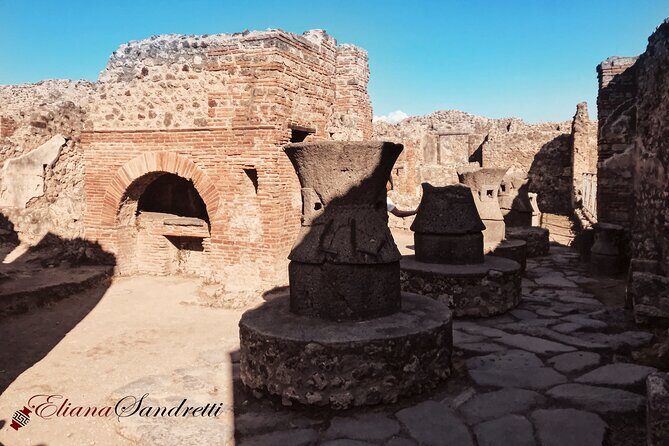
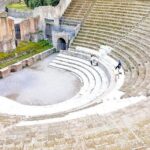
After the main park introduction, you’ll visit the Small Theater (Odeion). This is where the experience gets more than “look at ruins.” You’ll hear how Roman builders recreated perfect acoustics.
If you’ve ever watched a movie scene and wondered why ancient stages worked so well, this is the answer in physical form. Pompeii’s stone shapes still show the logic behind sound control. It also gives you a break from pure walking, because your focus becomes listening and imagining a performance in a space that’s still shaped like a theater.
If you’re bringing kids or people who get tired of “just more ruins,” this is a smart moment to perk attention back up. It’s also a good reminder that architecture wasn’t only for looks—it was for function.
You can also read our reviews of more tours and experiences in Pompeii


Teatro Grande: Pompeii’s Biggest Stage
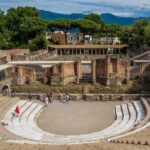
Next you’ll visit Teatro Grande, the Great Theater of Pompeii. This is described as the most important theater in the archaeological site, and it’s easy to see why once you’re standing in the space. The scale helps you picture public life: entertainment was a civic event, not just a private pastime.
Even if you’ve seen theater ruins elsewhere, Pompeii’s setting makes it feel closer. You’re surrounded by the city’s bones, not isolated monuments. With the guide’s explanation, you can connect the theater to the Forum and the street network around it.
Time here is short (about 15 minutes), so the value is in your guide pointing out what you might miss on your own—like how the design supports viewing and crowd flow. If you want photos, do them early, then let the guide’s talk do its job.
Forum Energy: Granaries, Markets, Jupiter, and the Basilica
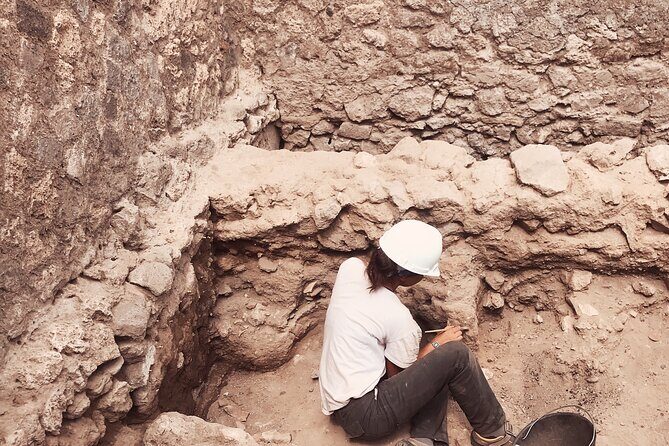
You’ll cross via dell’Abbondanza, Pompeii’s main street, which is the kind of detail that makes the walk feel purposeful. This street helps you transition from entertainment to civic life: you’re moving from the public spectacle zone into the administrative and commercial heart.
Then you’ll hit Granai del Foro—the Granaries of the Forum. The key points here are the casts again and the archaeological deposit, described as including amphorae and work tools. The deposit matters because it’s a way Pompeii preserves not just buildings, but evidence of routines and storage—what people used and how they prepared.
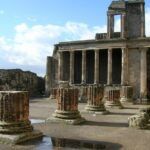
After that comes Stabian Baths (more on those soon), and then Foro di Pompei and Pompei La Basilica. The Forum is Pompeii’s main square with markets and temples, and the basilica is where justice was administered. That’s a powerful combo: you see where people bought things and also where civic decisions were made.
You’ll also visit the Temple of Jupiter present in the main square. And near the end of the tour you’ll include the Temple of Venus, linked to worship of a key city divinity. These religious stops help explain why Pompeii’s streets and plazas feel like more than backdrops. They were part of public identity.
Stabian Baths: Roman Spa Culture in Stone and Ash
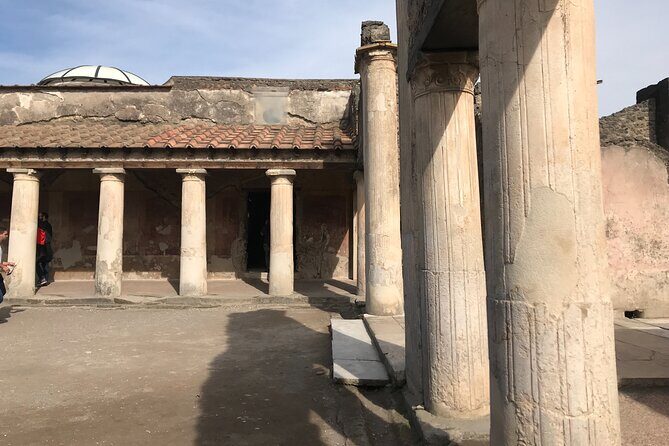
The tour includes Stabian Baths (Terme Stabiane), described as the best spa of the Roman Empire in Pompeii. Even if you don’t remember every Roman term, the bigger idea is that bathing was social and structured, not just hygiene.
Think of what the baths meant:
- people met
- gossip happened
- routines played out in a shared space
Your guide’s job is to help you visualize that flow so the ruins don’t stay cold and silent.
This stop is listed for about 15 minutes. That short window works because the guide usually picks out the areas that show the layout and the purpose behind them. If you’re traveling in warmer months, baths can also be a welcome shift from the sun-exposed streets—though Pompeii itself can still bake.
Gladiator Barracks and the Training World
In the Quadriporticus of the theatres area, you’ll visit the Gladiator Barracks. The itinerary description notes apartments and where gladiators trained. This is important because it shifts the gladiator story from “fighting” to “living and preparing.”
What I like about including this section is that it gives a more rounded picture. Gladiators weren’t only athletes or entertainers; they were residents in a working system, with spaces for daily life and training rhythms.
If you like seeing the “human” parts of ancient history, this stop tends to land well. Even within short time blocks, it usually turns the tour from a list of sights into an explanation of roles inside the city.
Lupanar Area: A Sensitive Stop Done Practical
The itinerary includes Vicolo del Lupanare—the ancient red district light area (brothel)—and it also notes a Temple of Venus near the same overall loop. The Lupanar stop lasts about 15 minutes.
This is a sensitive zone. The best version of this tour is when your guide keeps it factual and contextual instead of sensational. In Pompeii, the value is that the site preserves how commerce and sexuality were integrated into city life. You also get a clearer sense of social divisions—who had power, who served whom, and how public norms were enforced.
If you’re uncomfortable with this kind of content, it’s okay. You can still learn a lot from the surrounding architecture and street positioning without treating it like a theme park stop.
Casa del Fauno: Elite Living at House Scale
You’ll end (or near the end, depending on timing) with Casa del Fauno, described as one of Pompeii’s richest and most luxurious residences. This is the counterweight to the Forum and the baths.
This stop helps you understand inequality. Pompeii wasn’t one uniform “everyone lived the same way” city. The house scale, design, and level of decoration (as your guide points out) show how the wealthy lived when most others worked in markets, workshops, or trades.
Even if you’re not an architecture person, a great guide can explain what you’re looking at in plain terms. And if you’re traveling with people who like aesthetics, this is often the moment where photos actually feel like more than souvenirs.
So, Is the Private Archaeologist Tour Worth the Money?
Let’s talk value in real terms. The tour is $375.05 per group up to 10 people, which sounds steep until you compare it to a per-person model. Because it’s a private tour, that price can spread out nicely for families and small groups.
Then add the separate entry ticket cost: 19 euros per person. That pushes the total up, but you’re still buying time savings, a tight route, and on-site interpretation from an archaeologist.
The biggest “value lever” here is not just access. It’s what a strong guide can do with limited time:
- keep you from wandering into the wrong corners
- pick the highest-impact stops first
- answer questions in context
In the feedback this operator is associated with, guides like Luisa and Eliana are repeatedly described as efficient, animated, and good at turning Pompeii into real life. Other named guides in the same orbit—Antonio, Danilo, Viktoria, Mattia, Roberto, Francesco, Marina, Raffaele—show up linked to the idea of tailoring the route to what your group needs, including kids and mixed-age families.
Here’s my practical bottom line: if you want Pompeii in two hours without losing the story, this is one of the better ways to do it. If you’d rather stroll slowly, you may feel rushed. But if you want a smart hit of Pompeii and then freedom after, the structure makes sense.
Who Should Book This Pompeii Tour (and Who Might Skip It)
Book it if:
- you have about half a day and want the main anchors
- you’d like help understanding what you’re looking at
- you’re traveling with kids, teens, or a multi-age group and want pacing handled for you
The guides listed in the feedback also show up for kid-friendly explanations and for being flexible when people need shade or slower walking.
Consider skipping or adjusting if:
- you hate buying tickets in advance (you really should for this)
- you want a slow, unstructured “wander and interpret” day
Pompeii will still be there tomorrow, but this tour is built around a set route and time limits.
Also, it’s in English by default. If your group needs a different language, you’ll need to request it.
My Take: Should You Book This Pompeii Archaeologist Tour?
Yes—if you go in prepared. Buy the 19-euro entrance ticket ahead using the link you’re sent, arrive at Piazza Esedra on time, and wear shoes that forgive you.
The reason I’d recommend it is the balance: you get an archaeologist-led tour with a coherent sequence of stops (theaters, Forum, basilica, baths, casts, Lupanar area, and a major house), without the “lost in the ruins” feeling. The private format (up to 10) also makes it easier to ask questions and keep the experience aligned with your group’s interests.
If tickets aren’t ready and skip-the-line expectations are fuzzy, it can turn into a frustrating start. Fix that ahead of time, and you’ll likely come away with Pompeii understood—not just photographed.
FAQ
Is the Pompeii entrance ticket included in the tour price?
No. The Pompeii entrance ticket costs 19 euros per person and is free for under 18 with ID or passport. The tour also sends you a link so you can buy tickets online in advance.
How long is the Pompeii private archaeologist tour?
It’s about 2 hours.
Is this tour private or shared?
It’s private. Only your group participates, and the group size is up to 10.
What language is the tour offered in?
The tour is offered in English. Other languages are available only on request.
Where do we meet for the tour?
The meeting point is Piazza Esedra, 10, 80045 Pompei NA, Italy. The tour ends back at the same meeting point.
What happens if the weather is bad?
This experience requires good weather. If it’s canceled due to poor weather, you can choose a different date or receive a full refund.