REVIEW · POMPEII
Ancient Pompeii Private Tour: Skip the Line & Kid-Friendly Option
Book on Viator →Operated by Leisure Italy · Bookable on Viator
Pompeii is huge, but this tour feels focused. You get skip-the-line access plus a private guide who helps you hit the most important stops without getting lost in the ruins maze.
I especially like how the guide can steer the route if you care most about daily life, politics, or the horror of the casts.
You’ll also like the Pompeii4kids kit option if you’re traveling with youngsters. The family version adds a kid-friendly map, stickers, and games, so children don’t just shuffle along—they participate. That same private format means the pace stays flexible, and your questions actually get answered.
The main consideration is the physical side: Pompeii involves moderate walking and lots of open-air stairs and paths. Go with good walking shoes, plan for sun, and keep your group moving at a steady pace.
In This Review
- Key things that make this tour worth your time
- Skip-the-line, private entry: how you avoid the Pompeii time trap
- Your guide’s “story mode” at Pompeii’s most famous ruins
- Pompeii4kids kit: games, clues, and stickers that make ruins make sense
- Forum stop: where politics, religion, and commerce shared the same square
- Walking Via dell’Abbondanza: the main street of everyday Roman life
- Terme del Foro: the Roman bath sequence, room by room
- Temple of Apollo and the Forum buildings: Greek-Italic mix, plus civic scale
- Casa dei Vettii: Pompeii’s luxury moment after a hard day’s walk
- Teatro Grande and the Antiquarium casts: beauty, then the heavy part
- Practical value: time, tickets, and what to bring
- Price and value
- What to wear and bring
- Language and format
- Who should book this private Pompeii tour?
- Should you book? My take
- FAQ
- How long is the Pompeii private tour?
- Is this tour skip the line?
- Does the tour include admission tickets and entry fees?
- What does the family tour option include?
- What ages is the family option designed for?
- Where does the tour start and end?
- What documents do children need?
Key things that make this tour worth your time
- Skip-the-line tickets help you start seeing Pompeii sooner, not just waiting at entrances
- Private guide attention means fewer dead ends and more context at each stop
- Family Pompeii4kids kit uses games and clues to keep kids engaged while still covering major sights
- A tight hit list covers Forum, baths, major temples, top houses, and the Antiquarium casts
- Kid-friendly route tailoring lets the guide shift emphasis toward what your children can grasp
- Fast guide access on-site is part of how the experience avoids slow ticket hassles
Skip-the-line, private entry: how you avoid the Pompeii time trap
Pompeii is the kind of place where waiting can eat your whole morning. So I love that this private tour includes skip-the-line entry as part of the experience. It’s not magic, but it’s a real time-saver—especially on busy days when lines can form fast.
Because it’s private, you’re not stuck with a large group’s timing. If your kids need a breather, you can pause. If you want extra explanation at the Forum or at the public baths, your guide can adjust. That’s a big deal at Pompeii, where the ruins are beautiful but can feel confusing unless someone gives you a mental map.
The tour is listed at about 2 hours (approx.), which is a smart length for a first Pompeii visit. Long enough to see the core highlights, short enough to keep everyone from turning into a cranky statue.
You can also read our reviews of more private tours in Pompeii


Your guide’s “story mode” at Pompeii’s most famous ruins
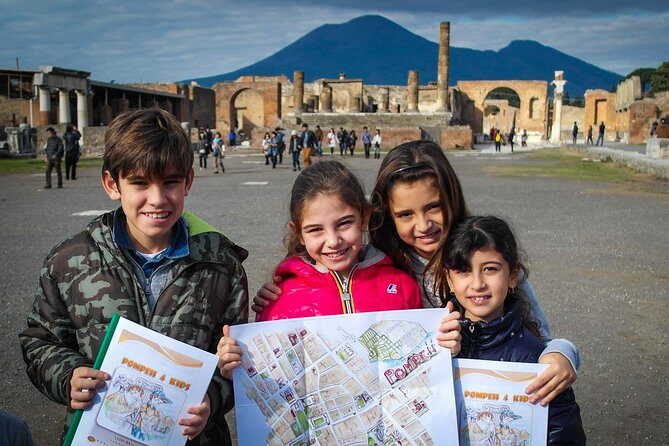
The heart of the value here is what a guide does for you. Pompeii isn’t just stones. It’s a city that was buried by the AD 79 eruption of Mount Vesuvius, preserving daily life under ash for nearly 2,000 years. A good guide turns those fragments into something you can picture.
On this walk, you start with an introduction to the eruption story and then move through the best-preserved areas. You’ll get a guided look at features like city walls and the Porta Marina area that once connected to the harbor. You also see the ancient theater where performances happened and can spot the everyday rhythm of Roman life in the street layout and buildings.
If you end up with a guide like Francesca or Anna, the common thread is clear: strong storytelling and patience with kids and adults. Guides such as Giuseppe and Natalia are also described as strategic with crowd flow, which matters because Pompeii can feel like a game of dodge-the-tour-groups.
A nice perk for families: the tour includes a route that’s easier for kids to follow (more on that below).
Pompeii4kids kit: games, clues, and stickers that make ruins make sense
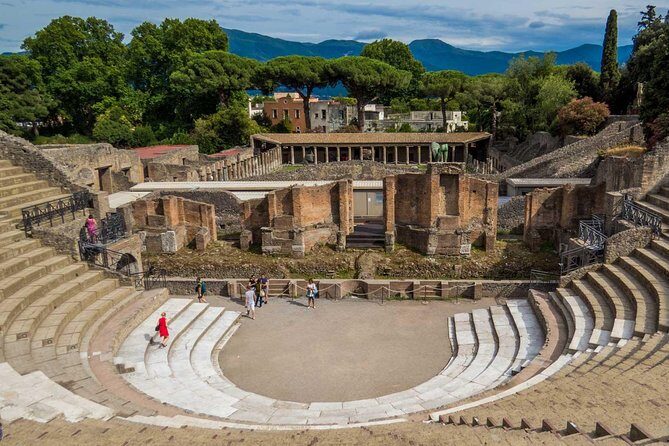
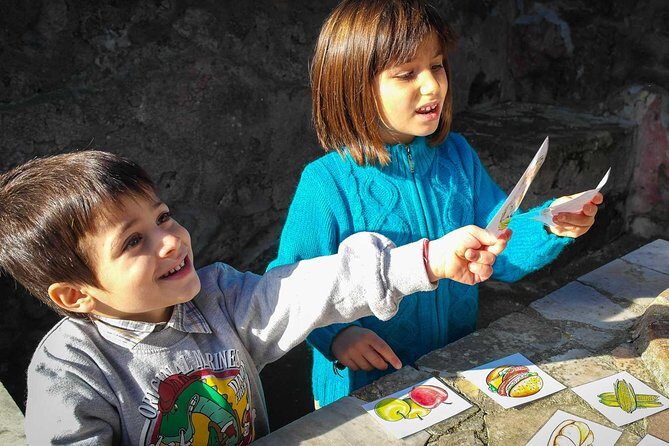
If you’re traveling with children, the family option is the difference between a win and a slow-motion struggle. The Pompeii4kids kit includes a kid-friendly map with stickers and activities. There are games and clues built into the experience, and the guide tailors the route toward what youngsters can understand.
The kit is recommended for kids 6 to 11 years old, but you’ll still find that many families can make it work outside that exact age band. The key is how the guide uses the activities to keep kids curious instead of bored. In practice, the family approach turns Pompeii into a scavenger-hunt version of history: identify a character, match it to a building, learn why that place mattered.
You can expect moments like asking children questions during the walk, using stickers at the right stops, and reinforcing facts with quick, fun games. It’s the kind of structure that helps kids handle Pompeii’s pace and heat without melting down.
Forum stop: where politics, religion, and commerce shared the same square
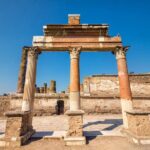
One of the best ways to understand Pompeii is to start at its center. The Forum was the city’s main public space, serving political, religious, and commercial roles. It’s a large rectangular plaza (chariot traffic was excluded), which makes it a natural “anchor point” for a tour.
Here, you get context you won’t easily grab from a guidebook alone: how Pompeii’s civic life worked and what the Forum was used for day to day. This stop also helps you read other buildings later. Once you understand the Forum’s purpose, a temple, a basilica, and even public bath spaces start feeling connected instead of random.
One practical tip: the Forum area can still be busy, even when you have skip-the-line benefits. Since this is private, your guide can usually manage where you stand so you can hear the explanation without shouting over constant foot traffic.
Walking Via dell’Abbondanza: the main street of everyday Roman life
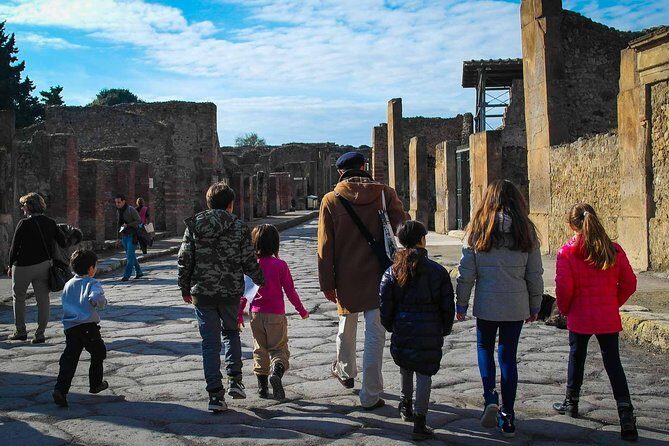
Next comes one of the most important streets in Pompeii, Via dell’Abbondanza. Think of it as the city’s main commercial and social artery—the Decumanus Inferior—running from the Forum toward the Sarno Gate.
This is where you get a vivid look at daily life. You’re not just seeing famous monuments. You’re walking the kind of street where people would have come to shop, meet, and move through the city’s social life. A guide helps you connect street layout to how a city actually functioned.
Also, Pompeii’s street stones and squares have character. You’ll notice basalt-laden streets and the way stones were used to create stepping points across areas that could be flooded and affected by sewage. That small detail tells a bigger story about the city’s daily realities.
You can also read our reviews of more tours and experiences in Pompeii


Terme del Foro: the Roman bath sequence, room by room

The Forum Baths (Terme del Foro) are one of Pompeii’s standout preserved complexes. They were built around 80 BC and were still operating at the time of the eruption in 79 AD, which makes this stop feel oddly immediate.
Your guide walks you through the bath sequence:
- Apodyterium (changing room)
- Frigidarium (cold bath)
- Tepidarium (warm room)
- Calidarium (hot room)
The rooms also show Roman design choices, including high barrel-vaulted ceilings with stucco reliefs and terracotta figures known as telamones. Seeing the layout in order makes the whole concept click. Without guidance, it’s easy to stare at walls. With guidance, you understand the flow and what people likely did in each space.
If your group includes kids, the bath stop often works well because it’s structured and visual. Kids get to imagine the steps like a routine.
Temple of Apollo and the Forum buildings: Greek-Italic mix, plus civic scale
The Temple of Apollo is an early religious site with origins dating back to the 6th century BC. It sits in the Forum area and functions as a major landmark for any walking tour. What makes it interesting is the blend of Greek and Italic influences.
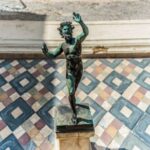
You’ll be able to see bronze replicas of Apollo and his twin sister Diana. The originals were preserved in the National Archaeological Museum in Naples, but the replicas still give you a strong sense of what the temple honored.
From there, you’ll also see the Basilica. This is Pompeii’s major public building in the Forum area, dating back to the 2nd century BC. It’s one of the oldest examples of its type in the Roman world. In plain terms: it’s the kind of building that shows you how Romans built for public life.
If your group likes architecture, this part will feel satisfying. You’re seeing scale and design meant for crowds, not just private interiors.
Casa dei Vettii: Pompeii’s luxury moment after a hard day’s walk
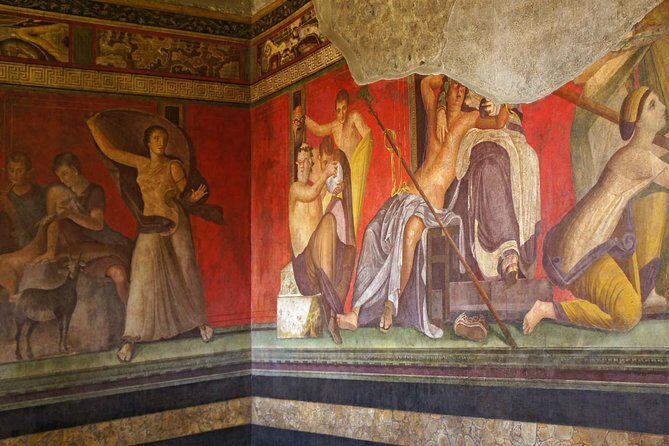
Then you get to a house that people often describe like a highlight reel. The Casa dei Vettii (House of the Vettii) is famous for luxury and for being one of the most beautifully preserved residences in Pompeii. It reopened in 2023 after a long restoration.
The owners were Aulus Vettius Conviva and Aulus Vettius Restitutus, freedmen who became wealthy wine merchants. That detail matters because it shapes the house’s message: new money showing off. Pompeii’s elite homes aren’t just places to live. They’re public statements.
This is also where the timing of the tour works in your favor. The house is a good “recharge” stop because you get a different kind of space than the open street walking. Your guide can point out what to look for in the art and layout so it feels like a story, not a checklist.
Teatro Grande and the Antiquarium casts: beauty, then the heavy part
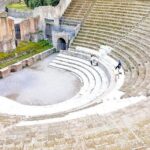
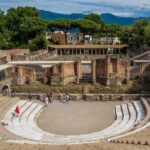
At the Teatro Grande (Large Theatre), you see one of the world’s oldest surviving masonry theaters, originally built in the 2nd century BC. It’s carved into a natural lava hillside, showing the shift from Greek to Roman architectural styles.
The theater stop is also a reminder that Pompeii wasn’t only politics and commerce. It had culture and performances, and this space gives you a sense of how entertainment fit into Roman life.
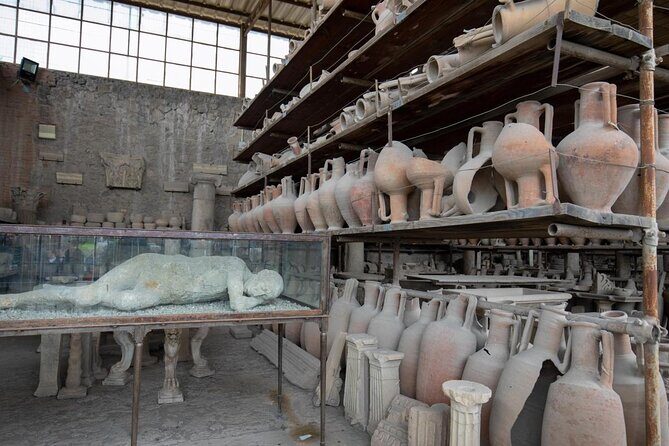
Then comes the Antiquarium di Pompei, the site’s main museum in a climate-controlled setting. If you want fragile artifacts without constant outdoor exposure, this is where you appreciate modern preservation.
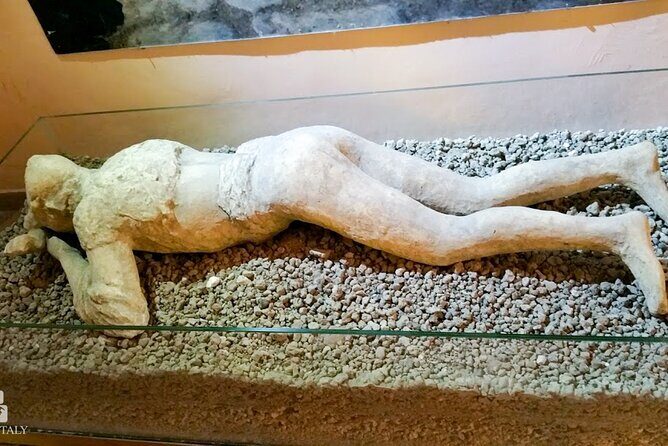
Most notably, you’ll see casts of victims. Some casts remain in place at the ruins, but the Antiquarium displays plaster casts including children preserved in their final moments. This is not a light stop, and I’m glad the tour includes it as a guided moment. A guide can help you understand what you’re seeing without making it feel sensational.
If you’re bringing kids, it helps to have a guide who can handle the topic in a way that fits their age level—many families report that the kids are absorbed by the story while staying emotionally okay.
Practical value: time, tickets, and what to bring
Here’s the real-world part you should plan for.
Price and value
At $165.05 per person for roughly 2 hours, you’re paying for three things at once:
1) a private, Blue Badge guide,
2) skip-the-line entry,
3) a route that’s designed to reduce confusion and wasted time.
Whether admission fees are fully included can depend on the booking details. The experience description includes admission fees, but there’s also a note connected to the family option that says admission fees aren’t included, while the guide can buy tickets quickly on-site using a fast-track line. So I’d treat this as a “confirm before you go” item. It’s one of those small checks that protects your budget.
What to wear and bring
Pompeii is outdoors for much of the walk. Bring good walking shoes and plan for heat. A couple of people also recommend starting earlier in the day to avoid stronger midday conditions, which is smart advice if you want energy left for the museum.
For kids, pay attention to the document requirement: a current valid passport is required on the day of travel for children under 18.
Language and format
The tour is offered in English, and it’s a private tour/activity—only your group participates. There’s no pickup or drop-off included, so you’ll want to plan your own transport.
You meet at Via Villa dei Misteri, 2, 80045 Pompei NA, Italy, and the tour ends back at the same starting point.
Who should book this private Pompeii tour?
This is a strong fit if you want:
- the big Pompeii highlights without spending hours figuring out where to go
- a kid-friendly option that uses games and a map kit, not just lectures
- a private guide who can answer questions and keep a flexible pace
It’s especially good for families with kids who need structure. It’s also a solid choice for couples and groups who want Pompeii’s story told in a way that makes buildings and streets feel connected.
If you have mobility issues, keep in mind the tour still requires walking across an active archaeological site. One review mentioned a rushed pace and that mobility differences made it harder, which is a reminder to manage expectations and choose a guide who can slow down when needed.
Should you book? My take
If you’re aiming for your one best Pompeii day, this private skip-the-line option is a smart buy. The private attention plus a tight highlight route means you’re not just staring at stones—you’re learning what you’re looking at, fast.
I’d book it if you want:
- skip-the-line help
- a guide who can tailor the route for kids
- a balanced mix of Forum life, baths, homes, and the Antiquarium casts
I’d think twice only if your group isn’t ready for substantial walking or you’re the type who wants to wander entirely on your own. In Pompeii, that approach can be amazing too—but it’s risky if you don’t have context. This tour gives you that context without stealing your whole day.
FAQ
How long is the Pompeii private tour?
It’s listed at about 2 hours (approx.).
Is this tour skip the line?
Yes. Skip-the-line tickets are included.
Does the tour include admission tickets and entry fees?
The experience description indicates admission fees are included, and the stops note admission ticket included. There’s also a note saying admission fees are not included for the family option, though the guides can buy tickets quickly on-site. I recommend confirming what’s included in your specific booking.
What does the family tour option include?
If selected, it includes the Pompeii4kids kit with a map, stickers, activities, and an activity-book, plus a kid-friendly approach from the guide.
What ages is the family option designed for?
The family option is recommended for children ages 6 to 11.
Where does the tour start and end?
It starts at Via Villa dei Misteri, 2, 80045 Pompei NA, Italy, and ends back at the same meeting point.
What documents do children need?
A current valid passport is required on the day of travel for children under 18.