REVIEW · POMPEII
Stories of Pompeii: Small Group tour with archeology expert guide
Book on Viator →Operated by TUI Musement · Bookable on Viator
Pompeii is big, even when it feels frozen. This small-group tour is built to help you make sense of the ruins in a short time, using a local, archaeology-focused guide and story-first explanations. I like the practical structure: you get an entrance ticket, a guided walk, and enough stops to cover what most people actually want to see.
Two things I really like are the small group size (up to 16) and the guide touch. People repeatedly single out guides like Maria Novella for bringing Pompeii to life with clear, story-driven storytelling, and Pippo for being well prepared and informative. That kind of guidance matters when you are trying to spot what is important inside a massive site.
One possible drawback: this is about 2 hours, so you will not have time for every corner of Pompeii. Also, the tour does not include a guided visit to Villa dei Misteri, so plan that separately if it is on your must-see list.
In This Review
- Key takeaways before you go
- Why this 2-hour Pompeii tour is a good value
- Meeting at Piazza Esedra and getting to Pompeii on time
- What you’ll learn as you walk the Archaeological Park
- Theatre stop: entertainment as a window into Roman life
- Brothel and everyday contrasts: how a guided story changes perception
- Spas and baths culture: why you should not skip the hygiene stops
- Thermopolium and food habits: reading daily life in small places
- Amphitheatre stop: public events and the pace of a short tour
- Headsets, group size, and how the tour handles crowds
- What’s not included: Villa dei Misteri and planning your time
- Who this Pompeii tour suits best
- Should you book this Stories of Pompeii small-group tour
- FAQ
- How long is the Pompeii small-group tour?
- Is the Pompeii entrance fee included?
- Is the tour offered in English?
- How big is the group?
- Are headsets provided during the tour?
- What should I bring?
- Can I bring a large backpack or bag?
- Where do I meet, and where does the tour end?
- What is not included in the tour price?
Key takeaways before you go
- Up to 16 people means you can actually hear your guide and ask questions.
- Entrance fee included saves time and avoids ticket hassle once you arrive.
- Headsets are provided for groups larger than 6, which helps a lot in open-air crowds.
- Stops cover the stuff you expect: theatre, brothel, spas, amphitheatre, thermopolium, and more.
- Bring the right essentials: comfortable shoes and water for hot days.
- No large bags inside; you will use the free cloakroom at the entrance.
Why this 2-hour Pompeii tour is a good value
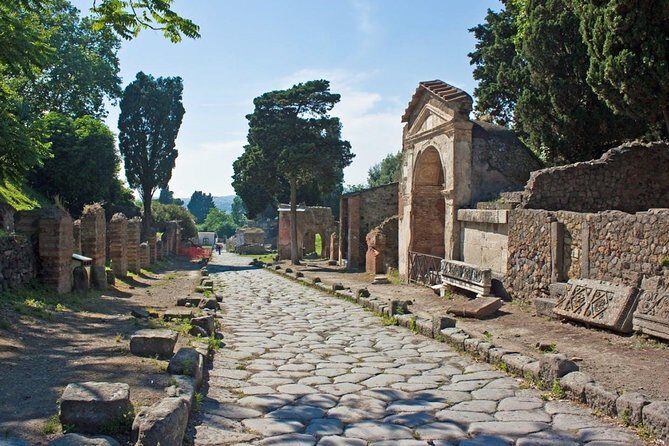
At $54.44 per person for about two hours, what you are really paying for is guidance plus access. You are not just buying entry to a site; you are buying an organized walk with an archaeology expert who helps you understand what you are looking at.
Entrance is included, and that is the biggest value lever here. You also get a friendly local guide and a format that is designed for a manageable pace, not a rushed stamp-and-go.
The small-group cap matters too. With a maximum of 16 travelers, you usually get better flow around bottlenecks, and you are less likely to get swallowed by a crowd. If you have ever tried to read signs in Pompeii while dodging other visitors, you will understand why that matters.
You can also read our reviews of more guided tours in Pompeii

Meeting at Piazza Esedra and getting to Pompeii on time
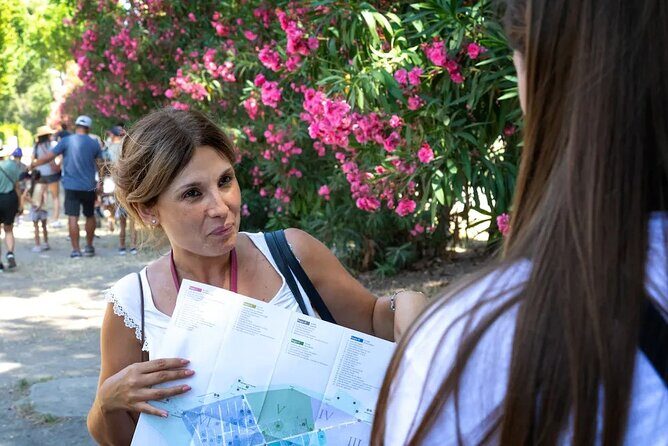
Your tour starts at Piazza Esedra, 80045 Pompei NA, Italy, and ends at the Archaeological Park of Pompeii. That is helpful because you do not have to worry about finishing with directions across town. You can focus on showing up prepared.
Pompeii logistics can be slow, especially by public transport. The tour guidance is clear: leave early enough to arrive at least 15 minutes before the start time. Late arrival is not something you can count on being accommodated.
If you are staying near Naples or elsewhere on the Amalfi Coast, build in extra buffer. Think of it as buying time, not just preventing stress.
Also note the site rules on bags. You cannot bring large bags and backpacks inside. The good news is there is a free cloakroom at the entrance, and you can retrieve your items at the end.
What you’ll learn as you walk the Archaeological Park
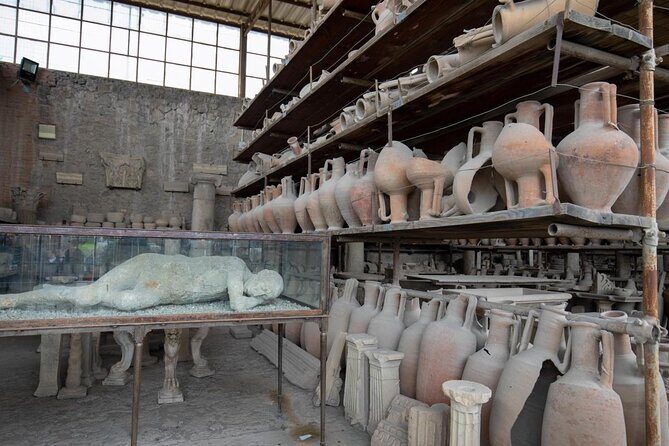
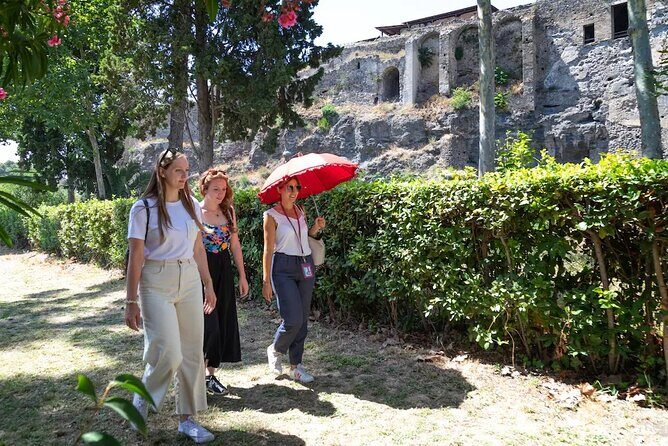
The core experience is a guided visit inside the Archaeological Park of Pompeii. The promise here is not just sightseeing; it is understanding daily life in ancient Rome through the lens of the ruins.
A good guide can do something important in Pompeii: help you connect buildings to behavior. Instead of seeing isolated walls, you start recognizing patterns: entertainment, personal hygiene, food habits, and social structures. That is exactly what this tour leans on.
You will likely be moving at a walking pace that fits a two-hour window. That means you should expect the tour to be focused, with the guide choosing stops that explain key aspects of Pompeii’s culture and layout.
And since it is offered in English, you can keep the explanations clear without relying on translations or guesswork. That makes a short tour feel much longer in the best way.
Theatre stop: entertainment as a window into Roman life
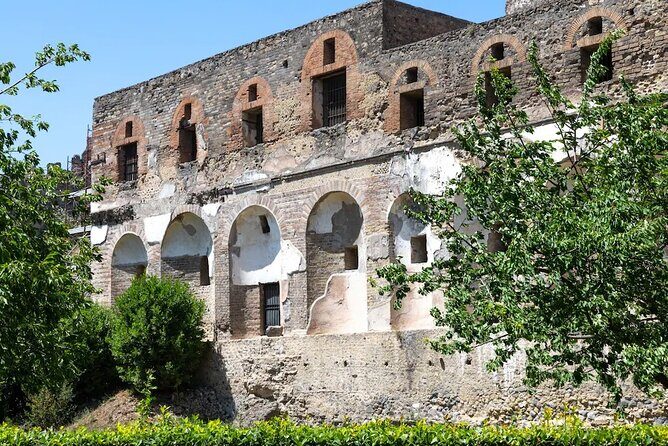
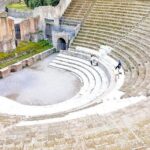
One of the standout highlights is Pompeii’s theatre. Even if you do not know Roman performance traditions, a guide can help you read the space: who went, what events mattered, and how public life worked.
This is where guided interpretation pays off. Pompeii ruins are visually impressive, but they can also be confusing if you only have time to scan. A theatre stop gives your brain an anchor point, so other places start making more sense.
If you love people-watching, you will probably like this angle too. The theatre is tied to public gathering, so it naturally leads to stories about Roman entertainment and community routines.
Downside to note: like the rest of the tour, the focus is breadth over depth. You will get meaning, but you will not get hours of linger time in one area.
Brothel and everyday contrasts: how a guided story changes perception
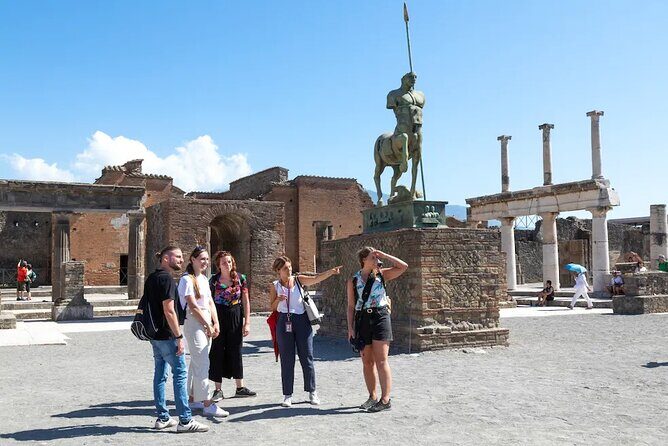
The itinerary highlights include a brothel stop. That is not everyone’s favorite topic, but it is an important one for understanding how Pompeii functioned as a real town, not just an outdoor museum.
A guide’s job is to handle sensitive topics in a way that stays factual and useful. The value here is context: how commerce and social life intersected, and how Roman culture played out in spaces we would recognize today as part of street life.
This is also where a storytelling guide style can really help. When someone explains what you are seeing and why it mattered, the ruins stop feeling like random shock value and start feeling like evidence.
If you are easily uncomfortable with adult themes, you may want to mentally prep yourself for this stop. It is included in the tour highlight list, so it is not a surprise you can avoid.


Spas and baths culture: why you should not skip the hygiene stops

Another highlight is spas. Roman hygiene was social, not just practical, and Pompeii preserves enough to spark useful explanations. A guided stop here helps you connect the idea of bathing with the town’s rhythm.
Think of it like this: when you visit Pompeii alone, you might focus on big dramatic ruins. When you have a guide, you also notice the everyday systems. Spas do that. They shift the visit from grand buildings to lived routines.
The tour’s strength is that it uses these different site types to tell a fuller story. A theatre shows public entertainment. A spa shows how people took care of themselves and spent time. Suddenly Pompeii feels more like a place where people worked, relaxed, ate, and met each other.
Thermopolium and food habits: reading daily life in small places
You also get a stop at a thermopolium. This is one of those features that can be easy to overlook if you are rushing for the biggest sights.
A thermopolium matters because it points to how everyday meals worked. Even if your understanding of Roman food culture is limited, a good guide can show you why this space was practical and important for locals.
This is also a great stop for photos, but more importantly, it is a great stop for understanding scale. It reminds you Pompeii was full of spaces for ordinary needs, not just major civic events.
Amphitheatre stop: public events and the pace of a short tour
The tour includes an amphitheatre. That is your built-in spectacle stop, and it usually helps wrap the story of Roman entertainment around a more athletic, public-event vibe.
However, this is also a good moment to understand what a two-hour tour means. You are getting key stops, not an all-day exploration. The amphitheatre is likely one of the highlights the guide uses to land the big-picture feeling of Pompeii.
That is fine if your goal is a high-impact primer. It is not ideal if your goal is research-level wandering or if you want to spend a lot of time in one area.
Headsets, group size, and how the tour handles crowds
The tour includes headset access for groups of more than 6 people. That is a small detail that makes a big difference. Pompeii is noisy at times, and open-air sound can be tricky.
If you are the type who likes to actually follow the story and not just glance at architecture, headsets are worth it. They let you stay oriented without constantly turning and raising your voice.
With a maximum of 16 travelers, you should also find it easier to keep your bearings. The guide can control flow better, and you can move through tighter areas without feeling like you are trapped in a long line.
What’s not included: Villa dei Misteri and planning your time
One key item to know: the tour does not include a guided visit of Villa dei Misteri. If you want that specific site, you will need to book it separately.
Also, food and drinks are not included. That is normal for a two-hour experience, but it changes how you should schedule your day. If you plan to keep exploring after, bring water and plan a meal break elsewhere.
Because hot days can make the walking feel longer, I recommend packing water even if you think you will be fine. Pompeii is open-air, and the guidance specifically suggests bringing water and wearing comfortable shoes.
Who this Pompeii tour suits best
This tour fits best if you want a clear, guided overview without spending an entire day in Pompeii. If you are short on time, or if it is your first visit and you need a strong foundation, this is a smart format.
It also suits travelers who like stories and who want context while walking through ruins. The names Maria Novella and Pippo come up as examples of guides who are praised for being approachable, prepared, and able to make Pompeii feel like more than stone.
If you are the DIY type, you can still enjoy Pompeii on your own. But if you get overwhelmed by too much information and not enough interpretation, a guided tour like this will feel like speed without losing meaning.
Should you book this Stories of Pompeii small-group tour
I would book this if your priorities are a short, guided Pompeii visit with entrance included and a guide who explains what you are seeing. At $54.44, you are paying for access plus interpretation, and the small group size helps you actually benefit from that interpretation.
Skip it or pair it with another plan if you want a long, detailed tour where you can linger for hours in multiple areas. Also consider booking something else for Villa dei Misteri, since it is not part of this experience.
One more practical nudge: this is an experience that gets booked in advance, with an average booking lead time of 53 days. If you are traveling in peak season or on popular dates, secure your spot early so you are not choosing between limited options.
If you want Pompeii with less stress and more story, this is a solid bet.
FAQ
How long is the Pompeii small-group tour?
The tour runs for about 2 hours.
Is the Pompeii entrance fee included?
Yes. Admission fees to Pompeii are included in the tour.
Is the tour offered in English?
Yes. The tour is offered in English.
How big is the group?
This experience has a maximum of 16 travelers.
Are headsets provided during the tour?
Headsets are included for groups of more than 6 people.
What should I bring?
Wear comfortable shoes and bring a bottle of water, especially on hot days.
Can I bring a large backpack or bag?
You cannot bring large bags and backpacks inside the site. You can leave them at the entrance using the free cloakroom service and pick them up at the end.
Where do I meet, and where does the tour end?
You start at Piazza Esedra, 80045 Pompei NA, Italy, and the tour ends at the Archaeological Park of Pompeii.
What is not included in the tour price?
Food and drinks are not included, transportation to the meeting point is not included, and the guided visit of Villa dei Misteri is not included.