REVIEW · POMPEII
Pompeii 2-hour Private Tour with an Archaeologist-Ticket included
Book on Viator →Operated by Askos Tours · Bookable on Viator
Pompeii hits harder when you slow down. This private 2-hour walk trades big-group yelling for an archaeological guide and an easy rhythm through the ruins, starting at Porta Marina Superiore with the Askos Tours sign (private pace and archaeologist-led).
I especially like that the experience includes your Pompeii admission so you can focus on the walking and the stories, not ticket math.
Second, I like the way the route is built around real sites you can actually see and connect: the Basilica and Forum areas for civic life, then homes, baths, and theaters for daily rhythm. You’ll also have a guide who can adapt on the fly, which matters because Pompeii ground is uneven and weather changes fast.
One consideration: 2 hours is a focused sprint, not a slow wander. If you want to linger over every corner, you may leave thinking you could do one more pass on your own.
In This Review
- Key things to know
- Why this private Pompeii tour feels calmer than the big-group crush
- Meeting and first stops: Porta Marina Superiore to the Basilica
- Forum streets and granaries: where the city’s center tells its story
- Menander and the House of the Faun: reading wealth and design in stone
- Stabian Baths and the Lupanar: routine, power, and uncomfortable details
- Teatro Piccolo and Teatro Grande for the city’s public mood
- Archaeologist guide power: questions, pacing, and real context
- Price, value, and who should book this 2-hour plan
- Small practical tips that make Pompeii easier underfoot
- Should you book this Pompeii private archaeologist tour?
- FAQ
- How long is the Pompeii private tour?
- Is the admission ticket to Pompeii included?
- Where do I meet the guide?
- Is this tour really private?
- What language is the tour offered in?
- Is there free cancellation?
Key things to know
- Archaeologist-guided private tour so you can ask questions and keep a comfortable walking pace
- Pompeii admission included, plus entry to the archaeological park is handled at the start
- Forum core stops like the Basilica and main square areas, where Pompeii’s public life comes into focus
- House visits that show wealth and design, including the House of Menander and the House of the Faun
- Stabian Baths and the Lupanar connect everyday routines to Roman social reality
- Two theaters with a look at Teatro Piccolo and a stop at Teatro Grande
Why this private Pompeii tour feels calmer than the big-group crush
Pompeii is busy even when it looks quiet. The ruins cover a lot of ground, and large tours can turn into a stopwatch exercise. Here, you get the opposite: you move as a small private group with an archaeologist guide who can pace the visit to match your interests.
I like that the tour stays to an efficient 2-hour format. You’re not stuck in a long day with constant redirecting. Instead, you get a tight sequence of the most readable parts of the city: public spaces, then private life, then big public spaces again at the theaters. It’s a smart way to build a mental map fast.
You’ll also like the “no-rush” feel that shows up in the guide style. For example, guides such as Giovanni and Luca have been praised for being patient and not making people feel hurried, even when schedules get messy. That tone matters because Pompeii is physically demanding in places, with slopes and uneven paths.
You can also read our reviews of more tours and experiences in Pompeii


Meeting and first stops: Porta Marina Superiore to the Basilica
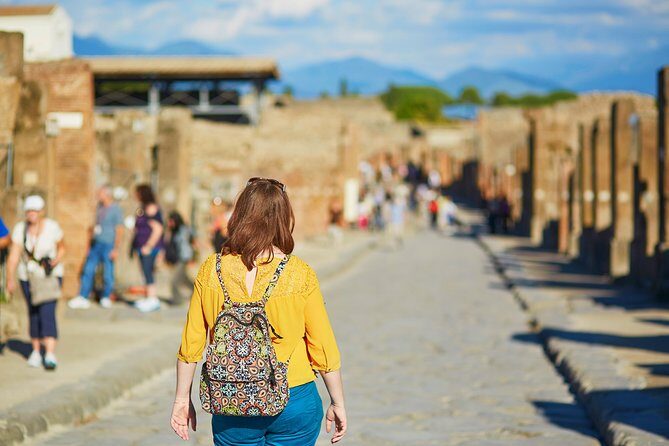
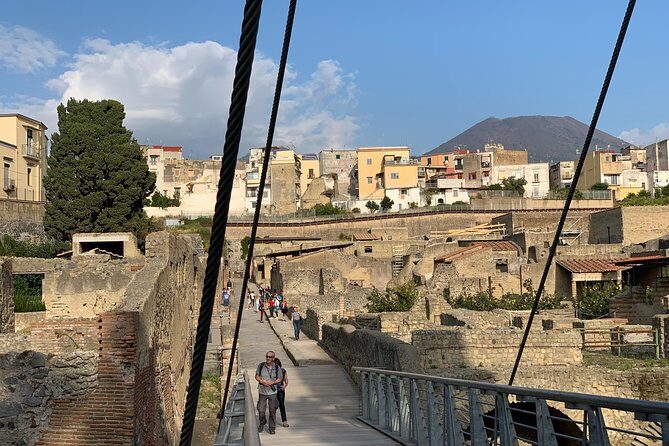
You start at the archaeological park’s main entrance area known as Porta Marina Superiore. The guide holds a sign at the meeting point with the company name Askos Tours, which is helpful in a place where the streets around the park can feel confusing.
The start point listed is Via Villa dei Misteri, 2, 80045 Pompei NA, Italy. Your tour then continues inside the ruins, and the tour ends after the walkthrough, with the guide happy to help you figure out how to get back to your accommodation or the closest train station.
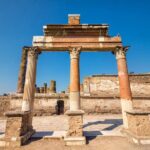
The first stop is the Archaeological Park of Pompeii itself. The time here is short—about 10 minutes—and this is where the admission ticket is included. You’ll effectively get through the start-up friction quickly, which is a big deal at Pompeii. Then you move to the Basilica, an open portico area that historically offered shelter for merchants and other activities.
This matters more than it sounds. In Pompeii, you can walk past a structure and still miss why it mattered. With an archaeologist guide, the Basilica stops being just stone and becomes a place where commerce and daily movement happened under cover. And since this stop is marked as admission ticket free, it keeps the experience smooth without extra entry friction.
Forum streets and granaries: where the city’s center tells its story
After the Basilica, you’ll look at the Foro de Pompeya—the main square. This is where Pompeii’s public life shows up most clearly, with space that was built for gathering, activity, and visibility. Even in a short tour, hitting the main square early helps you understand what you’re seeing later when you move into homes and specialized areas.
Then there’s a walk through the main street of Pompeii. That stretch is useful because it helps you stitch the city together. Without that kind of connective walk, you can end up with a list of buildings instead of a sense of how people actually moved.
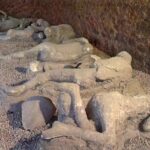
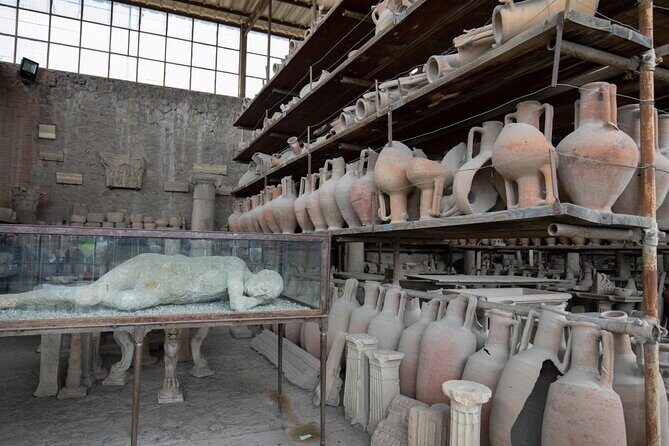
One of the more memorable stops is the Granaries of the Forum. You’ll see marble tables and baths for fountains that adorned entrances of houses, plus casts of victims of the eruption—including casts of a dog and a tree. This is a heavy moment, but a meaningful one. It shows you the city wasn’t just architecture; it was people and their daily attachments.
A practical note: these stops can be visually crowded, depending on the day. Having a private guide helps you keep your attention on what matters—what each object is, what role it likely played, and what changed after the eruption.
Menander and the House of the Faun: reading wealth and design in stone
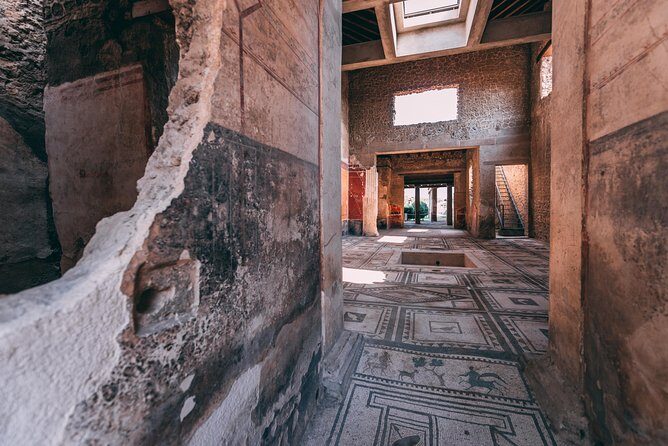
Pompeii’s homes are where you start to feel the city’s social split. The tour includes two standout residences, and they’re chosen for variety.
First up is the House of Menander. This is described as one of the richest and most magnificent houses in Pompeii for architecture, decoration, and contents. That phrasing is your clue to what you’ll focus on during the stop. This isn’t just a “pretty room” visit. You’ll get context for how decoration and layout signaled status, and you’ll likely hear how everyday life worked inside a wealthy Pompeian home.
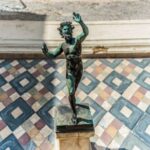
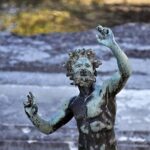
Next comes the House of the Faun. This is one of the largest and most impressive private residences. When you compare it to the House of Menander, you start to see differences in scale and presentation. That makes the short time feel more productive, because you’re not just collecting facts—you’re comparing living styles.
If you’re the type who loves photos, you’ll probably appreciate the way some guides handle it. Mena has been praised for focusing on what people want to see and being patient during photo time. In Pompeii, that patience helps because it reduces the urge to rush your shots, and it lets you catch details you’d otherwise walk past.
Stabian Baths and the Lupanar: routine, power, and uncomfortable details
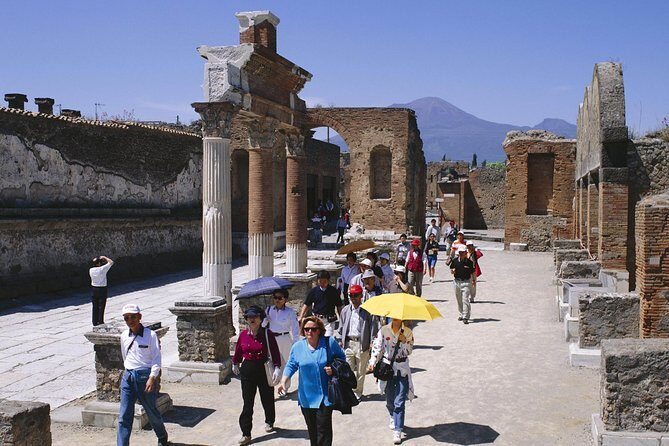
One reason I like this tour plan is that it includes places that don’t try to be polite.
The Stabian Baths (Terme Stabiane) cover a vast area and are described as the oldest thermal complex in the city. They’re located between the Brothel lane, the Holconius crossroads, and the Via Stabiana. So you’re not just seeing a bath building—you’re seeing how different parts of the city sat near each other, shaping daily routines.
After that, you visit the Lupanar, the most famous brothel in the ruined Roman city of Pompeii. This stop is famous for a reason, but your guide should give you the context that turns scandal into understanding. You’re seeing how Roman culture handled services, privacy, and social behavior inside the built environment. It can be uncomfortable, but it’s also one of the clearest ways to grasp that Pompeii wasn’t a museum of wealthy villas only.
If you’re traveling with kids or with people who want less graphic detail, it helps to be clear with your guide about comfort levels. In the guides’ style notes, Silvia has been praised for pacing and for being mindful of older family members who needed a slower rhythm on rough and steep ground. That kind of control often helps tailor how these heavier stops are handled.
You can also read our reviews of more private tours in Pompeii


Teatro Piccolo and Teatro Grande for the city’s public mood
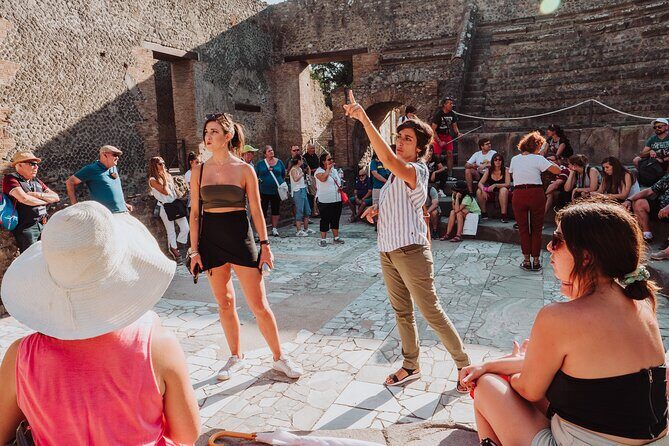
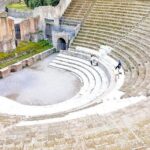
Pompeii’s theaters help you understand the city as a place for entertainment, gathering, and public identity. This tour includes a look at the Teatro Piccolo and then a visit to the Teatro Grande.
Teatro Grande is described as the most important theater in Pompeii, and that label matters. The scale and prominence are part of the story, and you’ll likely get guidance on why it was central to civic life—where people would show up, how performances fit into daily culture, and what the space tells you about power and leisure.
Teatro Piccolo is shorter in time, but it’s still useful. Looking at both theaters gives you a sense of the city’s range, from smaller venues to the bigger stage.
These theater stops also work as a natural “wrap up” for the route. After homes and baths, you return to public space and it helps your brain reorganize the city into categories.
Archaeologist guide power: questions, pacing, and real context
This is the tour’s main selling point, and you feel it in the way guides are described.
PhD archaeologist guides like Alessandra and Silvia have been singled out for making Pompeii feel like it has a pulse, not just a pile of ruins. Silvia has also been praised for tracking current excavation works as part of the context, and that kind of update helps you connect what you’re seeing to what archaeologists are still learning.
You also get practical benefits beyond facts:
- Guides like Amedeo have been praised for passion and enthusiasm, which keeps explanations from sounding like a script.
- Giovanni has been praised for clarity and patience, especially when people arrive late, without turning it into a rushed experience.
- Paolo has been praised for logistics support, including detailed instructions with a photo, which matters because meeting points in Pompeii can be tricky.
And yes, the tour is private—only your group participates. That’s not just a comfort perk. It means your questions shape the experience. If you care more about daily life than politics, or you want emphasis on specific visuals, you should get that attention.
Price, value, and who should book this 2-hour plan
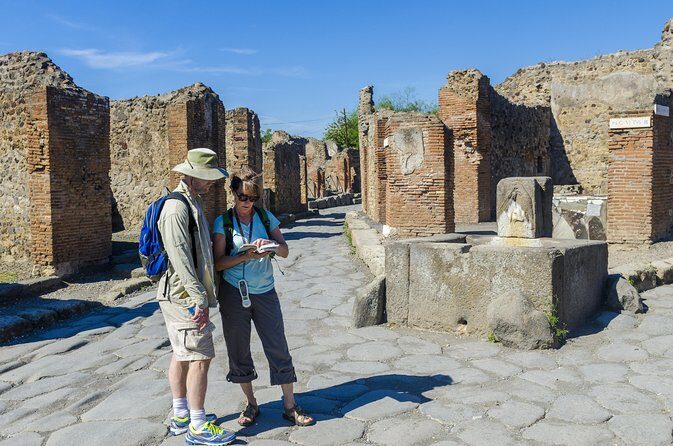
At $214.75 per person for a tour that runs about 2 hours, this isn’t the cheapest way into Pompeii. But it’s also not trying to be. You’re paying for a private archaeologist guide and admission fees included for the archaeological park.
So where’s the value?
- You save time at the start because ticketing is built in.
- You cut down wasted walking because the route focuses on high-readability stops: Basilica, Forum areas, notable homes, Stabian Baths, the Lupanar, and the theaters.
- You get better learning without needing to stop constantly to read every sign.
This tour tends to make the most sense if you’re:
- First-timers who want a fast, structured overview with expert context
- People who hate feeling herded in large groups
- Travelers who want a calmer pace and time to ask questions
- Families or multi-generational groups who benefit from pacing (Silvia has been praised for slowing down for older visitors)
If you want to wander for half a day and chase every side alley, you might feel boxed in by the 2-hour frame. But if your goal is to leave Pompeii understanding what you saw, this format hits the target.
Small practical tips that make Pompeii easier underfoot
Pompeii works best when you plan for your body. The tour recommends comfortable shoes, and the experience runs in all weather, so you’ll want to dress for sun, wind, or rain.
You should also expect moderate physical fitness. Some routes include uneven stone and slopes, and the guide may slow down when needed—Silvia has been praised for doing exactly that for older family members.
The tour is offered in English. It’s also near public transportation, which helps because you won’t have hotel pickup or drop-off included.
Should you book this Pompeii private archaeologist tour?
I’d book it if you want a smart, high-impact Pompeii introduction with a real expert leading the walk and you’d rather move at your own pace than fight a crowd. The included admission and the focused 2-hour routing make it feel efficient, not skimpy.
Hold off or consider a longer plan if you’re the kind of visitor who needs hours of unstructured wandering, or if your main goal is pure photo time without guidance. For most people who want context and calm, this is a strong choice.
FAQ
How long is the Pompeii private tour?
It’s about 2 hours (approx.), depending on the pace of your group and on-site conditions.
Is the admission ticket to Pompeii included?
Yes. Admission fees to Pompeii are included, and the first stop at the archaeological park includes the admission ticket.
Where do I meet the guide?
Meet at Via Villa dei Misteri, 2, 80045 Pompei NA, Italy. The guide meets you at the main entrance called Porta Marina Superiore and holds a sign with the Askos Tours name.
Is this tour really private?
Yes. Only your group participates.
What language is the tour offered in?
The tour is offered in English.
Is there free cancellation?
Yes. You can cancel for a full refund up to 24 hours in advance of the experience start time.