REVIEW · POMPEII
PompeiI Exclusive Tour with your Archaeologist in a Small Group
Book on Viator →Operated by Grand Tour Experience · Bookable on Viator
Pompeii hits harder with context. This tour is built for fast understanding of the Roman city’s big ideas, not just photo stops. I like the archaeologist-led explanations that make the ruins readable, and I like the priority entry that saves you from the gate bottleneck. One thing to consider: you still need to buy the Pompeii park admission ticket separately, so the all-in cost is higher than the tour price alone.
You get a focused walk—about 2 hours—through major sites, moving at a relaxed pace thanks to a small group (up to 15). Guides such as Ricardo, Rafaele, Antonio, and Ornella are mentioned often for clear English and for answering questions with real care. The route is efficient, but it does mean you won’t cover every single famous spot in depth—Pompeii is big, and there’s no way around that.
In This Review
- Key things I’d watch for before you book
- Pompeii with a human guide, not a wall of ruins
- Priority line and the real start: Porta Marina Superiore
- 2 hours and a tight route: what you’ll actually see
- Temple of Venus and the city’s protective goddess
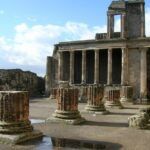
- Basilica: law, business, and power in one place
- Sanctuary of Apollo: old worship at a strategic spot
- Forum: main square life in the center of everything
- Temple of Jupiter: Forum dominance and the Vesuvius view
- Macellum market stop: everyday food life plus the archaeology method
- Forum Baths: best-preserved daily routine and mixed city life (in layout)
- Thermopolium: the ancient diner feeling
- Casa del Fauno and the Vettii: wealthy homes and what’s on the walls
- Via dell’Abbondanza: the ancient main street
- Teatro Grande: where Greco-Roman drama happened
- Small-group value: why up to 15 people changes the experience
- Price check: $30.25 plus the Pompeii admission ticket
- When this tour is the best fit
- Practical tips so your day goes smoothly
- Should you book this Pompeii VIP small-group tour?
- FAQ
- FAQ
- How long is the Pompeii VIP small-group tour?
- How many people are in the group?
- Is the tour offered in English?
- Are Pompeii park admission tickets included in the price?
- What does the priority entry actually help with?
- Does the booking ticket serve as my entry ticket to Pompeii?
- Where is the meeting point?
- What if the weather is bad?
- Can I cancel for a full refund?
Key things I’d watch for before you book
- Priority access at the gate: fewer minutes stuck waiting means more time inside the ruins.
- Small-group pace (max 15): you’re less lost in the crowd and more able to ask questions.
- Frequent “why it matters” stops: Venus, Apollo, the Forum, baths, and markets explained as living places.
- Macellum and plaster casts: you get a rare chance to connect everyday life to archaeology methods.
- Two houses worth planning for: Casa del Fauno and the Vettii are subject to seasonal openings.
Pompeii with a human guide, not a wall of ruins
Pompeii can feel like a puzzle with missing pieces. Without context, you see stone walls and street corners. With a real archaeologist as a guide, those same shapes start telling you how people ate, shopped, prayed, argued in court, bathed, and relaxed.
This experience is interesting because it’s designed to be interpreting-focused. You’re not just learning names. You’re learning how the ruins functioned as a city. The tour also keeps moving, but never in a “run and point” way. The best part is the feeling that the guide is helping you read Pompeii rather than reciting dates.
You’ll also notice something practical right away: Pompeii is famous for lines, and lines eat your energy. Here, you enter via a separate priority line, which helps you get inside with less frustration. That sounds small, but it’s the difference between enjoying the start and feeling rushed before you even begin.
You can also read our reviews of more tours and experiences in Pompeii.
Priority line and the real start: Porta Marina Superiore
The meeting point is Via Villa dei Misteri, 1, 80045 Pompei NA, Italy. From there, the tour begins at the Archaeological Park of Pompeii area near Porta Marina Superiore, the western entrance. Your guide meets you outside the park with a sign that reads Pompei Vip.
A small detail here matters: Porta Marina Superiore is described as the western entrance, and the name Marina connects to an outgoing road that led toward the sea. Your guide turns that into a bigger idea—Pompeii wasn’t a sealed-off town. It was connected to travel routes and movement, which makes the city feel less like a museum and more like a place on a map.
And yes, you’ll likely feel the benefit of the priority entry immediately. Less time waiting at the gate means more time for your guide to show you how to look—what to notice, what to skip, and what to ask about.
2 hours and a tight route: what you’ll actually see
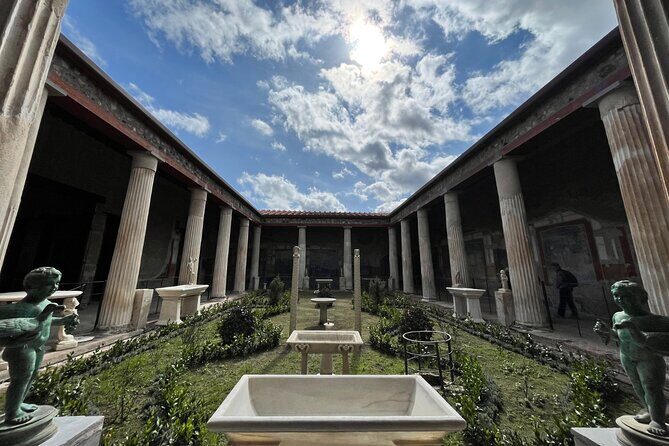
This is a highlight tour, so think of it as a guided “best-of” with explanations that help your next self-guided hour feel easier. The stops are short—about 10 minutes each—so the guide has to select scenes that teach you patterns: religion in public space, civic power in the Forum, food and trade, and daily routines like bathing and stopping for snacks.
Here’s how the route reads as a story.
Temple of Venus and the city’s protective goddess
You start with the Tempio di Venere (Temple of Venus). Venus was a patron goddess of Pompeii, so this stop gives you an anchor for how religion shaped everyday life. Even if you don’t consider yourself a “history person,” a dedicated temple tells you something concrete: people didn’t separate belief from daily behavior.
If you like visuals, this is one of those moments where your eyes start working differently. After a guide points out key features, you can start imagining ceremonies, processions, and the social purpose of worship.
Basilica: law, business, and power in one place
Next comes the Basilica, described as the most lavish building in the Forum. It served as a hub for managing business and administering justice.
This is where the tour starts feeling more like city planning than ruins spotting. A basilica isn’t just an impressive shell. It’s a functional space—where decisions and commerce got made. When your guide explains what kind of work happened there, you begin to understand why the Forum was where people had to be.
Sanctuary of Apollo: old worship at a strategic spot
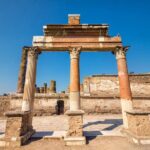
The Temple/Sanctuary of Apollo is positioned as one of the older worship sites, built at a strategic point along the street from Porta Marina toward the public center.
This helps you understand something important: Pompeii’s sacred spaces were placed so people would encounter them while moving through town. It’s not only about gods; it’s about geography. The guide’s role here is to connect a location choice to the way people traveled and gathered.
Forum: main square life in the center of everything
Then you reach the Forum (Foro de Pompeya)—the main square and the center of daily city life. If you ever feel lost in Pompeii, the Forum is your reset button. It’s the obvious “start reading the city from here” zone.
Your guide will typically steer you to what the Forum implies: a place for meetings, announcements, and civic identity. The Forum also sets you up for the next stop—because you’ll start noticing how buildings surround and emphasize authority.
Temple of Jupiter: Forum dominance and the Vesuvius view
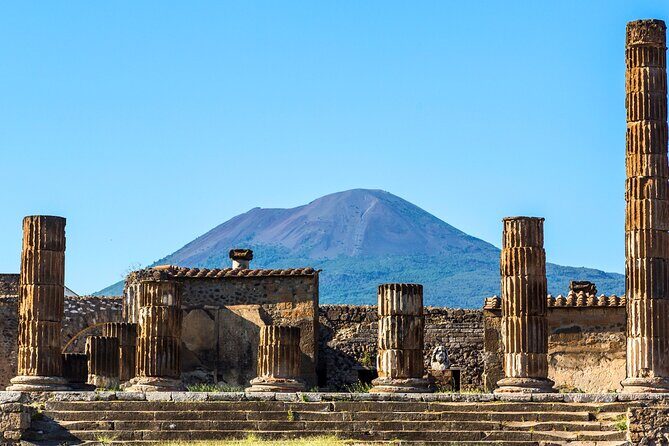
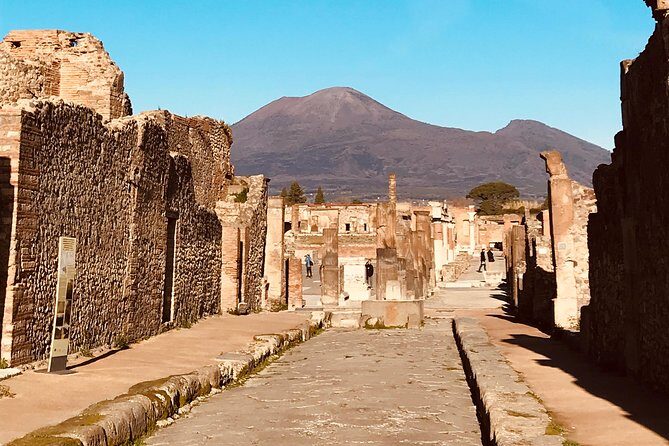
On the northern side of the Forum stands the Tempio di Giove Capitolino (Temple of Jupiter), with Mount Vesuvius rising behind it.
That view connection is one of those Pompeii moments that feels both dramatic and instructional. You can literally feel how the city’s most powerful religious site aligns with the most powerful landscape behind it. Your guide uses that positioning to explain symbolism—how the city framed its world.
Macellum market stop: everyday food life plus the archaeology method
At Macellum, a monumental market building, you shift from civic and religious space into daily consumer life. The Macellum was used for the sale of food and daily products.
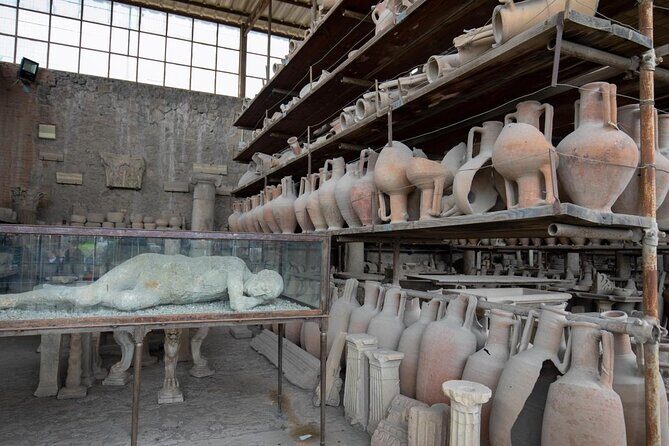
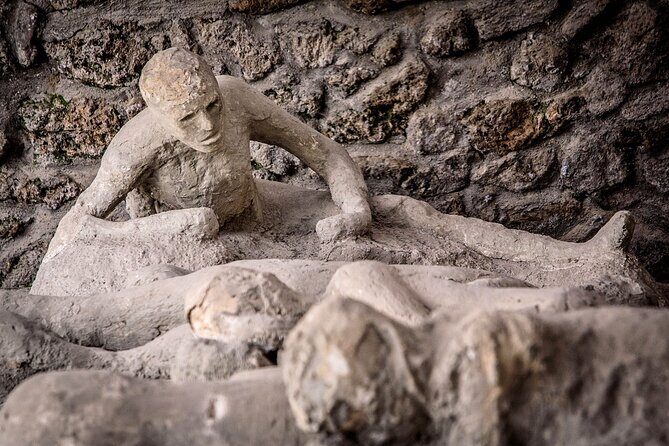
What makes this stop special is what your guide points out next: you can see plaster casts of bodies associated with archaeological methods used to understand what happened during the eruption. You’ll learn how archaeologists reconstruct the human story when soft remains are long gone.
Even if you’re emotionally affected easily, I think this stop is one reason to book a guided tour. It turns the tragedy into a learning tool—without turning it into a spectacle.
Forum Baths: best-preserved daily routine and mixed city life (in layout)
You then visit the Terme del Foro (Forum Baths). These are described as one of the best-preserved parts of Pompeii. The tour notes that female and male parts had separate entrances.
That detail matters because it shows how social norms shaped space. Baths weren’t only about washing. They were a routine. They were a meeting place. Your guide can help you picture the flow of people through separate entry points—so you understand how privacy and public life coexisted.
Thermopolium: the ancient diner feeling
The stop at the Termopolium di Vetuzio Placido brings you to a refreshment place—an old diner where inhabitants grabbed something to eat or drink.
This is one of the more “human scale” moments. Instead of thinking in terms of temples and civic buildings, you think in terms of lunch. And once you think of Pompeii that way, you start noticing why the city had so many places geared toward daily transactions.
Casa del Fauno and the Vettii: wealthy homes and what’s on the walls
The tour includes two house experiences, with an important practical note: openings can be seasonal, so access depends on current schedules.
You’ll stop at:
- House of the Faun (Casa del Fauno): one of Pompeii’s largest houses, with a Latin sidewalk welcome inscription (HAVE).
- House of the Vettii: associated with rich ownership and placed under the protection of Priapus, the god of prosperity.
This pair of stops gives you a quick compare-and-contrast of how Pompeii’s elite lived. Your guide helps you move beyond “big house” into how the space communicated status and identity. Even if you don’t go inside fully, the exterior and key features still make sense with the right explanation.
Via dell’Abbondanza: the ancient main street
Then comes Via dell’Abbondanza, the ancient main street (decumanus maximus). Main streets are where the city’s energy collects—shops, movement, and visibility.
This stop is a good reset before you end with the theater. Your guide helps you see the street as an organizing spine, not just a walking corridor. After this, you’re better at imagining where people went next and how the city directed foot traffic.
Teatro Grande: where Greco-Roman drama happened
Finally, you reach Teatro Grande, the large theater. Comedies and tragedies in the Greco-Roman tradition were performed here.
A theater is built for listening and watching, but in a ruined city, it can be hard to picture sound and staging. This is where your guide’s job really pays off. With the right cues, the seating and the stage area start feeling like a real performance space, not only “stone steps.”
Small-group value: why up to 15 people changes the experience
The tour limits the group to a maximum of 15 travelers. That’s the sweet spot for a place like Pompeii. If you’re in a huge group, you spend time waiting and trying to regain your place. In a smaller group, you can hear explanations and keep your own pace.
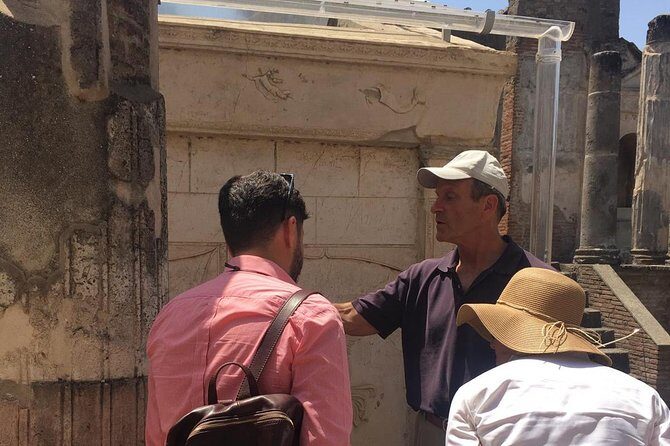
The guide style also matters. The experience highlights archaeologist-led expertise, and the guide’s passion shows in how questions get handled. Names like Ricardo, Rafael, Antonio, and Ornella come up in the guide stories you’ll hear from others—especially for clear English and for adding details beyond what you’d guess by looking.
Two hours also creates a practical advantage: you finish with enough energy to explore nearby on your own. That matters because Pompeii is still full of things the tour won’t get to.
Price check: $30.25 plus the Pompeii admission ticket
At $30.25 per person, the tour price itself is only part of the total. Pompeii Archaeological Park admission is €19.00 per adult (free under 18). In other words, you should plan on paying the tour fee and the park ticket.
This tour can still be good value because the guide is doing the heavy lifting—interpretation, route efficiency, and priority entry that saves your time at the gate. If you’re going without guidance, you might wander and miss patterns. Here, you’re paying for a focused lens.
Also note the tour provides a link so you can purchase tickets online ahead of time, sent the afternoon before. That helps you arrive more prepared.
One key clarification: the ticket you get through the booking platform is not the entry ticket for the archaeological site. The site entry ticket is separate and must be purchased for admission. Your guide can help with that on the day.
When this tour is the best fit
This is a great match if you:
- Want the main Pompeii highlights without getting overwhelmed.
- Prefer a guided pace over solo wandering.
- Like learning how archaeologists interpret evidence, not only what things are called.
- Enjoy asking questions and getting answers in English.
It may be less ideal if you:
- Want a slow, deep visit of just one neighborhood or a single major site.
- Plan to rely entirely on your own interpretation—Pompeii rewards preparation, but the guide structure here is doing real work.
Practical tips so your day goes smoothly
Pompeii is not gentle on your feet. Even with short stops, you’ll walk on uneven surfaces. Wear comfortable walking shoes. Bring a layer if the weather shifts, because the ruins don’t protect you from wind.
If you’re the type who likes photos, know you may not have unlimited time at every stop. The tour keeps a steady rhythm, so I recommend doing quick snaps during the guided explanation, then using your remaining energy afterward to linger where you feel drawn in.
Also, if you’re using any audio device during the tour, make sure it’s working. Clear sound is part of what makes a guide’s explanations land well in a busy open site.
Should you book this Pompeii VIP small-group tour?
If you’re visiting Pompeii for the first time and you want to leave with a real understanding—not just pictures—this tour is a strong choice. The combination of priority entry, a small group (max 15), and an archaeologist-led route that covers the Forum, baths, markets, homes, and theater gives you a smart overview in about two hours.
Skip it only if you’re determined to do Pompeii slowly with zero structure, or if you want full coverage of every famous attraction. For most people, this tour acts like a map plus a translator.
FAQ
FAQ
How long is the Pompeii VIP small-group tour?
It runs for about 2 hours.
How many people are in the group?
The tour has a maximum of 15 travelers.
Is the tour offered in English?
Yes, it’s offered in English.
Are Pompeii park admission tickets included in the price?
No. Pompeii Archaeological Park admission is not included. It’s €19.00 per adult, and free under 18.
What does the priority entry actually help with?
You enter via a separate priority line to avoid a long wait at the gate.
Does the booking ticket serve as my entry ticket to Pompeii?
No. The Viator ticket is for joining the tour. You must buy the Pompeii archaeological site entry ticket separately.
Where is the meeting point?
The tour meets at Via Villa dei Misteri, 1, 80045 Pompei NA, Italy, and it ends back at the same meeting point.
What if the weather is bad?
This experience requires good weather. If it’s canceled due to poor weather, you’ll be offered a different date or a full refund.
Can I cancel for a full refund?
Yes, you can cancel for a full refund if you cancel at least 24 hours before the experience’s start time.