REVIEW · POMPEII
Pompeii 2h Small-Group Tour with Expert Archaeologist
Book on Viator →Operated by Mondo Guide Srl · Bookable on Viator
Two hours, and Pompeii still feels huge. This is a fast, well-paced way to see Pompeii with a guide and cover major spots you’d otherwise bounce past. The plan is built around guided highlights and an included entrance ticket, so you get structure without spending your whole day lost in ruins.
What I really like is how the stops are chosen for maximum payoff. You move through iconic public buildings, daily-life spaces, and private homes, and the guide keeps the story moving instead of just listing dates. I also like the small-group feel, with a crowd-friendly pace that (for many guides) includes pausing in shaded areas when the heat is doing its thing.
One drawback to consider: the 2-hour limit means you’ll get a “best-of” look, not a slow, detailed deep study. If you want heavier archaeology, you might feel a bit rushed at some stops, because each place gets only a short visit.
In This Review
- Key highlights to know before you go
- Pompeii in Two Hours: Why This Small-Group Works
- Price and Value: Ticket Included for a Guided Best-Of
- Where to Meet and How to Time Your Arrival
- The Walk Through Pompeii: Stop-by-Stop Highlights
- Archaeological Park of Pompeii: Frescoes and the Big Picture
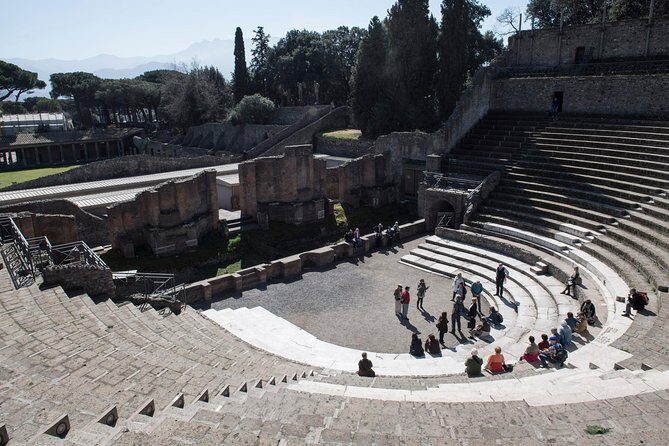
- Odeon (Teatro Piccolo): A Theater for Smaller Gatherings
- Teatro Grande: Pompeii’s Most Important Theater
- House of Menander: Luxury, Decoration, and Design
- Stabian Baths (Terme Stabiane): The City’s Oldest Thermal Complex
- Lupanar: The Famous Brothel in Pompeii
- Via dell’Abbondanza: The Main Street Feeling
- House of the Faun: One of Pompeii’s Largest Residences
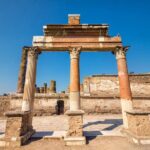
- Foro and Basilica: The City’s Heart—Square and Shelter for Business
- Crowd, Heat, and Footwear Reality Check
- Family-Friendly? Yes, With One Big Caution
- Guides and English: What You Can Expect
- Tips That Can Save You Money on Entry
- Should You Book This Pompeii 2-Hour Tour?
- FAQ
- What languages is the tour offered in?
- How long is the Pompeii tour?
- Where do I meet the group?
- Is the Pompeii entrance ticket included?
- Is this tour suitable for children?
- Are there rules for free entry for kids?
- What if the minimum group size isn’t met?
Key highlights to know before you go
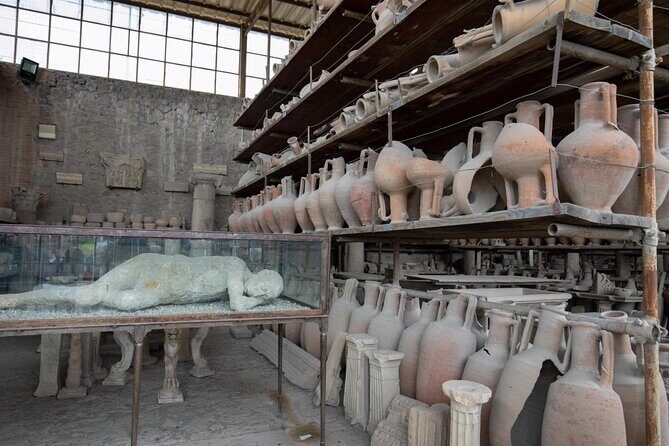
- A tight route through Pompeii’s must-sees: theaters, baths, a brothel, major homes, and the public heart of the city.
- Short stops that still tell a story: you get orientation plus key details fast.
- Included Pompeii entry: your tour covers admission (with special free-entry rules you should know).
- Guides who handle real-world conditions: shade breaks and pace adjustments come up again and again.
- Small-group cap: up to 30 people, with a minimum of 6 to operate.
Pompeii in Two Hours: Why This Small-Group Works
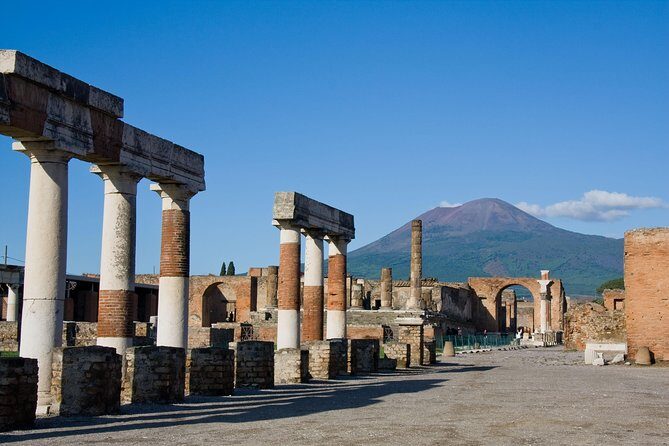
Pompeii is massive. Even if you’re a confident self-guided walker, you can easily spend 90 minutes just figuring out where you are and what to care about. This tour’s value is simple: it gives you a route that funnels your attention to the places that answer big questions, like how people gathered, ate, shopped, bathed, and lived behind the walls.
In a short visit, the guide’s job is to help you see patterns. You’re not just looking at stones—you’re understanding what a theater meant for community life, what baths meant for daily routine, and what a wealthy house signaled socially. That’s why people often feel they would have missed essential connections without a guide.
You’ll also appreciate the “real day” pacing. Pompeii can be hot, crowded, and tiring fast. Several guides described in the experience feedback focus on keeping the group moving at a manageable speed and stopping where there’s relief from direct sun when possible.
You can also read our reviews of more tours and experiences in Pompeii


Price and Value: Ticket Included for a Guided Best-Of
At $32.67 per person for about 2 hours, you’re paying for two things: (1) a guided walkthrough and (2) Pompeii admission included with the tour experience. That’s the part many travelers forget when comparing “free admission” plans. If you’re not eligible for a free entry day, the entrance component makes the overall deal feel more balanced.
It’s also priced for people who want to get their bearings quickly. If your schedule is tight—maybe you’re on a day trip, or your train timing leaves you limited hours—this format helps you avoid wasting time on the wrong paths. You also get a mobile ticket, which reduces stress when you’re trying to check in efficiently.
One more value note: there’s a stated option to upgrade to a private tour. That’s worth considering if you want longer conversations, more time at fewer stops, or a quieter experience for kids or grandparents who may need more breaks.
Where to Meet and How to Time Your Arrival
Meeting point: Ristorante Suisse, Piazza Esedra, 10/13, 80045 Pompei (NA), Italy. The tour ends back at the same meeting point, so you don’t have to worry about planning a separate return route.
The meeting spot is described as near public transportation, which matters in Pompeii because schedules and walking times can get weird depending on where you’re coming from. If you’re coming by train from Naples, build in buffer time anyway—Rome-to-Naples delays happen, and when they do, guides in this program often try to adjust smoothly rather than letting you miss everything.
A practical tip: wear shoes you’re comfortable walking in for a couple of hours. Pompeii is uneven underfoot in places, and the tour moves at a steady walking pace. The experience is listed as suitable for travelers with moderate physical fitness, so plan for some stamina, not a sit-down museum tour.
The Walk Through Pompeii: Stop-by-Stop Highlights
This is a structured highlight loop. Some stops are around 10 minutes, while others are about 15 minutes. Think of each one as a focused “chapter” in what daily life in Pompeii looked like.
Archaeological Park of Pompeii: Frescoes and the Big Picture
You begin at the Archaeological Park of Pompeii, where the guide frames the story behind the city’s preservation after Mount Vesuvius erupted in 79 AD. This is your orientation stop: what Pompeii was, why it survived, and what you should watch for as you walk.
You’ll also spend time on frescoes—those wall paintings are one of the fastest ways to move from ruins to real people. Short as the visit is, this stop is a strong start because it sets your eyes for the details you’ll see later.



Odeon (Teatro Piccolo): A Theater for Smaller Gatherings
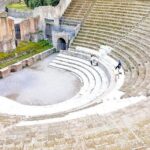
Next comes the Odeon – Teatro Piccolo. This is a chance to see how entertainment and civic life worked in different scales. The “big impression” here is that Pompeii’s theaters weren’t just grand monuments—they were built for gatherings with purpose.
In a quick tour, this stop can be easy to treat as a photo stop. Don’t. Use it to learn what makes this theater distinct before you hit the main one.
Teatro Grande: Pompeii’s Most Important Theater
Then you’ll visit Teatro Grande, described as the most important theater in Pompeii. This is the stop where the guide’s explanations usually matter most: why theaters were central, how crowds would move, and what kind of performance culture a Roman city supported.
With about 15 minutes, you’ll have enough time to look around, not just stand in one spot. Still, if you love architecture details, remember that this is a highlight tour, so the theater won’t get a full deep reading.
House of Menander: Luxury, Decoration, and Design
You move from public entertainment into private wealth at the House of Menander. This is one of the richest homes in Pompeii, known for architecture, decoration, and the contents preserved there.
This stop is a great reality check. Pompeii wasn’t only about crowds and tragedy—it was also about status, taste, and everyday household life. In a shorter format, the guide’s job is to help you read the house like a system: where people would live, how rooms would function, and what the decorations communicated.
Stabian Baths (Terme Stabiane): The City’s Oldest Thermal Complex
The Stabian Baths take you into Roman routines. These baths occupy a vast area and are described as the oldest thermal complex in the city. That alone makes it a must-see, because it connects you to how bathing wasn’t just hygiene—it was social life, and part of how the city kept moving.
Expect about 15 minutes here. It’s enough to understand the layout conceptually and see what makes this complex significant, even if you don’t get time for every nook and corridor.
Lupanar: The Famous Brothel in Pompeii
Next is the Lupanar, described as the most famous brothel in Pompeii. This is one of the most talked-about stops for a reason: it’s vivid, and it’s also uncomfortable. A good guide keeps the tone matter-of-fact and context-based rather than sensational.
This stop works best when you go in ready for history, not shock. Around 10 minutes, it’s quick, but it’s also memorable because it shows Pompeii’s everyday realities were complicated and very human.
Via dell’Abbondanza: The Main Street Feeling
Then you walk along Via dell’Abbondanza, Pompeii’s major street. Even if you’re not doing long sightseeing here, this section helps you connect the buildings you’ve seen to the city’s movement—where people traveled, shopped, and passed through.
If you’ve ever lost your way in a large site, this is the kind of “string” a guide provides. It helps everything link together.
House of the Faun: One of Pompeii’s Largest Residences
The House of the Faun is next, one of the largest and most impressive private residences in Pompeii. Here, you’re shifting back into domestic life, but on a bigger scale than most travelers expect.
This stop is about contrast: public spaces first, then social institutions (like baths), then wealth in the form of a major home. With about 10 minutes, you’ll get enough time to register the size and importance, especially with an explanation guiding what you’re seeing.
Foro and Basilica: The City’s Heart—Square and Shelter for Business
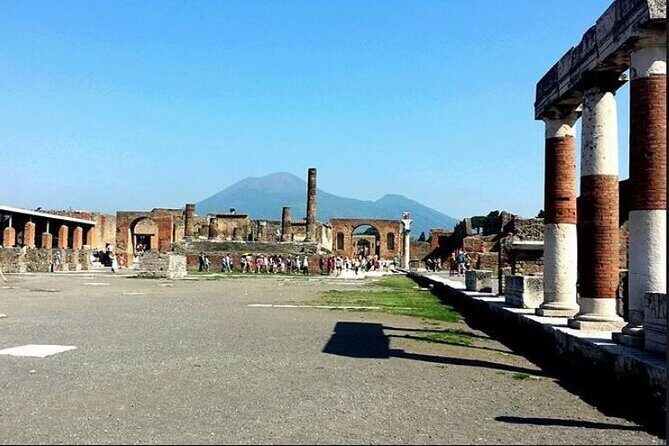
Finally, you visit the Foro de Pompeya (the main square) and then the Basilica, described as an open portico that gave shelter to merchants and other activities.
This ending is smart. It brings you back to the city’s core functions—trade, meeting points, and daily commerce. The square and portico feel like the heartbeat of Pompeii, and after walking through homes and amusements, you finally see where people would actually gather to do business and live their normal day.
Basilica time is about 15 minutes, which is a good match for what this stop needs: enough to understand the role of the structure without turning it into a long sit-still lecture.
Crowd, Heat, and Footwear Reality Check
Pompeii is one of those places where conditions can change your whole day. The experience lists moderate physical fitness, and the route is mostly walking between sites.
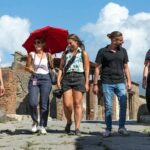
One pattern that shows up in the experience feedback: guides often try to keep the group comfortable. For example, some guides are described as adapting to heat by stopping in shaded areas and pacing the tour so people don’t get overheated and stressed.
For your part, pack practical items. Bring water, sun protection, and layers if weather turns. Pompeii can also get rough when skies misbehave—hail and sideways rain have shown up in at least one experience log, and the guide still kept the flow by finding covered spots for explanations.
Shoes matter. Even on a “short” tour, you’re still spending time on uneven ground and moving between zones of the park.
Family-Friendly? Yes, With One Big Caution
This tour is marketed as family-friendly, and many families are happy with how guides handle kids and keep them engaged. You’ll see examples of guides who worked well with young visitors—people mention patience with kids around elementary school age, and guides who keep explanations easy to follow.
That said, you should know there’s at least one negative account involving kids. One family reported that their children were mocked over an audio headset, which is the opposite of what you want when you’re paying for a kid-friendly experience.
So here’s the best way to handle it:
- If you have kids aged 6 to 8, consider choosing this tour only if your kids do okay with a straightforward walking tour.
- If you’re bringing a teen or older child, you’ll likely get more out of the history stories and the quick “chapter” structure.
- If your kids need constant interaction, ask questions before booking about how the guide handles children during the walk.
Guides and English: What You Can Expect
The tour runs in English, which is a big deal in Pompeii because you’ll hear the story differently depending on the guide’s style. The experience feedback includes praise for several guide names—Luca, Gianluca, Roberta, Manuela, Patrizia, Clare, Keeva, Mafilda, Enzo, and Barbara.
Common praise points: guides who make Pompeii feel like a place with people in it, guides who keep a moderate walking pace, and guides who are easy to understand. Some guides are also described as good at handling families and keeping kids from losing interest.
There’s also one caution: one guest felt the tour didn’t feel archaeological enough for their expectations. If what you want is heavy archaeology and technical detail, you should go into this as a highlights tour, not a lab-style lecture.
Tips That Can Save You Money on Entry
Pompeii entry rules matter because your tour includes admission, but you may have other options depending on the date.
- First Sunday of each month: Pompeii’s entrance ticket is always free.
- Under 18: entrance is always free, but kids must show valid ID (passport or document) on the day.
If you’re traveling with kids, or you happen to visit on that first Sunday, do the math. Sometimes buying a guided entry still makes sense because the guide is the value. But if you already qualify for free admission, you can better judge what you’re truly paying for: primarily the interpretation and routing.
Should You Book This Pompeii 2-Hour Tour?
Book it if you want a smart, efficient overview and you’re short on time. This is a strong choice for:
- first-timers who want the highlights without mapping your own route
- families with kids who can handle a history walk
- people who want a guide to explain the meaning behind the major sites quickly
Consider skipping and doing a self-guided approach if:
- you prefer slower pacing and longer reading at each structure
- you want very deep archaeological analysis
- your kids need very interactive, kid-activity style engagement all the way through
My rule of thumb: if you have limited hours, this tour is built for that reality. Pompeii can overwhelm your brain if you try to do everything on your own. A good guide makes the place click fast—and even with only two hours, you’ll leave with a clearer sense of what Pompeii was.
FAQ
What languages is the tour offered in?
The tour is offered in English.
How long is the Pompeii tour?
It lasts about 2 hours.
Where do I meet the group?
You start at Ristorante Suisse, Piazza Esedra, 10/13, 80045 Pompei (NA), Italy, and the tour ends back at the same meeting point.
Is the Pompeii entrance ticket included?
Yes, admission is included for the stops listed in the tour.
Is this tour suitable for children?
It is marketed as family-friendly, and it’s designed to keep kids engaged during the visit. Still, the experience is primarily a guided walk, so it may work better for children who can handle that style of touring.
Are there rules for free entry for kids?
Yes. Pompeii entrance is always free for people under 18, but they must show a valid document (ID or passport) on the day of the tour.
What if the minimum group size isn’t met?
The tour requires a minimum number of travelers (6). If it’s canceled because the minimum isn’t met, you’ll be offered an alternative or a full refund.