REVIEW · POMPEII
2 Hours Private Tour in Pompeii with Archaeologist
Book on Viator →Operated by Napoli e dintorni - Archaeological tour guide · Bookable on Viator
Pompeii feels way less confusing with a plan.
This 2-hour private Pompeii tour pairs a licensed guide with a specialized archaeologist to help you read the ruins like a living city—what you’re seeing, why it mattered, and what details still survive. You’ll move through major stops with a clear focus on “hidden” corners and everyday life, using a mobile ticket for the activity.
I love two things most. First, the archaeologist approach: you’re not just looking at stone walls, you’re getting explanations that connect buildings and art to real Roman routines. Second, the structure: you hit key highlights in a tight route, so you don’t lose the day to wandering and guesswork.
One consideration: the tour is only about two hours, and the archaeological park entrance fee is not included, so you’ll want your ticket plans sorted before you go.
In This Review
- Key highlights you’ll care about
- Pompeii with an archaeologist’s lens (not a random walk)
- Meeting at Via Roma and what “private” means here
- Your 2-hour Pompeii route: what each stop is really for
- Palestra Grande (largest gymnasium)
- Roman Amphitheater (Anfiteatro Romano)
- Praedia di Giulia Felice (a major private complex)
- House of Venus in the Shell (frescoes)
- Casa di Ottavio Quartione (frescoes + outdoor dining)
- Orto dei Fuggiaschi (13 victims found)
- Necropoli di Porta Nocera (cemetery outside the walls)
- Palestra Grande and Anfiteatro Romano: reading public life in stone
- Frescoes in private homes: House of Venus and Casa di Ottavio Quartione
- Praedia di Giulia Felice: status, space, and the scale of wealth
- Orto dei Fuggiaschi and Necropoli di Porta Nocera: the city’s end and its memory
- Price and value: is $267.46 per group a good deal?
- Who should book this tour (and who might want more time)?
- Tips to get the most from a short Pompeii session
- Should you book? My practical take
- FAQ
- How long is the Pompeii private tour with an archaeologist?
- Is this tour private, and how many people are in a group?
- Is the Pompeii archaeological park entrance fee included?
- Where does the tour start and end?
- What ticket format is used for this experience?
- What happens if weather is poor?
- Can I cancel for free?
Key highlights you’ll care about
- Special archaeologist-led storytelling that helps you understand what you’re seeing at each stop
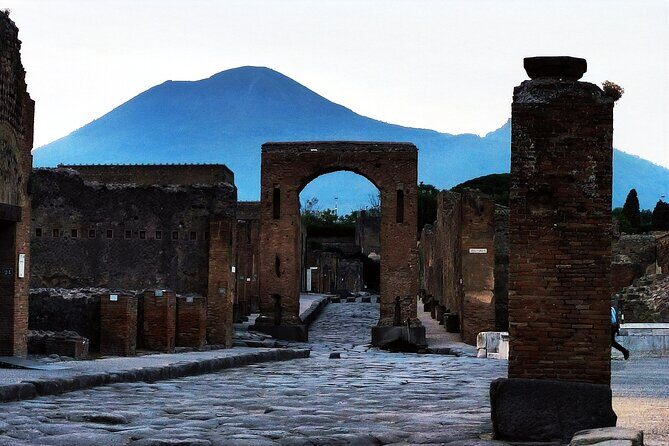
- Seven major Pompeii stops in one focused route, from Palestra Grande to Porta Nocera
- Fresco and home-life focus at places like the House of Venus in the Shell and Casa di Ottavio Quartione
- Meaningful, human scale moments at Orto dei Fuggiaschi, where 13 victims were found
- Quick handling of crowds and logistics so your group can keep moving
- Private group up to 15 people with room for questions, including for kids
Pompeii with an archaeologist’s lens (not a random walk)
Pompeii is big. Even if you’ve done the classic guidebook route before, it can still feel like information overload—stone, labels, street crossings, and nowhere to anchor the story. This tour tackles that by keeping you on a short leash: a licensed guide plus a specialized archaeologist, working like a translator for the site.
The real value is the way you’ll be nudged to notice details that self-guiding usually misses. Roman public buildings aren’t just “cool ancient stuff.” They were tuned for daily habits—training, spectacle, status, and social life. Private homes weren’t just decorated boxes. They were built for how people ate, worked, hosted guests, and showed off taste.
And if you like asking questions, you’ll probably find this style fits you. The group stays together, the guide keeps the line moving, and the archaeologist angle makes the explanations stick.
You can also read our reviews of more private tours in Pompeii


Meeting at Via Roma and what “private” means here
You start and end at Via Roma, 101, 80045 Pompei NA, Italy, and the tour returns you to the same spot. It’s private, meaning only your group participates, with a maximum group size of 15.
That group size matters more than it sounds. With Pompeii crowds and uneven walking surfaces, a larger group can slow down and scatter. A smaller “private” group keeps the pacing readable, and it’s easier for the guide to keep track of everyone—bags, kids, questions, and the occasional stop to re-group.
You’ll also use a mobile ticket for the activity. Do yourself a favor and keep your phone charged, screen brightness up, and the ticket page ready before you arrive. Pompeii is not the place for last-minute app hunting.
Your 2-hour Pompeii route: what each stop is really for
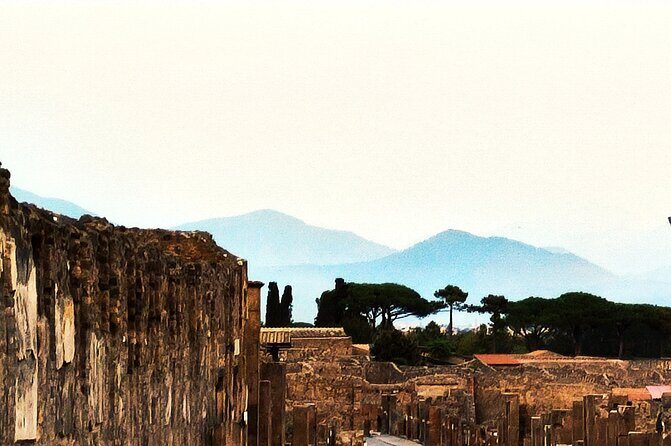
This tour is built as a highlight ladder. You don’t “cover everything.” You cover the most meaningful pieces—public life, private life, art, and the eruption’s aftermath—so you leave with a story that makes sense.
Each stop is about 15 minutes except the necropolis segment, which runs about 30 minutes. If you arrive late, the guide may reduce the tour duration, so try not to build your day around “we’ll see how it goes.”
Here’s how the stops connect:
Palestra Grande (largest gymnasium)
You begin at Palestra Grande, the largest gymnasium in Pompeii. A gymnasium in Roman terms wasn’t only about workouts. It was a public space tied to training, socializing, and status. Even if you’re not a “sports ruins” person, this stop helps set the tone for Pompeii as an active city, not just a museum.
Roman Amphitheater (Anfiteatro Romano)
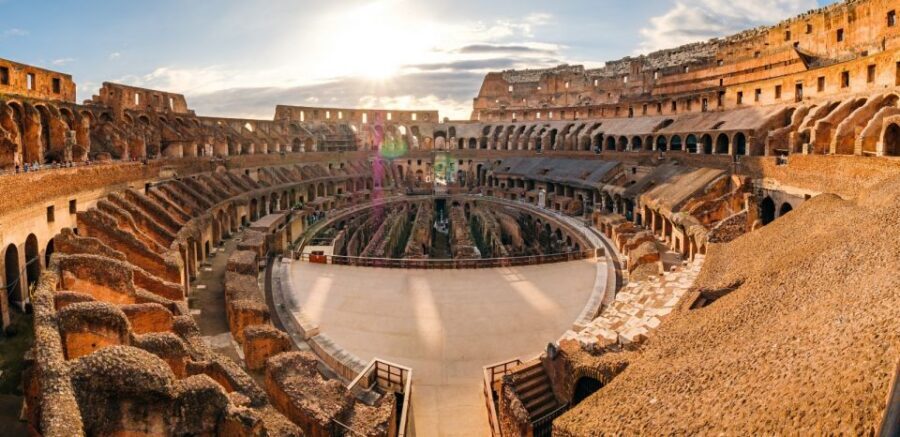
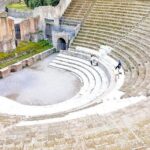
Next comes the Roman Amphitheater, one of Pompeii’s best-preserved buildings of its kind and among the oldest worldwide (as the tour description notes). Amphitheaters are easier to understand with guidance because you can connect the architecture to spectacle and crowd behavior. You’ll be looking at stone shaped for viewing, noise, and drama.
You can also read our reviews of more tours and experiences in Pompeii


Praedia di Giulia Felice (a major private complex)
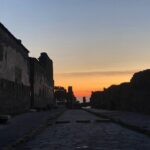
Then you shift from public spectacle to private space at Praedia di Giulia Felice, described as one of the largest private houses in Pompeii. This is a useful mental reset. You’ll start thinking about wealth, privacy, and how property could work like an asset rather than just a home.
House of Venus in the Shell (frescoes)
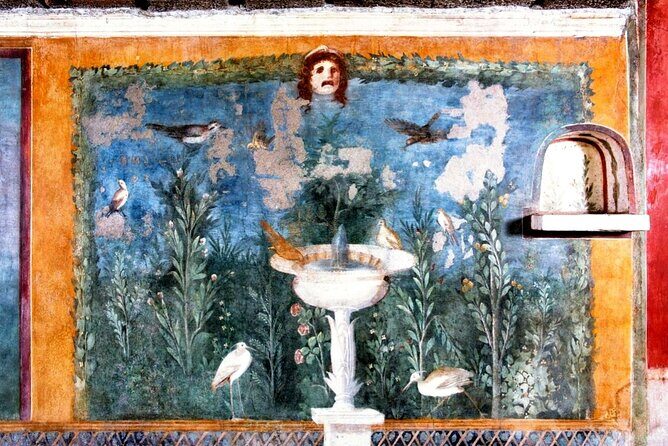
At the House of Venus in the Shell, the focus is on frescoes. This stop is perfect if you like visual details. Frescoes in Pompeii can feel like time capsules—bright color and purposeful design that hint at what people wanted visitors to notice.
Casa di Ottavio Quartione (frescoes + outdoor dining)
You then visit Casa di Ottavio Quartione, where you can admire magnificent frescoes and a splendid outdoor biclinium (an outdoor dining area). This is the part where Pompeii stops feeling abstract. You’ll picture meals, hosting, and daily rhythms in a home built for social performance.
Orto dei Fuggiaschi (13 victims found)
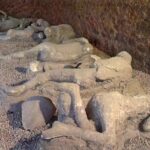
The tone turns solemn at Orto dei Fuggiaschi, where 13 victims of the eruption were found during excavations. This is not a “quick photo stop.” It’s a moment that gives weight to everything you’ve just seen—public life, art, wealth—and reminds you that the city’s story ended abruptly.
Necropoli di Porta Nocera (cemetery outside the walls)
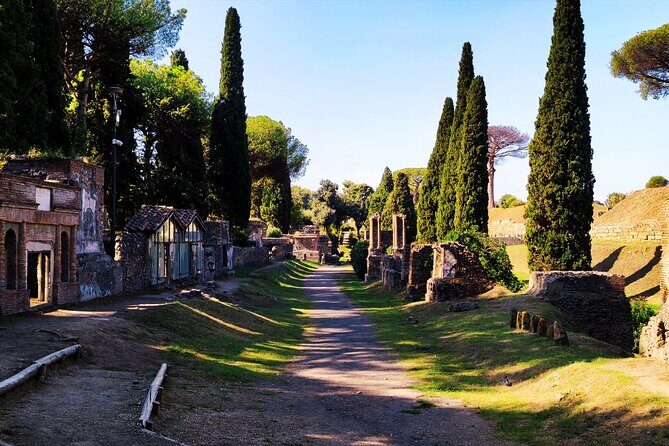
Finally, you cross toward the Necropoli di Porta Nocera. This is the outer area with one of Pompeii’s largest cemetery zones. The city walls matter here. You’re moving from Pompeii the living city to Pompeii the remembered place, and that shift often makes the ruins feel more complete.
Palestra Grande and Anfiteatro Romano: reading public life in stone
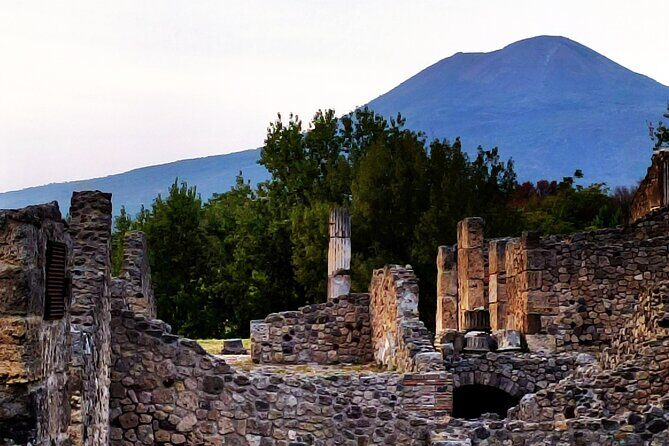
If you’re the kind of traveler who wants Pompeii to explain itself, the best payoff often comes from public spaces. Palestra Grande gives you that foundation. You’re seeing how Romans trained and gathered, not just how ruins look from the outside. A good guide helps you understand why a gymnasium would be the largest in town and how that signals civic priorities.
Right after that, the Amphitheater helps you spot the “why” behind the shape. Even without going deep into technical history, you can often feel how an arena was built to hold attention—views, movement, and the sense of anticipation. When a guide points out what matters, you don’t just see seating. You recognize purpose.
This pair is also smart time management. If you tried to self-guide these first two stops in a maze of paths, you might end up confused about what you’re looking at. With this route, you’re led straight into the major story beats: training and public spectacle.
Frescoes in private homes: House of Venus and Casa di Ottavio Quartione
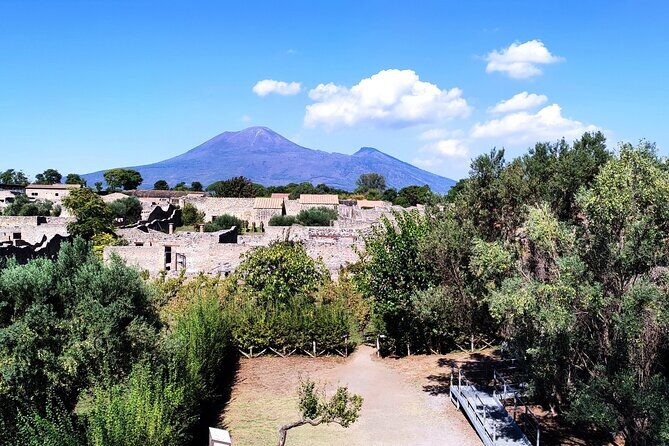
Pompeii’s private houses are where the city stops being only architecture. They become art and daily behavior.
At the House of Venus in the Shell, the tour spotlights frescoes. Frescoes aren’t “just decorations.” They’re a communication tool—what a family wanted to show, and how visitors were meant to feel. With an archaeologist guiding your eyes, you’re more likely to notice composition, color choices, and how the rooms were meant to flow.
Then comes Casa di Ottavio Quartione, which adds another layer. You’re shown magnificent frescoes and an outdoor biclinium, a dining area designed for time with others. This is one of the best places in Pompeii to connect what you’re seeing with a human moment: food, conversation, and social rituals.
If you like visual souvenirs, this section tends to deliver. It’s also where you can ask the most interesting questions—why certain rooms were arranged the way they were, and what the design suggests about status and taste.
Praedia di Giulia Felice: status, space, and the scale of wealth
Not every stop is “pretty art.” Praedia di Giulia Felice matters because it shows you scale and ownership in the Roman city.
The tour frames it as one of the largest private houses in Pompeii. That size changes how you interpret everything else. It suggests that private wealth wasn’t small or hidden. It shaped how much space families could control, how property could be organized, and how homes could function as both residence and statement.
This stop also helps you understand the city as an engine of class differences. When you move from amphitheater spectacle to a large private complex, you’re basically walking through two versions of power: public attention and private influence.
Orto dei Fuggiaschi and Necropoli di Porta Nocera: the city’s end and its memory
At Orto dei Fuggiaschi, you’ll encounter a hard moment in Pompeii’s story: the site where 13 victims were found during excavations. The guide’s job here isn’t to sensationalize. It’s to keep the focus on what the site represents and how archaeology helps us understand sudden loss.
After that, you move to the Necropoli di Porta Nocera, described as one of Pompeii’s largest cemetery areas. Visiting cemeteries on a Pompeii walk changes your brain rhythm. You’re no longer thinking about meals and entertainment. You’re thinking about remembrance and the movement from living space to burial space—especially with the city walls separating those worlds.
This last section is where many people feel the tour becomes more meaningful. It also helps you tie the whole experience together: Pompeii wasn’t just preserved because it was lucky. It was preserved because catastrophe froze a society in time.
Price and value: is $267.46 per group a good deal?
The price is listed as $267.46 per group for up to 15 people, for a tour length of about 2 hours. That can look pricey if you assume it’s per person. It isn’t. It’s per group.
Here’s the value math:
- If you max out at 15 people, you’re roughly at $18 per person.
- If you have 5 people, you’re roughly at $54 per person.
- If you have 2 or 3 people, it’s more like $90+ per person.
So the value depends on your group size and how you like to travel. If you’re a family, a small friend group, or a larger group coordinating schedules, this can be a surprisingly efficient way to pay for expertise. You’re buying time, not just facts—someone else handles the route logic, keeps you moving, and helps you interpret what you see in a short visit.
The entrance fee for the archaeological park is not included, so budget for that separately. It’s a common “gotcha,” but it’s also easy to manage if you plan ahead before meeting.
Who should book this tour (and who might want more time)?
This tour fits best if you:
- Want a guided route that prevents Pompeii from feeling chaotic
- Care about frescoes and daily life, not only famous landmarks
- Are traveling with a group size that makes private pricing reasonable
- Prefer a guide who can manage logistics quickly when crowds slow things down
It might be less ideal if you’re the type who wants hours to roam freely and linger at every street corner. Two hours is built for highlights. Even with the archaeologist focus, it won’t feel like a full day at Pompeii. If you’re dreaming of a long, slow “see everything” plan, you’ll likely want either a longer tour or multiple visits.
Tips to get the most from a short Pompeii session
Pompeii rewards preparation. With a tight 2-hour window, small decisions matter.
- Get your archaeological park admission sorted in advance since it’s not included.
- Wear shoes you trust on uneven ground and plan for sun and stairs.
- Come with a couple questions ready. Ask about how the public spaces worked, or how a home’s layout could signal wealth and status.
- Keep your expectations realistic: you’re sampling the city’s best story beats, not exhausting every site.
And if you’re traveling with kids, this style of guiding tends to work well because it keeps the group together and supports questions rather than shutting them down.
Should you book? My practical take
Book it if you want Pompeii to make sense fast—especially if you like an archaeologist’s interpretation of public life, private homes, and what the excavations reveal. The structure is smart for short stays, and the private format helps you move without losing your group.
Skip it or rethink if you want long free time or you’d rather pay for a full-day experience at a slower pace. Pompeii is too big to be one-and-done, but this tour is a strong way to get the “right story” in a short visit.
If your goal is: see the best highlights, understand what they mean, and avoid feeling overwhelmed, this one checks that box.
FAQ
How long is the Pompeii private tour with an archaeologist?
It runs for about 2 hours.
Is this tour private, and how many people are in a group?
Yes, it’s private. The group can be up to 15 people.
Is the Pompeii archaeological park entrance fee included?
No. Admission tickets are not included for the stops, so you’ll need to purchase the archaeological park entrance separately.
Where does the tour start and end?
The tour starts at Via Roma, 101, 80045 Pompei NA, Italy and ends back at the same meeting point.
What ticket format is used for this experience?
The tour uses a mobile ticket.
What happens if weather is poor?
The experience requires good weather. If it’s canceled due to poor weather, you’ll be offered a different date or a full refund.
Can I cancel for free?
Yes. There’s free cancellation up to 24 hours in advance for a full refund.