REVIEW · POMPEII
Skip-the-Line Half-Day Private Tour Ancient Pompeii Highlights with Native Guide
Book on Viator →Operated by Tours of Pompeii with Lello & Co. · Bookable on Viator
Pompeii feels easier with a real plan. I like this tour because it’s built for skip-the-line entry and for learning the stories behind what you’re seeing with an art historian-style guide. The one possible drawback is the time limit: it’s about two hours, so you’ll leave knowing the highlights well, not every corner of Pompeii.
You’ll hit a smart slice of the ruins: the main streets, the Roman bath culture at the Stabian Baths, and the Forum area where daily life centered. It’s also private, which matters here. You’re not stuck waiting for a big group to shuffle forward, and the guide can keep the pace comfortable while still covering the key sights.
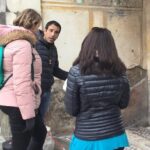
If you visit in summer, bring water and plan for sun. And with guides like Lello, Italo, Fabio, or Rosanna (depending on your departure), the best part is often the energy: they turn stone and frescoes into a lived-in city, including moments tied to the theaters and even an underground section people love.
In This Review
- Key highlights worth your attention
- Why Pompeii feels different with skip-the-line access
- Getting oriented fast at the meeting point in Pompeii
- The Roman city “spine” you’ll walk with Teatro moments
- A small tip I’d follow here
- Via dell’Abbondanza: the main street feel in real scale
- Stabian Baths: how Roman bathing worked
- What to watch for
- Forum area (Foro di Pompeya): the civic heart you can actually read
- Lupanar (Lupanare): the frescoes people talk about
- Pompeii Archaeological Park time: how the 2 hours add up
- What makes this private tour feel worth the money
- Practical advice before you go
- Who this half-day Pompeii private tour suits best
- Should you book this skip-the-line Pompeii private tour?
- FAQ
- FAQ
- How long is the Pompeii highlights private tour?
- Is this tour private?
- Does the tour include skip-the-line entry?
- What’s included with the tickets?
- Where do we meet?
- Is hotel pickup or drop-off included?
- What language is the tour offered in?
- Is this suitable for children and moderate walking?
- Can I get a full refund if I cancel?
- What happens if the weather is poor?
Key highlights worth your attention
- Guaranteed skip-the-line entry so your morning stays on your schedule
- Private format for smoother crowd navigation and a pace that fits your group
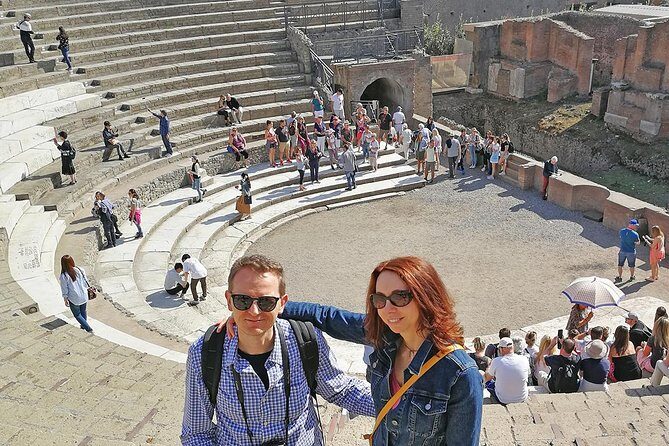
- Teatro Grande and Teatro Piccolo moments, including how sound works there
- Stabian Baths (Terme Stabiane) for a clear look at Roman bathing life
- Forum focus where you’ll see market and civic space in context
- Lupanar (Lupanare) for a direct look at the famous erotic frescoes
Why Pompeii feels different with skip-the-line access
Pompeii is big, and the ticket lines can eat your day. This half-day plan fixes that by building in guaranteed skip-the-line entry, which is one of the best value moves you can make at a place like this. When you don’t spend your first hour standing around, you actually get to enjoy the ruins instead of only managing time.
Second, the tour is private. That means you can move at a human pace—pause when something grabs your eye, ask questions, and avoid the awkward gaps that happen when you’re following a crowd. Private tours also help on uneven terrain and around crowded pinch points, because you’re not forced into one single flow.
The practical trade-off is what you’d expect from a 2-hour format: you’re not touring every major neighborhood. You’re touring the parts that give you the strongest “aha” about how Pompeii worked—street life, public spaces, baths, and a few of the city’s most talked-about buildings.
You can also read our reviews of more guided tours in Pompeii


Getting oriented fast at the meeting point in Pompeii
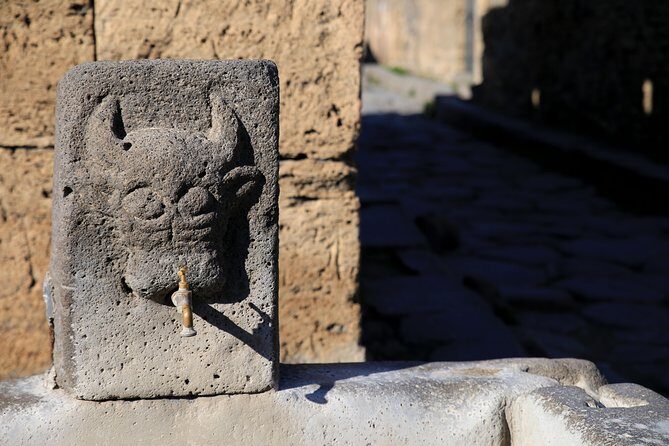
The tour starts and ends back at the meeting point near Hotel Vittoria, Piazza Esedra, 80045 Pompei, which keeps things simple. You’ll want to be there a few minutes early so you’re not rushed into the first walk.
You also get a mobile ticket, and confirmation comes at booking. For most visitors, that removes friction on arrival. You can focus on the site rather than hunting paperwork.
Because it’s near public transportation, you don’t need a car to make this work. Pompeii is still a place where walking is unavoidable, though: plan on a moderate physical level, and wear shoes that handle rocky ground and lots of stairs.
The Roman city “spine” you’ll walk with Teatro moments
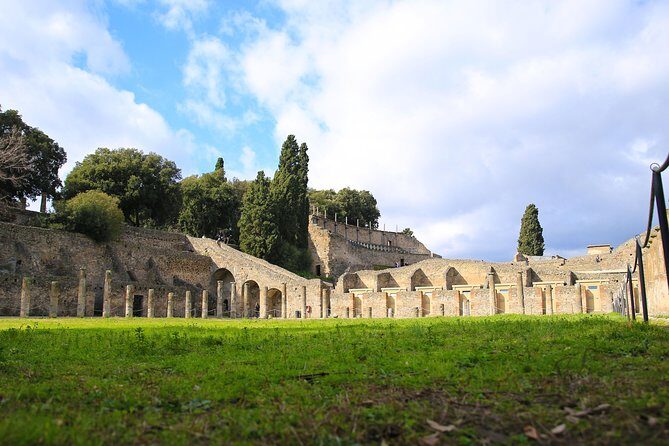
The experience opens by walking Pompeii’s central story, not by throwing you into random buildings. You’ll move through the main streets and key public areas while your guide turns the ruins into something you can picture.
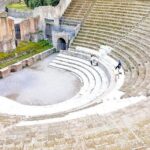
One of the most memorable parts is the theater sequence, built around Teatro Grande and the smaller Teatro Piccolo. You’ll hear explanations about the acoustic design of these spaces—how the layout helps sound travel in a way that still feels impressive today. This is the kind of detail that makes you look twice: you stop thinking only about seating and start thinking about performance, crowd energy, and how Roman architecture served daily entertainment.
You’ll also connect buildings to everyday routines. Your guide points out how people moved through Pompeii—where they walked, what kinds of spaces they used, and what the city looked like during active market hours.
A small tip I’d follow here
If you’re sensitive to heat, aim to keep your stops short and hydrate during the transitions. A two-hour highlight tour can include standing and short climbs, and summer sun can turn fast into fatigue.
Via dell’Abbondanza: the main street feel in real scale
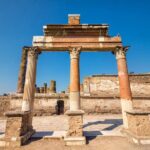
A highlight stop is Via dell’Abbondanza, the city’s famous main thoroughfare. Walking this stretch with context is a big difference from wandering alone. Instead of seeing columns and street stones as “just ruins,” you get a sense of how a Roman city moved people in a straight line from everyday errands to major civic hubs.
This stop is also short by design. That’s not a flaw; it’s smart scheduling. You’re using your time where the guide can best explain layout and how Pompeians lived along a street like this.
If you tend to get lost easily in big sites, you’ll probably appreciate how the guide keeps you anchored to the city’s logic. Pompeii is easy to feel overwhelmed by—this is the antidote.
You can also read our reviews of more private tours in Pompeii




Stabian Baths: how Roman bathing worked
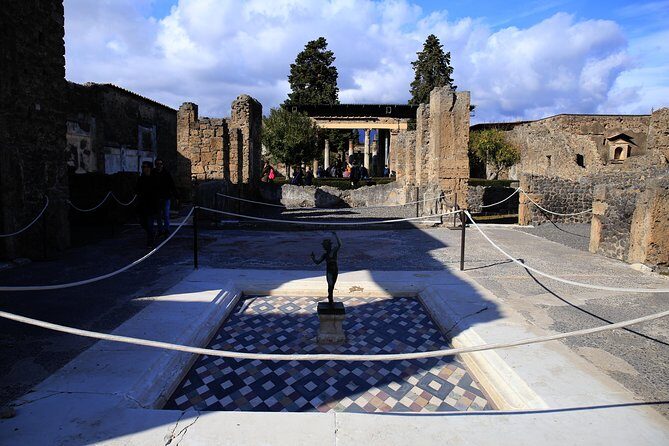
At the Stabian Baths (Terme Stabiane), you step into a building type that was central to Roman social life. This is where the tour does something more useful than “look at the wall.” Your guide walks you through how the bathing experience was structured and what it meant for daily routines.
Bath complexes weren’t just about cleanliness. They were about status, social time, gossip, relaxation, and meeting people. When you get the function right, the ruins start making sense. You’ll better understand the layout, the flow of spaces, and why so much effort went into plumbing and design.
What to watch for
Bath areas can feel busy inside because people want photos near the best-preserved sections. If you want fewer crowds around you, the private pacing helps. You’re more likely to get a quiet moment for details like floor patterns, wall remnants, and how rooms connect.
Forum area (Foro di Pompeya): the civic heart you can actually read
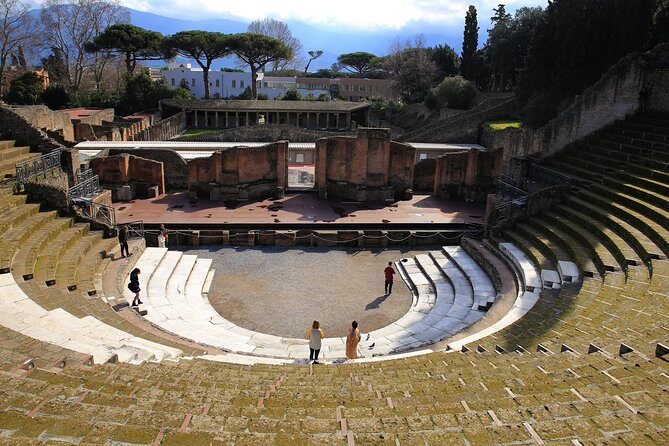
The tour brings you to the Forum (Foro di Pompeya), where civic life, commerce, and public events overlapped. This is the place that can feel confusing if you’re walking it solo, because the ground is uneven and the “what happened here?” story isn’t obvious.
With a guide, the Forum turns into a map. You’ll understand markets and gathering spaces as part of the city’s daily rhythm, not as isolated ruins. The excavated sections help you see where buildings stood and how the area functioned as a center.
An extra payoff: you may also get access to an underground section of the site route. People often love this part because it changes perspective. You’re not just looking at the walls from street level; you’re appreciating how layers of the city fit together—what’s above, what’s below, and how the ruins reveal the original layout.
Lupanar (Lupanare): the frescoes people talk about
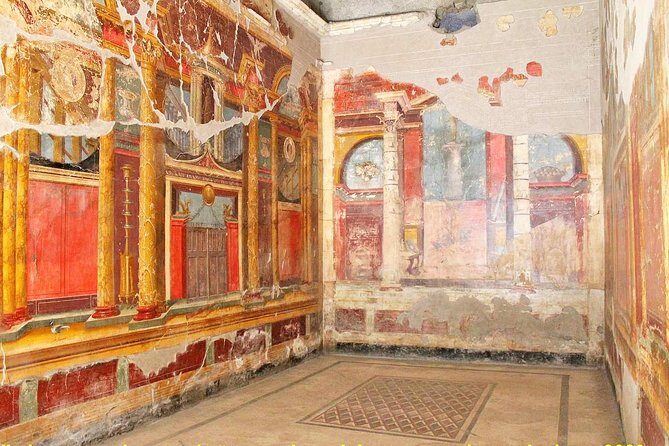
Yes, the Lupanar (Lupanare) is famous for its erotic frescoes. But on this tour, it isn’t treated like a shock stop. The guide frames it in context: what these spaces were used for, where they sat in the city’s geography, and how Pompeii’s street life included a range of private and commercial activities.
This stop is one of those that can go wrong if a guide turns it into a cheap joke. Here, the tone is more about explanation than embarrassment. If you like your history with clear, non-dramatic storytelling, this usually lands well.
It’s also a good reminder that Pompeii wasn’t a museum town. It was a working city with commerce, leisure, and services—some of them the stuff you only learn about when someone points at the right building for the right reason.
Pompeii Archaeological Park time: how the 2 hours add up
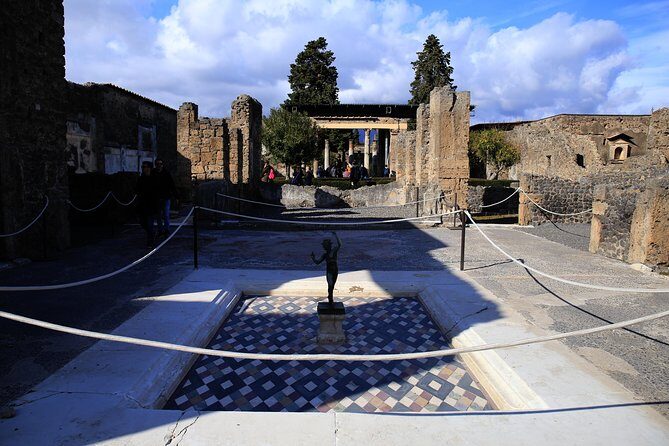
You’ll spend time inside Pompeii Archaeological Park, and that time is what makes the tour feel “half-day” instead of “half-guided walk.” The guide focuses on highlights without letting it become a rushed checklist.
In a two-hour private tour, the real trick is prioritization. You’ll see enough major anchors to understand Pompeii’s structure: street life, the public heart, major leisure space, the baths, and the Lupanar. That’s a strong set, because it covers both how people relaxed and how they organized their public and commercial lives.
The best guides also point out smaller details that most visitors miss. In some departures, guides like Lello or Italo are known for bringing Pompeii to life with humor and story-driven explanations, including vivid connections to what happened during the eruption of 79 AD. (Your specific guide depends on your date.)
What makes this private tour feel worth the money
At $83.48 per person, you’re paying for three things: (1) skip-the-line access, (2) a private guide experience, and (3) specialist-style explanations focused on the strongest site highlights.
Skip-the-line matters because time at Pompeii is expensive. If you lose an hour in a line, you feel it immediately. This tour keeps that from happening.
Private also matters because Pompeii is wide and uneven. A big group tour can be loud, slow, and repetitive. Private gives you control: you can ask follow-ups, slow down for a theater explanation, or spend an extra minute on a Forum detail if it clicks.
One more value note: the tour is designed for families and mixed ages. You’ll still need moderate mobility, but the pacing and the story focus can work well even if someone in your group isn’t a hardcore history reader.
Practical advice before you go
- Bring water bottles, especially in summer. Short tours don’t mean short sun exposure.
- Wear grippy shoes. Pompeii’s surfaces can be rough and sometimes uneven.
- If you care most about theaters, baths, or the Forum, tell your guide at the start. The private format makes it easier to tailor the emphasis.
- Expect to pick up a lot of names and place terms. It helps to take photos and then ask your guide to connect what you see.
Who this half-day Pompeii private tour suits best
This tour is a strong match if you want:
- a guided, structured introduction to Pompeii without feeling overwhelmed
- the biggest, most meaningful stops in about two hours
- skip-the-line entry and a private pace for families or small groups
- an art-historian-style framing that explains why a detail matters
It might be less perfect if you’re the type who likes to roam for hours with no schedule. Pompeii rewards wandering, yes, but this experience is designed for people who want clarity and a high payoff in limited time.
Should you book this skip-the-line Pompeii private tour?
If you want Pompeii highlights with less wasted time and better context, I’d book it. The guaranteed skip-the-line access plus the private pacing is the winning combo, especially for a 2-hour visit. Choose it when your goal is to understand how Pompeii worked through the Forum, baths, the main street feel, and the Lupanar, with memorable theater moments layered in.
FAQ
FAQ
How long is the Pompeii highlights private tour?
It runs for approximately 2 hours.
Is this tour private?
Yes. It’s listed as a private tour/activity, so only your group participates.
Does the tour include skip-the-line entry?
Yes. Skip-the-line entry is guaranteed.
What’s included with the tickets?
The tour includes admission tickets for the sites on the route, and guided time with a local guide and professional art historian-style guidance.
Where do we meet?
The meeting point is Hotel Vittoria, Piazza Esedra, 80045 Pompei NA, Italy.
Is hotel pickup or drop-off included?
No. Hotel pickup and drop-off are not included.
What language is the tour offered in?
The tour is offered in English.
Is this suitable for children and moderate walking?
Children must be accompanied by an adult, and the experience calls for moderate physical fitness due to site walking.
Can I get a full refund if I cancel?
Yes, you can cancel for free up to 24 hours in advance for a full refund.
What happens if the weather is poor?
This experience requires good weather. If it’s canceled due to poor weather, you’ll be offered a different date or a full refund.