REVIEW · POMPEII
Fast Access Exclusive Private Ancient Pompeii Half Day Tour with Local Guide
Book on Viator →Operated by Private Tours of Pompeii · Bookable on Viator
Pompeii can feel like a sprint. This private, fast-access tour is built to get you into the site with less waiting, then move efficiently from big landmarks to the details that make the ruins human. I especially like the skip-the-long-lines advantage and the private guide who can steer your route based on what you care about most. One trade-off: two hours goes fast, so you’ll need to choose between broad highlights and extra time at specific spots.
What makes this experience click is the pairing of architecture and everyday life. You’ll get stops ranging from an open-air theater world to Roman baths, plus a look at the Lupanar with its surviving frescoes. If you’re into mosaics or plaster casts, you can usually shape the pacing around that interest, rather than being dragged through a one-size-fits-all checklist.
Guides you may meet (depending on the day) include people like Anna, Livio, and Lello, and the common thread is clear: they help you get oriented fast and keep the visit moving without rushing the meaning out of it. You also get morning or afternoon options, which matters a lot at Pompeii when crowds and light shift hour to hour.
In This Review
- Key Highlights You’ll Actually Feel During the Tour
- Two Hours to See Pompeii’s Big Names Without the Line
- Piazza Esedra Meeting Point: Starting Smooth and Staying That Way
- UNESCO Pompeii First Stop: Turning Ruins Into a City
- Teatro Grande: The Big Open-Air Stage of Roman Life
- Odeon and Teatro Piccolo: Why Smaller Theatres Still Matter
- Via dell’Abbondanza: Pompeii’s Main Street for Villas and Shops
- Terme del Foro Baths: Daily Comfort Hidden Under Stone
- Lupanar: Frescoes, Taboo, and How Your Guide Helps You Read It
- Price and Value: Is $203.95 Worth It for Two Hours?
- Who This Pompeii Tour Fits Best (and Who Might Prefer Something Else)
- Should You Book This Fast-Access Private Pompeii Tour?
- FAQ
- How long is the Pompeii tour?
- Does the tour include admission tickets?
- Is this a private tour?
- Where do I meet the guide?
- What language is the tour offered in?
- Are hotel pickup and drop-off included?
- Do I need moderate physical fitness?
- Does the tour run in bad weather?
- Is a passport required?
Key Highlights You’ll Actually Feel During the Tour
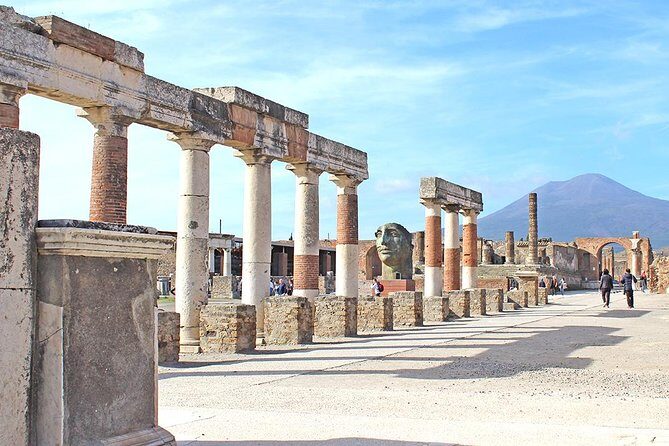
- Fast-access entry so you spend your time walking, not standing
- A guide with an art historian approach to help you read what you’re seeing
- Two theaters in one run with Teatro Grande followed by smaller performance spaces
- Via dell’Abbondanza for major villas and Roman shop life
- Terme del Foro to understand daily routines beyond the streets
- Lupanar frescoes that add a frank, human layer to the story
Two Hours to See Pompeii’s Big Names Without the Line
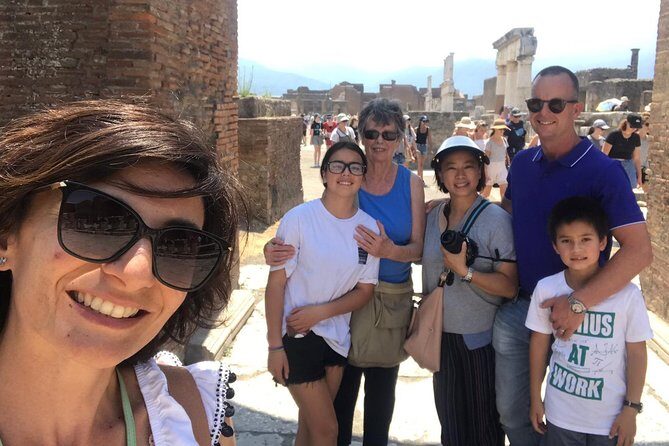
Pompeii is famous, which means it can also be crowded. This tour’s main practical value is simple: it’s designed to cut down the dead time. Instead of losing an hour to queues, you get directed access and start touring while the day is still fresh.
I like that it stays structured enough to feel complete, but flexible enough that your guide can adjust the emphasis. For example, some people want more on decorative arts and details like mosaics or plaster casts. Others want the layout and how the city worked. With a private guide, you’re not stuck in the wrong gear.
Because it’s only about 2 hours, you should expect a focused overview rather than a slow, linger-all-day museum style visit. If you know you want to spend 20 minutes staring at one wall painting, this format might feel a little brisk. If you want the best hits with meaningful context, it’s a strong match.
You can also read our reviews of more guided tours in Pompeii

Piazza Esedra Meeting Point: Starting Smooth and Staying That Way
The tour begins at Piazza Esedra, 80045 Pompei NA, Italy, and ends right back there. That round-trip setup is handy because it reduces end-of-tour stress: you’re not trying to figure out transport while your brain is still half in 79 A.D.
It’s also described as near public transportation, which is good if you’re not doing a hotel pickup. Your day is easier if you plan your own arrival—train, bus, or local taxi—and then just show up a bit early.
One more practical point: you should expect a moderate walk, with Pompeii’s ground that can be uneven. The tour asks for moderate physical fitness, so wear shoes you’d trust on stones and outdoor surfaces. And because it runs in all weather conditions, dress for sun or rain, not for ideal conditions.
UNESCO Pompeii First Stop: Turning Ruins Into a City
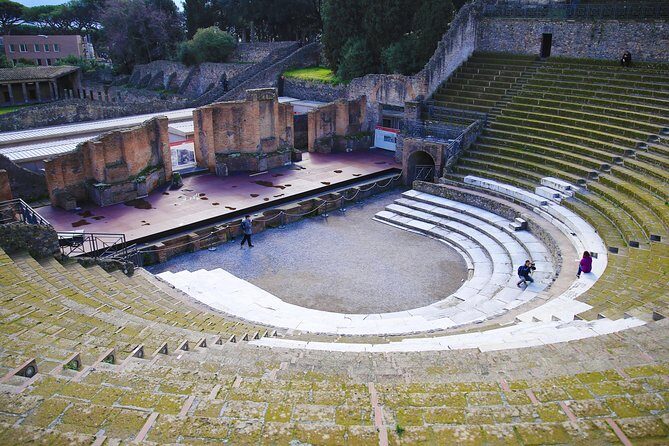
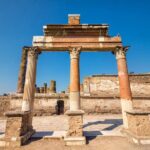
Your first stop is the heart of the UNESCO World Heritage Site experience: Pompeii itself. This is where a private guide earns their keep. Without context, ruins can blur together into columns and stone footprints. With a guide, you start seeing how the pieces connect—streets, neighborhoods, public spaces, and private life.
This entry portion is short (about 20 minutes), so your goal isn’t to cover everything. It’s to get your bearings quickly: where you’re going next, what to look for, and what questions to keep in mind as you move.
The most helpful guides don’t just point at walls. They connect those walls to the eruption story and to ordinary routines—how people moved through the city, how they spent time, and how public and private spaces differed.
If you’re visiting Pompeii for the first time, this early framing sets you up for better photos later. You won’t just shoot the famous spots; you’ll understand why they mattered.
Teatro Grande: The Big Open-Air Stage of Roman Life
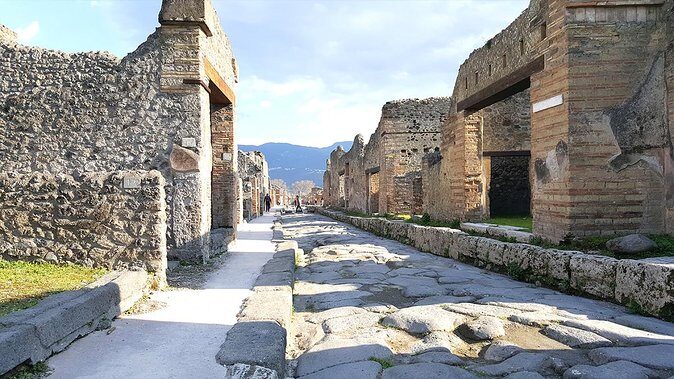
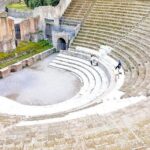
Next comes Teatro Grande, a 5,000-seat open-air theatre. Even if you’ve never studied Roman entertainment, you can feel the scale here. It’s not a small venue tucked away; it was made for crowds and community attention.
In about 20 minutes, you’ll get the essentials: how the theatre functioned in daily Roman life and how the space sits within Pompeii’s layout. The open-air design also helps you appreciate the reality of performance in that climate—sound and visibility were part of the architecture, not an afterthought.
A possible drawback is that outdoor theatres can be exposed to wind or sun. If you pick an afternoon slot on a bright day, bring sunglasses and plan for glare. If you pick a morning slot, you often get more comfortable walking and better photo conditions, though the exact experience depends on the day.
Still, this is a strong stop because it’s one of the clearest ways to see Pompeii as a living city. Entertainment wasn’t rare. It was built into the rhythm.
Odeon and Teatro Piccolo: Why Smaller Theatres Still Matter
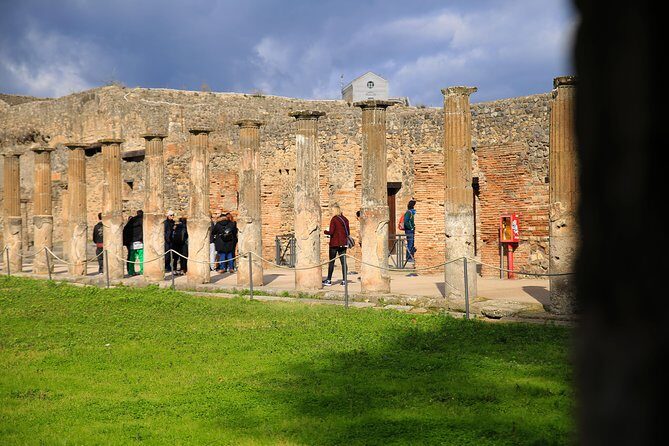
After Teatro Grande, you head to the Odeon and Teatro Piccolo area—an 800-seat open-air theatre. Smaller doesn’t mean less important. In many ancient cities, different performance spaces served different audiences, productions, or styles of public life.
This stop is also around 20 minutes, which means you’ll want to focus on what your guide highlights. Ask (politely) for the specific details that make this theatre distinct—why it was built this way, what kind of crowds it would have held, and how it fits into Pompeii’s broader public culture.
This pairing of a large theatre and a smaller theatre is great value in a short tour. You get scale and variety without losing half your day to transportation between far-flung sites. And because they’re both open-air, you can compare how each space feels in the landscape of ruins.
You can also read our reviews of more private tours in Pompeii




Via dell’Abbondanza: Pompeii’s Main Street for Villas and Shops
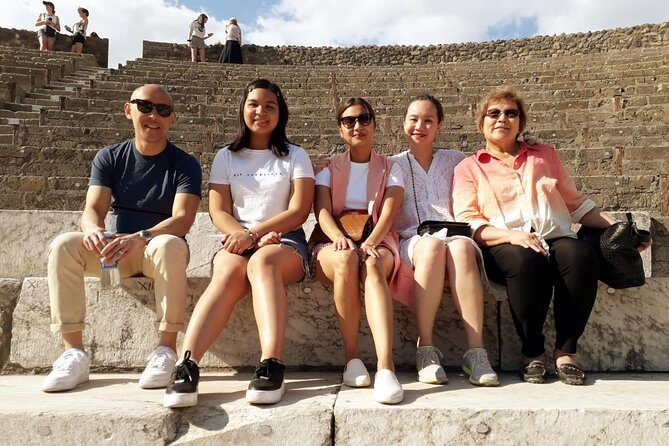
Then you walk Via dell’Abbondanza, Pompeii’s main street, lined with major villas and ancient Roman shops. This is where Pompeii shifts from standout monuments to the day-to-day city vibe.
In real life, most people didn’t spend their whole day at theatres or bath complexes. They lived among streets like this—passing storefronts, catching glimpses of wealthier homes, and moving between work, home, and public spaces.
A private guide makes the street walk more than a stroll. You’re more likely to notice the scale of the homes, the way shops front the road, and the clues that show how commerce worked. Even in a short segment (about 20 minutes), this stop can help you picture the city’s social mix rather than seeing only the dramatic public buildings.
If you care about arts and interiors, use this moment to ask your guide what to look for in decoration and layout. It’s a good place to connect the look of Pompeii’s interiors to the lived environment outside.
Terme del Foro Baths: Daily Comfort Hidden Under Stone
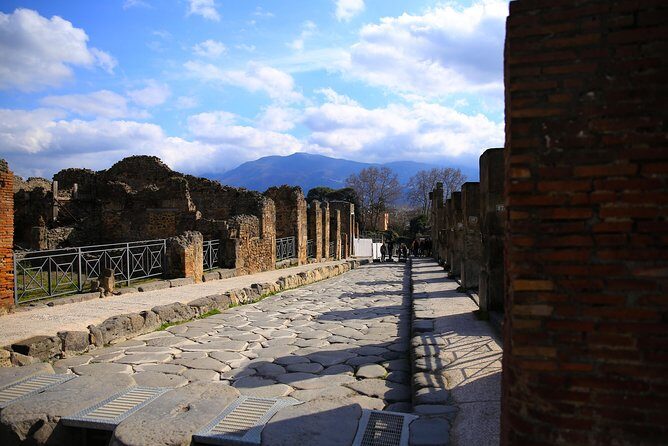
Next is Terme del Foro, the Roman bath complex buried by the eruption of Vesuvius in 79 A.D. Baths can sound like a side note until you understand what they represented. They weren’t just places to get clean. They were hubs for conversation, routine, and social life.
This stop takes around 20 minutes, which is a practical length. You’ll likely see the overall layout and key features, rather than trying to read every architectural fragment like a textbook. A guide helps you translate what you see: which spaces were for different stages, how the complex worked as a system, and why it mattered that the city invested in this.
The baths also add variety. Theatre stops are about crowds and performances. The street stop is about movement and commerce. Baths bring it back to routine and comfort—what daily life may have felt like.
One consideration: bath areas can be slippery or uneven depending on weather. Wear grippy shoes. If it’s raining, take your time on the approaches. The tour runs in all weather, so the safest plan is to be a little cautious and let the guide’s pace keep you steady.
Lupanar: Frescoes, Taboo, and How Your Guide Helps You Read It
Finally, you’ll visit the Lupanar, an ancient Roman brothel where some frescoes are still visible. This is an intense stop, and it helps to have a guide who can handle it with clarity instead of shock.
What makes the Lupanar particularly informative here is the way it’s presented: the frescoes illustrate the specialities of women working there. That detail turns a scandalous rumor into something you can interpret as part of ancient signage and customer logic—advertising in the form of wall art.
This isn’t light material, but it’s also one of the most human and specific windows you’ll see on Pompeii’s everyday economy and social systems. If you prefer a gentler route through the ruins, you might want to tell your guide upfront that you’d rather focus more on architecture and decor than this subject. A good guide can tailor the balance while still covering the stop.
The frescoes themselves can be easy to miss if you’re looking only for huge paintings. This is where your guide’s direction really matters: you’ll know where to look and what to notice, instead of guessing.
Price and Value: Is $203.95 Worth It for Two Hours?
At $203.95 per person for about 2 hours, you’re paying for time saved, private attention, and included access elements. The good news is that the tour isn’t just a speaking tour in the plaza. It includes a local guide and a professional art historian guide style approach, plus the promise to skip the long lines. Each main stop also notes admission ticket included.
So the real value question is: what would you spend your time doing otherwise? If you were to visit Pompeii on your own, you’d likely spend more time in queues, and you might miss the kinds of details that help you understand what you’re seeing quickly—especially in a short visit.
This format tends to be worth it if:
- You’re short on time and want the strongest highlights delivered in a tight loop
- You like context, not just photos
- You’re visiting with a couple or family group that benefits from a guide pacing the day
It might feel less worth it if you’re traveling solo with lots of free time and you prefer to wander without structure. In that case, the savings on lines may not outweigh the cost of a private guide.
Booking is often made early—this experience averages booking around 43 days in advance—which is a clue that the time-saving appeal is real. If you want a specific schedule slot, don’t wait until the last week.
Who This Pompeii Tour Fits Best (and Who Might Prefer Something Else)
This tour is a great match for you if you:
- Want Pompeii’s top stops without the stress of line management
- Enjoy a guide who can explain both art details and how the city worked
- Prefer a private group plan that can adjust to your interests—mosaics, plaster casts, or big-picture storytelling
It’s also a solid choice for couples and families. The tour is private, so the pace can stay friendly and the guide can handle questions without worrying about slowing down a large group.
If you’re traveling with kids, note that children must be accompanied by an adult. With a two-hour structure, it can work well, but you’ll want to keep an eye on how your group handles walking and outdoor heat or wind.
Finally, you’ll get the most out of the experience if you accept that it’s a curated sprint. You’ll leave with a clear map of what Pompeii contains and what each place meant—plus a good sense of where you might want to return for deeper exploring.
Should You Book This Fast-Access Private Pompeii Tour?
Book it if you want Pompeii without the headache. The fast-access line skipping, private guide attention, and stop lineup—from Teatro Grande to Terme del Foro and ending at the Lupanar—make it a smart way to see a lot with real context in only two hours.
Skip it or consider a different option if you’re the type who likes to linger for long stretches, especially at decorative details. This tour is built for efficiency, not for extended wandering.
If you’re visiting for a first time, short on time, or you just hate wasting your vacation hours in queues, this is the kind of Pompeii plan that lets you spend your energy where it counts: looking closely, asking questions, and understanding the city behind the stones.
FAQ
How long is the Pompeii tour?
The tour lasts about 2 hours.
Does the tour include admission tickets?
Yes. Admission tickets are included for the listed stops.
Is this a private tour?
Yes. It’s a private tour/activity, and only your group participates.
Where do I meet the guide?
You meet at Piazza Esedra, 80045 Pompei NA, Italy, and the tour ends back at the same meeting point.
What language is the tour offered in?
The tour is offered in English.
Are hotel pickup and drop-off included?
No. Hotel pickup and drop-off are not included.
Do I need moderate physical fitness?
Yes. The tour is recommended for travelers with a moderate physical fitness level.
Does the tour run in bad weather?
It operates in all weather conditions, so dress appropriately.
Is a passport required?
Yes. A current valid passport is required on the day of travel.