REVIEW · ROME
The Treasures of Rome
Book on Viator →Operated by Greenline Tours · Bookable on Viator
Rome starts with a quick hit of the classics. This 3-hour morning tour strings together some of Rome’s most famous sights in a sensible order, using a mix of walking and an air-conditioned ride to keep you moving without cooking. I love how the Pantheon visit gets you inside one of ancient Rome’s best-preserved buildings, plus the tombs of major figures like Renaissance artist Raphael. I also love the finish at St. Peter’s Square, which gives you a clear handoff so you can explore the Vatican area on your own pace after the tour ends.
One big consideration: you should plan for a lot of walking on uneven, cobbled streets. You might spend time off the bus and, as a reality check, if you stay on the coach you’ll miss several of the key sights.
In This Review
- Key things I’d watch for
- How the morning tour flows from Centro Storico to the Vatican
- Piazza Barberini prelude: Bernini’s Triton and the Barberini bees
- Trevi Fountain timing and the coin ritual (without the stress)
- Inside the Pantheon: Raphael and King Umberto I’s tombs
- Piazza Navona and Bernini fountains over a Roman stadium
- St. Peter’s Square payoff and what to do on your own after
- Dress code, Basilica access, and the Sunday exception
- Walking level, comfort breaks, and the real meaning of 3 hours
- Price and value for a $49.26, guide-led morning
- Who should book The Treasures of Rome?
- Should you book this tour or not?
- FAQ
- What’s the duration of The Treasures of Rome?
- What time does the tour start?
- Where is the meeting point?
- Where does the tour end?
- Is the tour offered in English?
- What’s included in the price?
- Do I need to buy tickets for the main sights?
- Is lunch included?
- What’s the dress code for the places of worship?
- Can I enter St. Peter’s Basilica every day?
- What if I need to cancel?
Key things I’d watch for
- Pantheon access plus attention to famous tombs inside
- Small group size (max 20) for a more manageable morning pace
- Air-conditioned vehicle for the jump toward Vatican City
- St. Peter’s Square drop-off so you control what comes next
- Dress code rules that can affect entry to St. Peter’s Basilica
How the morning tour flows from Centro Storico to the Vatican
This is built as a morning overview of classic Rome, starting in the historical center and ending in Vatican territory. The structure is simple: meet your guide in central Rome, see several major landmarks in a row, then take a vehicle ride to St. Peter’s area where you finish with time to roam.
The value here is not just the list of famous stops. It’s the way the tour helps you get oriented fast—where the big sights sit relative to each other, and how to string together your own next steps. If it’s your first days in Rome, this kind of guided route can save time and reduce the mental load of figuring out what’s close to what.
You’ll also feel the practical rhythm of Rome tourism: photo moments, short stops, and some walking that adds up. The tour is labeled as 3 hours, but your experience will feel like a focused morning in the center of the city, not a quick drive-by.
You can also read our reviews of more tours and experiences in Rome.



Piazza Barberini prelude: Bernini’s Triton and the Barberini bees
Before you hit the postcard-famous fountains, the morning includes a stop around Piazza Barberini. In the center sits Bernini’s Triton Fountain from 1643, made of travertine and commissioned under Pope Urban VIII Barberini. It’s a nice warm-up because it gives you a taste of the Baroque style before the bigger name fountains take over.
On the corner toward Via Veneto, you’ll also see the Fountain of the Bees, tied to the Barberini family symbols. This is the kind of detail you can easily miss if you’re just strolling without a guide, and it helps you read the city more like an art-and-power map rather than random monuments.
Even if you only spend a brief moment here, you get something useful: context. Once you understand Bernini’s influence and the Barberini branding, later scenes in Piazza Navona and other Baroque squares make more sense.
Trevi Fountain timing and the coin ritual (without the stress)
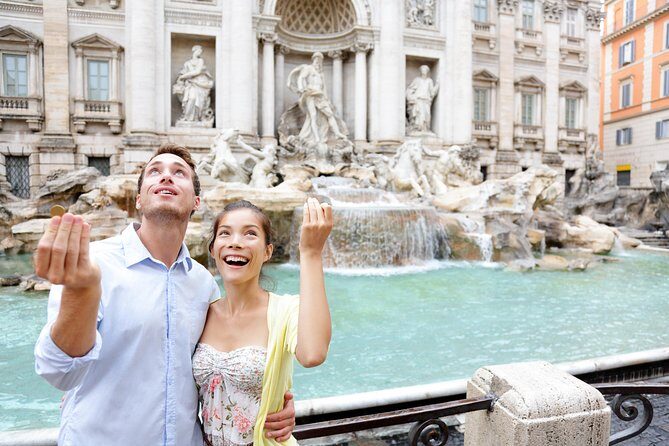
The Trevi Fountain stop is the big dramatic pause in the middle of the morning. You get to see Fontana di Trevi as the architectural showpiece it is—water, stone, and clever staging right in the historic center. And yes, you’ll likely have the classic moment where you throw a coin for good luck, because it’s basically part of the Trevi Fountain script.
What matters for you is the practical experience: you’re not just passing by. The tour includes time to take in the fountain and get photos, which can be hard to do when you’re trying to coordinate your own route through crowds.
One small tip: treat this as your main photo stop. After Trevi, you’ll keep moving, so capture what you came for here—especially wide shots showing the whole fountain, not just close-ups.
Admission at this stop is free, which helps the value. The cost you’re paying is really for the guide’s route planning, timing, and the chance to see everything without scrambling.
Inside the Pantheon: Raphael and King Umberto I’s tombs
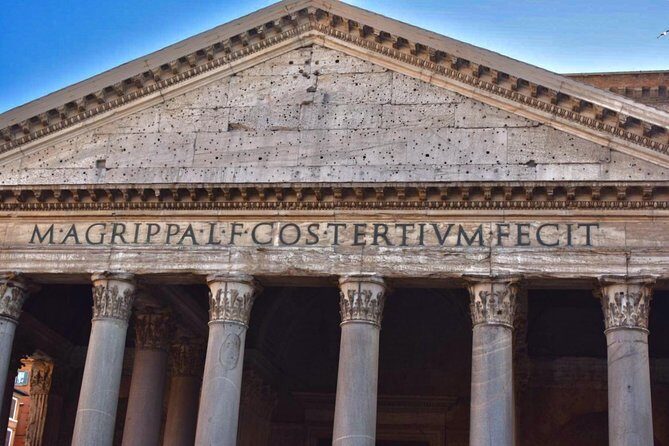
If I had to pick the anchor of this tour, it’s the Pantheon. It’s one of those places that makes you rethink what you thought you knew about ancient buildings. This is a former Roman temple later used as a church, and it’s famous for being so well preserved.
The standout part for many people is what you can find inside. The Pantheon holds the tomb of Renaissance artist Raphael, along with the tomb of King Umberto I. That’s the kind of fact that turns a stop into an experience, because you’re not only looking at architecture—you’re standing in a place where major cultural and political stories are physically present.
Plan to enjoy the interior, but also know you’ll likely be on a schedule. The tour includes about 30 minutes at the Pantheon, so focus on the big visual moments first: the space, the ceiling, and then the tomb areas your guide points out.
This stop is free to enter on the tour schedule, so you get a high value experience without extra ticket friction. If your time in Rome is limited, this is the one you’ll remember when you’re back in your hotel at night thinking, that was the real deal.
Piazza Navona and Bernini fountains over a Roman stadium
Next up is Piazza Navona, which has always been one of Rome’s best stages for people-watching and Baroque drama. The square is built on the site of the Stadium of Domitian from the 1st century AD, so you’re standing on a location that has held public life for a very long time.
The reason Piazza Navona feels so special is the fountain work. You’ll admire fountains designed by Baroque master Bernini, and you’ll have time to soak it in as the square does its work—street musicians, outdoor cafes, and the open-space feel of a true Roman public square.
The practical advantage of having a guide here is simple: you’re more likely to notice what you should look for. Bernini’s designs have specific visual cues that a casual walk-by can miss. With guidance, the fountains stop being just pretty water displays and start reading as part of a bigger Baroque program.
Admission is free for this stop as listed, and the time on site is fairly short. So again: treat this as a key photo and orientation moment, then keep moving. You’ll get the best payoff when you use what you learned to explore nearby streets on your own after.



St. Peter’s Square payoff and what to do on your own after
The tour ends in St. Peter’s Square. You get time to admire the huge open space in front of St. Peter’s Basilica, including the ancient Egyptian obelisk in the middle and the Doric colonnades designed by Bernini.
This is a smart ending because it doesn’t trap you inside the same group itinerary. Once you’re there, you can decide what you want next—whether that’s getting closer to the Basilica, lingering in the square longer, or continuing into the Vatican area under your own timing.
The tour schedule includes around 30 minutes at the square. For most people, that’s enough to take in the big geometry and get a sense of the scale, but it’s not meant to replace a full Vatican day. If you want the Vatican Museum and Sistine Chapel experience, you’ll still need a separate plan and tickets.
If you like options, this finish works. You’re not rushed out of the area the moment you arrive; you get that handoff moment where Rome feels wide open and you can choose your next move.
Dress code, Basilica access, and the Sunday exception
St. Peter’s Basilica interior visit is included, but with a major condition: it won’t be possible on Sundays, religious festivals, or religious ceremonies. On those days, your itinerary can be adjusted.
So if you’re visiting on a Sunday (or around a Vatican-heavy religious schedule), set your expectations early. You may get the square experience for sure, but the interior part can change.
The other critical detail is the dress code. Knees and shoulders must be covered for both men and women, and shorts or sleeveless tops are not allowed. This is strictly enforced, and failing to follow it can mean refusing entry.
My practical advice: check your clothing the night before, not when you’re standing in line. It’s the kind of rule that can ruin momentum fast if you’re caught without a cover-up.
Also keep in mind that some monuments may be under restoration due to the Jubilee, and you could receive messages about changes. Rome can change quickly, so staying flexible helps.
Walking level, comfort breaks, and the real meaning of 3 hours
This is a short tour on paper, but in Rome time works differently. You’ll be on narrow, cobblestoned lanes where footing isn’t always smooth, and the group needs to keep pace. Rome morning walks can be lovely, but they’re still walks.
The tour offers an air-conditioned vehicle and you’ll ride between zones, but don’t mistake that for a fully seated experience. There can be quite a bit of walking, and you can remain on the coach—but doing so means you’ll miss many of the sights.
I’d call this a good fit for people who can handle a couple hours of walking at an easy-to-moderate pace and don’t need constant rest stops. It’s also a good first-tour option because the stops are clustered and the guide’s route can keep you from zigzagging unnecessarily.
Group size matters too. This tour has a maximum of 20 people, which usually makes it easier for the guide to keep everyone together and for you to hear explanations without constant scrambling.
Price and value for a $49.26, guide-led morning
At $49.26 per person for about 3 hours, the big value drivers are the local guide and the air-conditioned vehicle. You’re also getting multiple high-demand sights chained together in one morning, including the Pantheon interior and a Vatican-area finish.
Admission is listed as free for Trevi Fountain, Pantheon, Piazza Navona, and St. Peter’s Square. That matters because you’re not paying extra per stop just to see the core landmarks. Your extra spending is mostly on what the tour doesn’t include, like drinks.
Lunch is only included if you select that option. If you don’t choose lunch, you may want to plan where you’ll grab food after the tour ends, especially since St. Peter’s area can be convenient but also busy.
So is it good value? For most first-time visitors who want a tight morning overview with minimal planning, yes. If you’re already comfortable navigating Rome on your own and you hate walking, you might question whether a guided pass is worth it for your style of sightseeing.
Who should book The Treasures of Rome?
This tour fits best if you want a guided morning that connects key classics: Trevi, Pantheon, Piazza Navona, and then St. Peter’s Square. It’s also a solid match for first-time visitors who want help getting oriented quickly and learning what to look for in each stop.
It may not be ideal if you want a mostly seated experience. The walking component is real, and the tour schedule includes multiple landmark moments rather than long “sit and watch” breaks.
If you’re particular about details at the Pantheon—especially the tombs of Raphael and King Umberto I—this tour is especially worthwhile because the guide’s pointers can turn the visit from looking into understanding. Past groups have also highlighted guides like Georgio for being friendly and informative, and Max for strong on-the-ground explanations, which is exactly the kind of support that makes a short tour feel productive.
If you’re visiting during a Sunday, festivals, or a time when Basilica access might be restricted, go in knowing the St. Peter’s interior piece can change. That flexibility mindset will keep the morning smooth.
Should you book this tour or not?
Book it if you want an efficient, guide-led Rome sampler that gets you into the Pantheon and ends where you can keep exploring at your own pace in St. Peter’s Square. The price-to-sights ratio is strongest for people who like structure and don’t mind cobblestones.
Skip it (or choose a different format) if you’re sensitive to walking time, or if you strongly prefer a stop-by-stop itinerary where you can control every minute. Also consider skipping if you’re traveling with limited ability to handle dress-code rules for churches, since St. Peter’s enforcement is strict.
For most visitors, it’s a very workable first morning, especially when you pair it with a later, fuller Vatican plan.
FAQ
What’s the duration of The Treasures of Rome?
It runs for about 3 hours.
What time does the tour start?
It starts at 9:00 am.
Where is the meeting point?
The meeting point is Via Giovanni Amendola, 32, 00185 Roma RM, Italy.
Where does the tour end?
It ends at St. Peter’s Square, Piazza San Pietro, 00120.
Is the tour offered in English?
Yes, it’s offered in English. It’s also described as a multilingual tour.
What’s included in the price?
You get a local guide, an air-conditioned vehicle, and lunch if you choose the lunch option.
Do I need to buy tickets for the main sights?
Admission is listed as free for Trevi Fountain, the Pantheon, Piazza Navona, and St. Peter’s Square.
Is lunch included?
Lunch is included only if you select the option. Drinks are not included.
What’s the dress code for the places of worship?
You must cover knees and shoulders. Shorts and sleeveless tops are not allowed, and entry can be refused if you don’t follow the rule.
Can I enter St. Peter’s Basilica every day?
The inside visit of St. Peter’s Basilica is included, but it will not be possible on Sundays, religious festivals, and religious ceremonies, and the itinerary may change.
What if I need to cancel?
Free cancellation is available up to 24 hours in advance for a full refund.