REVIEW · MUSEUMS
Vatican Museums, Sistine Chapel Tour and Basilica Access
Book on Viator →Operated by Journey Tours · Bookable on Viator
Skip the Vatican queues, then see masterpieces. This tour is built for speed without going numb on details: you get skip-the-line entry to the Vatican Museums (and the Sistine Chapel), plus headsets so you can actually follow the story even when crowds get loud. The trade-off is pace and timing—Vatican rules are strict, so if you’re late, you can lose entry.
What makes it feel worth it is the way the guide steers you through the biggest hits: the Maps, Candelabras, and the ceiling frescoes don’t feel like a checklist. Names like Antonio, Lora, Laura, Patrick, and Paola M show up in standout experiences, with guides using clear explanations and lots of context to help you “read” what you’re seeing.
One more thing to plan around: St. Peter’s Basilica access (if you choose it) can still involve long security lines, and it’s not truly the same as skipping lines inside the Museums. Also, the Sistine Chapel can close with little warning, so build flexibility into your day.
In This Review
- Quick hits before you go
- Is a 3-hour Vatican Museum sprint the right fit?
- Fast-track entry: what you’re really buying
- Meeting point at Via Vespasiano: how to avoid the first scramble
- Vatican City overview: tiny state, big rules
- Vatican Museums highlight route: Maps, sculptures, and the big names
- Pine Court (Cortile della Pigna): a breath of green
- The Gallery of Candelabras: marble drama, fast context
- Gallery of Maps: art you can read like history
- Sistine Chapel timing: awe plus operational risk
- Raphael Rooms and the Michelangelo rivalry story
- Optional St. Peter’s Basilica access: good value, but not magic
- Pace, walking, and crowd-proofing tips that actually help
- What stood out most in guide quality
- Who should book this tour, and who should rethink it
- Should you book this Vatican Museums, Sistine Chapel, and Basilica-access tour?
- FAQ
- What’s included for the Vatican Museums and Sistine Chapel?
- Is St. Peter’s Basilica also skip-the-line?
- How strict is the timing for entry?
- What should I wear for the Vatican sites?
- What ID do I need?
- Where does the tour start and end?
- Can the Sistine Chapel close unexpectedly?
- When is St. Peter’s Basilica closed?
Quick hits before you go
- Skip-the-ticket-line to the Vatican Museums so you avoid the worst of the entrance chaos
- Covers signature stops like the Gallery of Maps and the Gallery of Candelabras
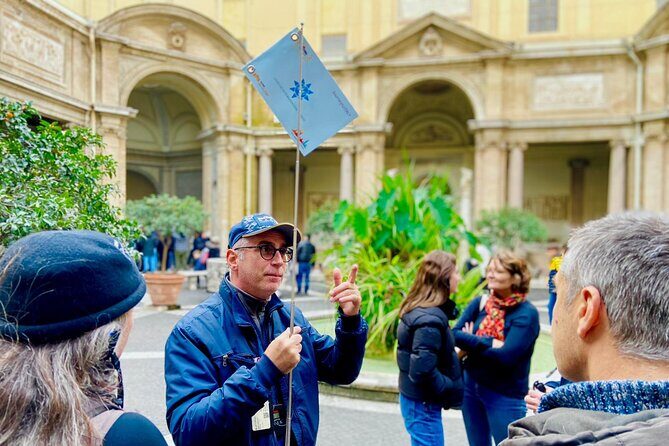
- Headsets are included, which matters when the group is moving and the crowd is roaring
- Small group size (max 20) helps you keep up better than big group tours
- Rooftop-rival energy: you’ll hear the Michelangelo and Raphael backstory around the Sistine Chapel
- Optional St. Peter’s Basilica can be a time-saver, but security timing there still rules your day
Is a 3-hour Vatican Museum sprint the right fit?
You’re signing up for a fast, focused Vatican day: about 3 hours to see the Museums highlights and reach the Sistine Chapel. That’s not long enough to wander every gallery, but it’s long enough to hit the masterpieces that most first-timers want—without spending your entire trip in line.
I like this format for one main reason: it helps you choose. Instead of letting the Vatican overwhelm you (it will), the guide routes you to the most recognizable works and explains how to look at them. If you love art history but also want to see the big scenes before your feet complain, this is a good match.
The other side of the coin is physical reality. Even with skip-the-line entry, you’ll walk a lot and you may face stairs. The tour notes moderate physical fitness is best. If you’re sensitive to fast walking and crowded interiors, plan for breaks and don’t assume you’ll soak in every room like you would on a slow, self-guided visit.
You can also read our reviews of more museum experiences in Rome



Fast-track entry: what you’re really buying
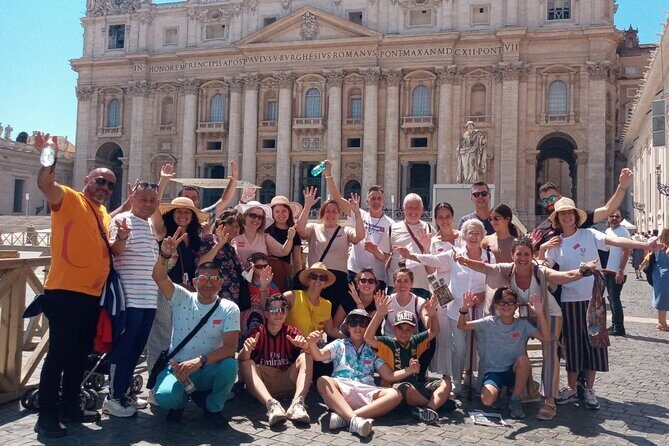
The headline feature is skip-the-ticket-line access to the Vatican Museums—and also skip-the-ticket-line access to the Sistine Chapel. In plain terms, you’re buying back time. At the Vatican, time is money and money is your day.
Headsets matter here. Several reviews praise being able to hear the guide clearly with the earpiece, which is a big deal when you’re moving through crowded halls where voices bounce off stone. The tour also includes a professional licensed guide and small-group handling, plus team assistance at the meeting point.
One caution: the Vatican enforces strict timed entry for the Museums. The rules are simple—late arrivals or no-shows may not be admitted and there’s no refund for late misses. So your best move is to arrive early enough to handle security without stress.
Meeting point at Via Vespasiano: how to avoid the first scramble
You’ll meet at Via Vespasiano, 26–28, Roma RM, Italy, and the tour ends at the Sistine Chapel (00120, Vatican City). Because the Vatican area is a maze and security lines can shift, arriving with buffer time is smart.
The meeting point includes free Wi‑Fi, and there’s team assistance to help you get started smoothly. Reviews also mention check-in being quick and easy, but peak season can add delays because you might need extra time for security and to pick up the compulsory headsets.
If you want a stress-free start, wear your best “I can walk 2–3 hours” outfit, not your “Rome for photos” outfit. You’ll also want your photo ID ready—Vatican security requires it.
Vatican City overview: tiny state, big rules
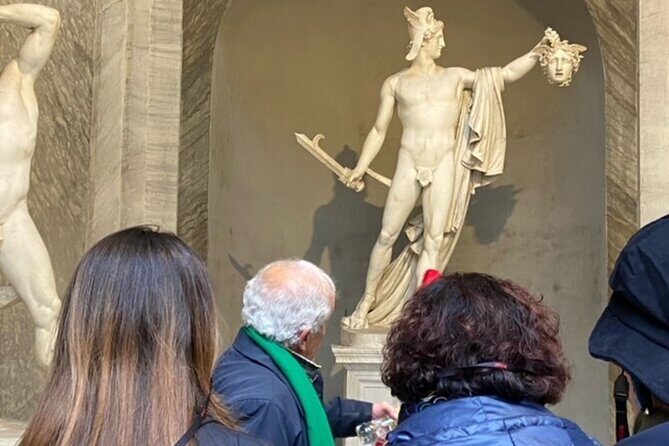
Before you get deep into art, you get a quick grounding in what you’re standing in. Vatican City is a separate state with its own sovereignty under the Holy See, recognized through the Lateran Treaty (1929). It’s extremely small—about 49 hectares—and the population is listed around 825.
Why this matters in a tour like this: it explains why the Vatican operates like it does. You’re not just touring a building; you’re entering a state with different jurisdiction and strict visitor flow.
You’ll also get a short stop—about 10 minutes with admission free—so it’s mostly orientation before the Museums proper.
Vatican Museums highlight route: Maps, sculptures, and the big names
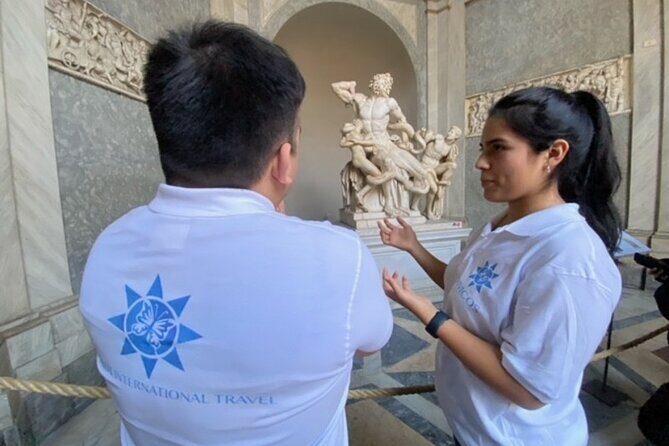
This is the heart of the experience. The Museums stop is around 2 hours, with major sights built into a guided route. Expect to see highlights connected to classic collections and famous sculpture and gallery areas, including well-known pieces such as Apollo of Belvedere and Laocoon, plus other famed items listed in the route like Pine Court surroundings and the Room of Muses. You’ll also pass through Pio Clementine Museum areas and other major viewing sections as part of the highlight plan.
The Galleries of the route you’ll hear about are some of the most “visual and memorable” rooms in the Vatican. You’ll move through spaces like:
- Gallery of the Candelabras, with towering marble candelabras in a grand corridor feeling
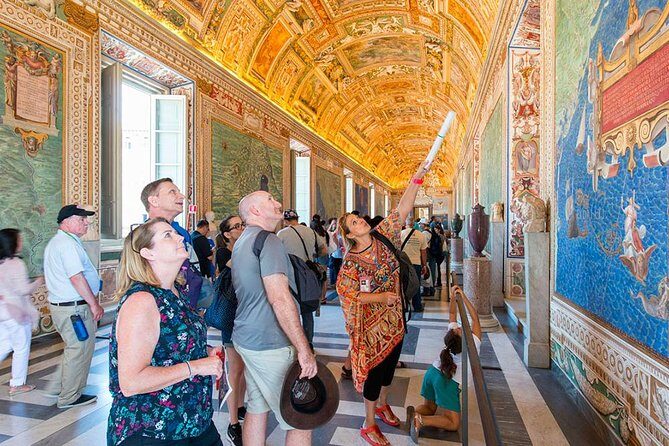
- Gallery of Maps, famous for the painted cartography that mixes art with history
The benefit of doing it this way: you’re not stuck asking, What am I supposed to look at? The guide points you at the themes and stories so your eyes know where to land.
The drawback: time compression. A couple of reviews mention a rushed feeling in crowded periods, where it’s hard to admire everything. That doesn’t mean the tour is bad—it means the Vatican is a busy machine. If you want maximum lingering time, consider adding extra Museum time later on a separate day.




Pine Court (Cortile della Pigna): a breath of green
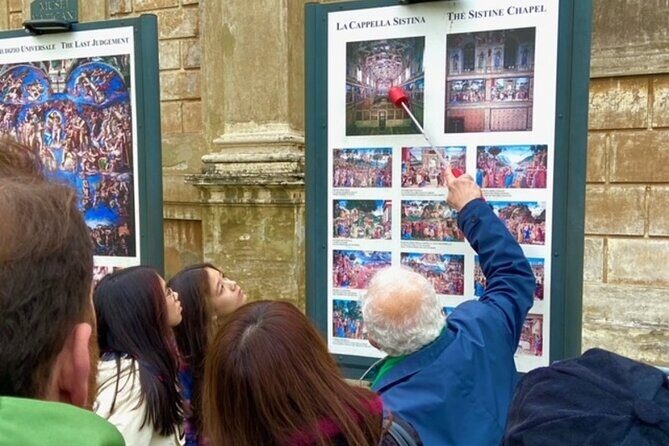
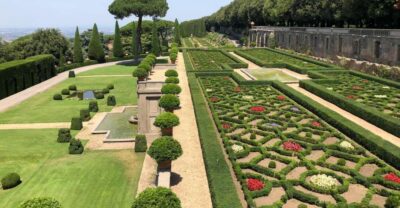
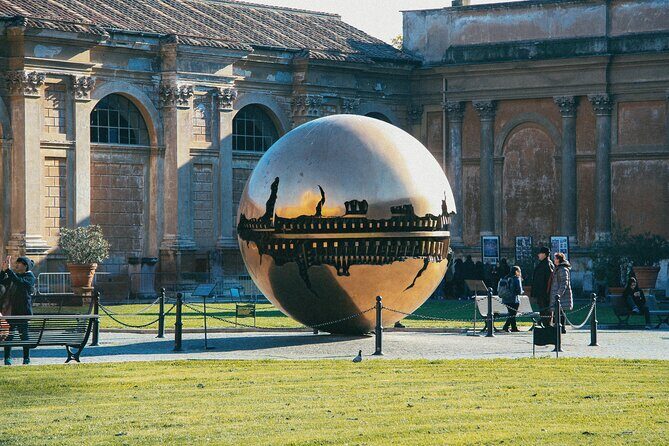
The tour includes a stop at Cortile della Pigna, also known as the Pineyard Courtyard. This is a calmer pocket inside the Museums area, with greenery mixed into classic architecture. The highlight is Bramante’s bronze Pigna statue at the center.
This stop is useful because it breaks the pace. After you’ve been inside long corridors with crowds, this courtyard moment can feel like resetting your eyes and your brain.
The Gallery of Candelabras: marble drama, fast context
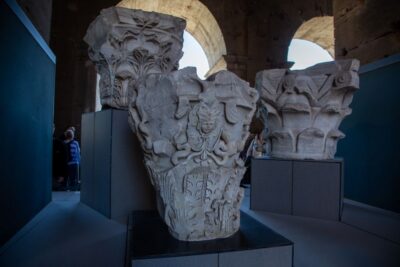
In the Gallery of the Candelabras, you’ll see massive marble candelabra lined up along a corridor of ancient sculpture and sarcophagi. The ceilings are painted, and the room layout frames these objects like a stage set.
The key value here is the guide’s context. Without explanation, you can end up looking at impressive objects with no story attached. With the guide’s take, these sculptures make more sense as part of how the Vatican curated power, history, and taste.
This stop is about 15 minutes, so again: you’ll see it, learn it, move on. You won’t get a long, quiet study session in every room.
Gallery of Maps: art you can read like history
The Gallery of Maps is one of those rooms where you’ll either speed through it or actually look. The tour gives you a reason to look.
This gallery is known for hand-painted maps of Italy, presented as an artwork in its own right. The guide helps you connect what you’re seeing to the bigger story behind the geography and design, so the room feels less like wall decoration and more like a historical snapshot.
It’s another around 15 minutes stop. The sweet spot is to pause where the guide points out the details, then spend your own time scanning the rest without chasing the group for every second.
Sistine Chapel timing: awe plus operational risk
Reaching the Sistine Chapel is the main payoff, with Michelangelo frescoes as the headline. The tour includes skip-the-line access to the Sistine Chapel, but once you’re inside, Vatican timing rules still apply.
You should know the tour can be affected by closures. The tour information warns that the Sistine Chapel may close without prior notice on rare occasions, and if that happens, your guide provides a tour of other sections of the Museums instead. One review also describes a situation where the chapel was closing unexpectedly in the afternoon, which forced a run-through and reduced time for enjoying other works.
So here’s the practical takeaway: don’t plan the rest of your day like everything is guaranteed to go smoothly. Plan buffer time. And when you enter the Sistine Chapel, treat it like your one guaranteed moment—look, breathe, then look again.
Also: dress code is strict. Shoulders and knees must be covered. No sleeveless tops, shorts, miniskirts, or low-cut outfits.
Raphael Rooms and the Michelangelo rivalry story
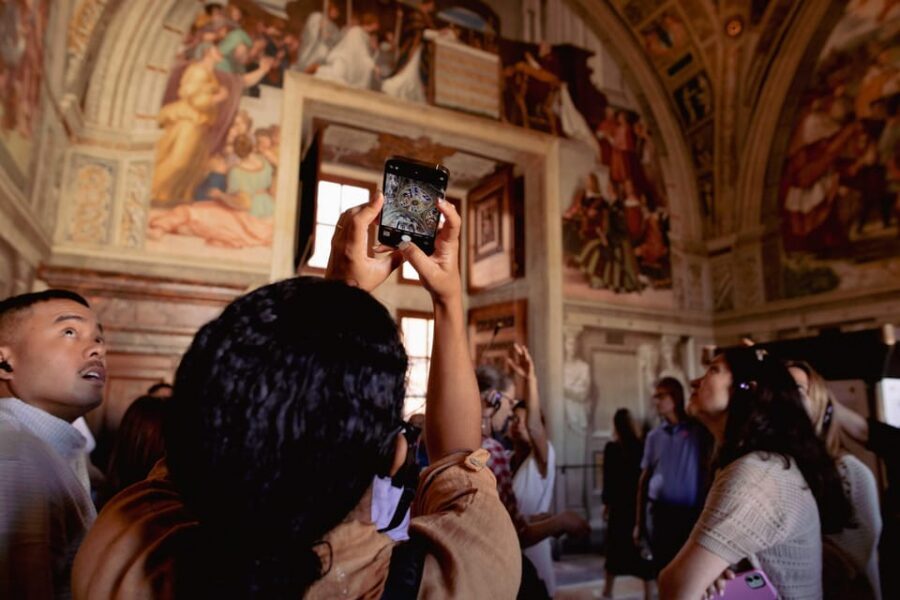
Even though the timed stop is centered on the Sistine Chapel, the experience is built to help you understand it in context. The tour includes time in the Raphael Rooms, where the guide explains the style and creative genius tied to Raphael.
Then you connect the dots: the tour highlights the close artistic relationship between Raphael’s work and Michelangelo’s Sistine ceiling, including the intense rivalry theme. That rivalry angle is one reason the Sistine Chapel can feel more than just famous art. It becomes part of a bigger human story about competition, skill, and ambition in Renaissance Rome.
If you love art, this is the kind of framing that makes your eyes more active. You’ll start noticing why certain choices were made instead of just recognizing faces and scenes.
Optional St. Peter’s Basilica access: good value, but not magic
This tour offers access to St. Peter’s Basilica if you choose the option, but it’s important to understand what skip-the-line does and does not cover.
Skip-the-line access is clearly tied to the Vatican Museums and Sistine Chapel. Reviews include a key correction: skip-the-line language doesn’t mean you’ll bypass the Basilica security line. Entry to the Basilica still involves mandatory Vatican security screening, and that line can be long—one review reports almost 3 hours waiting despite expecting faster access.
Also note operational scheduling: the tour information says the door connecting the Basilica and the Vatican Museum is closed in the afternoon and on Wednesdays. Translation: even if your day is planned to move from Museums to Basilica, the physical route may not be open when you need it.
The Basilica has its own closure days. It’s closed on Wednesdays and during religious holidays, and it may also close unexpectedly for ceremonies. So if Basilica access is a must for you, consider adding flexibility to your schedule and not relying on a single day.
Finally, a practical review detail: Basilica access can be independent rather than guided. That means you might not have a guide in the Basilica the way you do inside the Museums and Chapel. If you want interpretation inside St. Peter’s, you may prefer a separate guided Basilica-focused tour.
Pace, walking, and crowd-proofing tips that actually help
This tour runs in a working schedule inside a high-demand site. The Vatican Museums and Sistine Chapel are crowded, and your group size is capped at 20 travelers, which helps, but the building still runs like a crowd magnet.
Here’s what improves your experience most:
- Wear real walking shoes. One review flat-out recommends it, and they’re right.
- Arrive early so you’re not juggling security and headset pickup under pressure.
- Bring your photo ID even if you think you’ll be in and out quickly.
- Respect the dress code the first time. If you forget, you lose time at security.
- Expect stairs and fast movement. Even reviewers who loved the tour mention it can be tiring for some people.
And if you’re worried about being rushed: the tour often hits the big rooms, but it can’t turn into a museum-length study session. If your goal is slow looking, you’ll likely enjoy doing the Vatican Museums highlights with a guide first, then returning later for independent time.
What stood out most in guide quality
A big reason this tour earns strong ratings is the guide experience. The names and comments aren’t random. Multiple reviews highlight guides who explain clearly, keep the group moving smoothly, and bring enthusiasm without turning the visit into a script.
Examples you may see referenced:
- Antonio gets praise for turning facts and stories into something memorable
- Lora earns top marks for history explanations and keeping a fast-pass feel
- Laura is described as a professor-level guide with strong teaching of timelines
- Patrick is praised for in-depth talks tied to sculptures and the art collection
- Paola M is praised for attention to sculpture and artwork details
- Patricio is described as a great guide
No guide can control Vatican crowds, chapel closures, or every operational hiccup. But a good guide changes how you experience stress. If your guide provides clear next-steps and you can hear them through headsets, the day feels smoother.
Who should book this tour, and who should rethink it
This tour is best for you if:
- You want the Vatican Museums + Sistine Chapel highlights without spending half your day in lines
- You like guided context and want help understanding what you’re seeing
- You’re okay with a high-structure route instead of wandering forever
- You want an experience that’s realistic in a tight Rome schedule
You might rethink it if:
- You want lots of slow, quiet looking in every gallery
- You struggle with crowds, stairs, or fast walking
- You’re counting on Basilica access to be smooth and fast, like the Museums portion is
- You’re planning other timed tours right after, since crowd flow can shift
Also, because the Sistine Chapel can close unexpectedly in rare cases, keep a little slack in your itinerary.
Should you book this Vatican Museums, Sistine Chapel, and Basilica-access tour?
If your priority is to see the Vatican Museums highlights and reach the Sistine Chapel with less line stress, I think this tour is a strong value. The combination of a licensed guide, headsets, and skip-the-ticket-line entry is exactly the kind of thing that makes the Vatican feel manageable.
Choose the optional St. Peter’s Basilica access if it fits your schedule and you want that extra checklist item. Just go in with the right expectation: Basilica security and closures still govern the day, and the entrance experience may be more line-heavy than the Museums portion.
If you want the calmest possible Vatican day, consider booking Museums and Sistine Chapel now, then plan Basilica for another time slot. That choice reduces the risk of a rushed day if operations change.
Bottom line: book this if you want a guided highlights route that saves time. Skip it only if you’re hoping for an unhurried, fully flexible, no-crowds Vatican experience.
FAQ
What’s included for the Vatican Museums and Sistine Chapel?
You get skip-the-ticket-line entry to the Vatican Museums and skip-the-ticket-line entry to the Sistine Chapel, along with a professional licensed guide, headsets to hear clearly, and team assistance at the meeting point.
Is St. Peter’s Basilica also skip-the-line?
The tour data includes access to St. Peter’s Basilica if you select that option, but entry still depends on Vatican security screening and crowd management, which can involve significant waiting time.
How strict is the timing for entry?
Very strict. The Vatican Museums enforce timed entry, and late arrivals or no-shows may not be admitted. Late arrivals can also mean no refund.
What should I wear for the Vatican sites?
Dress code is enforced: shoulders and knees must be covered. Sleeveless tops, shorts, miniskirts, and low-cut outfits aren’t allowed.
What ID do I need?
All guests must bring a photo ID for the security check.
Where does the tour start and end?
It starts at Via Vespasiano, 26–28, Roma RM and ends at the Sistine Chapel (00120, Vatican City).
Can the Sistine Chapel close unexpectedly?
Yes. The Sistine Chapel may close without prior notice on rare occasions. If that happens, your guide will provide a tour of other sections of the Vatican Museums.
When is St. Peter’s Basilica closed?
St. Peter’s Basilica is closed on Wednesdays and during certain religious holidays. Access may also be restricted for ceremonies or events, sometimes without notice.