REVIEW · COLOSSEUM TOURS
Colosseum Small Group Experience Official Guided Tour
Book on Viator →Operated by Rome Colosseum Tours | Official Guided Tours · Bookable on Viator
That first step into the Colosseum feels like time travel. This small group experience is built around a timed visit plus smart stops that connect the Colosseum to the Roman Forum and Palatine Hill in a way you’ll struggle to DIY on your first day.
I especially like two things: you get skip-the-stress ticketing support (and a real reservation) and you also receive access that extends beyond the Colosseum, thanks to Palatine Hill + Roman Forum tickets valid for 24 hours. One possible drawback to weigh: the day is governed by tight entry timing, and security lines and group logistics can affect when you actually start—so arriving early matters more than you’d expect.
In This Review
- Key points to know before you go
- The Colosseum is the headline, but the plan is the real value
- Entering the Colosseum without wasting your day
- Colosseum stop: what you should look for during the 1.5-hour centerpiece
- Roman Forum and Latin Forum: the part that makes the Colosseum click
- Arch of Constantine: victory propaganda at human scale
- Temple of Venus and Roma: Hadrian’s big political message
- Palatine Hill: where imperial life began to concentrate
- The included tickets that let you stretch the visit
- Guided vs self audio: which option matches your style
- What I’d pay attention to, based on real guide vibes
- Price and value: does $59.03 feel fair?
- Small-group pacing: the secret to not getting lost in crowds
- So… should you book the Colosseum small group experience?
- FAQ
- Is the tour in English?
- How long is the Colosseum small group experience?
- What is included with the tour ticket price?
- Do I get access to the Roman Forum and Palatine Hill?
- Is a tour guide included?
- Does the self audio option work on my phone?
- Do I need earphones for self audio?
- Where do I meet for the tour?
- What ID do I need for entry?
Key points to know before you go
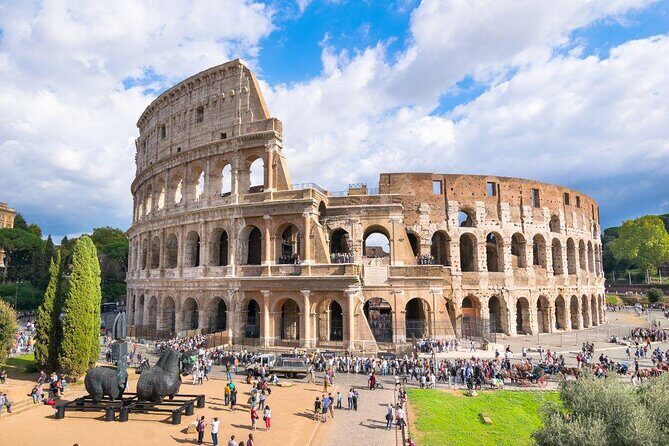
- Timed entry + reservation fee included to help you get inside faster than standard walk-up tickets.
- 24-hour entry to Roman Forum and Palatine Hill after the tour, so you can slow down later.
- Choose guided or self audio: guides are included only on guided options.
- Max group size of 24, which usually means more human pacing than the giant bus crowd.
- Tour runs in English, with a multi-language audio app if you pick self audio.
The Colosseum is the headline, but the plan is the real value
For many first-time visitors, the Colosseum is the “I can’t believe I’m here” moment. What makes this experience useful is that it treats the Colosseum like a starting point, then carries you to the Forum and Palatine so the site starts making sense as one connected Roman world.
At $59.03, you’re not just paying for entrance. The ticket value is spelled out: Colosseum entry (€18) plus a reservation fee (€2) are part of what’s included, and the remaining cost pays for the tour services and coordination that help you move through a crowded, tightly managed monument.
You can also read our reviews of more guided tours in Rome



Entering the Colosseum without wasting your day
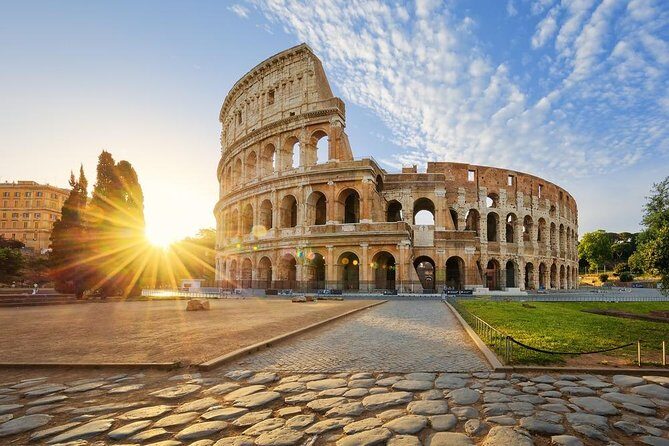
Your schedule is structured, not loose. You’ll meet at Piazza del Colosseo, 1, and you’re expected to check in at least 30 minutes before your selected start time. That is not optional. If you roll in late, the rules are strict: you may not be able to join or reschedule.
Then comes security. The guidance is to allow at least 20 minutes to clear the checkpoint. This is why I call timed entry a “stress reducer,” not a magic wand. If you show up early, you’re more likely to actually experience the tour rather than spend it waiting.
Colosseum stop: what you should look for during the 1.5-hour centerpiece
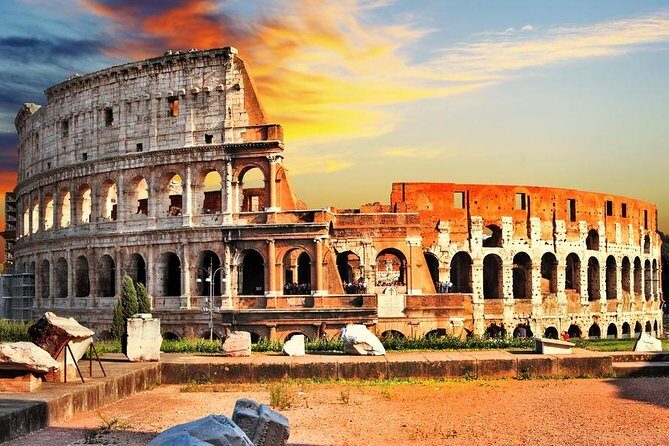
The Colosseum stop is where the emotion hits first. It’s also where interpretation matters. The tour’s content is built around what makes the Colosseum special in Roman culture: public spectacles, engineering scale, and the way the ancient city organized power and entertainment.
You’ll get Colosseum admission ticket included, and the tour time is listed as roughly 1 hour to 1 hour 15 minutes overall, with at least one main stop given as longer on the itinerary (plan for time variation). On paper, that’s short. In real life, the pacing depends on security and crowd flow, and the operator warns that departure time can shift by up to 20 minutes.
My practical advice: once you’re inside, don’t try to “see everything.” Try to notice the layout and the stories that connect later stops. That’s the difference between a fast photo loop and a visit that actually sticks.
Roman Forum and Latin Forum: the part that makes the Colosseum click
If the Colosseum is the stage, the Roman Forum is the backstage. This stop focuses on the Forum as the center of public life—law courts, meetings, markets, and ceremonies that changed character from republican times into the empire.
The tour highlights several surviving landmarks you can actually spot while you’re there, including the Temple of Castor and Pollux, the Temple of Saturn, the Temple of Vesta, the Curia (senate house), and the Arch of Titus. It also calls out the Mamertine Prison and the Cloaca Maxima, which is a great reminder that Roman engineering wasn’t only for monuments—it was for daily survival too.
Here’s why this stop is valuable for you: you’re not just walking through ruins. You’re learning what kind of space the Forum was, so the architecture stops being random stone and starts reading like a map.
Arch of Constantine: victory propaganda at human scale
Between the Colosseum and the Palatine Hill, the Arch of Constantine anchors a very Roman theme: power that wants to be remembered. The arch commemorates Constantine’s victory over Maxentius at the Battle of Milvian Bridge in AD 312, and it was commissioned by the Senate.
Even if you’re not a deep-arch person, this stop is worth it because it shows how Rome branded itself. The arch’s size and structure—three bays, with the central opening tallest—makes it feel like a ceremonial doorway, not just a decorative relic.
If you’re short on time later, this is one stop you can still appreciate quickly. It works as a mental bridge between the public spectacle of the Colosseum and the political-religious spaces of the Forum and Palatine.



Temple of Venus and Roma: Hadrian’s big political message
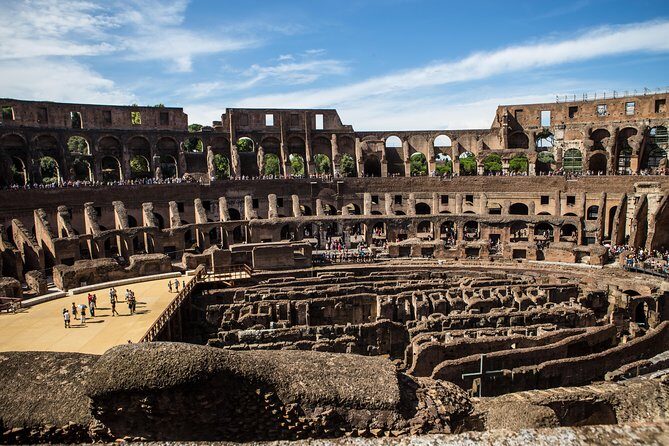
Next is the Temple of Venus and Roma, credited to Emperor Hadrian. Construction began in 121, inaugurated in 135, and finished around 141. That timeline matters because it frames the temple as an empire project, not a one-off local shrine.
The tour context here is the dedication: Venus Felix (Venus the Bringer of Good Fortune) and Roma Aeterna (Eternal Rome). That pairing is exactly the kind of Roman idea that helps you understand their mindset: divine protection and Rome’s permanent identity fused into a single statement.
This is also a good stop for you if you like “why did they build it?” questions. The answer is politics, religion, and branding—all in stone.
Palatine Hill: where imperial life began to concentrate
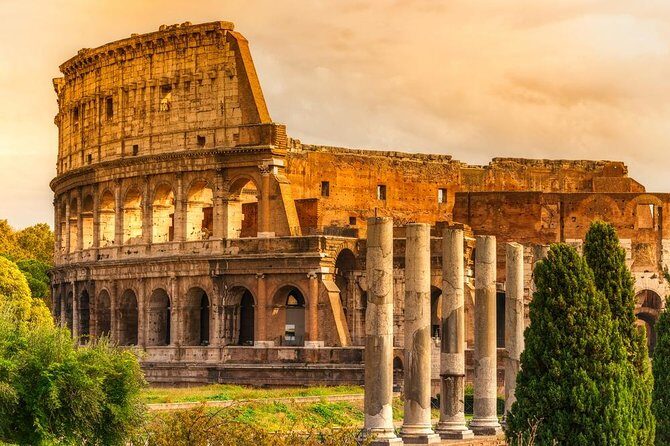
Palatine Hill is often described as the most historic-feeling part of Rome, and this tour treats it as an essential payoff. The hill is called the central one of Rome’s Seven Hills and described as one of the oldest areas of the city—linked with the idea of the empire’s first core.
The tour notes that imperial palaces were built here starting with Augustus, and it also points out that before imperial times, the hill was mainly home to wealthy residences. That matters because it keeps you from treating Palatine as “just views.” It’s about who lived where, and how status shaped the city.
The hill is now mainly an open-air museum area, with collections housed in a museum. Practically, you’ll want to take your time here if you can. The included tickets give you room to do that after the tour ends.
The included tickets that let you stretch the visit
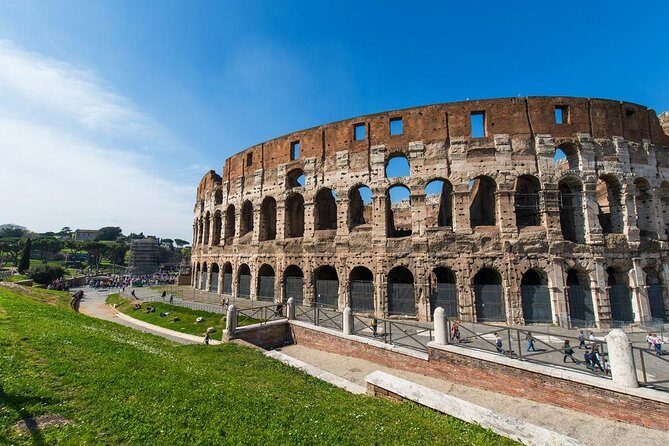
This is one of the best bits of value: your Palatine Hill and Roman Forum entry tickets are valid for 24 hours for both guided and self audio options. So even if your guided portion feels short (it often does, because crowds are real), you can return or linger later under your own pace.
The tour ends in the immediate vicinity of the Colosseum and Roman Forum, so you’re not stranded across town or forced into an immediate exit. You can use that breathing space to re-walk the parts you cared about most.
For me, that flexibility is what turns a fast tour into a full day. You get the structure upfront, then you earn the time you want later.
Guided vs self audio: which option matches your style
You can pick the tour type that fits your schedule and preferences. If you choose the guided option, the tour guide is included. If you choose self audio, the guide is not included, but you get a storytelling app on your phone.
A few practical notes matter a lot here:
- The self audio uses a multilingual audio guide app available in English, Chinese, German, French, Italian, and Spanish.
- Smartphones must be no older than 2020 (so plan for your battery and storage).
- Earphones are not included for self-guided tours.
If you’re the kind of traveler who wants a human explain-it-now voice, guided is the safer bet. If you’re more independent and like reading the stones at your own speed, self audio can work well—especially because the 24-hour access lets you come back.
Also, group size is capped at 24, which usually helps with pacing. Still, I’d keep expectations realistic: crowds can compress the route, and the operator warns security and capacity regulations may delay departures.
What I’d pay attention to, based on real guide vibes
A good guide can make the difference between seeing ruins and understanding a system. In the feedback you provided, a few guide names came up often enough that it’s worth thinking about what style you want.
- Eva was praised for being patient with the group and adjusting for needs like shade and water breaks.
- Eddy, described as an archeologist, was singled out for clear, engaging explanations that even helped a younger family member enjoy the story.
- Daniele was noted as responsive when a couple ended up at the wrong meeting location.
Your lesson here: show up early, confirm you’re at the right meeting point, and give your guide a chance to set the pace. When the group sticks together, everyone usually gets more out of the same limited time inside.
Price and value: does $59.03 feel fair?
At first glance, $59.03 is not cheap for just one hour. But you should price it like a Rome ticket bundle, not a generic walking tour.
You’re getting:
- Colosseum entry plus a reservation fee component called out in the inclusions
- Roman Forum + Palatine Hill tickets that remain valid for 24 hours
- A guided or self-guided storytelling layer, with audio available in multiple languages if you choose self audio
If your plan is to do only the Colosseum, you might still feel okay skipping a guided plan. But if you want Forum + Palatine without wasting time juggling tickets, this is where the value starts to show.
Small-group pacing: the secret to not getting lost in crowds
The Colosseum area is a traffic jam of history and people. A small group helps you get to key zones without turning your trip into a scavenger hunt. It also usually means the guide can correct headcount and keep the group together, which matters when security lines and entry rules get strict.
That said, you should expect friction on busy days. The operator warns that capacity regulations and security can delay departure, and national holidays or events can make the timing tighter. If you’re the type who needs an exact itinerary minute-by-minute, build in cushion time around the tour.
So… should you book the Colosseum small group experience?
I’d recommend booking this if your goal is simple: get into the Colosseum efficiently, connect it to the Roman Forum and Palatine Hill, then use your included 24-hour tickets to fill in the gaps at your own speed.
Skip it (or consider self audio only) if:
- you hate timed experiences and want total spontaneity
- you’re very sensitive to audio quality and you’re picking self-guided without earphones
- you’re arriving late or you won’t have 20 minutes for security
If you do book, your best move is practical: arrive early for check-in, keep your bag small (there’s no cloakroom), and bring an ID/passport that matches your booking names exactly. Those small details are what protect the experience from turning into a frustrating waiting game.
FAQ
Is the tour in English?
Yes. This experience is offered in English.
How long is the Colosseum small group experience?
The duration is listed as approximately 1 hour to 1 hour 15 minutes.
What is included with the tour ticket price?
The inclusions state that you get entrance to the Colosseum, Palatine Hill, and Roman Forum, plus a Colosseum entrance ticket and reservation fee. Palatine and Roman Forum tickets are also included and valid for 24 hours.
Do I get access to the Roman Forum and Palatine Hill?
Yes. The tour includes entry to Roman Forum and Palatine Hill, and the tickets are valid for 24 hours after your tour option.
Is a tour guide included?
It depends on the option you choose. Tour guides are included only with the guided tour option. They are not included if you pick the self audio-guided option.
Does the self audio option work on my phone?
It uses a multilingual audio guide app, available in English and several other languages. Your smartphone must be no older than 2020.
Do I need earphones for self audio?
Yes. Earphones are not included for the self audioguided tours.
Where do I meet for the tour?
The meeting point is at Colosseum, Piazza del Colosseo, 1, 00184 Roma RM, Italy.
What ID do I need for entry?
You must bring a valid passport or ID document that matches the full name provided at booking.