REVIEW · POMPEII
Guided tour of Pompeii with a writer
Book on Viator →Operated by Morosofi Guided Tours · Bookable on Viator
Pompeii turns human fast.
This guided visit takes you past the usual pile of ruins and into the people who lived there. The tone is unusual in a good way: you focus on how the city worked day to day, not only on dramatic walls and mosaics. You’ll hear questions like how Pompeii’s inhabitants lived, what daily life looked like for women, and how routine carried on until the eruption—presented lightly so it stays understandable for everyone (people and daily life take center stage).
Two things I like a lot are the story-driven approach and the practical pacing. A licensed guide brings the archaeological site to life with clear explanations and often funny, human details, so the place starts to feel less like a textbook and more like a real town. And because the route can flex based on what areas are open, you get a tour that follows what the park allows in the moment, while still aiming for key building types (houses, shops, and even spa-style spaces).
One heads-up: entrance tickets for the Pompeii Archaeological Park are not included, and what you see can depend on park closures. That doesn’t ruin the tour, but you’ll want to plan your arrival time so you’re not stuck waiting around before you meet your guide.
In This Review
- Key Things to Know Before You Go
- Why This Pompeii Tour Focuses on Real People
- Meet at Piazza Porta Marina and Get Moving
- What You’ll See Inside Pompeii Archaeological Park
- Houses, Shops, and the Spa: How the Site Tells Daily Life
- A Writer-Style Guide Like Sara and Why the Story Feels Fun
- Pacing, Walking, and Who This Works Best For
- Price and Value: What You’re Really Paying for at $173.47
- How to Prep So the Tour Feels Easy
- Should You Book This Guided Pompeii Tour?
- FAQ
- How long is the Pompeii guided tour?
- Where do we meet for the tour?
- Are entrance tickets to the Pompeii Archaeological Park included?
- Is this a private tour?
- Do I receive a mobile ticket?
- What fitness level is needed?
- What is the cancellation policy?
Key Things to Know Before You Go
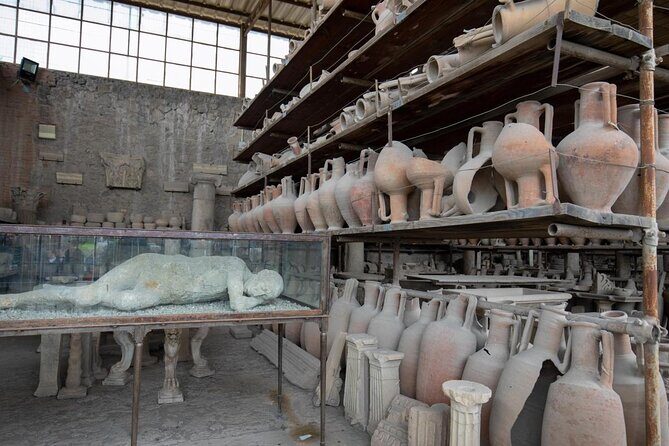
- Writer-style storytelling that focuses on daily routines and social life, not just stone monuments
- Licensed guide with a clear, engaging way of explaining archaeology
- Private experience with only your group participating
- Flexible route based on park management closures, so stops may vary
- Mobile ticket for the activity, with park entry handled separately
- Family-friendly guidance reported by people who visited with kids and teens
Why This Pompeii Tour Focuses on Real People
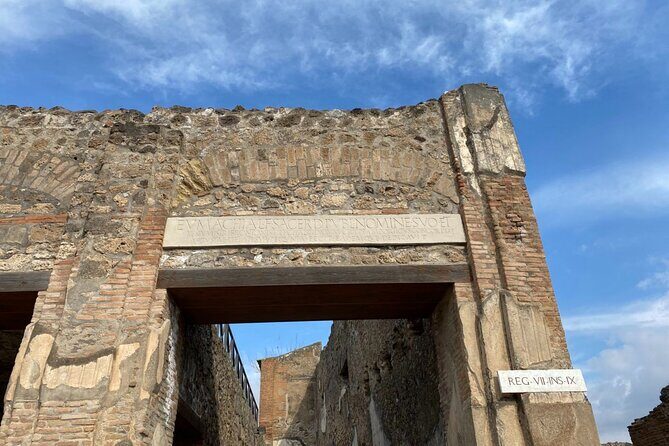
Pompeii is famous for being frozen in time, but it can also feel cold if a guide only points out architecture. This tour keeps the temperature human. The point is to understand how the city functioned—how people moved through markets and shops, how homes were laid out, and what daily life might have felt like. It’s a “look, then imagine” kind of experience: you see the physical space, then the guide helps you connect it to the lives that used it.
What makes this angle work is that it stays accessible. Instead of drowning you in dates and technical terms, the explanations are framed around questions you can actually picture. You’ll talk about how the eruption changed everything, but the emphasis stays on who lived there and what their routines likely looked like. That focus is also why families tend to enjoy the tour: kids can grasp the idea that this was a real city full of real routines, even if the setting is ancient.
And yes, you still get the payoff of Pompeii itself—because when you understand daily life, the ruins become more than scenery. They become evidence.
You can also read our reviews of more guided tours in Pompeii


Meet at Piazza Porta Marina and Get Moving
You start in a very straightforward spot: Piazza Porta Marina, 80045 Pompei NA, Italy, and the activity ends back there. That matters more than it sounds. Pompeii can be chaotic at the edges, and having a clear meet point helps you reduce stress.
The tour runs about 2 to 3 hours, which is a smart length for Pompeii. Long tours can turn into a blur of stops, heat, and “wait, what was that building again?” This time window keeps momentum, so you can actually absorb what you’re seeing rather than just checking off locations.
It’s also a private tour/activity, meaning only your group participates. In practical terms, that usually means fewer delays and more chances to ask questions—especially if you have kids, teens, or anyone in your group who wants clarification before moving on.
You’ll also have a mobile ticket for the activity. Bring it up on your phone and keep battery life in mind. In busy areas, it’s the simplest thing that prevents small problems from becoming big problems.
What You’ll See Inside Pompeii Archaeological Park
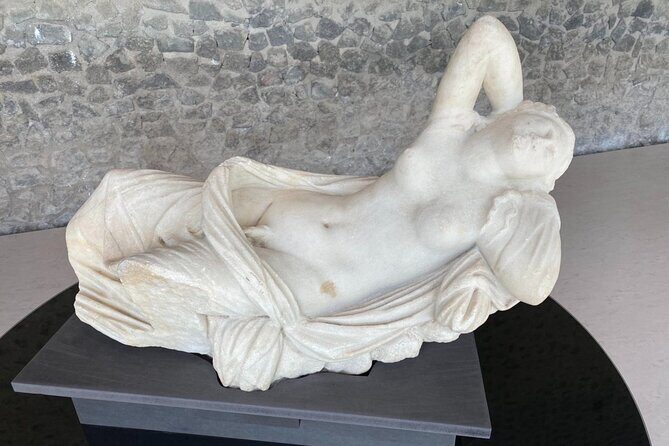
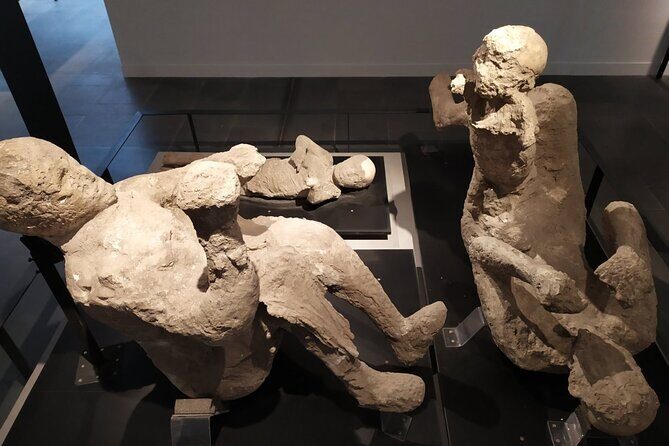
Inside the Pompeii Archaeological Park, the guide’s job is to connect buildings to life. The tour is built around seeing several building types, with the exact mix shaped by park management closures. That flexibility is normal here, and it’s also useful: you still get a coherent story even when an area is temporarily off-limits.
Based on what the tour highlights, you should expect to spend time around:
- Houses (domestic life and how space shaped daily routines)
- Shops (business, street-level activity, and the flow of customers)
- Spa-style areas (public or semi-public spaces for bathing and social habits)
- Plus additional stops where possible, depending on what’s open
One practical note: admission tickets to the park are not included. So you’ll want to arrive ready with your entry, or plan your timing so your guide can help you get everyone through efficiently. People often appreciate when a guide helps manage ticket timing, because Pompeii’s entrances can be slow if you’re unprepared.
Even with that caveat, the experience stays focused. The guide doesn’t toss you from point to point like a checklist. Instead, you move through clusters of buildings that help you build a mental picture of how the city worked.
Houses, Shops, and the Spa: How the Site Tells Daily Life
Here’s where this tour differs from the typical “look at this ruin” style. You’re not just seeing structures—you’re reading them like a map of behavior.
Houses help you picture household roles and routines. You’ll likely hear explanations that link layout to how people lived, stored things, and interacted with others in the same space. Even if you only catch a few rooms, the guide helps you understand the bigger idea: Pompeii wasn’t built for tourists; it was built for everyday work, rest, and family life.
Shops are where the city starts to feel lively. This is the layer most visitors don’t expect—because it’s easy to treat ruins as quiet. Shops hint at traffic: people coming and going, goods changing hands, and business happening where streets meet daily needs. When the guide talks about daily activity, you can almost hear what the street might have sounded like.
Then there’s the spa-style stop. Bathing spaces in ancient cities were often more than hygiene. They were social, practical, and part of a rhythm of public life. Seeing this kind of space makes the eruption story more than disaster history; it becomes a snapshot of normal human behavior—then the guide ties that snapshot to what changed.
If you’re worried Pompeii will be mostly walking past walls, this is exactly the cure. When the guide frames the buildings as living systems, you understand why details matter.
A Writer-Style Guide Like Sara and Why the Story Feels Fun
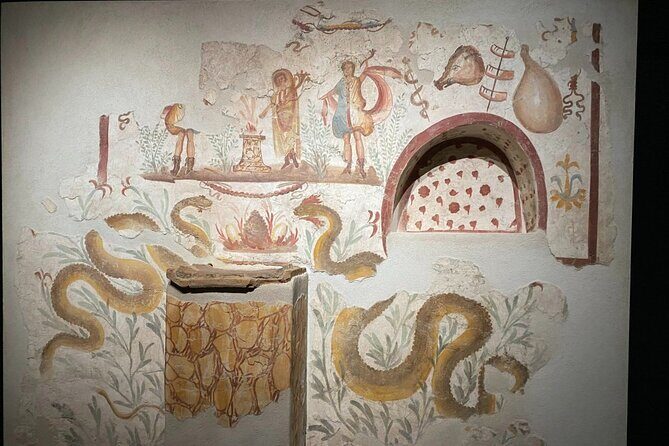
A lot of the praise for this tour circles around the same theme: the guide, often described as Sara (including the full name Sara Prossomariti in some accounts), uses storytelling that feels energetic and structured. The key isn’t that she knows facts—plenty of guides know facts. The key is that she turns those facts into scenes.
In real terms, that means you’ll hear:
- Explanations that stay clear even when topics get complex
- Anecdotes that make social life easier to picture
- A sense of timing that keeps the group engaged, including kids
People also mention that the guide can add extra social detail, like how markets and shops fit into everyday life, and how daily activities might have worked for different people. That’s the heart of this tour’s value: Pompeii stops being a distant tragedy and starts behaving like a real city.
It also helps that the guide is known for being engaging. If you’ve done tours where you silently check your watch, you’ll probably like this style. The pacing feels like a guided conversation with a smart plan underneath it.
If you prefer a tour where you ask questions and get answers without being rushed, a private group setting makes that easier.



Pacing, Walking, and Who This Works Best For

This experience asks for moderate physical fitness. Pompeii involves walking on uneven ground and absorbing a lot of visual input. For most people, the distance is manageable, but you should plan for a “comfortable walking” day, not a sit-down museum visit.
The 2 to 3 hour duration helps a lot. It’s long enough to tell a real story, but short enough that you’re less likely to get mentally fried. That matters because Pompeii is visually intense. A guided framework helps you process it instead of just photographing it.
This tour also seems to work well with families, including people traveling with children and even teens. If your group includes young travelers, bring the expectation that the guide will keep things moving and use storytelling to hold attention.
Who it’s best for:
- First-timers to Pompeii who want meaning, not just highlights
- Families who want the ruins explained in a way kids can follow
- Anyone who likes history told through people, routines, and social context
If you’re someone who only cares about the most famous viewpoints and doesn’t want any explanation, you might find a different kind of tour more to your taste. But if you want Pompeii to make sense, this is a strong fit.
Price and Value: What You’re Really Paying for at $173.47
At $173.47 per person, this isn’t a budget ticket—but it’s not trying to be one. The price is mainly paying for a licensed guide and for the time it takes to convert a huge site into an understandable narrative.
Here’s how to think about the value:
1) You’re paying to save your brain. Pompeii is big. Without guidance, you can spend time wandering while missing the social story that makes ruins click.
2) You’re paying for focus. The tour aims at specific building types and a people-centered theme, instead of scattering your attention.
3) You’re paying for time quality in a short window. Two to three hours is a sweet spot if you want an experience without losing the whole day to logistics.
The one catch is that entrance tickets to the park are not included, so your real total cost depends on your entry setup. Still, the tour’s structure can feel worth it if you care about understanding what you’re seeing rather than just walking around.
If you’ve already bought park entry, you’ll feel the cost more clearly as guide service. If you haven’t, budget for the missing piece.
How to Prep So the Tour Feels Easy
Pompeii can be a heat-and-walking day, so a little prep goes a long way. Since the tour depends on what’s open at the park, plan to be flexible about exact stops.
Practical prep:
- Wear shoes you trust on uneven ground.
- Bring water and plan for breaks if your group needs them.
- Charge your phone. The activity uses a mobile ticket, and you’ll likely be coordinating with your guide near the start point.
- If you haven’t booked park entry yet, do it early so you’re not making last-minute decisions at a busy entrance.
If you’re traveling with kids, this kind of storytelling can really help, but you’ll still want snacks and hydration. Pompeii doesn’t care about your itinerary.
Also, if your group has questions, bring them. This tour format tends to work best when you treat it like a conversation with a plan.
Should You Book This Guided Pompeii Tour?
Book it if you want Pompeii to feel like a real town. The people-first focus, the guide’s energy, and the way the tour connects houses, shops, and spa-style spaces to everyday life are the reasons this experience performs well. It’s also a good choice for first-timers because it gives you a clear story framework quickly.
Think twice if you’re trying to keep costs ultra-low, since park entry is not included. Also consider whether your group can handle moderate walking for a couple of hours in a large outdoor site.
If you’re visiting Pompeii with kids, or you want a guide who explains history through human details rather than only monuments, this tour is likely a strong match. For many people, that’s the difference between seeing Pompeii and understanding Pompeii.
FAQ
How long is the Pompeii guided tour?
The tour lasts about 2 to 3 hours, depending on what’s open in the park.
Where do we meet for the tour?
The meeting point is Piazza Porta Marina, 80045 Pompei NA, Italy, and the activity ends back at the meeting point.
Are entrance tickets to the Pompeii Archaeological Park included?
No. Entrance tickets are not included in the tour price.
Is this a private tour?
Yes. It’s a private tour/activity, so only your group participates.
Do I receive a mobile ticket?
Yes. The experience uses a mobile ticket.
What fitness level is needed?
The tour lists a moderate physical fitness level, so plan for walking around an outdoor archaeological site.
What is the cancellation policy?
The experience is non-refundable and cannot be changed for any reason. If the minimum number of travelers isn’t met, you’ll be offered a different date/experience or a full refund.