REVIEW · POMPEII
Wine Tasting and Winery Tour in Vesuvio National Park with Lunch
Book on Viator →Bookable on Viator
This tour turns the Vesuvius area into a food-and-wine lesson you can taste. I like that it pairs Lacryma Christi wines with classic Neapolitan plates, so you’re not just sipping in the dark. I also like that it’s set in the Vesuvius National Park, a UNESCO-listed biosphere reserve that shows up in the glass and in the cellar.
You’ll get a small-group experience with a true family-winery feel, including a walk through the vineyard and a look at how they make wine in lava-rock facilities. The one thing to plan for is transportation: the tour starts at Via Cifelli in Trecase, and you may need to arrange your own way to reach the winery area.
In This Review
- Key details that matter before you go
- Why a Vesuvius Winery Tasting in the UNESCO Park
- Arrival at Via Cifelli, 10: Timing and getting there
- The vineyard walk: ungrafted vines, different slopes, and Caprettone
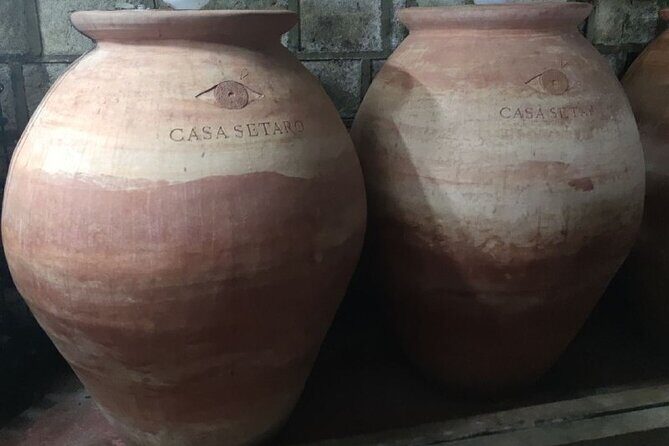
- The cellar cut from lava stone: steel vats and amphora
- 4 wines and 4 Neapolitan dishes: how the tasting works
- How long it takes and what the group size feels like
- Price and value: what $79.94 buys you
- Who should book this Pompeii-area winery tour
- Should you book the Wine Tasting and Winery Tour in Vesuvius?
- FAQ
- Where does the tour start?
- What time does the experience begin?
- How long is the tour?
- How many wines and dishes are included?
- What kinds of wine will you taste?
- Do you visit the vineyard and the cellar?
- Is this a small group tour?
- Is there free cancellation?
Key details that matter before you go
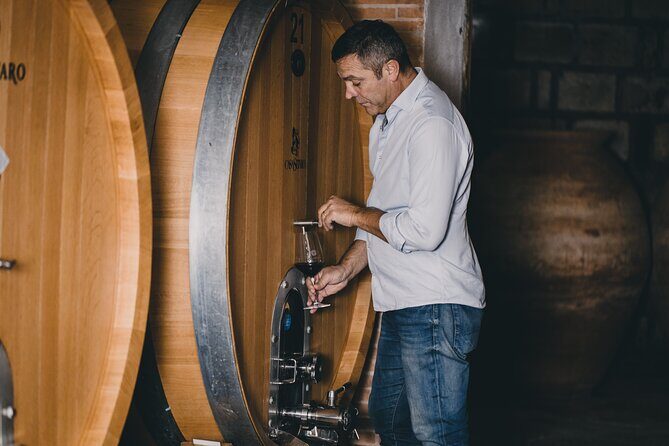
- UNESCO Vesuvius setting: the winery is inside the Vesuvius National Park, a biosphere reserve and UNESCO site (since 1995)
- 4 wines, 4 Neapolitan dishes: the tasting includes rosé through reds paired with local plates
- Ungrafted, native vines: Aglianico, Falanghina, Piedirosso, plus Caprettone, a rare local vine that grows only here
- Lava-stone cellar: the cellar is dug from the volcanic rock of Vesuvius’ major eruption
- Small group: maximum of 10 travelers, so the guide can actually talk and answer questions
- Guide name you’ll hear: Marco is highlighted in the experience reviews as a strong host
Why a Vesuvius Winery Tasting in the UNESCO Park
If you’re doing Pompeii, you already know Vesuvius isn’t just a background story. This is how that volcano shows up in daily life: in the soil, in the vines, and in the way wine is made. The winery operates within Vesuvius National Park, which is recognized as a UNESCO biosphere reserve (since 1995). That matters because it signals protected land and long-term traditions, not a quick tourist setup.
What I like most is that the tasting is built around local identity. You’re offered wines from rosé to reds, and you’re pairing them with Neapolitan dishes that match the region’s style. It’s a smart way to connect flavors to place without needing a wine degree.
And you’re not stuck in a showroom. You’ll walk in the vineyards and then go into the cellar for the behind-the-scenes part. It’s the kind of tour where you can leave knowing a few concrete things, not just having a nice glass.
You can also read our reviews of more food & drink experiences in Pompeii

Arrival at Via Cifelli, 10: Timing and getting there
The tour starts at 12:00 pm and meets at Via Cifelli, 10, 80040 Trecase NA, Italy. It ends back at the meeting point. The duration is about 2 hours, so this is not a long full-day outing. It’s also a good option if you want something food-focused without losing an entire afternoon.
Here’s the practical thing to plan: transportation. The experience begins in the Trecase area, and one review flagged the need to handle your own ride to the winery. If you’re staying in central Pompeii, Naples, or the Amalfi Coast, you should assume you’ll be using a taxi, rideshare, or arranged transport to get to the start location on time.
Because it’s a short tour, being late is not a fun game. Aim to arrive a little early so you can check in calmly and settle before Marco (the host mentioned in reviews) starts the program.
The vineyard walk: ungrafted vines, different slopes, and Caprettone
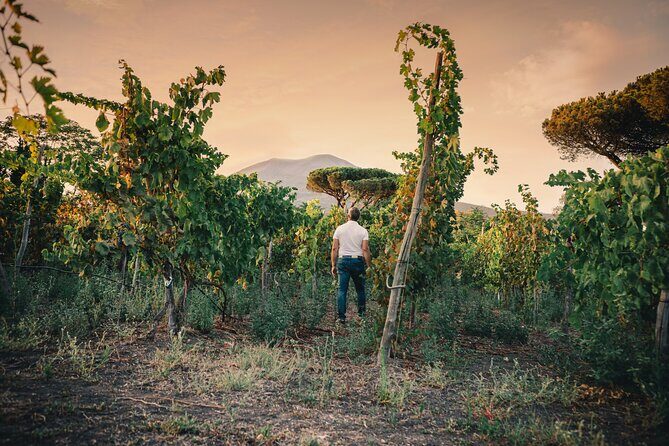
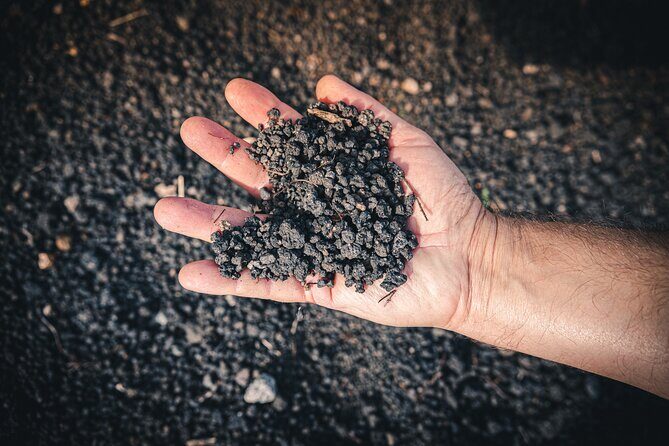
The vineyard part is where the tour earns its name. You’ll walk through the vines and get context for what makes this volcanic territory special. The winery has 12 hectares of vineyards, cultivated organically with native varieties on volcanic soils. That combination is the heart of the story: not just where the winery is, but what they choose to grow and how.
The grapes they grow are Aglianico, Falanghina, Piedirosso, and Caprettone. Caprettone is rare and described as a vine that grows only here. That’s a big deal for a tasting like this because it gives you something you can’t easily replicate on another coastline. Even if you’ve tasted wine before, hearing about a local vine with limited range usually changes how you pay attention to aromas and structure.
The tour explains that the vineyards are planted at different altitudes and exposures. That means the grapes don’t ripen the same way across the property, and the wine character can shift depending on where the grapes come from. For you, that turns the vineyard walk into a tasting prep session: you’ll start noticing why wine might taste different even when the region is the same.
You’ll also learn that these vines are ungrafted and that the cultivation focuses on native varieties. Ungrafted vines are often linked to resilience in a challenging environment, and in places like this they help preserve older regional winemaking identity. The bigger win here is that the tour explains the farming in a way that makes your later sip feel more intentional.
The cellar cut from lava stone: steel vats and amphora
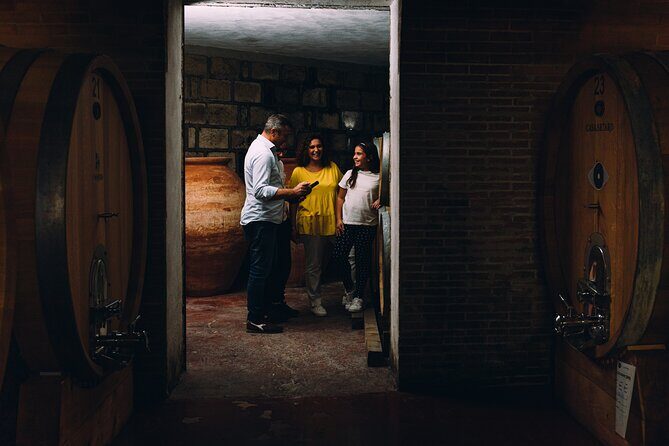
After the vineyard walk, the experience moves underground—literally. The cellar is dug out of lava rock from the last great eruption of Vesuvius. That detail isn’t just dramatic architecture. A stone-built, volcanic cave-like space tends to offer stable conditions, which helps the winemaking process.
Inside, the tour discusses fermentation and vinification in both large steel vats and in amphora. Knowing that split matters, because different vessels can affect how wine ferments and handles oxygen exposure, and that can shape the final taste and texture. You don’t need to memorize wine chemistry, but you should pay attention during the tasting because you’ll be able to connect technique to what you’re tasting.
This part of the tour also helps explain why a family operation can feel distinct. The winery isn’t relying on a single modern tasting room experience. It uses the property itself—the volcanic rock, the humidity and temperature it creates, and the cellar’s physical layout—as part of the production story.
If you care about the practical side of winemaking, this is one of the best parts. You get a guided look at how the wine is processed, then you immediately test the results in your glass.
4 wines and 4 Neapolitan dishes: how the tasting works
The tasting includes 4 wines and 4 Neapolitan dishes. The wines range from rosé to reds, so you’ll likely move through flavors rather than doing a single-style flight. This helps if you’re not sure what kind of wine you like, because you get contrast early and then a fuller picture later.
The experience specifically highlights Lacryma Christi wines and pairing them with local delicacies. Lacryma Christi is strongly tied to the Vesuvius area, so it’s a logical centerpiece. In a tasting like this, the pairing is the point: you’re meant to taste how local food responds to the wine’s acidity, body, and aromatics.
Neapolitan dishes tend to bring comforting, savory elements to the table. That’s ideal for wine flights because it makes it easier to notice what changes in the glass once the flavors hit your palate. You’ll be tasting enough that you should feel differences across the flight, not just repeating impressions.
What I’d suggest while you’re eating: take small bites and sip slowly. With four wines and four dishes, it’s easy to rush and blur everything together. If you want the most value out of the tasting, treat it like a guided meal: one dish, one wine, then switch.
Also, Marco’s role comes through in reviews as a strong hosting presence, with pairings described as inspiring. That kind of guidance makes a difference when you’re tasting multiple wines in a short time.
You can also read our reviews of more wine tours in Pompeii

How long it takes and what the group size feels like
This is a 2-hour experience and the group limit is 10 travelers. That size is big enough to feel social, but small enough for the host to keep attention on details like the vineyard types, the cellar setup, and the logic behind pairings.
Because the schedule is tight, you’ll cover three main things:
- Check in and set the context at the start
- Walk and learn in the vineyard
- Go into the lava-stone cellar and taste
It’s also described as suitable for most travelers. The winery visit includes walking in vineyards and going into a cellar, so if you have mobility limitations, you’ll want to consider comfort with uneven outdoor ground and a possibly cooler underground space.
Price and value: what $79.94 buys you
At $79.94 per person, you’re paying for a compact but well-rounded package: vineyard walk, cellar visit, guidance from Marco, and a structured tasting with four wines plus four Neapolitan dishes.
Here’s how I think about value on tours like this:
- You’re not just buying wine. You’re buying access to the property and the explanation of why the wines taste the way they do.
- You’re not just doing a meal. The tasting flight gives you context and direction, which can make the food more memorable.
- You’re in a small group. That usually means better conversation and fewer rushed moments, which matters when time is limited.
One more practical angle: this tour is often booked about 30 days in advance on average. That tells me it’s a popular slot for people who want something more grounded than a typical tasting room stop. If you’re traveling during peak season or on a busy day around Pompeii, it’s smart to book early rather than hoping for a last-minute opening.
Who should book this Pompeii-area winery tour
This tour fits best if you want a short, high-impact experience that connects Pompeii’s volcanic setting to wine and food. It’s also ideal if you like structure: vineyard first, cellar second, tasting third, all in about two hours.
You’ll especially enjoy it if:
- You want Lacryma Christi and regional wines tied to the Vesuvius area
- You like food pairings and want Neapolitan flavors alongside wine
- You prefer small-group tours with a real family-winery feel
- You’re traveling with friends or a partner and want a shared experience you’ll talk about later
If you mainly want scenic views without wine history or pairing details, you might find the structure a bit intense. But if you enjoy learning while eating, this is a strong match.
Should you book the Wine Tasting and Winery Tour in Vesuvius?
I’d book this when I want two things at once: a real winery visit and a meal that actually matches the wines. The combination of vineyard walk, the lava-stone cellar, and a tasting flight from rosé to reds paired with Neapolitan dishes is exactly the kind of “why this place” experience that travels well in your memory.
Just be honest about one issue: getting there. If you can’t comfortably arrange transport to the Trecase meeting area, that’s the biggest friction point. If you can solve that, you’re likely to have a smooth, rewarding couple of hours.
FAQ
Where does the tour start?
The tour starts at Via Cifelli, 10, 80040 Trecase NA, Italy.
What time does the experience begin?
The start time is 12:00 pm.
How long is the tour?
The duration is approximately 2 hours.
How many wines and dishes are included?
You’ll taste 4 wines and enjoy 4 Neapolitan dishes.
What kinds of wine will you taste?
The tasting includes wines from rosé to reds, including Lacryma Christi.
Do you visit the vineyard and the cellar?
Yes. You’ll walk in the vineyard and then visit the cellar, including the lava-stone wine cellar area.
Is this a small group tour?
Yes. The maximum group size is 10 travelers.
Is there free cancellation?
Yes, you can cancel for a full refund for free up to 24 hours in advance of the experience’s start time. If you cancel less than 24 hours before, the amount paid is not refunded.