REVIEW · POMPEII
Pompeii private tour with expert guide in archaeology
Book on Viator →Operated by POMPEIGRANDTOUR · Bookable on Viator
Pompeii clicks with the right guide. This private, 2-hour walk is built around everyday life 2000 years ago, with an archaeology expert steering you through the big scenes and the quieter corners.
What I like most is how the tour is structured to connect sites into a story, not a checklist, and how you end in the Forum area so you can choose to keep exploring or head back with the guide. One consideration: the park entrance ticket isn’t included, so you’ll want to budget that on top.
- Private group size (up to 8), so you can ask questions and move at a human pace
- Archaeologist-led interpretation focused on how people lived, worked, and played
- A smart route through gladiator training, the theatre, baths, and the Forum
- Fresco-heavy stops (including the erotic fresco area) for a more complete picture
- Plaster casts related to the Vesuvius victims, which brings the eruption story into focus
In This Review
- A 2-hour Pompeii plan that avoids the guesswork
- Meeting at Coffee Shop Vittoria: start easy, not frantic
- Gladiator training grounds and the theatre: spectacle with purpose
- Main streets, taverns, and shops: the city you can almost hear
- Pompeii baths: the spa that doubled as social life
- The Red Light District and erotic frescoes: hard to forget
- The Domus of rich patricians: mosaics and frescoes with context
- The Forum, temples, market, and Vesuvius victim casts: social center and human cost
- Price and value: what $302.34 per group really buys you
- What you’ll walk away understanding (beyond the ruins)
- Who should book this private Pompeii archaeology tour
- Should you book this Pompeii private tour?
- FAQ
- How long is the Pompeii private tour?
- Is the entrance ticket included?
- What is the group size for this private tour?
- What language is the tour offered in?
- Where do we meet the guide?
- Is pick-up and drop-off included?
- Is the tour suitable for people with limited mobility?
- What is the cancellation policy?
A 2-hour Pompeii plan that avoids the guesswork

Pompeii can be overwhelming fast. You see walls, doorways, and street grids—and your brain tries to fill in the blanks. This tour is designed to do that filling for you, using an archaeology specialist to turn what looks like ruins into daily routines and public spaces.
The big win is the pacing. In about 2 hours, you cover a lot of the essentials without getting steamrolled by a long mega-tour. It’s long enough to understand what you’re looking at, and short enough that you don’t feel trapped when your feet start bargaining with you.
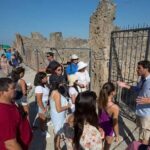
Because it’s private for a group up to 8, you’re not forced into a rigid single-file flow. If you care more about baths than gladiators, or you want to linger near frescoes, your guide can steer the balance. That flexibility is a real value add, not a luxury.
Admission ticket not included is the main gotcha. You’ll pay the Archaeological Park ticket separately, which you should treat like part of your planning, not an afterthought.
Meeting at Coffee Shop Vittoria: start easy, not frantic

You meet at Coffee Shop Vittoria, Via Mare, 80045 Pompei NA. That’s helpful because it’s a real, recognizable starting point rather than some abstract street corner. The tour ends back at the meeting point, which keeps logistics simple at the end.
There’s also something quietly practical here: the tour is near public transportation, so you’re not locked into one way in and out. And since it’s marked for moderate physical fitness, plan for walking on uneven, historic surfaces—Pompeii is not a smooth museum floor.
The tour is in English and is confirmed at booking time. Service animals are allowed, too, which matters for comfort and planning.
You can also read our reviews of more guided tours in Pompeii

Gladiator training grounds and the theatre: spectacle with purpose
The tour opens at the Pompeii Archaeological Park and quickly pulls you into a kind of real-time Roman routine. One early stop is the school and training place of gladiators. This is more than costumes-and-violence imagery. Your guide focuses on how performance and public life shaped the city’s culture—who watched, what training meant, and how entertainment fit into the rhythm of everyday Pompeii.
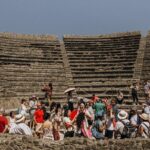
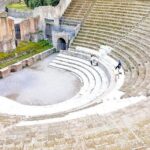
Right after that, you’ll move toward the theatre. Even if you think you already know what a theatre is, Pompeii’s theatre tells you something specific: public spaces weren’t separate from daily living. They were woven into it. It’s the kind of perspective shift that makes you look at the buildings differently for the rest of the visit.
A small practical note: these early stops can set your expectations. If you enjoy sport and spectacle, you’ll feel the energy. If you’re more of a “show me the kitchens” person, don’t worry—the route keeps building toward homes, baths, and daily commerce next.
Main streets, taverns, and shops: the city you can almost hear
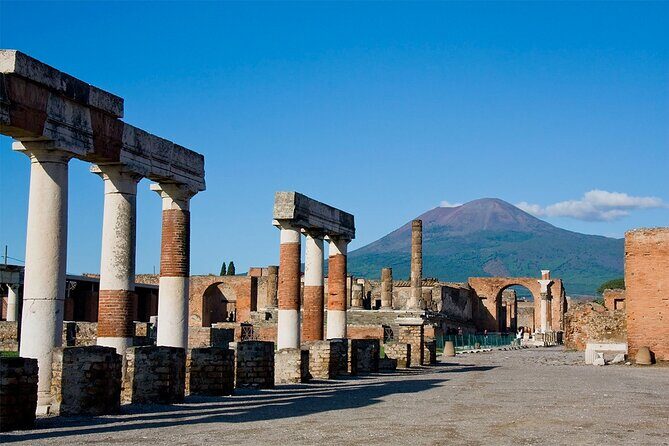
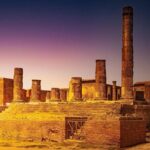
Next come the main streets with ancient taverns and shops. This is where you stop thinking of Pompeii as only tragedy and start seeing it as a functioning town. Your guide points out what these street-level spaces suggest about consumption, gathering, and daily errands.
I like this part because it’s where the ruins stop being abstract. A shop layout, a doorway, a street curve—suddenly you’re picturing commerce and community. The tour doesn’t just point. It explains why that space mattered.
You also get a sense of city flow. Pompeii’s layout can feel logical once you understand how people moved between public and semi-private areas. By the time you reach later stops, you’ll realize you’re not wandering. You’re following a map of social life.
If you’re the type who hates rushing, this section is a good anchor. It’s full of small visual details, and your guide’s context helps you notice more than you would on your own.
Pompeii baths: the spa that doubled as social life

Then it’s time for the Baths, described as a 2000-year-old spa. Even if you’ve read about Roman baths before, seeing them in Pompeii is different. Here, the rooms and circulation make it easier to picture how people would move, talk, and spend time.
What I find smart about covering the baths mid-tour is timing. By then, you’ve learned enough basics to understand the function of the space. And you’re not too tired yet. You’ll be able to focus on how the baths weren’t only about cleanliness. They were a social hub and a public statement.
If you want to take your own notes or pause for photos, this is a good stop to slow down. The structure gives you reference points, so you’re not just guessing where you are.
Possible drawback? If you’re the kind of visitor who wants only the most famous sites, the baths can feel less dramatic than the biggest monuments. But that’s also the point. Baths are where daily life shows up most clearly.
The Red Light District and erotic frescoes: hard to forget
Next comes the red light district and its famous erotic frescoes. This is one of those stops that turns a visit from sightseeing into understanding. Pompeii isn’t pretending to be polite. The city recorded life as it was, including what people bought, talked about, and decorated their walls with.
You’ll get guidance on what you’re seeing and how these images fit into the broader urban culture. If you’ve ever visited a historical site and felt like the people were edited into respectability, this area resists that. It’s real, and it’s part of the story.
Keep in mind that this stop is likely to be emotionally and visually intense for some people. If your group prefers a lighter tone, you might want to mention that to the guide early so they can pace the explanations.
You can also read our reviews of more private tours in Pompeii

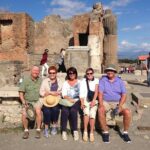
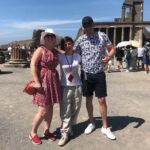

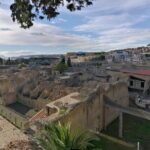
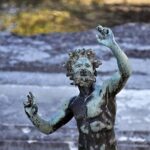
The Domus of rich patricians: mosaics and frescoes with context
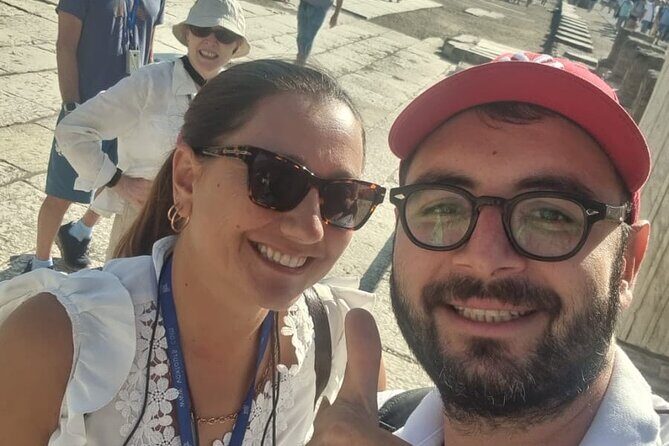
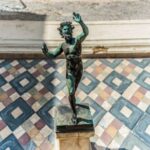
After that, the tour heads into a house of rich Roman patricians (Domus) with frescoes and mosaics. This is your contrast section. You’ll see how wealth showed up in art, layout, and decorative choices—and how private home life differed from the public street experience.
Mosaics and frescoes can easily become “pretty pictures” if nobody explains them. With a guide, they turn into evidence: evidence about status, taste, and what homeowners wanted visitors to feel.
I like this stop because it helps you understand Pompeii as a layered city. You’re not only looking at public life and commerce. You’re seeing domestic culture—how people entertained guests, displayed identity, and organized space around daily needs.
If you’re into art and design, this is a highlight. If you’re not, the guide’s framing often makes you look again. The trick is that Pompeii’s art isn’t isolated. It sits inside real rooms with real views and entry points.
The Forum, temples, market, and Vesuvius victim casts: social center and human cost

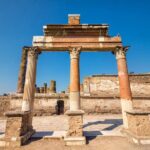
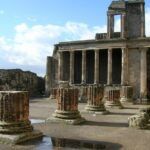
The tour wraps through the Forum, which was the center of social life with key buildings. This area ties things together. After seeing streets, baths, and homes, you can better understand why the Forum was such a magnet.
You’ll also pass by temples places of worship and the main market of the city. These stops are valuable because they show Pompeii wasn’t only about entertainment and shopping. There were rituals, civic rhythms, and public gatherings that anchored the community.
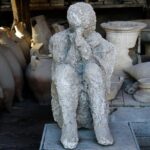
Then comes one of the most sobering portions: plaster casts of the victims crystallized at the time of the Vesuvius eruption. This is the moment where the tour shifts from interpretation of daily life to the human consequence of disaster.
A guide matters a lot here. Without context, it’s easy to look at the casts and feel lost. With a specialist in archaeology, you get a clearer sense of what these casts represent and why they’ve become part of how we remember the eruption.
The tour ends at the Forum. From there, you can decide whether you want to continue the visit on your own or return to the exits with the guide. That choice is practical. If you’re still energetic, keep exploring independently. If you’d rather not navigate crowds and distances, stick with the guide for an easier finish.
Price and value: what $302.34 per group really buys you
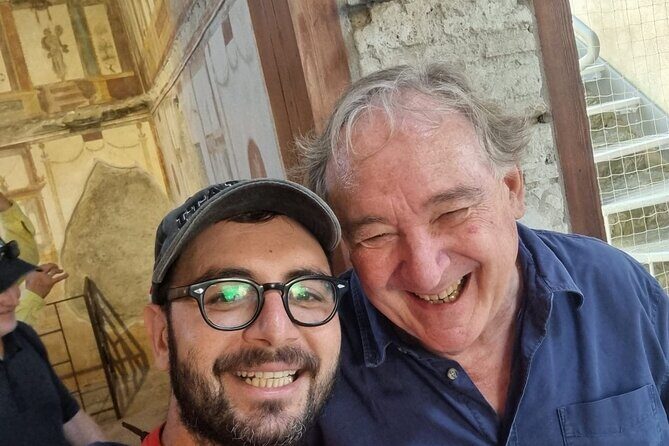
The price is $302.34 per group for up to 8 people, for about 2 hours. Your admission ticket is extra: €19.00 per booking for the Archaeological Park.
Here’s how I think about the value. Private tours cost more because you’re paying for focused attention. In Pompeii, that’s not optional if you want understanding instead of wandering. The guide is an archaeology expert, and the route is organized around meaning: gladiators, theatre, baths, red light frescoes, wealthy homes, and then the Forum with civic life and the eruption story.
If you’re coming as a group of 2 to 6, you’re buying shared access to a guide rather than paying for a seat on a crowded bus. That’s often a better use of money than trying to “DIY” Pompeii with only a map, especially if you care about the why behind what you see.
If you’re traveling solo, it can feel pricey compared with group tours. But private still helps you slow down and ask questions—and Pompeii rewards that. If you want a thoughtful visit instead of a quick photo run, this format fits.
One thing to note: pick-up and drop-off by minivan isn’t included, though you can book that option through the provider. If you’re relying on local transport or you’re already near Pompeii, you may not need it. If you hate logistical stress, consider arranging transport so you keep your energy for the ruins.
What you’ll walk away understanding (beyond the ruins)
A good Pompeii visit changes how you read the site. After this tour, you’ll have a stronger sense of how the city functioned day-to-day.
You’ll understand:
- how entertainment (gladiators and theatre) fit into public life
- why streets with shops and taverns matter for city rhythm
- what the baths suggest about social mixing
- how frescoes and the erotic area show the city’s honesty, not a sanitized version
- how a Domus reveals wealth through art and space
- how the Forum stitched civic, worship, and commerce together
- how the Vesuvius victim casts connect daily life to a sudden end
That’s why people love guided visits so much here. Pompeii is not just a set of buildings. It’s a frozen snapshot of a world. The guide turns that snapshot into a story you can follow.
Who should book this private Pompeii archaeology tour
This one makes the most sense if you:
- want an English guide who can explain what you’re seeing as you go
- like a private group up to 8 where you can move at a human pace
- care about both public spaces (Forum, theatre) and more intimate life (Domus, baths)
- appreciate stops that don’t shy away from difficult or adult material (like the erotic fresco area)
- prefer a structured 2-hour plan rather than trying to figure out priorities alone
It’s also a good choice if your group includes mixed interests. The route covers a lot of different themes, so most people find at least one highlight.
Should you book this Pompeii private tour?
I’d book it if you want a Pompeii visit that actually makes sense. For the money, you’re not just buying access—you’re buying interpretation from an archaeology expert, plus a route that hits major everyday-life zones without wasting time.
Skip it or pair it with extra self-guided time if you already know Pompeii deeply and you want a long, slow wandering day. Also think twice if you’re uneasy with adult fresco content; you can manage it with the guide, but it’s part of the tour’s focus.
If your goal is a clear, meaningful first visit—this is a strong bet.
FAQ
How long is the Pompeii private tour?
It lasts about 2 hours.
Is the entrance ticket included?
No. The Archaeological Park of Pompeii ticket is €19.00 per booking and is not included.
What is the group size for this private tour?
It’s a private tour for your group only, up to 8 people.
What language is the tour offered in?
The tour is offered in English.
Where do we meet the guide?
The meeting point is Coffee Shop Vittoria, Via Mare, 80045 Pompei NA, Italy.
Is pick-up and drop-off included?
Pick-up and drop-off by minivan is not included, but you can book it separately through Pompeigrandtour.
Is the tour suitable for people with limited mobility?
The tour is noted as having a moderate physical fitness level, so you should be ready for walking in an outdoor archaeological site.
What is the cancellation policy?
You can cancel for a full refund up to 24 hours in advance of the experience start time.