REVIEW · WALKING TOURS
Rome: Jewish Ghetto Walking Tour
Book on GetYourGuide →Operated by Roman Vacations · Bookable on GetYourGuide
Rome’s Jewish Ghetto feels personal. In just 2.5 hours, you connect ancient ruins to the lives of real people, using a route built around major landmarks and stories. I love that it starts in the historic center at Foro Traiano and quickly moves you into neighborhood time, not just monument time.
Two things I especially like: the walk is story-driven (when our guide was James, it felt like history with scenes), and the included break for homemade kosher gelato gives you a tasty reset without turning the tour into a food crawl. One consideration: if you want to go inside the Great Synagogue, this tour mostly focuses on the area outside the building, so you may need to plan a separate visit for interior access.
In This Review
- Key highlights to look forward to
- Start at Foro Traiano 84: Where your tour snaps into place
- Theater of Marcellus: Rome’s scale before the Ghetto story
- Turtle Fountain in Piazza Mattei: Love, myth, and a perfect photo pause
- Through the Jewish Ghetto: Walls, the Great Synagogue area, and resilience
- Portico d’Ottavia: Ancient architecture still in daily use
- Portico-to-island rhythm: the oldest functioning bridge to Tiber Island
- Asclepius on Tiber Island: from temple legend to a church
- Kosher gelato (or coffee) break: small stop, good value
- Price and timing: why $65 works for the right traveler
- What to bring: small prep, fewer annoyances
- Who should book this Jewish Ghetto walking tour
- Should you book? My quick verdict
- FAQ
- How long is the Rome Jewish Ghetto walking tour?
- How much does it cost?
- Where do I meet the guide?
- What’s included in the price?
- What stops will we see on the tour?
- What should I bring?
- Does the tour run in bad weather?
- What if I arrive late?
- Can I cancel for free or pay later?
Key highlights to look forward to

- Theater of Marcellus first, and yes, it’s older than the Colosseum, which helps you understand how Rome evolved.
- Fontana delle Tartarughe (Turtle Fountain) in Piazza Mattei, with the well-known romance story tied to the spot.
- The Jewish Ghetto streets paced for meaning, including the last remaining wall section that shaped centuries of life here.
- Portico d’Ottavia for those “how old is this?” Roman-column moments, still visible and usable today.
- Tiber Island via the oldest functioning bridge in Rome, plus WWII hospital stories.
- An ending with Asclepius’ temple legacy, now a church, so you close the loop from ancient faith to later layers.
Start at Foro Traiano 84: Where your tour snaps into place
You’ll meet at Foro Traiano, 84, and you’ll spot your group by looking for an orange Roman Vacations sign. This matters because the opening stretch is where you get your bearings fast, plus you’re right in the old-Rome core before the route starts threading through the Jewish Quarter.
Plan on wearing comfortable shoes from the start. This is a walking tour, and even when the pace is thoughtful, cobblestones and shade gaps are real.
You can also read our reviews of more walking tours in Rome


Theater of Marcellus: Rome’s scale before the Ghetto story
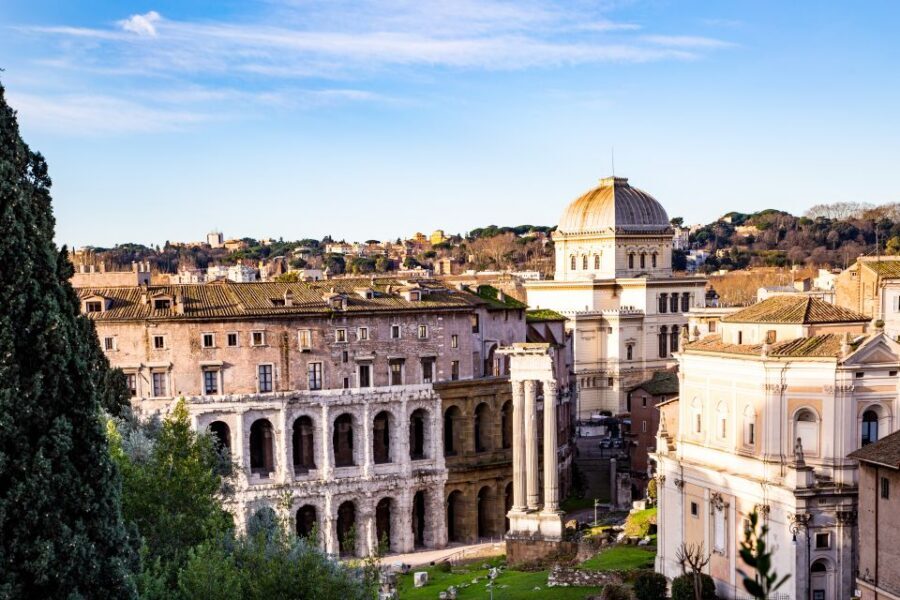
The first big stop is the Theater of Marcellus, with a guided explanation built around how Rome’s public life worked. What I like here is the timing: you’re not jumping straight to one neighborhood. You’re learning the wider Roman “machine” that shaped what came later.
It’s even more satisfying if you already know the Colosseum. The guide’s comparison that Marcellus is older than the Colosseum helps you feel the timeline in your body, not just your brain.
Turtle Fountain in Piazza Mattei: Love, myth, and a perfect photo pause

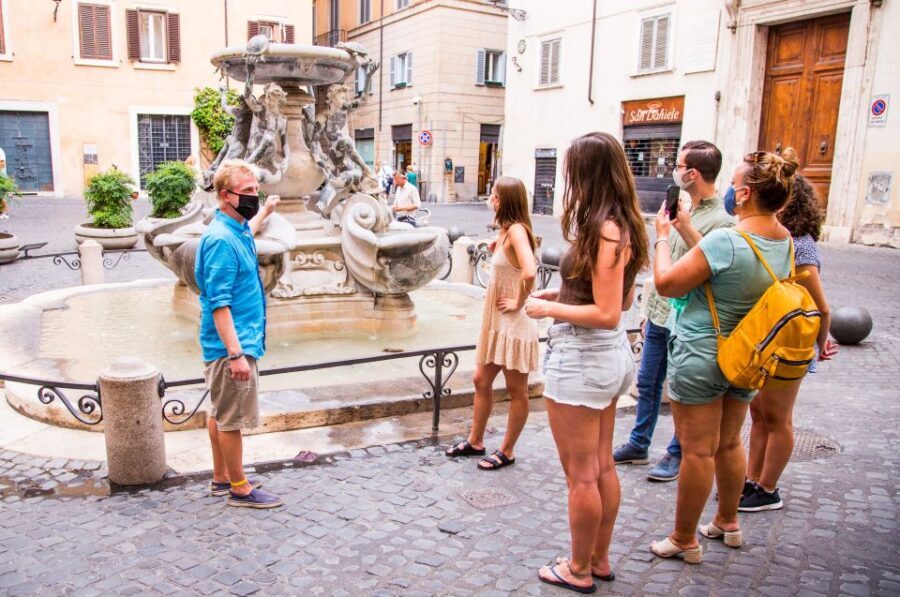
Next comes Fontana delle Tartarughe in Piazza Mattei. You’ll hear the story tied to the famous turtles and the famous feeling around it—often described as unrequited love—so the fountain isn’t just a pretty stop.
This is also one of the easiest moments to reset. You get a guided chunk of info, then you can look around the square at your own pace for a minute or two.
Through the Jewish Ghetto: Walls, the Great Synagogue area, and resilience
Now you enter the neighborhood layer where the tour does its best work. You’ll walk through the Jewish Ghetto and hear how the community shaped Rome across centuries—alongside how Rome shaped it in return.
A standout stop is the sight of the last remaining wall that once helped define and restrict the Jewish community’s space for generations. Seeing that physical remnant makes the stories hit harder, because you can point to what survived.
You’ll also pass by the Great Synagogue of Rome. For practical planning, the tour data focuses on seeing the synagogue area as part of the walk, not on an interior visit. If going inside matters to you, consider arranging that separately.
Guides in this tour style tend to make the past feel specific, not abstract. In particular, multiple guides (including Angela and Elena in past groups) are known for adding emotional context and answering questions clearly, which helps if you’re new to the subject.
Portico d’Ottavia: Ancient architecture still in daily use
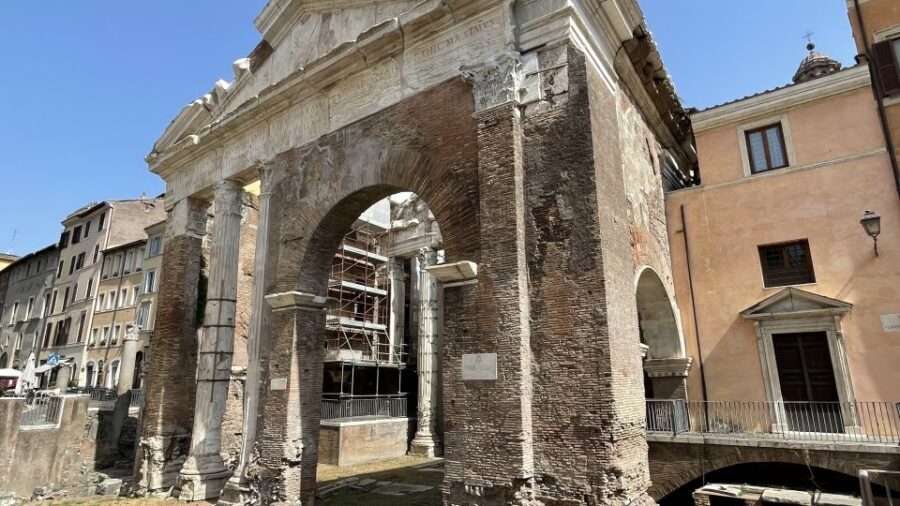
The route continues to Portico d’Ottavia, another spot where the guide points out what’s still functional about Rome’s older structures. You’re not just viewing a monument; you’re seeing a corridor of columns that’s part of the neighborhood’s present-day flow.
This is a good moment for anyone who loves the “how does this still work?” angle. You’ll get a short, focused explanation, then you can actually walk through the space and feel the scale.






Portico-to-island rhythm: the oldest functioning bridge to Tiber Island
After the ghetto streets, the tour crosses to Tiber Island via Rome’s oldest functioning bridge. That detail isn’t just trivia—it sets up a different tone. The guide connects the move across the river to a shift in stories, from long-term community history to events that shook everyone.
This is where the tour history becomes very human. You’ll hear WWII hospital stories, centered on how people were saved during the war, and you’ll also hear how ancient names and places were repurposed through time.
Asclepius on Tiber Island: from temple legend to a church

Your last phase includes the story of Asclepius, tied to the temple tradition that now lives on through a church on the island. It’s a neat wrap-up because it shows how Roman and later cultures didn’t just replace things—they often layered onto what already existed.
Even if you’re not a religion-history person, the guide’s job here is to make the transformation legible. You leave with a sense of continuity: different eras using the same “place power,” just in different ways.
Kosher gelato (or coffee) break: small stop, good value
About halfway through, you’ll get a treat at a gelateria: homemade kosher gelato (or you can choose coffee, depending on what’s offered for your group). I like that this break isn’t random. It’s timed as a moment to refuel and keep your energy for the rest of the walk.
This also affects value. At $65 per person for about 2.5 hours, the included refreshment makes the price feel more grounded—especially if you’re already spending most of your Rome day on food purchases anyway.
Price and timing: why $65 works for the right traveler
Let’s talk value straight. $65 for a 2.5-hour guided walking tour means you’re paying for two things: a tight route and a guide who can connect multiple eras without turning it into a lecture.
This is a strong choice if you:
- want a concentrated history route without committing to a full-day museum plan
- like learning through places you can see immediately (walls, fountains, columns, bridges)
- enjoy guides who tell history like scenes, not just dates
One timing tip: if you’re considering scheduling, be careful with Friday afternoon timing near the start of Sabbath. Some guides have noted practical issues around that window, and it can affect how smoothly the day feels.
What to bring: small prep, fewer annoyances
The tour runs in real weather, so bring what you’d bring for any solid Rome walk. I’d pack:
- comfortable shoes
- sun hat, sunscreen
- umbrella
- weather-appropriate clothing
- a reusable water bottle
And if your route includes time inside any churches (it can, since the ending features a church tied to the Asclepius legacy), bring a cover for bare shoulders. It’s an easy way to avoid awkward last-minute fixes.
Who should book this Jewish Ghetto walking tour
This tour fits well if you’re:
- curious about how Roman history connects to Jewish life across time
- traveling with teens or anyone who likes storytelling more than timelines
- the type of visitor who loves “I can point to it” history—like the last wall section and the physical transition to Tiber Island
It’s also a good pick if you’re meeting Rome’s ancient sites in a smart order. Starting with the Theater of Marcellus helps you understand the city’s scale before you zoom into the neighborhood story.
Should you book? My quick verdict
Yes—book it if you want a guided, place-based tour of the Jewish Ghetto area that mixes famous Rome sights with a focused narrative about centuries of life and change. The route is short enough to stay enjoyable, but packed enough that you’ll feel like you understood the neighborhood, not just walked through it.
If you’re the type who needs inside access (for example, you strongly want to go into the Great Synagogue), plan that as a separate add-on. Otherwise, the walk’s structure, the story approach, and the included kosher gelato/coffee make this a solid use of time in Rome.
FAQ
How long is the Rome Jewish Ghetto walking tour?
The tour lasts 2.5 hours.
How much does it cost?
It costs $65 per person.
Where do I meet the guide?
Meet at Foro Traiano, 84. Look for an orange Roman Vacations sign.
What’s included in the price?
You get a live English-speaking tour guide and kosher gelato or coffee.
What stops will we see on the tour?
You’ll pass by or visit major sights including the Theater of Marcellus, Fontana delle Tartarughe in Piazza Mattei, the Jewish Ghetto area, the Portico d’Ottavia, and then cross to Tiber Island, ending there.
What should I bring?
Bring comfortable shoes, a sun hat, umbrella, sunscreen, weather-appropriate clothing, and a reusable water bottle.
Does the tour run in bad weather?
Yes. The tour proceeds in all weather conditions.
What if I arrive late?
Tours cannot be delayed for late arrivals, and no refunds are given for late arrivals or missed tours.
Can I cancel for free or pay later?
Yes. You can cancel up to 24 hours in advance for a full refund, and you can reserve now & pay later.