REVIEW · ROME
Rome: 1 Day Vatican & Colosseum Tour
Book on GetYourGuide →Operated by Gray Line I Love Rome · Bookable on GetYourGuide
Two Rome icons in one guided day.
This small-group Rome: 1 Day Vatican & Colosseum Tour keeps things personal while you’re moving between the ancient and the Renaissance, with a professional English-speaking guide plus wireless audio headsets so you can actually follow along. The lineup is simple and powerful: Colosseum (inside), the Roman Forum, and Palatine Hill in the morning, then Vatican Museums and the Sistine Chapel plus St. Peter’s Square in the afternoon.
The one thing to plan around is that the Vatican can’t always guarantee access during the Jubilee Year. Some areas of the Vatican Museums may close for religious ceremonies, and if the Sistine Chapel isn’t accessible for reasons outside their control, there’s no partial refund.
In This Review
- Key things that make this tour work well
- Two sites, one day: how the Colosseum-to-Vatican flow works
- Meeting points at Colle Oppio Park and Piazza Risorgimento (and how to find your group fast)
- Inside the Colosseum: what you get beyond the photos
- The Roman Forum and Palatine Hill: where the guide turns ruins into meaning
- Lunch break strategy: how to use the free time without losing your momentum
- Vatican Museums and Sistine Chapel: hearing the story in a crowd
- Price and value: what $372.71 is buying you
- Comfort, pace, and what to bring so the day stays enjoyable
- Should you book this Vatican and Colosseum day tour?
- FAQ
- How long is the Rome: 1 Day Vatican & Colosseum Tour?
- What language is the tour guide?
- How big is the group?
- Where do I meet for the Colosseum portion?
- Where do I meet for the Vatican Museums portion?
- Is hotel pickup included?
- Do I need ID for the tour?
- What happens if the Sistine Chapel is closed?
Key things that make this tour work well
- Small group limit (10 participants): You get a more controlled experience, not a herd.
- Wireless audio headsets: You can hear the guide without needing to stand glued to their shoulder.
- Inside visits: You’re not just taking photos outside big-ticket sites.
- Two-chunk day with a lunch break: Morning archaeology, then time to eat before the Vatican.
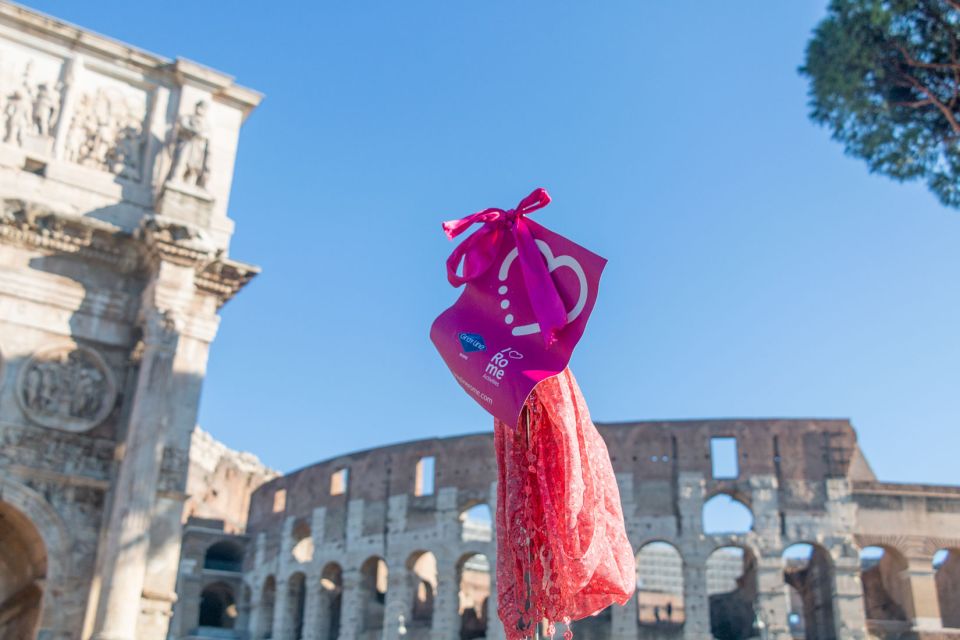
- Clear meeting points with an I Love Rome logo: You’re not left guessing where the group starts.
Two sites, one day: how the Colosseum-to-Vatican flow works
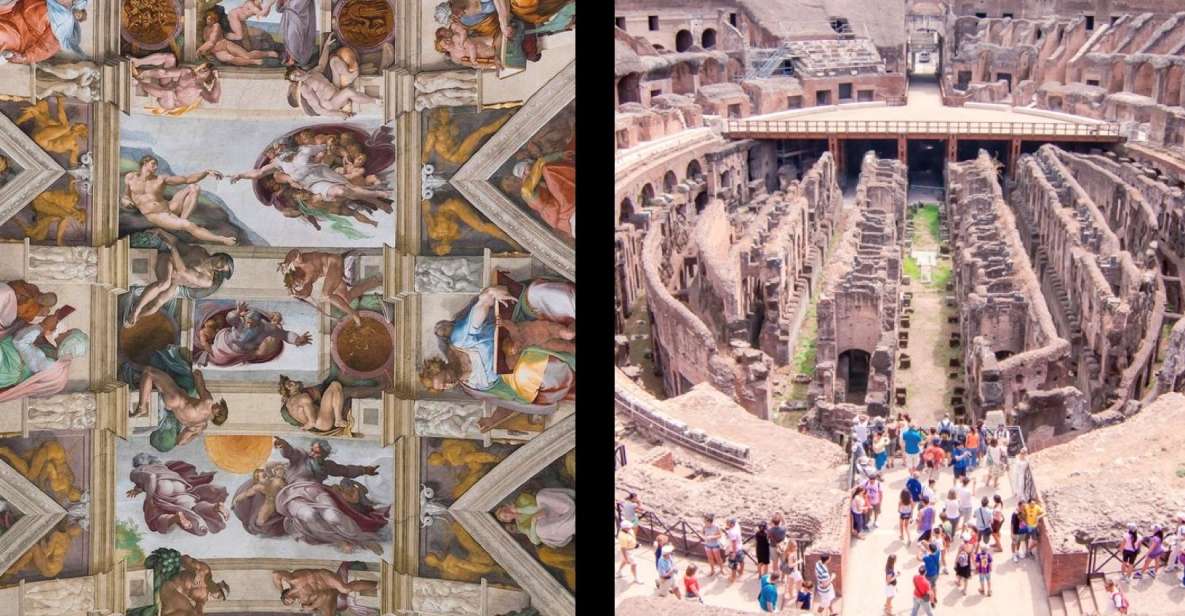
This is a classic Rome pairing, and the order matters. You start with the Colosseum area—then you shift to the Vatican Museums later in the day. That split is built for sanity: you see a lot, but you’re not stuck in one single location for hours with no rhythm.
In the morning, your time is focused on the Colosseum plus the wider archaeological zone: the Roman Forum and Palatine Hill. The guide’s job here is to make sense of ruins that can look like random stone from a distance. With the wireless headset, you can step back to take photos and still keep up with the story.
After the morning section, there’s a break for lunch. Food isn’t included, so you’ll want to plan for an actual meal or at least a solid snack before you get back into another timed, ticketed-feeling day. Then the tour reconvenes and you head to the Vatican Museums portion for the afternoon.
One practical note: the tour is listed at 6.5 hours, but it includes distinct morning and afternoon blocks. You should still expect a long day in terms of walking, standing, and waiting your turn at major checkpoints.
You can also read our reviews of more tours and experiences in Rome.



Meeting points at Colle Oppio Park and Piazza Risorgimento (and how to find your group fast)
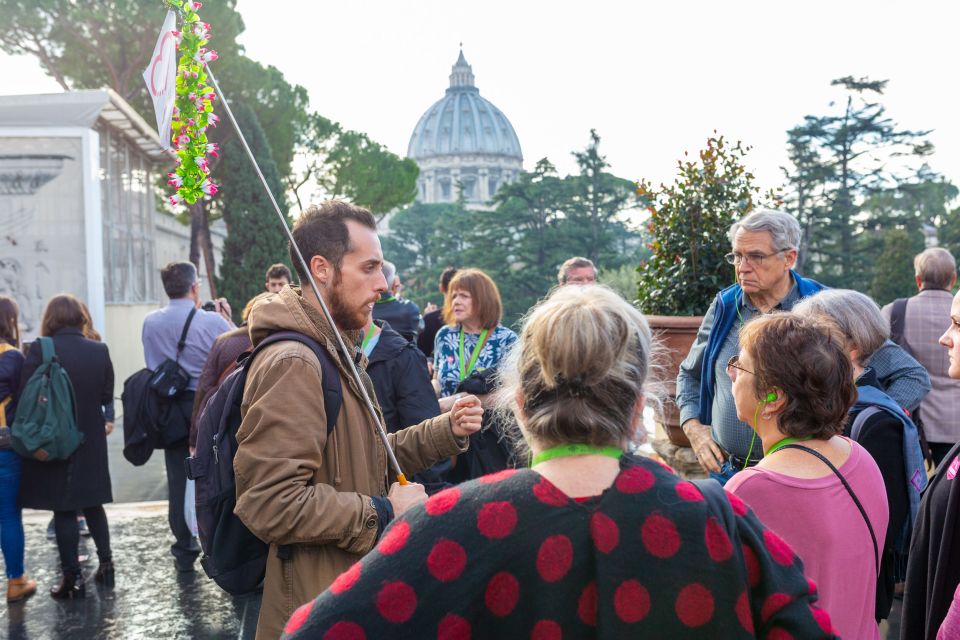
Where you start is half the battle in Rome, especially with multiple tour groups converging on similar corners. This tour uses two specific meeting points, each with an I Love Rome logo staff member holding it up.
For the Colosseum portion, you meet at Colle Oppio Park – Via delle Terme di Tito, corner of Via Nicola Salvi, inside the park, about 15 minutes before start time. The wording matters here: inside the park, at that corner, and early enough to get sorted before the group moves.
For the Vatican Museums portion, the meeting point is Piazza Risorgimento (Bar – Caffetteria L’Ottagono). It’s also described as 400 metres from the nearest Metro A stop (Ottaviano). Same deal: show up 15 minutes early and look for the logo.
If you choose an option that includes transportation, you may have early hotel pickup. If not, you follow the voucher instructions and meet at the points above. Either way, I’d treat the 15-minute rule as a real one, not a suggestion. Late arrivals can throw off the flow, especially when groups have to move through entrances in an orderly line.
Inside the Colosseum: what you get beyond the photos
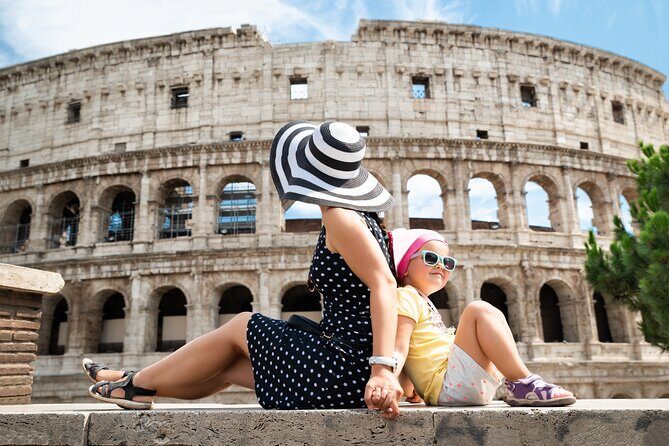
Seeing the Colosseum from the outside is impressive. Seeing it from the inside is a different level. This tour is designed for the inside experience, and that’s where a guide earns their fee.
Once you’re inside, your guide ties the architecture to the real human story: gladiators, spectacle, and what daily life and politics looked like around this kind of public arena. Without guidance, you can walk through and only catch the biggest visual moments. With a guide, you learn where to look and what details matter—so the Colosseum stops being a postcard and starts feeling like a place with rules, seating, and movement.
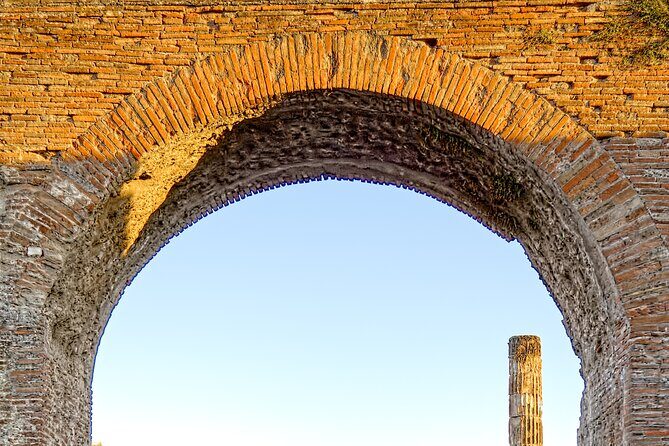
After the Colosseum, you move into the broader archaeology stretch: the Roman Forum and Palatine Hill. These areas reward a guided approach because they’re not one simple building; they’re a network of spaces that used to function together. Palatine Hill is especially good for getting spatial understanding—where people lived, why leaders wanted visibility, and how vantage points shaped power.
Comfort tip that matters here: the ground can be uneven, and you’ll spend time walking. Wear closed-toe, grippy shoes, not sandals. On hot days, consider grabbing water before you head in. There are fountains around, but you don’t want to wait until you’re already overheated.
The Roman Forum and Palatine Hill: where the guide turns ruins into meaning

The Roman Forum and Palatine Hill can feel like “more ruins” until someone explains what used to happen there. That’s exactly what this tour aims to do.
The Roman Forum is where you get context for how Rome worked—public buildings, political life, and the kind of civic energy that made the city run. The Palatine Hill piece adds another layer: it’s not just where history happened, but where status and residence connected to that history.
What I like about this part of the day is the pace. The tour description calls out a relaxed pace with morning and afternoon tours, and in practice that kind of pacing helps you not miss the moments that make these areas special. You don’t want to speed-walk through, because you’d lose the story. But you also don’t want a slow shuffle that drags for hours in direct sun.
Your best move: stay present. Use the guide to orient yourself, then take your photos with intention. Look where the guide points. Don’t just aim your camera at the nearest wall.
Lunch break strategy: how to use the free time without losing your momentum
Between the morning and afternoon portions, you get free time for lunch. Meal costs aren’t included, and that’s important. You’re not getting a set menu, so you need a plan that fits your energy level and your location.
Because this is a two-meeting-point day, I treat lunch like a reset button. You want something quick enough that you can get back on schedule, but satisfying enough that you don’t crash before the Vatican Museums section.
Here’s what you can do to make lunch work:
- Go simple: a casual sit-down or a quick counter meal beats chasing a perfect restaurant.
- If it’s hot, prioritize hydration and shade when you can.
- Don’t overpack your schedule with a long detour. Your afternoon starts back at a defined meeting point.
If you’re the type who easily gets hungry while walking, consider bringing a small snack for the transition. It’s the kind of practical move that turns an okay day into a comfortable one.



Vatican Museums and Sistine Chapel: hearing the story in a crowd
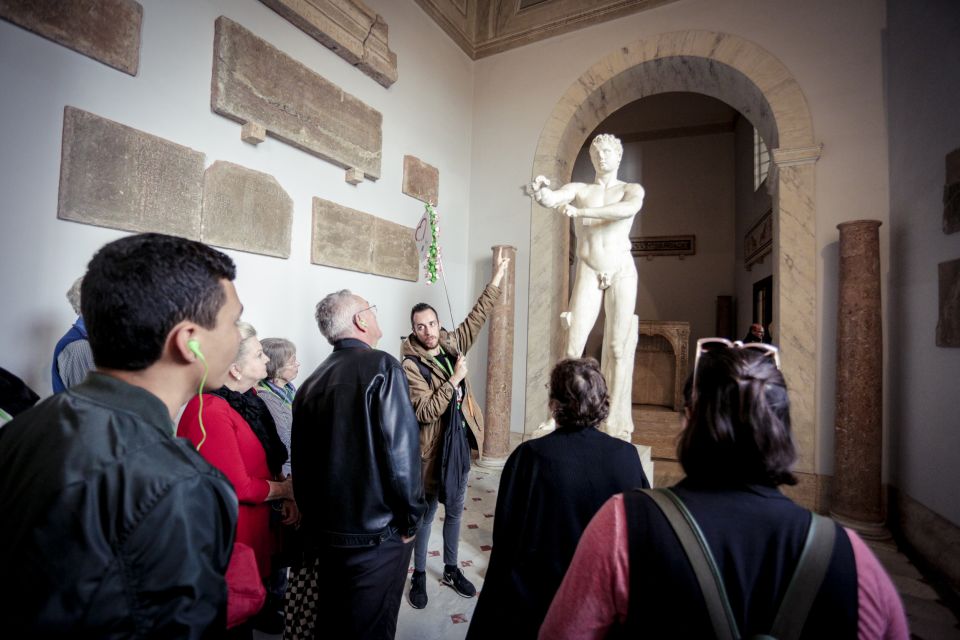
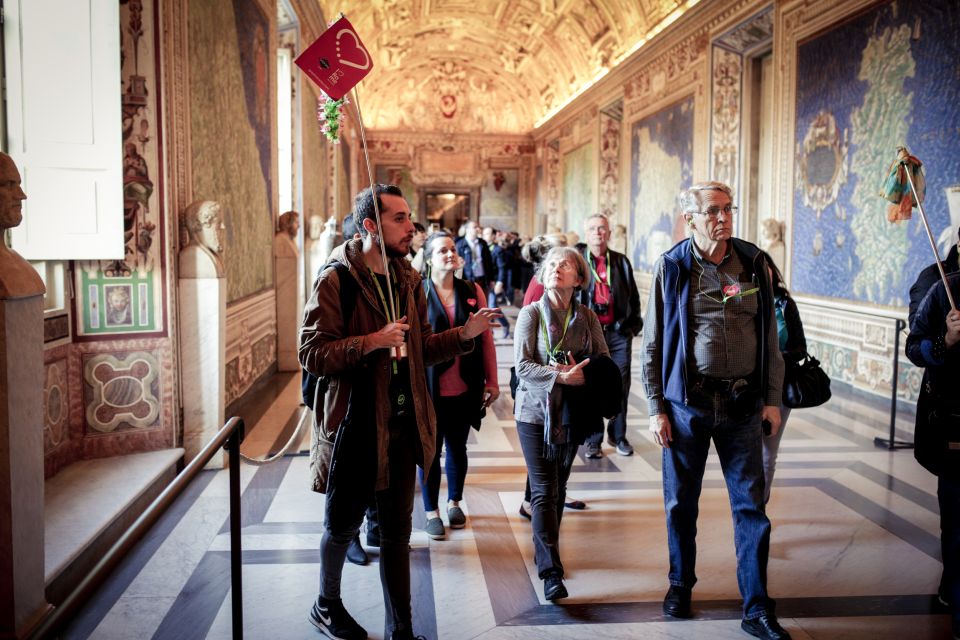
The Vatican Museums are famous for a reason: they’re big, dense, and crowded. This is where guided direction can save you from wandering in loops.
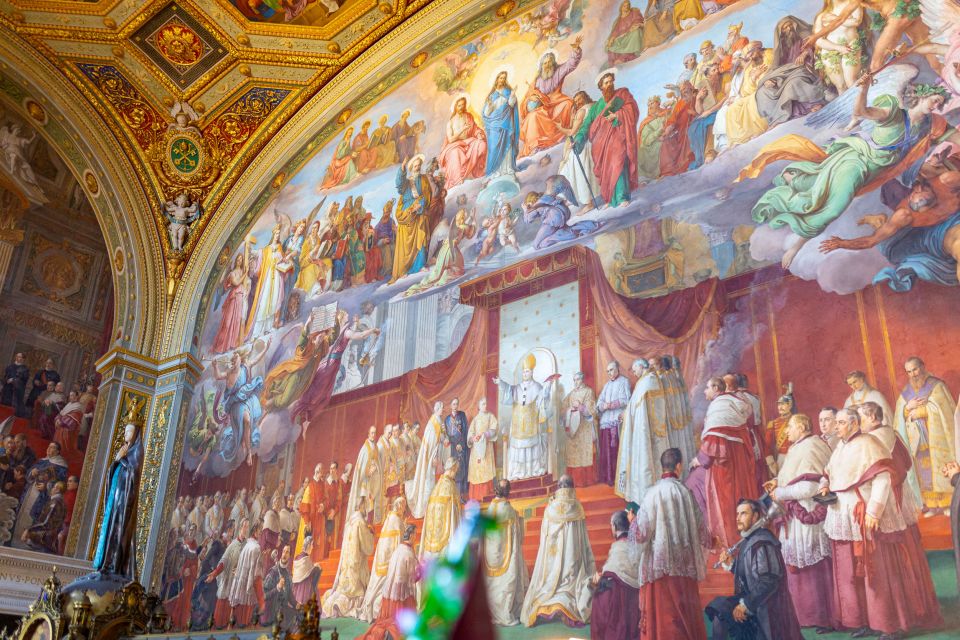
This tour includes the Vatican Museums and highlights Michelangelo’s masterpieces in the Sistine Chapel, plus the grand setting of St. Peter’s Square. With the wireless audio headsets, you can stay connected to your guide even as the crowd forces everyone to adjust spacing.
The biggest challenge in the Vatican isn’t the art—it’s the environment. You’re surrounded by people, and the building layout can make it feel like you’re constantly negotiating elbows. A guide helps you decide what to focus on and what details will actually make the artwork meaningful.
One note I’d take seriously: the Vatican Museums are places of worship, so some areas can close suddenly without notice. And during the Jubilee Year, certain areas may be inaccessible because of religious ceremonies. If the Sistine Chapel isn’t accessible due to reasons outside their control, there’s no partial refund. That’s not a reason to skip the tour—just a reason to keep expectations flexible.
Also, the headset experience can vary. The tour provides wireless audio headsets, and when they work well, it’s a game-changer. If you find audio is unclear, move a bit closer within the flow and tell the guide as soon as possible so you can hear instructions for the next sections.
Price and value: what $372.71 is buying you
At $372.71 per person, this tour isn’t cheap on paper. But the real question is what you’re purchasing.
You’re paying for:
- A professional English-speaking guide who handles both the archaeology and the Vatican art narrative.
- Inside access for the included attractions.
- Wireless audio headsets, which are especially useful in crowded buildings.
- A small group limited to 10 participants, which usually means less waiting around and more space to hear and see.
What you’re not paying for:
- Hotel pickup/drop-off (unless your option includes transportation).
- Food and drinks.
So the value depends on you. If you’re in Rome for limited time and you want the most important sites handled in one organized day, the price starts to make sense. If you love slow independent exploring and you don’t mind spending extra time figuring out timing and entrances yourself, you might choose a cheaper approach.
My rule of thumb: the higher the complexity (timed entries, big crowds, multiple sites), the more you’ll feel the value of a guide and a small group. This day hits both complexity points hard—so it tends to work best for visitors who want structure.
Comfort, pace, and what to bring so the day stays enjoyable
This is a “see a lot” day. I don’t mean that as a warning; I mean it as a planning tool.
Wear comfortable shoes. The Colosseum area and the Forum/Palatine zone involve uneven surfaces and lots of walking. In summer heat, you’ll feel it. There are water stops around, and it helps to be proactive early, not late.
Bring your passport or valid ID card. It’s mandatory for this tour day.
Two more considerations:
- The tour is not suitable for wheelchair users, so if mobility is an issue, you’ll want a different format.
- The Vatican can have sudden closures of some areas. Even with a plan, worship-related interruptions can change what you access.
This isn’t the type of tour where you pop in for a quick look. It’s more like a guided route through two of the biggest “Rome must-sees,” with breaks built in so you don’t burn out immediately.
Should you book this Vatican and Colosseum day tour?
Book it if you want:
- A guided explanation that helps you understand what you’re seeing, not just where to point your camera.
- To tackle Colosseum + Roman Forum + Palatine Hill in the morning and the Vatican Museums + Sistine Chapel + St. Peter’s Square later, without having to plan every transfer.
- A day that keeps the group small (up to 10), with headsets to follow the guide easily.
Skip it (or look for an alternative day format) if you:
- Need a lot of mobility assistance, since it’s not suitable for wheelchair users.
- Can’t handle the possibility of Vatican area closures during the Jubilee Year and worship events, especially if the Sistine Chapel is a must-no-matter-what for your trip.
- Prefer a slower, totally self-paced day and don’t want to follow meeting points.
If you go in with the right expectations—good shoes, flexible Vatican access, and a willingness to walk—the structure can make this one-day plan feel efficient rather than exhausting.
FAQ
How long is the Rome: 1 Day Vatican & Colosseum Tour?
The tour duration is listed as 6.5 hours. Starting times depend on availability.
What language is the tour guide?
The tour is guided in English.
How big is the group?
This is a small group limited to 10 participants.
Where do I meet for the Colosseum portion?
You meet at Colle Oppio Park – Via delle Terme di Tito, corner of Via Nicola Salvi, inside the park, about 15 minutes before the start time. Look for the I Love Rome logo.
Where do I meet for the Vatican Museums portion?
You meet at Piazza Risorgimento (Bar – Caffetteria L’Ottagono) about 15 minutes before the start time. Look for the I Love Rome logo.
Is hotel pickup included?
Hotel pickup and drop-off are listed as not included. If your option includes transportation, you may get an early pickup at your hotel.
Do I need ID for the tour?
Yes. You must bring a passport or valid ID card. It’s mandatory on the day of the tour.
What happens if the Sistine Chapel is closed?
If the Sistine Chapel is not accessible for reasons beyond the tour operator’s control, no partial refund is provided. The Vatican may also restrict access during the Jubilee Year due to religious ceremonies.